


 Director: Takashi Miike
Screenplay: Daisuke Tengan
Based on the novel: Audition by Ryu Murakami
Starring: Ryo Ishibashi, Eihi Shiina, Jun Kunimura, Tetsu Sawaki, Miyuki Matsuda, Toshie Negishi, Shigeru Saiki, Ken Mitsuishi, Ren Osugi, Renji Ishibashi
Year: 1999
Country: Japan
Running Time: 116 min
BBFC Certificate: 18
Takashi Miike is an incredibly prolific director, having helmed over 100 films in the space of around 35 years. The Japanese director learned his trade through direct-to-video V-Cinema releases. Around 30 films into his career, many of which were V-Cinema alongside some cracking early gangster works, he directed his calling card, one of a number of horror films for which he would be well known for, Audition.
Based on the novel of the same name by Ryu Murakami, from a screenplay by Daisuke Tengan, Audition follows widower Shigeharu Aoyama (Ryo Ishibashi), who is advised by his teenage son Shigehiko (Tetsu Sawaki) to find a new wife.
Shigeharu, though, has understandably been out of the dating scene for some time – his wife, as we see in the opening scenes, died seven years earlier – and needs some advice about how to go about wooing a new woman. This advice is provided by colleague, film producer Yasuhisa Yoshikawa (Jun Kunimura), who organises a fake casting audition for women, with the prize being to star in a bogus new television series.
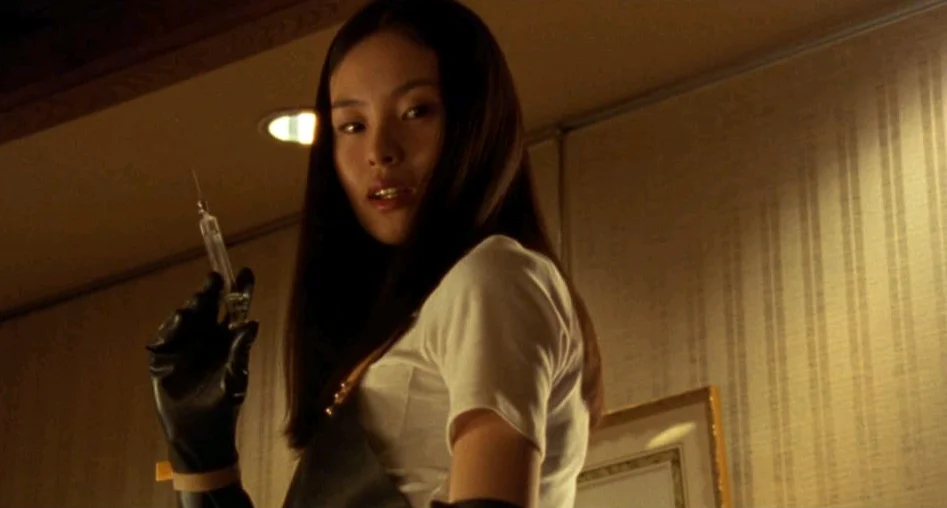
In reality the scam is a ploy to allow Shigeharu, posing as a casting director, to meet young aspiring actresses to get back into the dating game. Shigeharu is immediately smitten by one of the actresses, both from her application and when he first meets her. The woman is Asami Yamazaki (Eihi Shiina), who claims to have had her career as a ballerina ruined by injury.
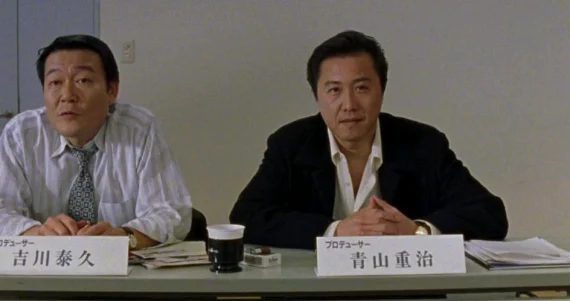
Things are suspicious from the get go: Yasuhisa can’t find any of the references on Asami’s résumé and is suspicious of her, but Shigeharu pursues her and begins dating her. A tantalising tale then unfolds as we learn more about the mysterious Asami and her past, building to a truly unforgettable final act, where horror comes to the fore.
I first saw Audition on a Tartan Video DVD release in the early 2000s and it has stuck with me ever since. It’s a remarkable piece of cinema from a master who was very much still carving out his career at the time it was made. Thinking about the finale still makes me wince.
And that’s something I will warn potential first-time viewers of – it’s a fascinating piece of cinema, but it is very dark, twisted and challenging, mostly due to its content. The finale is harrowing, grotesque and tough to watch and I can easily see some viewers not, understandably, having the stomach to see it through.
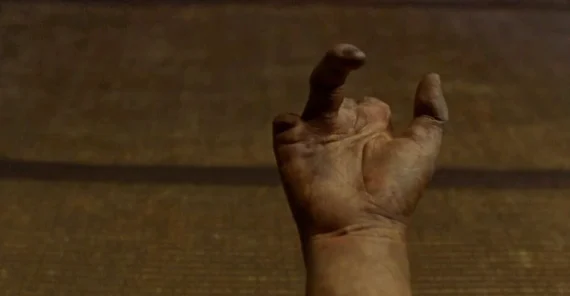
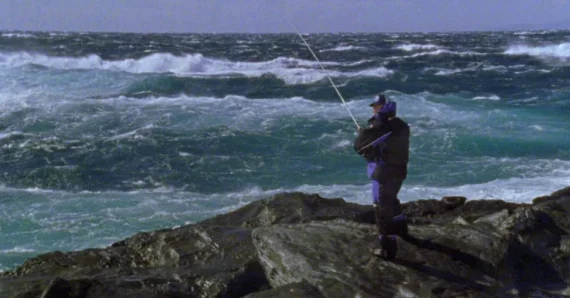
That being said, if you have the nerve, and particularly if you like psychological horrors, it’s an excellent film. One of the first things that stuck out for me on this rewatch was the change in tone that happens during the course of the film. Shigeharu seemingly lives an idyllic life with his son, with whom he seems to get along really well with. The pair go fishing, eat meals together and encourage each other in their endeavours. It’s a warm opening act to the film.
Yet Shigeharu is clearly lonely and wants the love of a woman again. An early scene suggests he’s been having a relationship with a co-worker who tells him she’s getting married. The sense of loss on his face is clear to see as the lift door closes between them following the co-worker’s revelation.
But then the tone gradually turns more unsettling and ominous as Shigeharu meets Asami, and her tragic past and horrific present come more to the fore.
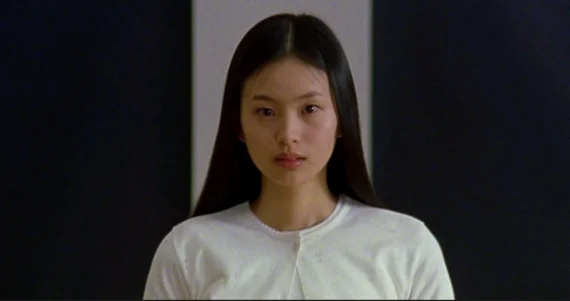
Acting throughout is fantastic. Ryo Ishibashi is excellent as Shigeharu and really shows emotional range. He goes from lonely to coy and happy as his new relationship begins, before being put through some devastating scenes in the final act.
But, for me, this is fashion model turned actress Eihi Shiina’s film. She is simply astonishing as Asami. She plays every facet of the character perfectly. Highlights include her waiting patiently for four days after her audition for the phone to ring, her making Shigeharu promise to love her, fits of jealousy and the incredibly dark finale. She’s very creepy and an eerie atmosphere pervades when she’s on the screen.
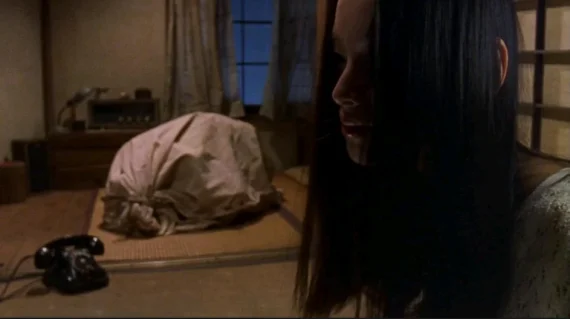
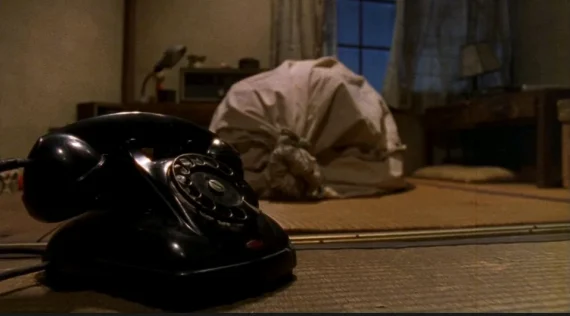
The use of video footage – most famously used in Hideo Nakata’s Ringu (1998) – is particularly effective, as is the build-up to Asami getting the call following her audition. What should at face value be a joyous scene increasingly creates a sense of unease. When we see Asami waiting for the phone to ring we know something is wrong; she’s shot almost bowing down, long hair draped over her face – again similar to Ringu and it’s terrifying vengeful spirit Sadako – and then gives a wry smile when the phone finally rings. In the background, we then see a human-sized sack move. It’s a striking and unsettling scene.
The film plays out at a deliberate pace and this is one of the only flaws for me. It really feels its nearly two hours length, dragging a little before the finale, but only a little. It’s a small flaw. Despite these minor reservations about the pacing, the story as a whole is very intriguing, giving snippets of the mystery of Asami throughout.
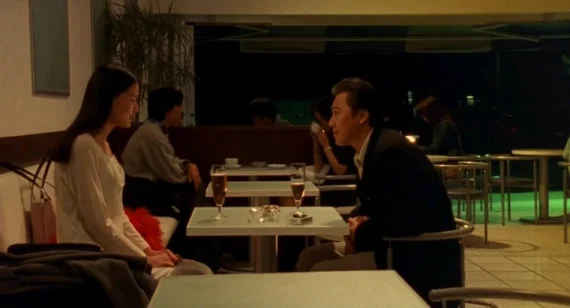
We’re not given the whole story until the end, but we get so much about her character from those little nuggets – she’s made up her résumé, there’s something or someone tied up in a sack in her apartment, she’s got scars on her body, body parts start turning up and she’s clearly jealous of others showing affection to Shigeharu.
The score by Kōji Endō is beautiful and used in an understated way throughout, but particularly helps to create a sense of palpable dread and an off-kilter feel, and the film is lensed gorgeously by director of photography Hideo Yamamoto with some very memorable compositions, particularly in Asami’s apartment. One silent and static shot of her phone in the foreground and the aforementioned sack behind is particularly striking.
I’ve deliberately not spoiled what happens in the finale, as it is best that first-time viewers go in knowing as little about how the story will play out as possible. What I will say is that this is, at its heart, a horror film and we’ve been given multiple warnings about Asami throughout, so it’s not too much of a spoiler to say the film develops into full-on horror territory for the finale.
The horror aspects are clear to see from early sequences where a sense of unease is provided; hallucinations that Shigeharu has about body parts and the revelation of what is in the sack. It’s very much a psychological horror for the first three quarters of the film before the visceral and visual elements shine through.
Asami’s actions are the heart of the horror yet we’re given plenty of sympathy for her, for two reasons – one, we’re provided with her tragic backstory. She was tortured as a child ballerina by her tutor, which is why she is scarred, her parents divorced and she was abused when staying with her aunt and uncle and then by her stepfather.
These elements are revealed in several scenes – one of Shigeharu meeting the dance tutor, who is now in a wheelchair for reasons that will become apparent as the story progresses, and in dialogue sequences on the dates he has with Asami over drinks, where we also see flashbacks to the trauma she has suffered. This explains why she has become the woman she has and why she acts in the way she does, which we get a glimpse into throughout the film before seeing them in full force in the finale.
Secondly, Shigeharu and his colleague’s motivations for auditioning women are underhand at best, slimy and misogynistic at worst, and for them to have got no comeuppance wouldn’t have passed muster, particularly in 2026.
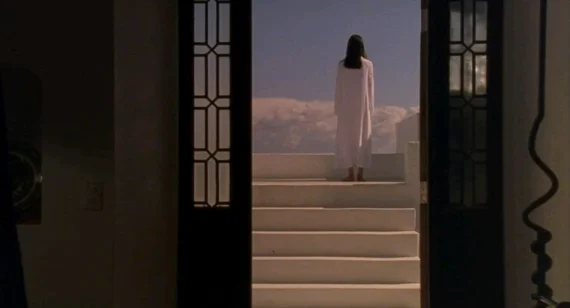
Essentially, though, for fans of Miike, his trademark violence and gore comes to the fore in the finale with some audacious sequences, with the imagery staying in the mind long after the closing credits. It accounts for the final 25 minutes or so, essentially around a quarter of the film.
In conclusion, Audition is among the best films from prolific director Takashi Miike. It’s a provocative piece of cinema, incredibly dark and twisted and builds to a truly unforgettable, queasy and harrowing finale. The film has stuck with me since I first viewed it more than 20 years ago, and gets better with every viewing. It is not for the faint hearted, but if you’ve yet to see it and are a fan of dark Japanese cinema or just a darn good, yet icky and unsettling, horror film, this is highly recommended.
Film: 

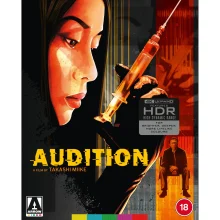
Audition is released on limited edition 4K UHD on 15th June 2026 by Arrow Video, and is a great upgrade on their previous Blu-ray edition thanks to the picture and sound and a couple of extras that weren’t on their original release. The new 4K restoration was carried out by Arrow Films from the original Super 16mm camera negative and the transfer and restoration was approved by director of photography Hideo Yamamoto. It looks simply stunning, with natural tones and colours, fine detail and the right amount of grain. The film looks fantastic throughout, with only the occasional softer sequence. It also sounds great, with very clear dialogue, sounds effects and music.
4K Ultra HD limited edition contents:
Brand new 4K restoration from the original Super 16mm camera negative by Arrow Films approved by director of photography Hideo Yamamoto
4K (2160p) UHD Blu-ray presentation in Dolby Vision (HDR10 compatible)
Newly restored original lossless stereo and 4.0 audio, plus optional DTS-HD MA 5.1 surround audio
Optional English subtitles
Introduction by director Takashi Miike
Audio commentary by director Takashi Miike and screenwriter Daisuke Tengan
Audio commentary by Miike biographer Tom Mes
Callback, a brand new interview with actor Ryo Ishibashi
Ties that Bind, an interview with director Takashi Miike
Damaged Romance, an appreciation by Japanese cinema historian Tony Rayns
Archive interviews with stars Ryo Ishibashi, Eihi Shiina, Renji Ishibashi and Ren Osugi
Deeper, Deeper Into Audition, an audio essay by author and critic Alexandra Heller-Nicholas
Trailers
Image gallery
Collectors’ booklet featuring new writing on the film by Anton Bitel, Jennie Kermode and Jamie Graham
Reversible sleeve featuring newly commissioned artwork by Dark Inker – Sampson and original UK artwork by Graham Humphreys
Firstly, I’d recommend, as with any film but particularly this one, not watching any of the extras until after you’ve watched the feature, if this is your first viewing. There are spoilers throughout the extras and it is best going in knowing as little as possible.
The film can be watched with an optional intro from director Takashi Miike running just over a minute. This was filmed around ten years after the release of the movie, with Miike proclaiming it as a turning point in Japanese cinema but that he’s not so happy with some aspects of the finished product.
The archival audio commentary by director Miike and screenwriter Daisuke Tengan was recorded to mark the 10th anniversary of the film and talks about its influence on subsequent filmmakers as well as the background to the making of the film. Both Miike and Tengan share their influences and plenty of nuggets about the making of the film.
Miike biographer Tom Mes provides one of his typically richly detailed, well researched and entertaining commentaries. This is among my favourite extras with a wealth of detail and insight provided by Mes, who is one of the authorities on Japanese cinema. There are loads of snippets that I got from this archival commentary, with lots of background to the production company behind the film and those in front of and behind the camera.
The new interview with actor Ryo Ishibashi runs for eight minutes and includes clips from the film, so the interview itself is even shorter. Ishibashi also spends the first few minutes giving background to the film and story, but then he shares his thoughts on sequences like the audition scene. So, it’s a mix of an intro to the film and Ishibashi’s thoughts on the movie and its themes, but it is mostly the actor giving a run through of the film. I’d have preferred more insight.
The archival interview with director Miike is from Arrow’s previous 2016 release and runs for 30 minutes and is a pleasure to watch. The director shares the importance of the film on his career, his motivations for making films and much more besides. There are sections where Miike shares his thoughts on some of those involved in the film, which are particularly illuminating. If you only watch one of the cast and crew interviews, I’d recommend making it this one.
Ryo Ishibashi’s interview is from 2009 and is much better than the new interview. He shares his background in a music band, how he got into acting, working with Miike, thoughts on the film and why he agreed to be in such a provocative piece of cinema and plenty more. I liked this 16-minute interview a lot.
Also from 2009 is an interview with Eihi Shiina who also shares her start as a model, her father’s love of movies which led to her appreciation for the art form, her love of Japanese cinema, how she got the part in Audition, colleagues she worked with, that unforgettable final sequence, the success of the film, attending film festivals and recollections of the production, plus more. It’s a really good interview.
Renji Ishibashi’s interview also dates from 2009 and runs for 21 minutes. Ishibashi plays the ballet tutor who abused Asami in her past. He shares how he got into film, Miike’s approach to directing, his favourite film by the director, his most difficult roles, how he prepares for a movie and more in a wide-ranging piece, that’s also very good.
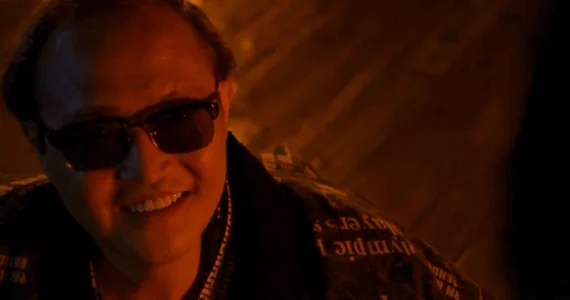
The final archival cast and crew interview is with Ren Osugi who – spoiler alert – plays the man in the sack. Also from 2009, this one runs for 16 minutes and sees Osugi sharing how he got into film, which is a particularly interesting story. He also discusses some of his other roles and, of course, thoughts on Audition. It rounds out a really strong selection of archival interviews.
Damaged Romance is a wonderful appreciation by Japanese cinema historian Tony Rayns, which was produced for Arrow’s 2016 Blu-ray release. During the course of 36 minutes Rayns provides an incredible amount of detail and insight into Miike and the film. He also shares similarities between the story and the Stephen King book, and subsequent film adaptation, Misery. It’s among my favourite extras on the disc and those who know extras involving Rayns will appreciate how high quality this extra is.
The audio essay by author and critic Alexandra Heller-Nicholas is from 2024 and is another strong piece. Running for 11 minutes, it highlights the amount Shigeharu drinks throughout the film, which I must admit I hadn’t noticed before, different ways the film can be read, and the style of scenes that mean we don’t always know if what we’re seeing is meant to be real or not, at least until the finale – and even then the rug is pulled from us at least once. It’s a great piece.
Also included are a Japanese trailer and an international trailer. Arrow provide a helpful bit of text before the option to play the Japanese trailer explaining that it shows imagery from some key plot points of the film – it certainly does with lots of imagery from the finale, and I’d recommend first-time viewers watch it after watching the film, as Arrow also recommend. The Japanese trailer runs for under two minutes and is very creepy and effective.
The international trailer does not contain as much in the way of spoilers and, as such, has no warning, but there are one or two images that I would place in the spoiler territory, and I would advise watching it after the film. It runs for just over a minute and is suitably creepy.
The image gallery contains around 30 stills.
I wasn’t provided with the booklet, so am unable to comment on it.
In closing, Arrow Video have provided an excellent new limited-edition 4K release of Takashi Miike’s phenomenal Audition. The film remains a powerful and challenging watch – mostly due to the wince-inducing and harrowing finale – and it is presented with a brilliant new 4K restoration by Arrow. All of the extras from the previous Arrow Blu-ray are carried over – including two commentaries and a brilliant appreciation by Tony Rayns – but the label also adds a relatively new audio essay by author and critic Alexandra Heller-Nicholas, and a new interview with actor Ryo Ishibashi who plays Shigeharu.
Disc/Package: