

 Director: Antonio Mercero (Telephone Box) & Narcisso Ibanez Serrador (The Television)
Script: Jose Luis Garci & Antonio Mercero (Telephone) & Luis Penafiel (Television)
Cast: Augustin Gonzalez, Goyo Lebroso, Toto Garcia, Maria Uico (Telephone) & Narcisso Ibanez Serrador, Maria Fernando D’ Ocon, Kit Maner, Jose Miguel Aguado, Rafael Navaro
Running time: 36 minutes (Telephone) / 68 minutes (Television)
Year: 1972 (Telephone) / 1974 (Television)
Certificate: 12
Back in the early to mid-1980s when they used to still screen some interesting content on BBC Two and ITV, I remember watching a screening of the first film in this compilation, La Cabina (aka The Telephone Box), and it traumatising me for a couple of days afterwards! I seem to remember watching it on our black & white television, which made it appear more like a semi-documentary.
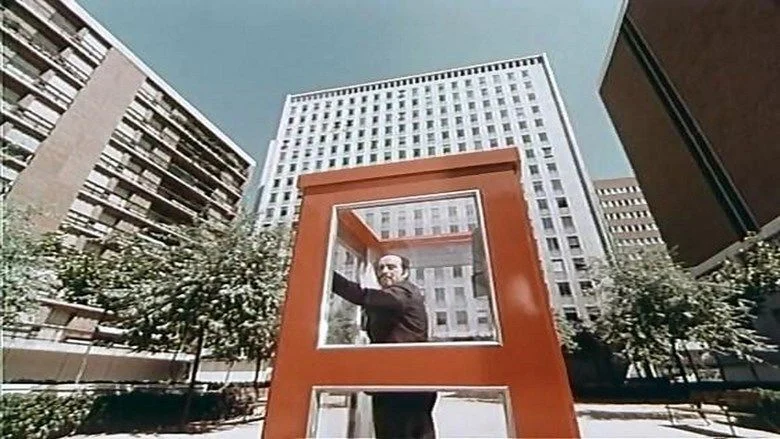
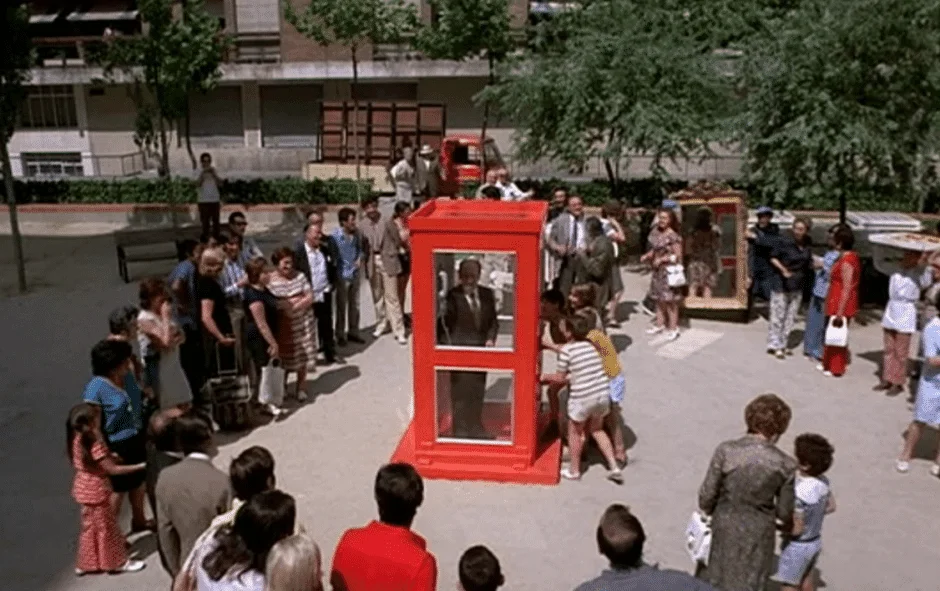
Essentially La Cabina begins with a middle-aged man walking his son to the bus stop to catch the school bus. Once the lad has been picked up, the father makes his way across a plaza, encountering a new telephone box, one that we saw being installed during the opening credits. He decides to make a call, but after inserting money into the phone nothing happens and the door, like a mechanical Venus fly-trap, closes shut and locks him into the box.
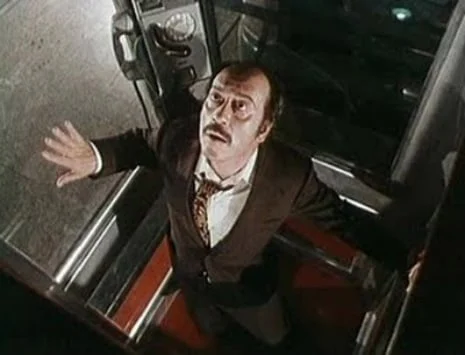
A number of passers-by try to help him, including a local strongman and two cops, but none of them can get the door open, so someone calls the fire-brigade and they arrive to try to extract him. However, just as one of the fireman readies himself to swing a hammer at the top of the box the original telephone box installation crew arrive and load the box – with the father still in it – onto the back of their flat-bed truck then drive off with it.
Subsequently, the film logs the man’s journey as the truck drives through the city, then on through the countryside, and then finally on to his final destination, in more ways than one!
I don’t want to give the ending of the short film away, but it’s a real peach and very nihilistic, hence my teenage trauma all those years ago! But the ending is up there with the end of the original The Vanishing as a denouement that’s one that’s both memorable and one that really bites.
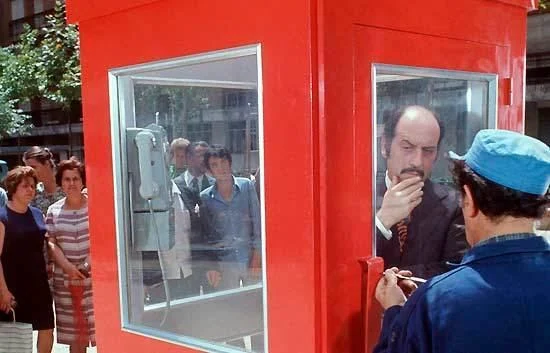
While it’s hard to judge the acting since there’s not much dialogue, the lead actor is great and his eyes and his mannerisms tell us pretty much all we need to know about how he’s feeling and what he’s thinking. And the film is nicely shot and must have had a sizable budget given the scale of it.
Overall, it’s an excellent short film and one that still has the power to disturb all these years on.
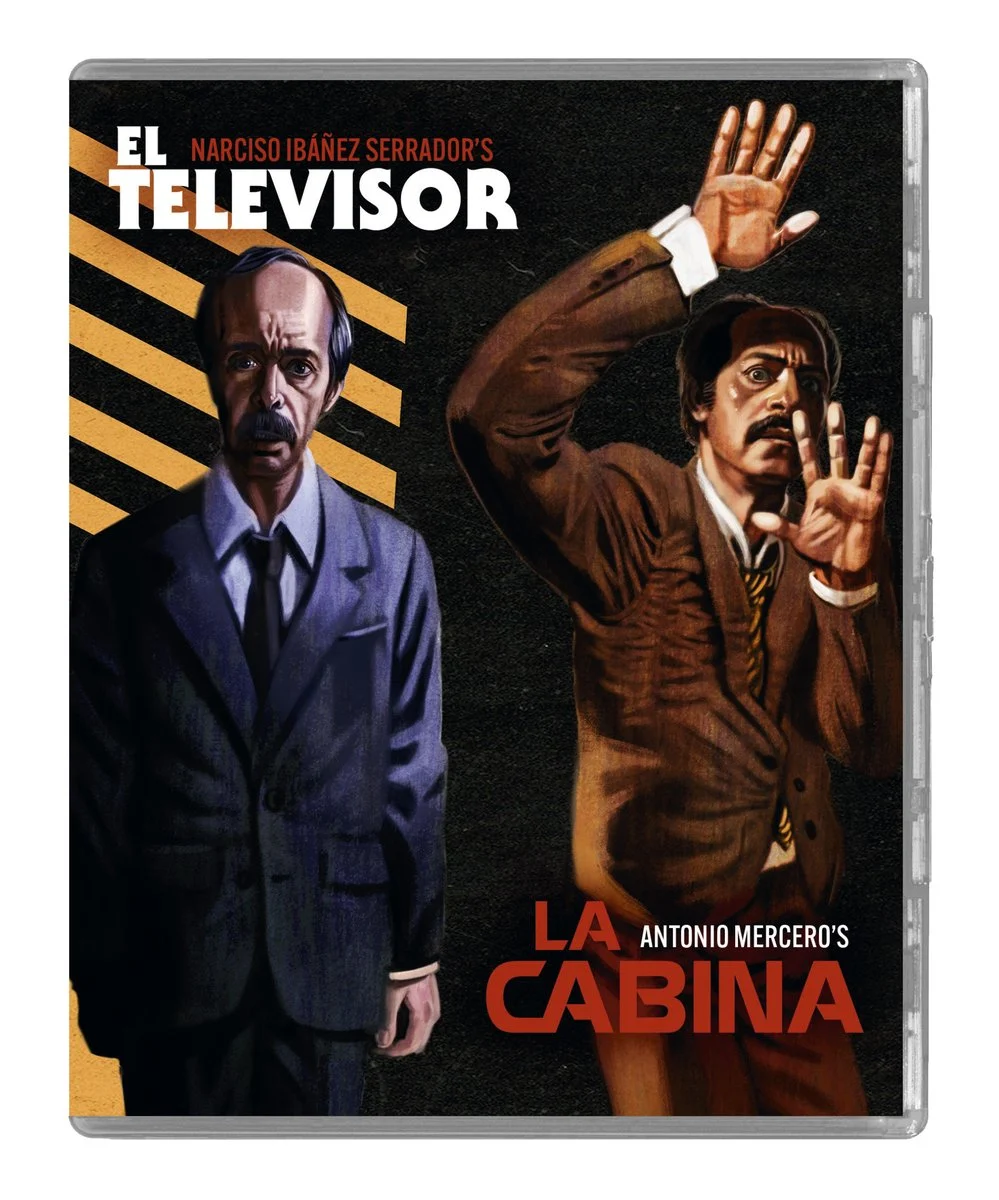
The second film on the disc I hadn’t previously seen, hence it was a fresh experience for me. El Television (The Television) plays out more like a feature-length episode of Tales of the Unexpected and is therefore tamer, but still arresting.
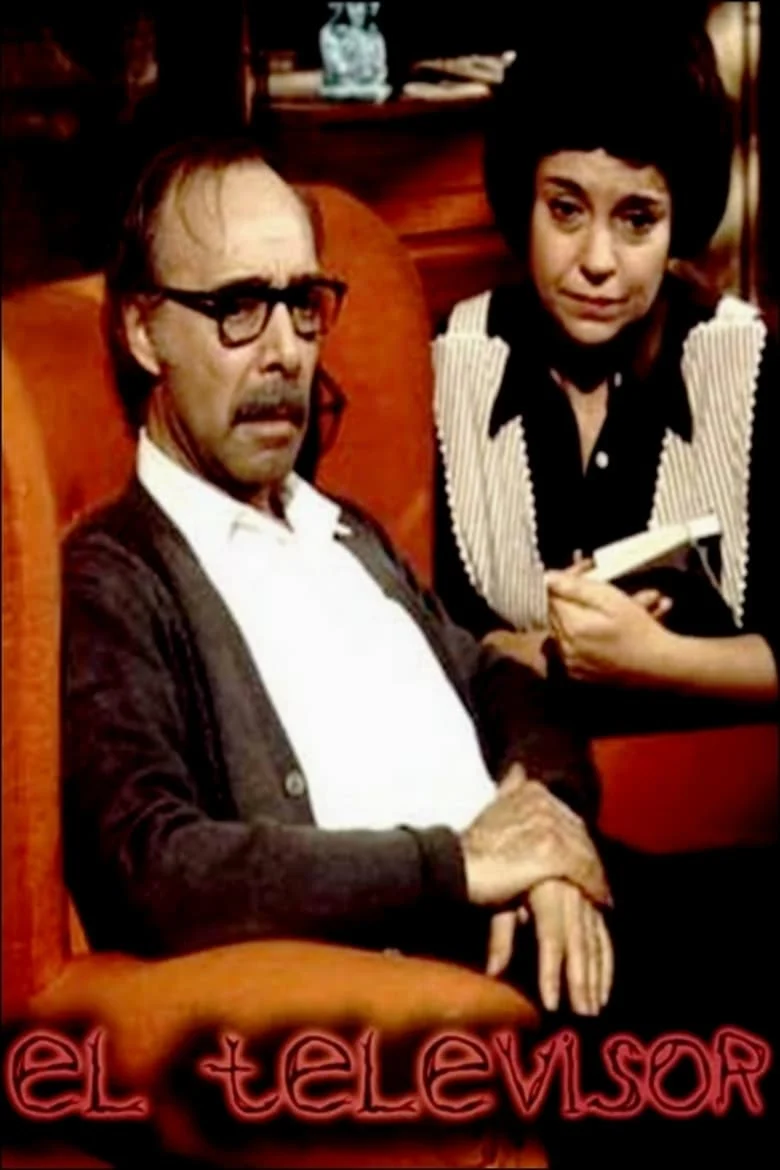
The story follows hard-working accountant, Enrique, who has spent years yearning for a television for his family home, but always puts his wife and two kids first and buys them stuff that they need/want first. However, one day he realises that he now has enough savings to purchase a television set and, with his wife’s permission, finally takes the leap and buys one.
What is initially a great joy to Enrique becomes a burden over time as he stops going to work so he can watch the various Spanish soap operas that air during the day. He also becomes obsessed with seeing news programes and various documentaries that have opened up his mind to the wider world around him.
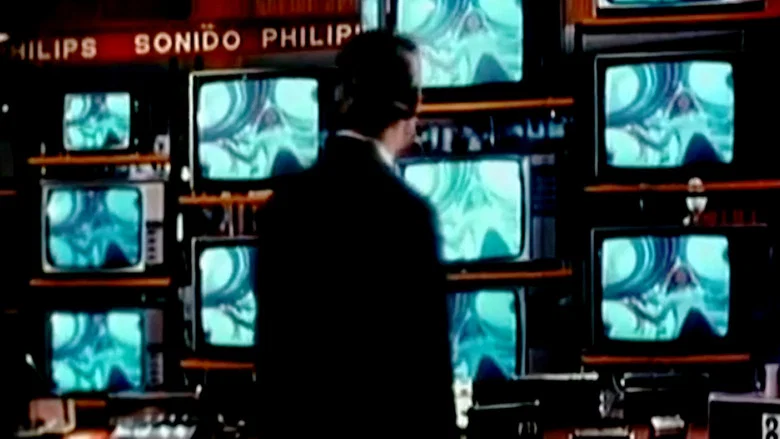
His wife is at first supportive of him, but when he loses his job due to his lack of attendance she seeks his old bank manager boss’s help and he brings in a psychiatrist to assess her husband. He recommends that Enrique watches less TV, but that when he does watch it that he has the rest of the family watch it with him. However, this tactic later backfires with devastating consequences for everyone.
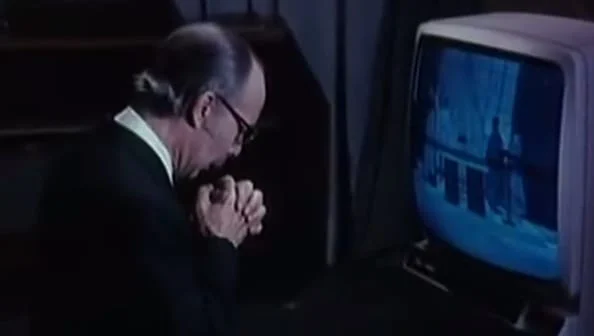
The Television was another good film, but perhaps over-egged its central conceit, whereby a man starts to believe that what he’s watching on the box is real and that he’s actually interacting with the figures on screen. The central character reminded me a little of George from the TV sitcom George and Mildred that ran on British TV during the 1970s.
While this wasn’t as engaging as The Telephone Box, it’s still worth watching for the excellent acting and to see how they try and bring some interesting ideas to the fore.
The film tends to go over the same ground too many times, and could, therefore, have been cut down by ten to fifteen minutes without damaging it, but even so it’s still a captivating watch.
Extras include:
Audio commentary on La Cabina by Reece Shearsmith and Steve Pemberton – The duo of writer/actors, probably best known for their work on The League of Gentlemen, turn out to be very knowledgeable about the film revealing that there was a previous Spanish feature film called The President’s Analyst which contained a similar sequence back in 1969. They also reveal that the production got into trouble with composer Carl Orff for using his music without his permission. However, the matter was settled out of court because he liked what they’d done with his music.
Audio commentary on El Television with author Jonathan Rigby and Kevin Lyons who is editor of the Encyclopaedia of Fantastic Films – This spends much of the film observing what’s happening on screen, although they do make some interesting observations, including that it’s still a very contemporary film and it’s themes could easily be replicated in modern times, but using mobile phones and social media to replace television as the ‘monster’ in the room. They also note that the film’s director was very important in Spanish horror cinema and later went on to direct the classic Who could kill a child? Apparently, some of the film was shot in Portugal, although most of it was made in Madrid. Apparently between 1968 and 1975 there were 150 horror films made in Spain, many of which were subtly commenting about the nastiness of General Franco’s regime.
Interview with Antonio Lazaro Reboll (38 mins) – Reboll is a cinema expert who explores the career of Chico Ibanaz Serrador and the importance of his horror works, especially the 1960s series Tales to Keep you Awake. He also touches on other Spanish directors associated with the horror genre including Jess Franco and Paul Naschy. The interview uses posters, stills and lobby cards to help illustrate the points it’s making.
Interview with Jose Luis Garci (co-screenwriter of La Cabina) (18 mins) – Garci fills in some of the gaps in the film’s production history, citing that it took quite a long time to get off the ground and that in Spain it became quite the social phenomena in that people would start sticking their foot in the door while they made calls from public telephone boxes after seeing the film on TV!
Interview with Antonio Mercero Santos (13 mins) – The son of the director of La Cabina goes back to where the film was shot, but finds the plaza is now a private area and is out of bounds to the general public. Apparently the film was filmed in order and the lead actor was scared of the magnetic crane that picks up the box towards the end. The last sequence was actually shot at a hydroelectric station.
El Television’s writer/director discusses the film’s impact (6 mins) – The film was originally broadcast late at night and wasn’t advertised as it was deemed to be very critical of television. The interview is a bit peculiar as he’s filmed while he’s at some kind of press conference meal, hence is eating and being served drinks, etc. while he’s talking to the camera!