


For over a century, Alfred Hitchcock has remained one of cinema’s most influential directors. Known as the “Master of Suspense,” this visionary filmmaker directed more than fifty films over six decades. His thriller The Lodger (1927) marked the start of his signature style, which was later exemplified in classic films like Vertigo (1958), North by Northwest (1959), Psycho (1960), and The Birds (1963). Drawing on new archival research, previously unpublished interviews, and a rigorous examination of key biographies, A Century of Hitchcock challenges the long-standing narratives that have shaped Hitchcock’s legacy. Author Tony Lee Moral revisits controversial claims regarding Hitchcock’s alleged abuses, scrutinizing biographer Donald Spoto’s interpretations, particularly his portrayal of the director’s relationship with actress Tippi Hedren. With his analysis of a 1980 interview between Spoto and Hedren, Moral reveals for the first time how one key document contradicts decades of exaggeration.
I’m not sure what cinema would look like without Alfred Hitchcock. We think of his films in the mode of thrillers, but that sells short his influence on the very fabric and grammar of cinema. Tony Lee Moral’s timely book, A Century of Hitchcock, provides a comprehensive re-evaluation of the legendary director’s life and work. It’s a valuable reference piece, not least because the text challenges the narrative first highlighted by biographer Donald Spoto and his interview with Tippi Hedren.
Spoto portrayed Hitchcock as a psychologically troubled man who mistreated his leading ladies. By utilising archival evidence, including interview transcripts from 1980, Moral argues the allegations were embellished. He discusses Hitchcock’s meticulous craftsmanship and his supportive collaborations with strong, central female characters, backed up by testimony from cast and crew members. This is a work that seeks to restore a balanced perspective on Hitchcock’s genius, as well as his enduring influence on modern filmmakers.
Moral isn’t as pre-occupied with the Spoto files as some reviews might have you believe. Indeed, he thoroughly covers Hitchcock’s career in the first chapters and continues throughout the text to pivot back to the director’s craft. However, it is a fascinating counterpoint from which to consider his method and subsequent effect on cinema. Especially when he was making Marnie on the cusp of the Production Code collapsing and his very specific intentions in making the film the way he did.

In 1963, Stanley Donen made Charade. I mention it because some (wrongly) say it is the best Hitchcock film Hitchcock never directed. That’s actually Carol Reed’s Fallen Idol, or Henri-Georges Clouzot’s Les Diaboliques, the rights to which Hitchcock lost by a whisker. Marnie was released a year after Charade and it’s that film’s evil twin.
Hitchcock would never have made Charade so passive to the studio system. As fabulous as Audrey Hepburn is, her character is structurally trapped. She spends the entire film being lied to, manipulated, and yet protected by Cary Grant before eagerly marrying him. The effervescent Regina is forced to validate her existence and independence by being tied to a man.
Always the provocateur, Alfred Hitchcock had moved past the easy charms of the spy thriller by 1964. There was a little more vinegar in his work; and the best way to prove a system doesn’t work? Use it until it breaks. In Marnie, he actively circumvented the Code; Tippi Hedren’s criminal uses her own wits to survive outside the system while Sean Connery functions as a twisted version of Cary Grant. Instead of turning her over to the police, he blackmails her into sexual and emotional captivity under the guise of fixing her.
Hitchcock knew the Hays Code was losing its teeth, and he ruthlessly pushed past its boundaries. But in doing so, he arguably trapped Tippi Hedren in a tough production by using the same tropes of the studio system he was undermining on screen.
Hepburn and Donen may have played the game passively, but once the Hays Production Code collapsed, they made Two for the Road, a cynical and non-linear autopsy of a marriage. Charade is glossy technicolor and immaculate Givenchy gowns, while Two for the Road gave Hepburn the space to play a woman with genuine complexity. She left Hollywood a few years later, but on her own terms. Tippi Hedren’s profile remained more muted from Marnie onwards.
The story could end here in a timeless debate of art vs the artist. Donen’s compromised Charade at least earning a second movie as a gratifying payoff, vs Hitchcock pushing the system, reinventing film grammar again, at the alleged cost of his star’s welfare. But there was a further twist.
In 1980, six months after the death of Alfred Hitchcock, biographer Donald Spoto interviewed Tippi Hedren. Not only was Marnie an exhausting production, not only was she handcuffed to a useless contract, Hedren alleged that Hitchcock was a sexual predator.
These allegations spiralled and dots have been joined ever since. Spoto’s book, The Dark Side of Genius was a seminal point for many years and he compounded the narrative in 2008 with Spellbound by Beauty. Hedren herself reiterated the events in her biography Tippi in 2016.
It all began with Donald Spoto’s interview though and, somewhat by chance, Tony Lee Moral’s own research unearthed interview transcripts from 1980 that suggest Spoto’s version was contrived. A single source directly contradicting years of rumour. Certainly, Tippi Hedren’s story has never been directly corroborated, beyond the media seeing a ghost in the machine behind Hitchcock’s precise filmmaking.
Tony’s book is excellent and he tackles both angles with solid evidence and research. His experience and knowledge put forward a well-supported and compelling case that not only answers the Spoto narrative, but emphasises Hitchcock’s methods and his indelible effect on cinema history. Whatever your own conclusion, Tony has produced a reference-quality work that finally triangulates the lazily accepted narrative that has existed for years, while demonstrating why Hitchcock’s work remains essential. Part 3 is especially fascinating, looking at the wider responsibilities in biography and the new generation of filmmakers who have been influenced by the Hitchcock legacy.
For me, I keep thinking: why Marnie? I’d find it easier to believe if the accusations emerged during The Trouble With Harry or even Vertigo. But to accuse the director of sexual manipulation while making a film about sexual manipulation? Tougher sell. In any case, it remains a sad fact that Tippi Hedren was manipulated by someone. Be it Hitchcock, or Spoto, it’s not a fair legacy.
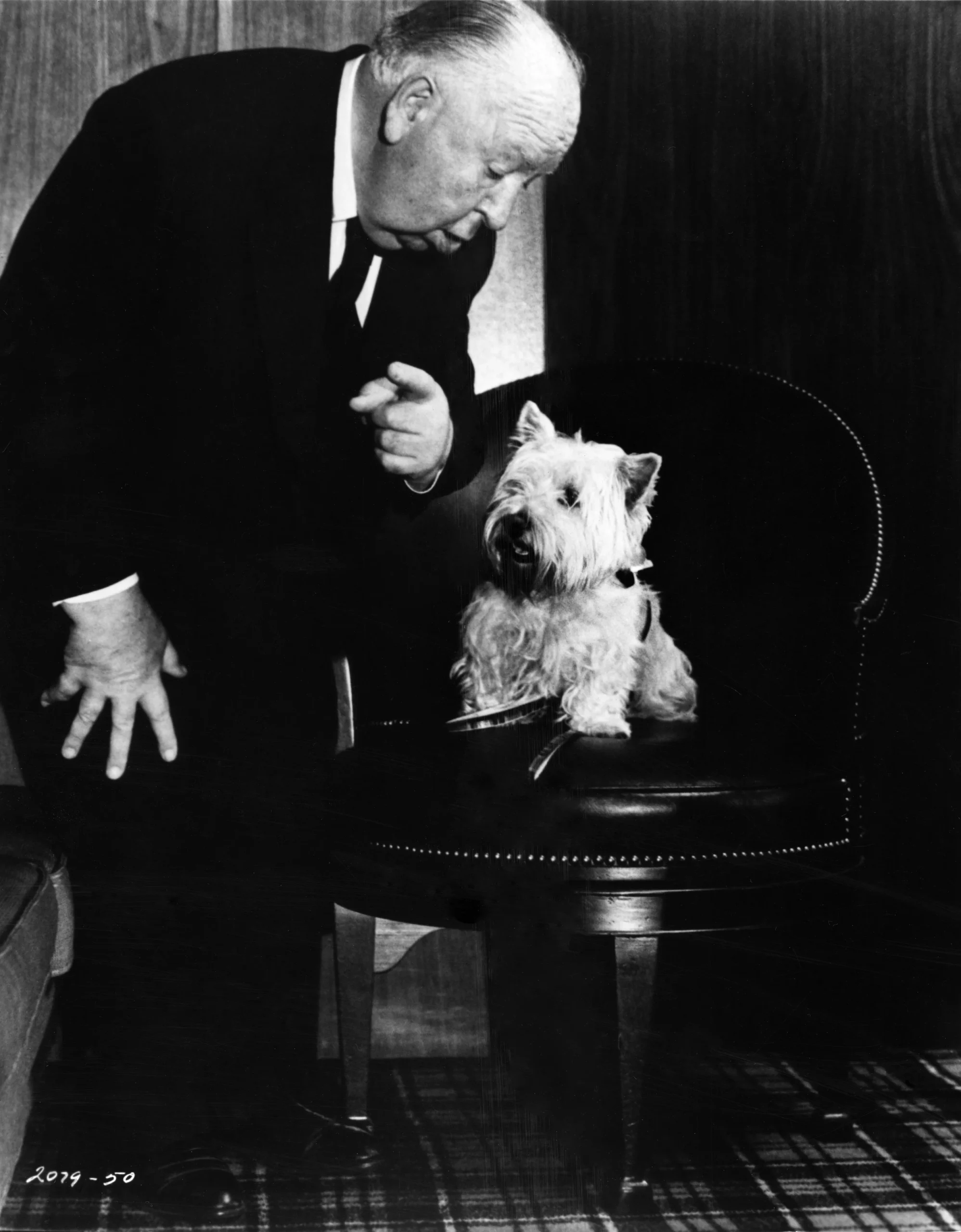
Reassessing the Master of Suspense: A Conversation with Tony Lee Moral
I had the opportunity to interview Tony about his book on a Zoom call. I wanted to explore his work’s more scholarly depth; the book shouldn’t be reduced to a defensive brief regarding the #MeToo controversies, and this conversation highlights the book’s broader cinematic value. He joined our call, proving easy and engaging to talk to. He had no agenda, placards, nor even a t-shirt with “#TEAMHITCH” emblazoned upon it. Like his book, he exudes an assured confidence.
Jon Meakin: Congratulations on the book. I’ve been enjoying it immensely. When I heard there was another Hitchcock book, my first reaction, to be honest, was: “Another one, really?” But reading it, I think you’ve got a really nice balance of where we’re at with Hitchcock 100 years on. What was the impulse for writing the book? Was it the centenary?
Tony Lee Moral: It was more of an accumulation, really, because I’ve been researching Hitchcock for almost 30 years. I started writing my first Marnie book in 1998, and I just had a lot of unpublished interviews. Then I wrote a book on The Birds and a masterclass book. It was really a case of cast and crew members telling me stories and sharing perceptions of Hitchcock that were very different from what Donald Spoto and the media were saying. I thought it was an opportunity to present that in book form, and the centenary was obviously a good hook to do that.
Jon: What was your reaction when you realized there was such a difference between Donald Spoto’s published narrative and what you uncovered?
Tony: The main thing is obviously about the allegations with Tippi Hedren, and the game-changer for me was finding the interview transcript from October 1980, six months after Hitchcock died. Spoto met with Hedren, and there’s a 36-page interview transcript, but none of the later allegations he talks about are in that document. It makes you wonder why it came about in later versions of his biographies, like Spellbound by Beauty. I discovered that transcript around 2012. I went to UCLA to look through the Spoto files and that was just a very important source for me. I think he made a mistake leaving that there, because he went to live in Denmark and he left all his files at UCLA. For me, it was black-and-white proof that they embellished a lot of the later stories.
Jon: Recently, there was an interview with Kim Novak in Sight and Sound [April 2026] where she briefly alludes to the allegations and didn’t seem to support them.
Tony: Yes, I interviewed Kim at the Cannes Film Festival in 2013 when she was honored, and she said the same to me. In her version of Hitchcock, he was very supportive, even though she wasn’t the first choice for Vertigo. As we know, Vera Miles was the first choice, but she said he led her through the role and everything was very carefully storyboarded, like the run up the bell tower. She described his editing like a metronome, and she was only complimentary about him.
Jon: How do you think he would work with actresses today? Jodie Foster recently commented that in older films, actresses were treated not as female parts, but as an element of the filmmaking.
Tony: I don’t completely agree with that because Hitchcock was very pro-women. If you look at Ingrid Bergman in Notorious or Grace Kelly in Rear Window. Cary Grant actually complained, saying, “Oh, you framed the picture to the woman again,” after he saw Suspicion or Rebecca. Hitchcock’s empathy was with the female character. But to answer your question, it’s a completely different time now. The studio system is gone, as is the nature of grooming stars across repeated pictures. Today, stars are managed by agents rather than studios. Would he have liked today’s actresses? He would still obviously cast cool, Nordic-looking women; he probably would have liked Naomi Watts or Cate Blanchett. The book places Hitchcock within the context of his time, especially in the #MeToo chapter, because we can’t judge Hitchcock by the era of the 50s and 60s when the culture and studio system were completely different.
Jon: The irony is not lost on me, considering two middle-aged men happily discussing whether Tippi Hedren’s recollection was correct or not. Have you had any pushback from female writers, or have you received supportive comments?
Tony: The supportive ones stand out. Because it’s a university press book, it had to go through a lot of peer reviews. The two endorsements on the back page are by Christina Lane (who wrote the Joan Harrison book, Phantom Lady) and Elisabeth Karlin, both recognized Hitchcock scholars. Karlin believes Hitchcock’s women were front and center, from Tallulah Bankhead in Lifeboat to Grace Kelly in Dial M for Murder, and she views them as role models and that’s when she says, you know, very cleverly, “me too, I would I want to be like those women”. So she puts herself in the category of those Hitchcock women, those strong women. The book has only been out a month and most people recognize the research. Some people are firmly in Hedren’s camp and don’t want to recognize the evolving story or the ambiguities, but it’s all documented in the archives, which is a major strength of the research, as well as the interviews I conducted with the cast and crew.
Jon: I think you’ve supported everything that you’re saying and that’s the most important thing, because it fits as a matter of record. We have the two previous biographies and now there’s this other point of view. You can see that the research is there.
I recently saw that Guillermo del Toro did a couple of lectures on Hitchcock, which I thought was really nicely timed. Who do you think is the best director today who embodies Hitchcockian values?
Tony: I discuss that in the last chapter on Hitchcock’s disciples. We mention del Toro, Christopher Nolan, and David Fincher, but also international directors like Park Chan-wook and Bong Joon-ho. There are also female directors like Lynne Ramsay and Kathryn Bigelow. It’s almost impossible to be a director and not be inspired by Hitchcock because he invented so much film grammar across his vast portfolio of 53 films. So, there’s something for everyone.
Jon: Would he have that towering reputation today if it wasn’t for François Truffaut’s book?
Tony: I think the legacy of his films is much more important than a single book, although I do discuss Truffaut and had a lengthy interview with his daughter, Laura Truffaut. But there were seminal books beforehand; I really rate Robin Wood’s book. It was a seminal moment for me reading Robin Wood’s Hitchcock’s Films, which came out in 1965, a couple of years before Truffaut’s. Hitchcock’s films stand up on their own; they don’t need any books to support them.
Jon: Yes, absolutely. And, I reference Sight and Sound again, but I love how their editorial can be a little bit sniffy sometimes; every time Truffaut’s name comes up, they’re quick to say, “we were there as well, before Truffaut”. Hitchcock always had his flag wavers.
What would be your favorite Hitchcock film that no one really talks about? Mine is I Confess.
Tony: I agree with you. I often quote I Confess as one of the first films I saw as a 10 or 11-year-old. I also highly rate Under Capricorn from a similar time period, around 1948 or 1949. That transition era between the 1940s and 1950s is actually quite interesting. There are a number of films that don’t get talked about enough, like Stage Fright, I Confess, and Under Capricorn.
Jon: I’ve always been fascinated by what I nickname his “Bond trilogy”. People immediately see the link when North by Northwest comes out, and then the James Bond films start aping that style, but it’s almost as if he’d invented the Bond character in Secret Agent years before. And then with Torn Curtain, he kind of responds to everyone else’s version as if to say, “You’ve completely misunderstood this”. I wonder how much influence Ian Fleming was picking up from Hitchcock films early on. It would be interesting to see where a Venn diagram overlaps with the two of them.
What do you find is the general perception of Hitchcock when you’re out and about? Do people think he’s the monster they’ve heard about, or the genius?
Tony: It’s a mixture of both because that’s how the press works. I’ve been doing talks on Hitchcock recently on cruise ships to general audiences. Most are delighted and recognize great classics like North by Northwest or Rear Window, but people always ask me, “Was he a womanizer? What was his thing about blondes?” I tell them what his colleagues have told me, which is all in the book, that he was very supportive and pro-women. This comes from female colleagues like his secretary, Peggy Robertson, or Jay Presson Allen, the screenwriter of Marnie, and many of his actresses. It’s really only Donald Spoto and Tippi Hedren who came up with this detrimental narrative.
Jon: He was such a practical joker. You see in some of the behind the scenes footage of how he behaved, while always being very serious, or appearing to be so. It’s hard for me to reconcile that image with someone who’s apparently hiding another version of himself
Tony: Spoto’s assistant, Matthew Bernstein, noted that Hitchcock had a great sense of humor, but Donald Spoto didn’t, because of his strict religious upbringing. Meaning, he wasn’t the right person to write the unofficial biography.
Jon: I think you’ve created a solid reference book. While there have been a lot of frivolous, fun books before, yours provides solid information so the next generation can start picking apart the history and coming to their own conclusions. Thank you very much for your time, Tony.