


Director: Jean-Luc Godard, Anne-Marie Mieville
Screenplay: Jean-Luc Godard
Starring: Jean-Luc Godard, Anne-Marie Mieville, Michel Piccoli, Julie Delpy
Country: France
Running Time: Histoire(s) du Cinema 266 minutes), Other Works (412 minutes)
Year: 1982 – 2024
BBFC Certificate: 18
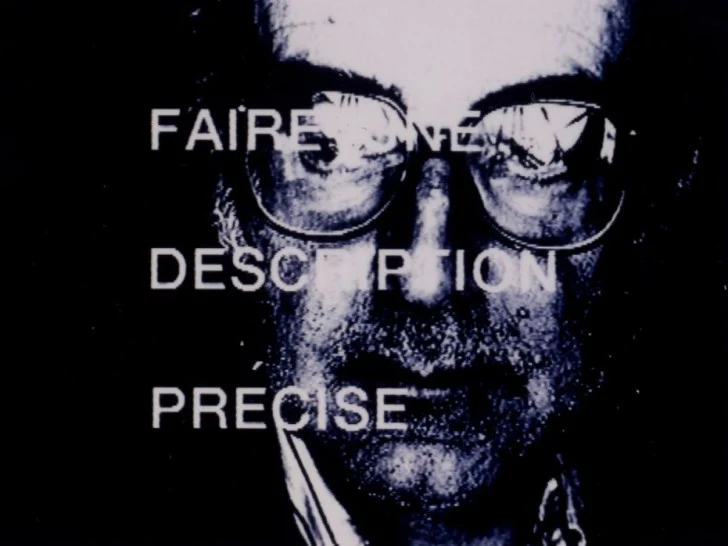
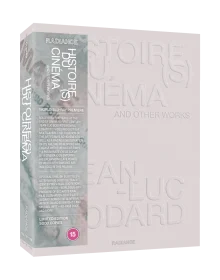
With most of cultural comment consumed by Christopher Nolan’s adaptation of Homer’s The Odyssey, I was reminded that another great directorial figure once made his own version of the epic tale. That was Le Mepris (Contempt) in 1963, and that director was the great French pioneer Jean-Luc Godard, then perhaps at the height of his celebrity. Godard remains one of the great innovators in post war cinema, but his reputation still seems fastened to the extraordinary series of films he made during the 1960s, from Breathless to Weekend. His subsequent work until very recently has been both harder to view and less prominent in critical appraisals; which is where this truly remarkable limited-edition box set by Radiance Films comes in. Histoire(s) du Cinema and Other Work assembles one of Godard’s greatest cinematic works alongside several other contextual pieces that illuminate the paths that this incredible creative force was forging during the blighted decade that was the 1980s and beyond, still innovating at a time when his contemporaries had either faded or compromised.
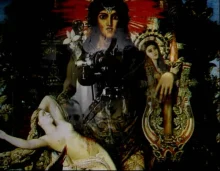
Histoire(s) du Cinema could only have been created by the man the critic Raymond Durgnat once described as ‘a systematic doubter’, a vast project weaving together metatextual strands to form a genuine Gesamtkunstwerk, or total work of art. It is as much a literary as it is a cinematic project, with the tone set firmly by the quotation from Shakespeare that prefaces the first episode:
‘Let every eye negotiate for itself’
This is not a chronological examination of the history of cinema akin to projects like Mark Cousins’ the Story of Film: An Odyssey (there’s that title again), nor an attempt to assert his place within that chronology, although references to Godard’s own films abound throughout the eight assembled episodes. Histoire(s) du Cinema uses the very fabric of cinema itself to investigate what it was, what it was (and is) capable of, and what it has become since its arrival as a new artform at the start of the 20th century. A sense of conventional narrative structure is entirely absent, and as such, all eight episodes make for utterly uncompromising viewing. Even summarizing these episodes is fraught with danger, but I will make my own attempt at it.
The first two episodes are the longest and most dense of the series. Chapter 1A All the (Hi)stories (1988, ‘for Mary Meerson and Monica Tegelaar’) touches on Charlie Chaplin, Nicholas Ray, the MGM producer Irving Thalberg, Howard Hughes, Rita Hayworth and Sergei Eisenstein, whilst Godard himself is shown typing amid plumes of cigar smoke. The machine gun clatter of his electric typewriter will be a fixture of the series. Enigmatic phrases are used as repeated intertitle refrains:
TRADE FOLLOWS FILM
A WORLD THAT CORRESPONDS TO OUR DESIRES
FACTORY OF DREAMS
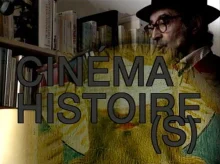
The effect is catalytic, striking sparks within the viewer as we try to find a foothold within the dense nature of what we’re witnessing. Godard utilises everything from literature to painting to theatre. Amongst many other things, the series is a dazzling feat of scholarship. Chapter 1B A Single (Hi) story (1989, ‘for John Cassavettes and Glauber Rocha’) detours through Jean Renoir, Fritz Lang, the photographer Lee Miller and the works of Emile Zola. Godard meets our gaze for the first time as new phrases grace the screen:
ETERNAL RETURN
FATAL BEAUTY
AN INDUSTRY OF ESCAPISM
DARK VICTORY
A bravura sequence melds Murnau and Bresson into Pasolini, before we see images from early porn films and atrocity footage. A trigger warning is definitely necessary for some of the content in this series. The wartime atrocity footage alone is deeply upsetting. The episode concludes with a digression into formation of United Artists and a sighting of the great French director Jean Vigo.
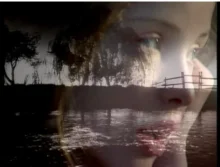
Chapter 2A Only Cinema (1997, ‘for Armand Cauliez and Santiago Alvarez’) is centred around a discussion between Godard and his great friend, the critic Serge Daney. The critic’s tragically early death in 1992 lends a valedictory air to this episode, where Godard is less formal and more forthcoming. Julie Delpy, who was discovered by Godard aged 14 and cast in his 1984 film Detective appears onscreen. The music of Meredith Monk collides with Night of The Hunter. One intertitle says it all:
WHY MAKE IT SIMPLE WHEN YOU CAN MAKE IT COMPLICATED?
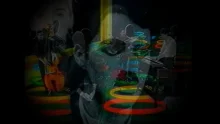
Chapter 2B Fatal Beauty (1997, ‘for Michele Firk and Nicole Ladmiral’) captures Godard topless and wearing a visor, gazing at the screen. Raymond Queneau and Marcel Pagnol rub shoulders with Anna Magnani and Marcel Proust.
CONTROL OF THE UNIVERSE
THE SIGNS AMONG US
ALWAYS THE FATAL MOMENT
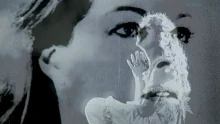
The actress (and wife of Alain Resnais) Sabine Azema recites from the works of Elle Faure. Erich Von Stroheim and Barbara Loden. Chapter 3A The Currency of the Absolute (1998, ‘for Gianni Amigo and James Agee’) references the Bosnian war by way of Goya. Alfred Hitchcock appears, as does Carl Laemmle, the founder of Universal Pictures, Louis Aragon and the antifascist anthem Bella Ciao. Jean Gabin and Michele Morgan in Port of Shadows, Zola’s Nana and UFA. The actors Alain Cuny and Marie Dea appear.
I KNOW WHAT YOU ARE THINKING
THE CAMERA, IT IS THE SCREEN.
Chapter 3B The New Wave (1998, ‘for Frederic C. Froeschel and Naham Kleinman’) is Godard’s oblique testament to the movement with which he made his reputation, and to his contemporaries who have long since diverged from the ‘new’. There are flashes of Jacques Rozier’s sublime debut Adieu Philippine, of Francois Truffaut, Jean-Pierre Leaud and Jacques Rivette, of Andre Bazin and Henri Langlois, of Frank Borzage and Virginia Woolf.
MONTAGE, MY BEAUTIFUL.
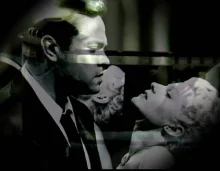
Chapter 4A The Control of the Universe (1998, ‘for Michel Delahaye and Jean Domarchi’) is perhaps the hardest to view, containing horrific war atrocity footage alongside the use of Henry Fonda, John Ford’s The Searchers, spaghetti western The Big Silence and yet more Hitchcock – a director whose work has never fully cast its spell upon me. We also hear a defiant blast from West German agit rockers Ton Steine Scherben and their immortal song Macht kaputt, was euch kaputt macht (Destroy What Breaks You).
THE ARTIST
Chapter 4B (1998, ‘for Anne-Marie Mieville and myself’) is the culmination, as Godard’s grim husk of a narration binds Hollywood dancers like Fred Astaire and Gene Kelly to truly gruesome war footage, Sartre’s disparagement of Orson Welles’ Citizen Kane aligns uneasily with Charles Peguy and Hieronymus Bosch. Godard’s final soliloquy is a rare glimpse into the romanticism at the core of this most perceptive and intimidating film maker.
CINEMA, WHO DOES IT BELONG TO?
TO YOU
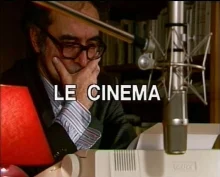
Histoire(s) du Cinema is perplexing, allusive, confrontational and all-consuming, in every sense of that term. There are infinite paths to take; even the people to whom each episode is dedicated are yet more signs, yet more methods of knowledge. Look them up; you’ll be enlightened by what you’ll discover. For all its digressions and provocations, as well as its sheer immensity, Histoire(s) du Cinema deserves to be regarded as one of Godard’s greatest achievements. The annotated subtitles by Felicity Chaplin are an absolute must for understanding what is happening textually as well as visually onscreen. If that were all this set had to offer, it would already be an essential purchase for all serious cineastes, but the inclusion of a vast array of other films, created by Godard and his frequent collaborator Anne-Marie Mieville over several decades adds even more weight to this stunning box set.
BLU-RAY LIMITED EDITION BOX SET SPECIAL FEATURES
- All 8 episodes of Histoire(s) du cinéma, viewable with two optional English subtitle tracks: a narration translation, and annotated subtitles by Felicity Chaplin identifying clips and images
- Lettre à Freddy Buache – Godard’s anti-film commissioned for the 500th anniversary of the Swiss city of Lausanne (1982, 11 mins)
- Soft and Hard [Soft Conversation on Hard Subjects] – creative partners Godard and Miéville discuss their work while involved in everyday tasks around their home (co-directed with Anne-Marie Miéville, 1985, 52 mins)
- JLG/JLG, autoportrait de décembre – Godard’s self-portrait documentary finds the filmmaker questioning his place in cinema history and the end of Western culture (1995, 56 mins)
- 2 x 50 Years of French Cinema – in his documentary in celebration of the centenary of cinema, Godard points the camera at himself (co-directed with Anne-Marie Miéville, 1995, 52 mins)
- Moments choisis des histoire(s) du cinéma – Godard’s re-edit of Histoire(s) du cinéma on 35mm film reorganises footage and includes unique material (2004, 83 mins)
- Exposé du film annonce du film “Scénario” – Jean-Luc Godard presents his idea for a 6-chapter feature film (2024, 36 mins)
- Scénarios – Godard’s final work (2024, 18 mins)
- New introduction by Godard expert Michael Witt (2025, 9 mins)
- New interview with Michael Witt on Godard’s magnum opus (2025, 26 mins)
- New interview with Godard collaborator Bernard Eisenschitz on the director’s working methods (2025, 13 mins)
- Extensive archival TV interview with Godard on French programme Bouillon de culture (1993, 56 mins)
- Limited edition 48-page perfect bound book featuring new essays by film writers Sophia Satchell Baeza and Jawni Han, and an essay by Adrian Martin
- Limited Edition of 5000 copies, presented in a rigid box with full-height Scanavo cases and removable OBI strip leaving packaging free of certificates and markings
These are films that display an entirely new set of parameters within Godard’s cinematic works, fully embracing video and later digital technologies and their potential to further develop his ideas. For every seemingly small venture like Lettre à Freddy Buache (a droll ‘anti-film’ where Godard spends more time playing vinyl on his record player than sticking to the task at hand), there are more substantial films such as Soft and Hard [Soft Conversation on Hard Subjects], where Godard and Mieville talk at length in real time about their creative processes and ideas. Godard even shows off his comedic side by wielding a tennis racket behind Mieviile while she irons his shirts. This is an invaluable document of two creative equals sharing their ideas and exploring their respective differences.
JLG/JLG, autoportrait de décembre was a commission by Gaumont to celebrate their centenary, and the film is undiluted, unfettered 100% proof Godard. His voice like gravel as he intones over footage of himself in the depths of winter:
“I was already in mourning for myself, a stern sense of quiet solemnity”
Diderot, Wittgenstein and Johnny Guitar walk together through these exacting frames. Commissioned by the British Film Institute, 2 x 50 Years of French Cinema is a brilliant collaboration by Godard and Mieville, examining the very nature of commemoration, the commercial exploitation of cinema and cultural memory. The breakfast conversation between Godard and actor Michel Piccoli is a terrific exchange with Godard in the role of cultural inquisitor – a role he plays to perfection; calm but exact, never letting anyone off the hook.
Moments choisis des histoire(s) du cinéma is a masterful root and branch restructuring of Histoire(s) du cinéma into a new cinematic statement, his masterwork restaged as a new entity. Critical new elements emerge like bright flowers amidst the rigour and the horror. Delpy and Azema reappear alongside George Stevens and evocations of childhood.
WHAT IS THERE TO DO
Scénarios was Godard’s final film, released in 2024, a precious final testament possessed by a resolute stillness, and one that uses elements of Godard’s own life at that time. The intertitle ‘MRI Odyssey’, and the sounds of that machine at work are utterly harrowing to experience. Exposé du film annonce du film “Scénario” shows and infirm and unwell Godard, his voice barely a whisper, taking his collaborators through a notebook of ideas for Scenarios, still teeming with concepts and ideas to the very end. Surrounded by 21st century tech, he is still working with notebooks, pen, paper and scissors; always practical and tactile. A series of limited-edition reprints of Godard’s journals are available for sale from Le Livre D’Image Editions via the Radiance Films website:
Scénario: The Five Notebooks by Jean-Luc Godard – Radiance Films
The special features involving Godard expert Michael Witt, author of Jean-Luc Godard: Cinema Historian and Jean-Luc Godard’s Unmade and Abandoned Projects are invaluable. Witt explains the roots of the project and how Godard had been working on the ideas in various forms since the mid-1970s. He also provides something close to a key that will hopefully help to unlock Histoire(s) du Cinéma for the prospective viewer, in identifying five specific areas that Godard chose to emphasize: German Expressionism, early Soviet cinema (Kino), Hollywood cinema, Italian Neorealism and the history of French cinema. The interview with Bernard Eisenschitz details the sheer amount of cataloguing and research that was undertaken to bring the project to fruition.
On a lighter note, the interview with Godard from the French programme Bouillon de culture displays his more considered and amenable side, fielding questions from the show’s baleful host Bernard Pivot whilst promoting his then latest film Hélas pour moi (Oh Woe Is Me) in 1993, while a small but enthused studio audience look on. Pivot tries his best with some rather tabloid-style questions ranging from the existence of God to the nature of celebrity, but he is comprehensively outfoxed by Godard who answers with clarity and concision across a variety of topics, including the Bernard Tapie scandal, the tennis player Cedric Pioline, dual nationality, the exchange rate between France and Switzerland and the size of his own name on promotional posters. He is politeness itself throughout, but his groan of ‘oh dear’ at having to give one-word answers to a final quickfire round of questions is priceless.
The 48 page book accompanying the box was sadly not available for me to review.
Histoire(s) du Cinéma and Other Works is a landmark release in the history of cinematic exploration, and one that pays full tribute to a film artist whose breadth of ambition and scale truly stands alone. Not only is this sumptuous box set one of the best releases of the year, it is also one of the most important ever released by Radiance Films.