



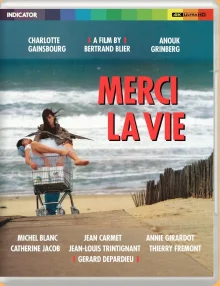
 Merci La Vie – Indicator
Director: Bertrand Blier
Screenplay: Bertrand Blier
Starring: Charlotte Gainsbourg, Anouk Grinberg, Michel Blanc, Jean Carmet, Annie Girardot, Catherine Jacob, Jean-Louis Trintignant, Gérard Depardieu, Thierry Frémont
Country: France
Running Time: 118 Min
Year: 1991
BBFC Certificate: 18
The late French auteur Bertrand Blier, who passed away aged 85 in 2025, directed more than 20 films during an acclaimed – but controversial – career, which also saw him write the screenplays for many of the films he helmed. He is perhaps best remembered for Get Out Your Handkerchiefs (1978), which won the Academy Award for Best Foreign Language Film.
His films were often dark and provocative and went into surreal and absurd territory. One such trip into the absurd, is the surreal road trip satire Merci La Vie (1991), which translates as Thank You, Life features big names Charlotte Gainsbourg and Gerard Depardieu and has just received its UK Blu-ray debut on the Indicator label.
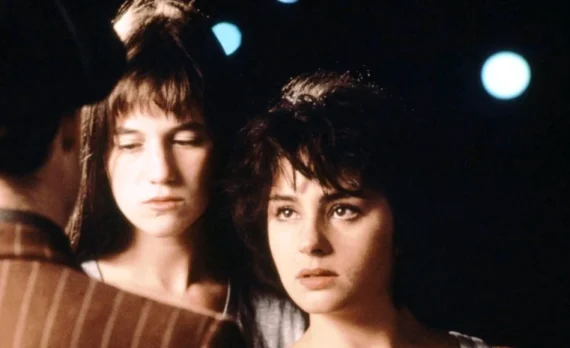
The film follows the naïve Camille (Charlotte Gainsbourg) who meets the older, carefree and promiscuous Joëlle (Anouk Grinberg), after the latter has been thrown out of a car by her abusive boyfriend. The pair go on a dangerous descent as they crash men’s cars, have sex, and encounter the AIDs crisis, with potentially devastating consequences for them, and everyone they meet.
The look of the film is very striking, from the opening sepia sequence which sees Joëlle left by the roadside by her boyfriend, to the way the camera is often moving. The opening beach setting is incredibly memorable too. The film bounces between colour, sepia and black and white throughout through the fabulous cinematography of Philippe Rousselot . The use of colour is marvellous and adds to the surreal nature of the story which almost feels like a waking dream at times.
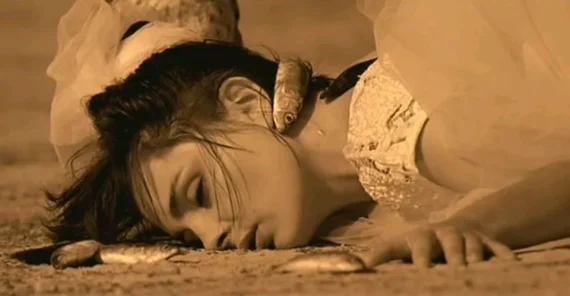
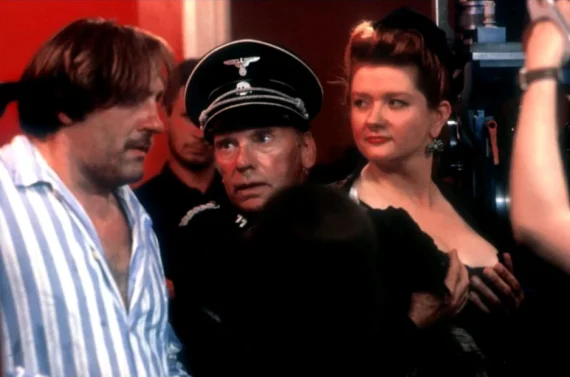
That dreamlike structure is enhanced through some of the shifts in not just tone but place and time through the use of flashbacks to the past lives of the leads. We also end up in the Second World War by way of a film set that one of the men they meet is directing, all of which certainly makes for a film that stays with you. Those shifts in tone, place and time are wild at times – moving from a surreal comedy to a dark thriller or war film in the space of moments.
Images in themselves will also remain etched in my brain, from Camille’s introduction pushing a trolley filled with a variety of items and seagulls to some of the architecture that forms the backdrops to sequences. A shot of Camille and Joëlle walking towards the camera in black and white during heavy rain is incredibly iconic, as is their wandering through empty streets at night. There’s also an almost horror-like sequence as wind sweeps behind the leads.
The performances are excellent. It’s quite a theatrically performed film, which adds to the absurdity of the situation. A fresh-faced Gainsbourg and Grinberg are both fantastic and hold the attention throughout. There are also cameos from the likes of Gérard Depardieu and Jean-Louis Trintignant.

All of the chaos is scored to an eclectic soundtrack that ranges from David Byrne to Dean Martin, and Beethoven to Philip Glass, but also leaves us with plenty of moments where the dialogue does the work with no music to underscore it. Some of these sequences – for example those involving Depardieu and Grinberg together – are incredibly powerful.
The film reminded me of a mix of Ridley Scott’s Thelma and Louise (1991) and Martin Scorsese’s After Hours (1985) via Luis Bunuel or David Lynch. In short, a film following two women on a road trip who we are with every step of the way and who delve into crime, mixed with a dreamlike journey through the night where they meet all sorts of characters, and all shot like a dream– and times a nightmare –that is surreal but also at times left me feeling palpable dread.
We follow Camile and Joëlle as they confront their past, the men who have impacted their lives and as they try to make sense of it all and their place in the world. I didn’t find it completely coherent and some elements I’m sure went over my head, but I was with the protagonists every step of the way and gripped throughout. I’m sure repeat viewings will be rewarding, allowing me to make more sense of it all.
The mistreatment of women comes to the fore in several sequences – particularly in a scene fuelled by the AIDS crisis of the time – and we are with the female leads all the way willing them on to rise above the men who have treated them so badly, particularly Joëlle’s character.
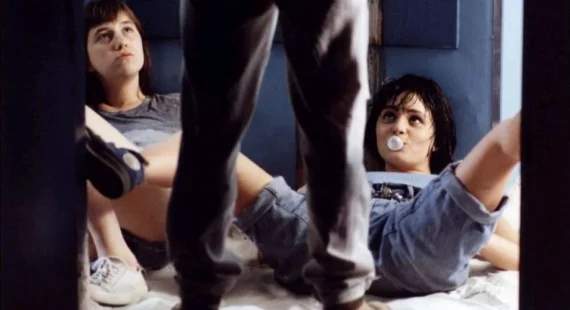
Merci La Vie won’t be for everyone. It’s a challenging piece of cinema, but I was won over by the sheer audacity of it all and the quite wonderful central performances of Charlotte Gainsbourg and Anouk Grinberg, who together are in virtually every minute of the film, bar some segways to follow other characters briefly and are enigmatic and captivating.
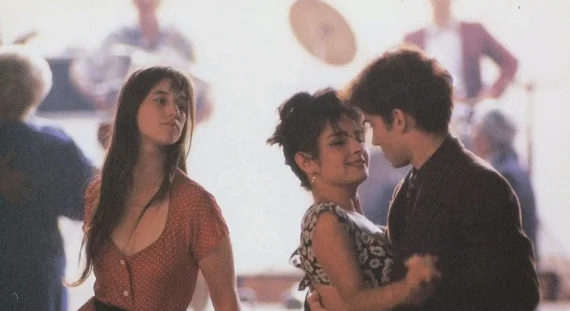
The film shifts wildly in tone and defies logic, instead following a dreamlike structure that is symbolised by the frequent change in colour scheme from sepia to vivid colours to black and white, as well as changes in time and place and even a film within a film. It also has an eclectic soundtrack and is a wild tale full of some great scenes, resulting in my first foray into the cinema of Bertrand Blier being incredibly memorable and leaving me wanting to savour more of the provocative auteur’s filmography.
Film: 

Merci La Vie is released on separate limited edition 4K UHD and Blu-ray editions by Powerhouse Films on their Indicator label on 17 August 2026. The 4K edition is a world premiere, and the Blu-ray is a UK premiere. Both editions are also available in the US on 18 August 2026. I watched the UK 4K UHD disc. The picture and sound are uniformly excellent. The film has been restored from the original negative and looks outstanding throughout, the shifts in colour looking natural and plenty of fine detail. The audio also sounds great. It’s a very strong audio-visual presentation for the film.
Indicator limited edition 4K UHD special features:
- 4K HDR restoration from the original negative
- 4K (2160p) UHD presentation in Dolby Vision (HDR10 compatible)
- Original stereo audio
- Bertrand Blier on ‘Merci la vie’: the writer-director takes an in-depth look back at his award-winning film
- Location report: extract from the French television programme 12-13, featuring footage of a night shoot and an interview with Blier
- Image gallery: promotional and publicity materials
- Script gallery: complete dialogue and continuity script
- New and improved English translation subtitles
- Limited edition exclusive booklet with new writing on the film by Sue Harris, archival interviews with writer-director Bertrand Blier, an overview of contemporary critical responses, and film credits
- World premiere on 4K UHD
- Limited edition of 6,000 copies (4,000 4K UHDs and 2,000 Blu-rays) for the UK and US
The extras kick-off with a 20-minute interview with director Bertrand Blier about the award-winning film. The archival interview from 2004 runs for 25 minutes. Blier covers film festivals he was appearing at during the time he was preparing to film the movie, the genesis for the script and some of the elements from his life that he brought to it. It’ a really good piece and helps to explain the film a bit more, whilst also revealing some of Blier’s artistic process, including how he took elements of French cinema and mixed it with a fascination with American cinema at the time.
Next we have a 1990 extract from the French television programme 12-13, featuring location footage of a night shoot and an interview with Blier. Running for three minutes it’s a brief but welcome inclusion that gives us a chance to see Blier at work and directing some of the scenes.
A two-minute trailer which gives a sense of the film – though two minutes can only give so much of a sense of just what this movie contains and is about – is great.
The on-disc extras conclude with two galleries, one of around 50 images of promotional and publicity materials and the other featuring the complete dialogue and continuity script over around 150 images.
The 40-page booklet is typically well appointed by Indicator. Blier expert Sue Harris provides a fascinating piece giving her reading of the film and plenty of background detail. It’s first class. The booklet also contains interviews with Blier, Gainsbourg and Grinberg from the film’s press kit, and a fabulous selection of contemporary reviews.
So, Indicator have provided a small but rewarding package of extras for Bertrand Blier’s Merci La Vie. The interview with Blier and the typically excellent Indicator booklet are the standout extras and the label has provided a brilliant audio-visual presentation for the surreal, dreamlike film, headlined by a fabulous 4K restoration. Indicator’s recent foray into the darker or more outlandish – and at times lesser known – realms of French cinema, on the back of their authoritative editions of the cinema of Jean Rollin, should be applauded, and I’m excited to see what more films from France they have in store for us in the future.
Disc/package: 