



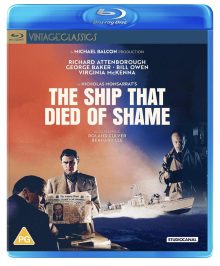
Director: Basil Dearden
Writers: Basil Dearden, John Whiting, Michael Relph (script) Nicholas Monsarrat (novel)
Starring: George Baker, Richard Attenborough, Bill Owen, Ronald Culver, Bernard Lee
Year: 1955
Duration: 95 mins
BBFC Certification: PG
Apart from a few isolated examples, such as Alberto Cavalcanti’s They Made Me a Fugitive, post war British cinema wasn’t all that interested in the lives of returning servicemen. The focus, instead, was very much on the war itself. Stirring efforts, like Gift Horse or Appointment in London were seemingly just as concerned with evoking national pride in Britain’s war effort as they were with telling a thrilling tale, while darker fare, such as Went The Day Well (Cavalcanti again) or The Cruel Sea, offered a more honest, grittier take on war and combat.
The latest addition to StudioCanal’s vintage classic line, 1955’s The Ship That Died of Shame, is a rare example of post war British Cinema following in the footsteps of Cavalcanti’s Fugitive, pulling back the curtain on the lives of demobbed servicemen and not being afraid to look away from what it finds. Directed by Ealing stalwart Basil Dearden and based on a novel by The Cruel Sea author Nicholas Monsarrat, The Ship That Died of Shame is a film that appears, rather unforgivably, to have been mostly lost and forgotten. Released in the same year as The Dam Busters, it trades in that film’s exuberant sense of national triumph for something far darker and more subversive; perhaps that goes some way to explain the film’s relative lack of presence in the annuals of 1950s British cinema. Hopefully, however, this new Blu Ray release will bring the film to the audience it has always deserved. Because make no mistake, The Ship That Died of Shame is one of the most criminally underrated British films of the 1950s.
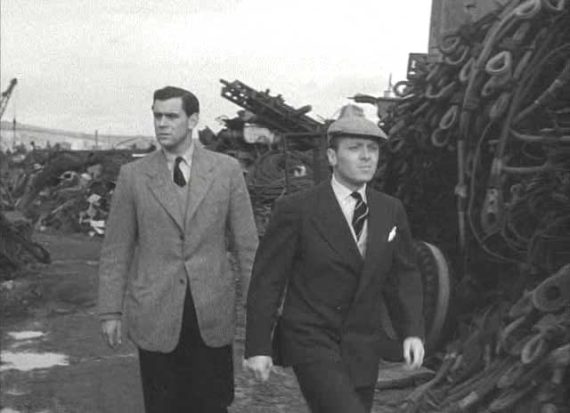
The film opens very much in the vein of a triumphant British war film. We are introduced to the crew of the 1087, an MTB (motor torpedo boat) making successful bombing runs against the Nazis. Led by Bill Randell (George Baker), his crew, including George Hoskins (Richard Attenborough) and Birdie Dick (Bill Owen) excel at both harassing the enemy and defending British shores. Yet this sense of triumph doesn’t last long. The film soon resettles in post war Britain, where Bill Randell is now struggling to make ends meet. Drowning his sorrows one night in an officer’s club, he bumps into George Hoskins, who seems to be enjoying every degree of success.
George convinces Bill to help him smuggle black market goods across the English Channel, using none other than their beloved old ship, the 1087. Yet it isn’t long before the expected wine and cigarettes are replaced by more lucrative and morally dubious cargo. The only question is how long will Bill’s conscience be able to hold out?
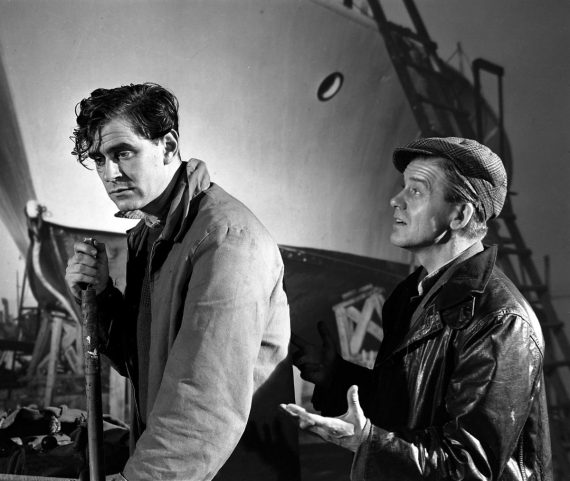
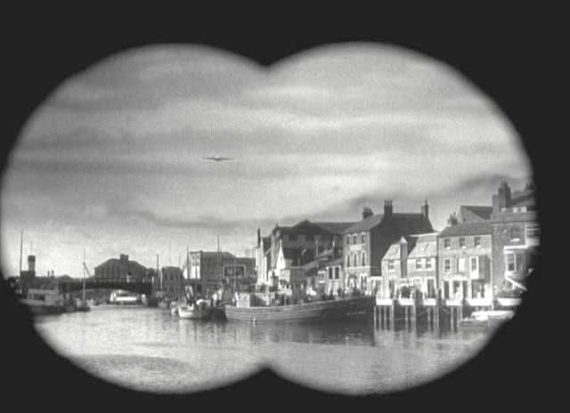
From the opening sea battle to a dark, ambiguous ending, it is clear that one of the keys to the film’s success is Basil Dearden’s crisp, authoritative direction. Always a brilliant and meticulous filmmaker, Dearden excels here, offering up both thrilling action set pieces as well gripping and shocking character moments. The opening sea battle feels genuinely exciting and the action doesn’t end there; several set pieces throughout the film offer other equally riveting moments, from on-board skirmishes to a climax set during a ferocious storm. The film’s special effects help enormously. With so much of the action being set at night, model work feels far less egregious here than in typical films of this age, which all combine to make The Ship That Dies of Shame one of Dearden’s most visceral and exciting directorial efforts.
Dearden equally excels at directing his wonderful cast. Both George Baker, Bill Owen and Bernard Lee offer decent turns as the films more morally conscious characters, yet the limelight is certainly stolen by the film’s villains. Ronald Culver, playing an old army major who has now dipped his toe into murkier waters, brings a refreshing darkness and balance to what easily could have lapsed into stereotype, whereas Richard Attenborough delivers a wonderfully nuanced performance as George Hoskins, balancing smug charm with a ruthless sense of greed. Hoskins might not match the level of psychotic brutality that characterised Attenborough’s star making turn as Pinkie in 1948’s Brighton Rock, yet you certainly feel that both characters are, at times, cut from the same cloth.
In fact, the only thing that lets The Ship That Died of Shame down (apart from its awful title) is the central conceit that underpins the story. As the ship’s crew undertake more morally questionable actions, their ship, the trusty old 1087, literally beings to break down – the more dubious their actions, the more the ship begins to fall apart.
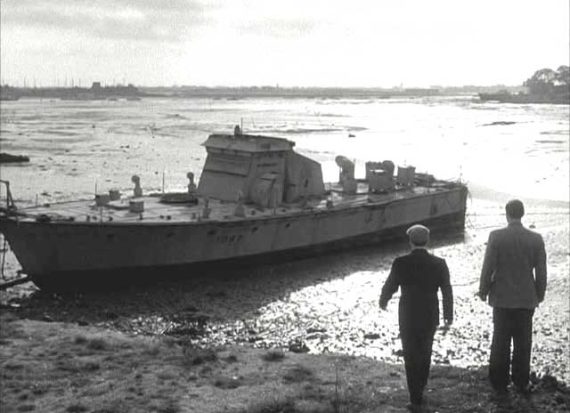
This idea could be viewed as an almost supernatural occurrence, yet it is clear that Dearden, alongside playwright and co-screenwriters John Whiting and Michael Relph, intend this to be a rather heavy handed metaphor. This sort of allegorical undertone is certainly subversive for a film of its time and subject matter, and in that regard The Ship That Died of Shame must certainly be applauded. Yet there is no doubt that the conceit does, at times, blunt the edge of the film’s otherwise coldly realistic, pessimistic tone.
Thankfully, it doesn’t detract so much that the film is in any way ruined; it remains a gripping, brilliantly directed thriller, one that isn’t afraid to bravely pull back the curtain to reveal the darkness lurking within post war Britain. In regards to its subject matter, while it has certainly been overshadowed by Dearden’s own (brilliant it has to be said) League of Gentleman, as well as by other film’s of its era, The Ship That Died of Shame is ripe for rediscovery and re-appreciation. An criminally forgotten gem, this is an absolute must buy for fans of British cinema.
Film:


The Ship That Died of Shame is being released on Blu Ray and DVD on 11th September, via StudioCanal’s Vintage Classics line. As ever, picture quality is very strong. Detail is wonderfully crisp, while black levels looked fantastic – this is especially important, considering how much of the film takes place at night. Luckily, the encode was robust as well. Sound (in original mono) felt punchy and dramatic, with the opening sea battle being a particular standout. Dialogue was also crisp and clear.
Extras are a little light on the ground. The key one is a 23 minute interview with Neil Sinyard. He briefly goes over how the film fits into Ealing Studio’s history, before offering background information on the film’s production history and an analysis of the finished article. A great watch.
The only other extra is a stills gallery.
Disc/Extras
