


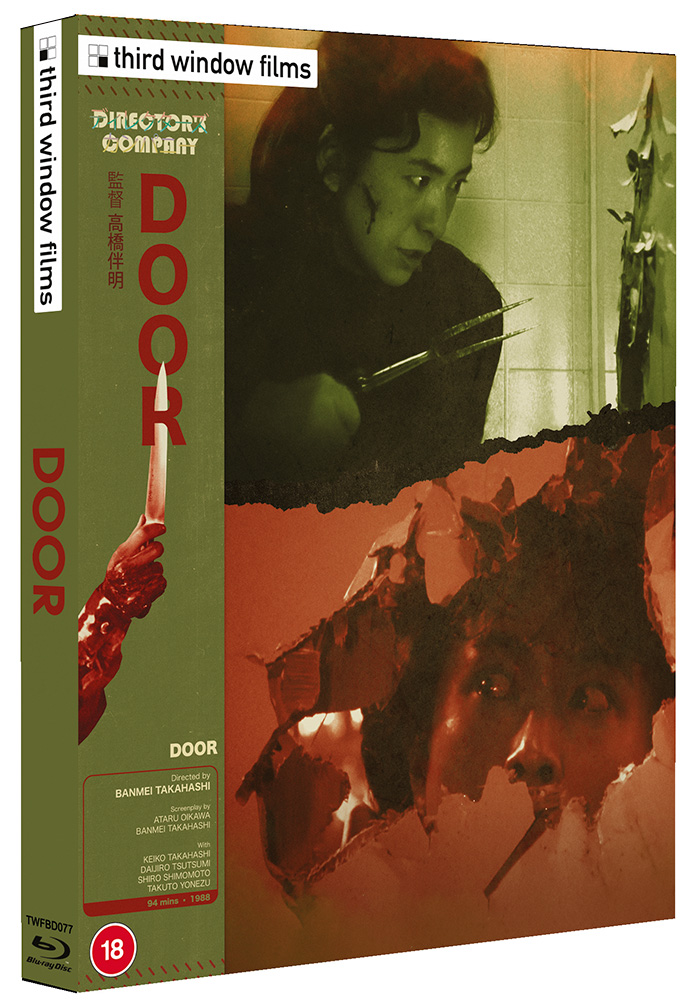
 The Director’s Company (or ‘Dire-kan’ for short) was an independent Japanese production company born in the mind of director Kazuhiko Hasegawa. He had begun his filmmaking career at Nikkatsu making ‘Roman Porno’ films (low-budget softcore pornographic films) but was growing tired of the stifling environment of the rigid Japanese studio system.
So, he began the Director’s Company to allow fellow filmmakers to take more of an auteur approach to making genre pictures. He let his in-house team of directors find projects that suited them and make them in whichever they wanted, just so long as it would fit the commercial landscape in some way.
The company’s president, Susumu Miyasaka (Hasegawa was vice-president), was from an advertising background. His know-how helped keep the team busy in between film projects by bringing in corporate PR jobs and adverts.
Sadly, the Director’s Company only lasted around a decade, with its doors opening in June 1982 and closing in May 1992. Whilst much of the studio’s output was well-regarded, it wasn’t particularly successful and the spiralling budget of Kazuyuki Izutsu’s Travels in the Orient (a.k.a. Toho kenbun roku) pushed the Director’s Company over the edge, into bankruptcy.
Due to its disastrous end, many of the films have since been difficult to get hold of, particularly in the West. However, in 2021, Takashi Ikoma, an ex-producer of the Directors Company, got his hands on many of the negatives from the studio’s back catalogue, got them cleaned up and cleared the rights to make them available.
Third Window have got their hands on a bunch of the titles and are releasing them under a new ‘Director’s Company Collection’ sub-brand. The first batch includes The Guard From Underground, Door and Typhoon Club. Leon is going to cover the first of these but I got hold of Door to review. It’s packaged with its sequel Door 2, so my brief thoughts on both films follow.
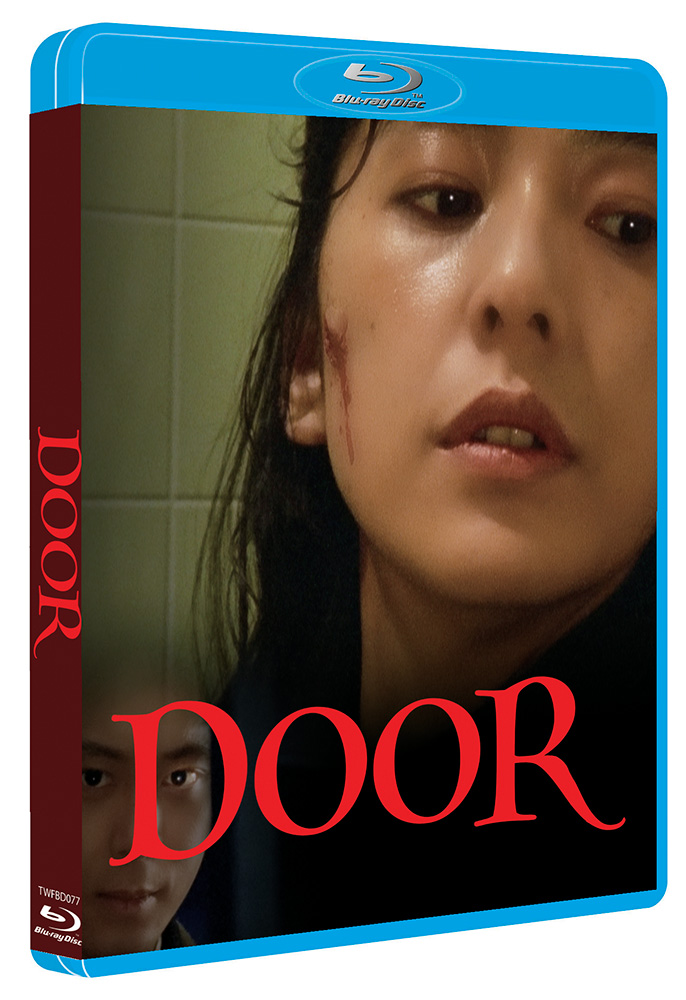
Door
Director: Banmei Takahashi
Screenplay: Ataru Oikawa, Banmei Takahashi
Starring: Keiko Takahashi, Daijiro Tsutsumi, Shirô Shimomoto, Chikako Aoyama
Country: Japan
Running Time: 94 min
Year: 1988
Door has quite a simple setup. Yasuko lives a respectable life in a classy apartment with her husband Satoru (Takuto Yonezu) and son Takuto (Takuto Yonezu). However, after shunning an annoying salesman (Takuto Yonezu) and slamming the door on his fingers, Yasuko starts to receive obscene notes and ‘gifts’, as well as threatening phone calls and visits.
Left alone in the apartment whilst her husband is away on business, Yasuko desperately attempts to protect herself and Takuto when Satoru takes his harassment to a new level.
I’m a sucker for stripped-back genre movies that keep things lean and mean, so I was in high heaven with Door. The way a simple premise is milked for maximum tension and thrills reminded me very much of the work of Alfred Hitchcock, rather than any Japanese masters.
Like Hitch, director Banmei Takahashi uses a variety of cinematic tricks and techniques to tell his story and supply the genre-movie goods. Whilst there’s an astonishingly long and complex overhead shot that is the big talking point of the film, it’s the clever use of lingering shots of the door and occasionally off-beat use of sound effects that ratchet up the tension. That overhead shot is damned impressive though and certainly aids the intensity of the finale.
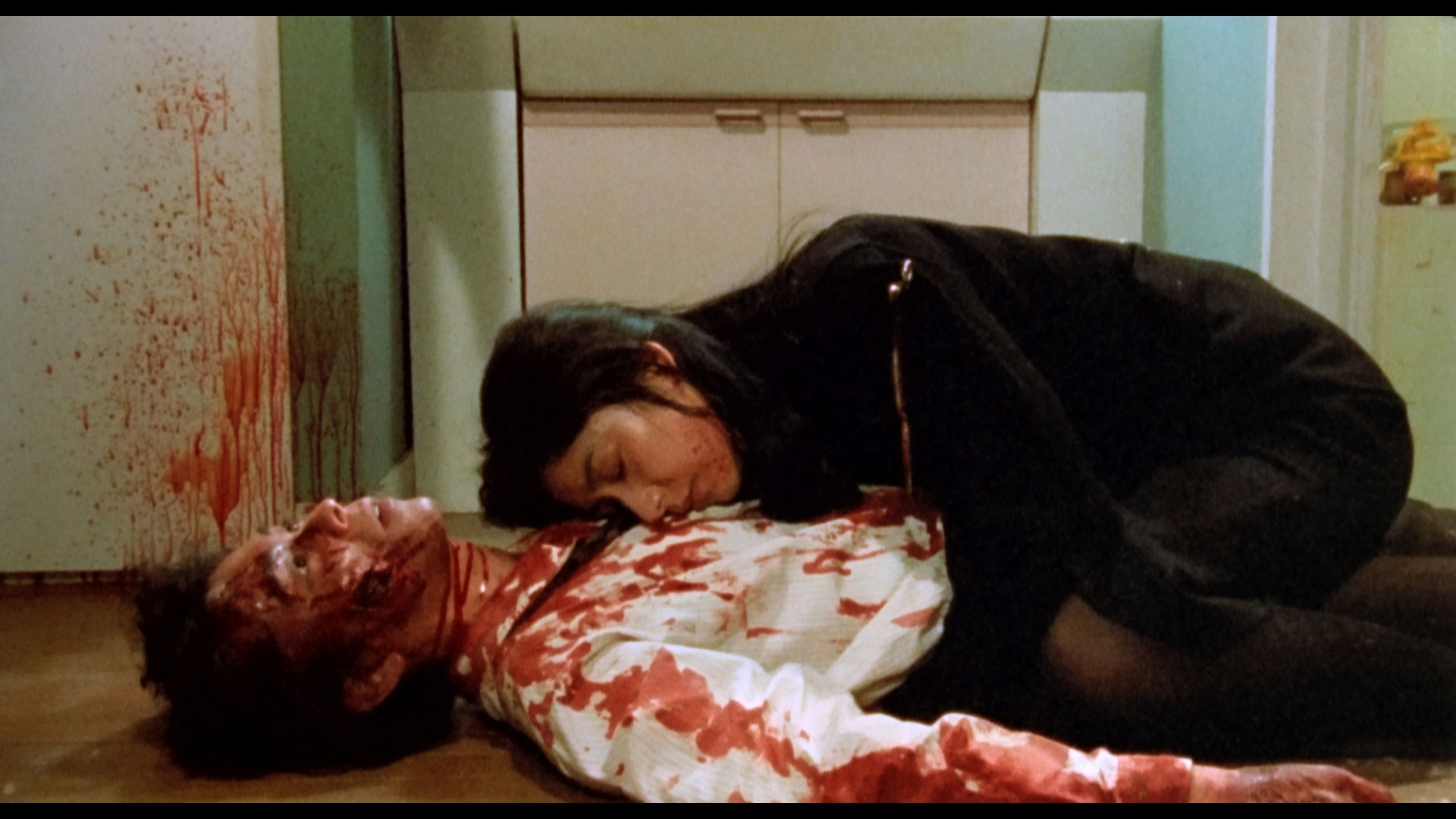
Speaking of which, whilst the majority of the film plays in Hitchcock’s wheelhouse of cranking up tension through worrying about what is to come and by keeping the audience a step ahead of the protagonist, the final act moves up a gear. Without wanting to spoil anything, once Yasuko begins to properly fight back, things get gruesome pretty quickly, leading to a climax that made my jaw hit the floor.
Banmei Takahashi was better known for directing ‘pink’ films at the time. He saw this project as a challenge, to take on something different and play with techniques of thrillers and horror movies. It’s a shame he didn’t make many more films like this because he proved he was a deft hand with such material.
The film isn’t without its faults though. A couple of sequences seem strangely drawn out (the door kicking, for instance, goes on for ages, giving Yasuko plenty of time to call the police or try something to stop it). Some moments get a little silly too (Yasuko telling Takuto to ‘man up’ at the end and their feeble attempts to fend off the chainsaw, for instance).
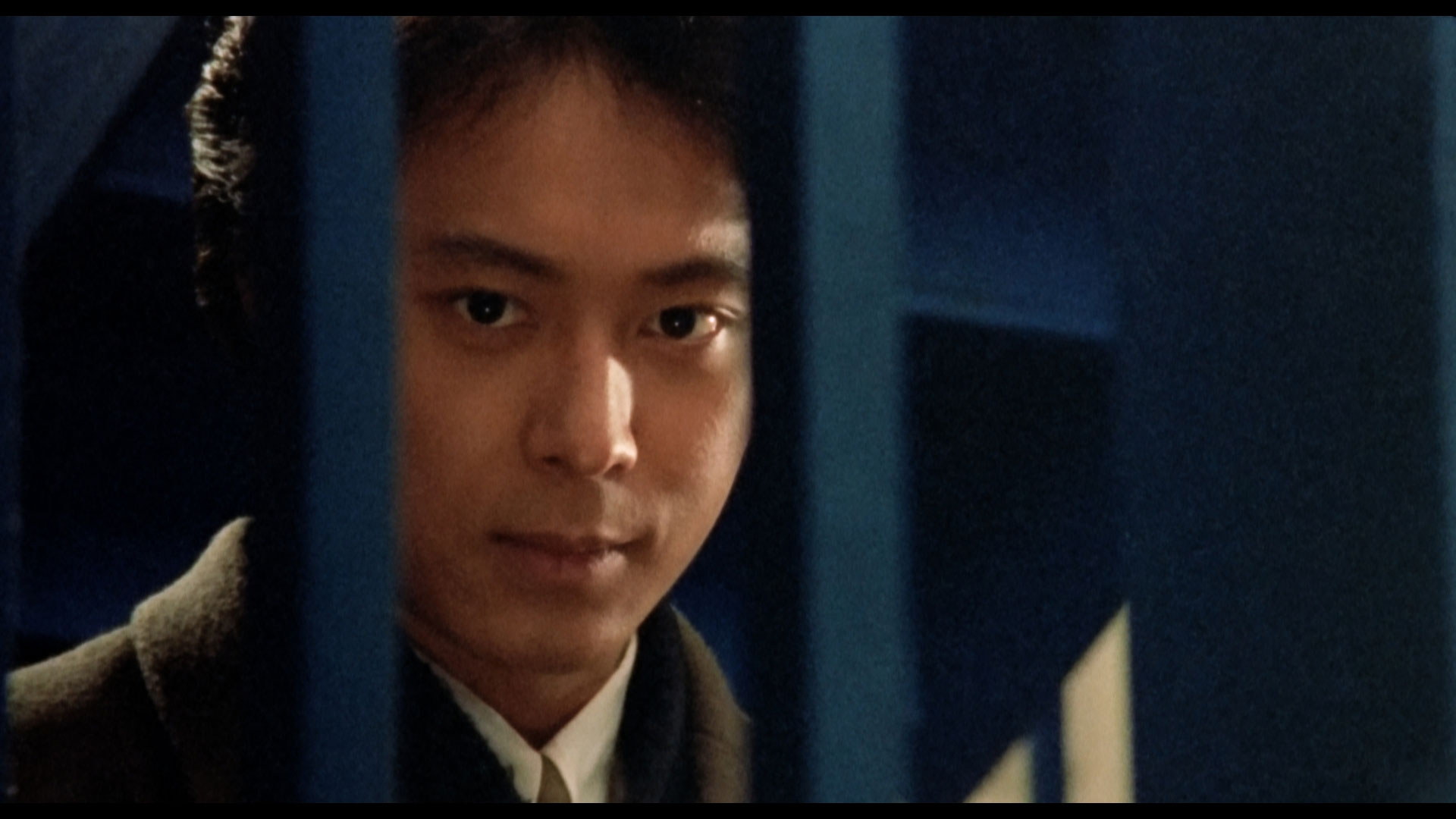
Overall, however, Door is an intensely gripping, streamlined thriller with an attention-grabbing finale. With some subtle social commentary on Japan’s ‘bubble economy’ of the time, there’s also a little more to the simple film than meets the eye. As such, it’s a wonderful little gem and bravo to Third Window for giving it a new lease of life.
Film: 

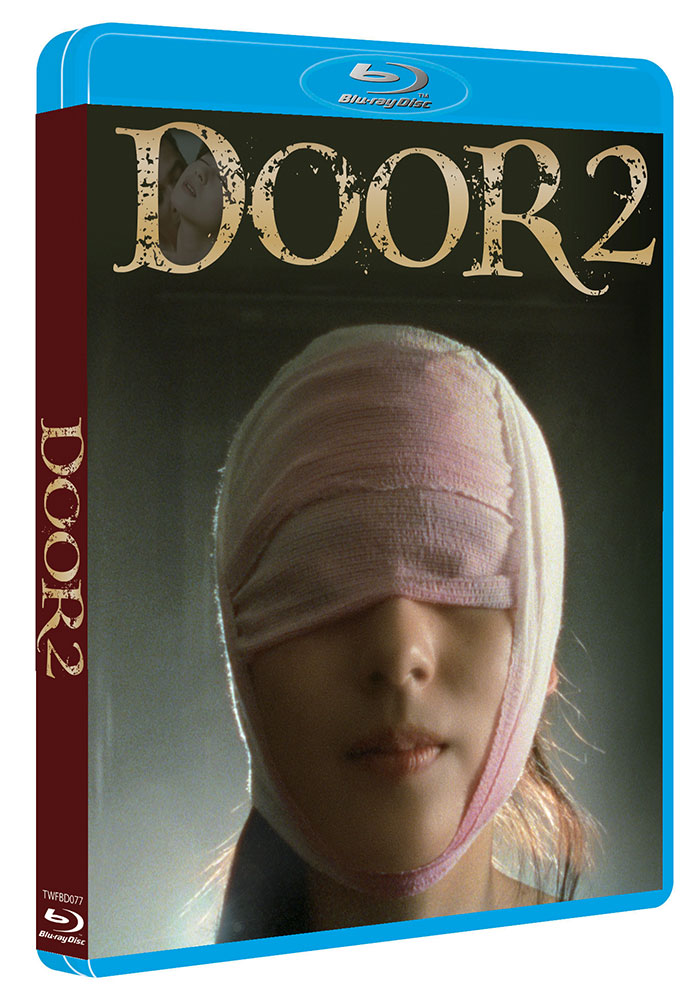
Door 2: Tokyo Diary
Director: Banmei Takahashi
Screenplay: Toshiyuki Mizutani
Starring: Chikako Aoyama, Joe Yamanaka, Shingo Kazami, Chiharu Iwamoto, Tatsuo Yamada
Country: Japan
Running Time: 82 min
Year: 1991
Door 2: Tokyo Diary was originally being produced as its own entity under a different title but, after Door proved to be a moderate success on home video, the producers got Banmei Takahashi to change the title of this later film.
Door 2 focuses on Ai (Chikako Aoyama), a high-class call girl who has ‘gone solo’, much to the annoyance of the local madame (Keiko Takahashi).
Through the film, Ai meets with various men who call her for ‘a good time’. These seemingly average guys all show their true colours when they enter ‘the door’ of whatever hotel room they use. Their sexual turn-ons vary wildly, from a need for basic companionship, whatever the cost, to violent S&M rituals, and Ai is usually happy to indulge them.
One day, however, she meets Mamiya (Joe Yamanaka), an elusive character who has his own strange desires but fascinates Ai much more than her usual clients. This, on top of a horrific experience with a disturbed john, makes her question her career choice.

I must admit, this wasn’t my cup of tea. I’m no prude and have no problem with sex on-screen but I don’t tend to find sex-heavy films very engaging. Whilst I’ve seen more explicit films than Door 2, a good portion of its run-time is made up of Ai’s sexual adventures, rather than any other dramatic subplots. As such, I found it a little meandering, despite the short run time.
Its themes are quite interesting though, even if they’re not explored in great depth. The film looks at the hypocrisy of modern Japanese society as well as the idea of roleplay or masks painting a truer picture of someone’s identity than their public image.
Door 2 is nicely shot too, with good use made of reflections in particular. It’s certainly more on the classy side of the softcore porn movie scale, in this respect. So fans of the genre will likely get more out of it than I did.

So, whilst I found the film strangely compelling to an extent and it’s nicely crafted from an aesthetic perspective, I didn’t get much out of the film overall, other than a few suitably sexy sequences. It just kind of meanders on in a largely episodic fashion with minimal plotting or character development. It has its moments though, so it’s a welcome addition to the set.
Film: 
Door is out on 30th October on region free Blu-ray, released by Third Window Films as part of their new Director’s Company Collection. The transfers on the films are decent, though the first film is a touch soft perhaps. This is likely due to the stock it was shot on though. Nonetheless, colours are pleasing and, despite it being a much smaller filesize, Door 2 looks a little better than its predecessor. I had no issues with the audio on either of the films.
There are several special features included on the disc:
– Bonus feature: Door 2: Tokyo Diary
– New digital remasters on both films, from their original negatives
– DOOR 1 audio commentary by Jasper Sharp
– Interview with director Banmei Takahashi
– Trailers for both features
– Slipcase with artwork from Gokaiju
– Reversible sleeve featuring both DOOR 1 and 2 artworks
– ‘Directors Company’ edition featuring insert by Jasper Sharp – limited to 2000 copies
– Region Free

In his commentary, Jasper Sharp talks about the history of the Director’s Company, as well as the changing shape of Japanese cinema in the 80s and the careers of the key players in Door. As always coming from Sharp, it’s an incredibly well-researched track that will get you itching for more releases of the relatively obscure titles discussed.
Banmei Takahashi provides an interview too. He’s wonderfully honest about the well-meaning but chaotic work of the Director’s Company. He also discusses how Door fits in his oeuvre, as well as explaining how its incredible overhead long take was filmed.
The insert provides a clear and concise history of the Director’s Company, which is handy. It proved vital in writing my introduction to this review.
So, whilst I wasn’t a huge fan of Door 2, the first film is great and its sequel still makes for an excellent ‘special feature’. The other two extras are valuable additions too. As such, this gets an easy recommendation and I’m looking forward to checking out more titles from the Director’s Company Collection.
Disc/Package: