


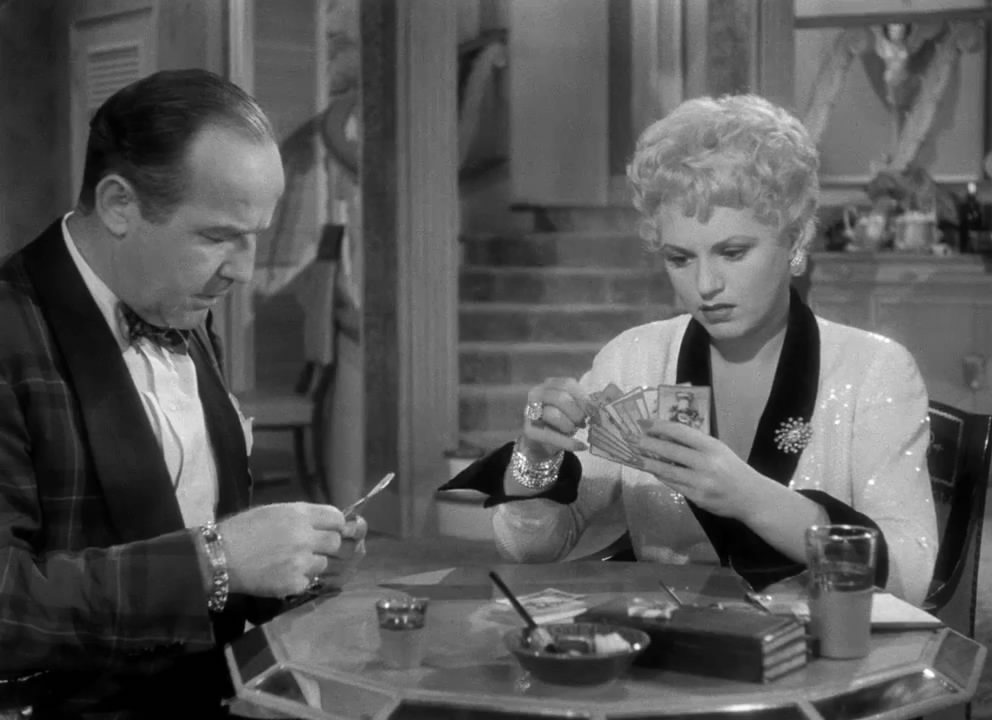
Working my way through the filmographies of the Golden Age Hollywood directors, I was excited to get to George Cukor because, as well as the many classics that I’d already seen, there were so many lesser-known works to get into. In this second part we’ve reached the best of Cukor’s 48 films, which includes both established classics and hidden gems.
WHAT’S HERE AND WHAT’S NOT: Cukor was a director who often got brought in to replace directors when they had to be removed from films for one reason or another. Cukor himself was also removed from several films, most famously Gone with the Wind. The result of this is that his filmography is littered with films for which he directed varying-sized chunks but not the whole thing. I have decided to only include those films for which Cukor received onscreen credit as director, which means films like One Hour with You (for which he was credited as “Dialogue Director”) and Song Without End have been omitted. Having watched Cukor’s two late-era TV movies Love Among the Ruins and The Corn is Green, I’ve decided they don’t quite belong here amongst his theatrical works so they have also not been included.
ALL ENTRIES CONTAIN SPOILERS
20. GIRLS ABOUT TOWN
While he’d shown glimmers of promise in his earlier films, Girls About Town feels like the moment that George Cukor really finds his feet as a confident director. It helps, of course, that he has much better material to work with, which brings out that sense of warm off-camera amusement which radiates through Cukor’s best comedies. But Cukor seems energised by the saucy Pre-Code energy of this tale of two young women who survive the struggles of the depression by partying with lascivious businessman in order to help their employer close his business deals. While the premise may sound sleazy, Cukor and his leading ladies ensure that the female protagonists always feel in control of the situation. Early on, it is established that they work a grift in which their maid (the wonderful Louise Beavers, of whom I wish we saw more here) poses as their mother waiting up at the window, in order to deter the over-amorous suitors who attempt to follow them in. Cukor also establishes that, despite the less than desirable company, the ladies have a blast partying every night and sleeping through the days. He does this through some raucous opening montages that immediately identify Girls About Town as a turning point following the sometimes static and stagey early Cukors.
Girls About Town is one of a clutch of “gold diggers” films of the early 30s which follow groups of young women targeting rich men to rescue them from lives of poverty. Although the potential for sexism and sleaze seems high, these films were usually jolly capers that took the very real deprivations of the era and treated them with a lightly satirical smile, providing ideal escapism for those with no other path out of destitution beyond momentary distraction. Girls About Town reunites Cukor with star Kay Francis and it’s always a delight to see her displaying her underrated comedy chops, something she did definitively in the following year’s Ernst Lubitsch classic Trouble in Paradise. Despite being paired here with a blandly moody Joel McCrea, Francis is luminous but she is emphatically upstaged, as is everyone else in the picture, by a stunning comedic turn from Lilyan Tashman as her partner-in-partying. Tashman gets a better scene-partner for her comedic subplot in the imposing shape of Eugene Pallette as a wealthy, juvenile prankster, but the best parts of Girls About Town are when Francis and Tashman are bouncing off each other, divvying up their marks or cosying up in bed together. It is a bit of a shame when the plot comes along as the film is strongest at its loosest.
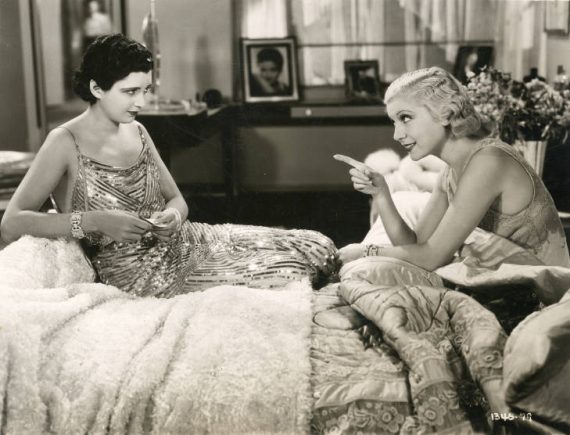
Girls About Town has the makings of a classic comedy but unfortunately the wheels come off the wagon a bit in the third act. Francis ends up tangled up in a serious plotline about her ex-husband which seems designed mainly to prolong the runtime on her dull romance with McCrea, while Tashman becomes embroiled in a plot to reconcile Pallette with his estranged wife, which is honestly less fun than just watching her humiliate him for the fun of it. The warmth at the core of Girls About Town is key but there’s also a sense that it needs to lean into its amoral side a little more in order to maintain the momentum and appeal of the first two thirds. Still, even as it becomes comparatively neutered in the final act, Girls About Town is still a lot of fun and evidence of Cukor’s speedy growth as an artist.
19. HER CARDBOARD LOVER
One of the things I love about going through a director’s whole filmography is the moment you get to the critically reviled films and discover you actually like them. When it comes to George Cukor, in contrast with my comparative distaste for the mean-spirited The Philadelphia Story, I’ve had a positive response to the commercial disaster that was Sylvia Scarlett and the practically forgotten Zaza. Her Cardboard Lover, then, is another oft-derided minor work with which I had a great time. Coming off the back of the similarly unpopular Greta Garbo vehicle Two-Faced Woman (for which, sadly, I had few kind words), Her Cardboard Lover laid claim to the dubious achievement of being the second Cukor film in a row to act as a major catalyst for the retirement of its star. But while Garbo’s retreat from screen stardom was also tangled up with the attack on Pearl Harbour and its effect on crucial European markets, the bowing-out of Norma Shearer seems to have been almost entirely down to the failure of Her Cardboard Lover. While Cukor can’t be entirely held responsible (Shearer herself chose the material, apparently rejecting the lead roles in Mrs. Miniver and Now, Voyager in the process), these back-to-back career-tankers do feel like rather a blot on his record in the four years between his major hits The Philadelphia Story and Gaslight. But that’s only if we’re speaking from a historical and business point of view. For those with a taste for the goofier variety of screwball, actually watching Her Cardboard Lover may prove to be more fun than expected.
Her Cardboard Lover was based on Jacques Deval’s French stage farce Dans sa candeur naïve, which had been adapted into a couple of previous films including The Passionate Plumber, one of Buster Keaton’s ill-fated attempts to transition to sound films. The premise has become somewhat of a comedy staple, that of a character employing another to restrain them from indulging in their most destructive addiction, only to change their mind and find themselves constantly outwitted by their self-imposed captor. Although there are nice supporting roles for Frank McHugh, Elizabeth Patterson and Chill Wills, Her Cardboard Lover is essentially a two-hander between Shearer and Robert Taylor. George Sanders is third-billed but his role is basically a plot point. He is the philandering cad who drives Shearer’s Consuelo to distraction with yearning, to the point where she hires Taylor’s Terry to keep them apart. The bulk of the action takes place in Consuelo’s room, betraying the story’s stage origins to some extent, but Cukor and his cast keep the energy levels high to compensate.

Although there’s a good deal of silliness and the film arguably collapses in on itself by the end, the battle between the equally determined leads is constantly enjoyable. Given screwball’s embattled view of romance, there is the odd moment that doesn’t sit well, notably a running joke about beating women which in its final iteration feels uncomfortably like an attempt to validate domestic violence. The fact that Terry is clearly an obsessive stalker is also a plot point you just have to swallow from the outset. But the few problematic elements are largely swept aside by the brisk comedic energy. Shearer is terrific and it’s a shame she retired after this, and that this performance is often categorised as a disappointing full stop rather than a comedic triumph. Taylor is also great, bringing a cartoonish vitality to his strange protagonist. While most of the best material comes from these two characters, there is also an unexpected and wildly entertaining fight sequence between Taylor and Sanders towards the end that serves as a tremendous finale, if only the film didn’t take a few less-compelling scenes to meander to its climax.
Her Cardboard Lover is a minor entry in the Cukor canon but it’s a hell of a fun one. Cukor’s unique touch isn’t necessarily on display here and this feels more like an obscure screwball comedy by an unknown, though not untalented, journeyman. Perhaps because of the twin critical failings of Two-Faced Woman and Her Cardboard Lover, Cukor would pivot away from comedy for the majority of the rest of the decade, until the success of Adam’s Rib at the very end of 1949.
18. WHAT PRICE HOLLYWOOD?
Fans of George Cukor’s later work, or even of Hollywood films in general, will probably notice something familiar about the plot of What Price Hollywood? It was, after all, the basis for one of the most remade stories of the golden age, A Star is Born. It’s fair to say that A Star is Born is more finely honed as a story than What Price Hollywood?, but What Price Hollywood?, especially in its opening act, is perhaps more fun for its loose-limbed gaiety. An examination of the darker side of Hollywood fame which manages to be neither an over-preachy exposé nor a woe-is-them ode to the trials of stardom, at its best What Price Hollywood? is up there with some of the top tier films of the early sound era. Unfortunately, its low-points, while not enough to prevent its overall success, are sufficiently detrimental to prevent it reaching the true greatness to which it aspires and with which it frequently and tantalisingly flirts.
What Price Hollywood?’s major trump card is a truly wonderful central performance by Constance Bennett as Mary Evans, an ambitious waitress who turns the arrival in her establishment of famous director Max Carey to her advantage. In accordance with that story you’ve probably seen performed by Gaynor, Garland, Streisand or Gaga, Mary’s rise to stardom coincides with Max’s booze-soaked fall from grace. What doesn’t happen in this case though is a romantic union between the two leads. What Price Hollywood? keeps their relationship platonic. This decision is both to its credit and its detriment, for while there’s something far more satisfying in the playful dynamic that develops in lieu of romance, it also opens up the door to third wheel Neil Hamilton, whose boorish polo player Lonny Borden bulldozes his way into the picture with charmless insistence. While Mary’s relationship with Lonny plays a big part in Max’s downfall as he watches his ingenue choose a younger model, it also steals focus to a problematic degree, elbowing Max off screen for such extended periods that the climactic tragedy of his suicide is robbed of impact. Cukor does a great job of staging this pivotal sequence, complete with visual representations of Max’s hallucinatory mindset, but what should be the story’s defining event is dealt with in a strangely casual manner, with the film ending on a poor and unrepresentative sequence of Mary and Lonny’s reconciliation, an event for which no audience member in their right mind is hoping.
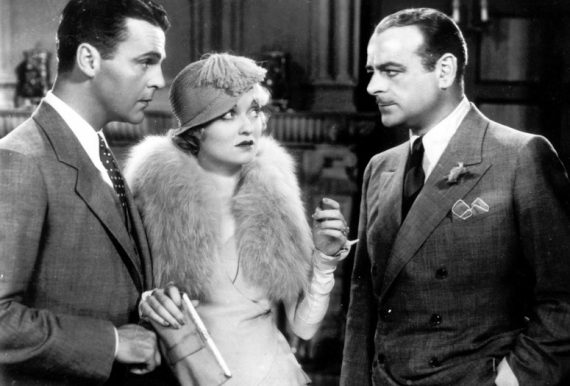
Because of the ultimate trajectory of the story, What Price Hollywood? is generally billed as a melodrama but it has enough witty dialogue and lighthearted charm to be considered equally as a comedy. Cukor thrives on this sort of material and he is really finding his niche here, drawing effervescent performances from his leads, particularly the sparkling Bennett. Lowell Sherman is the exact right combination of dashing and disheveled and his chemistry with Bennett in the early scenes makes the arrival of the bland Hamilton even more regrettable. The film’s most problematic passage is a caveman-like seduction in which Lonny, having been stood up, kidnaps Mary from her bed and force feeds her a meal until she submits to the date. I was in two minds about exactly what tone these scenes were going for but given the climactic reconciliation that passes for a happy ending, Lonny’s brutish attitude appears to be framed as an oasis of reason in a sea of Hollywood piffle. Still, for 1932 his acceptance of responsibility and plea for forgiveness is gratifyingly progressive and may indicate that those writing off What Price Hollywood? as misogynistic may be underselling its comparative emotional complexity. Whatever conclusion you draw, one thing is certain: the fact we’re talking this much about this weakly written supporting character is indication that the film loses its way significantly on his arrival. By the time of Max’s tragic fate, he feels like a supporting player in his own story.
As well as his two leads and a lively screenplay that was nominated for the Best Story Oscar, the other major asset to What Price Hollywood? is Cukor himself. In the opening scene he establishes Mary as a fan of Hollywood gossip magazines and it is through the eyes of a ravenous consumer of such salacious publications that the audience views the subsequent story. There are regular interjections from newspaper headlines detailing the paparazzi’s disproportionately gleeful take on the crumbling of romances and the destruction of careers. Cukor seems to project his own love of Hollywood glamour onto proceedings in a manner that acknowledges complicity rather than emphasising a pious and hypocritical sense of disapproval. This gives the film a unifying thematic continuity that makes it feel like the pages of a Tinseltown tabloid come to life. It’s an impressive directorial showing, a clear sign that Cukor was quickly moving on from the stagey testing grounds of his earliest films. While What Price Hollywood? isn’t quite his first masterpiece, it remains an excellent comedic melodrama that provides a fascinating snapshot of contemporary 30s celebrity culture.
17. SYLVIA SCARLETT
Sylvia Scarlett is mostly remembered now for being a colossal flop that lumbered Katharine Hepburn with the infamous “box office poison” label that she had to work for years to shake off. Based on a novel by Compton Mackenzie, who would later co-write Ealing comedy Whisky Galore! and the novel on which it was based, Sylvia Scarlett is an odd duck indeed. George Cukor admitted his intentions to make something decidedly outré, which is why he hired John Collier, a man who at the time was most famous for his novel about a man marrying a monkey, as one of the screenwriters. Hepburn was a co-conspirator in Cukor’s plans to make something quirky and shocking but once they had achieved their goal and witnessed the test audience’s disastrous reaction, they begged producer Pandro Berman not to release the film. Although Cukor didn’t suffer as badly as Hepburn from the fallout of this box office catastrophe, he did blot his copybook with RKO, to whom he had briefly returned in order to get the film made. Sylvia Scarlett was to be his last film for the studio.
Sylvia Scarlett’s reputation tends to precede it and that may play a part in making the film more palatable to audiences who have adjusted their expectations accordingly. Of course, its themes of gender identity and sexuality probably put off audiences of a more conservative era in a way that is less the case today, but even taking into account the general ideological liberalisation of intervening years, Sylvia Scarlett is still an extremely weird piece of work. Several elements contribute to this, including an overly theatrical and tonally uneven central performance by Hepburn and a meandering narrative that seems to lack key motivational information. This is particularly clear in a scene in which, while in the midst of robbing a mansion, the four main characters suddenly perform an impromptu version of I Do Like to Be Beside the Seaside and then decide to form a travelling entertainment troupe called The Pink Pierrots. Although this is perhaps the most jarring narrative shift, the film retains this wild energy throughout. An equally sudden descent into madness ending in suicide occurs late in the film with the abrupt impulsivity, but none of the motivational necessity, of a deus ex machina.

Such glaring flaws ought to absolutely sink Sylvia Scarlett but instead Cukor makes it a showcase for his impeccable directorial instincts. He seems to cast a spell over this material that somehow makes ingredients that should curdle instead coalesce into an improbably appealing dish. While there are those who claim to enjoy it as a so-bad-it’s-good film, to me Sylvia Scarlett feels more like a film that is good despite itself. The enchanting fairy-tale-like atmosphere evoked by Cukor, cinematographer Joseph H. August and art director Van Nest Polglase helps make sense of everything else, from Hepburn‘s ostentatious performance to the sharp changes in tone and the sudden bursts of music. There are also elements here that appeal in a more traditional Hollywood way, in particular a breakout performance by Cary Grant who overcomes a wavering cockney accent through sheer star power, making a likeable presence out of a pretty reprehensible character. A lengthy scene in the middle of the film in which Hepburn’s Sylvia reveals herself to Brian Aherne’s artist Michael is written and performed with a greater level of focus. But for the ahead-of-its-time gender themes, this sequence feels like an oasis of comparative normality amidst a disorienting desert of weirdness. But while these stabilising aspects help Sylvia Scarlett stay on the rails, there was a part of me willing it to derail again just to see where Cukor might take it next.
To be a true classic, Sylvia Scarlett perhaps needed a little more restraint in its writing and lead performance but to introduce a higher level of balance would be to neuter a film that clearly gets off, and gets its cult of adoring apologists off, on its own wanton strangeness. Where it fails on coherent storytelling, it succeeds on the deliberate rejection of the same in favour of an ahead of its time dedication to the examination and celebration of queerness. It may have failed at the box office but in retrospect Sylvia Scarlett succeeded in fulfilling Cukor and Hepburn’s ambitiously progressive artistic intentions.
16. DINNER AT EIGHT
George Cukor’s work with producer David O. Selznick at RKO put him firmly on the map as an acclaimed and respected director so when Selznick made the move to MGM, Cukor followed. His first project for the studio is a noticeably higher budget and higher profile affair. As with many of Cukor’s films, Dinner at Eight was based on a play but with films like Our Betters, Cukor had already shown a marked improvement in making something cinematic out of potentially stagey material. That is not to say the films were always great but Cukor was able to imbue the sometimes weak scripts with a sense of space and vitality. It made sense then that a stronger play would result in Cukor’s finest film thus far and such was the case with Dinner at Eight.
The story of the intertwining lives of a group of New Yorkers as they prepare to attend the dinner party of a status-obsessed wannabe-socialite, Dinner at Eight is bursting with talent in front of and behind the camera. MGM’s star-studded melodrama Grand Hotel had just won the Best Picture Oscar and Dinner at Eight seems like an attempt to pull off the same trick again, an ensemble piece in which various episodic strands are gradually pulled together for the climactic gathering of all the players. Among these players are three cast members of Grand Hotel, John and Lionel Barrymore and Wallace Beery, as well as recent Oscar winner Marie Dressler, leading sex symbol Jean Harlow and fast-talking comedy icon Lee Tracy. The screenplay was written by previous Cukor collaborator Herman J. Mankiewicz and another recent Oscar winner, Frances Marion, whose scripts for both The Big House and The Champ had taken awards for writing and story. Beery and Lionel Barrymore had also lifted the golden statuette in the past couple of years, making Dinner at Eight’s ensemble about as buzzworthy as it was possible to be at that moment. The fact that the film didn’t garner any Oscar nominations itself was likely due to its similarities with Grand Hotel or the fact that its plethora of roles actually results in a smaller amount of screentime than these actors would have been afforded in dedicated star vehicles, an issue that doubtless led to Grand Hotel’s lack of acting nominations also.

While fears of Déjà vu may have kept awards nominations at bay, Dinner at Eight was still a critical and commercial success. It is a hard film to categorise and, despite appearing in AFI’s 100 Years…100 Laughs list in 2000, its humorous moments are outweighed by a looming fatalism and tragic melodramatic plot twists that reflect such contemporary issues as the depression and what for many actors was the career-ending switch from silent to sound films. Affairs, alcoholism, suicide, financial ruin, corruption, the ravages of age and devastating medical diagnoses are all part of the intricately woven plot and Cukor does a tremendous job of juggling these strands while injecting a steady flow of much needed humour into proceedings. Amongst the talented cast, it is those who lean most heavily on the comedic that shine the most. For all the Barrymore’s overwrought thesping (a factor that thankfully feels fitting in the context of Dinner at Eight’s proto-soap style) and Beery’s boorish villainy, the show is emphatically stolen by Dressler’s mix of humanism and withering witticisms, Billie Burke’s shrill snobbery and Harlow’s splendidly caricatured streetwise sexuality. While they are often working in slightly different registers, the cast are versatile enough to react accordingly to their shifting scene partners, with Dressler beautifully rising to one of the film’s most profound ruminations and Beery elegantly pivoting into oafish comedy after becoming trapped in Harlow’s shrewd manipulations. Cukor’s previous film, the satire of the upper classes Our Betters, had suffered from two many characters, none of whom were differentiated enough to make an individual impact. In Dinner at Eight, Cukor has a similarly large number of characters to introduce but he is able to do so with perfect clarity. The recognisability of the major stars playing them helps, as does the screenplay which deftly weaves so many people in and out of each other’s lives, but Cukor is able to enhance the storytelling with a simple, subtle move of the camera which informs the audience that a particular person, object or event is crucial to the narrative and that they should pay particular attention.
Dinner at Eight is an especially talkie film, with its numerous changes of venue invariably revealing a new combination of characters with a lot to say to each other. Cukor is keenly attuned to the fact that there is plenty of action in the act of communication however, and what initially seems like a film made of worryingly static conversations builds incrementally into a slickly oiled machine with numerous moving parts. By the time the film has danced its way through death, despair and deceit, it is inspirational to witness Cukor execute a final pivot into the closing comedic exchange between Harlow and Dressler, which ends Dinner at Eight on a note of such lighthearted wit that it’s easy to see how audiences might leave under the impression that what they’ve seen is primarily a comedy.
15. THE MARRYING KIND
With its playful nudge of a title, its sprightly opening credits and its poster art that falls in line with the merry trivialisation of domestic violence consistently seen in lighthearted 1950s depictions of marital discord, from the outset everything seems to suggest The Marrying Kind would be a broad comedy. The credits attributing the screenplay to Adam’s Rib scribes Ruth Gordon and Garson Kanin and the leading role to Born Yesterday’s Judy Holliday reinforce these expectations. But Gordon and Kanin were one of the most multi-faceted and intelligent writing teams of the era and, in keeping with this, Holliday seized the opportunity to escape from under a monumentally popular role that threatened to define her whole screen persona. The Marrying Kind, then, is anything but the straight comedy about Billie Dawn’s domestic calamities that its promoters desperately wanted audiences to think it was. Rather, it is a slice of life comedy-drama about the tribulations of working class newlyweds that dares to plunder the most tragic corners of existence alongside its examination of the everyday. Holliday is exceptional in the much less showy role of Florrie, while Aldo Ray is also great as her rough-hewn but kind-hearted husband. With his unconventionally rugged charm and gruff rasp of a voice, it’s hard to believe that Ray was being touted as the studio’s new up-and-coming star, although pairing him with the equally unconventional Holliday made sense and worked wonders for this picture.
The major problem with The Marrying Kind seems to be one of expectations. To this day the little-mentioned film still suffers from that misleading promotional material and people tend to arrive at it by way of Born Yesterday, expecting a fun evening rather than an emotional roller-coaster. The premise of the film, in which a couple recount episodes from their marriage to a divorce court judge, seems like the set-up for classic battle-of-the-sexes screwball, but Gordon and Kanin’s writing does not accommodate such oversimplifications and Holliday and Ray rise admirably to the challenge of making Florrie and Chet feel like real people rather than reductive gender signifiers. With its collection of vignettes about married life that make up the first hour, there is a certain sitcom tone that may convince audiences that the film is building to something big. It is, but when that something big isn’t a punchline or a farcical escalation, the shock and subsequent fallout of the final half hour is something from which many viewers struggle to come back. The tragedy that occurs makes perfect sense when you consider the overall tone of the piece. Cukor’s astute direction has been pulling back from laughs more and more as we barrel towards it, with moments like the couple’s failure to win a radio phone quiz being depicted with a sense of melancholy that overwhelms the comedic notes one might expect from this episode. For those who are tuned into the mood the film is creating rather than that which they had been prompted to expect by external influences, the tragic event feels like a natural progression rather than a left-field disruption.

The influence of King Vidor’s silent masterpiece The Crowd is apparent in The Marrying Kind and, while it does a strong job of updating that story for the sound era, there are things that prevent it quite rising to the same level of quality. Gordon and Kanin, a married couple themselves, wrote ideas and scenes separately and then came together to pool their resources. This piecemeal approach is apparent in the film’s occasional lack of fluidity and logical progression. The fact that the writers also ended up with far too much material is clear in some of the extraneous inclusions, chiefly a surreal dream sequence which is more jarring that the third act tonal shift and, when you think about it for even a second, has no place whatsoever in a film framed as a series of recollections in a courtroom. Still, for the most part The Marrying Kind is a successful experiment that results in a fascinating, engaging film that manages to be both endearing and disturbing in its frank depiction of reality’s ups and downs.
14. BHOWANI JUNCTION
While researching his film adaptation of John Masters’ novel Bhowani Junction, George Cukor said “I feel that for the first time India has been presented in this book as it really is, instead of the usual hokey-pokey atmosphere in which it is painted by most authors who write about it.” Then, in honour of this authenticity, he proceeded to cast numerous white actors in brownface in the roles of Indian characters. I begin by flagging up this inescapable flaw because even before I’d read a word about the film, I went into Bhowani Junction fully expecting to discover just these kind of problematic remnants of its era. David Lean, whose subsequent epics share much of Bhowani Junction’s impressive aesthetic, was still sticking cast members in brownface some two and a half decades later. At the very least, Cukor also cast some actors with Indian heritage, although this is a film dominated by the very white Ava Gardner playing a biracial character and viewers should know this going in if it is likely to be a deal-breaker. Historians have often taken issue with Bhowani Junction’s forgivingly Anglocentric depiction of the British withdrawal from India and the changes made to the novel’s story, in which Gardner’s character Victoria Jones was described as having distinctly brown skin and ended up with fellow Anglo-Indian Patrick instead of the dashingly-British Lieutenant-Colonel Savage. The latter switch seems especially designed to appease the audience at which this British production was aimed but honestly its hard not to read a little hostility into the fact that this adaptation saw it as necessary to also kill off Patrick, however blunderingly noble they made his death.
Clearly then, there are issues with Bhowani Junction but as a piece of filmmaking in the notoriously problematic genre of the historical epic, Cukor has created an entertainment that can almost stand up with the best of them. Set mostly in and around the titular train station, Bhowani Junction is both intimate and rousingly cinematic. Cukor does a fantastic job of shooting bustling crowd scenes and making steam trains look mythically elegant. Future David Lean cohort Freddie Young, a multiple Oscar-winner for productions including Lawrence of Arabia, contributes sumptuous Technicolor cinematography which makes the film consistently gorgeous to look at. And for all the inevitably problematic elements we’ve already addressed, Sonya Levien and Ivan Moffat’s screenplay clearly maintains a sympathetic and, for its era, progressive attitude towards racial identity. It also refuses to pull any punches as regards sexual assault, with one intense sequence in which a lascivious British officer attacks Victoria being pointedly referred to as an attempted rape, a word rarely heard in films of this era. There’s even a passing acknowledgement of the fact that this particular officer is a serial assailant and that this has been allowed to happen by the complacency of his fellow Brits.

Much has been made by fans of Bhowani Junction of Ava Gardner’s performance, often used as a retort to those who claim she couldn’t act. Gardner is fine in the role, sometimes very strong and sometimes a little too over the top, but the melodramatic leanings of the film can fortunately accommodate this. Elsewhere, performances range from good to abominable, with the stiff-lipped Stewart Granger epitomising the former with his sturdy but unnuanced portrayal of Savage. One of Bhowani Junction’s worst decisions is to push the notion of Lieutenant-Colonel Savage as a more significant figure than he should be, resulting in a framing narration that somewhat deflates the narrative tension. Still, Granger is agreeable enough company and does not draw focus from Gardner as the rightful protagonist. Bill Travers, however, is abominable as Anglo-Indian railwayman Patrick, making the character almost impossible to connect with.
With such mixed quality in casting and writing, it is testament to Bhowani Junction’s technical achievements that it is still such an enjoyable watch. Cukor’s direction is a major plus, highlighting the rich iconography and kinetic potential of steam trains as a metaphor for political chaos and cathartic release. That said, it’s shamefully easy, especially when creating a chronological list of films by director like this one, to slip into an auteurist perspective in which the director is considered the “author” of the film. The reality, of course, is that film is a collaborative medium and individual movies are the products of many artists. If ever there were an illustration of that point, it is the consecutive releases of Cukor’s A Star is Born and Bhowani Junction. Both are epics but one is an extremely American work and the other is distinctly British in flavour. While Cukor’s fingerprints are all over both, his style is flavoured by the different settings and collaborators with which he worked. Several Hollywood directors made their Brit-pics but Bhowani Junction stands out as an example in which the director retained his artistic identity while incorporating the influences of a different country’s filmmaking culture, including their sometimes clumsy viewpoint on another culture. Whatever obstacles it stumbles over along the way, at heart Bhowani Junction is a film aiming to promote an open-minded attitude towards diversity, albeit from a perspective still skewed by colonialism, and its collaborative international production process is an apt parallel to this, imperfections and all.
13. PAT AND MIKE
Pat and Mike reunited the director, writers and stars of George Cukor’s earlier hit Adam’s Rib. While not quite as brilliant as that film, Pat and Mike was yet another charming, progressive comedy from the superb writing team of Ruth Gordon and Garson Kanin, whose collaborations with Cukor defined his early 50s period. Katharine Hepburn and Spencer Tracy also return, bringing with them their considerable chemistry as well as their individual excellence. Although it was nominated for the Best Original Screenplay Oscar, Pat and Mike seems to have fallen into comparative obscurity, often deemed a lightweight trifle in comparison with other contemporary comedies. But Gordon and Kanin were actually turning out some of the most enduring screenplays of the era in respect to sexual politics. Their male and female leads are always treated as equals and, while the conservative tendencies of the era are frequently acknowledged, they are not pandered to with the sort of eleventh hour patriarchy-pleasing punchlines you’ll find tagged onto films like Woman of the Year or His Girl Friday. With its story of a brilliant sportswoman who gets the yips every time her overbearing fiancé arrives, Pat and Mike acknowledges a societal truth about the stymying of women by controlling men through a comedic metaphor that makes it easier to swallow than overt speechifying. As with Adam’s Rib, the goal here is a step towards gender equality by way of improved communication.

For all its astute allegorical commentary, Pat and Mike is also just a really good sports film. While Tracy gets the bulk of the better lines as shady sports promoter Mike, it is Hepburn again who claims top acting honours as the multi-talented Pat. Her layered performance, which amply demonstrates Pat’s vulnerability as well as her determination, is enhanced by the fact that she too was a keen sportswoman, allowing her to perform most of the golf and tennis sequences herself. These periods of the film are a treat, tapping into the leisurely pleasures of playing and spectating in a way that is delightful even for a non-sports-fan like myself. Gordon and Kanin’s screenplay punctuates the breath of fresh air that are these outdoor scenes with dialogue-heavy sequences that are in keeping with the fast-paced tradition of screwball. A scene towards the end in which Pat intervenes in a fight and incapacitates the assailants is especially memorable, with the subsequent sequence at the police station pinballing expertly between farcical utterances. While the plot of Pat and Mike may be more predictable than that of Adam’s Rib, its similarly brief runtime prevents it becoming repetitive or dull. The two films make excellent companion pieces, with Tracy and Hepburn taking on very different roles in each but mining the same disarming vein of feelgood comedy with a delicately handled strand of surprisingly timeless social relevance.
Although they remained married and continued to work in Hollywood, Gordon and Kanin would not collaborate on a screenplay again until 1980’s TV movie Hardhat & Legs. While there are plenty more delights to discover in their individual catalogues as writers, as well as Gordon’s celebrated work as an actor and Kanin’s as a director, this small glut of collaborative films they made with Cukor is a splendid starting point for anyone interested in their intelligent and unique contribution.
12. ZAZA
Amidst George Cukor’s rich, creative mid-to-late 30s period, Zaza seems to have gotten completely lost. It’s not that it is a reviled or controversial film, it just seems to have slipped off most people’s radar despite being directed by Cukor, starring Claudette Colbert, being edited by upcoming director Edward Dymytrk and being really rather good! Based on a 19th century French play by Pierre Berton and Charles Simon, Zaza had been adapted twice before in silent versions starring Pauline Frederick and Gloria Swanson, but Cukor’s version was the first that was able to bring to life the crucial sounds of the music hall setting. Zaza is about a group of entertainers working the French music hall circuit and part of its considerable charm comes from the hubbub of backstage shenanigans, punctuated by moments of bawdy onstage frivolity and yearning torch songs. Cukor is the ideal director to vividly capture the warmth, excitement and heartbreak of this vivacious backdrop and his star, Claudette Colbert, is exceptional in the title role. With its 19th-century French setting and its focus on doomed romance peppered with vibrant character comedy around the edges, Zaza shares a great deal with Cukor’s earlier Camille, and is very nearly as good. Colbert’s performance certainly deserves to be mentioned in the same breath as Greta Garbo’s Oscar-nominated turn in the earlier film. The only thing that holds Zaza back from the same level of greatness as Camille is the miscasting of the romantic male lead. Herbert Marshall, though excellent in several other films of the period, feels completely out of place here and the necessary chemistry between him and Colbert never ignites, leaving the lengths to which she pursues him as a baffling mystery. In the absence of an appropriate scene partner, Colbert essentially doubles down and performs the whole romance herself as Marshall stands limply by.
Cukor bemoaned that the censors cut a great deal from Zaza, including swathes of Marshall’s part, but ultimately this may have worked in the film’s favour. At a mere 83 minutes, Zaza feels brisk, lively and free from flab, and Marshall’s long absences allow more screen time for the strong supporting cast, most notably Bert Lahr in a rare dramatic role as Zaza’s longtime friend and performing partner Cascart. The following year Lahr would become a cinematic legend as the Cowardly Lion in The Wizard of Oz, but his performance here is a very different beast, with flashes of comedy interspersed with nuanced understatement. Also memorable is Helen Westley as Zaza’s sponging stepmother, a broad but believable caricature.

In the few reviews I could find of Zaza, critics sometimes complain that it is slow moving and inconsequential. In terms of the pacing, it is slow if you think only in terms of the forward motion of the plot. However, if you look instead to the busy mise en scene or the plethora of backstage characters, Zaza is a film that feels constantly alive with activity, allowing for a greater immersive experience for those not waiting impatiently for the next story beat. To the charge of inconsequentiality, I can only assume that this conclusion is drawn by comparison with a film like Camille, which foregrounds its weighty themes of class and reputation. By constant, all the stands in the way of Zaza’s great love is the fact that the object of her affection turns out to be married. This may sound like a hackneyed and unremarkable plot point but Zaza isn’t just about martial infidelity. Instead, it becomes a treatise on how men who are slaves to their own hedonistic desires rob the women they wrong of their joie de vivre. In a memorable moment, Zaza talks of how spirited and happy she was before she met Marshall’s Dufresne, and now she has lost a large part of that, a fact reflected in the effective closing moments of Colbert crooning a mournful tune as Marshall slinks away. It’s a finale that seems like it might have been destined for the history books if only the right leading man had been cast. As it stands, Marshall’s performance is incongruous and unreadable, which hurts the film’s impact. But with Colbert’s casting feeling so very right, Zaza manages to claw its way to the edges of forgotten classic status anyway.
11. HOLIDAY
When people complain about how many remakes there are nowadays, they always ignore the fact that Hollywood has been remaking films since cinema began. Ben-Hur was a remake, Some Like It Hot was a remake, High Society was a remake, and George Cukor’s 1938 film Holiday was a remake. I suppose part of the reason no-one talks about Holiday being a remake is that, to a certain extent, no-one talks about Holiday. A comparatively overlooked film, Holiday is an adaptation of a play by Philip Barry, whose later play The Philadelphia Story would become the basis for one of Cukor’s most famous films. Holiday was originally brought to the screen just eight years previously by Edward H. Griffith. Griffith’s film was nominated for a couple of Oscars, for Ann Harding’s lead performance and Horace Jackson’s adapted screenplay, but the limitations of the early sound era meant it stuck a little too rigidly to its stage origins. Nevertheless, Barry’s source material was clearly strong enough to warrant a remake as the possibilities of sound cinema grew, and George Cukor was the ideal director to inject new life into the project.
Also key in making Cukor’s Holiday vastly superior to its predecessor is the impeccable casting. Originally intended to reunite Irene Dunne and Cary Grant after their success together in The Awful Truth (also a remake), Cukor wisely saw that the part of the effervescent, unconventional Linda Seton, so beautifully played by Ann Harding in Griffith’s film, was ideal to be played even more beautifully by Katharine Hepburn in his interpretation. This was a bold move given that Hepburn was still in her “box office poison” period and her presence may have contributed to Holiday’s underwhelming box office take, but her performance undoubtedly contributed to Holiday’s longevity as a minor classic and the critical plaudits she won likely helped in her imminent, self-engineered rejuvenation, in which her friend and champion Cukor would play a significant role. But if Holiday and Hepburn were undeniably good for each other, it is Grant’s sprightly turn as the free-spirited Johnny Case that stands out as the highlight. In both adaptations, Linda speaks the line “life has walked into this house today” about Johnny, but only in Cukor’s film is it remotely convincing. Robert Ames played Johnny in Griffith’s film, with all the stilted charisma of the average stuffy early 30s leading man, but Grant plays Johnny with the infectious vitality of a superstar. His impeccable comedic timing is punctuated by moments of acrobatic physical comedy, and it’s so much easier to see how this man somersaults his way into the hearts of so many. It’s a humdinger of a performance.

There’s a great speech by the character of Nick Potter in the original version of Holiday, a highlight that is ultimately too stagey to work in Cukor’s more cinematic adaptation. But while removing the monologue was a shrewd decision, retaining the actor who delivers it was an equally canny idea. Nick Potter is played by the wonderful Edward Everett Horton in both films. The character is tweaked to serve a slightly different function in Cukor’s film and Horton tweaks his performance accordingly, delivering two performances in the same role that are distinct from each other yet both excellent in their own way. The rest of Cukor’s cast also constitutes an upgrade, with the exception of Doris Nolan as Julia Seton, whose relative coldness makes Johnny’s initial attraction to her less convincing than Mary Astor’s more lovable take on the role had. But the backbone of Holiday is the chemistry between Hepburn and Grant, who were making the third of four film appearances together. Holiday isn’t quite their best pairing (that would be Bringing Up Baby) and it’s not their most famous (that would be The Philadelphia Story) but their dynamic here is perhaps the most purely pleasurable, showcasing a growing respect and mutual adoration that is less thinly sketched than in Bringing Up Baby and less mired in outdated gender politics than in The Philadelphia Story.
Holiday is a delight, a showcase for both its star pairing and its vivacious director, whose multi-faceted directorial touch is much in evidence here and brings a once-stagebound story into the realms of the cinematic. It’s Exhibit A in the case for remakes not having to be watered-down retreads and evidence that they can, in fact, be quite the opposite.
10. MY FAIR LADY
There are certain things that you have to forgive My Fair Lady if you are to accept its greatness. You have to forgive the fact that Julie Andrews, who had made such a success of the role of Eliza Doolittle in the stage version, was not cast in the part for the film. You have to forgive the fact that the film runs to almost three hours when it can’t quite convincingly sustain such an epic length. But you don’t have to forgive My Fair Lady the fact that it has one of the worst endings of any Best Picture winner. Not because that isn’t something you have to look past in order to enjoy the film. The sheer sense of deflation and of numerous narrative themes undermined is overwhelming in that climactic moment when Rex Harrison utters those six fatal words: “Where the devil are my slippers?” But this supposedly happy ending is not the creation of this version of the story. It, and variations of it, had been buzzing around the tale of Eliza Doolittle and Henry Higgins since George Bernard Shaw’s original play Pygmalion emerged early in the century. The audience, you see, fell in love with these characters and wanted to see them feel that way about each other. Various stage versions would bulldoze Shaw’s original ending, in which Eliza correctly chooses her independence, in order to insert at least some level of ambiguity and, more often than not, the implication that she gives in to her love of Higgins and Higgins uses this weakness in order to keep treating her in the beastly way he always has. The “Where the devil are my slippers” routine was there for all to see in the 1938 film adaptation of Pygmalion and both the Broadway musical of My Fair Lady and, ultimately, this film version, retained it. So don’t blame My Fair Lady for its final bum note. It is we, the demanding public, who have foisted this nonsense onto it, in the same way we’ve ensured that the majority of adaptations of Dickens’ Great Expectations go with the revised happy ending that betrays character and theme for a burst of unearned feelgood.
I decided to begin at the end in this review because I didn’t want that sour finale to be reflected here. Why end on a down note when I enjoyed My Fair Lady so much for so long. This tale of an arrogant phonetics professor who wagers that he can transform an uncouth cockney flower girl into a high society lady is replete with gloriously witty dialogue and intelligent examinations of class and gender roles that are only knocked askew by the ruinous climax, which paints the film as misogynistic and snobby when it is actually the opposite. Alan Jay Lerner’s screenplay draws heavily on Shaw but weaves the sparkling dialogue of Pygmalion deftly into a musical framework, with song lyrics that often match the dialogue’s level of wit. Frederick Loewe’s music is wonderful, tending towards uplifting even in the wistful ballads. On the Street Where You Live is such a beautiful melody which, since childhood, has never been far from my lips whenever they are pursed to whistle. It is a tune that is etched into me through cinema, to the same extent as As Time Goes By, and guaranteed to produce the same tingles. Elsewhere, there are tunes littering the runtime that are designed for the same effect: Wouldn’t It Be Loverly?, I Could Have Danced All Night, With a Little Bit of Luck, Show Me. Winners, all! Meanwhile, barbed spoken-word pieces like Why Can’t the English Learn to Speak? and An Ordinary Man, showcase Rex Harrison’s mastery of sprechstimme. It seems to make sense that a man like Henry Higgins would never quite lower himself to the indignity of actually singing.

A pretty big bump in the road to loving My Fair Lady comes in the lead performance of Audrey Hepburn, at least for half the film’s runtime anyway. This was the year of the unconvincing cockneys, with Dick Van Dyke’s performance in Mary Poppins becoming the gold standard for bad movie accents. I’ve always been a big defender of Van Dyke’s turn as Bert the chimney sweep though. Despite his inability to master the native inflections, I don’t think any other performer could’ve brought the same level of charisma, magic and showmanship to that role. There’s an element of that to Hepburn’s performance too. It’s certainly a thing of great physicality, as in the first half of the film she lurches and bends and shuffles around like a strange, giant bird. She comes fully to life when given the chance to indulge in the contemptuous song Just You Wait (although her singing voice throughout is dubbed by Marni Nixon). Her buzzsaw howls are sometimes intolerable but that can serve to highlight the grating effect she has on Higgins every time she opens her mouth. For the most part, Hepburn is playing pantomime cockney (save for a few moments, like when she says the word “French” and seems to devolve into some guttural aural atrocity that has never been heard before or since) and it almost works. After all, My Fair Lady asks us to make some pretty big leaps in credibility in order to appreciate its delights. There are few more uplifting scenes than when Eliza, Higgins and Pickering joyously perform The Rain in Spain, but the instantaneous transformation Eliza undergoes to get to this point is pure fantasy, and even with what we know of Higgins’ hubris, it beggars belief that after only a couple of well-intoned sentences he would declare her fit to try out in a public setting. But if we buy this notion, we’re rewarded with the ingenious scene at the races in which Hepburn is hilarious as she blends elements of cockney phrasing with pristine RP. The rewards of My Fair Lady are ample, if you’re willing to suspend disbelief to an excessive degree.
One particular issue I have with My Fair Lady is that once the wager is over and the transformation is complete, there’s still an hour left and the film struggles to fill it. This is where it becomes more about the relationship between Higgins and Eliza, beginning with a fantastic scene in which they have a blazing row in the wake of a triumphant evening. But after she leaves, the film has to simply replay the row again in a different setting. The players are more restrained the second time round but this ultimately makes it less entertaining, especially when we know the payoff afterwards is going to be so detrimental. Had Higgins story ended with Harrison’s fine performance of I’ve Grown Accustomed to Her Face, this would’ve been a perfect little tragedy with a moral. Higgins should slink away at the climax, realising his mistake too late. One thing My Fair Lady does not work as at all is a romance. Elements of the dialogue even seem to acknowledge this, with references to Eliza and Higgins’ unconventional relationship and the importance of kindness over passion. But when the climax plays out as if it is a romantic reconciliation, it just emerges as confusing. I remember when I watched the film as a child, I didn’t even catch that there were supposed to be romantic feelings involved. Basically, as a pre-teen, it all went downhill after the bit where she says “arse!”

Still, if the main plot loses momentum and, ultimately, its entire purpose, the final hour of My Fair Lady is still replete with pleasures. While we don’t really need that second Higgins song about the whimsical folly of womanhood, there are still big numbers like Show Me and Get Me to the Church on Time left in the barrel. The latter nicely concludes Stanley Holloway’s storyline as Eliza’s poor but carefree father who’s opportunistic visit to Higgins inadvertently seals his fate. This parallel plot has always been one of my favourite parts of Pygmalion and My Fair Lady and Holloway was a fine choice for the role, throwing himself into the dialogue and musical numbers with equal enthusiasm and glee. It’s a shame that his excellent final moment, being carried off mock-funeral style by a group of his fellow revellers, was not mirrored in an equally satisfying but more downbeat finale for Higgins.
I began this review by saying I didn’t want to end on a down note but the utter misjudgement of that ending is rather hard to dance around, all night or otherwise. There are other ways that My Fair Lady could’ve been better too, chiefly the casting of Julie Andrews in the lead role, who’s performance you can practically paint a picture of in your mind. Ironically, given that she was passed over due to her lack of box office pull, Andrews won the Oscar that year for her performance in Mary Poppins, while Hepburn went unnominated. In a production as heralded as My Fair Lady, the role of Eliza Doolittle should have been a shoo-in to bag its actress an Oscar nomination at least, but sadly the Academy’s decision was the correct one. As fascinatingly weird as she is in this, Hepburn’s performance clashes as much as it amuses, with the memory of that cockney cartoon haunting the more emotional later scenes and robbing them of their power. Still, with issues as difficult as an ineffective lead performance, overlength and a terrible ending, it’s testament to how strong the rest of My Fair Lady is that it can overcome them to such a degree. The performances of Harrison and Holloway, the steady directorial hand of old pro George Cukor, the often biting wit of the screenplay and the overwhelming wonderfulness of the music all make this flawed classic a joy to revisit.
9. CAMILLE
In 1936, George Cukor directed two classic literary adaptations for producer Irving Thalberg. The first, Romeo and Juliet, was very much Thalberg’s film, a lavish producer’s picture amongst which Cukor’s voice was lost. But Camille, an adaptation of Alexandre Dumas’ novel The Lady of the Camellias, was arguably the most Cukor-flavoured film of his career thus far. Although Cukor disdained his reputation as a “woman’s director”, his celebrated sensitivity and sophistication helped him excel with the female-focused material this unwanted label often brought his way. As a result, Camille is a ravishing film which emphasises its universal themes of love and loss without resorting to the bloated massiveness of Thalberg’s Shakespeare film. This is a simple, tragic but invigoratingly romantic tale of Parisian courtesan Marguerite, whose profitable lifestyle is disrupted when she mistakes Armand Duval, a handsome but not excessively well-off admirer, for the moneyed Baron whom she is supposed to be targeting. Although she initially tries to correct the mistake, her growing adoration for Armand overwhelms her financial ambitions. But as the two begin to plan a life together, Armand’s father arrives to beg Marguerite not to let her past destroy his son’s future.
Camille is beautifully written by James Hilton, Zöe Akins and Frances Marion. Reportedly, Marion had a crush on Hilton and this resulted in a florid, gushingly romantic first draft which had to be toned down with the assistance of Akins. If this is indeed true, perhaps what was initially seen as a liability actually became fortuitous, as Camille is able to rise to swooningly melodramatic peaks when the narrative demands, before it crashes down into a more realistic register when societal obstacles are encountered. Cukor is just the director to handle this potentially tricky combination. While the fawning declarations of the lovers should satisfy the appetites of the most ardent romantics in the audience, Cukor coaxes even more moving moments from other interactions. Notably, the scene between Marguerite and Armand’s father, despite being the pivotal moment that scuppers the budding romance, is a thing of tender beauty. Raised voices and rendered garments are forsaken in favour of a mutually respectful discussion between two adults who love the same man in a different way. Lionel Barrymore is the perfect actor to bring the required gravitas and sympathy to the father, a role that essentially hinges on this one scene. But it is his scene partner to which both this moment and the entire film inarguably belong.
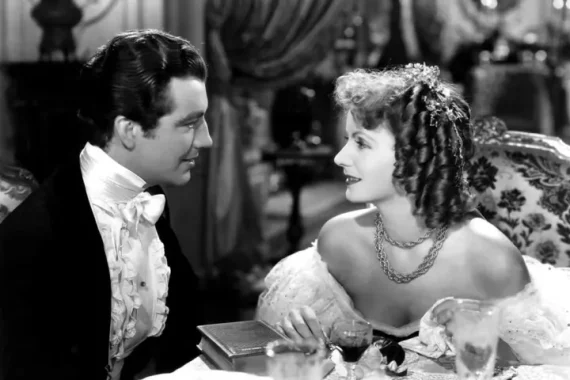
Camille is not wanting for great performances. Cukor’s cast includes wonderful comic turns from Laura Hope Crews and Lenore Ulric, suitably brooding young males in Robert Taylor and Henry Danielle, and dignified but authentically compromised members of the older generation in Barrymore and Jessie Ralph. But the shining star around whom these striking sketches orbit is Greta Garbo as Marguerite. Garbo is absolutely luminous in this role and, despite her demure reputation, it is her captivating smile above all else that lingers, several years before her performance in Ninotchka was trailed with the tongue-in-cheek incredulity of the tagline “Garbo Laughs!” Like every weapon in her acting arsenal, Garbo’s smile is a multi-faceted tool. It is divvied up between moments of sincere joy and of disingenuous enticement, of fleeting cruelty and concealed devastation. Garbo credited her director with playing a large part in key moments of her performance, notably her iconic death scene. She praised his sensitivity and how he drew on the experience of his own mother’s recent death, a personal tragedy whose significance can be keenly felt in the film. Thalberg’s tragic premature death during production also likely coloured the tone of the finished project, and yet Camille is not a depressing experience or a laborious task to get through. It moves with the fleet-footed vitality and studied good taste associated with Cukor, painting a vivid image of mid-19th century Paris which enriches the viewing experience with is lively humour and decorous presentation.
Camille would likely have won Garbo an Oscar in most other years but this was a particularly strong year for the Best Actress category, pitting her against fantastic performances by Barbara Stanwyck in Stella Dallas, Janet Gaynor in A Star is Born and Irene Dunne in The Awful Truth (in the event, Luise Rainer took the award for her retrospectively regrettable turn in The Good Earth). But statuette or no, Garbo’s celebrated performance has done its job down the years of keeping audiences returning to Camille to witness her in action again, at which point they are reminded of just how superb everything else in the picture is as well.
8. THE WOMEN
The Women is that rarest of things, a film with an all female cast, written and adapted by women and aimed at a female audience. It also doesn’t come remotely close to passing the Bechdel test. It would be naïve to expect that of any film from 1939 and, if the all female writing crew and cast got anyone’s hopes up, the eyebrow raising tagline “It’s all about men!” should have clued them in to not expect miracles. I’ve seen The Women written off in some modern articles as a misogynist artefact and, while its central message that a woman’s dignity is not worth losing her marriage over does feel like the product of a cobwebby conservative influence, I’d argue that the film itself feels more like a movie that loves women and is determined to showcase as many different types of the female animal as possible (this is not merely a turn of phrase. The filmmakers took great pains to ensure all the pets featured in the film were female as well). For sure, The Women lets philandering men off the hook too easily but in maintaining their complete absence it also satirises them as ineffectual juveniles whose fleeting whims are scarcely worth caring about. Like all films, The Women must be viewed in the context of its era to be properly evaluated, and to allow a screenplay by two women based on a play by another woman to so mercilessly lampoon the self-serious male population is surely progressive to an extent, even if they are just as caustic about their own gender. To my mind, the more famous male-penned The Philadelphia Story has aged much worse in how it tears apart its central female character through a stream of unkind assessments from overbearing men. The Women instead throws all the females together and lets them tear each other apart, armed at least with some level of gender-based empathy.
While MGM didn’t go as far as placing The Women in the hands of a female director, they did make the obvious choice in appointing George Cukor. Though he resented the label “woman’s director”, Cukor had regularly shown an affinity for stories focusing on females and had been praised by several of the actresses with whom he had worked for his sensitivity and good taste. In the case of The Women these characteristics are crucial in maintaining a balance, as even the most malevolent of creations here has a depth and believability drawn out by Cukor and his actors. Of course, the screenplay by Anita Loos and Jane Murfin, wrestled into something acceptable for the recently instated Production Code from the more ruthlessly cynical stage version by Clare Boothe Luce, plays a large part in that too. Presumably the supposedly common sense speeches about how women were better off before they could get divorces was a Code-mandated addition. There are a couple of moments like this, inevitably put in the mouths of older characters to reinforce their apparent wisdom, although one of those same characters does glibly suggest that some women deserve to be beaten. If you can swallow these finger-wagging concessions to patriarchal dominance (it’s all about men!) then The Women features some of the snappiest dialogue and funniest moments Cukor had yet directed. The scope is ambitious, with acidic putdowns and elaborate pratfalls rubbing shoulders with sublime moments of high drama and a stylised six minute interlude in which the film temporarily bursts into colour for a fashion show. With so much packed in, The Women does inevitably overstay its welcome slightly at two hours and ten minutes, but the only obvious cut I would make would be the removal of Joan Fontaine’s fragile and naïve Peggy, whose plotline feels like superfluous padding.

The Women makes the most of its premise in order to pack in cameos from a plethora of recognisable faces from Hedda Hopper to Butterfly McQueen, but the film does largely belong to its three top billed stars: Norma Shearer, Joan Crawford and Rosalind Russell. Shearer, though deprived of the more relishable wisecracks, has to carry the bulk of the film’s emotional content which she does admirably, with the assistance of the superb child star Virginia Weidler who would go on to all but steal The Philadelphia Story right out from under the noses of its nominal stars. Shearer and Weidler make a convincing and moving mother and daughter pairing, their happiness torn apart by the infidelity of the man in their lives (although the film does blame Shearer’s character for pushing for divorce, something it deems to be foolish pride). Crawford, meanwhile, is the unapologetically opportunistic perfume counter girl who sinks her jungle red claws into Shearer’s husband. In a delightfully amoral role, Crawford has a ball and gets to drop the final, most devastating quip in which she artfully circumnavigates the word “bitches.” But The Women is perhaps best remembered for Russell’s scrumptiously hateful turn as the real villain of the piece, Sylvia Fowler, a vicious manipulator who lives for the romantic discord of her acquaintances. Russell gives one of the great “big” comedic turns, using every inch of her willowy physicality supplemented by her impeccable delivery and timing. Often sniping on the sidelines, Russell also gets the majority of the showier moments including a memorable catfight with a fantastically feisty Paulette Goddard. But Russell knows when to play things small too. Towards the end of the film, she performs an elegantly understated headlong walk into a wall that made me laugh out loud.
Is The Women dated? Undoubtedly, but then that is part of its charm as a window into a woman’s perspective on a more oppressive era. While the core message may disappoint, it should not surprise nor should it pose too much of a problem for those who can temporarily adjust their sights while maintaining their modern ideals. That said, the final line “No pride at all. That’s a luxury a woman in love can’t afford” followed by Shearer’s cheesy, open-armed run towards her unseen husband certainly played a part in keeping my star rating from the full five I suspected may be in play. Nevertheless, The Women remains an oddball classic whose comedic and dramatic ambitions exceed its problematic undercurrent.
7. DAVID COPPERFIELD
George Cukor’s second film for MGM was another classic literary adaptation, following hot on the heels of his highly acclaimed version of Little Women for RKO. I’ve always found that the limitations of that smaller studio caused Little Women to feel pokey and cluttered, something that could have proven detrimental for a Charles Dickens adaptation. Fortunately, Cukor and producer David O. Selznick waited until their move to the much bigger MGM to mount their expansive, gloriously cinematic version of David Copperfield. As is the case with most of Dickens’ sprawling novels, David Copperfield is tough to pare down to a two-hour runtime and inevitably certain incidents and characters did not make it to the screen, but Cukor is absolutely true to the spirit of the story, creating an evocatively huge canvas upon which to bring to life a plethora of memorably vivid creations. Most of this spirited, fulsome yarn remains intact and, while certain beloved creations like Mr. Dick may seem discouragingly oversimplified in their necessarily fleeting depictions, the overall effect of Cukor’s lively pacing and tangible warmth is that of a scrapbook of events that can undoubtedly be more satisfyingly elaborated upon in the pages of a novel but which makes for a suitably delightful visual abridgement nonetheless.
David Copperfield is split into two parts of about equal length, covering the protagonist’s childhood and young adulthood. The first of these is often cited as superior due to the performance of child actor Freddie Bartholomew as the young Davey. Bartholomew is fine and preferable to Frank Lawton whose adult David is a bit wet, but in both cases the main character is upstaged by the gallery of amusing and colourful characters surrounding him. Cukor seems to have taken David’s famous words from the novel as a guide: “Whether I shall turn out to be the hero of my own life, or whether that station will be held by anybody else, these pages must show.” There are certainly many contenders for that station in this film. Most famously, Cukor’s David Copperfield features W.C. Fields as Mr. Micawber, a fantastic piece of casting which allows Fields to turn in a rare semi-dramatic performance. True, Micawber is a comic personality and Fields’ turn doesn’t stray too far from his established screen persona but fortunately it’s a good fit for Dickens’ creation. Even better though is Edna May Oliver, whose Betsey Trotwood is exemplary, switching between hilarious and moving with a fluidity that she makes totally convincing even when the character motivations are slightly lost to time constraints. Other notable performers are Lionel Barrymore, whose Dan’l Peggotty is writ large with that likeable brand of Barrymore family ham, Jessie Ralph as a particularly lovable Clara Peggotty, Basil Rathbone and Violet Kemble Cooper as the fiercely detestable Murdstones, Una O’Connor as a batty Mrs. Gummidge, and Elizabeth Allan and Maureen O’ Sullivan as David’s mother and wife respectively, performances that are linked by a finely drawn girlish naivety that makes them a telling mirror image of each other.

As well as the strong cast and well-written screenplay, David Copperfield is bolstered by Cukor’s exceptional direction. He has taken advantage of the greater resources at his disposal at MGM to create an exceptionally cinematic work. This is apparent from the very opening moments of Betsy Trotwood arriving at the Copperfield household during a ferocious windstorm and Cukor keeps the memorable images and sequences coming: Micawber’s rooftop diversion to avoid his debtors, Davey’s exhausting journey on foot from London to Dover, the tragic storm at sea that claims the lives of two characters. Cukor may have denied W.C. Fields’ request to incorporate a juggling scene for his character but he performs an impressive tonal juggling act of his own, the like of which any successful Dickens adaptation demands. The only major shortcoming of this version of David Copperfield is the surprisingly short shrift given to the Uriah Heep storyline, with Roland Young’s potentially effective performance not really given the opportunity to develop as it should. Still, there is so much going on in David Copperfield’s rapid two hour timeframe that disappointments are quickly forgotten.
Securing a second Best Picture Oscar nomination for a Cukor film, David Copperfield is a handsome and impressive piece of work, especially for its emergence while sound cinema was still in its infancy. Though it may have found itself a little lost among subsequent Dickens adaptations, this version of David Copperfield is a charming surprise for any Dickens fans who seek it out.
6. IT SHOULD HAPPEN TO YOU
The final collaboration between director George Cukor and screenwriter Garson Kanin excluded Kanin’s wife and regular writing partner Ruth Gordon except in relation to one key detail. It was at Gordon’s suggestion that the script be tailored towards the talents of Judy Holliday, rather than Danny Kaye as Kanin has originally envisaged. Holliday had been a crucial player in several of the previous Cukor/Gordon/Kanin collaborations and her presence in It Should Happen to You is very clearly the difference between it being a good movie and a great one. The film also has the distinction of having the first significant, credited appearance by Jack Lemmon. Lemmon has been another of my longtime favourites and, while this comparatively straight role of the love interest doesn’t yet showcase his immense range, it does trade heavily on his sweet, chipmunkish charm. But Lemmon, always known as a generous screen partner even at the height of his fame, knows instinctively when to step back and give the stage to Holliday which, as anyone familiar with Holliday’s work will know, is about 90% of the time.
Kanin’s screenplays were often characterised by a progressive, ahead-of-their-time viewpoint and It Should Happen to You feels prophetic in its examination of fame for the sake of fame. It follows the story of Gladys Glover, a woman of no particular talent whose two year quest for fame has come to nothing. Recently fired and concerned about her future alone in New York, Gladys spots a large, prominent billboard in Columbus Circle and impulsively decides to rent the space and have her name plastered upon it in huge letters. This leads to a clash with a large soap company who traditionally purchased the billboard for their own advertising, and negotiations with the determined Gladys lead to a deal in which several more billboards bearing her name are posted around the city. Soon, the name of Gladys Glover is on everyone’s lips but the resulting fame is not exactly what she imagined.
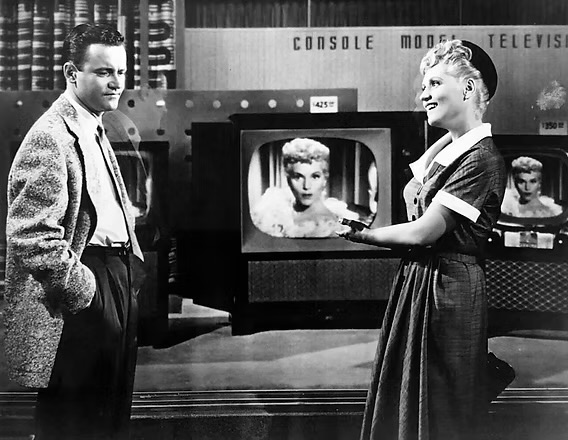
Amusingly, the second-billed actor in It Should Happen to You, Peter Lawford, was a member of the Rat Pack whose offscreen notoriety in later years eclipsed his movie career, leading to him being associated with the term “famous for being famous.” But more than this accidental coincidence, Kanin’s screenplay now feels prescient in relation to online celebrities and influencers who often build their brands through saturation rather than talent. Although Holliday’s fame was clearly founded on her exceptional talents, she does a marvellous job of depicting a sort of 1950s approximation of future YouTube frequenters. Kanin’s screenplay is yet another sympathetic piece, allowing Holliday to create a character who is hilarious to watch without needing to degrade or ridicule her. Gladys is a generally down-to-Earth woman and while she does allow an inaccurate dream of fame to go to her head, her grounded nature is constantly visible in Holliday’s immaculately executed mannerisms, the small glances and little tics. Fans of her larger-than-life Oscar-winning performance in Born Yesterday will not be disappointed but Holliday was always careful not to let that role define her subsequent, tragically short career. This is a clearly differentiated performance, channeling Holliday’s unique comedic skills into a very different creation.
It Should Happen to You ended a stretch of Cukor’s career that was dominated by comedies and which contributed significantly to his association with that genre. It acted as a perfectly formed full stop, with few of Cukor’s subsequent films being outright comedies. While the epic undertaking of his next film, A Star is Born, certainly played a part in this change of trajectory, perhaps the general excellence of It Should Happen to You made Cukor feel he had reached a point in his career where he could churn out gently satirical comedies without much apparent effort. Such speculation aside, it surely takes a strong, confident director to simultaneously put their stamp of quality on a film while also getting out the way of the material in order to let it thrive unencumbered. That’s exactly what Cukor does here and why It Should Happen to You is such an easy, pleasurable experience. If its lightheartedness has seen it become a comparatively hidden gem, this modesty is also what makes it so thrilling to unearth.
5. GASLIGHT
Gaslight was based on a 1938 play by Patrick Hamilton, originally made into a British film of the same name in 1940. When MGM bought the rights to remake the film, one of the stipulations of the contract was that all existing versions of the original be destroyed. It was fortunate that this clause was not honoured. Aside from there being something truly disturbing and depressing about a film industry that would seek to erase existing artworks, Thorold Dickinson’s 1940 original is a very good film in its own right and the two films differ enough to comfortably coexist. While Cukor’s film eclipsed Dickinson’s in both quality and popularity, there are elements that Dickinson did better and it is fascinating to watch the two films back to back. Gaslight has seen a small resurgence in popularity recently as the form of mental abuse that takes its name from the film has become a more widely recognised atrocity. The realisation that gaslighting, the attempt to convince people they are going mad or have imagined something that actually happened, is prevalent in toxic relationships and as a form of widespread political manipulation has retrospectively made what once felt like a fanciful psychological thriller suddenly snap into focus as an all-too-realistic horror film.
There are a few things that Dickinson’s film does better than Cukor’s. Frank Pettingell’s avuncular former-detective is more fun than Joseph Cotten’s rather bland inspector and the half-baked romantic implications between Cotten’s Brian Cameron and the woman he is trying to save feel like a pandering afterthought. In the absence of the comedic character traits that were given to Pettingell to play with but withheld from Cotten, the role of comedy relief is transferred to Dame May Whitty’s utterly superfluous Bessie Thwaites, whose final comedic beat after the grimly intense denouement ends the film on a note of levity that it can no longer justify. But the relationship between the villainous leading man and the saucy maid, a full-blown affair in Dickinson’s version, is much more effective as the passing flirtation as which it is portrayed by Cukor. In the acting stakes, Anton Walbrook and Charles Boyer are about on a par in the role of the manipulator, as are Cathleen Cordell and Angela Lansbury (in her film debut) as Nancy the maid. But Cukor has three major trump cards in establishing his version of Gaslight as the enduring classic.
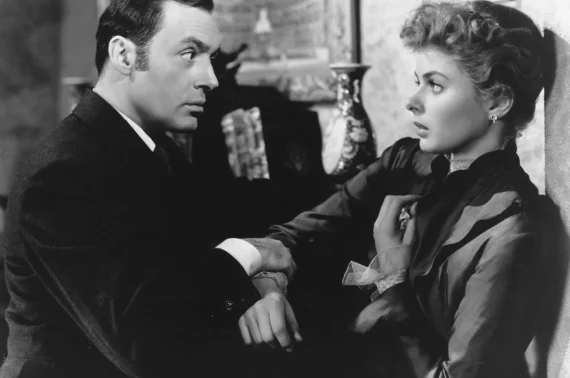
Cukor’s first major asset is the extra 25 minutes of runtime, which allows the story to be told far more effectively. Dickinson’s film plunges us straight into his heroine’s nightmare at the hands of her tormentor, whereas Cukor allows us to see the developing romance between Gregory and Paula, establishing the glimpse of possible happiness that ultimately traps Paula in her mental captivity. This allows us to warm to the characters before the emotional bombshells are dropped, rather than just relying on our basic natural humanity from the outset. The second great asset in Cukor’s Gaslight is the higher budget, allowing for the Oscar-winning art direction and Oscar-nominated cinematography to create a crucial atmosphere that was only hinted at in the earlier, cheaper British production. This is a world of eerie shadows and teasingly flickering gaslights, a scintillating snapshot of a mythical bygone London with a hefty helping of 40s noir relish. But the greatest trump card of all in Cukor’s Gaslight, and the worst stumbling block in Dickinson’s, is the leading lady. As a woman trapped on the precipice of mental collapse by the machinations of her manipulator, Diana Wynyard struggles to convince with her main acting tool being a wide-eyed faraway stare. But Ingrid Bergman is note-perfect in her Oscar-winning turn. While Wynyard attends to show us a woman broken by mental abuse, Bergman drags us down with her into the terrifying depths of self-doubt and fear. Boyer is entertainingly malevolent as her husband but it is Bergman’s reactions to his torments that make their exchanges so genuinely frightening. It’s one of the finest performances Cukor ever drew out of one of his actors.
Watching both versions of Gaslight back to back perhaps led to me holding back from a 5 star rating for Cukor’s classic because there are things I would have liked to see done slightly differently (I’ve convinced myself that Charles Laughton could’ve worked wonders in the Joseph Cotten role). But Gaslight is still a wonderful film, perhaps even one that has grown in impact and relevance after the much-needed MeToo and Time’s Up movements.
4. A WOMAN’S FACE
George Cukor was coming off the back of a run of comedies when he made A Woman’s Face, an absolutely terrific noir with only the smallest sprinkling of comedic flavouring around its edges. Based on the French play Il était une fois… by Francis de Croisset, A Woman’s Face tells the story of Anna Holm, a disfigured woman whose contempt for other humans softens somewhat when she falls for a plastic surgeon who eradicates her facial scarring. However, she has also fallen for the wicked but charismatic Torsten, a man whose plans to secure a large inheritance involve Anna in deeds far more sinister than the small-time blackmail with which she has previously lashed out at mankind.
As was often the case with films of its era, A Woman’s Face is somewhat problematic in how it equates disability with evil, with Anna’s potential redemption only made possible by the erasure of her disfigurement. But if you can allow for that common old Hollywood trope, A Woman’s Face is a magnificent piece of storytelling and the perfect vehicle for the rapidly evolving talents of Joan Crawford. Crawford herself cited this film as key in her development on the way to winning an Oscar for Mildred Pierce, and her performance here may be even better. After struggling with the admittedly strange lead role in Cukor’s previous Susan and God, Crawford is given the chance to play to her strengths in A Woman’s Face, first as a bitter, amoral misanthrope and then as a caring and humane woman slowly emerging from years of brooding hatred. It’s a tour de force.
The screenplay for A Woman’s Face was co-written by Elliot Paul and regular Cukor collaborator Donald Ogden Stewart (Holiday, The Philadelphia Story). The story is framed by a court case in which Anna is the defendant, and we hear pieces of her story related by various witnesses with whom she has crossed paths. Through those vignettes, a picture emerges not only of Anna but of those in the witness stand, whose own reliability is frequently brought into question. It’s a smart way in which to tell the story, providing breaks and analysis at key moments and underlining reasons behind some of the more drastic character choices that may otherwise have seemed unbelievable. Amongst the strong supporting cast are reliable names like Donald Meek, Albert Basserman, Marjorie Main and Reginald Owen. Melvyn Douglas is likeable as the romantic hero but it is Conrad Veidt as the loathsome Torsten who comes closest to emerging from the long shadow that Crawford casts over the film. Always adept at playing villains, Veidt is truly chilling here, as if ice runs through his very veins.
A Woman’s Face goes to some very dark places during its runtime but Cukor ensures that it is always thrillingly entertaining, navigating subtle tonal shifts with a deftness that few of his contemporaries could match. The film maintains a consistent air of mystery and suspense throughout and, for good measure, throws in a sleigh chase at the end. You read that right! How many noirs, or films of any type for that matter, feature a climactic sleigh chase. It’s indicative of the way A Woman’s Face delivers familiar delights in a slightly off-centre manner. This may account for why the film is comparatively under-seen these days but it also accounts for how much it tends to delight those who are lucky enough to discover it.
3. ADAM’S RIB
Adam’s Rib is an unusual Golden Age classic for several reasons. For one, while it is acknowledged as a classic in critical quarters, it is not a given that people have seen or even heard of it. It certainly doesn’t carry the popular weight of The Philadelphia Story or Some Like It Hot. And yet, unlike those two films, it also maintains a progressive and relevant feminist viewpoint that manages to represent its era with little to no problematic material with which to wrestle. Although I’m generally the kind of viewer who can adjust their sights in line with contemporary values, certain films have aged in a way that can’t help but leave a sour taste, not least the previous Spencer Tracy and Katherine Hepburn vehicle Woman of the Year. The film ended with a ludicrously sexist set-piece to which Hepburn strongly objected. By contrast, Adam’s Rib presents a film about gender relations which refuses to collapse into pandering patriarchal placation, thanks at least in part to the presence of something Woman of the Year and The Philadelphia Story didn’t have: a female screenwriter. Ruth Gordon, the exceptionally talented writer and future Oscar-winning actor, co-wrote Adam’s Rib with her husband Garson Kanin, and this too surely fed into the centrality of marital issues in their script.
One of the reasons that Adam’s Rib might be seen as less accessible to a wider audience is its unusual structure. Telling the story of Adam and Amanda Bonner, two married attorneys who find themselves on opposite sides of an attempted murder case, Adam’s Rib is part domestic comedy, part courtroom comedy and the two threads compliment and comment upon one another while also creating a narrative juxtaposition which makes the runtime just fly by. There’s a superb supporting cast here, including David Wayne as a bitchy songwriter and Judy Holliday, whose impressive turn as the abused wife driven to violence was seen by the studio as a screen test for her most famous role in Cukor’s subsequent Born Yesterday. Tom Ewell is comparatively underused as the husband but Jean Hagen, in her film debut as the mistress, makes an immediate impact in her handful of amusing scenes.
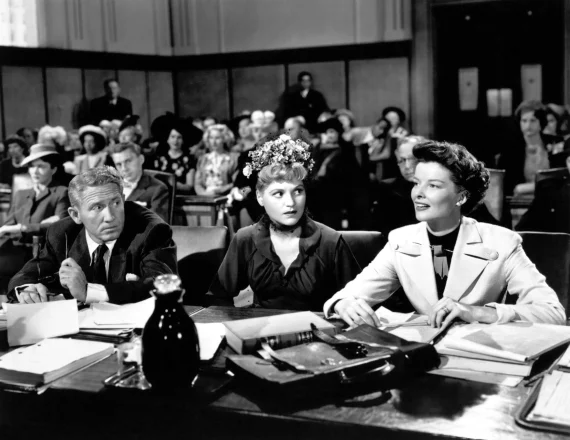
But it must be said that this film belongs to Tracy and Hepburn, with the latter particularly standing out as the lawyer who sees her client’s case as representing the plight of all women. In contrast with what a more crassly oversimplified script might have done, Gordon and Kanin do not set up Tracy’s Adam as a champion of men but rather as a devotee of the letter of the law. Thus, despite the poster art of Tracy and Hepburn fighting over a pair of pants, the focus is not on a battle of the sexes so much as an examination of equality and its relation to morality. To have made Adam a misogynist dunderhead would’ve scuppered this film immediately. Instead, he is credited with intelligence and, while his wife frequently gets the better of him, their romantic relationship outside of the courtroom continues to make absolute sense because their disagreement is not founded on diametrically opposed ideologies. There are no simple answers at the end of Adam’s Rib. No-one is put in their place or forced into societally-dictated subservience. That’s part of what makes it so brilliant and continually relevant.
Of course, what also makes Adam’s Rib so brilliant and continually relevant is how funny it is. If Hepburn shines the brightest amongst the cast, it is probably also fair to say that the very best scenes are those in which she and Tracy coexist together. Given their well-documented offscreen relationship, it should surprise no-one that they have terrific chemistry, and yet even this could be quelled by the wrong screenplay (see Cukor’s previous Keeper of the Flame). But Adam’s Rib offers the perfect, snappy material for these two most intelligent of performers, and long before the technique was celebrated as an innovation of New Hollywood, Cukor has his leads overlap their dialogue in a realistic and fast-moving depiction of a close romantic relationship. In a stylistic reflection of this choice, Adam’s Rib is crammed with overlapping comedic approaches. Smart dialogue and pointed satire share space with pithy putdowns and broad farce, and it’s never quite clear where the plot is going from scene to scene. But by the end, even with certain threads left dangling, it all makes perfect sense. Gordon and Kanin’s screenplay was justly nominated for an Oscar and placing it in the hands of Cukor was a masterstroke. This is a fine example of what an astute and natural comedic director he was and it set him back on a run of comedies after several years focusing mainly on dramas. Adam’s Rib remains one of Hollywood’s smartest little gems.
2. BORN YESTERDAY
Few films hinge so completely on the performance of one actor as Born Yesterday. The film came out in the year of one of the most hotly contested Best Actress Oscar categories ever, with lead Judy Holliday up against powerhouse competition from Bette Davis in All About Eve and Gloria Swanson in Sunset Boulevard. This contest is as good as any example of how pointless acting awards are when you get right down to it. Any of these three astonishing performances would be justifiable as the winning choice and, because they are so completely different in style from one another, comparison feels futile and unnecessary. However, after many years of vehemently supporting Bette as the standout, having rewatched Born Yesterday I think perhaps the Academy made the correct choice in awarding the Oscar to Judy. While the performances of Bette, Gloria and Judy might be wildly different from each other, only Judy’s performance is completely different from anything any performer has done, before or since. Only imitators, those directly influenced by Judy’s legendary turn here, can be compared but frankly none of them, not even the mighty Jean Hagen in Singin’ in the Rain, come anywhere close to the beguiling strangeness of Holliday’s mesmerising comedic ingenuity.
Before this review turns into a runaway Judy Holliday fan letter, as so many Born Yesterday reviews tend to, we should note how much else of worth there is here. The play from which Born Yesterday was adapted was by Garson Kanin, a fantastic writer who had already collaborated several times with Cukor, including on the excellent Adam’s Rib in which Holliday played a supporting role. Kanin’s play was adapted for the screen by Albert Mannheimer, who received an Oscar nomination for his work, although according to Kanin the bulk of the screenplay was written by him after Cukor disliked Mannheimer’s take on the material, but legal entanglements prevented Kanin receiving credit. Whoever was responsible, it is an exemplary script, managing to make Holliday’s Billie funny but dignified, without ever resorting to cruel mockery. It is a masterful expansion and humanisation of a stock figure, the gangster’s brassy moll, and the humanism extended to the lead character is also apparent in the complexity afforded the film’s unscrupulous bully, Billie’s abusive boyfriend and crooked working class tycoon Harry. The erudite journalist whom Harry hires to educate Billie is also drawn with a lighter-than-usual touch, as a compassionate and sympathetic figure who is never supercilious or condescending. The writing of these characters is enhanced by the performances. William Holden (who was having a very good 1950, appearing in two Best Picture nominees, this and Sunset Boulevard) is generously understated as the journalist Paul, essentially ceding the stage to allow Holliday the room she requires for her star turn. By contrast, Broderick Crawford is immense as Harry. Imposing in every way, frightening but human, funny but sad, this is a performance that surely deserved awards recognition and may have got it had Crawford not had to share the screen with the mesmerising Judy.
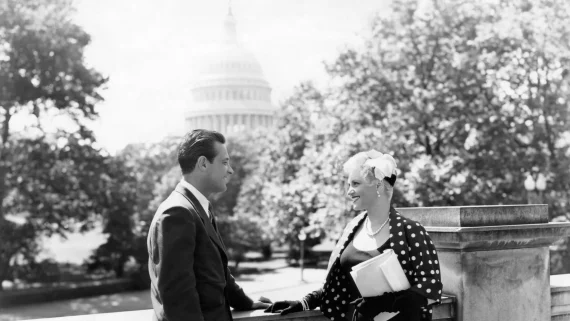
Ah, Judy! It all comes back to Judy. The fact is that no matter how well-written the screenplay and how solid the direction, no-one but Judy can be credited with making this character as unique as she is. It’s easy to imagine a less out-there take on the role of Billie, and I’m sure the film still would have been good with a competent actor playing up the usual reedy-voiced stereotype. But what Holliday does here is just unprecedented. The choices she makes in her inflections, her expressions and her volume levels are astounding, wringing maximum laughs from every single moment she spends on screen while simultaneously creating a living, breathing, fully-rounded character who easily sidesteps the potential for sexist airhead archetypes. Some lines are spoken with a soft, airy cadence, others with a piercing shriek. Then, every so often at exactly the right moment, she lets a word or sentence escape her lips like an uncontrollable baritone belch. The lines as written are funny and astute, but as performed they are simply transcendent within the genre. It’s a performance that feels comedically ahead of its time by decades, and the fact that it could be slotted comfortably into a later, more experimental comedy context is entirely down to the influence this legendary performance exuded. Holliday had played this role on stage and her appearance in Adam’s Rib had been treated as a sort of screen test for Born Yesterday, but it beggars belief that, having seen her do her stuff, that the studio could have considered anyone but Judy for this part.
Perhaps the one criticism I could level at Born Yesterday is that it doesn’t fully escape the shadow of its stage origins. Cukor makes a couple of efforts to open things out but the majority of the action occurs in the same suite of rooms in a Washington hotel. But with the quality of the writing and performances, Cukor’s instincts to let those parts do the talking is entirely correct and a filmed play is never a problem for me if it is a good play well filmed. Through sheer quality in every department, Born Yesterday achieves its cinematic credentials. And in Judy’s performance, it transcends them.
“And the Oscar goes to…”
Correct!
1. A STAR IS BORN
There’s a message in the opening credits of A Star is Born thanking the Academy for the use of Oscar statuettes in the scene set at the Academy Awards. It’s hard to believe that this temporary loan constituted the only time George Cukor’s epic musical remake got its hands on the coveted award, but it lost out on all six of its nominations. The most contentious of these defeats was Judy Garland losing to Grace Kelly in The Country Girl but it’s always seemed just as strange to me that A Star is Born missed out on a Best Picture nomination. Perhaps the Academy didn’t like its critique of the industry, perhaps the Best Picture nomination of Seven Brides for Seven Brothers fulfilled the musical quota for that year, or perhaps it was just that to exclude the enduring classic Three Coins in the Fountain would’ve been unthinkable! Whatever the reason, it’s hard to believe that this lavish, gorgeous film was not listed among the year’s best by the awards body that so graciously loaned out its little golden men to the production.
Cukor’s A Star is Born was a remake of the 1937 film of the same name, although their difference in scope is similar to that of the 1934 version of Imitation of Life and Douglas Sirk’s spectacularly lurid reimagining of that story twenty-five years later. Cukor was actually offered the chance to direct the 1937 A Star is Born but felt it was too similar to his 1932 film What Price Hollywood?, widely recognised as the unofficial prototype of A Star is Born (to the point where lawsuits were considered). But with the addition of Garland in the lead, songs by Harold Arlen and Ira Gershwin, a $5 million budget and the luxurious colour cinematography of Sam Leavitt, this version of the classic tale was a unique opportunity for Cukor to indulge his most excessive impulses to grandiose effect. The result is truly astonishing, though understandably divisive. It you enjoy vivid melodrama and Hollywood excess like I do, you’ll probably be firmly in the love-it camp but I must admit that after a 5 star first viewing, I initially downgraded A Star is Born to 4 stars on my second viewing. This third screening brought it right back up again and I can only assume that indicates a need to be in the right mood and the appropriate setting to watch this. A Star is Born is truly an event movie so you need to be in that mindset. If you’re tired and trying to cram this in before bedtime, it’s likely that its many big swings and full-blooded diversions will test your patience. If you have the free time to view it, are not in a remotely distracted mood and feel like enjoying the visual equivalent of a very rich gateaux (yes, the entire thing!) then this will feel like one of the great films of its era. Watching this last night, I was begging for a face-full of purest Old Hollywood Black Forest!

So obviously there’s Judy. We’ll get to Judy. But A Star is Born has far more going for it than just one legendary performance. For starters, there’s Judy’s leading man, James Mason, who is honestly very nearly as good. Less is asked of him, since he is not the all-singing, all-dancing chanteuse on the rise but rather the fading matinee idol on his way down, but in terms of tangible gut-punch emotional content Mason might well have the edge. There’s no degree of glamour to his drunk acting. The way Mason plays it practically makes the audience experience the hangover while the character is still experiencing the high. His ability to switch between the magnetism of his unfortified self and the shame-drenched repugnance of his alcohol-soaked lows is crucial in defining the line between the glamour of Hollywood excess and the degradation of real life addiction. Then there’s the soundtrack. In all honesty, not every one of Arlen and Gershwin’s songs is that memorable. In fact, in terms of songs to which you might be tempted to listen outside the context of the film, only the legendary The Man That Got Away stands out. It’s a powerful song, belted out with unmatched brio by Garland, encapsulated with a smoky late-night intimacy by Cukor. But if none of the other songs reach that level of brilliance, their use in the film is impeccable. The fifteen minute film-within-a-film that is Born in a Trunk was added after Cukor had finished with the production, supervised instead by Garland’s professional mentor Roger Edens. This was an appropriate choice, given that the sequence charts not only the rise to fame of character Vicki Lester but also an approximation of Garland’s own showbiz story. It’s an astonishing centrepiece for the film and a much more fitting representation of Vicki’s overnight success than the original plan to show the characters entering her premiere and then leaving to massive acclaim. In the excessive world of A Star is Born, a time-jump just isn’t sufficient. We need to see the show stopped.
A Star is Born’s screenplay by Moss Hart is not to be overlooked. It provides Cukor with the sort of material with which he most works magic. Hart emphasises the emotional weight of every scene, whether that be the tragedy of Norman Maine’s decline or the dizzying thrill of Vicki Lester’s rise. The growing love between the couple feels powerfully real, and there are plenty of much-needed moments of wit. Some of the dialogue is delightfully funny, and Hart doubles down on the humour of Vicki’s ghastly real name, Esther Blodgett (“we’ll have to do something about that,” remark numerous characters) by lumbering Norman Maine with the real name Ernest Gubbins, a fact not revealed until his wedding. In one of the most stingingly effective moments, Hart bookends Vicki’s emotional breakdown with rehearsals of the throwaway upbeat ditty Lose That Long Face, about the most inappropriate accompaniment to her heartfelt pain. It’s a strikingly humorous but painfully satirical moment that exposes the artifice of Hollywood gaiety in a manner that could really cost a film its Best Picture nomination!
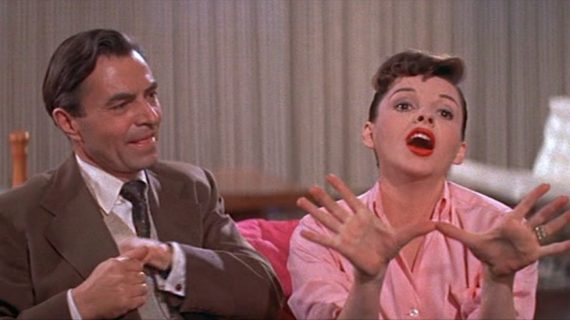
And then there’s Judy. I told you we’d get to Judy. Her performance here is widely regarded as not only the strongest of her career but one of the great performances of the era. There are dissenters and they are not to be pooh-poohed out of hand. This is, after all, a performance that is entirely in keeping with A Star is Born’s melodramatic excess and if you’re not feeling that, chances are you might miss the charm of this performance, or even consider it bad. Me, I’m firmly on the side of its champions. Garland was a legendarily troubled person and that vulnerability is clear for all to see here, not by accident but because she allows it to inform her performance, even if some of her addiction issues are transposed onto her leading man. Her famous tearful breakdown scene, dismissed as overwrought by naysayers, will likely feel like a wholly recognisable and heart-rending moment to those who have experienced similarly overwhelming panic attacks that change the whole rhythm and timbre of your outward communications. But it’s not all misery. Judy puts her all into convincing us of Esther Blodgett’s fame-worthy talents, stopping the show one minute and intimately crooning a private love song the next. And let’s not forget Judy the comedian, an oft-underrated skill of Garland’s that is in full display in her negotiations of the ups and downs of fame. One of my favourite moments in this respect appears in the reconstructed version of the film which restores a short scene in which Esther works as a waitress in a drive-in burger joint. She reels off a long list of menu options to a customer, which ends with the “Special Super Super Burger.” “What’s in that?” asks the customer. “Everything in the place”, she replies, “All burgered.”
Fans will often tell you that Judy Garland’s performance alone makes A Star is Born worth watching. While that’s true, it is far from the only thing to recommend in this sprawling, majestic picture. This is a confluence of multiple talent streams, running together to create the boldest of colours and the most overwhelming of cacophonies. It’s Hollywood at its most lurid, its most unleashed, its most mesmerising. While the same story has been remade several times since to varying levels of acclaim, there are many reasons why the 1954 version remains heralded as the gold standard, even if the Academy ultimately decided to withhold the gold.