



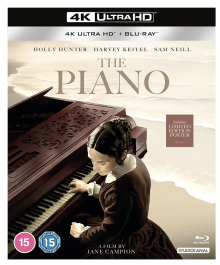
Director: Jane Campion
Writer: Jane Campion
Starring: Holly Hunter, Harvey Keitel, Sam Neill, Anna Paquin
Year: 1993
Duration: 121 mins
Country: Australia, France
BBFC Certification: 15
When Jane Campion finally won a Best Director Oscar earlier this year, there were many who felt that the award was long overdue. For decades, Campion has been a purveyor of brilliantly observed, studiously crafted cinema whose work resonates far more deeply and universally beyond the feminist labels her films are usually ascribed (although there is no doubt her adherence to feminine stories and perspectives have been ground breaking).
No film of Campions has perhaps resonated quite so powerfully as The Piano, her haunting romance which will celebrate its thirtieth anniversary next year. In light of this, StudioCanal are releasing a deluxe new restoration and edition of Campion’s most iconic film on 4K this September. Yet with now almost three decades under its belt, does The Piano still play well or has it gone badly out of tune during the intervening years?
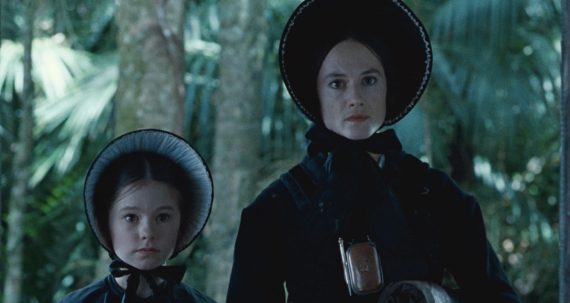
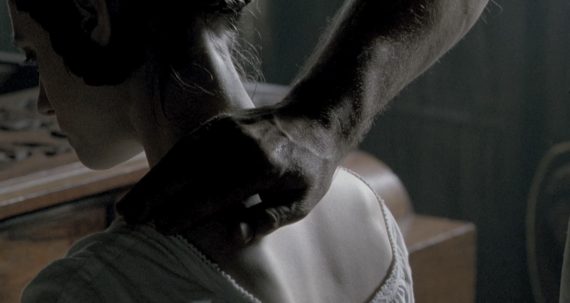
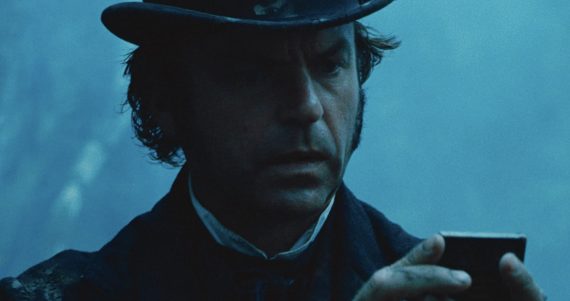
The story is still as alluring as ever. Ada (Holly Hunter) arrives in New Zealand with her daughter Flora (Anna Paquin) as part of an arranged marriage to Alisdair (Sam Neill), an English landowner trying to tame the remote bush of nineteenth century New Zealand. Ada has brought along her beloved Piano, which Alisdair views as an unimportant frivolity and orders her to abandon it. Finding herself trapped in a loveless marriage in an unforgiving foreign country, salvation arrives in the form of Ada’s neighbour George Baines (Harvey Keitel). He has brought and rescued Ada’s piano and is willing to not only allow her to play it but to allow her to actually purchase it back from him…providing that she allows him to do certain things while she plays…
The plot of The Piano was greatly inspired by nineteenth century feminist literature, in particular George Elliot and the gothic works of the Brontë Sisters. You can feel this influence in Campion’s film beyond the inspirational, taboo breaking female protagonist. The savagery and beauty of the Yorkshire Moors has here been replaced by the almost hellish landscape of the New Zealand bush, where deep, oozing mud and torrential rain conspire to drown the characters under a suffocating canopy of trees and foliage. The Piano’s adherence to historical accuracy, from its depiction of native Maori characters to the re-creation of life for nineteenth century European settlers, is one of the film’s most under appreciated yet most impressive feats. This is a world that feels livid and dangerous, far more visceral than contemporary cinematic period romances, such as those made by Merchant and Ivory.
Campion’s literary influences extend beyond characters and setting. The pace of The Piano is perhaps the one element where modern audiences may well struggle. Campion takes her time setting up her characters and her world. When drama occurs, it emerges slowly and sensually, requiring the audience to accompany the characters at their own pace. Ultimately, while this makes the story all the more rich and powerful, there is no denying that The Piano reserves its greatest rewards for those who are willing to completely submit to its languid, haunting atmosphere.
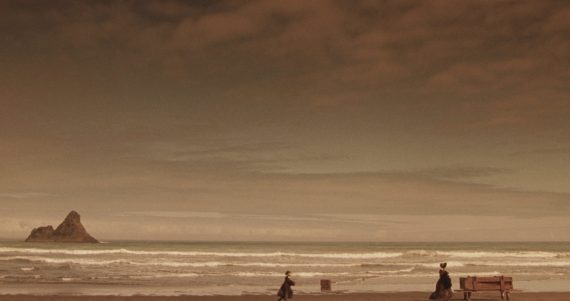
An atmosphere helped, in no small part, by the performances. There is no doubting the brilliance of Campion’s script and her world building; yet the real stars of The Piano are the actors, with Holly Hunter towering over the rest. While her Ada never speaks (aside from some very brief internal monologues bookending the film) you are never left in one moment’s doubt as to what Ada is thinking or feeling. Hunter is able to convey a whole plethora of meaning in just a few expressions, powerfully revealing inner feelings and thoughts that convey just as much as dozens of lines of dialogue. Her performance, beguiling, angry and sensual, remains quietly sensational to this day and was certainly rightly deserving of the Oscar Hunter won for Best Actress.
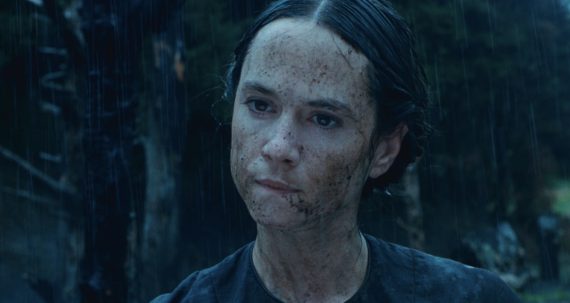
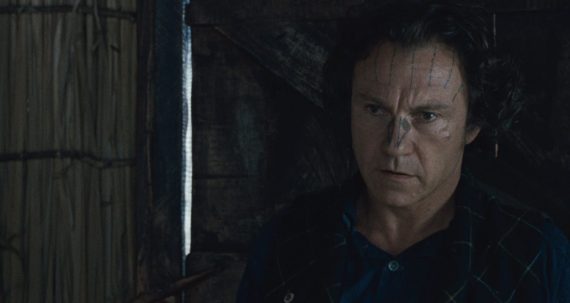
Her fellow Oscar winner, Anna Paquin, also delivers a wonderfully natural performance as Ada’s nine year old daughter. Totally convincing while avoiding any hint of off-putting precociousness, it remains one of the most impressive child performances in modern cinema. The two male leads are no slouches either. Sam Neill manages to combine coldness and vulnerability to create a horrifyingly patriarchal monster who never looses his human frailty, while Keitel offers a surprisingly soft and tender side to his usual tough guy persona. Campion skilfully weaves all these performances into one satisfying whole, where the torrid flow of emotions that erupt through Ada’s actions never feel histrionic or melodramatic.
Rewatching The Piano after all this time, it feels like a rare treasure just as much now as it did upon its initial release. It is no wonder that Campion became the first female director to win the coveted Palm D’Or (as well as an Oscar for her script). The Piano is a dark, sensual, unconventional romance that foregrounds female sexuality and experience in a manner that was rare at the time of release and, in mainstream cinema at least, has felt sadly rare ever since. Helped along by a timeless score by Michale Nyman, a visceral historical setting, riveting performances and a pace that beautifully reveals the film’s dark treasures, The Piano has rightfully cemented itself as a modern classic. Campion may have finally won an Oscar for The Power of the Dog but there is no doubting that The Piano remains her masterpiece.
Film:

The Piano is being released on 4K UHD by StudioCanal. The 4K picture is stunning, offering a wealth of fine detail and deep, realistic colours. The disc boasts Dolby Vision HDR which isn’t used to boost the film’s New Zealand setting into anything that might appear unnatural – everything is very balanced and evenly toned. Black levels are very well handled, which is essential considering the film’s more shadowy moments and there were no compression issues that I noticed. I watched the film with its DTS 5.1 track, which was perfectly adequate considering the rather subdued nature of the film; most importantly, audio was clear and precise and Michael Nyman’s score sounded wonderful. Overall, The Piano disc offers a very strong and pleasing 4K presentation.
Extras are numerous and are as follows:
• Audio Commentary with Jane Campion & Jan Chapman.
• Interview with Jane Campion & Jan Chapman
• Making of Documentary.
• 25 Years On Conversation.
• Featurette with Cinematographer Stuart Dryburgh
• Featurette with Production Designer Andrew McAlpine
• Featurette with Maori advisor Waihoroi Shortlan
• Trailers
The majority of the extras here feature Jan Campion and Producer Jan Chapman. They provide a joint commentary for the film that is very thorough and detailed. After working together for so many years, their conversation is very friendly and relaxed and they leave no area of the film uncovered. The disc also boasts an 80 minute interview with both Campion and Chapman. This was shot in 2003 and is in SD. Both are interviewed separately (Campion for one hour, Chapman for 20 minutes). Some of the same ground is covered as in the commentary, but overall, this is still a very interesting watch for those interested in learning more about the film and Campion herself. Finally, StudioCanal offer another conversation between Campion and Chapman in a 30 minute 25 year anniversary documentary. Shot on various spots around The Piano’s original beach location, Campion and Chapman once more delve into a discussion about the film. Some repetition here is inevitable, but it is still interesting to hear their thoughts on The Piano a quarter of a century after it was made.
A contemporary 1993 making of documentary is included with the disc, which offers our only chance of viewing some on set footage, as well as interviews with the main cast.
Three separate Featurettes (all roughly 10-15 minutes in length) make up the rest of the disc, where Cinematographer Stuart Dryburgh and Production Designer Andrew McAlpine recall their experiences making the film. The most interesting interview is arguably with The Piano’s Maori advisor Waihoroi Shortlan, who discuses the importance of creating a real representation of the Maori, even though The Piano isn’t their story, as well as navigating difficult moments, such as the Maori’s reaction during film’s nativity scene.
The disc is rounded out with two trailers and a limited edition poster that comes with the disc.
Disc/Package:
Overall, this a stunning package from StudioCanal. While it would have perhaps been nice to have seen modern interviews with The Piano’s actors, this still feels like an exhaustive package of supplementary material. Coupled with a beautifully refined 4K picture and it is clear that this new 4K release of The Piano feels like a definitive edition of this classic film.