


 Director: Norifumi Suzuki
Screenplay: Shinsuke Inoue, Masakazu Shimura, Norifumi Suzuki
Starring: Hiroyuki Sanada, Shin’ichi ‘Sonny’ Chiba, Etsuko Shihomi, Mikio Narita, Toshiaki Minami, Abdullah the Butcher
Country: Japan
Running Time: 95min
Year: 1981
BBFC Certificate: 15
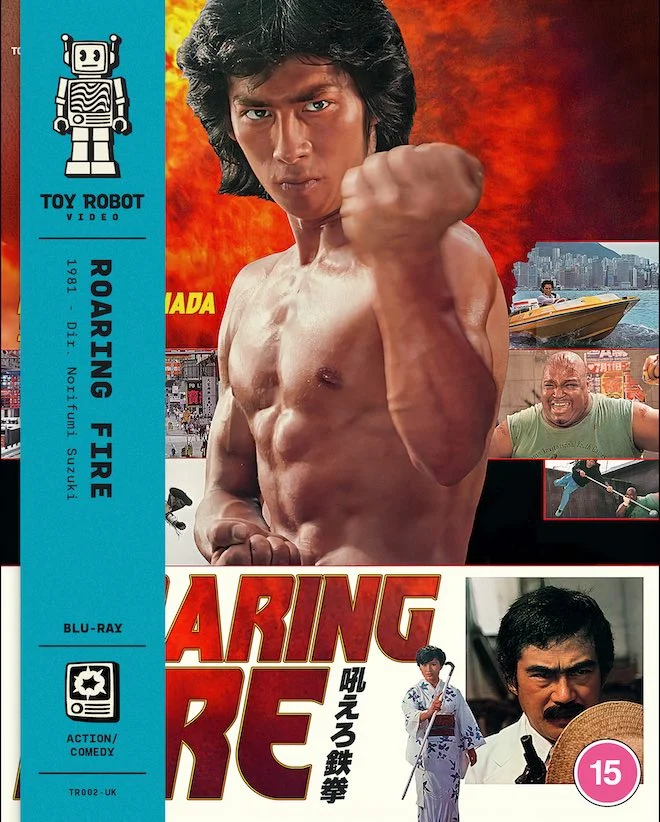
Whilst casual filmgoers might believe that watching films on disc is a dying practise, the collectors and ‘boutique’ market is booming. Evidence of this can be seen in the fact that we’ve had a number of new labels and offshoots emerge in recent years. The latest is Toy Robot. Releasing discs in the UK, US and Canada, they have announced an exciting and varied lineup of cult classics and genre curiosities. One of their first releases is Toei’s 1981 Hiroyuki Sanada vehicle, Roaring Fire. The film looked right up my street, so I got my hands on a copy.
To sum up the plot for Roaring Fire, let me borrow Toy Robot’s own synopsis:
“On the death bed of his adoptive father, Texas-raised rancher Joji (Hiroyuki Sanada) learns a shocking family secret – he has a twin brother and sister he never knew about. Determined to find his brother, Joji travels to Japan only to discover he has been mysteriously killed. As he stays with his sister and digs deeper, Joji uncovers his uncle’s involvement in criminal enterprises, including plans to obtain a priceless 130-carat diamond known as the Queen of Sheba. Betrayal and vengeance unfold as Joji confronts his corrupt uncle and fights to avenge his family.”

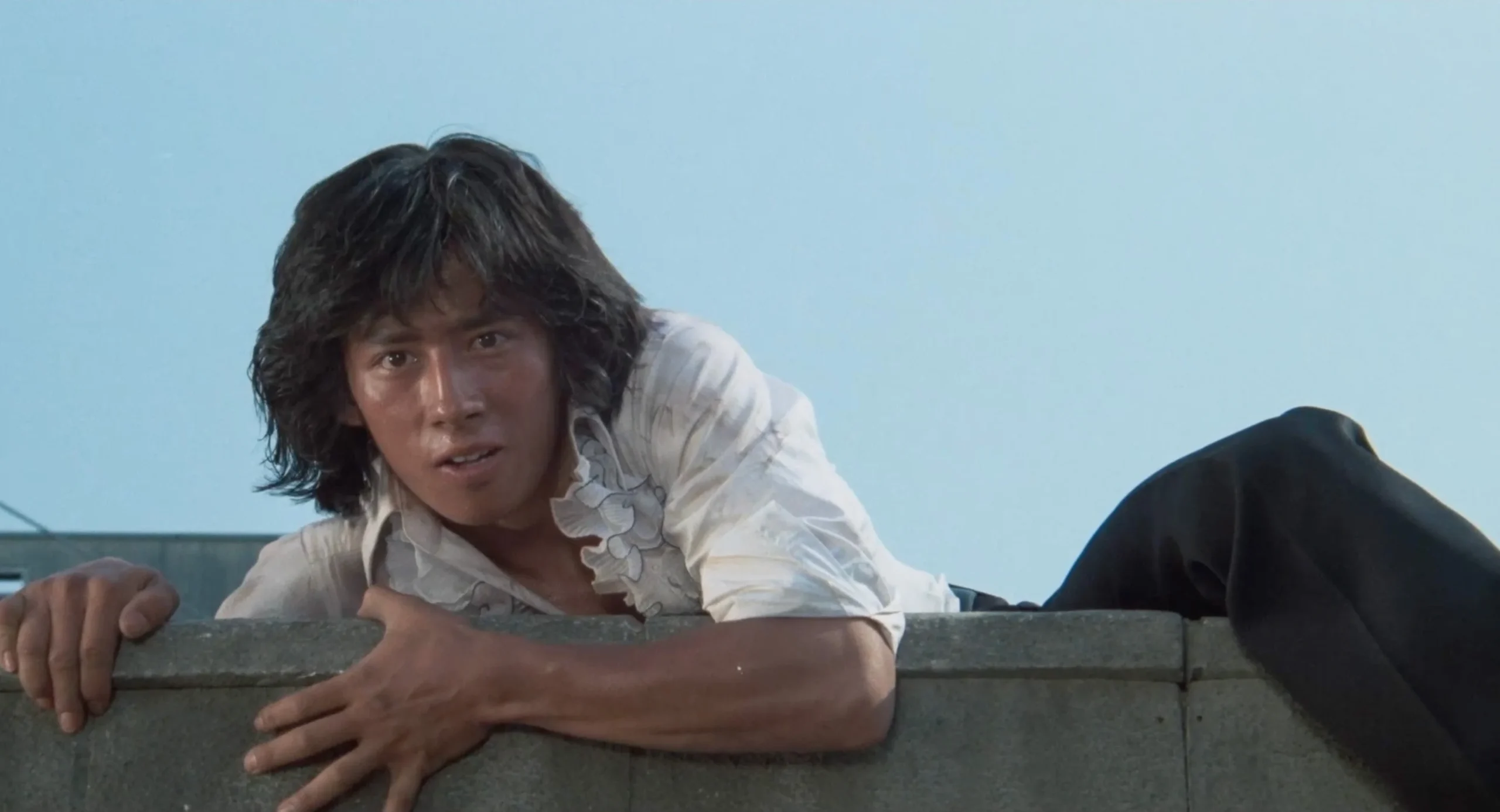
Roaring Fire is an enjoyably bonkers film that employs the ‘throw it at the wall and see what sticks’ formula to a revenge tale that, on paper, sounds rather conventional.
We’re initially knocked for six when we see Sanada gunned down in the opening scene (it turns out to be the lead character’s twin), and we’re thrown plenty of surprises throughout that’ll have you second-guessing what you just saw.
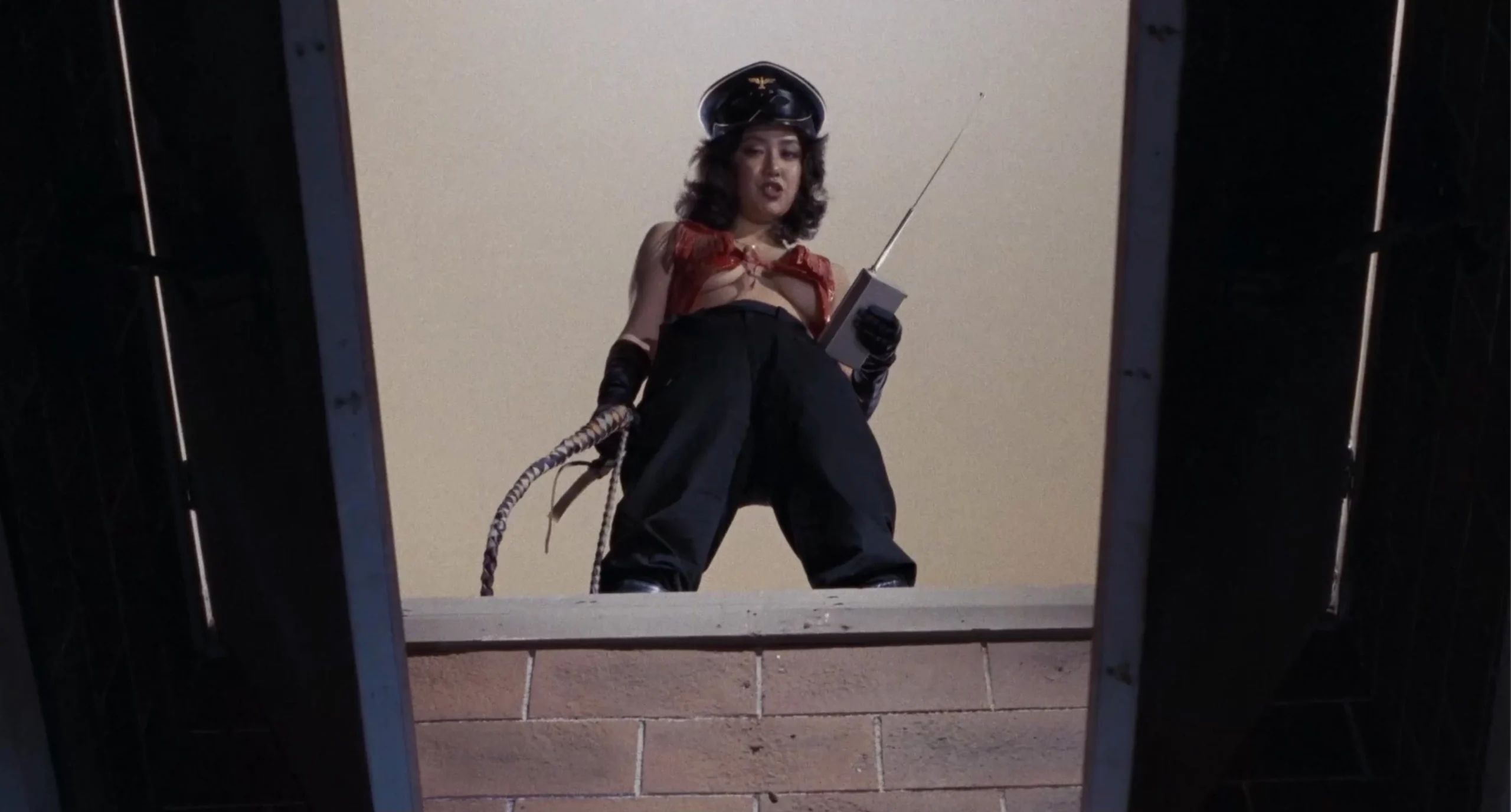
The film is full of quirky touches, like Joji’s pet monkey that rarely leaves his side, the fact that Sonny Chiba’s special agent poses as a magician, an overly extended chase sequence with a group of ninjas that takes some ridiculous turns, and a villain who is flanked by a pair of sadistic female goons and has a penchant for Hitler and Nazi-themed wall decorations.
Then you’ve got the addition of American pro-wrestler Abdulla the Butcher in the cast. He was big in Japan at the time, and his wrestling persona was one of a brutal villain who was famous for drawing blood on stage. Here he’s actually a good guy and gets to show heart and honour, though his character takes the idea of ‘larger than life’ to wild new heights with his exaggerated performance and crazy antics.
There’s a lot of zany comedy in the first hour, which really shouldn’t work, but I found it amusing in a ‘what am I watching?’ sort of way. A scene involving a bikini-snatching monkey and the introduction of Adbulla is particularly silly. You see some bare breasts in this scene but the film is not as sleazy as a lot of the Toei movies that came before, in the 70s.
The film gets more serious in the last half hour but is no less ridiculous. The action ramps up in this portion, too, being loaded with impressive stunts and fight scenes. Sonny Chiba choreographed the action, and does a stellar job.
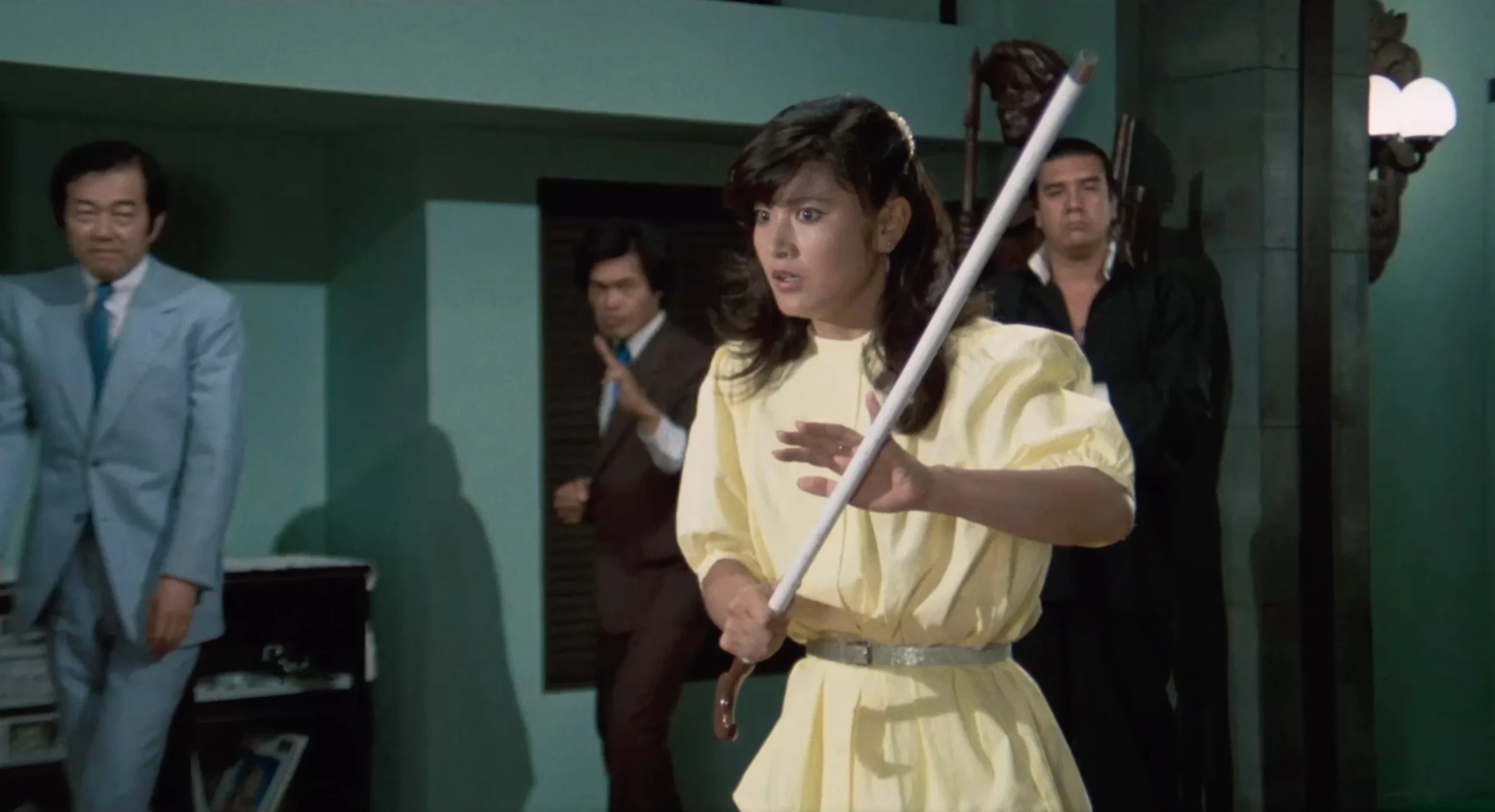
Sanada is a huge international star now, but he found fame as a young adult in action movies like this, after working as a child actor and then training with Sonny Chiba’s Japan Action Club (of which co-star Etsuko Shihomi was also a member). Chiba was Sanada’s mentor and would help him get a number of roles in big films in his early days. Roaring Fire was made after Shogun’s Ninja, which was his first leading role, flopped. This was a clear attempt to change tack, with a modern setting and altered tone.
Some of the opening and closing scenes of the film were shot in Hong Kong, so it has something of a flavour of a Hong Kong action movie (which also shift tones and blend genres like this). One stunt that takes place on top of a bus bears a resemblence to a stunt in Police Story 2, which would come out a few years later.
It’s all perhaps a little too silly for its own good but, on the whole, Roaring Fire is a whole heap of fun.
Film: 


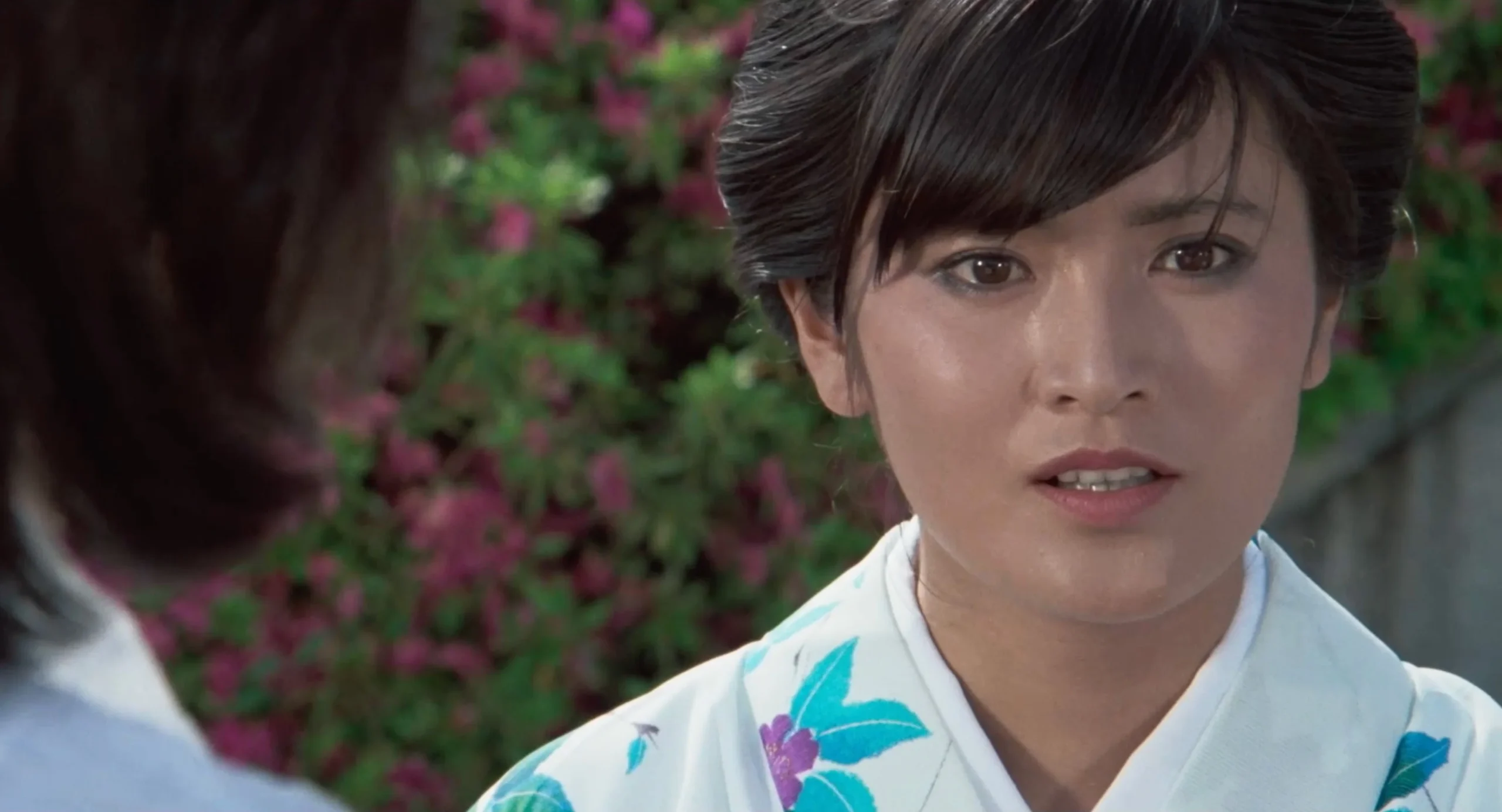
Roaring Fire is out on 7th September on Blu-Ray, released by Toy Robot. The transfer is pristine, with a detailed, clean picture, and natural textures and colours. Most of the publicity images I’ve used appear to be screengrabs, which should give you an idea of how it looks. Audio is faultless, too.
SPECIAL FEATURES
– NEW Audio Commentary with film historian Brian Bankston
– NEW Fire-storm!, Japanese film critic Akihiko Ito on Sonny Chiba, the man, the actor, the legend
– NEW A Roaring Success, critic James Mudge (easternKicks.com) offers a retrospective on Roaring Fire
– NEW Wrestle with Fire, pro-wrestling critic and film writer Chris Lines on the life and times of Abdullah the Butcher
– NEW A Buffet of Comedy and Action, critic Clément Rauger discusses the secrets of Roaring Fire
– Theatrical trailer & TV Spot

Brian Bankston provides a commentary over the film. This is excellent. Bankston covers a lot of ground and has clearly done his research. The track is a treasure trove of illuminating background information on the film and its cast and crew.
James Mudge talks about the film in a 20-minute interview. He provides a solid background to the production, and the piece is well worth a watch.
There’s also an interview with Clément Rauger that runs for around 25 minutes. It looks at both the film and its principles. It’s another strong cover-all piece.
Akihiko Ito is interviewed too. He talks about Sonny Chiba and his contributions to action cinema. It’s a well-researched and enjoyable piece.
There’s also an interview with Chris Lines about wrestler Abdullah the Butcher. He was quite a character in reality, and his story makes for enjoyable listening.
So, Toy Robot have got off to a great start with a disc that’s loaded with enjoyable and informative extras. The film is good fun, too, so the disc is well worth purchasing.
Disc/Package: