


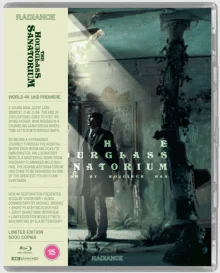
 Director: Wojciech Has
Screenplay: Wojciech Has
Based on Sanatorium Under the Sign of the Hourglass by: Bruno Schulz
Starring: Jan Nowicki, Tadeusz Kondrat, Irena Orska, Halina Kowalska, Gustaw Holoubek, Mieczysław Voit, Bożena Adamek, Ludwik Benoit, Henryk Boukołowski, Seweryn Dalecki, Jerzy Przybylski, Julian Jabczyński, Wiktor Sadecki, Janina Sokołowska, Wojciech Standełło, Tadeusz Schmidt, Szymon Szurmiej, Paweł Unrug, Filip Zylber, Jerzy Trela
Country: Poland
Running Time: 124 min
Year: 1973
BBFC Certificate: 15
I have long had an appreciation of Polish cinema which has grown thanks to the advent of boutique 4K UHDs and Blu-rays which have brought us some of the country’s masterpieces in definitive editions. Works by the likes of Krzysztof Kieślowski, Jerzy Skolimowski, Andrzej Wajda, Walerian Borowczyk, Jan Lanica and Grzegorz Królikiewicz include many masterful works, and these are just scratching the surface.
And then there is Wojciech Has, a director whose career spanned four decades, bringing us 14 films including the 1965 cult classic The Saragossa Manuscript, although few of his films were released in the UK.
The Saragossa Manuscript will be getting the 4K UHD and Blu-ray treatment from Radiance in September 2026, but before then is the subject of this review, The Hourglass Sanatorium, also released by Radiance in a dual-format 4K UHD and Blu-ray edition.
Adapted for the screen from a book of Bruno Schulz short stories – although it also adapts elements of other works from the author too – the film is regarded as one of the greatest Polish films of all time.
We are lucky we have it to enjoy – Has had to smuggle it out of Poland because of the disdain of Polish authorities, to premiere it at Cannes, where it won the Jury Prize.
Radiance provide a neat synopsis of the film, as follows: A young man, Józef (Jan Nowicki), takes a train into the middle of nowhere to visit his dying father, who he understands is residing in a sanatorium. On arrival he discovers a giant building crumbling into ruin, with the patients seemingly left to their own devices, and time itself behaving in strange, non-linear ways. A doctor then informs him that his father is both alive and not-alive, beginning an epic hypnagogic journey through the hospital and his own mind, with each room unlocking its own sinister, hallucinatory world.
The film opens in eerie style, artificial shots of a bird in slow motion, before the camera pans back and we see that this is a back projection portrayed as a window of a train. It’s a stylish opening that paves the way for the film proper. Nothing will be as it seems, the artificial and dreamlike will prevail, and our eyes will be given a feast of imagery.
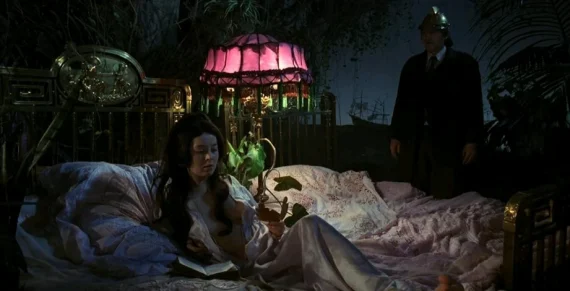
The whole film plays out like a dream, from the opening titles, but mostly from when Józef awakens on that aforementioned train. Everything feels off-kilter and surreal. The only character who seemingly knows what’s going on is a blind conductor (Mieczyslaw Voit) – ironic given he can’t see, yet seemingly sees more than anyone else.
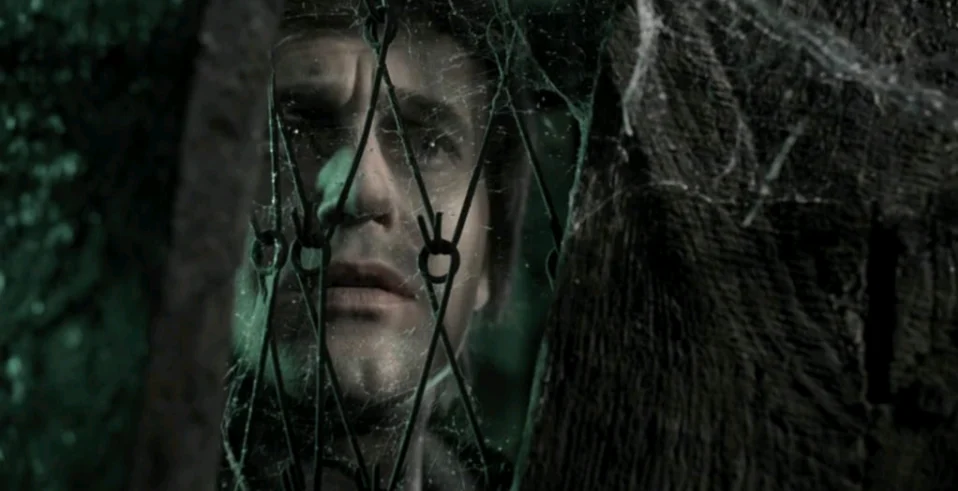
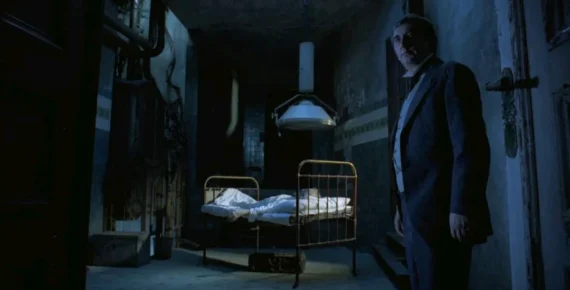
We seemingly travel through a series of wonderful locations, all brought to life through meticulously crafted production design and sumptuous visuals. There’s plenty of depth of field in the imagery, great use of fisheye lenses and a marvellous use of a variety of props that make the world feel incredibly rich and lived in.
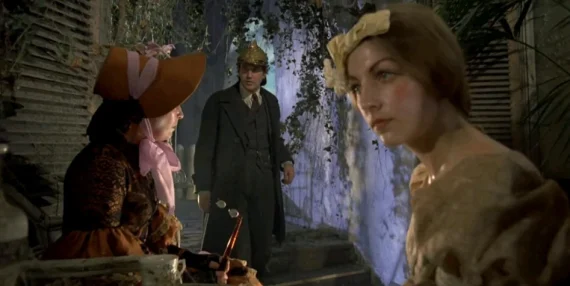
It’s a surreal experience yet, despite the lack of clear answers to what’s unfolding, it never feels too unwieldy and always remains incredible watchable. The commentary by Michael Brooke talks about the focus being on guilty conscience and rising to your responsibilities – when we’re asleep we’re avoiding our responsibilities, and we can feel guilty as a result.
I like this as an explanation but, to be honest, there are many ways you could interpret the film, and that is one of its pleasures. It offers no explanations, but leaves us plenty to ponder. It also provides us with a sense of the atrocities caused through the holocaust in some of the imagery, and a feeling of Has commenting on the Polish authorities and history.
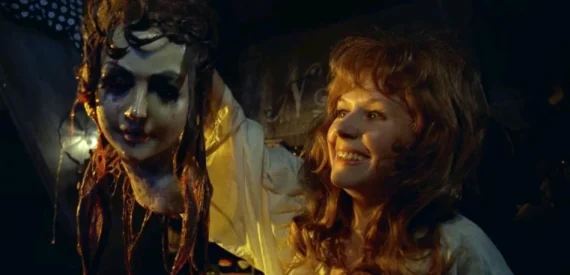
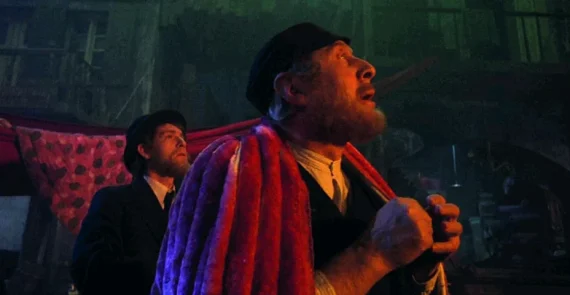
Everything on screen looks gorgeous and part of the reason is the phenomenal cinematography by Witold Sobociński who adorns the screen with some truly breathtaking imagery, some of which is included in the images accompanying this review. It’s a gorgeous looking film though with that beauty also comes horror, terror and a sense of unease. Images of mannequins, skulls and other unsettling elements, create a nightmarish landscape amongst the beauty.
Colour is used incredibly well, particularly the use of green, symbolising death and decay, which grows as the film builds to its unforgettable and perfect climax, which I adored.
I won’t proclaim to have fully understood The Hourglass Sanatorium – or much of it, to be fair – but I loved it, nonetheless. It’s a gorgeous film that I couldn’t take my eyes off. It’s a meticulously crafted, brilliantly acted fever dream-cum-nightmare that’s full of breathtaking production design and cinematography, with sequences that, when paused, look like a painting. Its imagery frequently wowed me and it is a film that, I’m sure, will reward repeat viewings for cineastes who want to unlock its secrets and delve into its background.
Film: 
The Hourglass Sanatorium is released on dual-format 4K UHD and Blu-ray by Radiance on 20th July 2026. The new 4K restoration from the original camera negative is absolutely astonishing. The film has an almost 3D quality throughout, thanks to the depths of the sets, there are no blemishes, detail is rich throughout and there is a very natural colour scheme. It’s a feast for the senses, supported by excellent audio.
4K UHD and Blu-ray limited edition special features:
New 4K restoration from the original camera negative, presented in Dolby Vision HDR
4K UHD and Blu-ray presentation of the feature; world premiere on 4K UHD
Uncompressed mono PCM audio
New audio commentary by Polish film expert Michael Brooke (2026)
Archival interview with production designer Jerzy Skarzynski by filmmaker Jerzy Wójcik (1997, 15 mins)
Accordion – acclaimed early short film from Wojciech Has (1947, 12 mins)
Newly improved English subtitle translation
Reversible sleeve featuring original and newly commissioned artwork by Time Tomorrow
Limited edition booklet featuring new writing by critic Ela Bittencourt and archival writing from Annette Insdor
Limited edition of 5000 copies, presented in full-height Scanavo packaging with removable OBI strip leaving packaging free of certificates and markings
A film like The Hourglass Sanatorium requires some helpful background to help us unlock its mysteries, and the standout extra does this magnificently. It is a new audio commentary by Michael Brooke, who provides an encyclopaedic overview of the film, its director, the background to the production and its themes and effects and so much more. Brooke knows his stuff very well, guiding us through the meaning of the film and looking at many of the scenes and describing how it may have played for audiences at the time of its release in Poland. We learn about the Poland of the time, the actors who feature and those behind the camera. Quite simply this is one of the best commentaries I’ve ever had the pleasure of listening to. Outstanding stuff.
The other two extras are on the Blu-ray disc, with the 4K disc just containing the film and commentary.
Wojciech Has’s debut short Accordion is a real treat. Running for 12 minutes, the short from 1947 follows a shoemaker’s son who dreams of one day owning his own accordion. It’s a heartbreaking silent short, full of wonderful visuals and compositions and a great use of music, which looks excellent too thanks to the transfer. It is incredibly gripping throughout, building to a real gut punch of an ending.
The final on-disc extra is a 1997 interview with production designer Jerzy Skarzynski by filmmaker Jerzy Wójcik, which runs for 15 minutes. Skarzynski’s interview, originally recorded for Polish television, sees him discuss his collaborations with director Has, supplemented by film clips. It’s quite a general interview but a welcome inclusion. I particularly enjoyed Skarzynski’s brief comments about how he chose objects to use in films to create mystery.
I wasn’t provided with the booklet to comment on.
Radiance have provided a small but perfectly formed selection of extras for their new dual-format 4K UHD and Blu-ray edition of the Polish masterpiece The Hourglass Sanatorium. Michael Brooke’s outstanding commentary provides richly detailed background to the film and helps to unlock some of its mysteries and meaning, and we also get a short but strong 1997 interview with the film’s production designer, as well as director Wojciech Has’s devastating but brilliant debut short feature Accordion. Most importantly though, his masterpiece of a feature film The Hourglass Sanatorium, is given a breathtaking restoration which looks astonishingly good.
Disc/Package: 
