


 Directors: Shan Hua, Meng-Hua Ho, Hsueh-Li Pao, Chih-Hung Kuei
Starring: Danny Lee, Hsie Wang, Terry Liu, Lilly Li, Ku Feng, Ni-Tien, Chen-Chi Lin, Jung Wang, Szu-Chia Chen, Kwok-Choi Hon, Lo Leih, Ti Lung, Lilly Li, Sheng Fu et al
Year: 1975-1983
Country: Hong Kong
BBFC Certification: 18
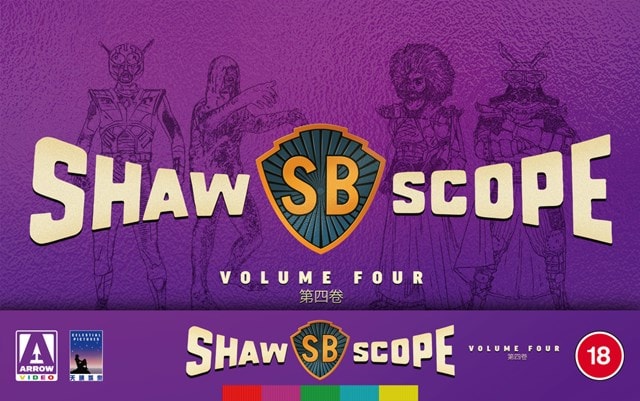
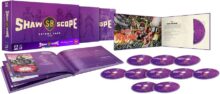
It’s becoming a pretty much annual treat that Arrow Video drops a massive box set of Shaw Brothers films on us at the end of every year as a bit of an early Christmas present. I took a look at Volume Three last November and here we are, once again, with another bumper box of films from one of Hong Kong’s most prolific film studios.
Things are slightly different this time around as volume four focuses on the studios horror, sci-fi and fantasy outputs – the weirder, wilder side of Shaw Brothers. We’ve seen some hints of this before with the likes of Mighty Peking Man, The Boxers Omen and of course the legends that are Buddha’s Palm and Bastard Swordsman, but this set digs deep and brings 16 films worth of bonkers madness and insanity; buckle up and prepare to have your minds melted!
Super Inframan (1975, dir. Shan Hua)
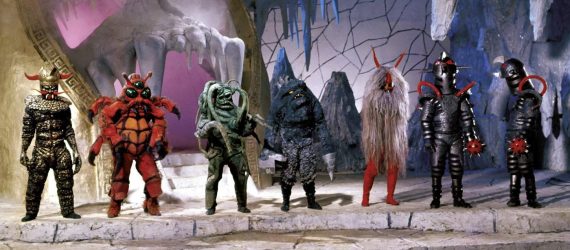
We kick things off with Shaw Brothers’ take on the Tokusatsu genre popularised in Japan by the likes of Super Sentai and Kamen Rider. Danny Lee plays a scientist who gets super armour grafted to his body to help protect the earth against a prehistoric menace bubbling up from its center in the form of Demon Princess Elzebub (see what they did there) and her monstrous hordes.
Despite being clearly aimed at kids, Super Inframan really sets the tone for this set in that a lot of these films are throwing everything at the viewer to see what sticks. We start off with some high octane peril as a school bus is attacked by a flying monster and a city basically explodes, pushing our biker scientists (you read that right) into action to save the citizens.
It’s absolutely ludicrous with production design that wavers between really good (the sets and overall design of Inframan as a character) and wonky (the monsters who look like Super Sentai rejects) and the plot is absolutely all over the place which leads to some distinct pacing issues, particularly in its saggy mid section.
The finale is incredibly entertaining, however, and some of the effects work and kung fu is top notch, but overall Super Inframan is a far too uneven hodgepodge to kick this set off with.


Bonus Features
- Option to view the film in its US theatrical version, Infra-man, with lossless “Stereo-Infra-Sound” surround audio
- Brand new commentary by martial arts cinema experts Frank Djeng & Erik Ko
- Shaws’ Little Dragon, a newly filmed interview with co-star Bruce Le
- Super Ultra Infra Action!, a brand new video essay on Shaws’ tokusatsu films written and narrated by Steven Sloss
Oily Maniac (1976, dir. Meng-Hua Ho)
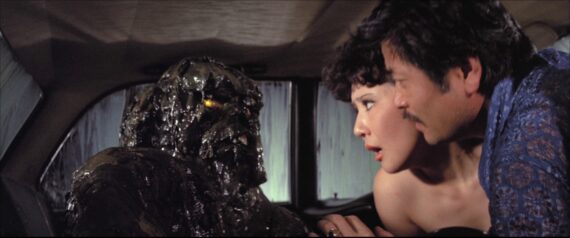
One of the more notorious films on the set is Meng-Hua Ho’s Oily Maniac, the tale of a disabled man given superpowers thanks to black magic shenanigans (something we’ll get pretty familiar with) that turn him into a gloopy revenge monster as he takes revenge on the criminals who wronged him.
There’s a bit of a who’s who of Shaw Brothers here as Danny Lee returns from Inframan alongside Shaw veterans Lilly Li and Ku Feng who rocks up for a few scenes at the beginning of the film. As with Inframan, though, it’s a remarkably uneven affair with a story that kicks off with a healthy dose of melodrama before dipping into the black magic infused madness. Lee’s Shen is a bit of an antihero and his monster costume is suitably icky and green, but the animation as he turns into an oil slick to get the drop on his enemies just looks naff, even for the time, creating a real dissonance in the vfx department.
It’s all a little bit Toxic Avenger but without the self aware irony and Shen’s revenge story kind of gets left behind as he starts to lose his mind and ends up focusing his ire on what he deems “evil” women that he hunts down as the Oily Maniac, basically because he got dumped by his girlfriend. While it does end up bringing things back round there’s definitely a whiff of misogyny to do it this, something that’s not helped by the copious amounts of nudity.
Ultimately, Oily Maniac is a weird, grimy B Movie of the kind that would have made Roger Corman or Lloyd Kaufman proud. It’s way less gory than you’d either expect or hope, though and far too smutty than it needs to be but despite constantly feeling like it should be better than it is, it does have some appeal in its overall bizarreness.
Bonus Features
- Brand new commentary on Oily Maniac by critic Ian Jane
Battle Wizard (1977, dir. Hsueh-Li Pao)
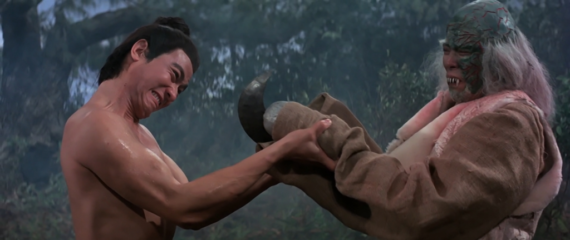
Alright, this is more like it. We’re moving from a grotty slime monster into a fantasy wuxia in which a brother and sister channel their inherited abilities to fight a nefarious band of na’er do wells. When a character blasts someone’s legs off in the opening scene by shooting lasers out of their fingers, you know you’re in for a treat.
This is the kind of bonkers movie that we came here for and it brings a surprisingly coherent story throughout its tight 77 minute run time. We get multiple types of madness as Battle Wizard does not hold back on the black magic; get ready for loads of types of magic vfx, some dodgy looking poison goo and a whole load of live snakes getting thrown at actors (both something you can expect to see more of as we delve into this box set)
It’s a hat trick for Danny Lee who shows up again as our main character, initially an inept fop who eventually unlocks his own hand laser ability (don’t ask) and he’s clearly having a lot more fun here than in either Inframan or Oily Maniac. Add to that fire breathing, extending metal legs and even a fight against a (clearly man in a suit) gorilla and you get some excellent action sequences that add up to a good solid laugh and the first standout film of the set.
Bonus Features
- Brand new commentary on Battle Wizard by Jonathan Clements, author of A Brief History of the Martial Arts
Black Magic (1975, dir. Meng-Hua Ho)
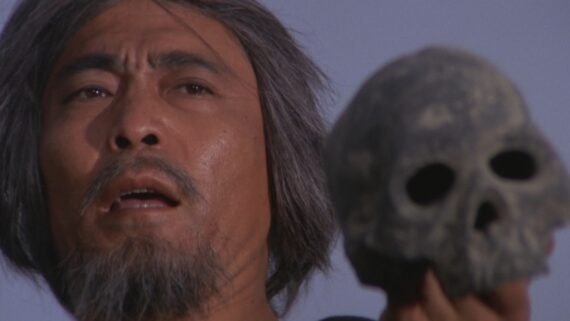
Taking another whiplash-inducing tonal swerve, we come to what is probably our first proper black magic film of the set – I mean, it’s in the title. Meng-Hua Ho’s critically acclaimed tale of witchcraft sees Ku Feng’s evil magician Jianmi hired by Lo Leih’s despicable cad to cast a spell on the woman of his dreams. Things quickly get out of hand and magic is being misused left and right, leading to Weng Chung-Ku’s good sorcerer being brought in to sort it all out.
The contemporary setting of Black Magic brings with it a darker, decidedly more adult tone to this one, exemplified in the opening sequence as a Jianchi casts a death spell on a young couple mid coitus; it only continues from there. This was a second viewing of the film for me and it really hit home how utterly compelling the look and feel of this horror subgenre is. While many of the lower budget black magic efforts from other studios were fairly grimy and despicable (look up the likes of Red Spell Spells Red and Centipede Horror), Black Magic itself is a slick horror production. Despite that, for Western viewers, there’s something utterly alien about the themes and visuals on display here, from the copious amounts of slimy bugs, unidentified gloop and just the general unpleasantness that goes into Jianmi’s magic.
All of this is amplified by Meng-Hua Ho’s excellent use of the Shawscope frame, put to use here far better than in Oily Maniac, with some absolutely beautiful shots. There’s also a touch of soapy drama to the proceedings which isn’t as jarring as it could have been, mostly in thanks to the fantastic cast. As well as Ku Feng and the always great value Lo Leih, we also get performances from Shaw stalwarts like Lung Ti, Tanny Ni Tien, and Lily Li who show up in lead roles. All credit to Feng, however, for his turn as the despicable Jianchi who’s muttered spells give the film the truly evil feel it deserves. An absolutely evil little treat.
Bonus Features
- Brand new commentary for Black Magic by critic James Mudge
Black Magic Part 2 (1976, dir. Meng-Hua Ho)
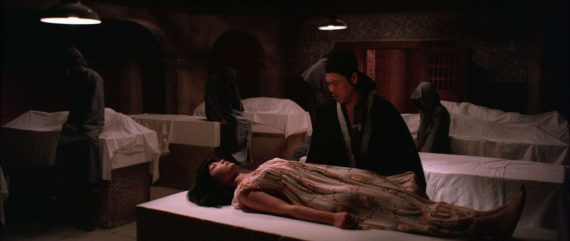
A year after the first Black Magic film, Meng-Hua Ho is back with a second installment. Most of the main cast, bar Ku Feng, return from part 1 but in a big twist they’re not playing the same characters! Instead we now follow the adventures of a group of doctors investigating a series of strange deaths and diseases that have been immediately attributed to black magic because why not. The returning actors make you appreciate how Shaw as a studio mirrored the likes of Hammer in many ways.
Black Magic Part 2 is immediately sleazier than the first film with some rather gratuitous nudity which leads to an unexpected crocodile attack and eventually a wizard catching the guilty croc and teaching it a lesson. This leads to all sorts of fun nonsense with reanimated corpses, possession and death spells and a crazy showdown that even manages to fit in a bit of light kung fu. It’s absolutely gonzo stuff.
It’s Lo Leih’s turn to be the baddie this time as a more suave dark magician. It’s a more natural role for the actor, one we’ve seen him tackle in countless Shaw Productions and the general sleaziness and nastiness on display here is a precursor to his baddie turn in Human Lanterns, another Shaw horror film that’s sadly not included in this set.
While in essence it retreads some similar ground to the first film, the script feels less soapy and it’s definitely got some wilder imagery in it, including the usual amounts of bugs and unidentified goop. Weirder, more sinister and sleazier than the first film, it’s objectively not quite as good but is a much more entertaining ride.
Bonus Features
- Brand new commentary for Black Magic Part 2 by critic Samm Deighan
- Alternate US opening for Black Magic Part 2
Hex (1980, dir. Chih-Hung Kuei)
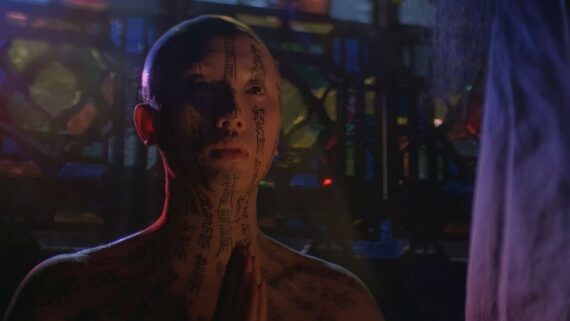
Hex was probably the first film that introduced me to that iconic Shawscope logo, back when I was doing a bit of a deep dive into the Chinese black magic subgenre of horror movies, and it’s a film I was really looking forward to revisiting in this set. To say that this is basically a take on Henri-Georgez Clouzet’s classic psychological thriller Les Diaboliques would sound like a bit of a spoiler but Hex takes the basic concept of that film and spins it out into an insane supernatural tale full of twists and turns that will keep the viewer guessing.
It’s also a lovely looking film with some gorgeous sets, locations and costumes and gorgeous cinematography with static framed shots mixing with some excellent, chaotic handheld work. It’s unsurprising given the pedigree here from director Kuei Chih-Hung, the filmmaker behind The Boxers Omen and Killer Constable, films we’ve seen in previous Arrow sets who brings a very distinctive visual style to the proceedings, and this film kicks off a four movie run for the director in this box set.
We do get a good chunk of melodrama but it’s presented with far more panache than your usual Shaw production and is far more engaging. There’s also a little bit of comedy in its later half (something that’s a bit of a foreshadowing here) but it’s kept very light and doesn’t really disrupt the overall dark tone of the film.
The tale of a sadistic husband who torments his sick wife and mistress is played fabulously by the principle cast with Jung Wang delivering a strong performance as Chun Yu. He’s a truly odious character and the first act build up truly leads you to want him to come to a grisly end. Shaw regular Tanny Ni Tien appears as Sau Ying, Chun Yu’s abused wife and is largely the driving force of the plot. It’s fascinating to see Tanny shed all her usual iciness to play a frail and vulnerable character, but it’s Szu-Chia Chen who’s the standout here as Yee Wah, the couple’s maid and Jung’s mistress, whose mind deteriorates through the course of the film, leading to the bonkers finale.
The horror here is somewhat more underplayed than the likes of Black Magic, with less reliance on weirdness and a greater focus on ghosts and other more spiritual aspects, but it does go all out in those last 15 minutes with some iconic and crazy imagery. With a great story that’s brilliantly acted and shot, Hex is still a standout in the Shaw Brothers canon for me and possibly the best film in this collection.
Bewitched (1981, dir. Chih-Hung Kuei)
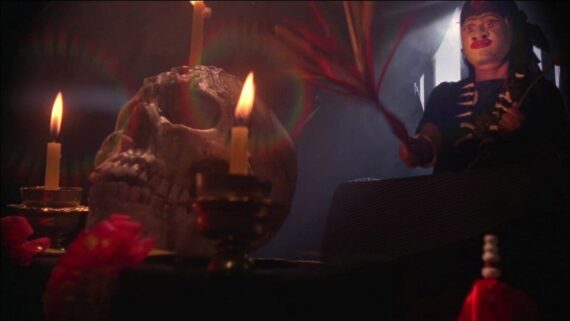
This second in our run of Chih-Hung Kuei films feels like an outlier as we don’t start with the usual Shawscope logo.This is because this isn’t filmed in the usual Shawscope widescreen, instead delivering a 1.85:1 frame with largely handheld camera shots to create a film that’s unlike anything we’ve had yet in this set – but one which will be familiar to viewers of previous Shawscope collections.
Bewitched is a dark and foreboding black magic thriller. We start out with what is largely played as a police drama with the gruesome discovery of the decomposing corpse of a young girl found in a park, a large iron spike hammered into the top of her head. When her father is arrested and charged with her murder, the investigating officer discovers a dark black magic plot stretching back to the fathers trip to Thailand, and one which dips him into madness and insanity.
Ostensibly a precursor to Chih-Hung Kuei’s later The Boxers Omen, Bewitched has a remarkable sleaziness to it that we’ve not yet seen in this set. It’s full of surreal imagery with floating skulls, wriggling insects and gloopy corpses and nudity aplenty with several shots being given the added sheen of being filmed through a prismatic lens, allowing colours to bounce off lights, elevating the otherworldly tone. There’s some superb production design with the sets and lighting that only elevates how surreal and otherworldly the experience is, particularly as the film starts to delve into some deeply weird stuff in its last act.
Cast wise we have some strong performances with Fei Ai playing the girl’s father. After his Thai jaunt leaves him cursed when he jilts the wrong woman, it’s heartbreaking to watch his descent into madness lead to the final act of him taking his daughter’s life. But Malaysian actor Hussein Abu Hasan is absolutely the standout here, shining as the demented hexer Magusu, putting himself through some ridiculous physical acts leading up to the film’s finale. It’s likely that this led to Hassan’s casting in some of the more notorious black magic films, the aforementioned Red Spell Spells Red and Centipede Horror a couple of years later and, while this is a relatively more restrained showing, there’s still a demonstration of a willingness to go above and beyond for this crazy art.
It does take some leaves out of the Black Magic duology but Bewitched feels like a completely different beast, dark and grimy with a thoroughly nasty undertone and absolutely one to watch for horror fans. A word of warning though – both this and Hex feature some scenes of animal cruelty involving snakes and chickens which may be problematic for some viewers.
Bonus Features
- Brand new commentary for Bewitched by critic James Mudge
Hex Vs Witchcraft (1980, dir. Chih-Hung Kuei)
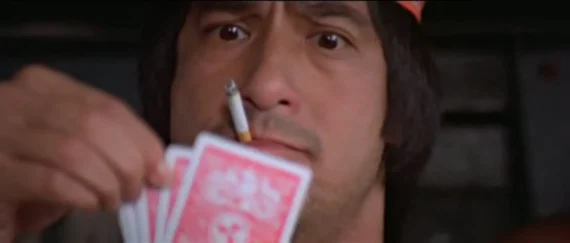
Now, dear reader, I’ve constantly been impressed at how well Arrow have curated the films that they’ve included in these box sets. Even those which I’ve considered to be lesser than the more extravagant and exciting efforts have at least been entertaining. Which led me, when 15 minutes into Chih-Hung Kuei’s Hex Vs Witchcraft, to exclaim “What the hell is this?!”
Allegedly a follow up to the superb Hex, what we have here is a sequel in name only; a straight up comedy, complete with zany music that bears absolutely no frame of reference to its predecessor apart from the fact that it’s got some spooky goings on. As with many foreign comedies I like to go in with the benefit of the doubt that some of the jokes are going to fly over my head, but Hex Vs Witchcraft is just plain bad. Within 10 minutes we’ve had some bizarre attempts at fourth wall breaking from our loathsome lead Cai Tou (James Yi Lui) who gets into trouble with gangsters and attempts to pay them off by getting his wife drunk so he can pimp her out to them.
The story just spirals out from here as Cai Tou gets into a demonic agreement with a man to marry the ghost of his dead daughter, leading to said spirit possessing various other women to get physical with Cai Tou. There’s lots of slapstick kung fu, inappropriate humour and a remarkable amount of incredibly racy nudity. But there’s also a weirdly dark undercurrent to everything as Cai Tou’s gambling habits lead to various (failed) suicide attempts and eventually an obsession with drunkenly flashing everyone.
This definitely feels like an attempt to ape the likes of the bawdy sex comedies of Animal House or Porkies while adding in a light sprinkling of the black magic ideas that were popular at the time. In some ways it’s definitely a black comedy with a sense of gallows humour but aside from a few chuckles the humour really did not land with me at all.
Despite some genuinely lovely photography, it’s a fairly excruciating and painful watch with very little to recommend. Each of these sets is destined to have a duffer in it and Hex Vs Witchcraft is probably the duffest Shaw Brothers film I’ve seen.
Hex After Hex (1982, dir. Chih-Hung Kuei)
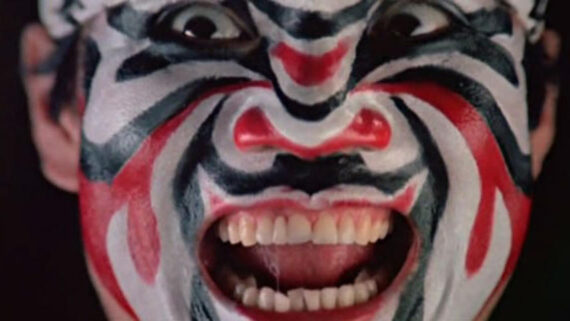
We end our quadrilogy of Chih-Hung Kuei movies with Hex After Hex, a direct sequel to Hex Vs Witchcraft which this time sees Meng Lo of the Venom Mob (the titular Kid With The Golden Arm) star as Tsang Ma Su, a stuntman (working for Shaw Brothers in another mad fourth wall breaking gag) who’s haunted by Cai Tou’s ghost wife from the previous film. This time, though, she possesses the body of a recently deceased woman, forming a proper relationship with Tsang rather than the weird… whatever it was we got in Hex Vs Witchcraft.
It’s still goofy with its humour but Chih-Hung also brings a weirder edge to the proceedings this time around, starting with the utterly surreal title sequence. Lo Meng meanwhile is a much more affable lead character and the film largely steers away from the more misogynistic aspects of its predecessor. There’s a smattering of black magic weirdness; nothing too strange and gloopy, but there’s some good use of ghost effects and even some metamorphoses which allow for some pop culture references (hello legally distinct Yoda and Darth Vader)
The humour overall is also more of an anarchic, surrealist and at times dystopian comedy this time around, closer to the likes of Zucker Zucker Abrams mixed with Terry Gilliam’s Brazil than the crass National Lampoon stylings of Hex Vs Witchcraft. While there are some fun moments, like a couple of fight scenes which give Meng Lo a chance to stretch his action chops and some more creepy ghost scenes, overall it just manages to drag its thin premise out over too many loosely connected setpieces which go on for far longer than they need to, leaving both this and Hex Vs Witchcraft as categorically the worst disc of the set.
Bonus Features
- Additional Mandarin voiceover clip for Hex Vs. Witchcraft
Bat Without Wings (1980, dir. Yuen Chor)
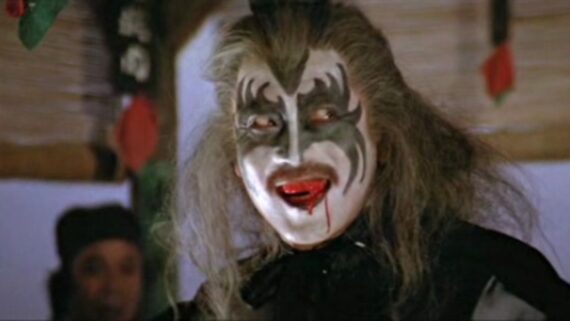
And breathe… After a couple of duffers, we’re back with some solid action in the form of Yuen Chor’s horror wuxia, Bat Without Wings. Ku Feng steals Gene Simmonds’s makeup to play the titular villain, an ancient evil warrior once thought defeated who returns to enact bloody revenge on the descendents of those who beat him. There’s plenty of twists and turns on the way, however, as nothing is what it seems…
A brilliant supernatural edge takes what could have been a fairly standard but entertaining wuxia and elevates it to something else entirely. Yuen Chor, director of the excellent Intimate Confessions of a Chinese Courtesan, once again delivers a superb looking film, with incredible visuals. Every frame is filled with bold, bright colours from the characters’ costumes, to the red of the blood they spill and the big, bold sets look sumptuous in that big Shawscope aspect ratio.
While the swordplay and kung fu action is brilliant here, the horror works really well too, full of spirit realm madness, spooky ghosts and dismembered corpses. There’s an elevated fantastical approach to everything that lends the film a feel of a Chinese folk tale.
The plot does sadly lose some focus as it bounces from one set piece to another which does weaken the overall package somewhat, but it’s a glorious throwback to those older Shaw Brothers films, given a unique twist that’s well worth a watch.
Bonus Features
- Brand new commentary by critic Samm Deighan
Bloody Parrot (1981, dir. Shan Hua)
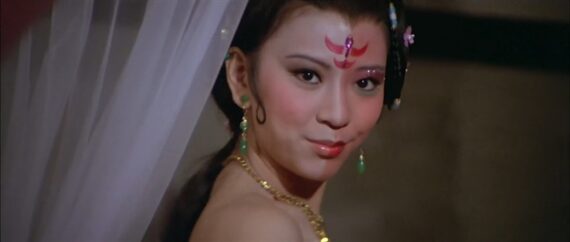
We go from one horror infused wuxia to another this time with the tale of a family cursed by a demonic parrot that grants wishes, albeit with a monkey’s paw-like twist. From this set up we spiral out into a tale of theft, demonic possession, vampires and sword fights aplenty.
This one has some incredibly demonic and sleazy vibes with some gruesome weirdness and icky gloop reminiscent of Shaw’s black magic focussed horror, but manages to inject some brilliantly energetic fight scenes into the proceedings, meaning that there’s never a dull moment.
It’s deeply surreal, even more so than Bat Without Wings, with a plot that goes all manner of places, and is remarkably adult. As well as copious amounts of nudity (mainly from the remarkably game and utterly stunning Jenny Liang) there’s an incredibly brutal streak of violence in here with a good crunchiness to the fights and bright red, thick blood freely covering many scenes. The finale in particular manages to build and build to feature some truly nightmarish imagery.
Director Shuan Hua mixes some sumptuous location shooting and fabulous sets with engaging cinematography to deliver a film that looks absolutely gorgeous. While the plot barely makes any sense, stringing together an excuse to bounce from one set piece to the next, the vibes are impeccable, making this a genuinely entertaining film.
Bonus Features
- Brand new commentary by critic Samm Deighan
The Fake Ghost Catchers (1982, dir. Liu Chia-Yung)
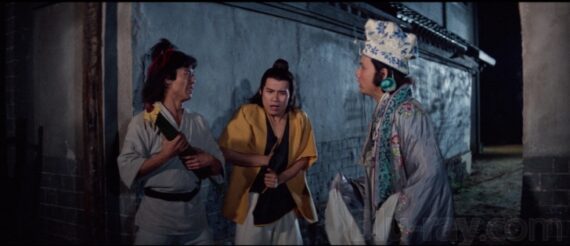
Slipping back into comedy territory but keeping the period trappings, The Fake Ghost Catchers sees a pair of conmen hired by the real ghost of a murdered woman to hunt and trap the demonic spirit of her former lover. Hijinx ensues.
With opening music that sounds like it’s been yanked from a 70’s Lucio Fulci joint, you’d be forgiven for thinking that The Fake Ghost Catchers was a straight up horror film, but the comedy actually manages to deliver pretty well here. It does help that the action is also a lot of fun, mainly thanks to Shaw rolling out some of their better comedy performers in the shape of the likes of the great Sheng Fu and Hsiao Ho who use their Kung Fu chops to deliver some fun slapstick. Cheung Chin-Pang stands out here though as the central action star who even pulls off an uncomfortable looking but nonetheless impressive fire stunt.
While the basic story treads some similar ground to Hex Vs Witchcraft with its possession antics and gambling sub plot it manages to be far more engaging and entertaining despite a somewhat overstuffed plot. With the tone and some of the horror beats, you’d be forgiven for thinking this was a parody of Ghostbusters but The Fake Ghost Catchers came out in 1982, a good two years before Ivan Reitman’s horror comedy classic.
Despite its pacing flaws, this one’s great fun and worth sticking on for a laugh or two.
Demon of the Lute (1983, dir. Tak-Cheung Tang)
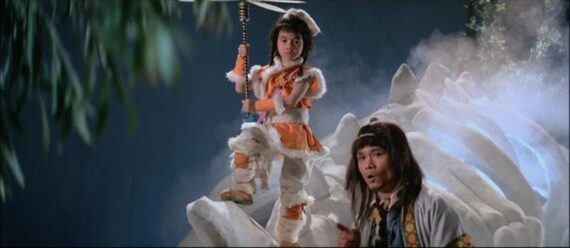
I wasn’t expecting to see a straight up kids film on this particular Shawscope volume, but that’s exactly what Demon of the Lute is from its big bold Saturday morning cartoon-esque title sequence to its preamble describing it as a “Wuxia Film Dedicated To Kids”. But don’t let that put you off; Demon of the Lute is a fantastic and incredibly fun film.
The story is pretty straightforward – the titular Demon of the Lute returns after years in exile and a band of misfit warriors team up to take him down and discover his true identity. This is very much a fantasy adventure film, cut from the same cloth as the likes of Ridley Scott’s Legend, Krull and (with its slightly more light hearted tone) The Princess Bride, but being a Shaw production we get a lot more extra nonsense than you’d find in those Western counterparts.
There’s plenty of Kung Fu action with a healthy dose of wire work and the vibe is reminiscent of the silliness of Buddha’s Palm with a brilliant fantasy feel to the set and costume design. There’s some absolutely bonkers baddies coming and going from the story and the hyperactive action and storytelling really lend this the feel of a live action shonen style anime. Despite being a kids film, it’s certainly not childish but the action is toned down to the levels of a Saturday morning Tokusatsu.
One thing that immediately stood out to me here is the character of Ding Dong; you don’t always get child actors in these films but tiny Kei Kong-Hung is brilliant here as a young thief who gets wrapped up in all the supernatural adventures. On the adult side, Chin Siu-Ho is great as stoic hero Yuan Fei while Kara Wai Yin-Hung brightens up the screen as the ever optimistic mystic warrior Fung Ling.
It’s a rarity to find a kung fu film that would be a great family watch, but Demon of the Lute absolutely delivers; Your mileage will most definitely vary as to how much you enjoy this but I thought it was an absolute blast.
Bonus Features
- Brand new commentary for Demon of the Lute by martial arts cinema expert Frank Djeng
Seeding of a Ghost (1983, dir. Kuen Yeung)
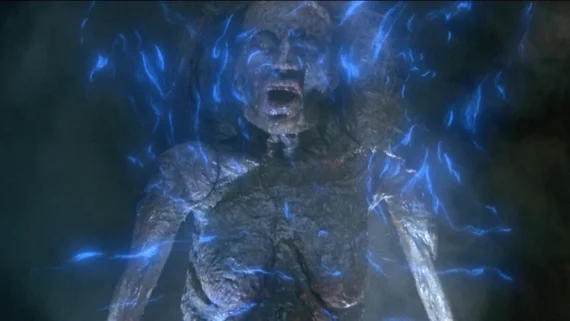
In another savage act of tonal whiplash we move from the lightest film in this collection to what is probably the darkest. Starting with a bit of light grave robbing by a skeezy little black magic practitioner, we move into the main plot fairly rapidly as said hexer is knocked down by a taxi driver while escaping arrest. This leads to the taxi driver becoming inadvertently cursed, his wife being kidnapped, assaulted and murdered and the hexer subsequently being hired to enact black magic fuelled revenge on those who perpetrated the crime. Jolly stuff indeed.
Seeding of a Ghost is sleazy as hell, a very 80s exploitation flick like a black magic infused Death Wish. We’ve got some genuinely unsettling imagery here with plenty of gore and nudity; the inciting act on the character of Irene, sexually assaulted by a pair of thugs, goes on for an uncomfortable amount of time and the resulting revenge sequences don’t fare that much better.
It also doesn’t help that the characters are relatively paper thin; Norman Chu and Philip Ko are the closest the film has to protagonists, but they’re both fairly despicable in their own ways, as are our two young villains, so the real focus is on how crazy the black magic is willing to go for Irene to exact her revenge.
From that angle there’s a real grimy feel to the film, with Irene’s emaciated, reanimated corpse (which our hexer uses to focus the revenge spells) providing a particularly nasty visual. We also get mouthfuls of worms and other assorted ickiness, as well as some other nightmarish imagery. It’s not the kind of psychedelia we’ve seen in the likes of Black Magic and Bewitched and is genuinely unsettling at times, dipping to some fairly extreme territory in the final act.
It’s all underpinned with a sinister synth score but it’s sadly undermined by some uneven production values. A lot of the earlier scenes have an air of cheapness about them with some flat lighting and wonky sets that do detract from the overall package, but this does add to the low budget grindhouse feel and as it goes on Seeding of a Ghost is a truly mind melting trip – if you have the stomach for it!
Bonus Features
- Brand new commentary for Seeding of a Ghost by critic James Mudge
Portrait in Crystal (1983, dir. Shan Hua)
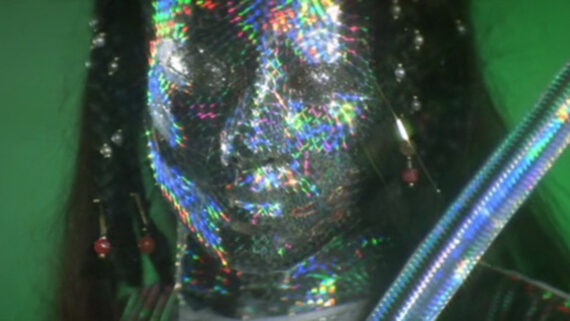
While Seeding of a Ghost was a grimy, nasty, low budget feeling ghost story, Portrait in Crystal brings us back into that tasty widescreen, high budget presentation you expect from Shaw Brothers. Despite a name that sounds like an early Dario Argento film, this is a gloriously bloody fantasy horror wuxia that doesn’t waste time in throwing madness at the viewer.
We start in media res with a little backstory around giving life to crystal sculptures and find our hero artist Lung Fei trying to do exactly that. When his crystal sculpture does seemingly come to life only to begin hunting down and killing various gangs of nefarious baddies, Fei has to go on the run to try and clear his name and find out just what kind of insane world of mysticism he’s managed to get himself into.
There’s a real grindhouse nastiness to some of the violence but it’s so over the top as to be incredibly fun. Admittedly it doesn’t always gel with some of the slightly goofier moments. But there’s also some brilliantly choreographed sword fights and Kung Fu to distract.
In the vein of the likes of Buddha’s Palm or this sets Battle Wizard, the pace is absolutely breakneck, almost never letting up and frequently bombarding the viewer with action, horror, lasers and gloopy black magic weirdness. It looks fabulous to boot with some superb sets and cinematography as well as some lovely looking exteriors. It’s also probably the only film to ever end with the message “With thanks to the Hong Kong racing pigeon association”
Twinkle Twinkle Little Star (1983, dir. Kwok-Ming Cheung)
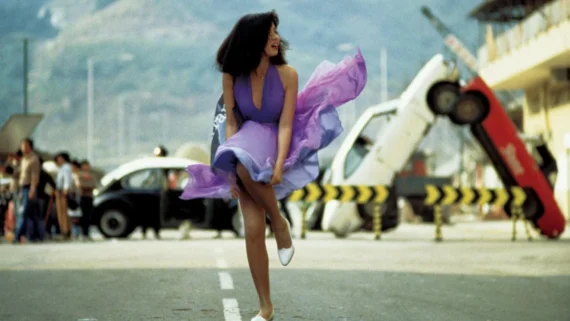
Rounding out the set we have another bizarre, contemporary set comedy film, albeit one which injects a little sci-fi into the mix. Starting with a remarkably epic title sequence that apes Richard Donner’s Superman, adding in some rather epic music to boot, before being dumped into a scene that echoes Close Encounters of the Third Kind.
The big budget vfx feel doesn’t last too long, though, as we quickly do the usual late stage Shaw Brothers trick of moving between seemingly unrelated setpieces at breakneck speed with a typically copyright baiting pastiche of superhero movies and sci-fi franchises. There’s dance routines, alien abductions, weird science, social commentary on the political condition of China… the tonal changes are positively whiplash inducing.
It’s a very broad comedy and as with other comedies in this set the humour doesn’t always land thanks to some cultural and generational differences, but it skews incredibly daft and actually manages to elicit quite a few laughs while (mostly) steering away from some of the ickier mysogyny that hung over the heads of the other two broad comedies in this set, Hex vs Witchcraft and Hex After Hex.
The cast is pretty decent here bringing a broad range of comedy chops and James Yi Liu returns from Hex Vs Witchcraft, here playing a far less odious character who gets some great comedy moments. The humour is very much a cross between Zucker Zucker Abrams and Monty Python and the overall production values are decent enough that this is a very watchable film – it’s definitely a strange one and probably not one that is very good, but when it works it’s remarkably entertaining.
Bonus Features
- Seamless branching option to watch Cantonese version with additional scene from Mandarin version
- Brand new commentary by martial arts cinema expert Frank Djeng
- Newly filmed interview with director/co-writer Alex Cheung
- Newly filmed appreciation by film scholar Victor Fan
- Theatrical trailer
Bonus Disc
The final disc in this set presents a series of extra assorted bonus features.
- Hong Kong: The Show of Mister Shaw, a 1972 French TV profile of Shaw Brothers
- Brand new video essay on Ho Meng-hua written and narrated by Grady Hendrix
- Newly filmed appreciations of Super Inframan by Leon Hunt, Luke White and Kim Newman
- Newly filmed appreciation of Bat Without Wings by Wayne Wong
- Newly filmed appreciation of Demon of the Lute by Luke White
- Newly filmed appreciations of Battle Wizard and Demon of the Lute by Victor Fan
- Theatrical trailers for most of the films in the set, some never seen on video before
Final thoughts
Shawscope Volume 4 is a strange beast; a smorgasbord of some of the weirder productions from the team at Shaw Brothers, not all of which hit as well as their more classic wuxia and kung-fu movies. Tonally this set is really all over the place making it very hard for a broad recommendation and there are a few genuine duds here in the form of the two Hex “sequels” – be that as it may, there are also some stone cold classics such as the original Hex, Demon of the Lute and the two Black Magic films, and the more supernatural efforts as a whole are a fantastic inclusion for horror fans.
The bonus features, though, are genuinely superb, adding the usual layers to the commentary around these films. It’s interesting to see some of the more contemporary efforts here delve into some more social issues, particularly around the political position of Hong Kong’s independence, something that was becoming more widely discussed in the early 80’s, as well as some commentary around the influence of China.
It’s brilliant that prestige labels like Arrow, 88 Films and Eureka! are bringing more esoteric and little seen films to the west from studios like Shaw Brothers and, while not everything can be a winner, the fact that these films are being lovingly rescued from obscurity, cleaned up and presented in these massive, deluxe packages should be something to be championed if at least from an archival point of view.
Shawscope Volume 4 is a fantastic addition to the Arrow catalogue, albeit one that feels a little lesser than previous sets thanks to the more esoteric and uneven nature of the films included. For that reason it’s a little harder to recommend to viewers who are perhaps looking for more wuxia and kung fu, but if you’re in the market for sampling the weirder side of Hong Kong cinema, you won’t go wrong by picking up this box set.