


 Director: John Waters
Screenplay: John Waters
Starring: Liz Renay, Mink Stole, Susan Lowe, Edith Massey, Mary Vivian Pearce, Jean Hill, Brook Blake, Karen Gerwig, Jay Allan, Al Strapelli, George Stover, Turkey Joe, George Figgs, Cookie Mueller, Pat Moran, Sharon Niesp, Dolores Deluxe
Year: 1977
Country: United States
Running Time: 90 min
BBFC Certificate: 18
Filmmaker John Waters has had a varied career from director and writer of cult and mainstream films to author, stage performer and artist. Depending on whether you’re a cult movie fan or watch more populist films, you’ll likely know him best for his shock movies of the 1970s into the 1980s or efforts like Hairspray (1988), which became a Tony Award-winning Broadway musical in 2002.
For me, his most interesting work came in the 1970s and ’80s with the likes of Multiple Maniacs (1970) and Polyester (1981) flanking his ‘trash’ trilogy Pink Flamingos (1972), Female Trouble (1974) and, the subject of this review, Desperate Living (1977).
Desperate Living follows hysterical housewife Peggy Gravel (Mink Stole) who murders her husband with the help of her disgruntled housekeeper (Jean Hill). In the words of Criterion, the newfound “sisters in crime” escape to the bizarr0 shantytown of Mortville, a depraved penal colony of outcasts and criminals, presided over by a despotic queen (Edith Massey) whose tyranny pushes her subjects to shocking revolt.
The trademark shock cinema of Waters follows, including deviant police officers, death by dogfood, DIY surgery and much more, such as a memorable wrestling match and a variety of other sequences that will last long in the memory of viewers. It is the only one of the ‘trash’ trilogy to not feature the iconic Divine, star of the previous entries in the depraved trio of films, who was unable to take part due to being committed to appearing in the play Women Behind Bars in London.
If you’ve seen some of the early works, in particular, of Waters, you will have an idea of what to expect – a blistering script, low budget filmmaking, theatrical acting, plenty of shocking, censor-baiting sequences, strong female and queer characters and a touch of the 1950s melodramatic films of Douglas Sirk. Waters wrote, directed and produced this one and it feels like a quintessential Waters film.
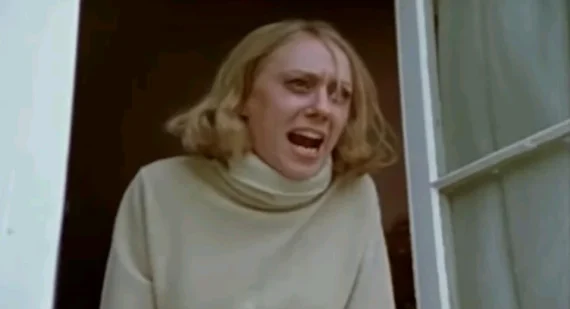
The film plays out like a fairytale complete with the type of ending you’d expect, but viewed through the lens of those aforementioned Sirk masterpieces. The acting is very theatrical and hyper-real, with Mink Stole as Peggy being deliciously over-the-top, enraged, emotional and shouting her dialogue in the opening sequences.
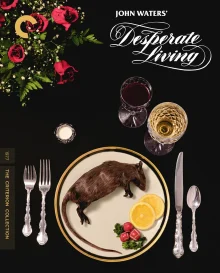
The film is beautifully shot by director of photography Thomas Loizeaux, with some striking images like the meticulously framed opening titles which play alongside a dinner set and flowers, with the plate of food frequently changing and at one point featuring a very unique dish.
The production, set and art design by Vincent Peranio, supported by costume and make-up design by Van Smith, is fabulous and creates a rich and vivid shantytown landscape. There are some small moments of real on-location filming in Baltimore, too, where Mortville was built for the film. In addition, Chris Lobinger provides the first classic-like score of Waters’ career, which plays over the opening titles and then sporadically throughout the film.
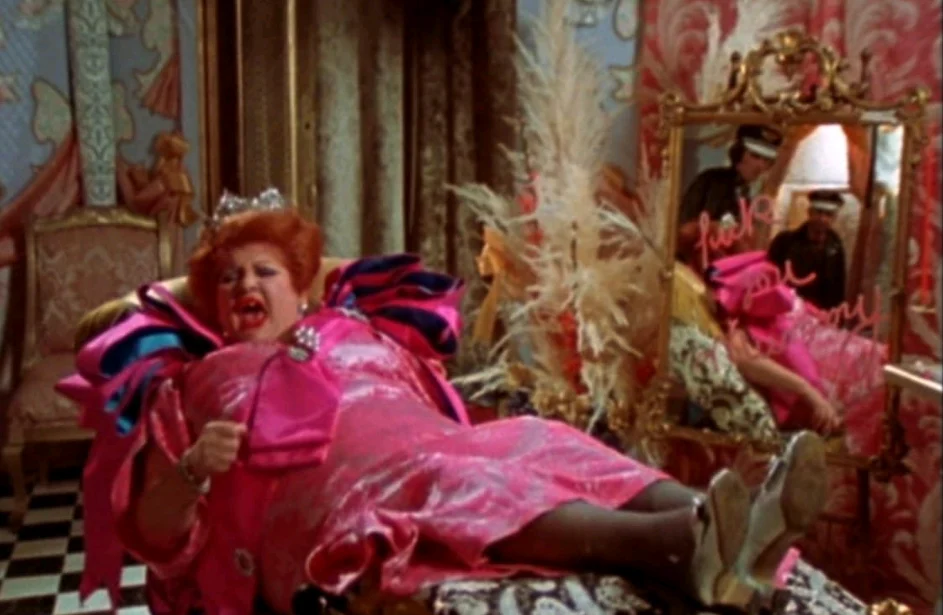
There are some deliriously over-the-top performances, including the central duo of Mink Stole as Peggy and Jean Hill as her housekeeper Grizelda. But even these are outshone by some of the denizens of Mortville, including Liz Renay as Muffy St. Jacques, Susan Lowe as Mole McHenry, Edith Massey as Queen Carlotta and Mary Vivian Pearce as the queen’s daughter Princess Coo-Coo.
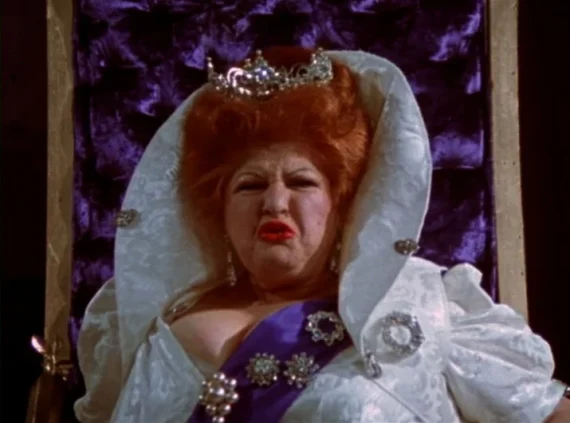
Massey is delightful as the Queen of Mortville, who has her own throne and servants and spends her time relentlessly suppressing her daughter. To add to the fairytale vibes, she even has her own sorceress towards the end of the movie. I shall not spoil which character becomes the sorceress but the sequences are a hoot.
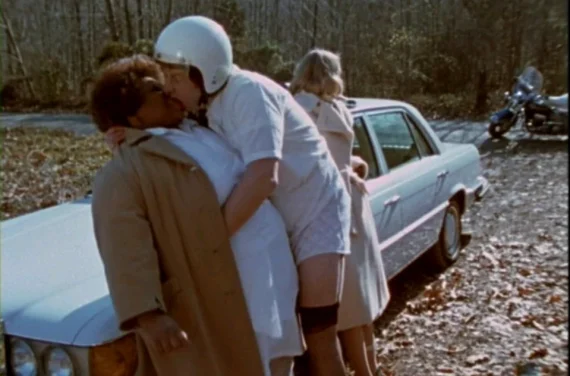
All of the characters are given a chance to shine and those portraying them deliver some very funny dialogue or theatrical performances. Also look out for some wonderful minor roles, including Turkey Joe as a motorcycle-riding cop with a penchant for cross-dressing who pulls Peggy and Grizelda over, guiding them to Mortville and setting the thrust of the plot in motion.
One final point on the acting: Lowe’s role as Mole would have been played by Divine. Whilst it would have been fitting for Divine to have closed out the trilogy, having headlined the previous two films, I really enjoyed Lowe’s performance.
And then there are the shock sequences including, but not limited to, cockroach eating, the aforementioned death by dogfood, a wrestling match which ends with an eye being pulled out and stamped on, graphic – though comically shot – sex and nudity, and two moments of graphic violence in the closing stretch that I shall not spoil. Critics apparently walked out of early screenings and it proved controversial upon release. It’s easy to see why.
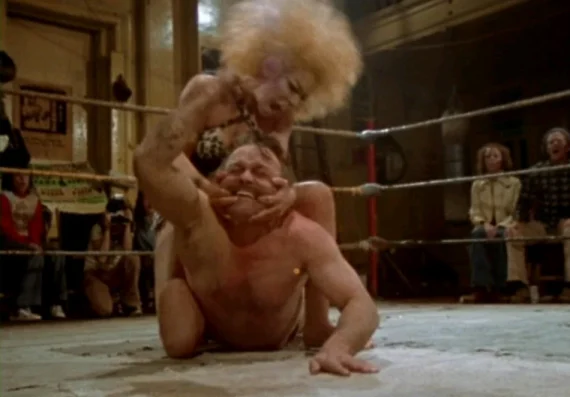
The script paints a portrait of class divide, with Queen Carlotta terrorising the citizens of Mortville and in conflict with punk lesbians who rebel against her tyrannical rule. It all plays out, as mentioned earlier, like an adult fairytale which adds to the off-kilter effect and it works brilliantly for it.
Waters has plenty to say about class and fascist-rule and even delves into gender reassignment. The fairytale allows this to be delivered in an entertaining way that is never preachy but is certainly a conversation starter, with, I’m sorry to say, some tangible parallels to the modern-day world of 2026.
In closing, Desperate Living is a fitting and outrageous conclusion to the 1970s trash trilogy of John Waters, which was preceded by Pink Flamingos and Female Trouble, two of the other Waters movies that have been released by Criterion. It features a witty script which provides a modern-day fairytale, complete with a Queen who terrorises her citizens, is a celebration of outsider culture and a perceptive look at class conflict and fascism, all played like an over-the-top black comedy. Its themes sadly chime closely with some of the challenges we face in the world today. It is one of my favourites of the director’s films and is given a new chance to shine by the Criterion Collection.
Film: 

Desperate Living is released on 20th July 2026 on dual-format 4K UHD and Blu-ray from the Criterion Collection. It includes a new 4K digital restoration, supervised and approved by director John Waters, which looks great. The film was shot in 16mm but blown up to 35mm for its theatrical release. Here the 16mm stock looks very good with rich detail and the wonderful colour scheme popping. Given it was shot on 16mm, it is never going to be the best looking film ever, but Criterion provide a fantastic transfer and presentation of the movie, supported by very clear audio that sounds great. Overall, it’s a brilliant presentation of the film.
Dual-format 4K UHD and Blu-ray special edition features:
New 4K digital restoration, supervised and approved by director John Waters, with uncompressed monaural soundtrack
One 4K UHD disc of the film presented in HDR and one Blu-ray with the film and special features
Audio commentary featuring Waters and actor Liz Renay
Optional dubbed Italian track
New conversation between Waters and film programmer Cristina Cacioppo
Back to Mortville, a tour of the film’s main Baltimore location, led by Waters
New interview with actors Susan Lowe, Mary Vivian Pearce and Mink Stole
Interview with production designer Vincent Peranio
Trailer
English subtitles for the deaf and hard of hearing
PLUS: An essay by critic Grace Byron
The 4K disc contains the film and a commentary by director John Waters and actor Liz Renay, who plays Muffy, which was recorded in 2004.The pair are both on great form, sharing lots of background, from the challenges of the title sequence to a look at the production design. There are plenty of little nuggets to take from the commentary and it’s a joy to listen to from start to finish.
The disc also contains “Dubbed Italian” which is certainly a curio. The film was re-dubbed and the dialogue changed for the Italian release of the movie, which changes the tone and meaning of it. As a one-off viewing experience, it’s certainly of interest, and a nice inclusion but not something I’ll probably return to.
The Blu-ray disc contains the film, commentary and Italian dub track plus the rest of the extra features under a section entitled “It isn’t very pretty”.
The new interview with Waters runs for 28 minutes and is absolutely brilliant. Waters is on fabulous form, explaining the background to the making of the film and the genesis of the story. He also shares the reaction to the film, why he made it like a fairytale, and how he always likes to surprise the audience. He shares his writing style, casting and much more. Wonderful stuff.
Return to Mortville is a new piece designed to celebrate the 50th anniversary of the filming of the movie and sees Waters return to the Baltimore location where the fictional town of Mortville was created for the film. The 13-minute piece is great, as we get to the see how the Baltimore locations look now, hear Waters sharing some stories of those involved and meet the current owners of the location where Mortville once stood. I could listen to Waters all day, so for me this is another great piece.
Next, we have another new piece, featuring interviews with Mink Stole, who plays Peggy; Susan Lowe, who plays Mole; and Mary Vivian Pearce, who portrays Princess Coo-Coo. The interviews run for 18 minutes and sees the trio interviewed together, with their comments playing as audio-only over a range of production stills, like a short commentary. The trio come across really well and are warm and enthusiastic about the movie. They talk about getting the roles, how they were urged to always stay on script – though they do describe one moment of improvisation for one of the sequences of Peggy late on, and plenty more. It’s another fabulous interview.
A 2004 interview with production designer Vincent Peranio runs for eight minutes and includes a chance to see some of his photos from the production. There are some insightful comments about how the production design was done and how some of the sets were made.
The two-minute trailer features a fun voiceover and some of the less graphic outrageous sequences.
I wasn’t provided with the leaflet essay, so am unable to comment on that.
In conclusion, the Criterion Collection have provided a fantastic dual-format 4K UHD and Blu-ray edition of the John Waters trash classic Desperate Living. The 16mm production looks likely as good as ever thanks to an excellent restoration that showcases fine detail and a natural colour scheme. The film is supplemented by an entertaining archival commentary and an archival interview, as well as an hour of new extras, including two fascinating interviews with director Waters and a collection of interviews with three of the cast members. Highly recommended for fans of the director and his films.
Disc/Package: 