



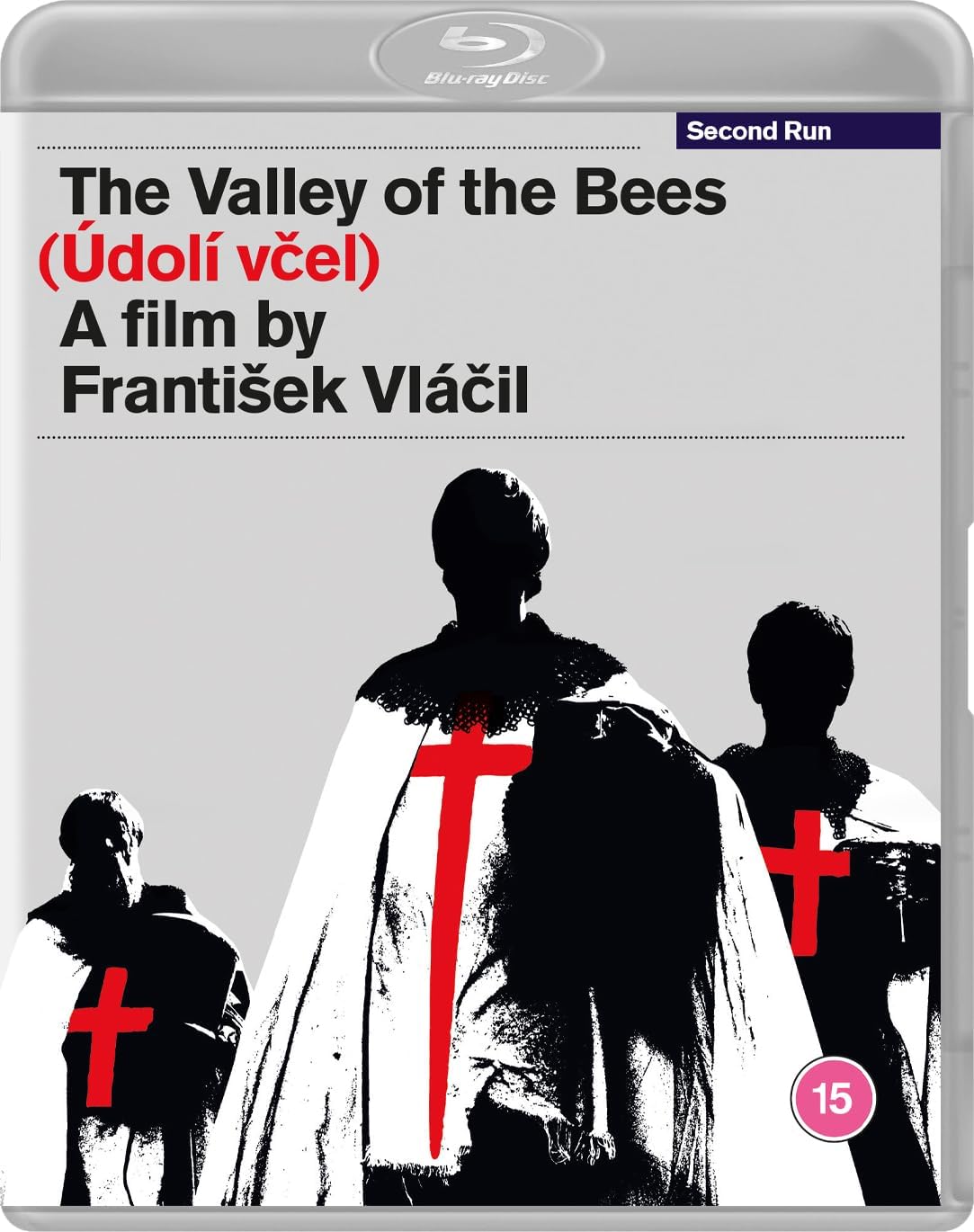
 Director: František Vláčil
Screenplay: Vladimír Körner, František Vláčil
Starring: Petr Cepek, Jan Kacer, Vera Galatíková, Zdenek Kryzánek, Miroslav Machácek, Josef Somr
Country: Czechoslovakia
Running Time: 101 min
Year: 1967
BBFC Certificate: 15
František Vláčil’s 1967 film Marketa Lazarová was voted the best Czech film ever made by a survey of some of the nation’s critics in 1998. Its director was given a lifetime achievement award at the Karlovy Vary Film Festival that year too. Marketa Lazarová has even been granted the privilege of being added to the illustrious Criterion Collection.
However, other than this acknowledgement from Criterion, Vláčil and his films have not been as widely heralded as they deserve, outside of Czechia.
Second Run have got Vláčil’s back though. They released Marketa Lazarová on DVD way back in 2007 and, in more recent years, they’ve upgraded The Devil’s Trap to Blu-ray. Now they’ve turned their attention toward the film Vláčil made back-to-back with Marketa Lazarová, The Valley of the Bees (a.k.a. Údolí včel). I thought The Devil’s Trap was fantastic (as my review will attest), so it didn’t take much convincing for me to request a copy of this new disc to review.
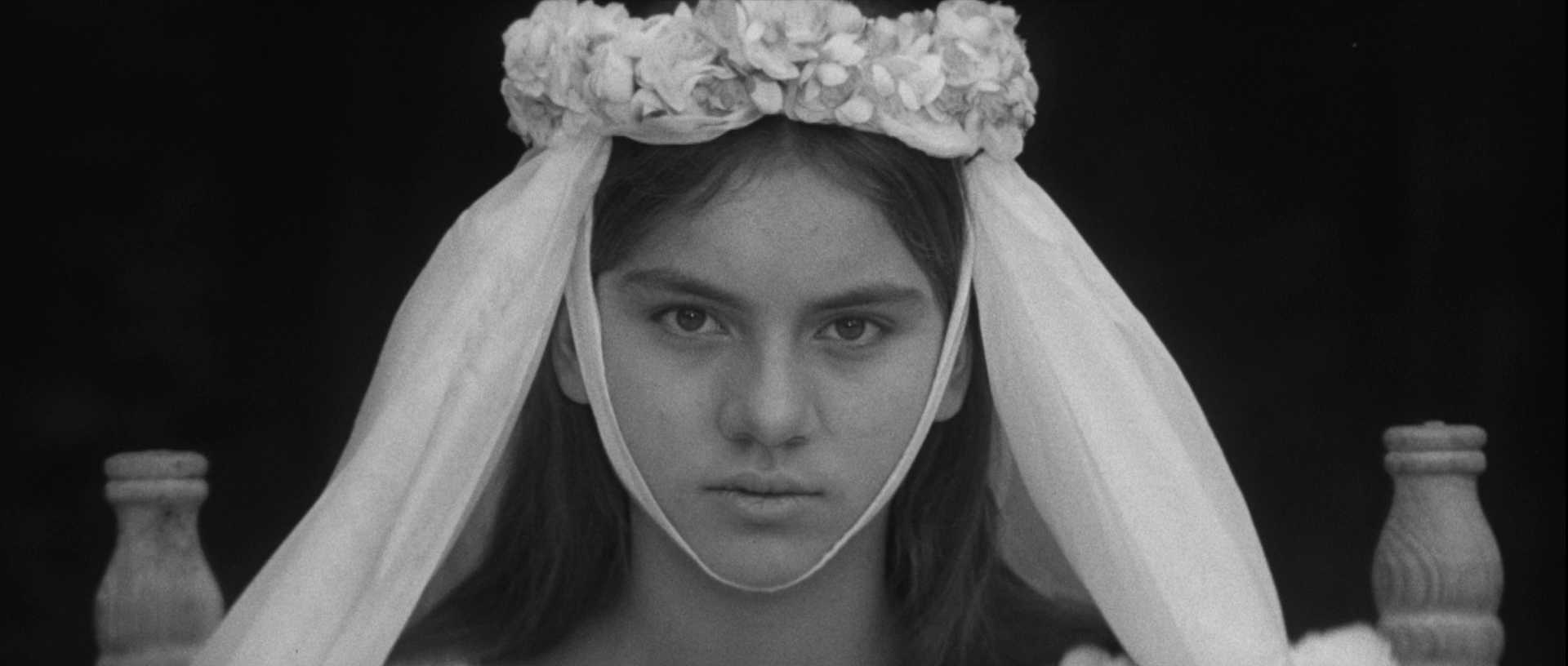
Set in 13th-century Europe, The Valley of the Bees centres around Ondrej (Zdeněk Sedláček, then Petr Čepek once the character has grown up). He’s the son of the lord of Vlkov (Zdeněk Kryzánek) and, at the start of the film, his father is seen marrying a much younger woman, Lenora (Jana Hájková, in the early scenes, then later Věra Galatíková). Either jealous or disgusted that his father is now with someone a similar age to himself, Ondrej plays a prank on his new stepmother, presenting her with a bowl full of bats as a gift.
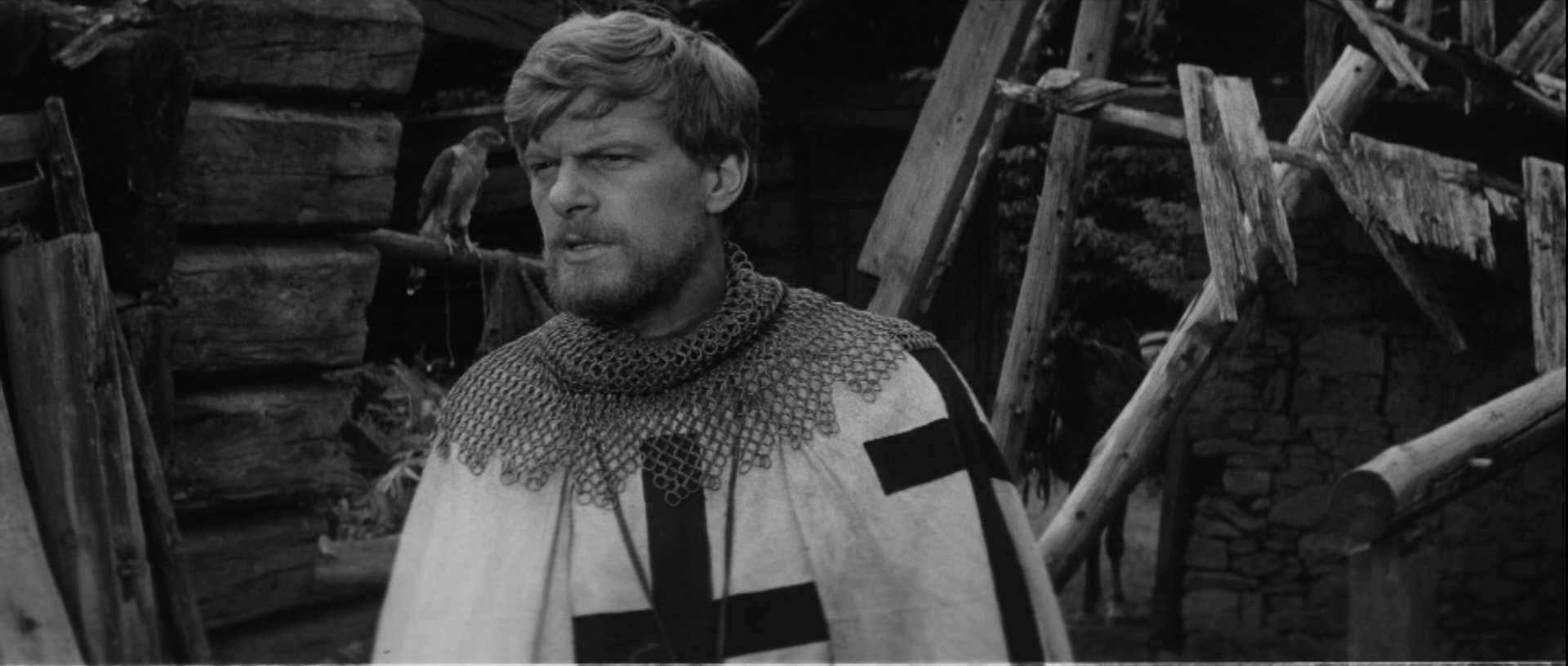
This enrages his father, who hurls his son against a wall, knocking him out. Shocked by his own actions, the lord then sends the boy away to join the Order of the Teutonic Knights, a devoutly Christian group sworn to strict, unbending rules of chastity and the forbidding of other ‘temptations’.
We jump forward several years and Ondrej is still serving in the Order, mentored by the fanatically religious Armin (Jan Kačer). The pair share a close bond. However, after a troubling meeting with Knight Rotgier (Josef Somr), who attempts to escape the Order, Ondrej himself decides to run away and he heads back home.
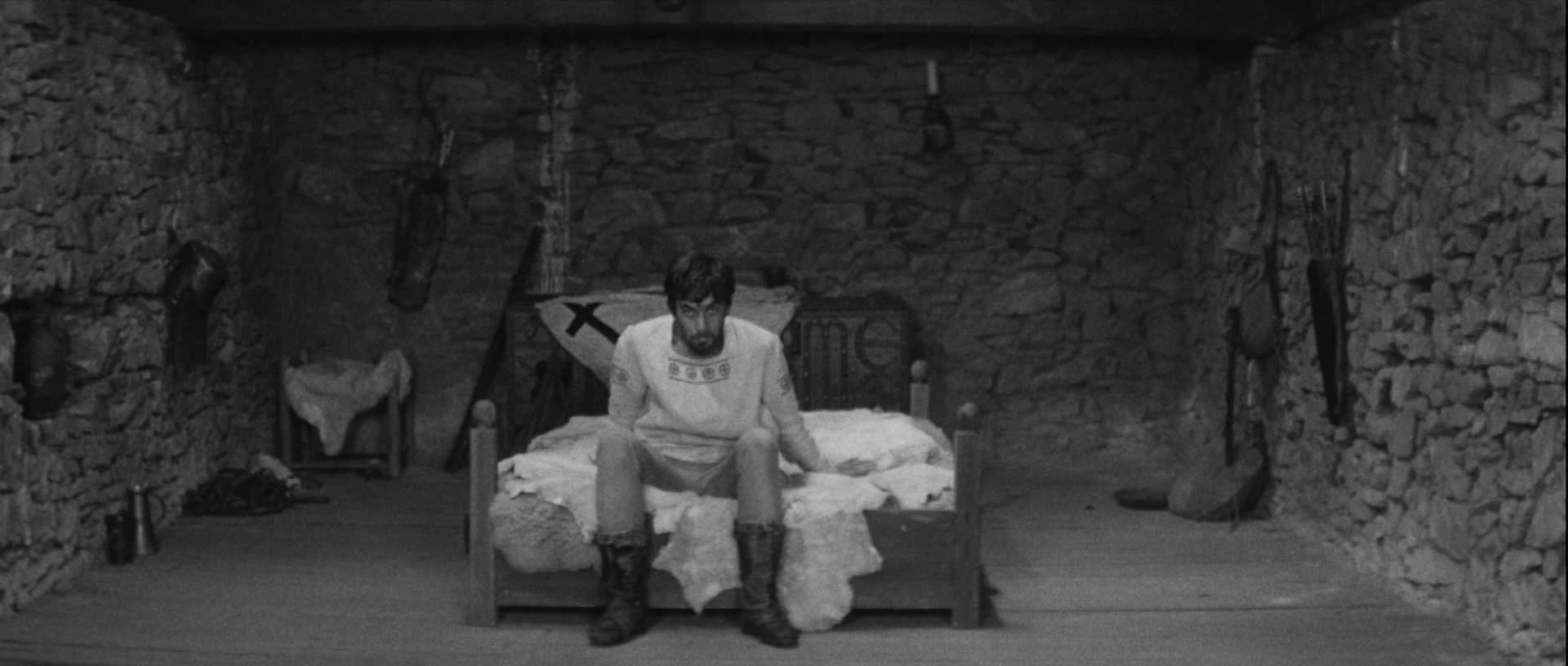
Ondrej arrives in Vlkov to find his father dead and his inherited estate in decay. He attempts to breathe new life into it and falls in love with his stepmother, who shares his feelings. They plan to marry but Armin is hot on Ondrej’s trail and is determined to set him back on a path of ‘spiritual redemption’.
The Valley of the Bees is a grim and bleak film which makes it difficult to fall for entirely but the quality of its craft and its depth are unquestionable.
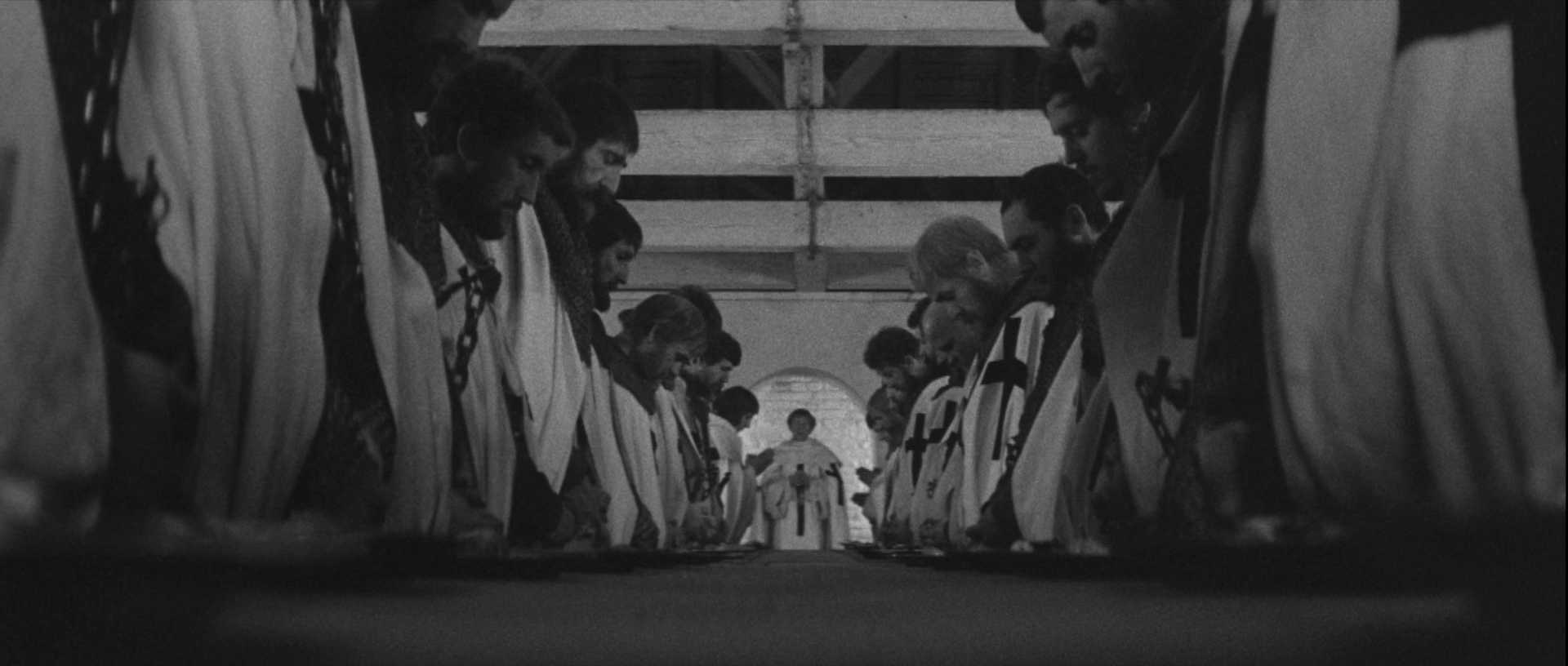
Like The Devil’s Trap, the film is filled with striking, artful compositions. Whilst stylishly shot, the production design feels much more authentic than most period films of the era though. There’s a rough, earthy quality to the sets, costumes and surroundings. This is also reflected in some shockingly brutal sequences. There’s a recurring motif of people getting savaged by dogs, for instance, and a swordfight in the middle of the film is surprisingly graphic for the time.
Sound and music are put to great use too. The sound design is kept fittingly bare and minimal. Zdenek Liska score, on the other hand, is rich, atmospheric and evocative of the period.
The film is no mere stylistic exercise though. There is much you can mine from the seemingly simple narrative. Vláčil and screenwriter Vladimír Körner compare the more ‘natural’ Paganism or early Christianity with the harsh, blinkered dogmatism of the Order’s brand of devout Christianity. Forcing the knights to control their sexual urges and such only breeds hatred and violence. This could be seen as a political message too, if you take the Crusaders as people blindly following any sort of belief.
The film also explores the irony of how these supposedly religious figures, who fight in the name of God’s love, are committing such heinous acts.
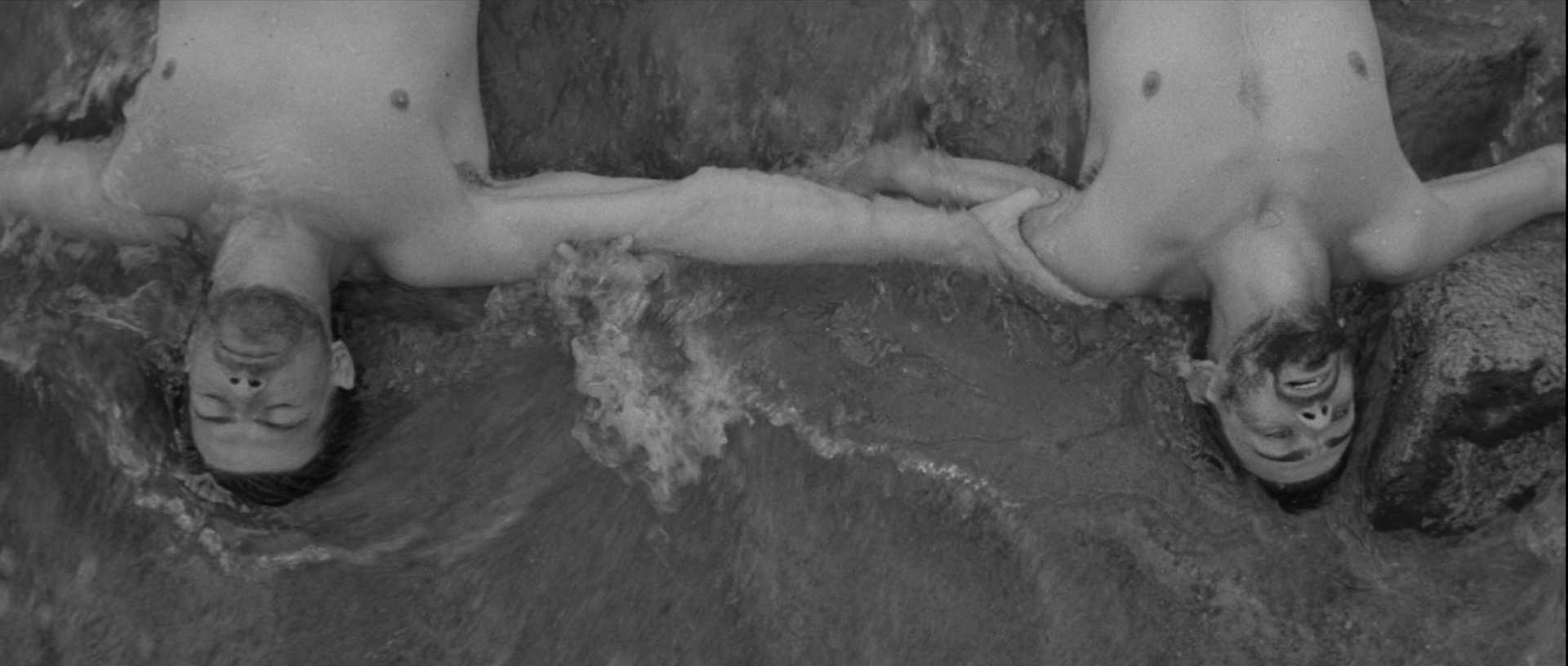
The film doesn’t necessarily pick sides though. Both the knights and townsfolk do questionable things. This, and a refusal to give too much background information away, leads to a wonderfully open-ended film.
There are other readings that can be made too, from the clear Oedipal complex in play and a homosexual bond between Armin and Ondrej that’s hinted at.
Overall then, The Valley of the Bees is stark and brutal yet cinematically astounding. It’s a film that isn’t easy to watch but remains deeply rewarding.


The Valley of the Bees is out now on region-free Blu-ray, released by Second Run. The transfer is strong. There are a few flecks and light wear on the print but it has a pleasing tonal range. I did notice a curious issue though, where a thin white line often flashed at the bottom of the screen on shot cuts. I’ve seen this before occasionally on discs. I presume it’s a source issue that simply shows there’s not been any cropping on the edges of the frame but perhaps someone could shed further light on this. I’ve used screengrabs throughout this review to give you an idea of how it looks (the image directly below shows the white line I mentioned). The audio is robust.
BLU-RAY SPECIAL EDITION CONTENTS
– The Valley of the Bees (Údolí včel, 1967) presented from a new HD transfer from original materials held by the Czech National Film Archive.
– An all-new Projection Booth commentary with Mike White and Robert Bellissimo.
– New HD presentations of two of František Vláčil’s acclaimed short documentary films, photographed by František Uldrich, with music by Zdeněk Liška:
– The City in White (Město v bílém, 1972)
– Karlovy Vary Promenades (Karlovarské promenády, 1972)
– 24-page booklet with writing by film historian, author and Czech cinema expert Peter Hames.
– New and improved English subtitle translation.
Mike White and Robert Bellissimo from the Projection Booth Podcast provide a commentary. They give numerous readings into the film to help better appreciate its depth. It’s a strong track that’s easy to get involved with.
The two shorts are well worth a watch too. The City in White is a keenly observed snapshot of a city (presumably Prague) during winter. Vláčil contrasts images of the city’s past with its present. Music is beautifully used, drifting between orchestral and jazz, and some of the visuals are gorgeous.
Similarly, Karlovy Vary Promenades takes a poetic look at art, culture and industry in Czechoslovakia. Like the other short, it’s accompanied by rousing music by Zdenek Liska and is beautifully shot.
The booklet provides an in-depth look at Vláčil’s career, written with intelligence and clarity by Peter Hames.
So, once again, Second Run have given a Czech classic the royal treatment and this humble reviewer would class the disc as a ‘must buy’.
Disc/Package: 