


 Whilst Jackie Chan became a huge star in Hong Kong after the success of Snake in the Eagle’s Shadow and Drunken Master, which were already quite a few years into his career, it was a long while before he managed to truly translate this success into international stardom. Golden Harvest had made a couple of failed attempts in the past, with Battle Creek Brawl (1980) coming early in his tenure at the studio, then The Protector (1985) a few years later. However, neither of these films made the best of Jackie’s talents, trying to shoehorn him into what they felt was a more American template.
What finally broke Jackie into the US and throughout the West was Rumble in the Bronx (1995). Interestingly, whilst the film is set in New York (but shot in Vancouver), it wasn’t actually designed to be a breakthrough in the same way that The Protector and Battle Creek Brawl were. It was made with an international audience in mind, but wasn’t an international co-production. It just managed to hit the right notes at the right time, giving Jackie the major league success he always dreamed of.
Not only did the success of Rumble in the Bronx help make Jackie’s future work easier to market worldwide, it also renewed interest in his back catalogue. Previous titles like Drunken Master II were soon picked up for a US release, despite being made the year before.
Jackie was bucking the trend with these films, as the Hong Kong film industry was, otherwise, struggling at the time, with budgets and box office figures falling. His features around this period, meanwhile, were doing big business locally and finally making an impact abroad. Soon after, Jackie would work on an all-out American production, Rush Hour and further cement his worldwide fame.
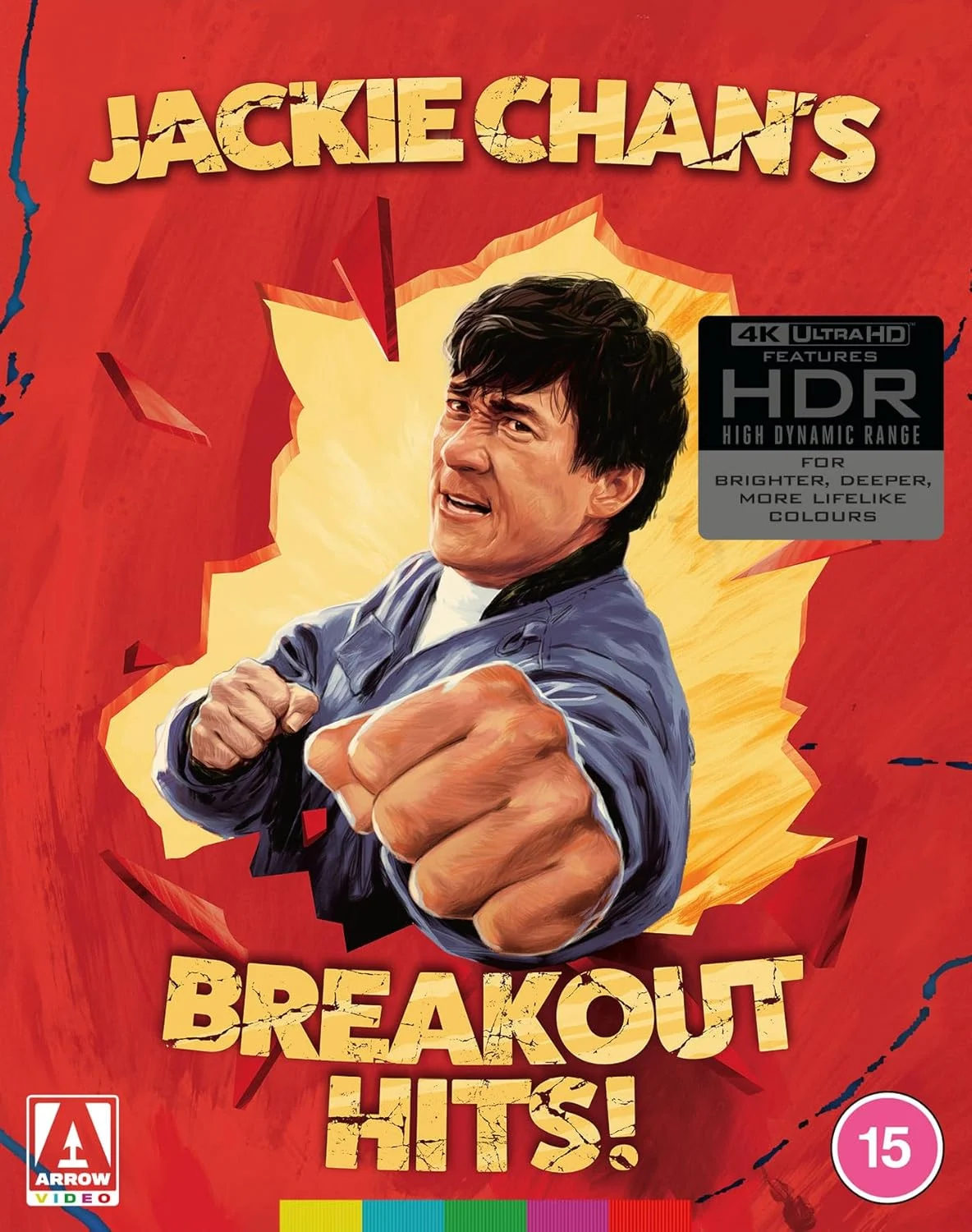
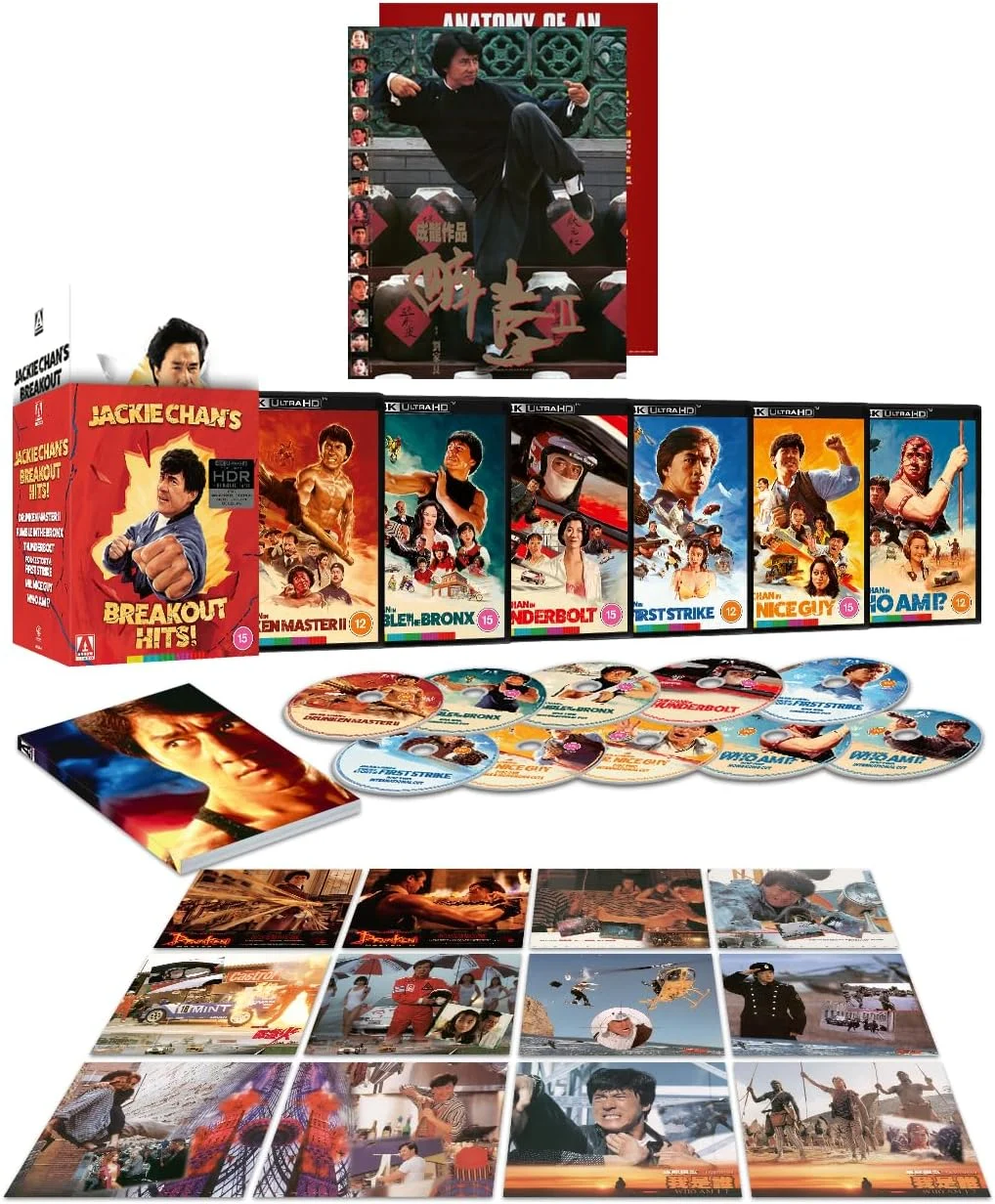
Arrow Video are celebrating this international breakout period with a 10-disc UHD box set entitled Jackie Chan’s Breakout Hits!.
The films included in the set are:
Drunken Master II (1994)
Rumble in the Bronx (1995)
Thunderbolt (1995)
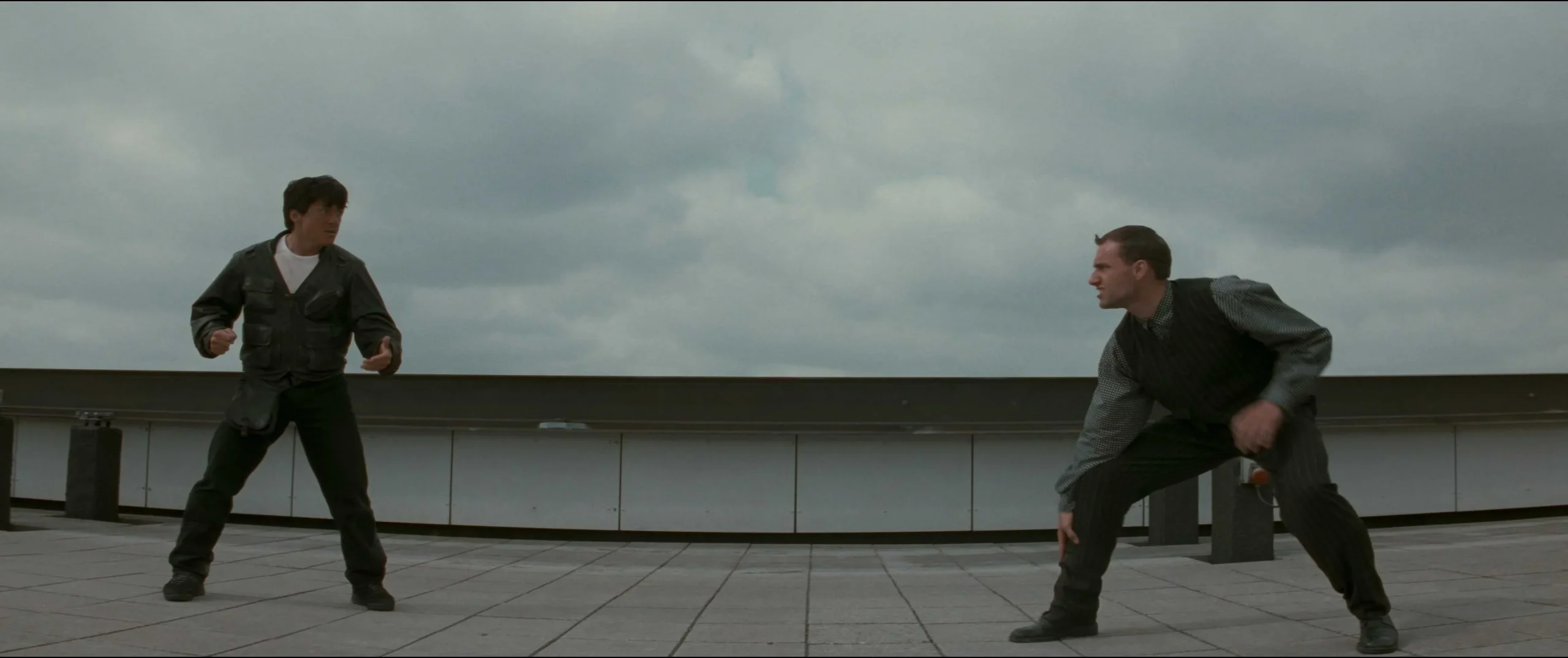
Police Story 4: First Strike (1996)
Mr. Nice Guy (1997)
Who Am I? (1998)
I got hold of a set of screeners to share my thoughts.
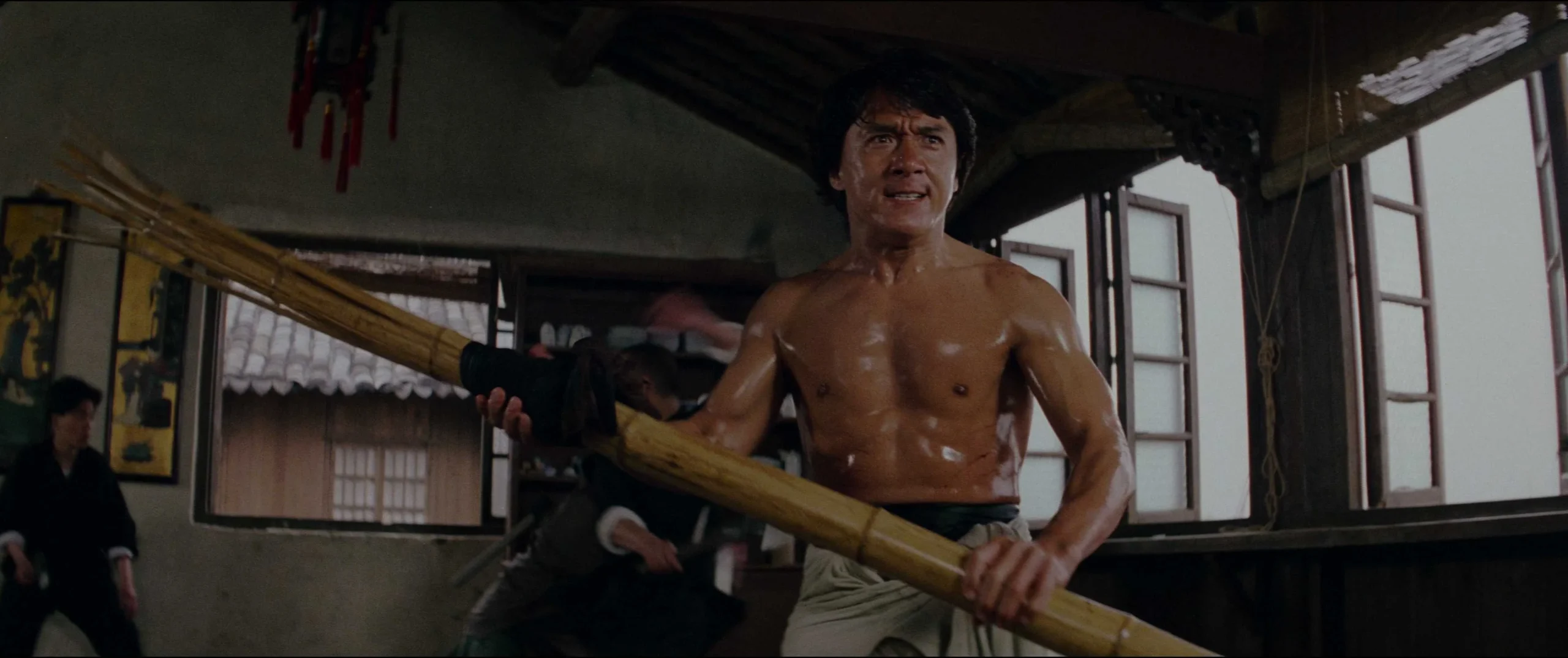
Drunken Master II (a.k.a. Legend of Drunken Masters or Jui kuen II)
Director: Jackie Chan, Lau Kar-Leung
Screenplay: Edward Tang Ging-Sang, Yuen Kai-Chi
Starring: Jackie Chan, Anita Mui Yim-Fong, Ti Lung, Felix Wong Yat-Wah, Lau Kar-Leung, Hoh Wing-Fong, Cheung Chi-Kwong
Country: Hong Kong
Running Time: 102 min
Year: 1994
Drunken Master II sees Jackie reprise his role as Wong Fei-Hung from the first film in the series. After a misunderstanding on a train trip back from Canton with his father (played by the great Ti Lung), Fei-Hung gets inadvertently involved with a plot to stop the British from sneaking a precious artefact out of China (the revolutionary we meet, who’s trying to stop this, is played by co-director Lau Kar-Leung).
Fei-Hung also gets embroiled in a local dispute between a steel factory’s workers and their British bosses, all whilst trying and failing to stay out of trouble with his father.
From Project A onwards, generally speaking, Jackie Chan made a conscious effort to switch from making traditional kung fu films to making action comedies. As such, Drunken Master II was a surprise to his fans and a much-welcomed return to the genre and indeed the film that first made him famous (alongside Snake in the Eagle’s Shadow).
It was made as a fundraiser for the Hong Kong Stuntman Association, which is why Jackie and Lau Kar-Leung were approached to make it. The former was a member, and the latter was the chair. Lau Kar-Leung was originally meant to be the sole director of the film, but he struggled to work with Jackie, whose style was very different to his. Lau eventually stepped back and let Jackie take over the production.
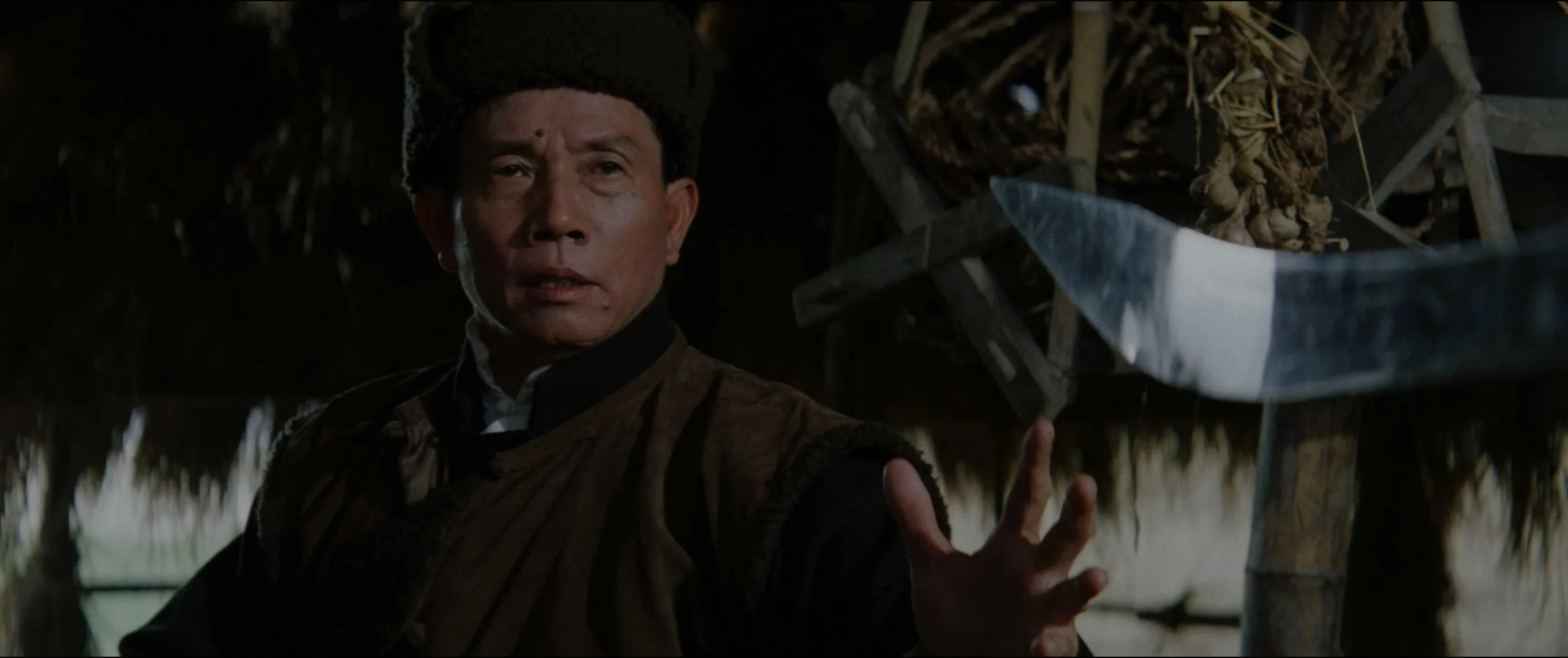
Lau reportedly shot about a third of the film before leaving. The script had to be altered to fit Jackie’s wishes once he took over. With such a troubled shoot, it’s amazing how well the film turned out.
Their differing styles might actually have aided the film’s success. You get the best of both worlds in terms of choreography. There’s some traditional but intricately plotted combat from Lau and then some elaborate, acrobatic set-pieces from Jackie. The film has a number of stunning fight scenes, from a close-quarters duel between the two directors themselves, which takes place partly under a train, to an intense finale in the steelworks.
In their commentary on the film, Frank Djeng and F.J. DeSanto call this “the last great pure kung fu film”. By that, I guess they mean the last great period martial arts movie that isn’t enhanced by lots of wirework or CGI. There is some wirework here, but it’s used relatively subtly for some more difficult stances and when characters are sent flying across the room from hits and such. As such, Drunken Master II has that classic period kung fu movie feel, but, at the same time, it benefits from modern production values, which give it a stamp of quality missing from a lot of early period martial arts titles.
Also contributing to the film’s success is its cast. Whilst Jackie is his usual loveable self, it’s Anita Mui who steals the show here. She carries all the most successful comedy sequences and is a joy to watch. It’s an absolute tragedy that she died so young in 2003 from cervical cancer, the same year as her friend, Leslie Cheung.
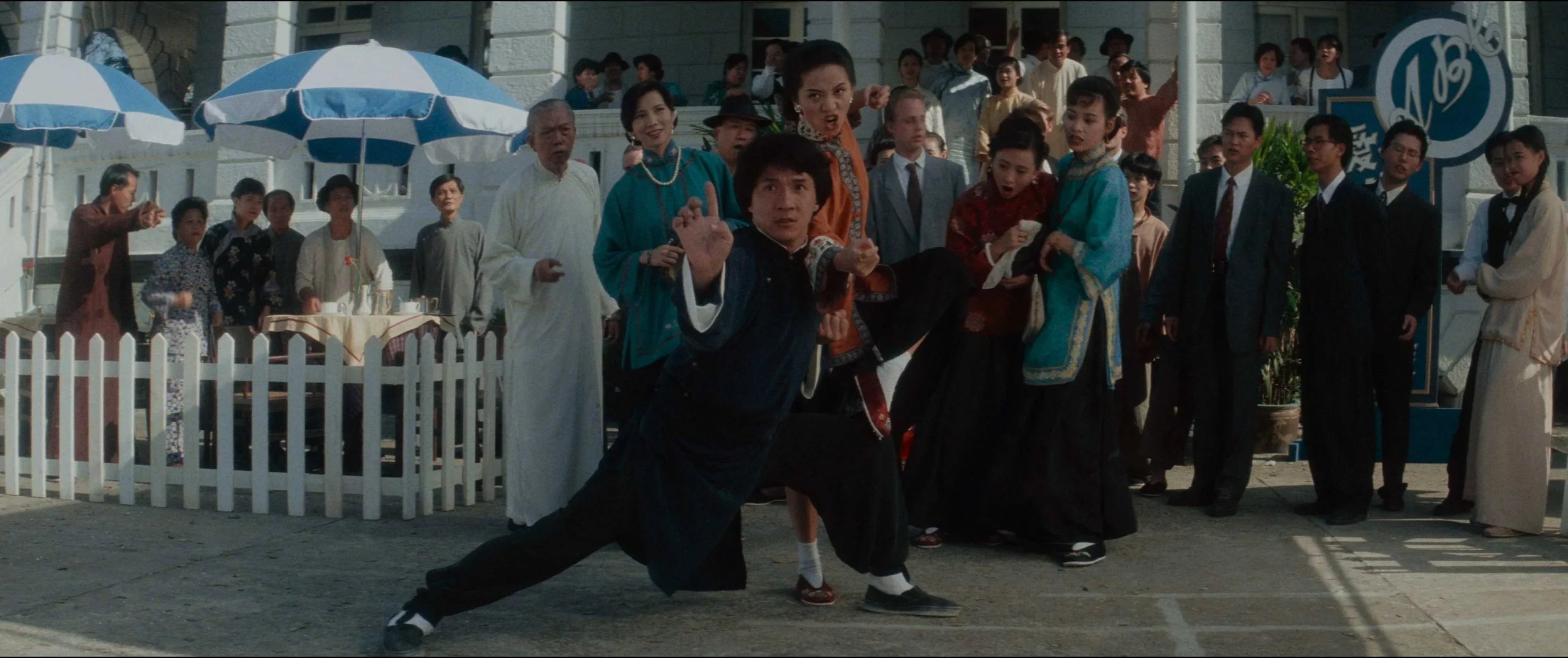
Former Shaw star Ti Lung is also great as Wong Fei-Hung’s stoic father. He gets to show his acting chops in the scenes where he falls out with his son. Whilst there is plenty of comedy in the film, it doesn’t skimp on the drama. It’s hardly Ozu, but the family dynamics are effectively portrayed to help you care about the characters.
Overall, Drunken Master II is a wonderful all-rounder that fires on all cylinders and satisfies on every level. It’s one of Jackie’s best films and the strongest in this set, in my opinion.
Film: 

Rumble in the Bronx (a.k.a. Hung fan kui)
Director: Stanley Tong Gwai-Lai
Screenplay: Edward Tang Ging-Sang, Fibe Ma Mei-Ping
Starring: Jackie Chan, Anita Mui Yim-Fong, Françoise Yip Fong-Wa, Bill Tung Biu, Marc Akerstream, Garvin Cross, Morgan Lam
Country: Hong Kong
Running Time: 104 min
Year: 1995
Rumble in the Bronx sees Jackie play Ma Hon Keung, a Hong Kong cop who is visiting New York to attend the wedding of his uncle Bill (Bill Tung) and his bride-to-be Whitney (Carrie Cain Sparks). Bill is in the process of selling his supermarket to a woman named Elaine (Anita Mui), and we discover that the shop is a target for thieves and a biker gang.
Bill usually pays off the local thugs, but Elaine refuses, getting her into trouble. Ma fights them off, initially, but later gets beaten up by the gang, who find themselves the target of a dangerous crime syndicate. One of the gang members steals their diamonds and lands him and his friends in trouble.
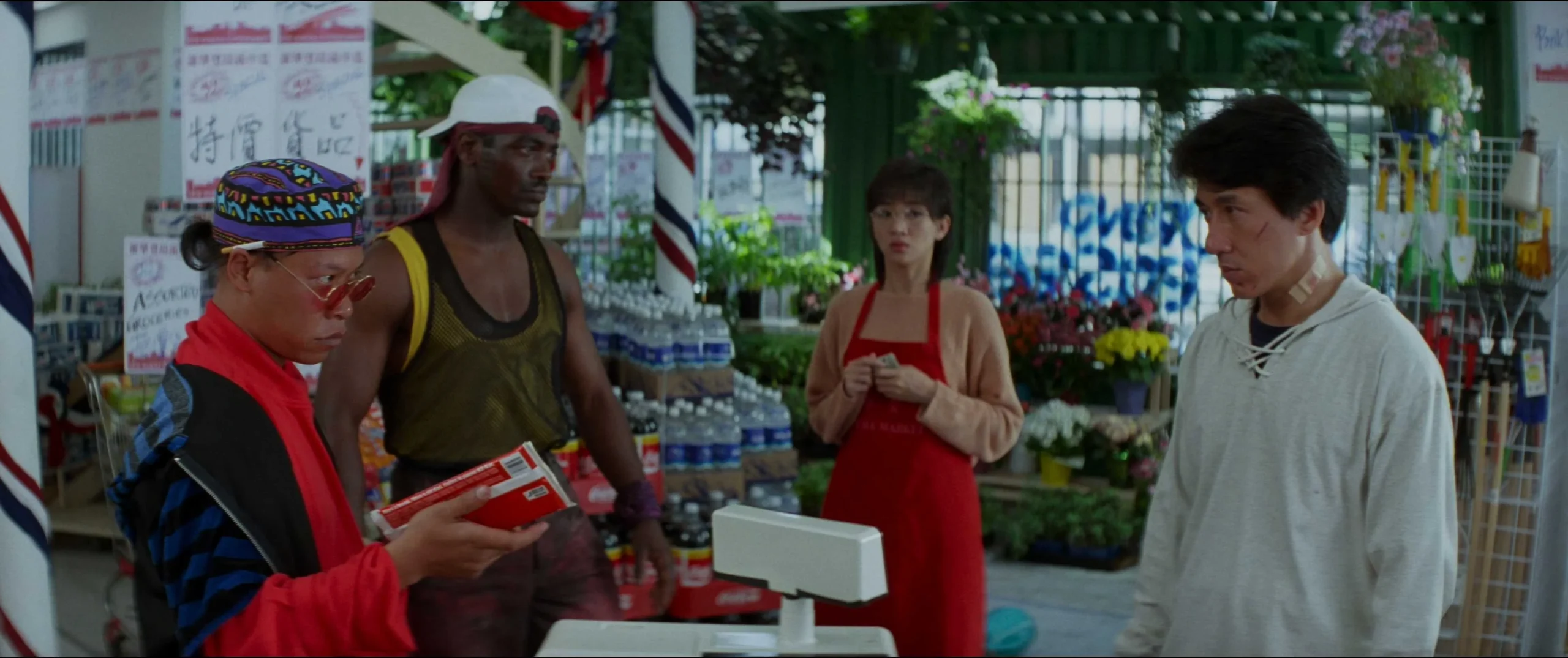
Meanwhile, Ma befriends Nancy (Françoise Yip), a member of the gang, causing him to get caught up in the mess, too.
Whereas Jackie’s earlier attempts to crack the West would try too hard to mimic American films or wouldn’t make good use of Jackie’s strengths, Rumble in the Bronx finally got the right balance.
It helped that it had a strong marketing campaign too, which pushed the ‘no stunt double’ angle, even if it wasn’t strictly true. In fact, director Stanley Tong reportedly did the big rooftop leap stunt in the film. Jackie had done it too, but it’s Tong’s take that made the cut.
That’s nitpicking, though, as Jackie still does most of the hard work and delivers all the hair-raising, mind-blowing physical feats fans are waiting to see. There’s great use of props in the fights, as usual, and some wild stunts.
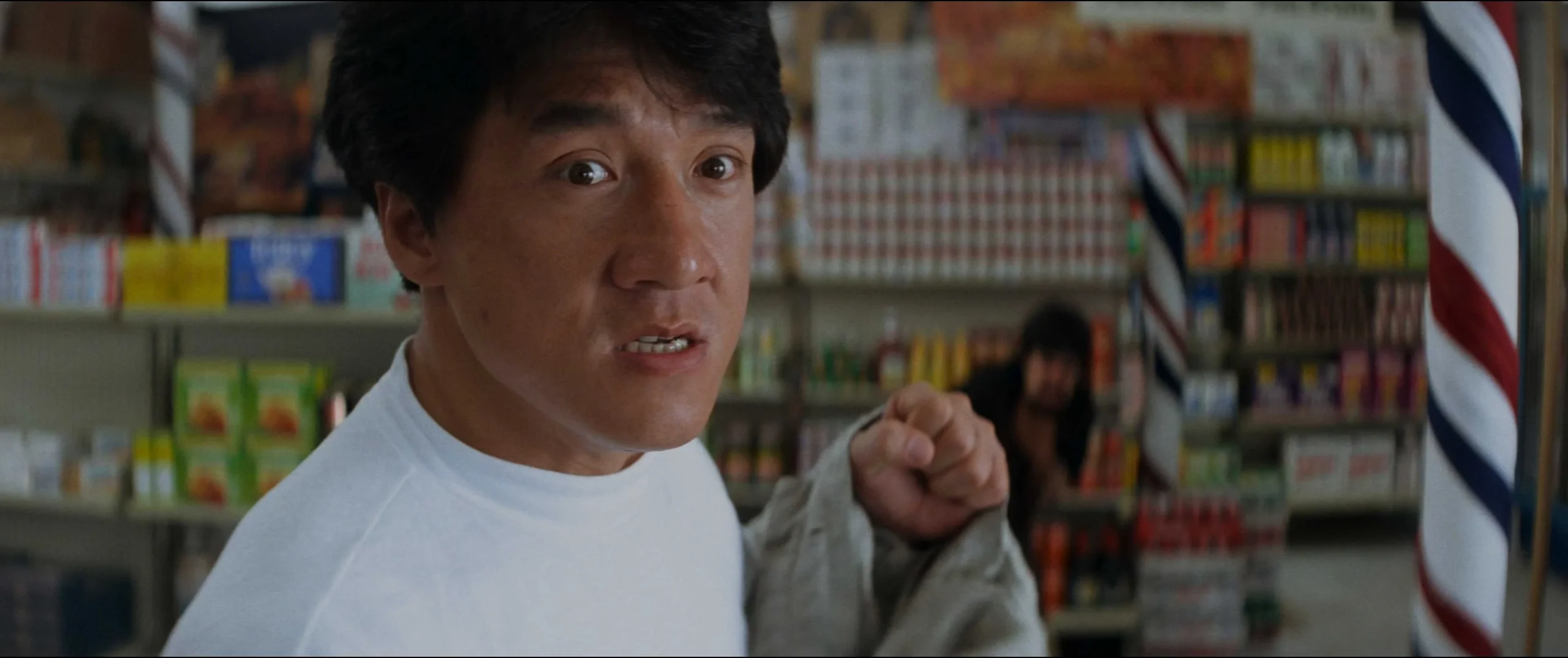
Vancouver isn’t the most convincing New York stand-in, once you start looking carefully in the background, but it still helps the film stand out from the crowd of martial arts films shot in Hong Kong.
It was very expensive for a Hong Kong movie, too, allowing for a slick production and an awful lot of destruction. The abuse that the poor supermarket goes through is something else.
My only gripe with the film is how it seems to suddenly shift gears in the second half, becoming a totally different story. The simple Jackie versus the thugs plot is sidelined to make way for a ridiculously over-the-top, completely out-of-nowhere diamond smuggling thriller. The tone and scale changes, too, with some pretty brutal sequences (a couple of bad guys end up in a wood chipper!) and an absolutely bonkers finale, involving a hovercraft wreaking havoc around Vancouver/New York.
I was also sad to see Anita Mui’s character pushed aside in favour of Françoise Yip’s. Mui is, once again, the strongest performer in the film, so it’s a shame her character isn’t given more to do in the second half.
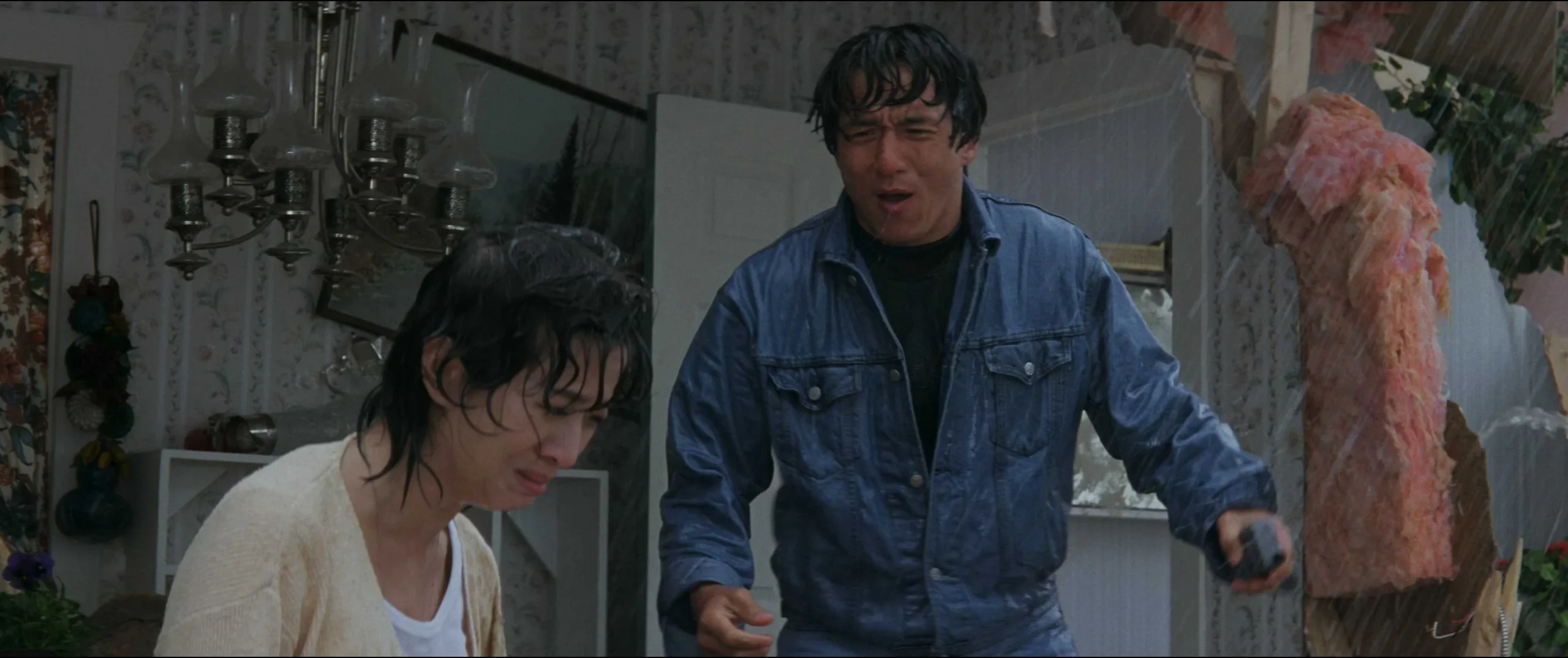
Whilst it does go off-the-rails somewhat, Rumble in the Bronx remains a hell of a lot of fun, throughout. It’s clear to see why it grabbed the attention of Western viewers, and it can still win over new fans today.
Film: 
Thunderbolt (a.k.a. Pik lik foh)
Director: Gordon Chan Kar-Seung
Screenplay: Chan Hing-Kai, Gordon Chan Kar-Seung, Philip Kwok Wai-Chung
Starring: Jackie Chan, Anita Yuen Wing-Yee, Michael Wong Man-Tak, Dayo Wong Chi-Wah, Thorsten Nickel, Ken Lo Wai-Kwong, Chor Yuen
Country: Hong Kong
Running Time: 110 min
Year: 1995
Thunderbolt sees Jackie play Chan Foh To, a car mechanic who, alongside his dad (played by the great Chor Yuen), helps the Hong Kong police crack down on illegal street racing.
One night, Jackie stops the violent criminal Warner “Cougar” Krugman (Thorsten Nickel). Krugman lands in jail, but not for long. He’s impressed by Chan’s skills behind the wheel, so he will try anything he can to force him into racing against him.
Thunderbolt was reportedly the most expensive Hong Kong film up to that point. It was a big hit throughout East Asia, but is often passed over when discussing Jackie’s films from the 90s.
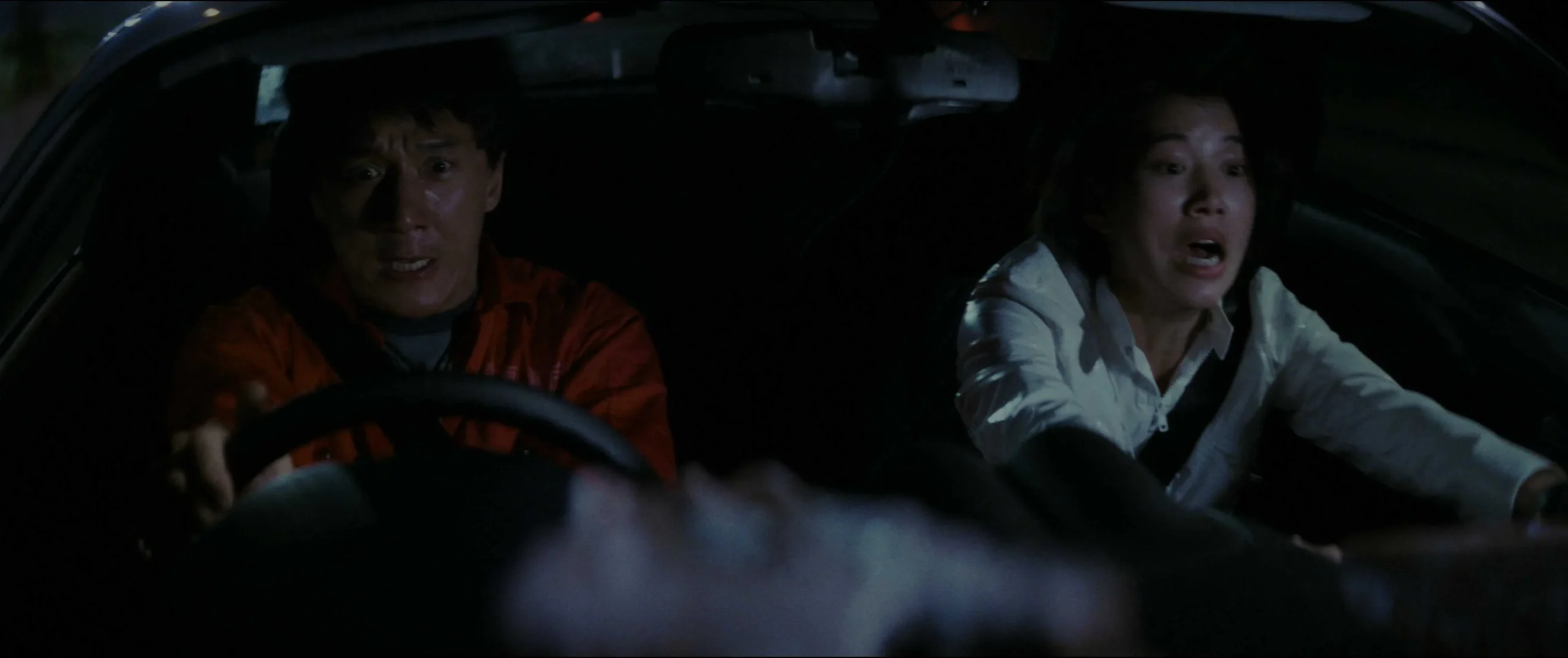
It might be down to the fact that it sees Jackie racing cars as much as fighting and pulling off stunts. It’s also darker and a little more brutal than the other films in this set. This is partly due to action director Sammo Hung’s tougher choreography, but also because the film has fewer gags, particularly in the second half. Jackie seems much more serious throughout.
That’s not to say this is drastically different from the rest of Jackie’s work. There are still a couple of superb fight scenes. One takes place in the garage, with some bone-crunching falls. Another fight takes place in a pachinko parlour that eventually sees Jackie and a couple of his adversaries fighting on suspended trampoline-like platforms above the machines.
There’s a bizarre stunt in the middle of the film, too, that sees Jackie’s storage unit room tossed around by a crane and dropped on top of his garage. I felt that some unusual music marred this sequence, though.
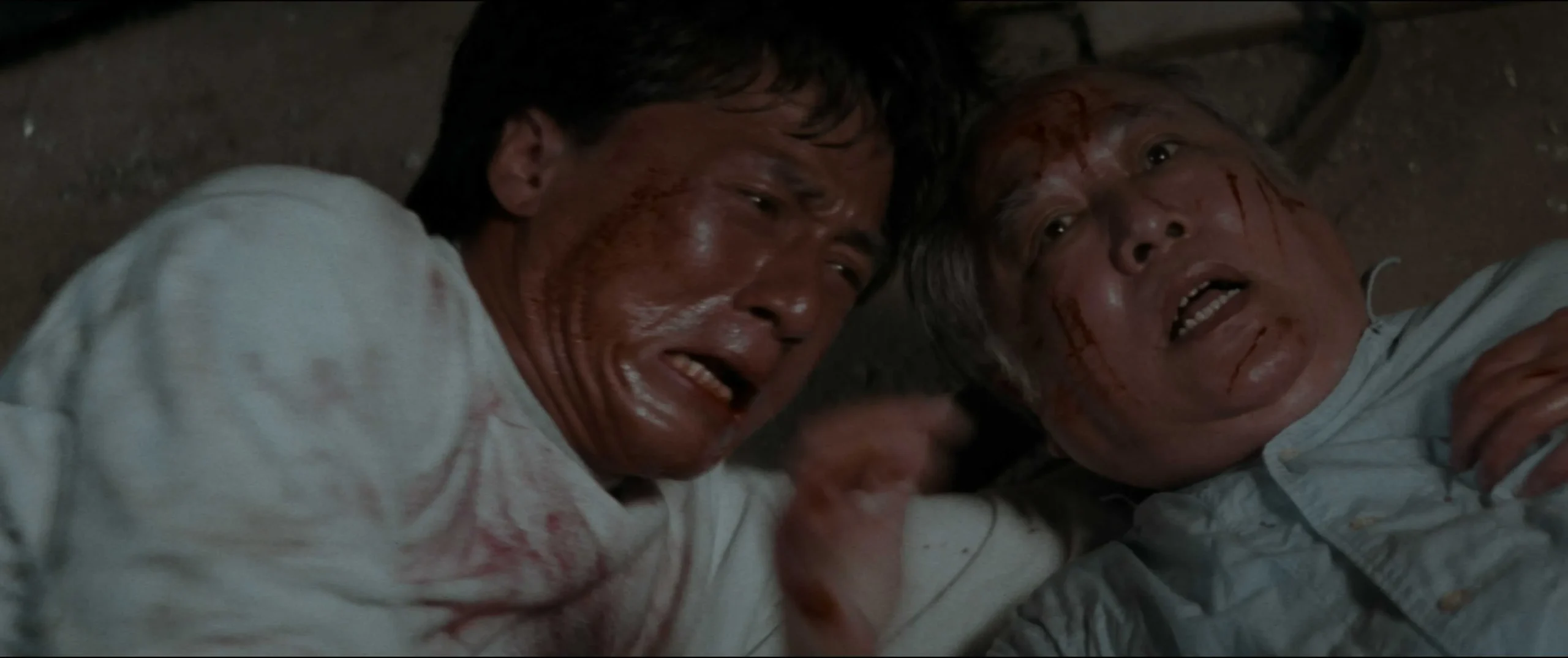
There were some other stylistic choices that slightly spoiled a couple of the set pieces, too. There’s quite a heavy use of ‘step printing’, which is the jerky yet blurry slow motion effect that I remember best from Chunking Express. It looks interesting, but I feel like it detracts a little from seeing the cast fighting or performing stunts ‘for real’.
I also didn’t like the regular use of undercranking in the final car race. It makes it look a little too Benny Hill for my tastes, when it could have been quite an exciting sequence.
These are fairly minor niggles, though, on the whole. Whilst I found Jackie to be a little too glum, it is refreshing to see him try something different at this stage in his career, when you might have expected him to coast on his success.
Film:
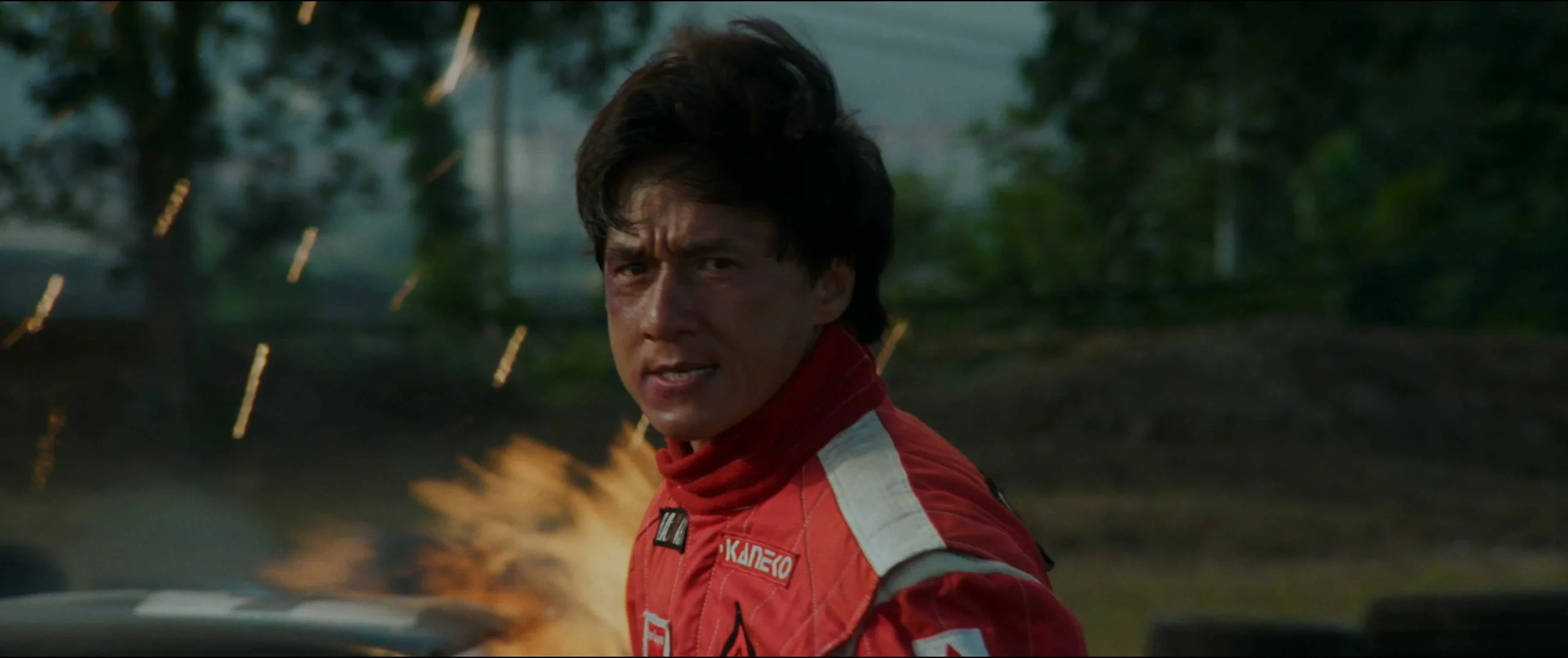
Police Story 4: First Strike (a.k.a. First Strike or Jackie Chan’s First Strike or Ging chaat goo si 4: Gaan dan yam mo)
Director: Stanley Tong Gwai-Lai
Screenplay: Elliot Tong Ming-Kei, Nick Tramontane, Greg Mellor, Stanley Tong Gwai-Lai
Starring: Jackie Chan, Jackson Lau Hok-Yin, Annie Wu Chen–Chun, Bill Tung Biu, Yuriy Petrov
Country: Hong Kong
Running Time: 107 min
Year: 1996
Police Story 4: First Strike sees Jackie reprise his role as Chan Ka-Kui from the other Police Story films, but using the nickname he used in the international prints of those titles, Jackie.
For some reason, this Hong Kong police officer is now working with the CIA to follow a lead on a nuclear arms smuggling case. This sends Jackie from Ukraine to Russia to Australia, and gets him in all manner of trouble.
First Strike feels markedly different to the first two films in the Police Story series, but the third does act as a bridge into this more epic, international story. It plays out like a more comedic James Bond movie, with Jackie as a globetrotting spy using his wits and fists to stop a global catastrophe.
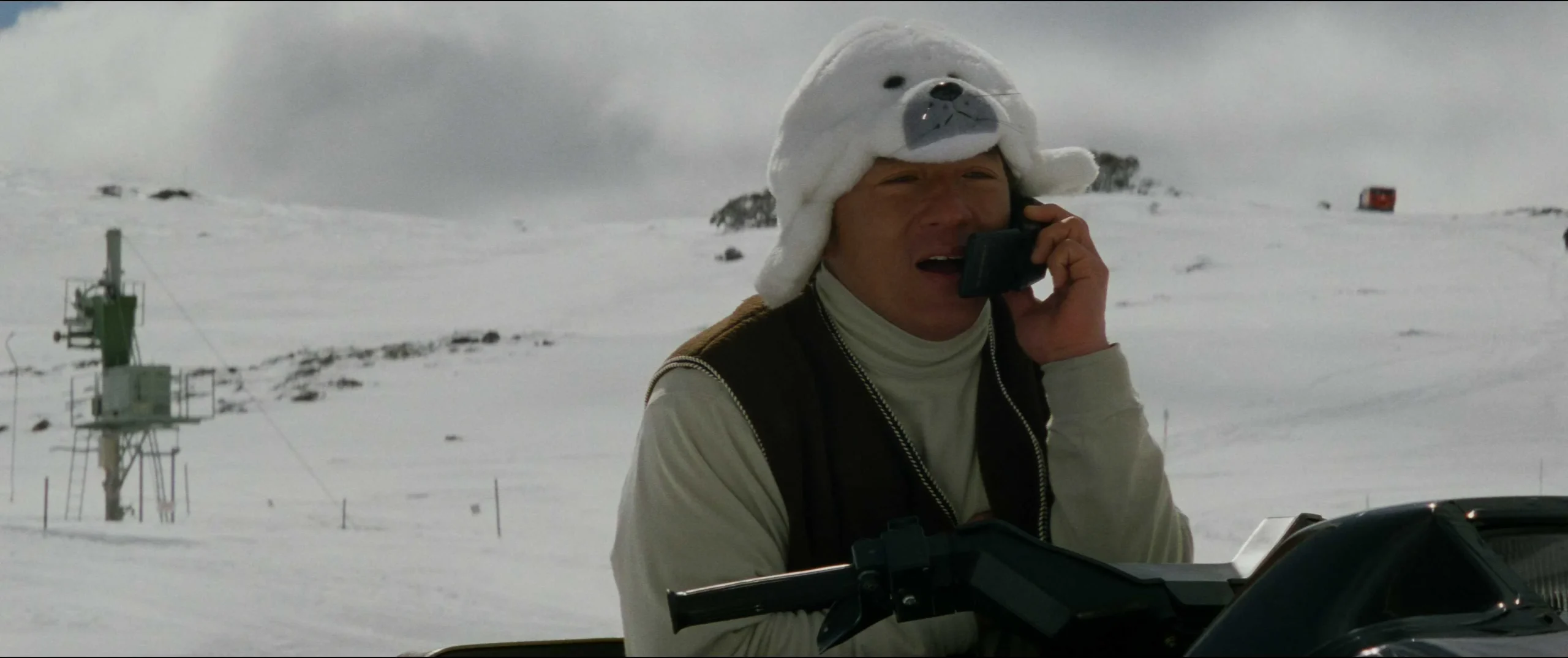
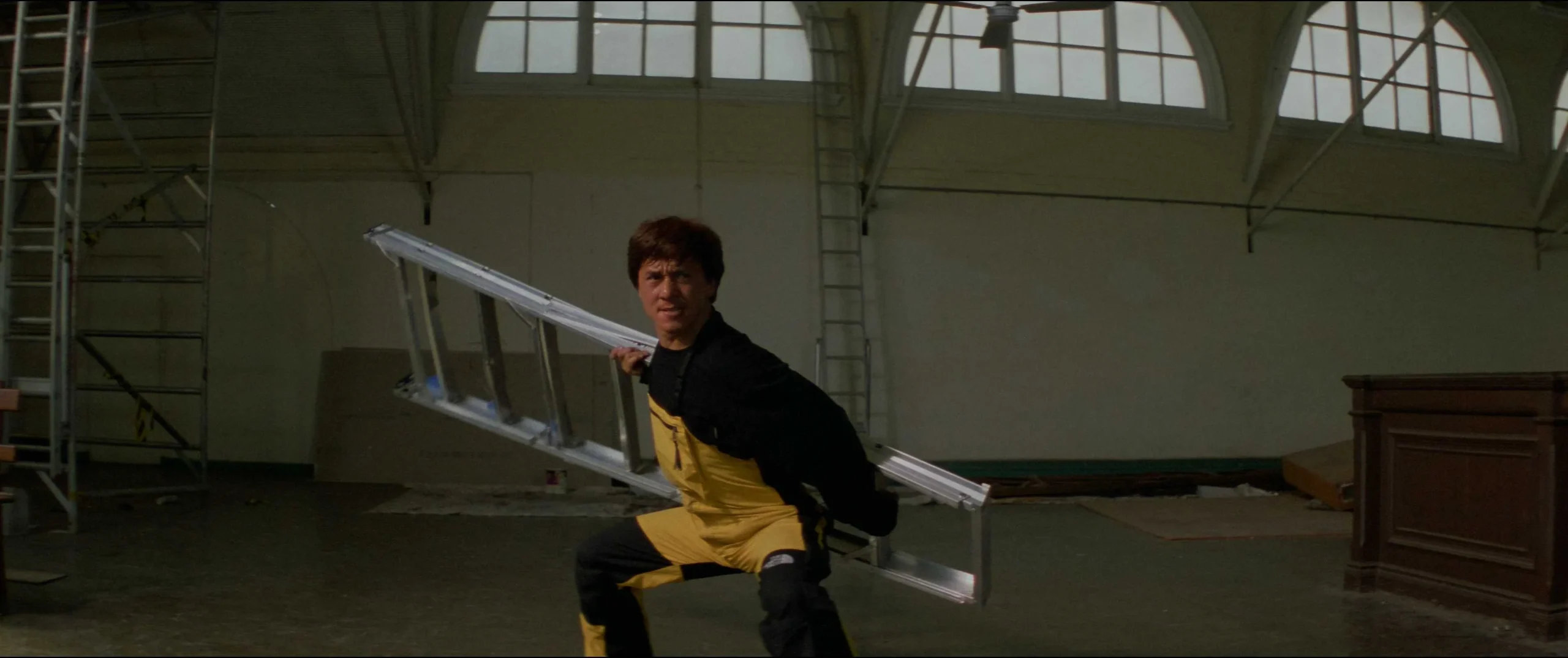
With the film having more of a global spy movie vibe, there are fewer fights than in some of Jackie’s earlier titles, but there’s still plenty of action. There’s a fantastic gun battle in the snow in the first half of the film. Around the mid-section, there is a stunning fight scene, too, which sees great use made of a ladder. If the outtakes are anything to go by, it was an incredibly difficult and painful scene to pull off, but it was the highlight of the film for me.
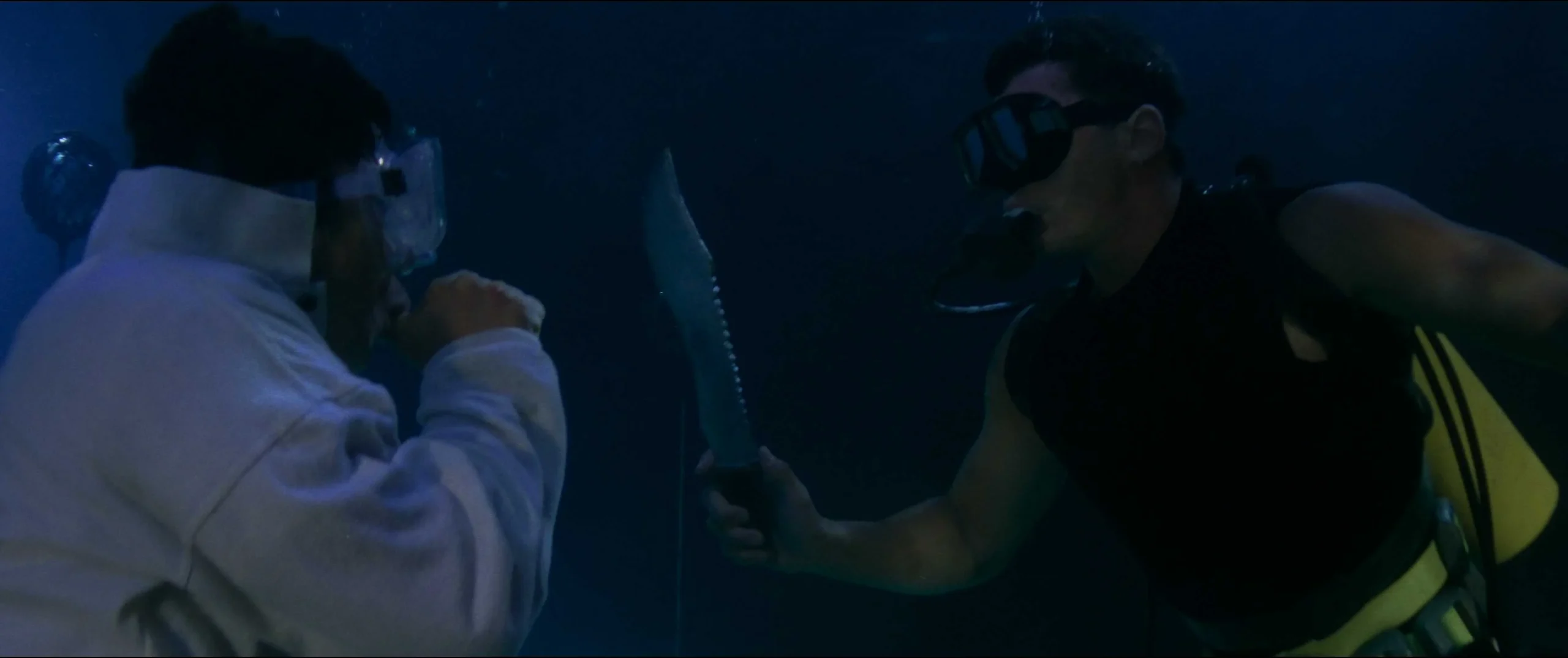
The story is a little messy, and I found my interest waning towards the end, so I think it could have used a trim (it must be noted that I watched the longer Hong Kong cut, so perhaps the international cut is worth a look). The underwater fight, in particular, goes on a little too long. It’s an enjoyably fresh approach to a fight scene, but the slow, underwater movements prevent it from being quite as fast and furious as it could be.
First Strike remains a fun romp, though. When it works, it works really well, it just feels like it could have been leaner and more cohesive.
Film:
Mr. Nice Guy (a.k.a. Yat goh ho yan)
Director: Sammo Hung Kam-Bo
Screenplay: Edward Tang Ging-Sang, Fibe Ma Mei-Ping
Starring: Jackie Chan, Richard Norton, Miki Lee Ting Yi, Karen McLymont, Gabrielle Fitzpatrick, Vince Poletto
Country: Hong Kong
Running Time: 101 min
Year: 1997
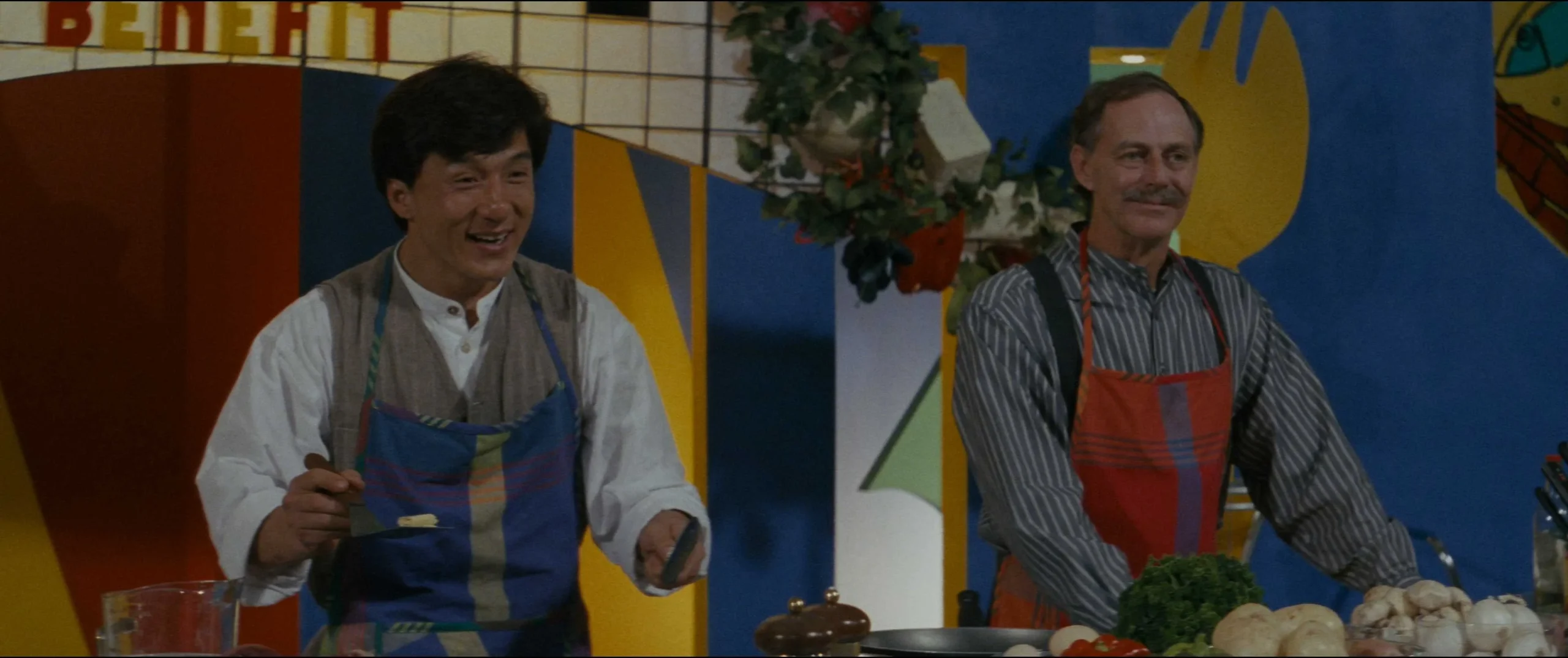
Mr. Nice Guy sees Jackie play, er, Jackie, a TV chef who comes to the rescue of a reporter named Diana (Gabrielle Fitzpatrick), whom he bumps into on the street. She’s got video footage of a shady deal between Giancarlo (Richard Norton) and a street gang called The Demons, so they’re after her, and Jackie helps her escape. In the midst of it all, Diana’s tape gets mixed up with Jackie’s.
This, of course, lands Jackie in hot water too, so the pair, and Jackie’s friends and colleagues, go on the run to evade the bad guys and find the tape that can put them behind bars.
Mr. Nice Guy is basically one long chase, but it works. The pace is relentless, and director Sammo Hung crafts some cleverly devised set-pieces. The standout is probably a fight in a construction yard, which makes terrifying use of some power tools and cartoon-like use of a maze-like set of corridors and blue doors.
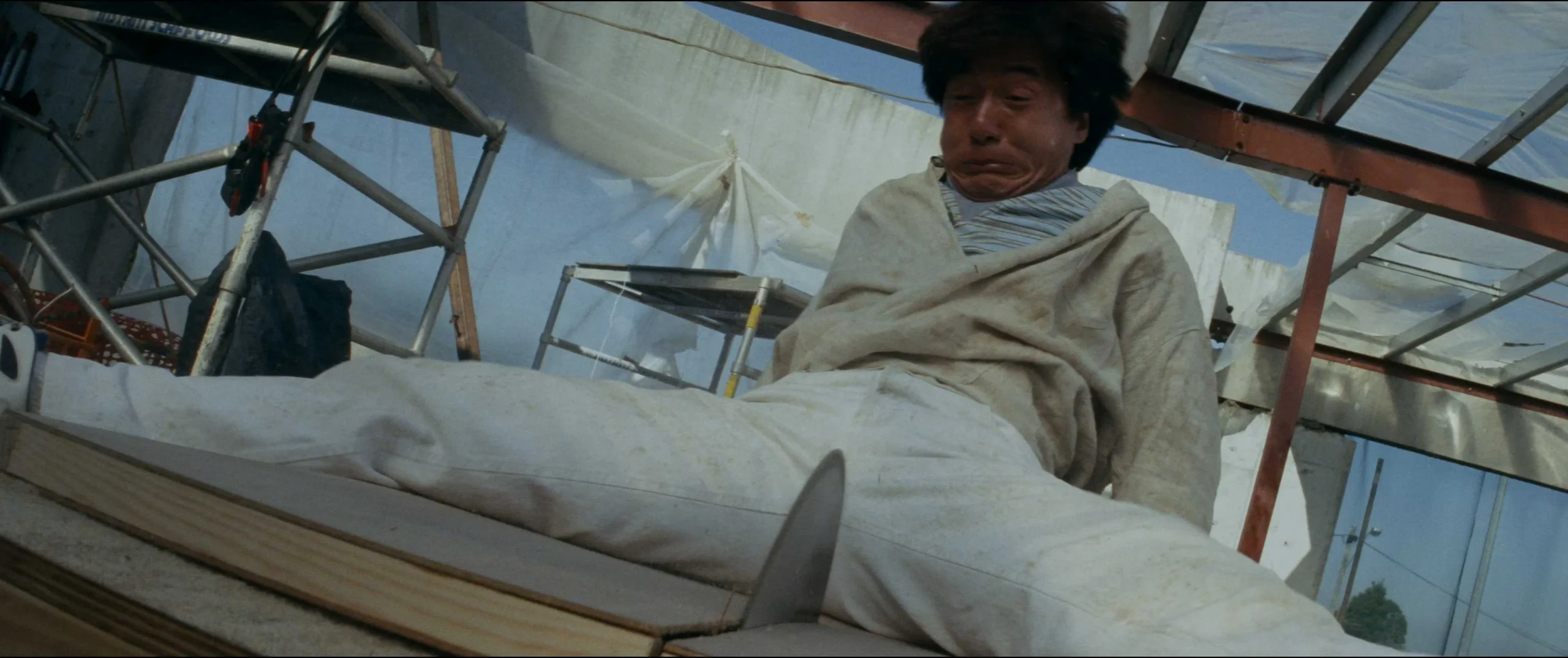
It’s a shame we never get a proper fight between Jackie and Richard Norton, though. Fight fans might be disappointed by the lack of fighting in the film’s finale, in general, but the stunts around the construction vehicle are exciting, and I enjoyed seeing the epic destruction that followed.
There are quite a few ideas and twists thrown into the film that aren’t developed or taken to completion, like the relationship with Jackie’s assistant (Karen McLymont) getting in the way of his relationship with his girlfriend (Miki Lee Ting Yi). Plus, some early dramatic scenes with Jackie’s chef partner Baggio (Barry Otto) fighting with his son, Romeo (Vince Poletto), never lead to anything, either.
There’s also an excessive amount of violence against women in the Hong Kong and Japanese cuts. Sammo and Jackie have been known to make slightly misogynistic films, and this leans towards that, in places. There are three leading ladies here, but their characters aren’t particularly fleshed out.
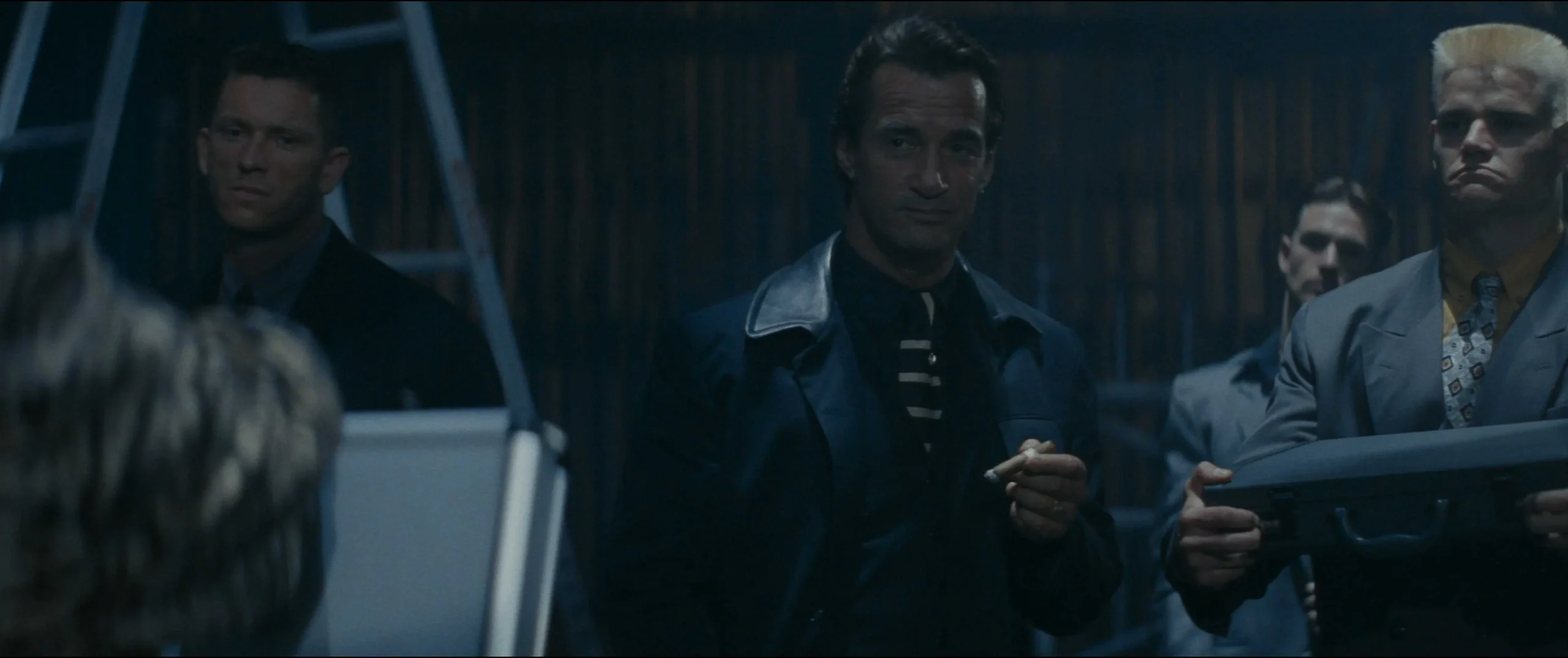
Missteps and clunky writing aside, Mr. Nice Guy is a good time at the movies. It’s probably the best-paced title here, aside from maybe Drunken Master II.
Film:
Who Am I? (a.k.a. Ngo si seoi)
Director: Jackie Chan, Benny Chan Muk-Sing
Screenplay: Jackie Chan, Susan Chan Suk-Yin, Lee Reynolds
Starring: Jackie Chan, Michelle Ferre, Yamamoto Mirai, Ron Smerczak, Ed Nelson
Country: Hong Kong
Running Time: 120 min
Year: 1998
Who Am I?, the final film in the set, sees Jackie play another character called Jackie Chan, but he’s not aware of this for much of the film. You see, he was part of an elite special forces unit who ended up being left for dead, but is picked up and brought back to health by an African tribe. Unfortunately, Jackie has amnesia, so he becomes known as ‘Who Am I’ by his rescuers.
When Jackie eventually leaves his new friends behind, he attracts the attention of CIA Agent Morgan (Ron Smerczak) and newly retired General Sherman (Ed Nelson), who want him silenced. You see, they had organised the mission Jackie was originally on, so that they could sabotage it to steal a meteorite fragment that could be used as a powerful weapon.
So, a number of bad guys chase Jackie whilst he tries to figure out what on Earth is going on and, of course, asks himself, “Who am I?”
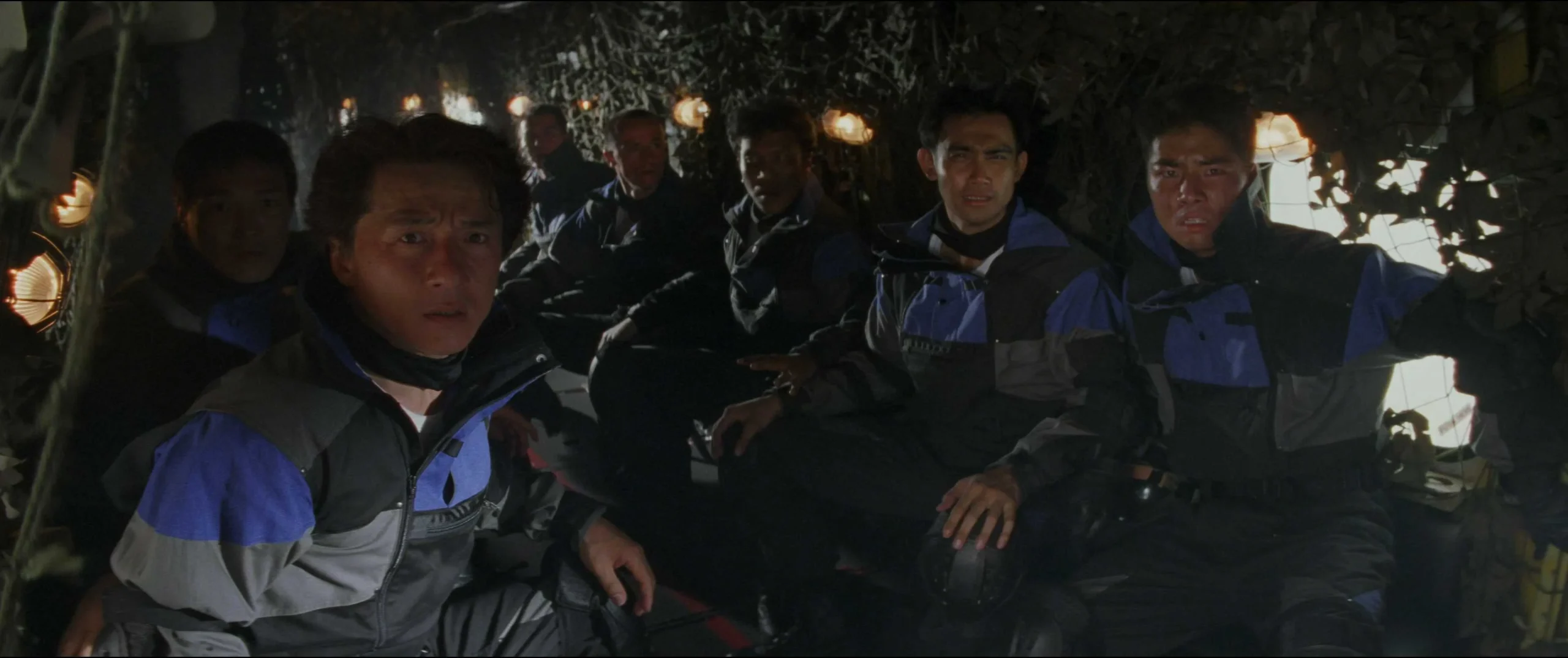
Indeed, Jackie literally asks himself this on a number of occasions, including a couple of wildly over-the-top shouting-to-the-skies sequences.
This is another not-quite-perfect but still rather enjoyable Jackie Chan vehicle. There’s a nice mix of set-pieces here, from the thrilling military operation that opens the film, to the impressive climactic fight scene and the jaw-dropping skyscraper rooftop slide at the end.
It doesn’t all work, though. The English-speaking actors are often a bit ropey in Jackie Chan’s films of this period, but they bothered me slightly more than usual here (Mr. Nice Guy suffers from this, too, though Norton is enjoyably over-the-top). I found Michelle Ferre, who plays a journalist in the film, to have some particularly weak line deliveries, though she has an unconventional beauty that I appreciated.
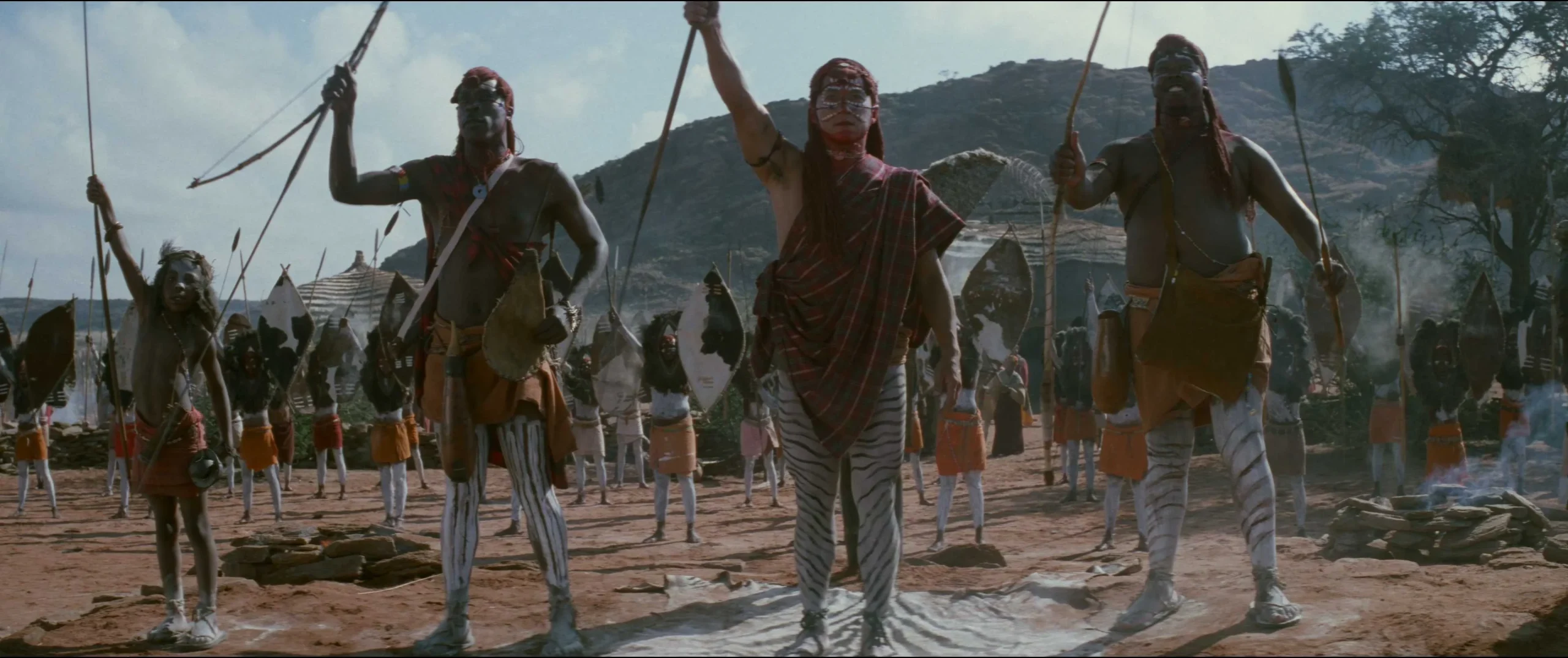
The African tribe section could be deemed as slightly problematic. The portrayal of the tribespeople is very stereotypical, but there are no jokes played at their expense, so it doesn’t feel as flat-out racist as some Hong Kong films of the era. I believe this portion of the film is shorter in the international cuts, so any potentially offensive scenes might be downplayed there.
I like the fact that we discover that Jackie was originally working for the bad guys, even if he didn’t realise it. This, added to the sense of mystery at the start, makes for an intriguing setup. Sadly, the story becomes more generic as it moves on.
So, again, Who Am I? is a bit rough around the edges, but generally successful.
Film:
Jackie Chan’s Breakout Hits! is out on 29th June in a limited Edition 10-disc UHD set, released by Arrow Video, who also have an alternative cover version available exclusively on their website. The transfers are all stunning, with crisp details, wonderfully rich, natural colours and well-balanced tones. I’ve used screengrabs throughout this review to give you an idea of how they look, though these images have been compressed. Audio is impressive across the board, too, with as many bases covered as possible.
LIMITED 10-DISC 4K UHD COLLECTION CONTENTS
– Brand new 4K restorations of each film from the original negatives by Arrow Films
– Limited edition packaging featuring newly commissioned artwork by Sam Hadley
– 160-page perfect bound book featuring an archive interview with Jackie by Craig D. Reid plus new writing by Thorsten Boose, Peter S. Bruce, Matt McAllister, Elaine Chung and Jialu Zhu
– Twenty-four lobby card reproductions
– Reversible poster with vintage poster artwork
DISC 1 – DRUNKEN MASTER II
– 4K (2160p) UHD Blu-ray presentations in Dolby Vision (HDR10 compatible) of three versions: the uncut 102-minute Hong Kong Cut , the 100-minute International Cut and the American Cut re-titled The Legend of Drunken Master (102 mins)
– Original lossless Cantonese, Mandarin and English mono audio for the Hong Kong Cut
– Original lossless English mono audio for the International Cut
– Original English DTS-HD MA 5.1 surround audio for The Legend of Drunken Master
– Optional English subtitles and subtitles for the deaf and hard-of-hearing
– Brand new commentary by martial arts cinema experts Frank Djeng and F.J. DeSanto
– Before the Breakout, a new featurette in which stuntman Wang Yao, academic Dr. Wayne Wong and critics David West and James Mudge look back at Jackie Chan’s earlier career
– Breakout! Part 1, a new featurette in which Wong, West, Mudge and stuntman Mars look back at the film
– Deadly When Drunken, a new interview with co-writer Yuen Kai-chi
– Tipsy Tribulations, an expanded interview with stuntman Mars
– Period Postures, a new interview with academic Dr. Lars Laamann on the historical context behind the film
– Drunken Defiance, a new appreciation of the film by martial arts cinema expert Ricky Baker
– Archive interview with Jackie Chan filmed for the American release in 2000
– Alternate Mandarin drinking scene (contains standard-definition inserts)
– Textless outtakes
– Chinese New Year messages recorded by Jackie for the Taiwanese and Malaysian openings
– Trailer gallery
– Image gallery
DISC 2 – RUMBLE IN THE BRONX (HONG KONG CUT)
– 4K (2160p) UHD Blu-ray presentation in Dolby Vision (HDR10 compatible)
– Original lossless Cantonese/English (sync-sound) stereo audio and English (export dub) mono audio
– Optional English subtitles and subtitles for the deaf and hard-of-hearing
– Brand new commentary by martial arts cinema experts Frank Djeng and F.J. DeSanto
– Breakout! Part 2, a new featurette in which stuntman Mars, stuntwoman Kathy Hubble, martial arts cinema expert Ricky Baker and critics David West and James Mudge look back at the film
– Rumble Recollections, an expanded interview with Hubble
– Alternate footage
– Textless outtakes
– Image gallery
DISC 3 – RUMBLE IN THE BRONX (INTERNATIONAL CUT)
– 4K (2160p) UHD Blu-ray presentation in Dolby Vision (HDR10 compatible)
– Original English-dubbed lossless stereo audio and DTS-HD MA 5.1 surround audio
– Optional English subtitles for the deaf and hard-of-hearing
– Electronic press kit interview with Jackie Chan
– Two scenes added for the network TV version with dubbing unique to this version
– US trailer and TV spots
DISC 4 – THUNDERBOLT
– 4K (2160p) UHD Blu-ray presentation in Dolby Vision (HDR10 compatible) of the uncut 110-minute International Cut
– Original lossless Cantonese/English (sync-sound) stereo audio, English (export dub) stereo audio and English (US dub) DTS-HD MA 5.1 surround audio
– Optional English subtitles and subtitles for the deaf and hard-of-hearing
– 97-minute Japanese Cut with lossless Cantonese/English sync-sound stereo audio (high-definition only)
– Brand new commentary by martial arts cinema experts Frank Djeng and F.J. DeSanto
– Breakout! Part 3, a new featurette in which stuntman Mars, critics David West and James Mudge, and dubbing supervisor Paul Clay look back at the film
– A Thunderous Presence, an expanded interview with Clay on his collaborations with Jackie Chan
– Alternate English export credits
– Textless outtakes
– International trailer
– Japanese trailers
– Image gallery
DISC 5 – POLICE STORY 4: FIRST STRIKE (HONG KONG CUT)
– 4K (2160p) UHD Blu-ray presentation in Dolby Vision (HDR10 compatible)
– Original lossless Cantonese/English (sync-sound) stereo and Mandarin (dubbed) stereo audio
– Optional English subtitles and subtitles for the deaf and hard-of-hearing
– Brand new commentary by martial arts cinema experts Frank Djeng and F.J. DeSanto
– Breakout! Part 4, a new featurette in which critics David West and James Mudge look back at the film
– Textless outtakes
– Image gallery
DISC 6 – POLICE STORY 4: FIRST STRIKE (INTERNATIONAL CUT)
– 4K (2160p) UHD Blu-ray presentation in Dolby Vision (HDR10 compatible)
– Original English-dubbed lossless stereo and DTS-HD MA 5.1 surround audio
– Optional English subtitles for the deaf and hard-of-hearing
– Striking Back, a new interview with martial arts cinema expert Frank Djeng
– Scenes added for the US network TV version with dubbing unique to this version
– US trailer
DISC 7 – MR. NICE GUY (JAPANESE & HONG KONG CUTS)
– 4K (2160p) UHD Blu-ray presentation in Dolby Vision (HDR10 compatible)
– Original lossless English DTS-HD MA 5.1 surround and lossless stereo audio for both cuts
– Optional English subtitles for the deaf and hard-of-hearing
– Brand new commentary by critic James Mudge
– Breakout! Part 5, a new featurette in which stuntman Mars and critics David West and James Mudge look back at the film
– Nice Thoughts, a new appreciation by martial arts cinema expert Frank Djeng
– Alternate English credits
– Textless outtakes
– Original trailer
– Image gallery
DISC 8 – MR. NICE GUY (INTERNATIONAL CUT)
– 4K (2160p) UHD Blu-ray presentation in Dolby Vision (HDR10 compatible)
– Original lossless English DTS-HD MA 5.1 surround and lossless stereo audio
– Optional English subtitles for the deaf and hard-of-hearing
– US trailer
DISC 9 – WHO AM I? (HONG KONG CUT)
– 4K (2160p) UHD Blu-ray presentation in Dolby Vision (HDR10 compatible)
– Original lossless English DTS-HD MA 5.1 surround and lossless stereo audio
– Optional English subtitles for the deaf and hard-of-hearing
– Brand new commentary by critic James Mudge
– Breakout! Part 6, a new featurette in which critic James Mudge, actor Glory Simon and second unit cinematographer Ray Wong look back at the film
– From Drunk to Slam Dunk: Jackie Chan in the New Millennium, a new featurette in which Mudge, Simon, Wong, stuntwoman Kathy Hubble, stuntmen Wang Yao and Mars, critic David West and others look at Jackie’s career in the years since
– The Making of Who Am I?, a three-part archive behind-the-scenes featurette
– Alternate English credits
– Textless outtakes
– Original trailer
– Image gallery
DISC 10 – WHO AM I? (INTERNATIONAL CUT)
– 4K (2160p) UHD Blu-ray presentation in Dolby Vision (HDR10 compatible)
– Original lossless English DTS-HD MA 5.1 surround and lossless stereo audio
– Optional English subtitles for the deaf and hard-of-hearing
– Who, When & Where, an expanded interview with Wong
– Jostling with Jackie, an expanded interview with Simon
– US trailer
A big selling point for the set is the fact that Arrow have collected as many different versions of the films as possible. I didn’t have time to check them all out, but it’s great to have the option to watch whichever cut you prefer.
Frank Djeng and F.J. DeSanto provide commentaries over the first four films in the set. They’re all strong tracks, as is to be expected from the duo. They often discuss the globalisation of Jackie’s films around this time, as well as providing behind-the-scenes details and backgrounds of the cast and crew.
James Mudge provides commentaries for Mr Nice Guy and Who Am I? There’s a little less information on the cast and crew in these, and more analysis as to what works and what doesn’t in the films, as well as some contextual analysis. They’re both strong tracks.
Throughout the set, there are short documentaries about each film under the ‘Breakout!’ heading. These are excellent, summarising the backgrounds behind each title, as well as discussing their strengths and occasionally weaknesses.
On the Drunken Master II disc, there’s also a ‘Before the Breakout’ piece. This, as you might have guessed, looks at the years preceding the films in the set.
Ricky Baker raves about Drunken Master II in an interview. It’s not a particularly deep or insightful piece, but he talks passionately about the film and describes what he thinks makes it special.
Dr. Lars Laamann gives some historical context behind the film and its setting. It’s an interesting addition to the set.
Co-screenwriter Yuen Kai-Chi is also interviewed about the film. He talks about the inception of the project and the changes made during production when Jackie took over. It’s an honest yet diplomatic description of the problems faced.
Mars is also interviewed about the film. He describes how he was Jackie’s ‘babysitter’ on Drunken Master II, and tells of the bad injury he suffered on set.
There’s a short EPK interview with Jackie, where he tries to sell Drunken Master II to American audiences, who likely haven’t seen the first film.
There’s also an alternative Mandarin language drinking scene, where Jackie sings a different song about his dad.
There’s a new interview with Kathy Hubble about her work on Rumble in the Bronx on that film’s disc. I enjoyed this piece a lot. She has some fun stories to tell of her time on set.
You can also watch the 55 seconds of extra material that appeared in the US cut of the film. A little of this helps tie up a minor issue I had with a scene.
There are some short archival interview soundbites from Jackie on the Rumble in the Bronx disc.
Frank Djeng provides an 11-minute interview about First Strike. This acts as a more focused alternative to his commentary with F.J. DeSanto.
Paul Clay is interviewed about dubbing Jackie Chan’s films on the Thunderbolt disc. It’s interesting to hear about the translation process, as well as his experiences working with Jackie.
Frank Djeng provides an interview on Mr Nice Guy, instead of a commentary. In this, he talks about Jackie’s attempts to break into the international market and how the films in this period differed from his previous work.
Who Am I? has one of the more stacked discs. On top of the usual ‘Breakout’ featurettes, you have an interview with actress Glory Simon. She has fond memories of working with Jackie and his team.
There’s also a piece featuring many of the contributors to the ‘Breakout’ featurettes that looks at Jackie’s films made following Who Am I? This is another well put together piece.
There’s also an interview with Who Am I? second unit cinematographer Ray Wong. He has some illuminating stories to tell. I enjoyed his contribution.
You also get a trio of behind-the-scenes documentaries on the making of Who Am I? I must admit, I haven’t got around to watching these yet, but at half an hour each, the series must cover a lot of ground.
Across the discs, you also get options to view clean outtake reels, as well as some alternative credits and such.
I wasn’t sent a copy of the booklet to comment on that.
So, Arrow have assembled a strong collection of extras to supplement a hugely enjoyable set of films. Highly recommended.
Disc/package: