


 Director: John Woo
Screenplay: John Woo
Starring: Chow Yun-Fat, Danny Lee Sau-Yin, Sally Yeh, Paul Chu Kong, Kenneth Tsang, Shing Fui-On, Tommy Wong
Country: Hong Kong
Running Time: 111 min (standard cut) 130 min (Taiwanese cut)
Year: 1989
BBFC Certificate: 18
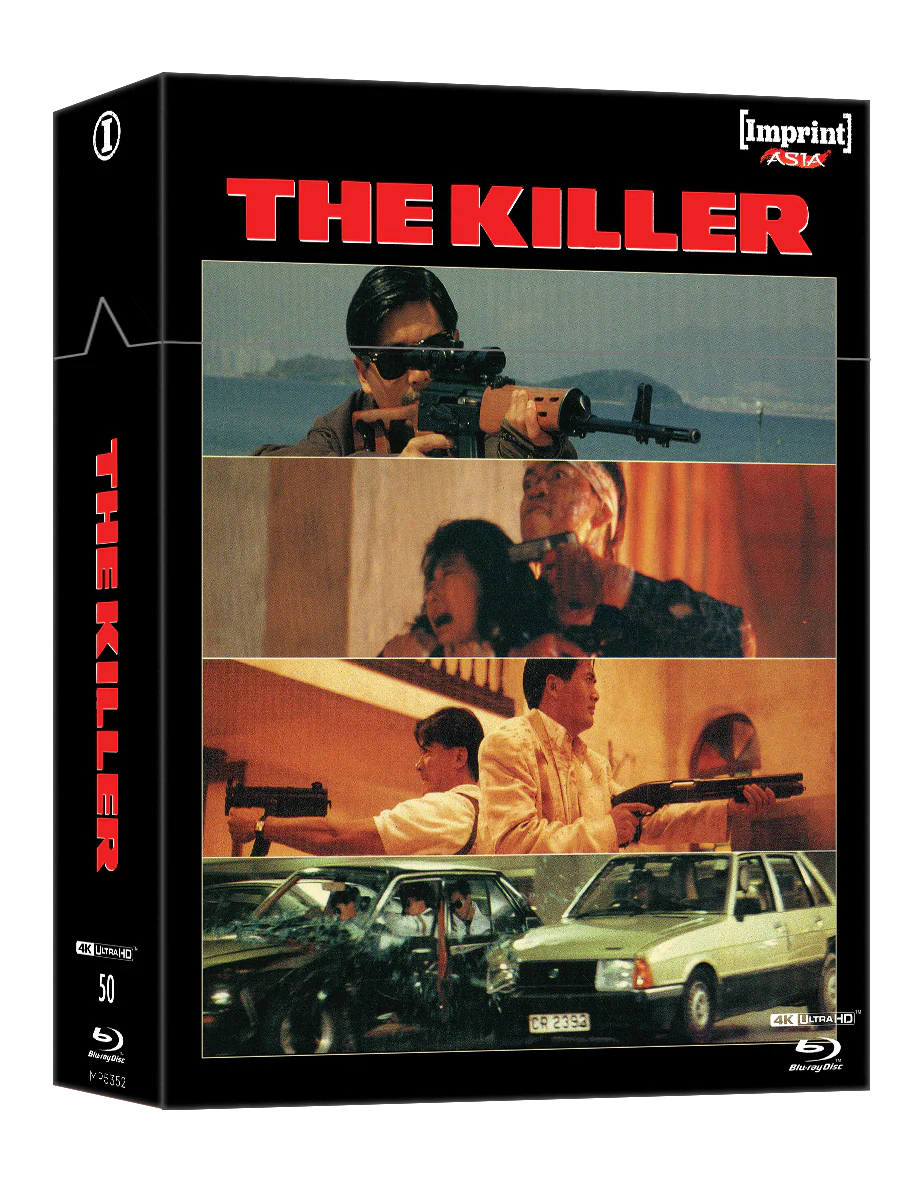
To accompany their exceptional release of Hard Boiled, Imprint have another John Woo classic ready for us on UHD & Blu-ray, 1989’s The Killer.
I’m replicating my review of Arrow Video’s release of the film but I will look at some of the different special features at the end.
Surprisingly, the film was only a modest success on its release in Hong Kong (A Better Tomorrow and Once a Thief made far more money). It gained considerable attention overseas, however, bringing Hollywood knocking at John Woo’s door.
The Killer was originally going to be based around a love triangle between a cop, a killer and a woman. They even started shooting with this in mind. However, Sally Yeh’s schedule changed, and it turned out she wouldn’t be available for long enough to shoot all of her scenes. So Woo and producer Tsui Hark came up with the idea of the cop and the killer becoming friends, instead. There’s still a hint of that love triangle in there, but the themes are shifted, and the cop’s relationship with the girl becomes less about romance and more about business with a dash of sympathy.
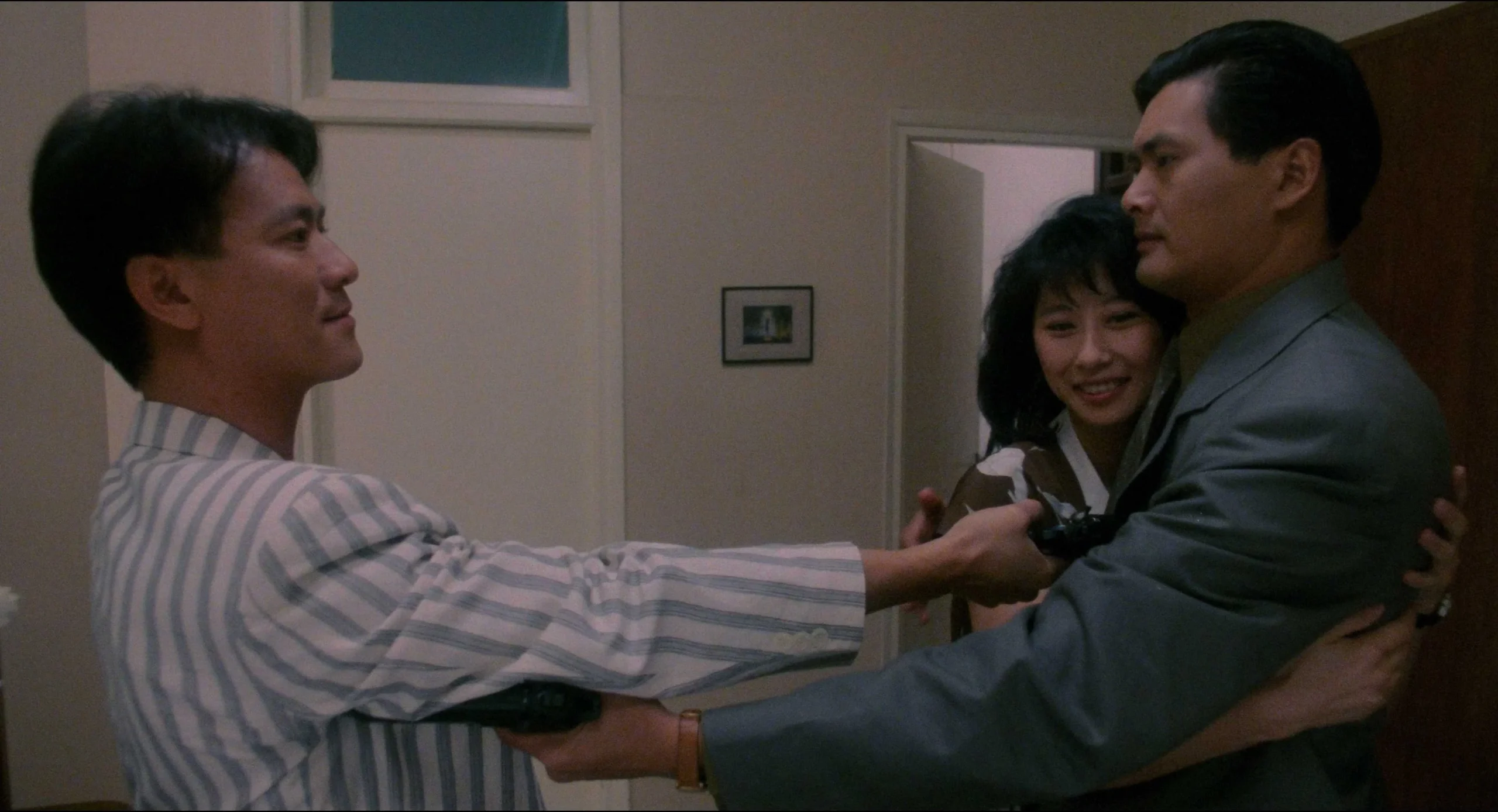
To borrow from Arrow’s press blurb, “Ah Chong (Chow Yun-Fat) is a hitman whose latest job takes a wrong turn when, during a shootout at a lavish nightclub, he accidentally blinds singer Jennie (Sally Yeh) by firing his gun too close to her eyes. Racked with remorse, Ah Chong decides to retire from his life of crime and help Jennie get a cornea transplant. But when Ah Chong’s rancorous former boss betrays him, Ah Chong receives an unexpected helping hand from hot-headed police detective Lee Ying (Danny Lee, City on Fire).”
The Killer is a film about guilt, as well as honour or chivalry. The latter shows the influence of his mentor, Chang Cheh. Like in those early Shaw Brothers ‘heroic bloodshed’ films, the drama is heightened. Those less accustomed to Hong Kong cinema might find this rather melodramatic, in fact, particularly if they’ve only seen Hard Boiled or Woo’s Hollywood output.
I don’t mean melodramatic as a criticism, though. Without wanting to sound wanky, the film has an operatic quality. The emotions are played big, with a romantic (albeit slightly dated) score fuelling the fire. It’s not just a slap-bang fireworks display, it’s a powerful drama that may not be subtle, but works a treat.
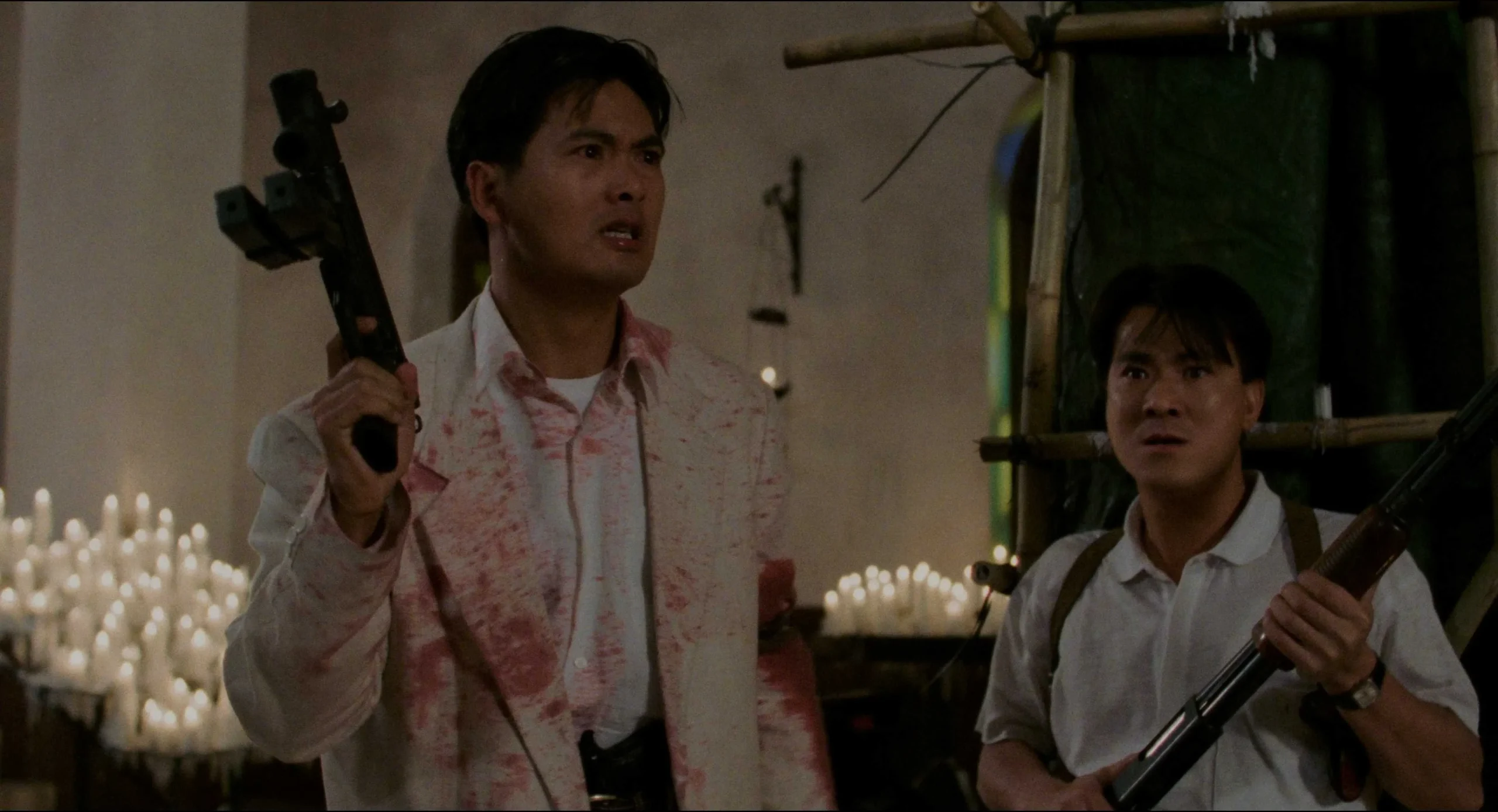
Don’t let that scare off the action movie fans among you, though. The Killer certainly still fits the genre. It may not quite reach the excess of Hard Boiled, but it’s still loaded with gobsmackingly good action set-pieces.
Woo’s use of camera movement and the action choreography by Ching Siu-Tung and Lau Chi-Ho work hand-in-hand to create a fluidly dynamic and deliriously exciting film.
Woo’s sense of pace and rhythm is impeccable, too. He uses a lot of slow motion but knows exactly how and when to effectively use it, rather than slinging shots in for the sake of it. It’s not just the action scenes that are well edited, either. Generally, the film sails by without hitting a lull, whilst never losing focus on the drama either.
Woo has said he was inspired by Jean-Pierre Melville’s Le Samouraï and a Japanese film called Tôkyô gyangu tai Honkon gyangu (translated as ‘Tokyo Gang Vs Hong Kong Gang’), starring Ken Takakura, as well as being influenced by Martin Scorsese. I feel like Woo’s film is much more emotionally resonant than Melville’s, though, which opts for a colder approach. Woo does share the French director’s sense of ‘cool’, though.
The performances are strong too. Chow Yun-fat had finally made it big by this point, which meant his schedule almost kept him from being cast in the film. However, a chance meeting with Woo caused Chow to clear room for it.
Rather than ride on his charismatic, live-wire persona that had made him famous in A Better Tomorrow, Chow scales things back a bit for The Killer, delivering a surprisingly nuanced performance, despite the explosive action often going on around him. He also gets some dramatic heavy lifting to do as the film goes on.
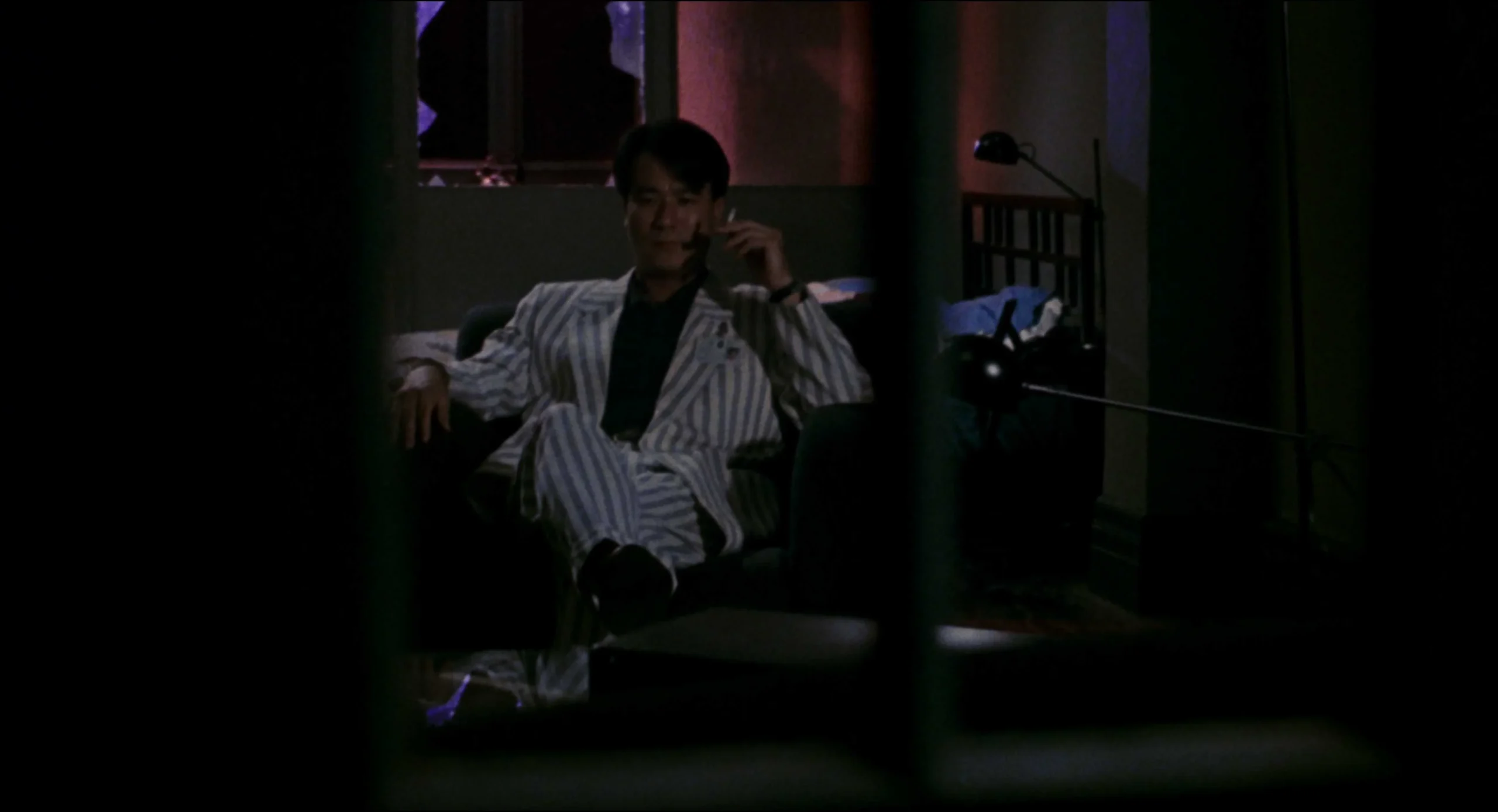
Danny Lee played a lot of policemen in his career. Some claimed he almost thought he was one! As such, he’s perfectly cast here and does a great job of keeping the moral conflicts of his character simmering under the surface.
Sally Yeh claims she wasn’t happy with her performance, but I thought she did a good job as Jennie, the focus of both Ah Chong’s guilt and desires.
Underrated performances in the film come from the central characters’ brothers-in-arms. Kenneth Tsang plays Lee Ying’s partner and Paul Chu Kong plays Ah Chong’s handler. They help enrich the theme of brotherhood embedded in the film.
I won’t ramble on any further about The Killer because I’m sure you’ve either already seen it or have heard about how good it is elsewhere. All I can say is that it’s an operatic tale of guilt and brotherhood that’s loaded with all the stunningly cool set-pieces you expect from a John Woo film. Simply put, it’s a masterpiece.
Film: 
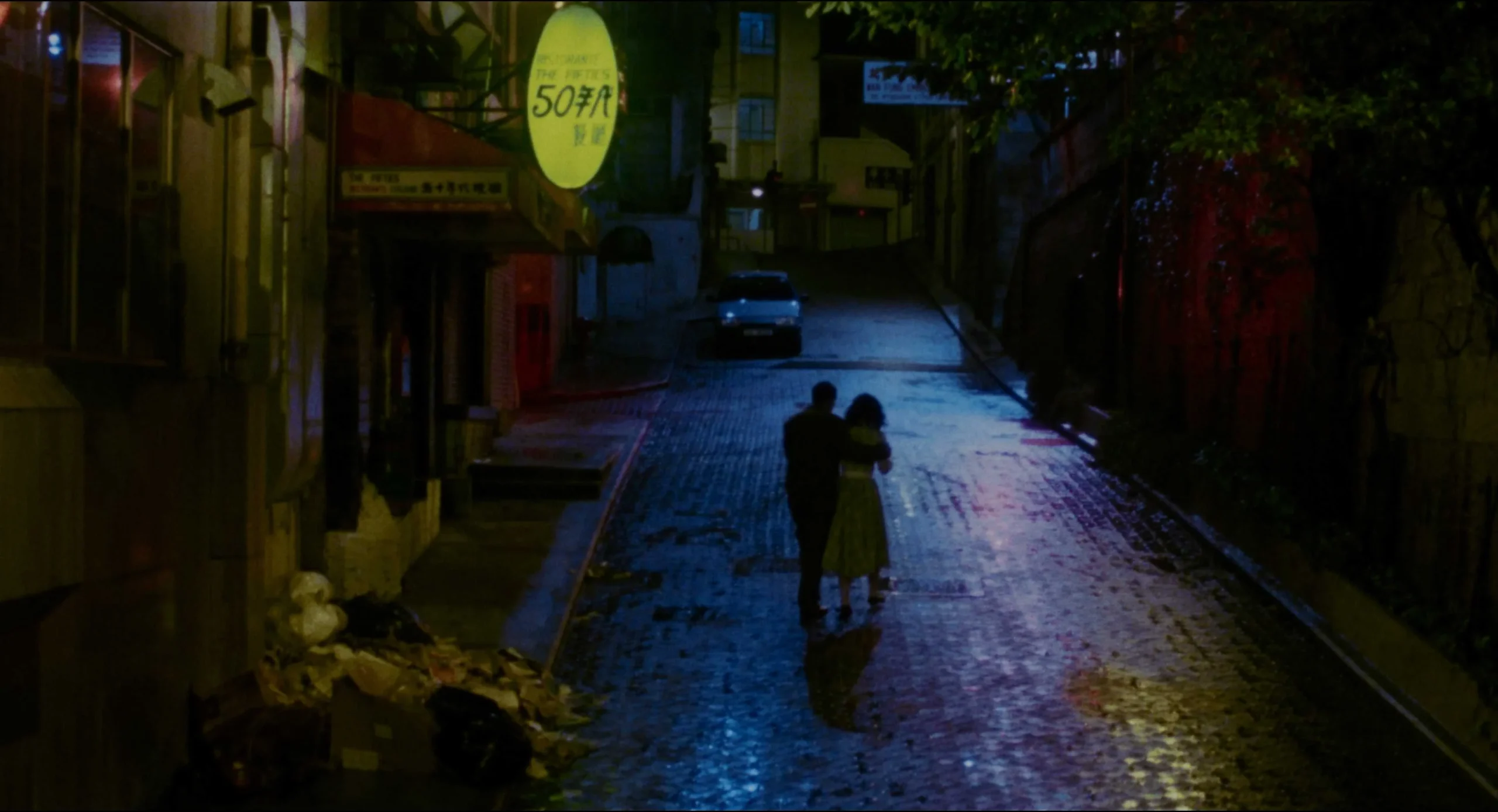
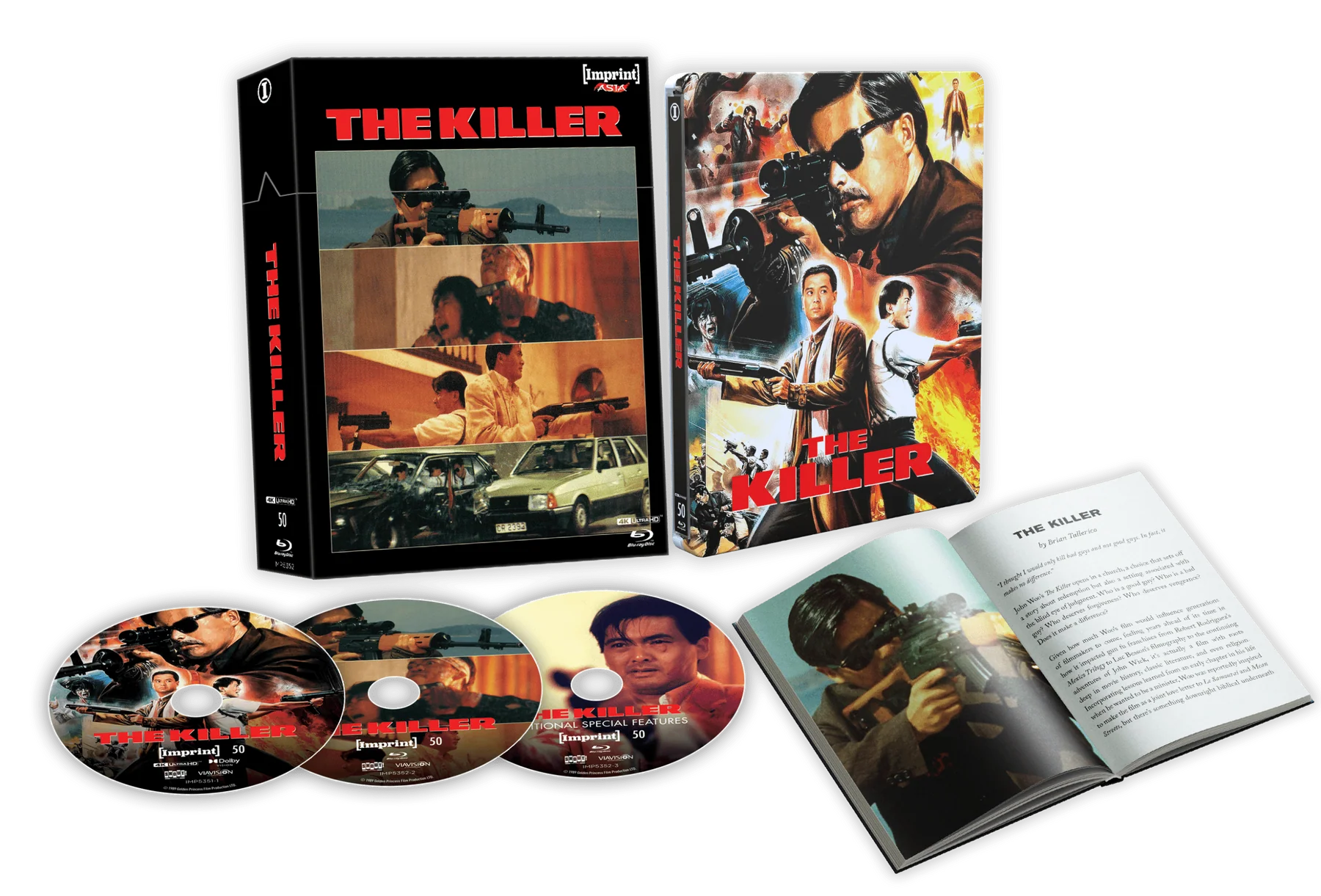
The Killer is out now on 4K UHD + Blu-ray SteelBook with a Hardcover Booklet in a Limited Edition Hardbox, courtesy of Imprint Asia (a Viavision label). I might be wrong, but I suspect the Imprint transfer is the same as on the Shout disc. The Imprint UHD seems to have slightly higher saturation in spots, or at least in the neon-lit screengrab I selected below. It might be down to slightly stronger purple hues, though the overall colour tone is a touch colder on the Imprint disc. What you prefer is down to personal preference, to be honest. I can’t say which is closest to Woo’s original vision. I’ve used screengrabs from the Imprint UHD throughout this review and below I have compared a couple of these screengrabs with the same frames on the Arrow disc.
Imprint UHD
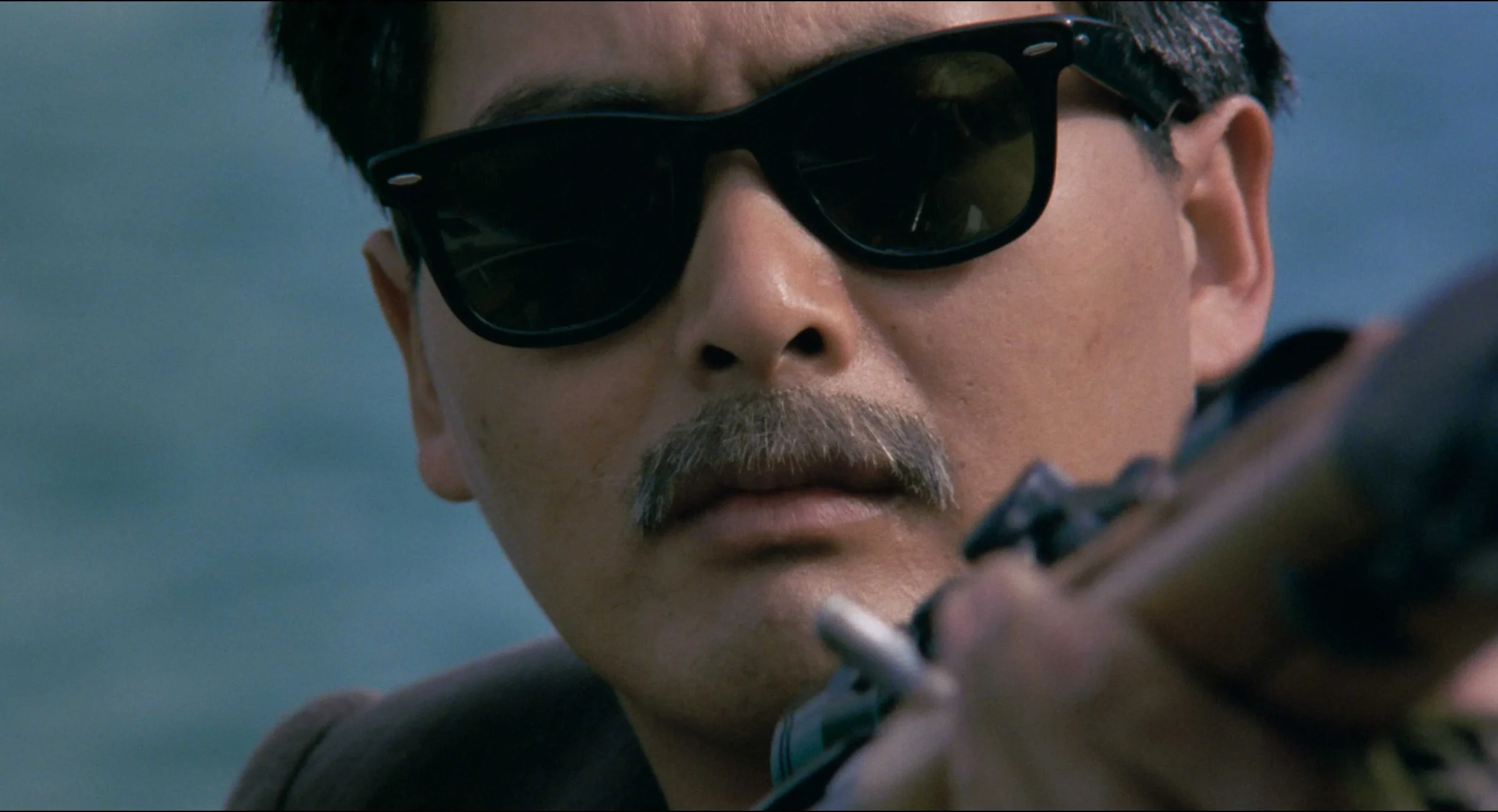
Arrow UHD
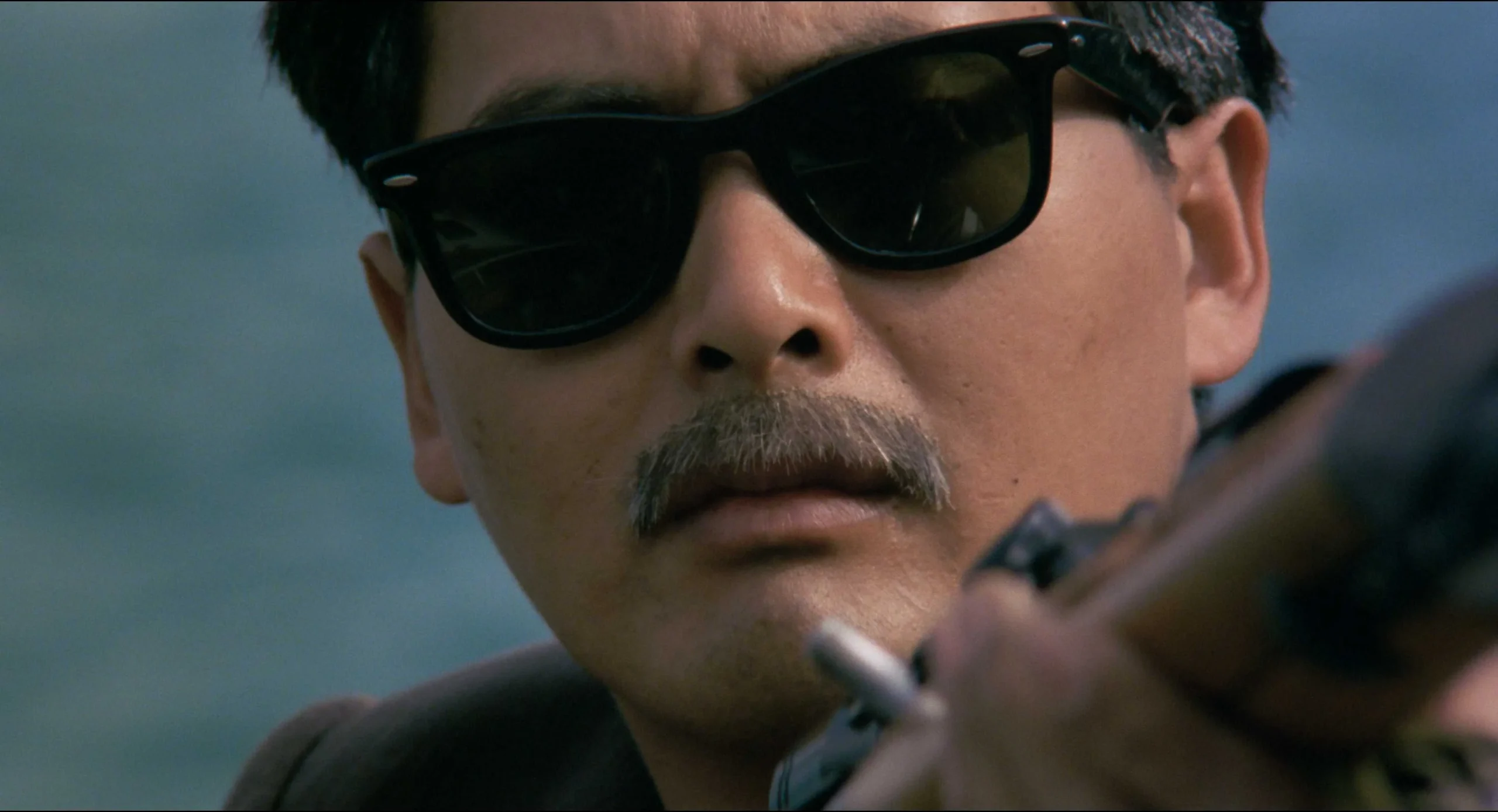
Imprint UHD
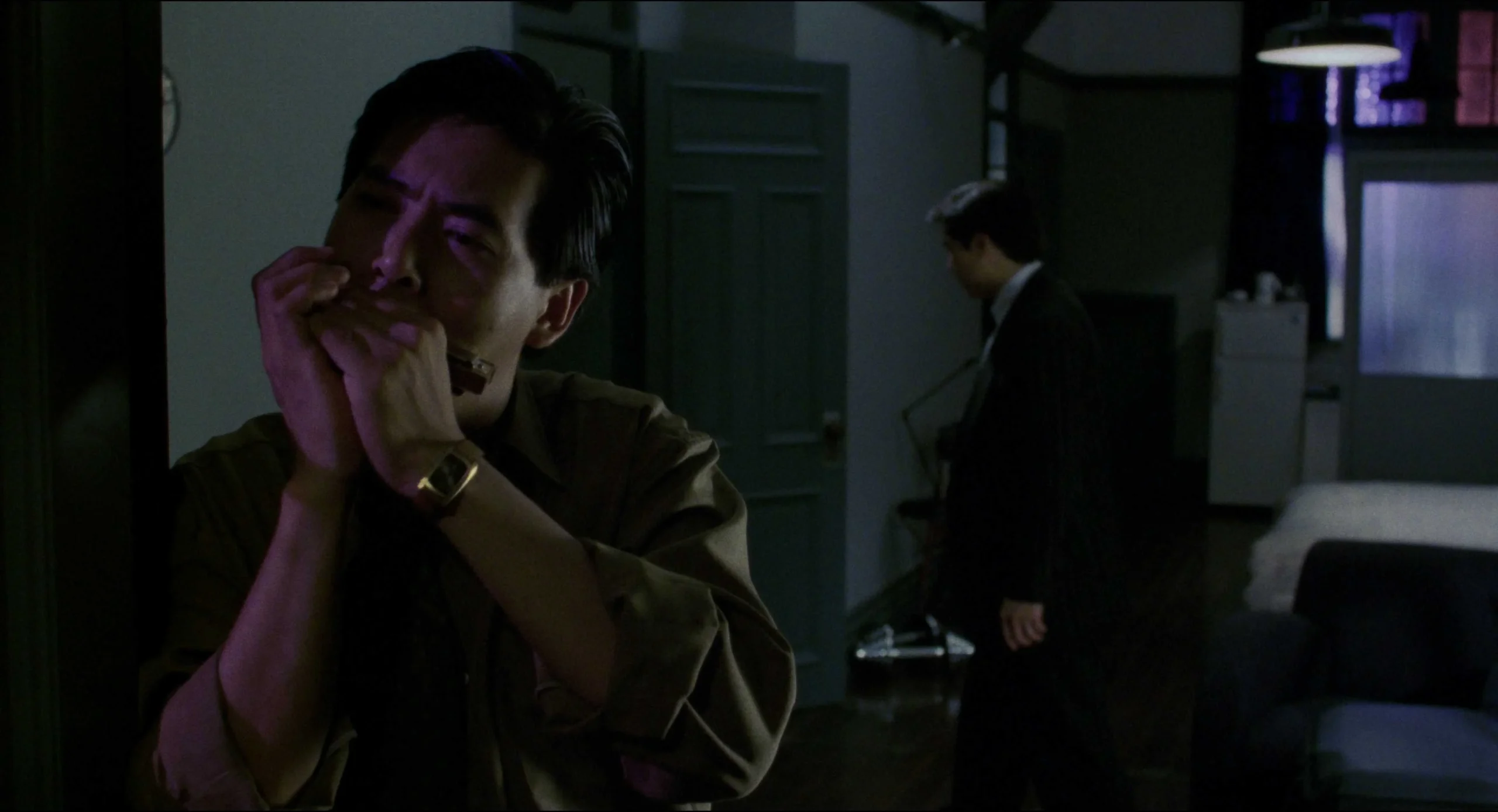
Arrow UHD
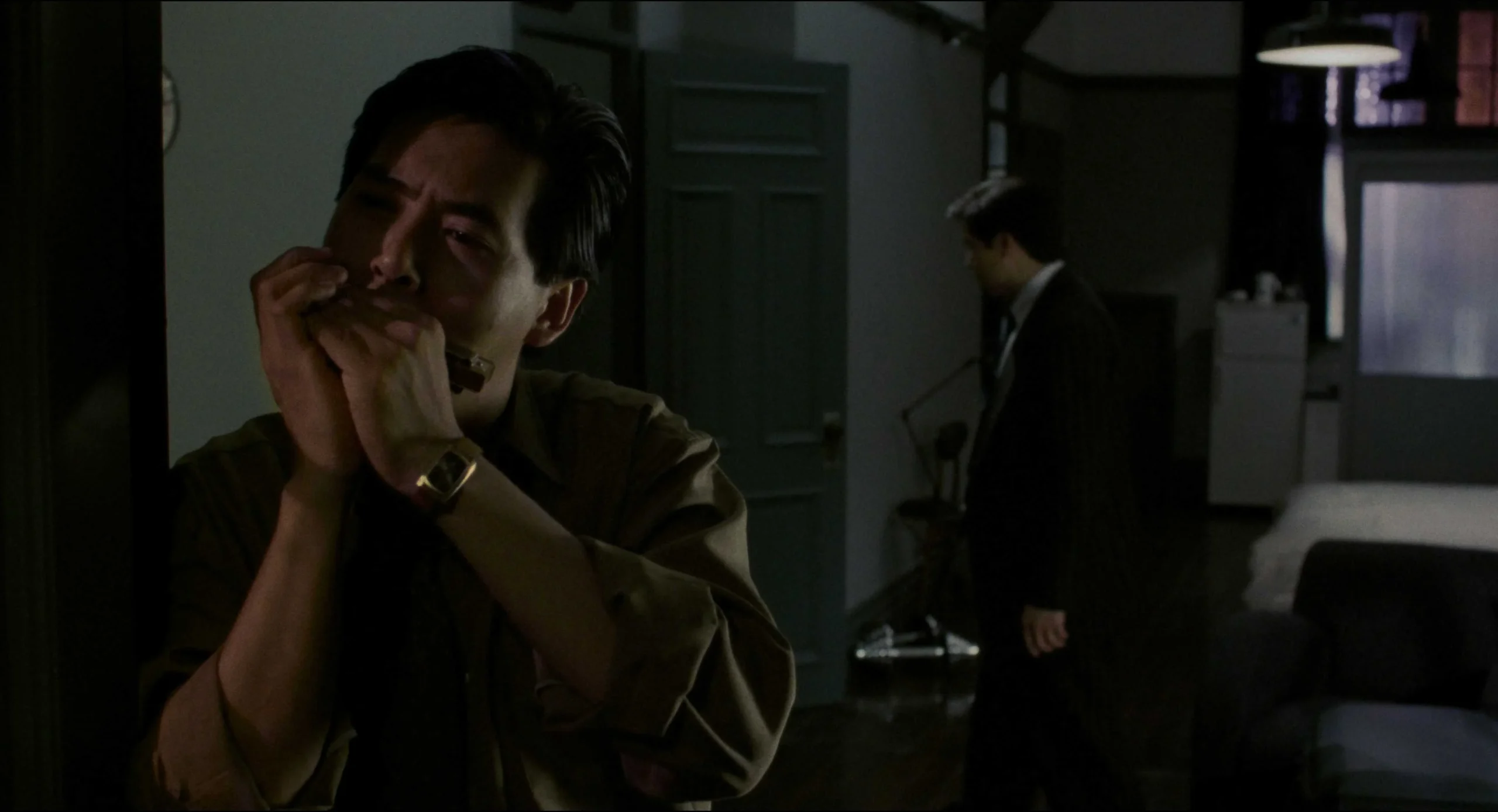
I believe the audio options are the same as on the Arrow disc. The Cantonese DTS-HD mono track sounded great to me.
Special Features & Technical Specs:
Disc One – 4K UHD
– 2160p Ultra high-definition NEW Dolby Vision / HDR10 presentation on 4K UHD, restored from the original camera negative
– NEW Audio commentary by director John Woo and film journalist Drew Taylor
– NEW Audio commentary by critic/author David West
– Audio commentary by director John Woo and producer Terence Chang
– Audio: Cantonese LPCM 2.0 Mono + Cantonese DTS-HD 7.1 Surround + Mandarin DTS-HD 5.1 Surround + English LPCM 2.0 Mono
– Aspect Ratio 1.85:1
– Optional English Subtitles from a NEW translation
Disc Two – Blu-ray
– 1080p High-definition presentation on Blu-ray of the 4K restoration
– NEW Audio commentary by director John Woo and film journalist Drew Taylor
– NEW Audio commentary by critic/author David West
– Audio commentary by director John Woo and producer Terence Chang
– Audio: Cantonese LPCM 2.0 Mono + Cantonese DTS-HD 7.1 Surround + Mandarin DTS-HD 5.1 Surround + English LPCM 2.0 Mono
– Aspect Ratio 1.85:1
– Optional English Subtitles from a NEW translation
Disc Three – Blu-ray Special Features
– The Hero of Heroic Bloodshed: A John Woo Documentary
– NEW A Bullet Ballet – interview with director John Woo
– NEW My Kind of Hero – interview with producer Terence Chang
– NEW Editing The Killer – interview with editor David Wu
– NEW Hong Kong Confidential – interview with author Grady Hendrix
– 136-minute extended Taiwanese Cut
– The Killer: Birth of a Romantic Killer – featurette
– Archival interview with Chow Yun-Fat
– Archival interviews with actress Sally Yeh
– Archival interviews with actor Kenneth Tsang
– Archival interview with John Woo
– Archival interview with cinematographer Peter Pau
– American Cinemateque Q&A with director John Woo
– Location guide
– Code of Bullets: ‘The Killer’ – Perfect Selection – featurette
– Deleted and extended scenes
– Theatrical Trailers
– Image Gallery
A big selling point for many will be the inclusion of the Taiwanese extended cut. This isn’t housed on a separate disc, as it is with the Arrow release, but it’s still here to see. I must admit, I didn’t sit and watch the whole extended version, but I did watch the deleted/extended scenes, which I believe include most of the material missing from the Hong Kong cut. A lot of these are just minor extensions of scenes, but you do get a couple more reflections of the Lee Ying and Ah Jong characters, to make their similarities more blatant. Personally, I don’t think they’re needed.
With the Killer and Hard Boiled discs being produced so close to each other, the extras here follow a similar ‘formula’, if you will, to Imprint’s previous disc. As such, they’re once again John Woo-heavy, and there are quite a few repeated anecdotes. It’s better to have more than is needed than less, though, so I mustn’t grumble.
Like on the Hard Boiled disc, we get four commentaries, three of which feature Woo, two with different co-commentators and one solo track. The new one with Woo is great. Whilst his voice is faltering in his old age, he’s on fine form and has lots to say about the production. I only listened to one of the archival tracks, one recorded for Criterion alongside Terence Chang. I enjoyed this one too, though it’s not drastically different to the new track.
The fourth commentary is by David West. He strikes an effective balance between analysis and production background. This was my favourite of the commentaries.
The lengthiest extra, aside from the commentaries, is a feature-length documentary about Woo’s career in general. With a number of different contributors, it’s a wonderful piece that delves into different aspects of his work, as well as offering some production background and anecdotes.
There’s also a new interview with Woo on disc 2. Running close to 45 minutes, it covers a lot of ground. It shares a lot of information with the commentaries, but offers a more focused and concise account from the director.
Grady Hendrix talks about The Killer in an 11-minute piece. This is a handy overview of the film’s background and its qualities.
There’s also an interview with music editor David Wu. He talks about his job on the production, looking at the use of music in the film. It’s an interesting piece, exploring an aspect of filmmaking that’s rarely discussed.
Terence Chang features in another one of the new interviews. He talks about the film and why he thinks it proved to be Woo’s breakout in the Western market.
The archival French pieces from the Arrow disc are combined into one documentary here. They centre around interviews with Woo and producer Tsui Hark. I found them very interesting.
There’s also an archival interview with cinematographer Peter Pau. This is excellent. He talks about Woo’s unusual but open and almost poetic way of working with his crew.
Another archival piece features actor Kenneth Tsang. He talks about his character and how it was to work with Woo and his co-stars. He’s a little bit of a ‘luvvy’ but in a nice, charming way.
There’s also an archival interview with Sally Yeh. She’s very humble, describing how she thinks she didn’t put enough effort into her job on the film and didn’t take it seriously at the time. She only made one more film after The Killer before taking a long break from acting.
That’s all the material that is shared with the Arrow release. Now onto the extras exclusive to the Imprint disc.
Unique to the Imprint disc is a 24-minute archival interview with Woo. This follows similar ground to the other interviews and commentaries, but it has some new takes on his work.
The Q&A on the Imprint disc is an older one than that on the Arrow disc. This is great. Although there’s a little crossover, there’s enough new material here, due to stronger questions, to make it well worth watching.
Also unique to this release is an extra archival interview with Kenneth Tsang. He’s an animated speaker, making for an enjoyable piece.
There’s also another archival interview with Sally Yeh. This is a decent piece, with the actress describing her experiences making the film.
Also new to the Imprint disc is a location featurette. This is well presented and informative, providing some film facts alongside showing what the locations looked like at the time of recording the piece.
There’s also a piece on the guns of The Killer on the Imprint disc. It goes into great detail on the hardware used in the film, making for a unique featurette.
There is an archival interview with Chow Yun Fat on the Imprint release that appeared on Arrow’s release of Hard Boiled. This sees Chow discuss his work with John Woo. It’s relatively short, but worth watching.
I didn’t get a copy of any of Arrow’s physical packaging or extras to compare, but the Imprint release is stunning, in this field. As usual with their LE releases, it’s housed in a solid, hard case with striking artwork. The discs are housed in a handsome embossed, glossy steelbook.
The booklet in Imprint’s release is also beautifully presented in hardback form and includes a pair of insightful essays alongside a wealth of publicity stills.
So, Imprint have done another exceptional job with The Killer. The differences between this and the Arrow release are only minimal, but Imprint’s release does offer a touch more, so may be preferable, depending on your thoughts on the transfer and having the extended cut housed on a separate disc. Hopefully my screengrab comparisons help you make the decision. Or, if you’ve got the cash, you could always double dip!
Disc/Package: