


 After losing money on Orson Welles’ ambitious and inventive but commercially unsuccessful first couple of films (and his aborted documentary, It’s All True), RKO vowed to focus on more commercial fare. As part of this drive, they hired Val Lewton, writer and one-time publicist/assistant to David O. Selznick, to head their new line of low-budget horror movies.
Lewton was given relatively free reign, so long as the films he produced ran under 75 minutes, cost less than $150,000 and were based on titles pre-determined through market research. This led to a series of movies with wonderfully lurid titles like I Walked With a Zombie and The Leopard Man. However, such care was taken in making the films that they generally turned out much classier than one might expect. Audiences, for the most part, appreciated his approach. His first film for the studio, Cat People, which he hired Jacques Tourneur to direct, was a huge hit.
Reportedly, Lewton would make the final changes to his scripts, adding incredibly detailed notes on the production design in particular. Perhaps due to this, his films tended to have a similar feel, despite using a range of directors. As such, Lewton was a rare example of someone who could be considered an auteur producer.
To celebrate some of Lewton’s best work, Criterion are releasing a pair of his RKO productions under the title I Walked with a Zombie / The Seventh Victim: Produced by Val Lewton. I got hold of a copy and my thoughts follow.
I Walked With a Zombie
Director: Jacques Tourneur
Screenplay by: Curt Siodmak, Ardel Wray
Based on a Story by: Inez Wallace
Starring: Frances Dee, Tom Conway, James Ellison, Edith Barrett, James Bell, Theresa Harris, Christine Gordon
Country: USA
Running Time: 69 min
Year: 1943
In the first film in the set, I Walked With a Zombie, Nurse Betsy Connell (Frances Dee) finds herself trading the Canadian winter for the tropical warmth of Saint Sebastian, a West Indian island. Accepting a position as a private nurse for Jessica Holland (Christine Gordon), the wife of plantation owner Paul Holland (Tom Conway), Betsy is unaware of what awaits her. Her first encounter with Mrs. Holland is a shock: after being afflicted with a tropical fever, Mrs. Holland is now in a zombie-like state, conscious but unresponsive.
Beyond the Hollands, the only other resident of the estate is Paul’s alcoholic younger half-brother, Wesley Rand (James Ellison). Their mother (Edith Barrett), a missionary widow, lives in town. Drawn to Paul, Betsy feels compelled to help Jessica recover, even if it means delving into the island’s voodoo rituals. Many locals believe voodoo is both the cause and cure for Mrs. Holland’s condition. As Betsy becomes involved, she finds herself caught between the two brothers, just as Jessica was, with rumours swirling about the true nature of her affliction.
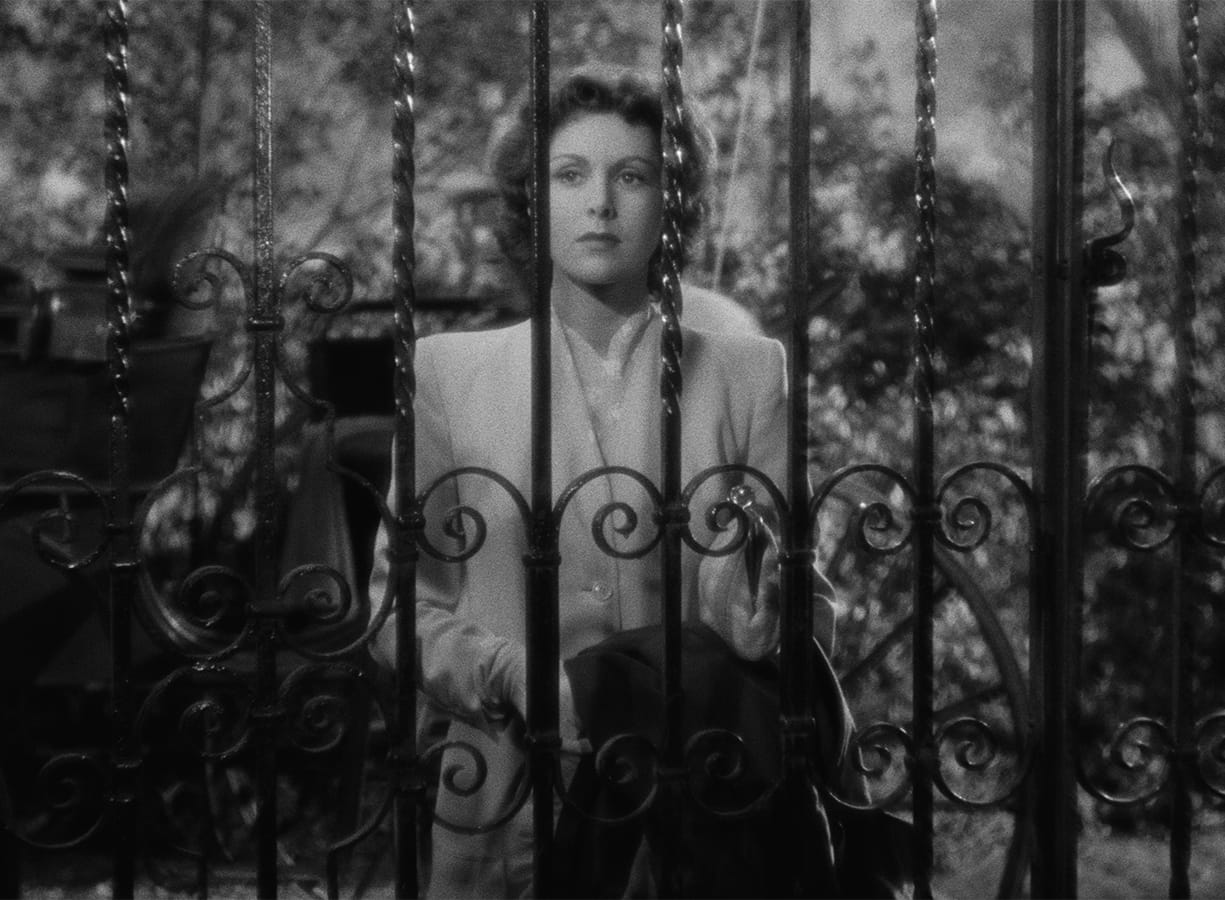
I Walked With a Zombie, whilst not as big a hit as Cat People, was surprisingly well received by critics at the time and performed well at the box office. I don’t just mean surprising because of the daft title, but because it’s quite an unusual film. Though largely seen as a horror movie, it’s not actually that easy to classify. There are no real villains, let alone monsters, and the story is quite peculiar in how it develops. It’s more of a creepy, melancholic melodrama, if that can be classed as a genre.
I must admit, I didn’t find it quite as captivating as Cat People or The Seventh Victim, partly due to an underwhelming climax (though the refreshingly open-ended and melancholic finale is notable). However, there’s still much to admire in I Walked With a Zombie.
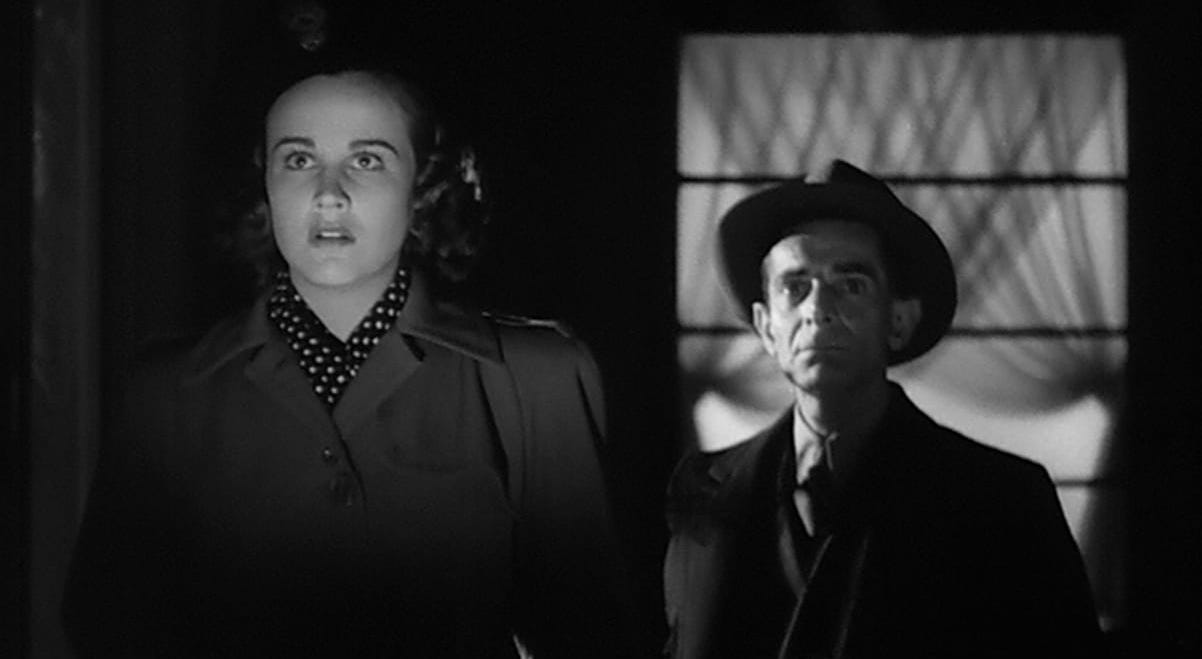
As is to be expected from Lewton and director Jacques Tourneur, the film is incredibly atmospheric. Great use is made of light and shadows, particularly in the more frightening scenes. The titular midnight trek through the long reeds/grass, where we meet another ‘zombie’ (played by Darby Jones), is particularly impressive.

Diegetic music is also effectively used to enhance the atmosphere. You often hear the foreboding sound of drumming in the distance when the locals begin their voodoo rituals. Tourneur also makes surprisingly unsettling use of a calypso song. The track ‘Shame & Scandal’ (also known as ‘Fort Holland’) was written by ‘Sir Lancelot’ who performs it in the film. The song became a hit and has been covered and adapted many times, over the years.
Though there are some stereotypical aspects, I was also surprised to find that the black characters in the film are much more rounded than usual for the era. The Alma character, in particular, is given a lot to do. It’s also honest about the struggles faced by Africans brought to the islands as slaves and voodoo is treated reasonably respectfully (though, technically, it’s Haitian Vodou that is more commonly associated with the concept of ‘zombies’).
So, whilst I don’t share Tourneur’s belief that it’s his best film, I still found I Walk With a Zombie to be a wonderfully atmospheric and effectively unsettling experience.
Film: 


The Seventh Victim
Director: Mark Robson
Screenplay by: Charles O’Neal, DeWitt Bodeen
Starring: Kim Hunter, Tom Conway, Jean Brooks, Isabel Jewell, Evelyn Brent, Erford Gage, Ben Bard, Hugh Beaumont
Country: USA
Running Time: 71 min
Year: 1943
In The Seventh Victim, Kim Hunter plays Mary Gibson, a student at a private girls’ school who has been raised by her older sister, Jacqueline (Jean Brooks). When her tuition goes unpaid for six months, Mary discovers Jacqueline has vanished. Despite infrequent contact, Mary knows little about her sister, so heads to New York to investigate.
Mary finds that Jacqueline sold her thriving cosmetics business, La Sagesse, to an associate named Esther Redi (Mary Newton). She had been dating a lawyer, Gregory Ward (Hugh Beaumont), who is also searching for the missing woman. And she had spoken of suicide, with a noose found in an unused room she rented.
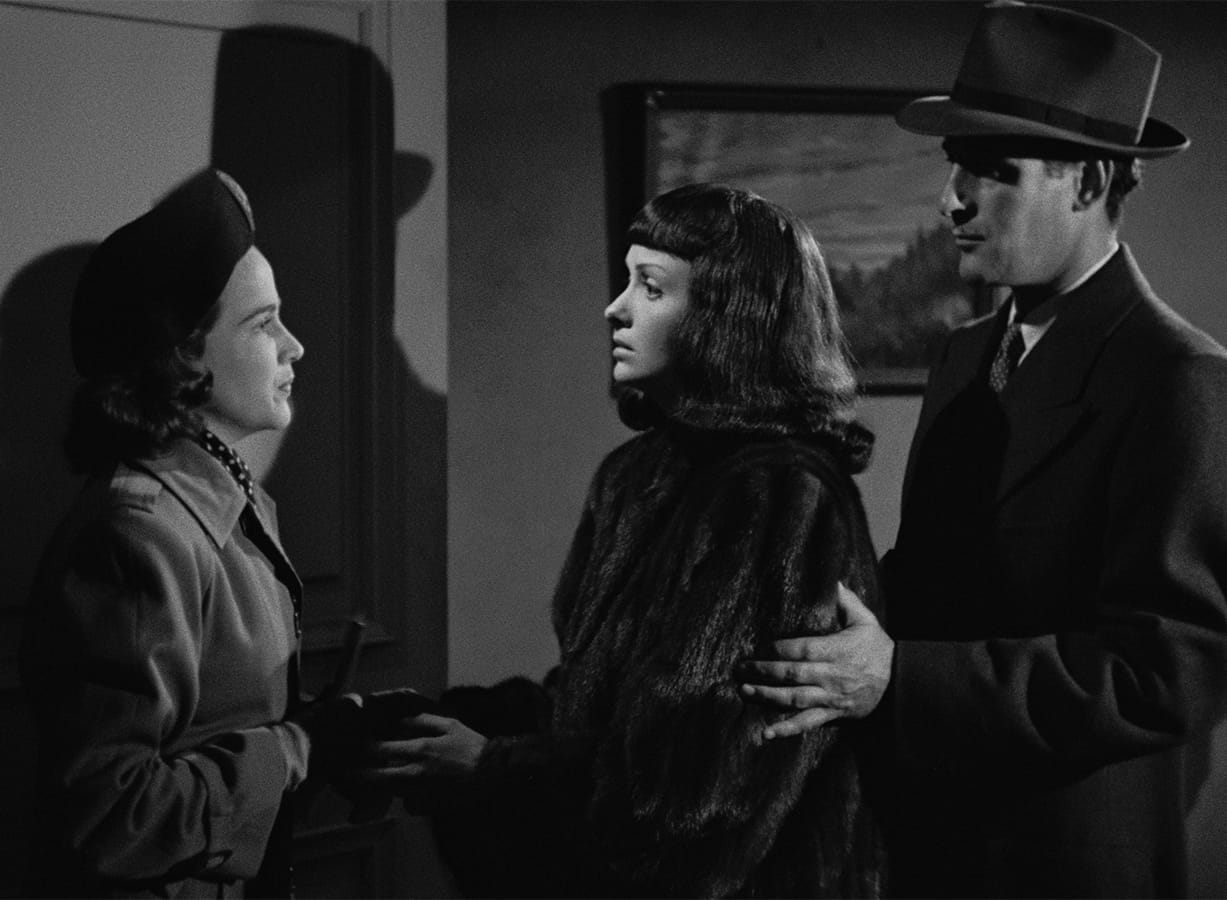
Mary enlists the help of others in the search, including the poet Jason Hoag (Erford Gage). Their investigation leads them to Dr. Louis Judd (Tom Conway), a psychiatrist who treated Jacqueline. However, they suspect Dr. Judd is hiding something, possibly connected to Miss Redi.
As they delve deeper, Mary and her allies are drawn into a world of the occult, specifically a group of devil worshippers. Jacqueline may be among their ranks.
As I alluded to earlier, The Seventh Victim is my favourite of the pair of films here, despite it being much less successful than its predecessor. It was fairly well received in Europe but critics and audiences in the US were less enamoured, with many calling its plot incoherent. I wouldn’t go that far, but I can see where they’re coming from. Personally, I found some of the unusual twists and turns helped create an elusive, ambiguous nature that I appreciated, even if the central mystery is unceremoniously tied up before the climax and downbeat finale.
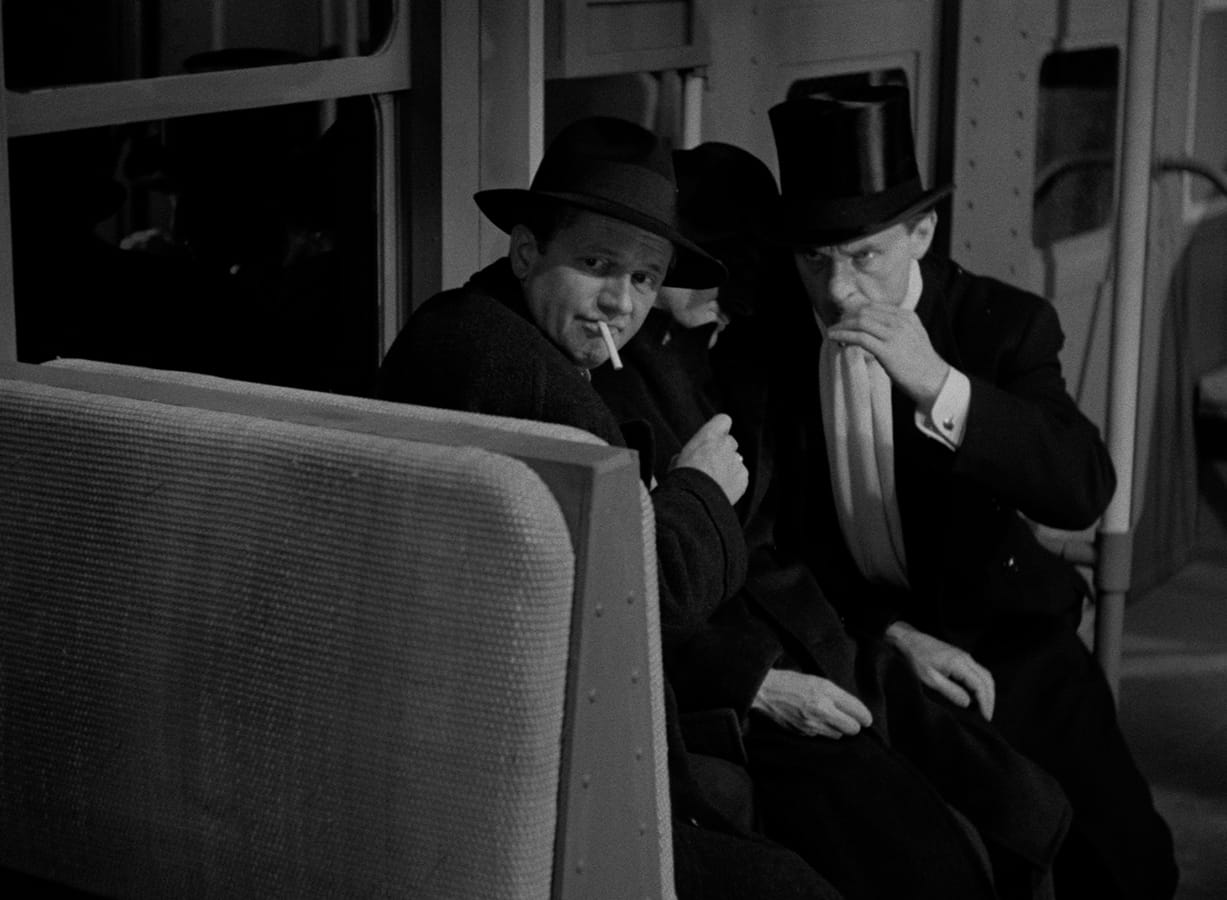
The film was directed by Mark Robson this time. He had worked as an editor for Lewton and the producer wanted to give him a chance to take a step up the ladder. The studio heads at RKO were less keen, refusing to give Lewton the ‘A’ picture budget he’d been promised for this next feature. Lewton stood his ground, so it became another B-movie instead.
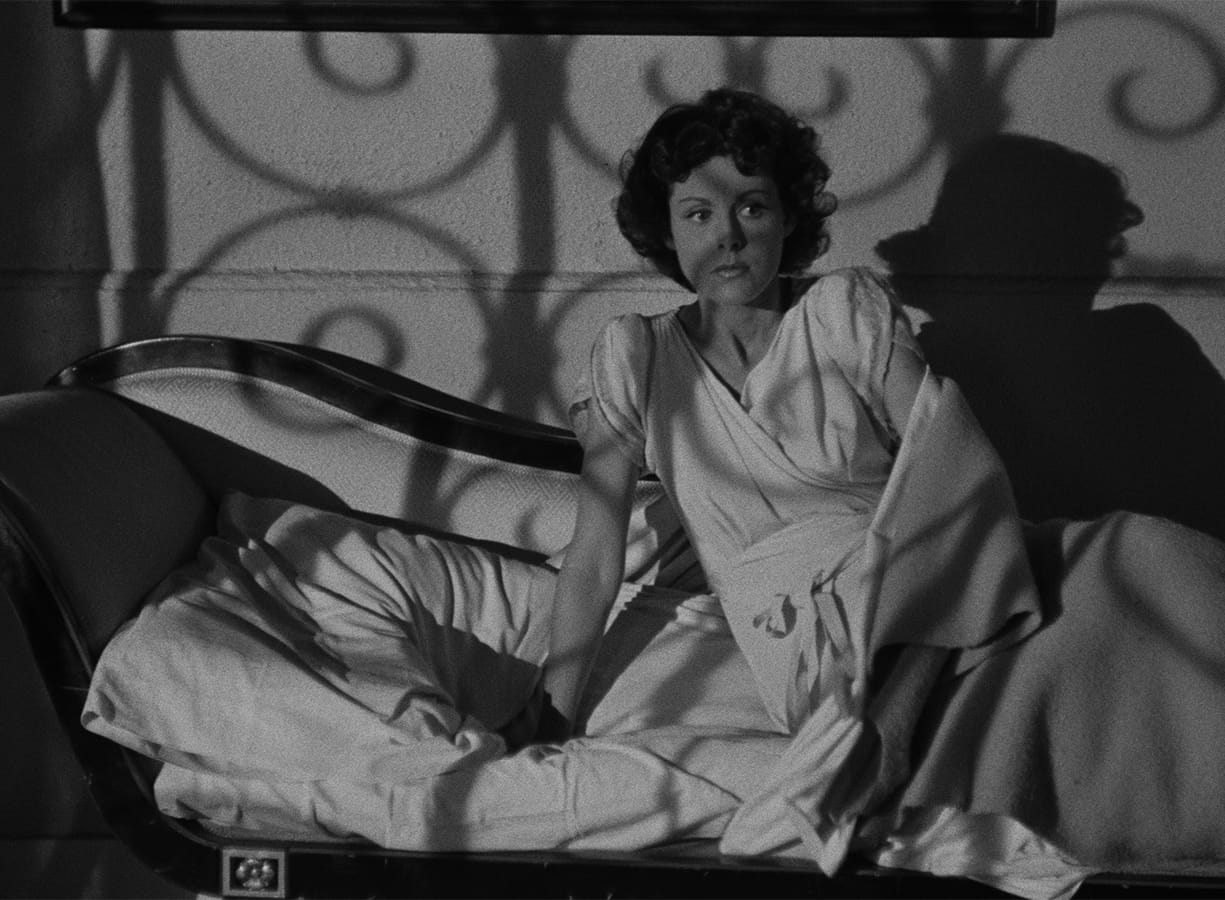
Lewton can do a lot with a little though and The Seventh Victim is once again incredibly atmospheric. Cat People cinematographer Nicholas Musuraca returns to the camera here and his work is exceptional. He famously lensed Stranger on the Third Floor, which many consider to be the first ‘true’ film noir. His work with light and shadows in The Seventh Victim and the film’s complex mystery plot also lean towards the genre. In fact, I’d go as far as to say it’s more noir than horror. This likely aided my preference for The Seventh Victim over I Walked With a Zombie, as I’m a big film noir fan.
There are still a couple of fittingly tense and unsettling sequences in The Seventh Victim though. One shower scene even plays out like a clear precursor to Hitchcock’s most celebrated scene from Psycho. The sequence where Mary sends a private detective to investigate a suspicious room late one night is even more frightening though.
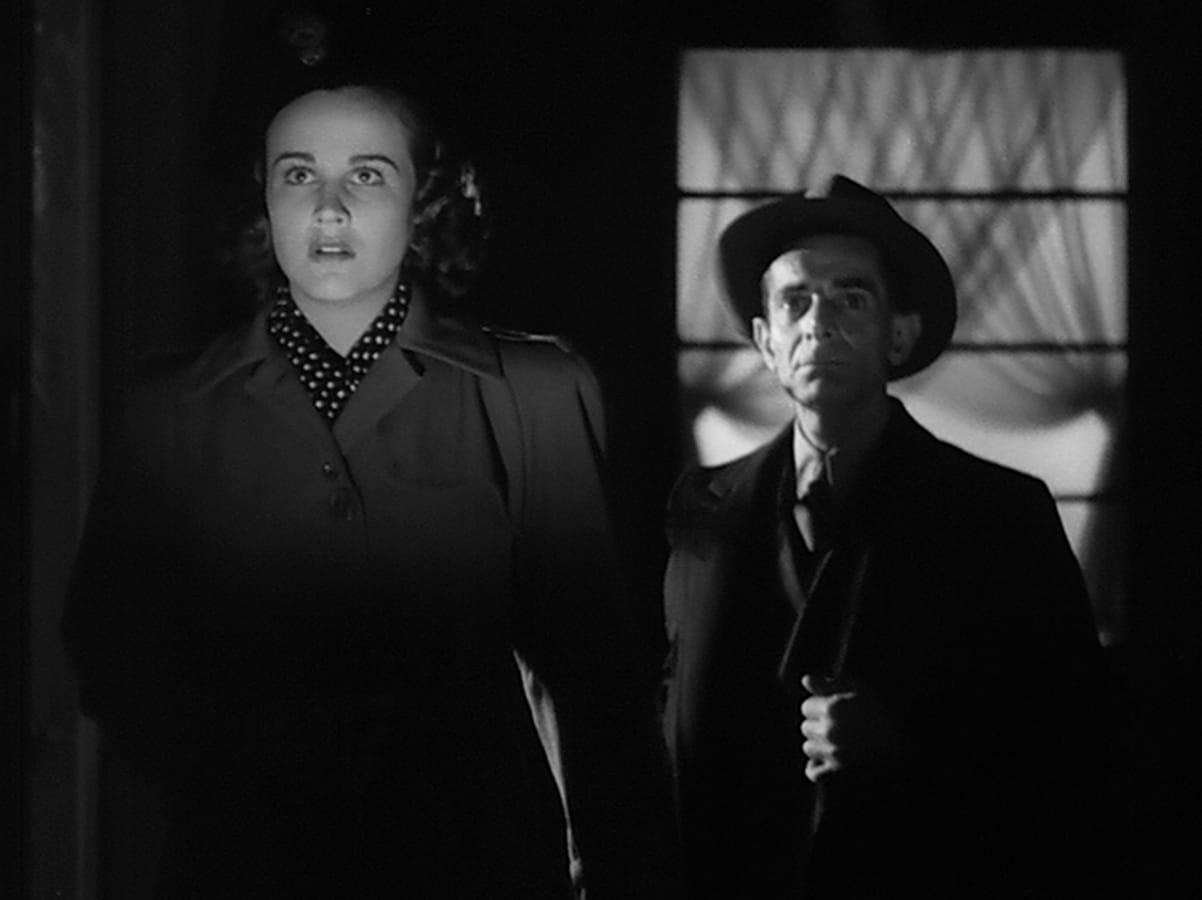
Sound effects and music are put to great use again here too. Even the opening scene in Mary’s private school is given a rich sense of atmosphere through the echoing murmurs of girls in the background.
So, whilst the story might stumble in places, The Seventh Victim is, once again, thick with atmosphere and melancholy. I enjoyed it a great deal.
Film:
I Walked with a Zombie / The Seventh Victim: Produced by Val Lewton is out on 14th October on UHD & Blu-Ray, as well as a standalone Blu-ray version in the UK, released by The Criterion Collection. I watched the Blu-ray version and I thought both films looked fantastic. The prints are clean, detailed and natural, with perfect tonal balance. The films sound good too, particularly considering their age.
SPECIAL FEATURES
– New 4K digital restorations of both films, with uncompressed monaural soundtracks on the 4K UHD and Blu-ray editions
– In the 4K UHD edition: One 4K UHD disc of the films and one Blu-ray with the films and special features
– Audio commentary on I Walked with a Zombie featuring authors Kim Newman and Stephen Jones
– Audio commentary on The Seventh Victim featuring film historian Steve Haberman
– Interview with film historian Imogen Sara Smith
– Audio essays from Adam Roche’s podcast The Secret History of Hollywood featuring stories about the casts, crews, and productions of both films
– Shadows in the Dark: The Val Lewton Legacy (2005), a documentary featuring Newman; Val E. Lewton, son of producer Val Lewton; filmmakers William Friedkin, Guillermo del Toro, George A. Romero, John Landis, and Robert Wise; actor Sara Karloff; and others
– Excerpts from “The Origins of the Zombie, from Haiti to the U.S.,” an episode of the PBS series Monstrum, hosted by scholar Emily Zarka
– Trailers
– English subtitles for the deaf and hard of hearing
– PLUS: Essays by critics Chris Fujiwara and Lucy Sante
Kim Newman and Stephen Jones provide a commentary on I Walk With a Zombie. As usual for the pair, it’s well-researched and engaging. They talk about the cast and crew as well as occasionally breaking down what we’re watching.
Steve Haberman provides a commentary for The Seventh Victim. It’s a strong track which strikes a nice balance between production background and analysis. He also often points out the differences between the original script and the end product, which is interesting to hear.
Imogen Sara Smith talks about both films in a lengthy interview/essay. It’s an intelligent, fascinating piece that digs into what makes Lewton and Tournier’s films special.
Included throughout the set are several lengthy episodes/excerpts from Adam Roche’s ‘The Secret History of Hollywood’. These are wonderfully dramatic stories of those involved in making the films. There are four tracks in total, covering the two films, Tom Conway and Jean Brooks. They’re a pleasure to listen to, filled with humour, scandal and occasional poignancy, as well as offering a valuable history of Hollywood in the 30s and 40s. Roche’s stories often take lengthy diversions from the listed figures/subjects to discuss tangential histories, making for a richly textured listen. These really are fantastic additions to the set. I found Tom Conway’s story particularly captivating.
You also get a 53-minute documentary on Lewton, called ‘Shadows in the Dark: The Val Lewton Legacy’. It’s another welcome addition to the set, offering an enjoyable and star-studded look at the producer’s career and what makes his films special.
Another featurette on the disc looks at the reality behind the concept of zombies, delving into the world of Haitian Vodou. It’s an illuminating and enjoyable piece.
I didn’t receive a copy of the booklet, unfortunately.
So, Criterion have put together a jam-packed package for two highly effective classic chillers, just in time for Halloween. I give it a very high recommendation.
Disc/Package: