


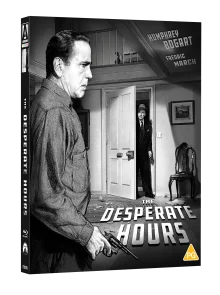
 Director: William Wyler
Screenplay: Joseph Hayes
Starring: Humphrey Bogart, Fredric March, Arthur Kennedy, Martha Scott
Country: United States
Running Time: 112 minutes
Year: 1955
BBFC Certificate: PG
“Clickety-click,” leers escaped con Humphrey Bogart, his lips curling into an evil sneer, cocking his gun at family man Frederich March, whose family he’s holding hostage as part of a home invasion. Legendary director William Wyler’s The Desperate Hours (1955) is credited with setting the blueprint for the ‘home invasion’ subgenre of crime movies with this beautifully shot and exquisitely staged film noir and domestic melodrama.
Arrow Video is releasing the film on bluray with a restored 6K scan of the original VistaVision negative. The Paramount movie is presented in 1080 high-definition with the original restored lossless mono audio.
The package also comes with a host of new special features, these include an audio commentary, a pair of visual essays with film critics and an audio interview with Wyler’s daughter.
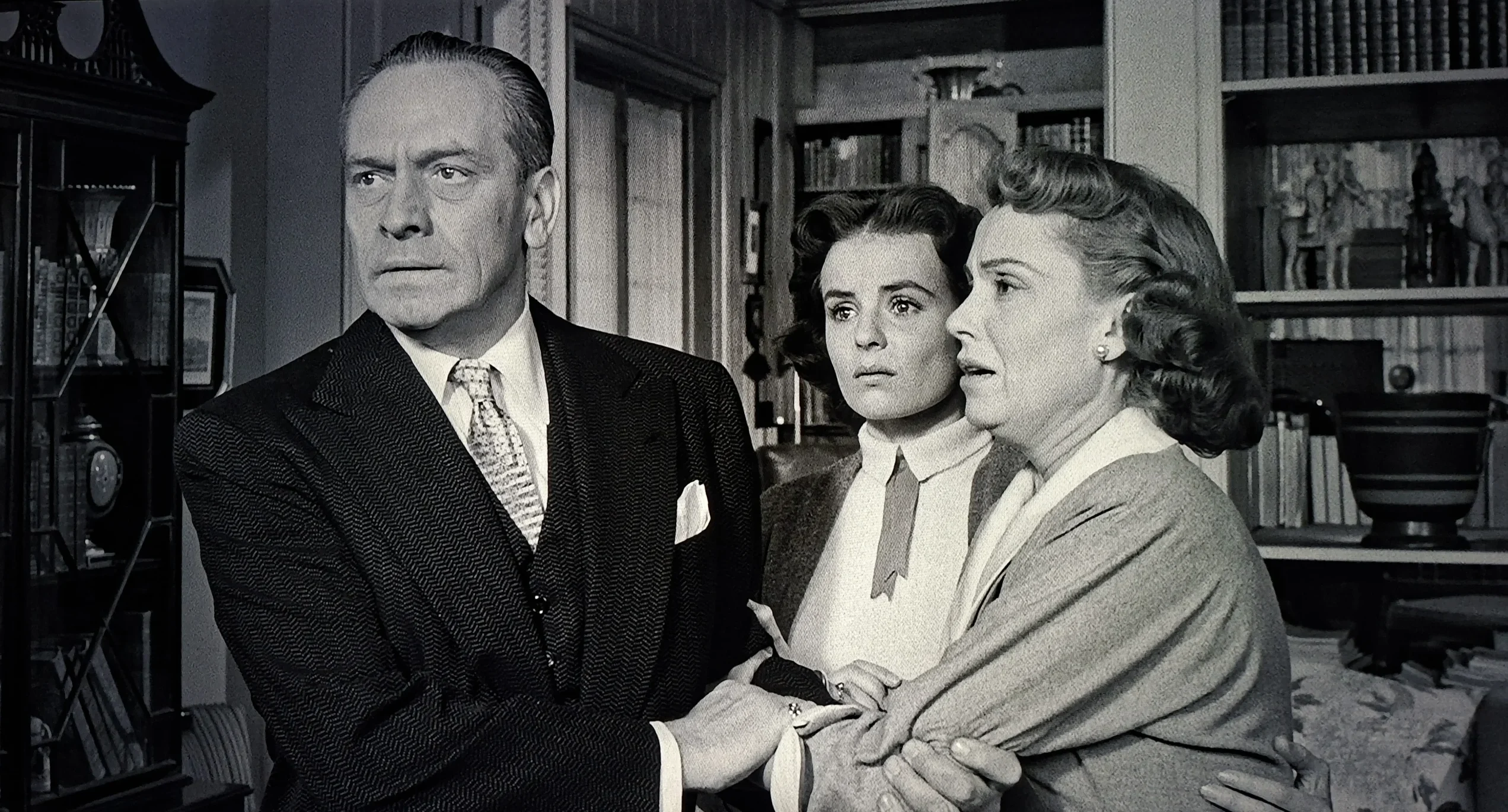
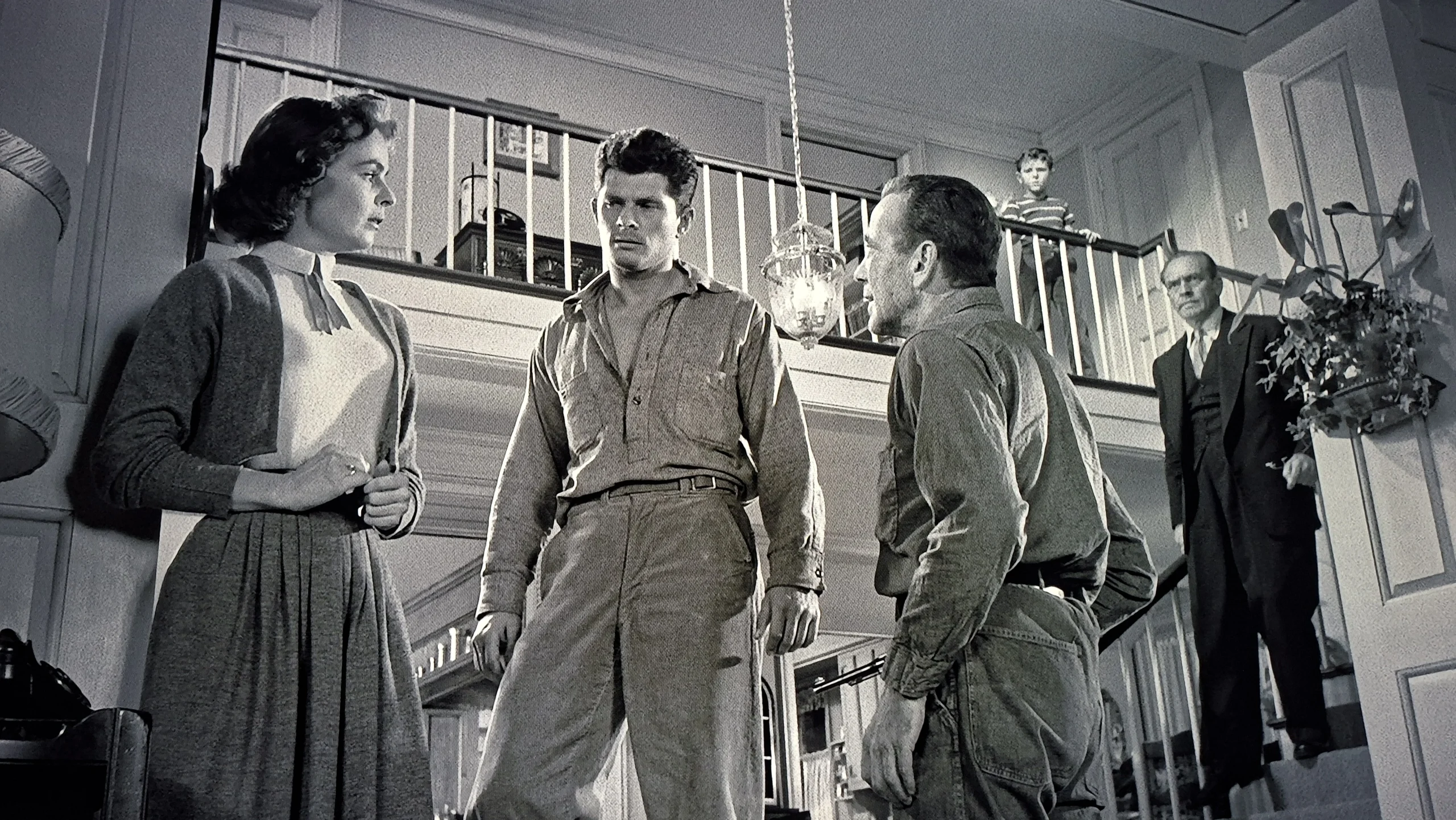
Arrow neatly summarises the plot, here: “Three escaped cons, led by the ruthless Glenn Griffin (Bogart), force their way into a suburban home, intending to hide out while they await the arrival of an all-important package. But what should have been an overnight stay extends into a protracted hostage situation, pitting Glenn against the embattled family patriarch, Daniel Hilliard (March) – a man with everything to lose.”
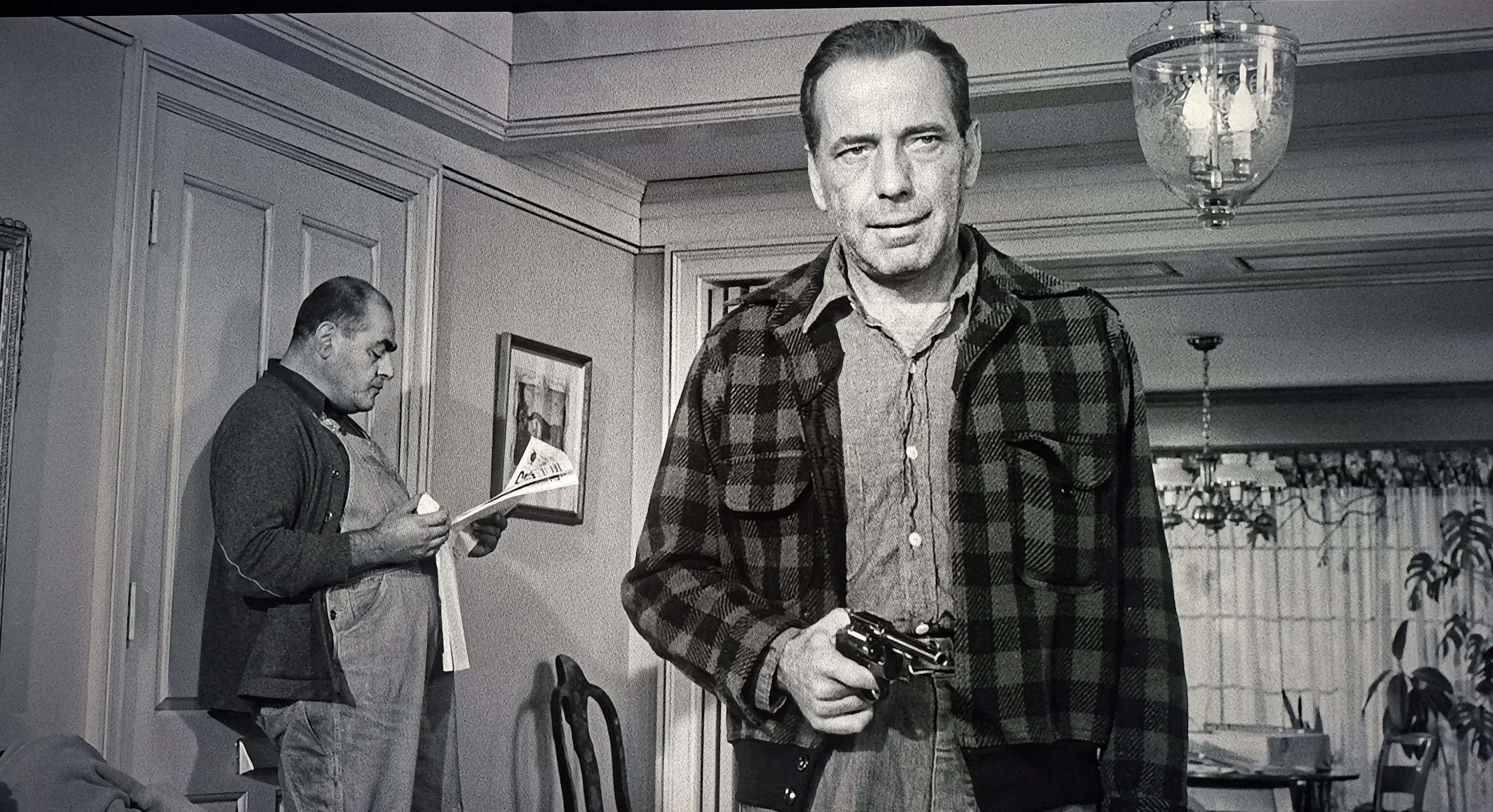
This was Bogart’s penultimate film role before he sadly passed away of cancer in 1957, and it’s a shame it wasn’t a greater hit at the time, as Bogie was back playing the type of role he played best. He made his name playing scumbags, and this feels like a spiritual successor to his first breakout role of Duke Mantee in The Petrified Forest (1936), another home invasion style movie. Bogart himself described Griffin as “Duke Mantee grown up”. It also feels similar to Key Largo (1948) where Bogart played the hero.
What sets Bogart’s villainous performances apart is how human and relatable he comes across, showing restraint where it matters, playing somewhat of an ambiguous villain. Griffin comes across like a man convinced the world is against him and is doing everything he can to survive.
Another titan of the screen in his twilight years, Frederich March (Dr. Jekyll and Mr. Hyde, A Star is Born) plays the role of Hilliard with a sobering intensity. March looks physically pained as the plot progresses, a man worn down.
What’s interesting is the fact, he’s not only at odds with the gangsters but with the law, and his young son’s perception of a what a man should do in this kind of situation.
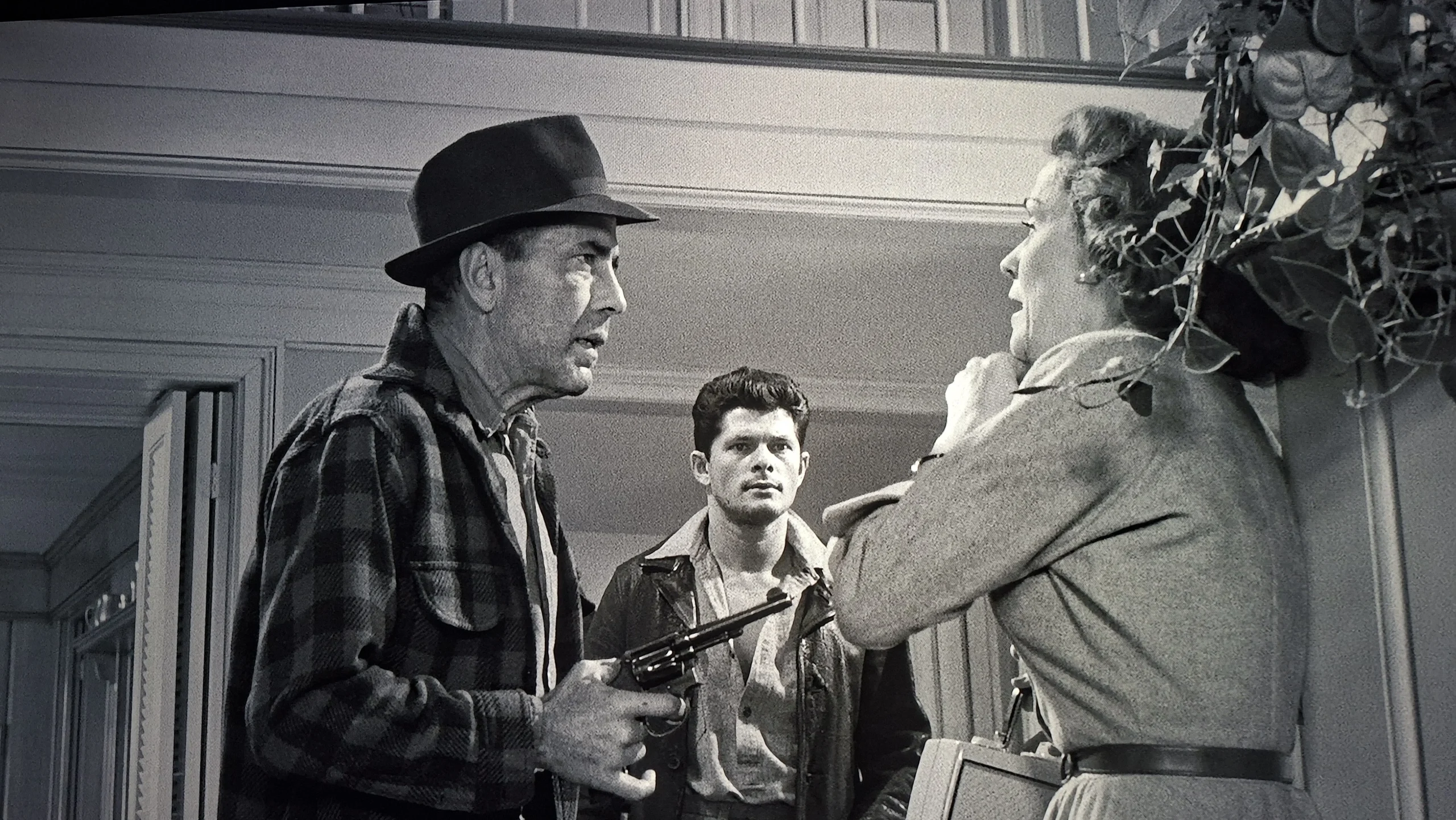
His main aim is to ensure the survival of his family which means keeping the situation secret from the police, who he predicts will go in guns blazing, and making it clear to his son not to attempt anything rash or heroic, while teaching him it’s okay to feel afraid.
It was wonderful but at just shy of two hours, it felt about half an hour too long. It juggled lots of themes, however, presenting complex issues in an entertaining and subtle way.
Picture and Sound
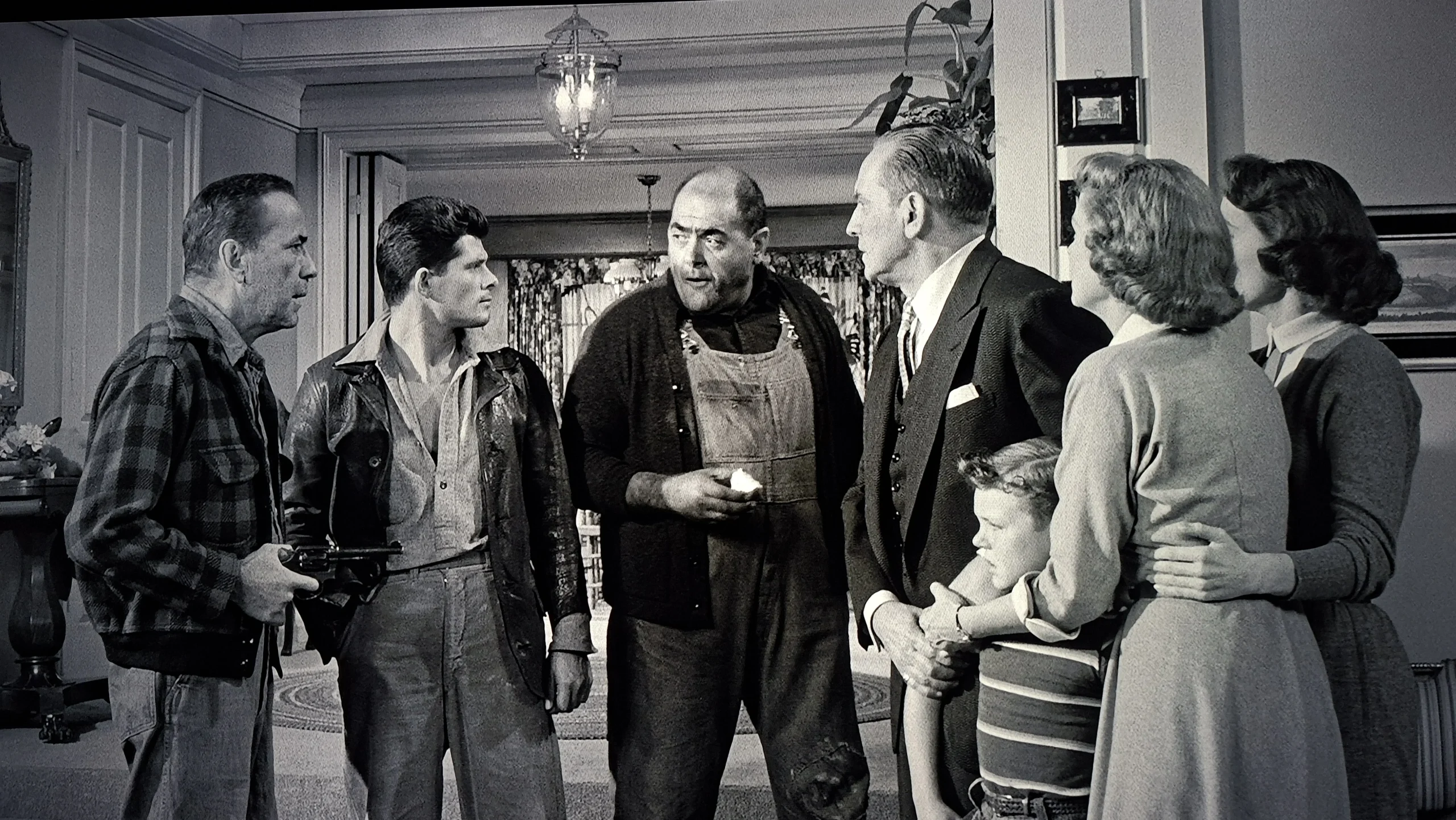
I was extremely pleased with the picture and sound quality of the feature. It was the first black and white film shot using the VistaVision process which involved flipping standard 35mm film horizontally, so it was running sideways through the camera. This doubled the negative frame area, allowing for a wider shot with a sharper clearer image with less grain.
Wyler’s team took full advantage of the wider picture, he uses the depth-of-field to enhance just about every shot, be it in the main staging area of the family home, police station or in the idyllic neighbourhood targeted by evil forces. Every shot tends to have something visually interesting going on, and that’s complemented by the beautiful photography on show. The audio was very clear with the classic orchestral score ramping up the drama and the tension.
Film:


Special Features
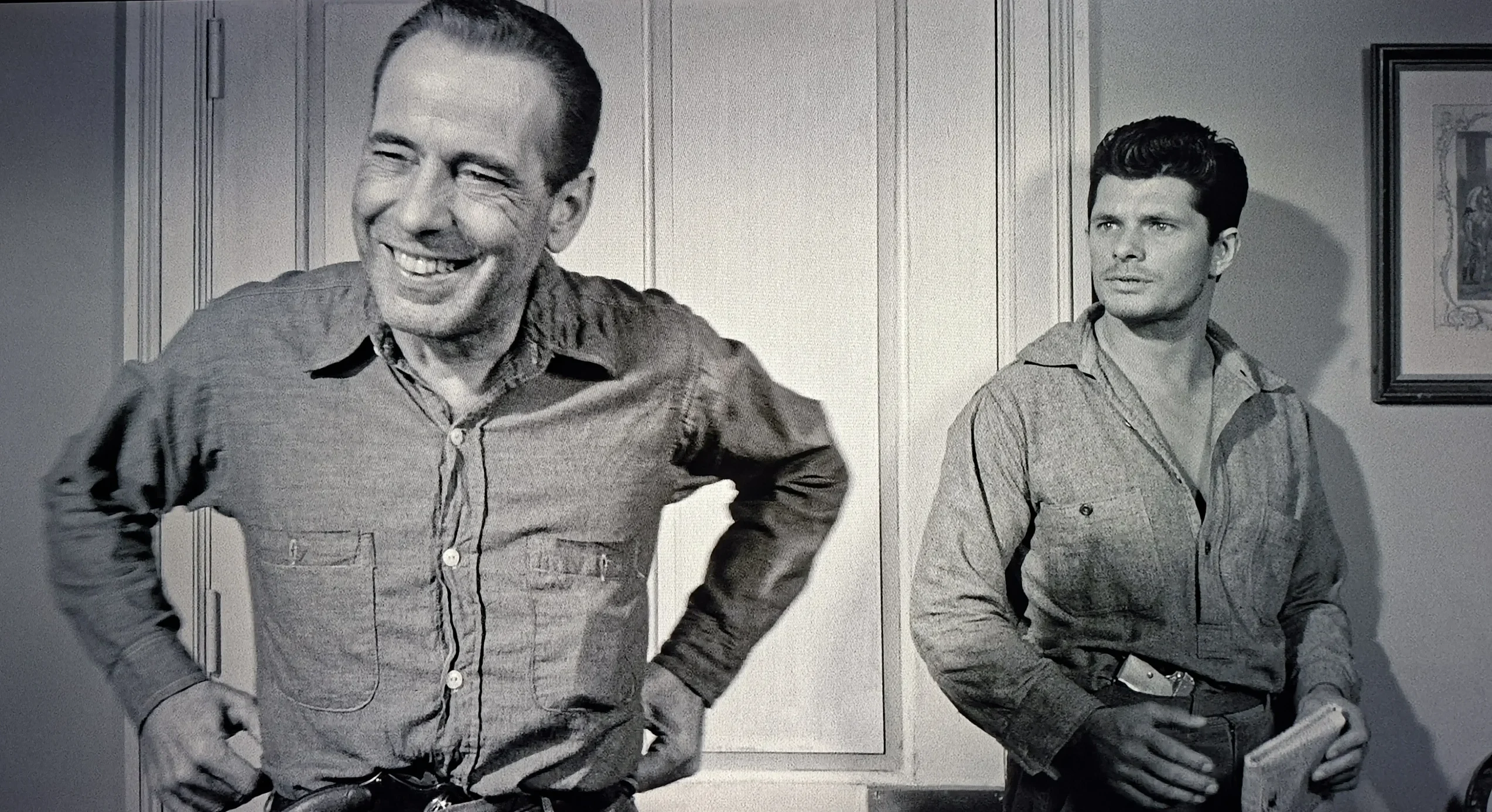
Audio commentary by film historian Daniel Kremer: Fascinating listen that provides meaningful context and analysis. Kremer speaks extensively about the production history, including Wyler’s career and Bogart’s impetus for getting involved in the project. He also speaks at length about how it fits into the home-invasion history of movies, and how Wyler used VistaVision to his advantage with the meticulously crafted set design.
Trouble in Suburbia, an appreciation of the film by José Arroyo, Associate Professor in Film and Television Studies at the University of Warwick: (38.51mins) This was a phenomenal interview/video essay analysing the film. Arroyo speaks about the themes, analyses a range of scenes and the style of cinematography.
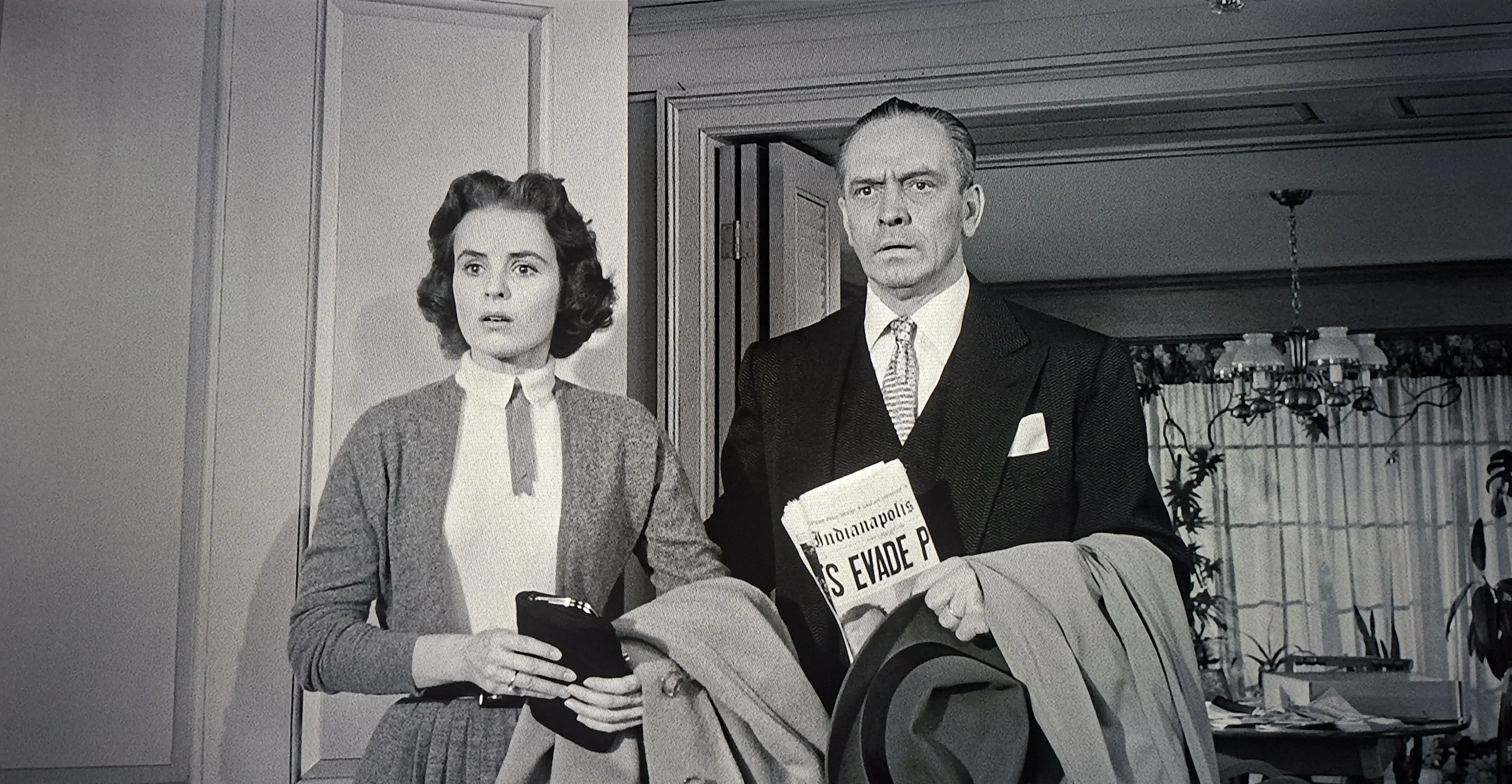
The Lonely Man, a visual essay by Eloise Ross, co-curator of the Melbourne Cinémathèque: (14.54 mins) Ross takes a closer look at Bogart’s acting in this film and how he perfected the art of playing an ambiguous villain, while also touching on broader themes in the movie.
Scaled Down and Ratcheted Up, an audio interview with Catherine Wyler, daughter of director William Wyler: (11.47mins) Nice interview with Wyler providing insight into her father’s divisive working methods, what it was like on set and her disappointment at the film not being a bigger success at the time.
Special Features:
Arrow releases The Desperate Hours on 14th September 2026.