



In Part 5 of my journey through the Best Picture winners, I’m looking at the second batch of films I rated 3.5 stars. This is the rating I usually give to films that I consider good but which fall short of being great. All entries contain spoilers.
You can find the earlier parts of the list here:
53. FROM HERE TO ETERNITY
Watched 1 February 2023
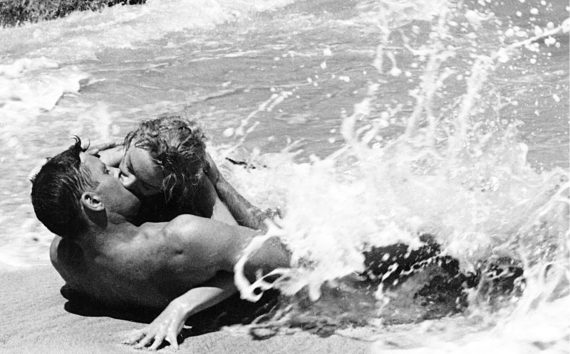
It might be the most famous love scene ever shot but what is it that makes the sight of Deborah Kerr and Burt Lancaster’s roll in the waves remain such a source of wonder. For one thing, it feels like a moment of real passion compared to the chaste pecking that neutered so many censor-pleasing movies of its era. Kerr and Lancaster convince completely as lovers, their adulterous clinch achingly capturing the desperation of a snatched moment. Many films relied on corny, overwrought dialogue and syrupy strings on the soundtrack as a passion surrogate and From Here to Eternity has both. George Dunning’s score soars in Icarean fashion as Kerr simpers “I never knew it could be like this. No one ever kissed me the way you do.” But by the time this cheeseball dialogue spills out of her thoroughly-snogged mouth, the spell has already been cast. It was apparently Lancaster’s idea to play the love scene lying down rather than standing up as scripted and director Fred Zinnerman makes the most of having his stars positioned horizontally by first showing the crashing waves inches from them and then having those same waves reach out to engulf the trysting twosome. On a silver screen that was kept on a very tight leash when it came to matters of the flesh, this wet hot eruption of unrestrained lovemaking caused millions of jaws to drop and it’s still possible to feel that buzz of excitement even in an age when far more graphic sex scenes are a regular fixture of cinema. Modern day filmmakers may be able to get their actors to strip down and jiggle on top of each other but few love scenes have created the same level of wonder as From Here to Eternity‘s perfect evocation of forbidden love and unbidden passion.
If only From Here to Eternity had sustained this level of screen magic, it could’ve been the classic it is sometimes portrayed as being. But there is an oddly pedestrian feel to much of this tale of life on an Hawaiian army barracks that makes it often feel more televisual than cinematic, despite an impressively starry cast. Signs of age in Hollywood classics are more often part of the appeal for me, making them alluring doorways to the past, but From Here to Eternity has aged in a strangely grainy way that somehow fails to have the same escapist appeal of other films of its era. Based on a controversial novel by James Jones, From Here to Eternity was sanitised in several ways in order to meet the demands of the Hays Code while also pacifying the US Army in regards to their depiction. This involved the removal of references to homosexuality, STIs, sexual abuse and unpunished abuses of power. While the former three changes were to be expected for films of the era, the latter point particularly enraged director Fred Zinnemann, with a scene of a corrupt Captain receiving a promotion being forcibly charged to a didactic resignation which Zinnemann felt was like a cheesy recruitment film.
Although the sanitised content of From Here to Eternity was to be expected in 1953, it does have the effect of rather blunting any satirical edge the adaptation might have had. What is left behind is really just a soap opera, albeit a compelling one. I have nothing against soapy films as they generally entertain very efficiently, but for From Here to Eternity to meet its potential as a true classic it feels like there needs to be a bit more commentary underlying the events of the narrative. Fortunately, the storytelling is strong enough to provide a satisfying viewing experience and certain details are danced around in a manner clearly intended to hint at their true meaning. There can’t have been many audience members of any era who didn’t know that Lorene’s job as “hostess at a private social club” was euphemistic, so her storyline about craving respectability retains its power in relation to class-based issues. Had Captain Holmes’ wife Karen’s hysterectomy been the result of him giving her gonorrhoea as it was in the novel, this would’ve tied in more powerfully with the scenes of the main characters visiting a thinly-veiled brothel, but for the early 50s the filmmakers did well to get any of this on the screen, even in this neutered form.
From Here to Eternity’s transformation from subversive contemporary commentary to wartime potboiler did not erase all of the story’s appeal. Private Prewitt’s dogged resistance of the pressure to join the boxing team remains gripping, while the violent implications of Private Maggio’s run-ins with sadistic Sergeant “Fatso” Judson are perhaps even more powerful for taking place offscreen. But as the various interweaving threads reach their conclusions there is a sense of “so what?”, particularly when they are as compromised as Maggio’s military-pleasing bow-out which tries to take the spotlight off his brutal treatment in the stockade in a blatantly unconvincing manner that is also thematically detrimental. While they’re in the process of unfolding, most of the stories are sufficiently involving but few of them feel like they truly stick the landing.
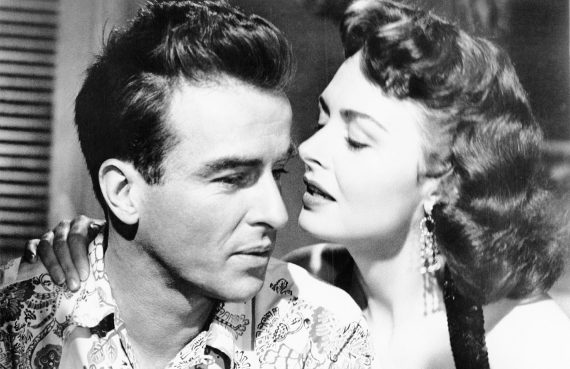
From Here to Eternity benefits greatly from performances of some subtlety, which prevent it from spilling over into overwrought melodrama too often. All five main actors were Oscar nominated, with Donna Reed and Frank Sinatra taking home their awards. While Reed’s Lorene doesn’t register as strongly as its win might suggest, Sinatra‘s lively turn gives the film an energy boost whenever he is onscreen and it rejuvenated his flagging acting career. Deborah Kerr and Montgomery Clift are both magnificently smouldering but it is Burt Lancaster who steals the show as the tough but good-natured Sergeant Warden. Lancaster’s tender masculinity has rarely been put to better use and it’s just a shame that his storyline with Kerr peters out disappointing after their roll in the surf had such an iconic impact.
Despite running at under two hours, From Here to Eternity has often been characterised as an Epic, mostly due to that one famous scene’s eternal place in Hollywood history. But the rest of the film feels much smaller than I was expecting on this rewatch, and while this sometimes works in its favour there is a sense that the narrative compromises have knocked the edges off some promising characters and plotlines. What is left is a good film but not a great one.
52. THE BEST YEARS OF OUR LIVES
Watched 3 May 2023
William Wyler’s The Best Years of Our Lives was a hugely revered film in its time, not to mention the highest grossing film of the 40s at the US box office. Though it is perhaps not as famous at it once was, The Best Years of Our Lives remains a highly acclaimed work, with many calling it Wyler’s masterpiece. I’ve now seen the film three times and, while I like it well enough, I’ve never been convinced of its apparent brilliance. There are things in it that are brilliant and it’s easy to see why it’s tale of returning servicemen struggling to readapt to civilian life would strike a chord with audiences in the immediate aftermath of the war. But across its near-three-hour runtime the film goes from engaging to hokily predictable, losing sight of its fascinating reintegration angle in favour of a hackneyed romance that overwhelms the narrative more than it captivates the viewer. In truth, the familiarity of the romance tropes are effective enough not to slow things down and The Best Years of Our Lives’ 171 minutes go by quite pleasurably. But by the end I felt a slight air of dissatisfaction and certainly no sense that I’d just watched an enduring classic.
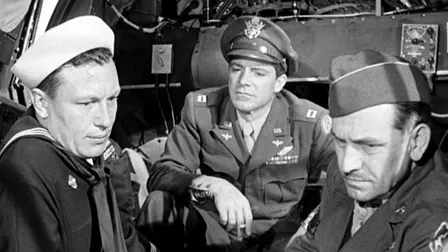
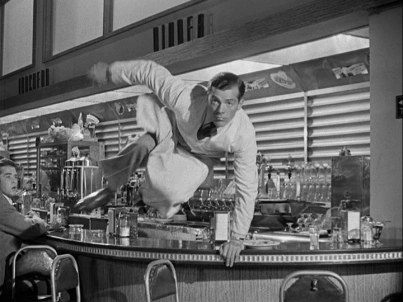
The Best Years of Our Lives starts out strongly with a lengthy sequence in which the three male leads meet on a flight back to their shared hometown. There is an immediate camaraderie between them, with Robert E. Sherwood’s screenplay nailing a naturalistic tone that never oversells the jocularity. Through these scenes, the film effectively introduces its trio of main characters before dropping them into their uncertain homelives. Frederic March’s Al is a former banker who’s children have grown up beyond recognition in his absence, Dana Andrews’ Fred is a former soda jerk who’s impulsive pre-enlistment marriage may not be everything he’d hoped, and Harold Russell’s Homer is a former High School athlete who fears that the loss of his hands will alienate his fiancé. Of these three stories, Homer’s is the most famous and Al’s the most compelling, but Fred’s is given precedence despite being the dullest. His struggle with PTSD is interesting but it receives less focus than his immediately faltering marriage and his burgeoning romance with Al’s daughter Peggy. Andrews, a decent but largely faceless actor, is also less engaging than old pro March’s excellent performance as Al or real-life war hero Russell’s Homer. Russell shared Homer’s disability, which brings an authenticity to his scenes that, coupled with his charmingly earnest amateur performance, makes the Academy’s sentimental decision to award him the Best Supporting Actor Oscar, as well as a Special Oscar on top of that, understandable.
One thing I very much admire about The Best Years of Our Lives is its refusal to tie everything up too neatly. While its romances come to conclusions of sorts, Fred’s PTSD and Al’s alcoholism are both left unresolved, astutely acknowledged as the ongoing problems they would be. While most films of the era probably would’ve offered a more specific note of hope in each case, The Best Years of Our Lives instead retains its slice of life approach, with the implications that the film’s established relationships will provide that hope. By bringing together its ensemble cast for a joyous occasion in the final scene, the importance of human relationships, both romantic and platonic, is firmly highlighted as a main theme. The open-ended nature of Al’s story is complimented by a forceful but subtle turn from March. Sherwood’s script thankfully doesn’t set him on that same glass-hurling, family-destroying downward spiral that so many cinematic drunks have ridden. An equally subtle performance by Myrna Loy as Al’s wife Milly aids this restraint, with Loy’s quietly expressive reactions betraying both her concern and her adoration. Meanwhile, Homer’s gradual acceptance that his fiancé Wilma loves him despite the loss of his hands culminates in a moving scene between them that speaks of just how difficult it will be to reach that level of trust with others, and just how much Wilma’s love and support will help in that respect.
Although it largely avoids the melodramatic tone, The Best Years of Our Lives feels like a forerunner for the Soap Opera, with its alternation between the occasionally interweaving stories of three different families. There are moments here and there that veer towards the sort of pro-American propaganda that hadn’t quite petered out since the war. A scene in which Fred belts a customer for his less-than-patriotic conspiracy theories probably raised the roof in its day but is more likely to raise eyebrows now, adding to the fairly toxic depiction of Fred that was likely once seen as masculine and heroic. But mostly The Best Years of Our Lives still works due to its healing humanism which transcends the wartime specifics. In unflinchingly showing the physical and psychological fallout of battle, it stands out above other films that favoured rigid stoicism or singled out specific acts of heroism. It makes clear that, in the face of fascism, the sacrifice was necessary, but a moment with a Stars and Stripes pin pushes too far into mawkish patriotism to fit comfortably with the more sober approach of the film’s better scenes.
There are enough relevant universal themes in The Best Years of Our Lives for it to largely remain an effective film rather than a museum piece, while its measured pace and tone make it a pleasurable way to spend three hours. But in the aftermath of the viewing experience, there is a strangely hollow feeling for me. For all its laudable themes, it ends up feeling like less than the sum of its parts, and if this were a Soap Opera I’m not sure I’d be moved to tune in to the next episode.
51. LAWRENCE OF ARABIA
Watched 14 July 2022
Lawrence of Arabia has long been a bit of a blind spot for me when it comes to the classics. I’d seen it once many, many years ago but I remembered it not making much of an impact. However, I think I was ill at the time (the only circumstances under which I could then find the three and a half hours required) which is hardly a fair state in which to properly evaluate a film. As both a film buff and a David Lean fan, my revisit to Lawrence of Arabia has been long overdue and I was expecting to enjoy it much more this time round. Happily, I did, although I must admit for me this still falls a long way short of its reputation as one of the greatest films of all time.
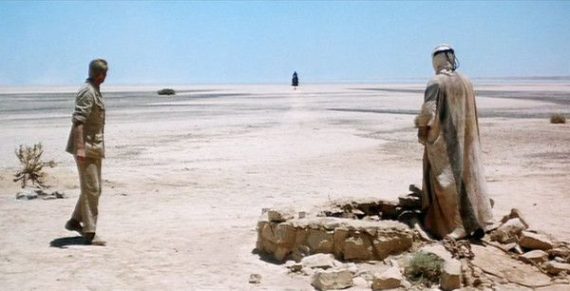
If you’re looking for spectacle then you’ve come to the right place. Though I’d put it at the bottom of Lean’s list of Epics (below even the much-maligned Ryan’s Daughter, of which I’m very fond), in terms of cinematography and direction of those sweeping desert-scapes, visually it’s probably top. I can think of few more breathtaking visual experiences in all of cinema than the lengthy mission through the Arabian desert that makes up the film’s first couple of hours. In a recent review of The English Patient, I said that Anthony Minghella shot his desert scenes with the verve of David Lean. While I stand by the comparison, revisiting Lawrence of Arabia has made clear just how much more epic and immersive Lean’s work is in this respect. There are a lot of lengthy, dialogue-free sequences of camels traipsing across barren sandy vistas and wearied travellers looking overwhelmed by the heat. This probably bored me the first time round but now I think they are essential. Lean forces the audience to experience the desert expedition as vividly as possible by battering the viewer with images of the awe-inspiring but forbidding sands and by the end of that first two hours there’s a real sense that you’ve been there the whole time. I’d definitely advise refrigerating a couple of beers in advance of putting on Lawrence of Arabia! .
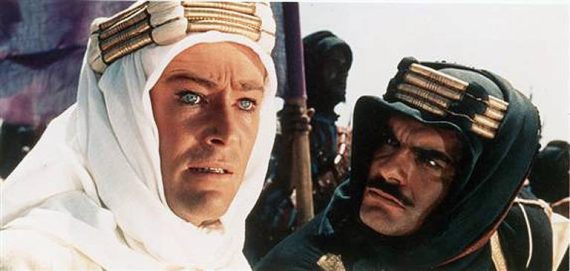
There are several other things that count in favour of Lawrence of Arabia’s classic status. Maurice Jarre’s iconic score is the first thing that springs to mind, that incredible theme enhancing Lean’s desert imagery and immediately evoking those breathtaking images even when played separately. It’s one of the most instantly recognisable scores in cinema history and well deserved its Oscar. Lawrence himself, as brilliantly played by Peter O’Toole, is a fascinating, charismatic and complex character and screenwriters Robert Bolt and Michael Wilson have given him plenty of witty dialogue, his dry and subversive sense of humour often offsetting the slight air of stuffiness that pervades the film elsewhere. Excellent as O’Toole is, I’d argue that Omar Sharif as Sherif Ali, a composite of several real Arab leaders, is even better. This is a vibrant, exciting supporting performance that energises the film massively whenever Sharif is on screen, right from his iconic emergence as a tiny dot on the horizon. The relationship between Lawrence and Ali takes precedence in the first couple of hours, which is another reason that these are the film’s best. Other casting decisions haven’t aged as well. Alec Guinness and Anthony Quinn have both had their skin artificially darkened for their roles and, though this was less frowned upon when the film came out, the casting of Guinness in particular seems baffling today. In truth, purely in acting terms, Guinness does rather well and Quinn is excellent, but this is tempered by the inescapable discomfort of modern sensibilities. Lean had a habit of casting Guinness in controversial roles, having him don brownface again a couple of decades later for A Passage to India and having earlier decked him out in grotesquely stereotypical Jewish characteristics for Oliver Twist. Guinness is one of my favourite actors and Lean gave him one of his best roles in The Bridge on the River Kwai but elsewhere their collaborations have been eyebrow raising to say the least.
As a lover of classic cinema, I’m more than used to guiltily swallowing elements of a production that don’t sit well nowadays, but for me Lawrence of Arabia has other problems that are detrimental to the viewing experience. After an excellent opening two hours I was sure I’d be giving this at least 4 stars but then the second part began. A far more insular affair, if still peppered with large scale moments, I had heard several people saying that the film loses momentum at this stage but it sounded like the sort of psychologically fascinating material that I generally favour over widescreen spectacle. Unfortunately, I felt that the examination of Lawrence’s state of mind in the aftermath of his desert adventure was rather poorly handled. After a truly chilling moment in which Lawrence admits to enjoying a brutal act he committed, I was ready for a taut examination of his mindset but it just becomes repetitive and terribly superficial, with O’Toole’s performance slipping a little as he is just required to stare into the distance a lot. The second part of Lawrence of Arabia lasts for a turgid hour and a half, which makes it a very difficult film to rate. While I think the first two hours are worthy of the plaudits they receive, the fact that there are then 90 minutes of stuffy tedium left to get through can’t help but sour the overall experience. If I were to rate the two parts separately I’d probably give part one 4 and a half stars, perhaps even 5 on a rewatch. But part two is a 2 and a half star film at best and having to consider them as a whole cannot help but drag down the overall rating to a 3.5.
50. AMERICAN BEAUTY
Watched 15 July 2022
Ah, American Beauty. There can be few films who’s reputations have turned around so drastically in so short a time. In 1999, when it won Best Picture, the acclaim was almost universal and it was only one Oscar away from becoming the fourth film ever to win the top 5 awards of Picture, Actor, Actress, Director and Screenplay (it was Annette Bening’s performance that ultimately wasn’t given the statuette). But quickly those critical plaudits began to drop away as the discussion continued. People started to call the film pretentious, its characters shallow, its performances melodramatic, its insights nonexistent and its message hard to pin down. Even Thomas Newman’s rather wonderful and highly influential score came in for scornful mockery, probably exacerbated by lesser imitators into who’s ranks it became assimilated in people’s minds. For my part, having loved the film at first, the further we got from the 90s, the more uncomfortable I became with some elements and the fact I hadn’t felt that discomfort at the time. Plus the more parodies I saw of that infamous plastic bag scene, the harder it became to take it seriously. But I made assumptions about my revised feelings on the film without actually revisiting it and that is always a foolish move. Having now been back and rewatched American Beauty, it’s definitely a film with a lot of issues but it’s also still a film I enjoy in many ways.
The first issue that needs addressing is the presence of Kevin Spacey. The concept of separating the art from the artist is a largely impossible task, especially with the match of someone with accusations against them like Spacey with a role like Lester Burnham, the middle-aged man who develops a predatory interest in the teenage friend of his own daughter. There’s just too much crossover between fiction and reality here for anyone to plausibly separate the two completely. It’s unfair to judge American Beauty on this count but it’s also impossible not to be affected by how the accusations against its star have made a deliberately uncomfortable experience often feel much more uncomfortable than is compatible with entertainment.
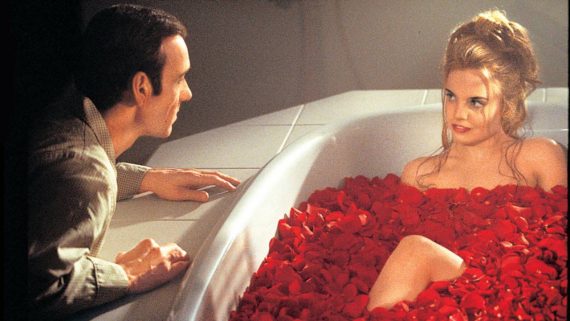
Given how much our world has changed since its release, it’s surprising just how well American Beauty holds up in certain areas where I was expecting it to fall down. Alan Ball’s screenplay largely avoids making any of his characters too sympathetic (those that are, like gay couple Jim and Jim or Allison Janney’s hauntingly broken housewife, are marginalised in a way that suggests more below the surface), so claims that American Beauty normalises stalking, paedophilia or misogyny seem to reflect more on what character a specific viewer has chosen as their point of entry in a film where such a thing doesn’t exist. American Beauty does slip up a couple of times in this regard. Giving Lester an omniscient voiceover filled with faux-wisdom does rather paint him as the main protagonist and there’s a sense that we’re sometimes being pushed to enjoy his destructive life-shift in a vicarious way. Ball’s original screenplay was apparently even more cynical than what we see onscreen and he had to accept softening influences from director Sam Mendes, so whether these problems were always present is uncertain. But certainly I felt that overall American Beauty asks us to observe rather than sympathise with its gallery of grotesques. In a similar way to Todd Solondz’s Happiness, a far more scabrously effective take on similar themes from the previous year, acknowledging people who do terrible things as complex, multifaceted characters rather that two dimensional monsters will often rile those who see more value in pious condemnation than an attempt at understanding. So Wes Bentley’s troubled teen Ricky Fitts indulges in odious activities such as drug dealing and voyeurism but is positioned where we’d usually expect to find the film’s romantic lead. This is immediately disconcerting and requires a willingness towards recalibration on the audience’s part.
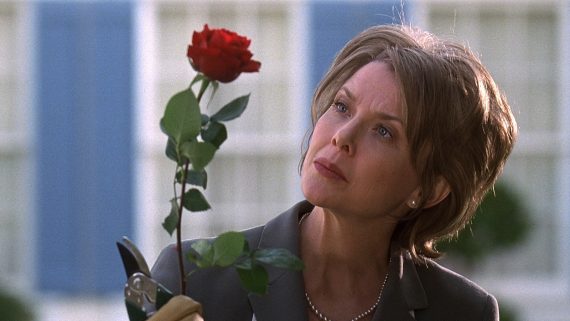
American Beauty was originally conceived in the early 90s but what eventually made it to the screen certainly seems at least partially influenced by the quirky suburban dysfunction of the many American indie movies that were pumped out during that decade. The slightly higher budget available is apparent in how beautifully shot some of the stylised sequences are, a factor that sits deliberately at odds with the unpleasant content of some of those scenes. Also in common with many of those cerebral indie movies, American Beauty leaves the viewer with a lot to discuss. Themes about perception of beauty, ideas of success, the sterility of middle-class suburbia and the desperation of sliding into middle age are all present but Ball’s screenplay seems to lack a unifying central anchor to guide viewers towards what he’s trying to say. Without the glimpses of humanity, American Beauty could seem like unadulterated nihilism but equally those human moments can seem a tad shoehorned in when they emerge as if from nowhere. Spacey and Bening play their characters big with scenery-chewing glee and, while this has been cited as a flaw, it’s entirely appropriate for the tone Mendes creates and their Oscar nominations were wholly justified. Separately, they allow us to glimpse their inner neuroses, whereas in the scenes in which they come together they are an explosive powder keg of crumbling repression. One unfortunate effect of these powerhouse central performances was that the equally excellent but far more restrained and realistic work of Thora Birch as daughter Janey was largely overlooked.
Among these vivid characters are a couple of creations that don’t work quite as well. Chris Cooper’s Colonel Frank Fitts, a gun-collecting, Nazi-memorabilia-owning abusive father and arch homophobe is little more than a mass of clichés and the final revelations about his character don’t come off at all, especially since they arrive by way of a weird sexual misunderstanding that seems like a throwback to Ball’s time as a sitcom writer but arrives at a high tension moment when such frivolous plotting feels disingenuous. As his son Ricky, Wes Bentley brings an enigmatic edge but the role often feels underwritten. That oft-parodied scene about the dancing bag actually feels consistent with what little we know about this character and offers us a tentative window into his troubled soul. The most regularly attacked part of the film, whether you find it nauseating or not will depend on how you approach the scene. Most people seem to think we’re supposed to be moved by the dancing bag and scoff at such nonsense but, in line with the film’s themes about different perceptions of beauty, I think we’re actually supposed to be moved by how it affects Ricky. We’re not asked to share in his feelings for the bag but instead expected to project our own comparable moment of unconventional beauty onto it. The emotion comes from understanding the experience of being awed by beauty and recognising it in someone else. From this perspective, all those parodies that focus exclusively on the bag begin to feel painfully reductive.
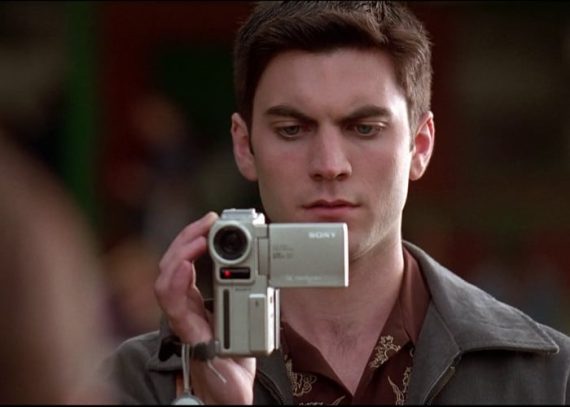
Though I really enjoyed my revisit to American Beauty, there are more things to be troubled by than just the accusations against Spacey. There are two teenage girl characters in American Beauty and both of them have topless scenes. Mena Suvari, who is sexualised throughout by way of Lester’s fantasy visions, was 20 and playing younger at the time. Birch, however, was 16 and had to have written permission from her parents to do the scene. When I first saw American Beauty I was about the same age as Birch and her scene didn’t seem gratuitous to me. But what stage of your life you see American Beauty at can have an enormous impact on perception. I read a comment online after my rewatch that disturbed me. It was from a man who said that when he first watched American Beauty he thought Kevin Spacey’s character was a creep but now he felt like he was turning into him and fully empathised with him. Personally, for me it worked the other way round. Seeing the film as a teenager and still in the unenlightened 90s, there seemed nothing unusual to me about being attracted to Mena Suvari. She was close to my age and I had no adult perspective from which to imagine the Lolita-esque relationship depicted here, nor a society that saw fit to influence me to frown upon it. In the post-MeToo era and as a 40 year old man, Suvari looks more like a child when I watch this and the full implications of Lester’s attraction, exacerbated by the details of Spacey’s own life, are all too clear. The question is did Ball and Mendes do a good enough job of making clear that Lester is a pathetic figure rather than a heroic one? Did they even feel this way? There were always many things to think about and discuss after watching American Beauty. Spacey’s downfall has added another angle to those discussions, but it is obviously an unwelcome one. Without that factor I may have been tempted to a higher rating on a rewatch but it’s just impossible to untangle the fiction from the reality. American Beauty was initially overrated and then quickly became underrated by many. The waters are now too muddy to properly define exactly where it belongs in the canon.
49. GRAND HOTEL
Watched 6 February 2023
Imagine a film that won the Best Picture Oscar but was not nominated in any other category. A film that has somehow achieved greatness without its performances, screenplay, cinematography, direction, production or sound design being worthy of consideration amongst the best of the year. A film that the Academy has essentially officially labelled as more than the sum of its parts. It’s only happened once and the film in question was Grand Hotel.
Based on the hit stage adaptation of Vicki Baum’s novel about the intertwining lives of a group of people who check into the titular establishment in Berlin, on screen Grand Hotel became a parade of MGM’s biggest stars. With cinema still in its infancy, the fascination with movie stars was very big business and you didn’t necessarily have to have a substantial vehicle for their presence to still translate to box office and acclaim. MGM’s previous The Hollywood Revue, which consisted of a stagey variety show, had been a hit with audiences and an early Best Picture nominee in 1929 but, even for cinephiles like myself who adore old Hollywood, the film doesn’t really play well today as anything other than a curious novelty. With sound cinema quickly growing in sophistication and audiences expecting more, Grand Hotel feels like the next logical step: an ensemble film that allows film fans to see their favourite stars all in one place but which also gives them a plot to enjoy. I’ve seen Grand Hotel described as being more of a series of vignettes featuring recognisable faces than it is an actual film but this opinion can only be born of misremembered memories because, although it begins by individually introducing its numerous players, Grand Hotel quickly interweaves their lives in inextricable ways. Every event feeds the main thrust of the plot and nothing happens without a reason. Although the stars are there to be enjoyed by their adoring fans, the material they’re working with this time is more than just a glorified tap dance.
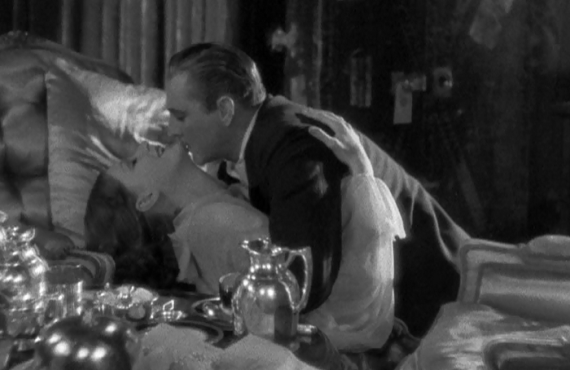
Grand Hotel will undoubtedly play best for those who have an existing interest in and knowledge of Golden Age Hollywood. Though the plot has enough twists and turns to maintain the interest, it is essentially soapy melodrama, albeit with an underlying fatalism. You miss out on a big part of the fun if you don’t recognise the stars and feel some sense of vicarious awe by placing yourself in the cinema seats of Grand Hotel’s contemporary audience. It would be entirely possible for many modern viewers to watch Grand Hotel with no awareness of who anyone was or even that they were figures of historical significance. But a film that features Greta Garbo, Joan Crawford, Wallace Beery and John and Lionel Barrymore is of immediate interest to those who do recognise those names, and there’s already a sense of magic in the anticipation alone.
Although none of its stars were Oscar nominated, their work in Grand Hotel is stellar. This is largely over-the-top stuff but it’s a blast to watch, from Garbo’s intense, tragic ballerina and Beery’s desperate, brusque industrialist to Lionel Barrymore’s comically eccentric Kringelin, a dying accountant on his last hurrah. The film juggles its tones well, moving from the cornily swoony love-at-first-sight meeting of Garbo and John Barrymore‘s Baron, to a nice physical comedy routine for the drunken Kringelin as he attempts to put himself to bed. Beery, with his broadly amusing German accent, provides a strong villain while Joan Crawford is the standout as the stenographer he hires. Boasting a charismatic naturalism that never conflicts with the melodrama, Crawford could easily have been the exception to the lack of acting nominations for Grand Hotel. While Garbo, with her overwrought monologues and iconic request to “be alone”, has retrospectively become Grand Hotel’s glamorous figurehead, Crawford steals the show and, crucially in a film that consciously pushes superficial stimulation as much as cerebral engagement, is quite breathtakingly beautiful.

Amidst its focus on the stars at its centre, Grand Hotel has other attractions. Cedric Gibbons art direction brings the hotel to life, especially in the impressive lobby scenes, while William A. Drake’s screenplay fills in the gaps between the stars with more than just empty space. There’s a nice minor subplot involving the hotel porter’s inability to break free from his demanding job in order to attend to his pregnant wife, and Lewis Stone‘s deadpan, detached Dr. Otternschlag provides a memorable figure on the sidelines through which we can relate and observe. Always lurking in the background and distinguished from the glamorous stars by a facial disfigurement sustained in the war, the doctor is a permanent resident of the hotel who, despite its numerous colourful goings-on, remains unimpressed by his surroundings and maintains that nothing ever happens. There’s a symbolism to be got at here but it remains as enticingly elusive as the spectre-like doctor himself. Is the hotel symbolic of life itself, with its constant rotation of new, impermanent residents and old guests checking out, with the doctor being a wise onlooker who’s detrimental cynicism is represented by his physical imperfections? Or perhaps the doctor is us, the filmgoing public watching the same stories play out again and again onscreen and fetishising physical beauty to the point that we degrade our own appearances. Grand Hotel feels like that wonderful middle-ground where trashiness meets quality and you get a satisfying dose of both. If its plots and characters are a little too broadly realised for it to truly endure as a solid gold classic, Grand Hotel still entertains reliably, which was always first and foremost its intention. Once a glamorous sensation, it is now a fascinating time capsule as well as an engagingly goofy melodrama. You can find better work by all of the film’s biggest stars elsewhere but good luck finding them all in the same place again.
48. GONE WITH THE WIND
Watched 15 February 2023
Back in 2020, amidst widespread protests following the murder of George Floyd, HBO Max removed Gone with the Wind from their service with the intention of adding a contextualising introduction by film scholar Jacqueline Stewart. At around the same time, in a less widely publicised move, I quietly visited my own Letterboxd page and changed my rating of Gone with the Wind from 4 stars to unrated. I always had the intention of eventually revisiting the film and reassessing my views on it but I think it is important to begin by acknowledging my original, unqualified rating because, to echo Stewart’s HBO introduction, to not mention it would be like pretending it never happened. Often when talking about content from a bygone era, we say it “hasn’t aged well” but I think that phrase lets us off the hook too easily. By placing the entire onus on the subject itself, we ignore our own part in making it popular and keeping it that way until the realisation of problematic material belatedly hits us. Acknowledging that we used to laugh at, accept or, perhaps most troublingly, be oblivious to content that now seems so clearly wrong can be embarrassing at best and, for those of us who dwell on these things, deeply psychologically disturbing. No wonder so many people refuse to accept the problematic nature of our past entertainments. It’s easier to blame the over-sensitivity of modern audiences than it is to accept our complicity in the history of prejudicial media.
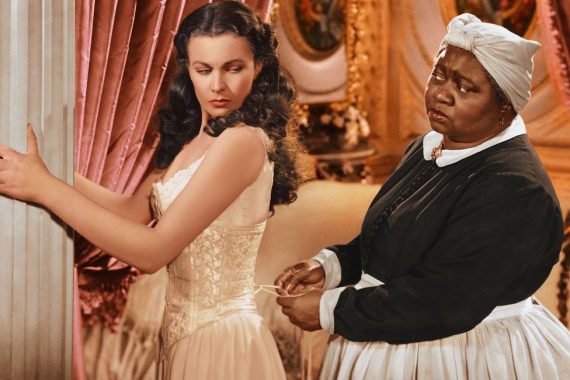
There is a more positive way to look at our reassessment of history. It comes about because we are getting better. We recognise and acknowledge past transgressions because of a desire to improve as human beings. The road we take towards these improvements is often clumsy but always well-meaning, and infinitely preferable to the path of those who spit the words “political correctness” and “woke” with a disdain that clearly identifies their prioritisation of their own beneficial relationship with a prejudicial status quo over any attempt at empathy or desire for equality. It may feel tedious reading yet another Gone with the Wind review that spends paragraphs wrestling with ideological issues before even getting to the film itself but opposition to the film’s undeniable racism is not a new phenomenon. Many black commentators were immediately critical of its content but their reactions and protests went unreported by a white-controlled media. In subsequent years, not all white critics were oblivious to Gone with the Wind’s racism but in a world in which the AFI still prized The Birth of a Nation’s technical innovations enough to include it in a 1998 list of greatest American films, Gone with the Wind had little trouble maintaining its prestige stature as the great American classic. Hattie McDaniel became the first African American Oscar nominee for her performance as Mammy and she ultimately won the award, something that Gone with the Wind’s unerring supporters often cite in its defence. They’re less likely to mention that McDaniel and the other black cast members were not allowed to attend the film’s Georgia premiere, or that McDaniel had to have special permission to attend the Oscar ceremony, where she was forced to sit at a segregated table against the far wall of the room.
But it’s easy to criticise Gone with the Wind’s more staunchly conservative defenders and to do so exclusively is to fall into the self-satisfied trap of deflecting from my own experience and those 4 shiny stars I sheepishly swept under the digital carpet three years prior to this review. Having watched Gone with the Wind, enjoyed it and registered my enjoyment with a context-free rating, I’ve played my role in perpetuating the notion that this is a film that can be enjoyed in a vacuum, when in fact it is a film that invites, nay demands, discussion, contextualisation and ideological evaluation. For me, there’s a definite sense of guilt that goes along with still enjoying Gone with the Wind and I can’t argue convincingly against reviews that denounce its pro-Confederacy romanticism and racist stereotypes as despicable. However, the suggestion that accompanies many of these reviews that we should no longer watch Gone with the Wind is not something with which I agree. Its attitudes may have no place as viable 21st century opinions but the film itself undoubtedly has a place in history, whether you admire it or not, and keeping it on display but with contextualising supplemental material feels like the best way we have right now to tackle a reprehensible legacy without resorting to censorship. Of course, despite the film being fully available once Jacqueline Stewart’s introduction has played, there are still those who cry “censorship” in the face of this approach, but they tend to be the sort of people who relish every N-bomb in the Tarantino oeuvre.
There are some reviews that attempt to clear the air regarding racism in their opening passages so they can then focus exclusively on the film, its aesthetics and achievements. This isn’t what I’m attempting to do here, as prejudice is so thoroughly baked into Gone with the Wind that you can no more separate it from the film’s other elements than you can extract ingredients from soup in their pre-blended state. The film’s opening caption is a representative precursor:
“There was a land of Cavaliers and Cotton Fields called the Old South… Here in this pretty world Gallantry took its last bow.. Here was the last ever to be seen of Knights and their Ladies Fair, of Master and Slave… Look for it only in books, for it is no more than a dream remembered. A Civilization gone with the wind…”
In its romanticised depiction of a mythical Old South, this introduction seeks to stir and the prettiness and sweep of its epic language is almost enough to achieve that response, were it not for the words “Master and Slave” right there in the middle, not proffered with the intent of creating light and shade but rather as a part of some imagined natural order to be admired, mourned and longed-for. There are times while watching Gone with the Wind during which I can almost imagine that it is not pro-Confederacy and that it is merely presenting the crumbling of the same from the viewpoint of those caught up in it, foregrounding the human experience in the same way All Quiet on the Western Front did by presenting WWI from the German soldiers’ perspective. But you need only think back to that opening caption to realise that this is not the case, and even if you’ve forgotten that, there are plenty more turds in the punchbowl to remind you that this isn’t some apolitical humanist tract.
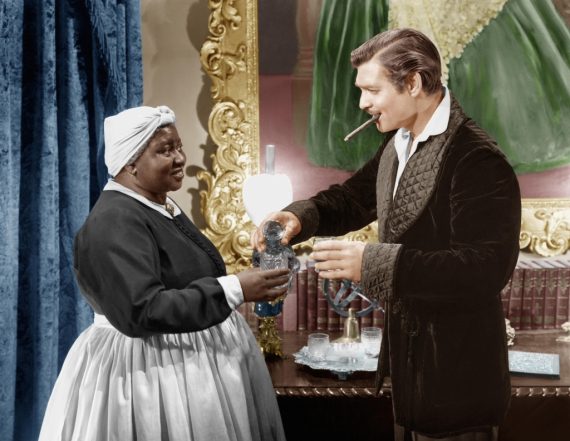
There are several things that make Gone with the Wind an enduring classic despite its retrograde politics. This is obviously a film that was conceived as a humongous affair from the off and that ambition is all over the screen. Gone with the Wind has always been thought of as more of a producer’s vision than a director’s, more readily associated with David O. Selznick than any of the three directors who worked on its troubled production. Likewise, several writers worked on the screenplay, including Sekznick himself and the legendary Ben Hecht, who’s screwball strengths can be heard in some of Rhett Butler and Scarlett O’Hara’s wittily hostile exchanges. Sole credit for the often impressive screenplay went to Sidney Howard, the film’s original adapter who was tragically crushed to death by a tractor before Gone with the Wind’s release, ultimately making him the first posthumous Oscar winner. But it wasn’t just behind the scenes talent that made Gone with the Wind special. The casting of the two leads, Scarlett O’Hara and Rhett Butler, is utterly impeccable. In the case of Rhett, Selznick was determined to secure Clark Gable from the off and the hoops he jumped through to make this happen proved to be completely worth it. It’s hard to imagine anyone else in this role. Gable is able to swing between likeable and unpleasant, domineering and vulnerable with a wit and realism that enhances the sharp writing. By contrast, the casting of Scarlett was a legendarily elaborate affair but the lengthy search for the perfect actress to embody this complex leading role proved to be the sort of publicity on which you can’t put a price. Vivien Leigh, a comparatively lesser-known British actress, beat competition from big names like Jean Arthur, Joan Bennett, Katherine Hepburn, Lana Turner and Paulette Goddard to secure the role. It’s hard to imagine any of these actresses having been right for the role of Scarlett, although in retrospect it’s hard to imagine anyone but Leigh in the part. She is the pivot on which these monumental four hours turn. Hardly ever off screen but never once letting her performance wane, Leigh is the main thing that sustains Gone with the Wind through its weaker passages, while making its high points absolutely spectacular. Whatever else there is to be debated about Gone with the Wind’s legacy, Leigh’s excellence is virtually inarguable.

The key to Gone with the Wind’s dramatic endurance can be glimpsed in a 2003 AFI poll to choose the 100 greatest heroes and villains. The AFI cling to Gone with the Wind’s status like a limpet but neither Scarlett nor Rhett, both nominated in the Heroes category, made the final list. This, it seems to me, is because they are actually anti-heroes, an infinitely more fascinating proposition that their flatter counterparts Melanie Hamilton and Ashley Wilkes. In fact, the supporting characters in Gone with the Wind are all rather thin. Ashley Wilkes, played by a vaguely miscast Leslie Howard, is a spineless, honour-obsessed bore who’s main arc is an emotional affair with Scarlett which sees him repeatedly kiss or nearly kiss her before placing the back of his hand to his forehead and going “Oh, my wife, my wife!” Melanie is a blandly perfect angel who’s juxtaposition with Scarlett is just a little too pointed. As played by the wonderful Olivia de Havilland, she’s not hard to love but she is hard to believe in. Despite her historic Oscar win, Hattie McDaniel is barely able to lift Mammy above a stereotype with the material she’s given, while Butterfly McQueen’s Prissy is a nails-on-a-chalkboard cartoon who famously made Malcolm X feel like “crawling under the rug.” By contrast, Scarlett and Rhett are rivetingly flawed, she a sociopathically manipulative, passionately determined and infuriatingly self-centred woman-child who casually shrugs off an impulsive murder, he a smug, roguish, hard-drinking womaniser who’s vulnerability and obsession ultimately drive him to marital rape. Together, these two characters are positively combustive and though images of their clinches have become iconically linked with epic romance, their actual love story is rivetingly imperfect, with the tempestuous passion rarely reflected in anything approaching a traditional reciprocal love.
Gone with the Wind’s excessive length is part of its appeal but also part of its undoing. Divided into two distinct acts, the first act is significantly better as it details the arrival of Civil War and the bursting of the mythical Old South bubble. This is where we find the legendary Burning of Atlanta sequence, still worthy of celebration in its fiery hugeness. There’s an exciting forward-drive to the narrative as it leads up to that famous declaration “As God is my witness, I’ll never be hungry again”, which closes part one on a rousing note. Part two features the best Scarlett and Rhett scenes but, with the war over, it quickly descends into repetitive soap opera and even this compelling couple can’t sustain the same argument engagingly across two hours. Taken separately, every one of Scarlett and Rhett’s arguments are entertaining, with great dialogue (claimed by Selznick but sounding suspiciously Hechtian) and performances that manage to combine realism and melodrama just about perfectly. But stacked end to end, the scenes diminish rather than enhance each other’s power. By the final stretch, Gone with the Wind seems determined to make up for lost time by cramming in as much tragedy as possible, with a miscarriage, a child’s death and Melanie’s untimely end all happening in the last half hour with barely minutes to separate them. It’s hard not to lose patience when a film becomes so barefaced in its emotional manipulation and the reaction it provokes in aiming so squarely for my tear ducts is that frankly, my dear, I don’t… no, I’m not going to do it!
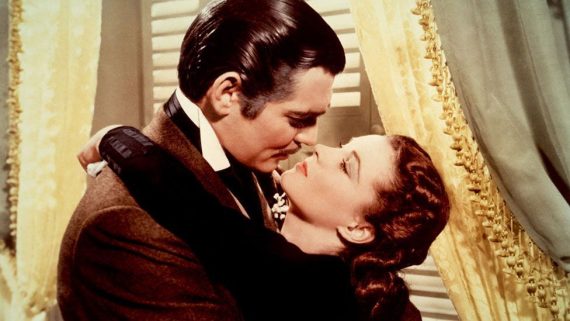
How to summarise how Gone with the Wind plays to a modern audience? Well, to those like myself with a penchant for classic Hollywood, there’s plenty to fascinate here, both in the film and the story of its creation. As a problematic historical document, it is valuable in its retrospective lessons, so long as context is provided (and no, that’s not the same as censorship). As an entertainment, it has two of the great lead characters and performances, though they are sadly milked beyond the natural lifespan of their appeal. Meanwhile, a cringe-inducing moment of, let’s not mince words, flat out racism is rarely far away wherever you happen to join the film, with the line between accurate depiction of historical attitudes blurred into a clumsy inability to recognise contemporary prejudice, with one hand hanging the “No Blacks” sign and the other lifting aloft the hand of the Best Supporting Actress winner. Outdated and offensive material is inevitable in media from a previous decade, let alone century, so Gone with the Wind’s content may enrage more than it surprises. But this inevitability is a reason rather than an excuse and, while it still tends to sit in the higher reaches of Greatest American Movie lists, you have to wonder just how long it will be until the same wind that allegedly carried away that non-existent romantic vision of the Old South returns to claim this film from its already weathered pedestal.
47. THE GREAT ZIEGELD
Watched 7 April 2023
The Great Ziegfeld is a good example of a film that has lost its critical cachet over the years. A supersize Biopic about the Broadway impresario Florenz Ziegfeld Jr., it received almost across-the-board praise on release, but the shifting expectations of audiences have resulted in its downgrading, its gargantuan size coupled with a modestly meandering, thematically vague narrative no longer seeming like the stuff of classic cinema. The Great Ziegfeld has also been sanitised to the point of fiction, turning a notorious philandering womaniser into a romanticised dreamer who’s “appreciation” of women is depicted as if akin to a love of great art. Any compromising positions Ziegfeld finds himself in, including that which ends his first marriage, are quite accidental and entirely the fault of brazenly forward women. You’d have to be deeply naïve to buy such a tale and there is surely a better, more interesting warts-and-all Biopic to be made out of Ziegfeld’s life. Where The Great Ziegfeld works is in its decision to focus on the glitz and glamour, the humour and romance that a life such as Ziegfeld’s projected into the minds of those who attended his shows. Retaining this feelgood approach necessitates creating a likeable central figure, roguish and opportunistic but never as selfish or problematic as the real man appears to have been. If the viewer can get past this shameless finagling, and if they have a penchant for the featherlight confections of 30s Musicals, they might find The Great Ziegfeld more entertaining than its latter day reputation suggests.
The Great Ziegfeld is too long. That needs to be acknowledged from the outset. There may be a certain prestige to having an overture and an intermission, and perhaps the filmmakers thought this would help evoke the glamour of the Ziegfeld Follies, which the film focuses on more in its second half. But in order to fill out the runtime, it appears more scenes of faux-Biopic have been added, when really what The Great Ziegfeld is crying out for is an increase in its sparsely sprinkled production numbers. Perhaps this was because, as the title suggests, the point was to make a film about Ziegfeld himself rather than the Follies. But if that was the case, the film fails in creating a compelling arc for the character or in showing what are potentially the most interesting moments from his life. Though we do get some memorable musical moments, The Great Ziegfeld finds itself hurrying through Ziegfeld’s greatest hits in the final half hour, representing them by showing their titles in bright lights and playing snatches of their most famous tunes. If a little less time had been spent on repetitive scenes of Ziegfeld’s relationship with his first wife, Anna Held (played by an Oscar-winning Luise Rainer), then perhaps we could’ve seen some moments from his biggest productions, rather than essentially just listing them at the end like a bibliography. There is a strange sense that The Great Ziegfeld is being made up as it goes along. There are peculiar moments that don’t seem to go anywhere, such as a scene in which a woman named Mary Lou, whom we saw in an earlier scene as a child who knew and adored Ziegfeld, turns up later as an adult. She bursts in on Ziegfeld, snogs him twice and is then packed off to become one of his chorus girls, never to be seen again. Although this visibly flusters Ziegfeld, there is no sense of any lasting impression here. I was expecting some kind of conflict regarding Ziegfeld’s attitude to the women he has always adored and one that he knew when she was an infant, but no such food for thought arises and neither does a reason for the scene to exist.

But if The Great Ziegfeld is a mess, it is at least a gloriously huge and entertaining one. In its quest to create a likeable Ziegfeld, the casting of the charismatic William Powell was a wise move. From the off, Powell is enjoyable to watch and he shows his range by moving from a fun vignette in which he faces off against a rival barker at the 1893 Chicago World’s Fair with manipulative cunning, into the first (and honestly faintly nauseating) scene with Mary Lou, in which he turns on the gentle, avuncular charm. The film is also well served by a strong supporting cast, including several real vaudevillians playing themselves. Ray Bolger appears as himself, as does the legendary Fanny Brice, although the film seems determined to repeatedly cut her off mid-performance. Others stars are impersonated, with A.A. Trimble’s spot-on Will Rogers being the most memorable cameo. Of the small handful of leads, only Myrna Loy is ill-served in her dull role of Ziegfeld’s second wife Billie Burke. The real life Burke served as a consultant on the film, which perhaps had some bearing on how blandly virtuous her surprisingly brief performance turned out to be. Those hoping to see the same chemistry between Loy and Powell established in The Thin Man films will likely be disappointed. Much more entertaining is Luise Rainer as Ziegfeld’s first wife, Anna Held. Rainer’s celebrated turn combines a broadly comedic flair with an underlying sense of tragedy, with the latter elbowing its way to the forefront for her famous final scene in which she holds her emotions in check while telephoning her ex-husband, only to break down in tears once the call is over. I can only imagine this sequence was terribly insulting to the real Held, who the real Ziegfeld threw over for a couple of other actresses, as it implies that she made a tragic mistake in giving up this man whom the film would have us believe is far less selfish than he was. Still, it makes for a cracking piece of Melodrama! Rounding out the principals is the fantastic Frank Morgan as Jack Billings, Ziegfeld’s rival impresario. Although the character appears to be fictional, this relationship is perhaps played as having a greater significance than any other, with their playful competitive sparring spanning decades and culminating with a deeply touching final meeting in the wake of the stock market crash that financially devastates them both. This moment is actually positioned as the emotional climax, with Loy oddly swept aside completely by this point. Why give such a pivotal moment to a comedic supporting character? I like to think that Billings represents a composite of several rivals/friends of Ziegfeld, as well as the entertainment business itself, and the ups and downs of his relationship with Ziegfeld reflects that man’s own tempestuous showbiz lifestyle. Then again, perhaps it was just a curious, hasty choice that happened to pay off, as so much of The Great Ziegfeld seems to be.
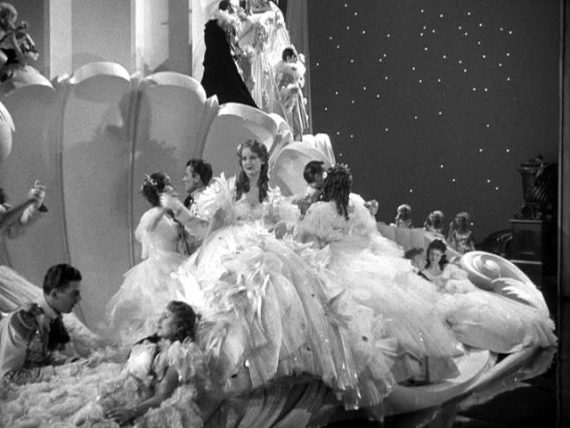
One of the major attractions of The Great Ziegfeld is the production numbers but it takes a surprisingly long time to get to them. When the first major musical moment arrives though, it is worth the wait. The number is called A Pretty Girl is Like a Melody, although it incorporates snatches of other famous tunes of the era, and it is shot in just two incredible long takes. A painstakingly designed and choreographed sequence, it involves about 180 performers who are arranged around a giant rotating staircase that resembles a wedding cake. Bedecked in a glorious range of costumes, they create a sumptuous set piece which immediately elevates The Great Ziegfeld at the end of its first half. Though the influence of Busby Berkeley is clear, choreographers Seymour Felix and Harold Adamson distinguish themselves with their own style which takes the extravagance of Berkeley but adds a notably different energy. This exquisite sequence, surely a significant influence on The Great Ziegfeld’s Best Picture win, kicks the film into a different gear. Though nothing in the second half tops it, for a while there is a noticeable increase in musical content, with moments like the Harriet Hoctor Ballet, which spotlights another real Ziegfeld collaborator, or Ray Bolger’s terrifically loose-limbed tap dance, which makes very clear the reasons why he was the ideal choice to play the Scarecrow in The Wizard of Oz a few years later.
It’s probably clear from my review that The Great Ziegfeld is a film riddled with problems, from overlength to lack of focus and good old fashioned basic dishonesty. It’s probably just as clear that I sort of love it. Like the giant wedding cake at the centre of its most famous scene, it might be a bit dry and stodgy underneath but it’s so beautifully iced that that ends up mattering less that it should. My Old-Hollywood-philia undoubtedly plays a part here and the film will likely tax the patience of those who don’t suffer (enjoy) that same magical movie malady. While I don’t think The Great Ziegfeld can convincingly justify its Best Picture win in the long run, my positive reaction to its superficially fluffy delights at least help me to sympathise a little more with the subsequent adventures of those inveterate icing-gobblers of the Academy.
46. THE LOST WEEKEND
Watched 30 July 2022
Billy Wilder’s The Lost Weekend, the director’s fourth American film, was a high profile adaptation of Charles R. Jackson’s novel of the same name. A grim, frank examination of alcoholism, Jackson’s novel was perhaps a little too bold for the 40s cinema screen but Wilder and his regular writing partner Charles Brackett did an often fine job of adapting it. In doing so there were a few edges sanded down, including prominent implications that protagonist Don Birnham was gay and the insertion of a more hopeful, if still suitably ambiguous (though, truthfully, also unsatisfying) ending. It seems unfair to hold these things against The Lost Weekend, given the impossibility of getting certain material past the oppressive production code of the era, but it inescapably hurts the film, making Birnham a more one-dimensional character who’s motivation for drinking feels underexplored. But, in keeping with Wilder’s more brittle sensibilities in comparison with his contemporaries, The Lost Weekend does manage to retain some of the grit that is so necessary in creating its impact. The character of Gloria is clearly a prostitute, something the film never states outright but comes as close as it possibly can to doing so. And Birnham’s descent into a hellish, obsessive stupor across several days is wrought with an effective mixture of wit, empathy and even outright horror.
It’s crucial to remember that alcoholism was rarely taken seriously on screen when The Lost Weekend appeared. Alcoholic characters were ubiquitous but were generally depicted as figures of fun, happy in their haze and non-threatening thanks to their inebriated inability to function properly. Lascivious advances were not uncommon but these invariably resulted in an off-aim lunge and a staggering self-hug. With this in mind, The Lost Weekend must’ve felt like a very important film in its days, finally showing the dark side of the bottle’s influence without a punchline to undermine it. While this obviously helped single out the film for praise from contemporary critics, it has also seen some modern critics compare The Lost Weekend to an over-earnest public information film. I’ve never particularly seen The Lost Weekend as finger-wagging or puritanical. I think it sets out with the best of intentions, showing the impact alcohol abuse can have on a person’s life, personality and relationships. That we’ve seen so many such films since then has undoubtedly reduced its impact on audiences down the years.
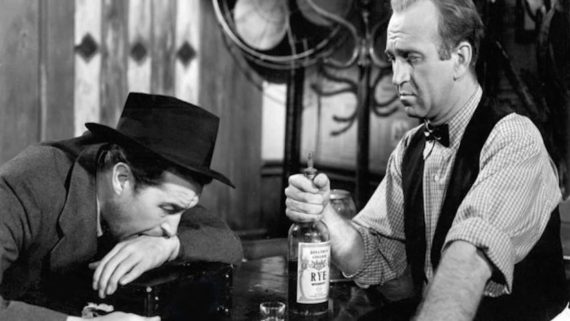
Though there is decent support from a range of lesser-known actors, as well as a strong turn from second lead Jane Wyman, the success of The Lost Weekend rests mainly on Ray Milland’s shoulders. Milland’s performance as the troubled writer Don has variously been mocked as overwrought and hailed as one of the greatest Oscar-winning performances of all time. For me, the quality of Milland’s performance varies according to the material. In the more naturalistic scenes, Milland is excellent, combining a public front with an underlying sense of unease that he will be discovered at any moment. The tricks to which he resorts in order to get a drink are carried out with a combination of pride at his own cleverness and shame at his own dependency. But Wilder and Brackett give him too many lengthy, eloquent speeches about alcoholism and here Milland slides into a stagier style which reflects the nature of the monologues he’s asked to perform. Few people like a big, well-written speech more than I do and Don being a writer at least gives Wilder and Brackett some convincing context for his eloquence. But the florid speechifying does become a little wearing and it is a relief when it recedes for a while to allow Don’s downwards spiral to play out.
That downward spiral is by far the best stretch of The Lost Weekend. This is where the film becomes more visual and less verbose, allowing Milland to shine in his increasingly disheveled, agonised battle against his better nature and his raging thirst. Though not without its moments of melodramatic excess, Milland’s performance here is appropriately obsessive. You can see his personality drop away completely until he is defined by the booze. Wilder’s direction has more opportunity to shine here too. Of course, there’s the famous and massively influential sequence of Don stumbling towards the camera as barroom signs flash tantalisingly past. Wilder also brings an otherworldly sense of terror to the scenes in an alcoholic’s ward where Don is taunted by a sadistic nurse, and a thriller-like tension to a sequence in which a cash-strapped Don attempts to steal a woman’s handbag to pay for the drinks he’s already consumed. The key scene in regards to how seriously you take The Lost Weekend is a horror-inflected moment in which Don hallucinates a bat killing a mouse in his apartment. The bat initially looks laughably fake and this could upend the whole scene but the subsequent mouse-killing is very effectively and horrifically realised. My reaction to this one sequence encapsulated the ups and downs in quality I perceived throughout The Lost Weekend. A promising setup fleetingly rendered ineffective by a moment of clear artifice, before being saved by a visceral development.
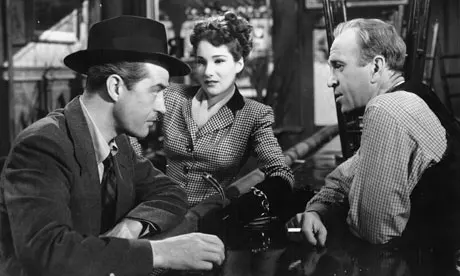
When it came to rating The Lost Weekend I spent the film wavering between 3.5 and 4 stars but the disappointing ending ultimately saw me settling on the lower score. While Wilder and Brackett evade the complete-cure happy ending in favour of which many lesser writers would’ve been happy to discard the reality of the situation, the attempt to incorporate a note of hope does necessitate a level of self-realisation on Don’s part that feels at odds with what’s gone before. Wilder’s Don attempts suicide to relieve others of the burden he has placed upon them. Jackson’s Don, meanwhile, crawls into bed and wonders what everyone is making such a big fuss about. Wilder gets to his moment of hope without any great contrivances but it feels anticlimactic. And the final shot of the city is slightly too eager to make clear that The Lost Weekend is not just an intimate tale of one man’s struggle with the bottle but a big issues film about a societal problem. Y’know, the kind that wins Oscars.
45. ROCKY
Watched 22 February 2023
Much has been made over the years of how the success of Rocky the film mirrored the underdog story of Rocky the character but it is a point worth repeating because the film coasts by on its scrappy charm to an extraordinary extent. A low-budget movie written in three days by a little-known actor called Sylvester Stallone, Rocky could’ve ended up polished up into a blandly edgeless studio vehicle for a big name star. But Stallone’s stubborn insistence that he play the title role and that his amateurish script not be rewritten resulted in Rocky being assigned a lower-than-intended budget. Producers Irwin Winkler and Robert Chartoff used their big budget Scorsese film New York, New York as collateral against Rocky’s potential losses. As it turned out, it was Rocky that eventually covered New York, New York’s losses.
People adored Rocky. People still do adore Rocky. I can understand that to some extent. Its screenplay is stitched together from tried and tested blue-collar B-movie cliches and inspirational sporting anecdotes. It “wows them in the end”, a technique advocated by a fictionalised Robert McKee in Adaptation. It’s the movie that Jack Lipnick wanted Barton Fink to write, only with boxing instead of wrestling. But I’ve always found Rocky to be an oddly aimless film for much of its runtime. This can be charming as we get to follow Rocky around his neighbourhood, hang out with his turtles and watch him clumsily try to romance Adrian, the shy sister of his best friend Paulie. It also results in some odd scenes, such as one where he escorts a thirteen year old girl home and advises her that if she hangs around with the crowd she was with, she will be “a whore.” This awkward scene ends with the girl calling Rocky “creepo”, which in the face of his misogynistic advice feels entirely warranted. The sweetness of Rocky’s courtship with Adrian is also tainted by a very coercive first kiss in which Rocky physically blocks her exit from his home. In light of the many real life allegations against Stallone, it’s uncomfortable to say the least and these two scenes seem to epitomise a retrograde attitude to women that is thankfully explored no further.
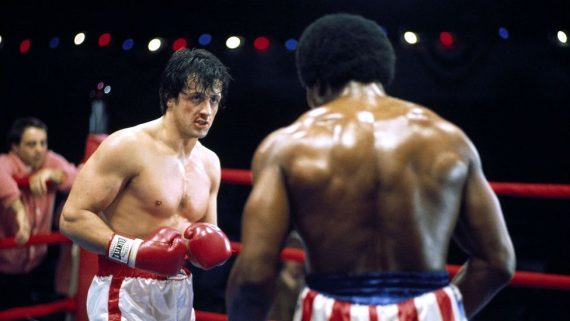
Aside from these bumps in the road, Rocky is largely charming enough and it derives a lot of good will from its rough-and-ready vitality and loose structure. Like its verbose but ineloquent main character, the film rambles. Safe in the knowledge that it’s building to a big fight at the climax, it’s easy enough to tolerate but until the final stretch Rocky never really realises the full potential of its major dramatic peaks. The unpleasant first kiss with Adrian, the underwritten confrontation with Mickey, the overacted Christmas bustup between Paulie, Adrian and Rocky. The latter is one of the worst scenes I can think of in a Best Picture winner. Everything is suddenly dialled up emotionally without the necessary level of build-up. Stallone just seems to have deemed it time for a big moment. Problems like this may have been ironed out had Stallone allowed professional writers to tinker with his script but oddly enough that would’ve been to the film’s detriment. To make any part of Rocky slicker would be to highlight and exacerbate its shortcomings. The slapdash approach Stallone has applied somehow works wonders, feeling right for these characters and their environment. When a banner was accidentally made showing Rocky in the wrong colour shorts, Stallone simply wrote a couple of lines of dialogue acknowledging the mistake in the world of the film. Likewise, a robe that was delivered to the set and proved to be too big for Stallone became the subject of a couple of amusing asides in which Rocky addresses his baggy attire. There’s a real charm to these quick patch jobs on the screenplay that epitomises Rocky’s infectious can-do spirit, even if the same loose approach eventually led to Stallone bunging a robot into Rocky IV because he’d seen it and thought it was cool.
Rocky’s focus on “the little man” (has that term ever seemed less appropriate in a literal sense?) has seen it frequently called Capraesque but this feels like a misnomer to me. If it shares a spirited energy with some of Capra’s films, Rocky’s tendency towards the heavily melodramatic seems a far cry from Capra’s fleet-footed sentimentalism. Rocky probes a couple of surprisingly dark narrative corners, such as having Rocky work as a reluctant but basically unrepentant heavy for a loan shark. While we see him letting off a mark who’s thumb he is supposed to break, it’s clear from the subsequent dialogue that had the opportunity to fight Apollo Creed not fallen into his lap, Rocky was barrelling towards a future GBH charge. The fact that the loan shark plot is never really addressed from a moral standpoint and is left unresolved could either be seen as a laudable refusal to adhere to narrative conventions or a sign that Stallone just got wrapped up in his other plotlines and shrugged it off. Again, there’s something strangely appealing in both possibilities. When a film like Rocky endears itself to so many people and in such an uplifting way, it can result in an overreaction from awards bodies. As perversely well as Stallone’s collection of cliches works, I don’t think it warranted a Best Screenplay nomination and the four acting nominations are borderline silly. I can sort of understand Stallone’s nomination as he created an iconic character here and did so with a haphazard charm, but Talia Shire’s Adrian is not so much understated as plain dull. The usually wonderful Burgess Meredith is a broad caricature as the gravel-voiced Mickey, and Burt Young… well, do I really need to go any further? Come on, Paulie got an Oscar nomination! That should tell you something is amiss here. Each of these characters gets one moment where emotions escalate and they get to shout a couple of lines and that seems to have been enough. It speaks volumes about Rocky’s ability to somehow convince you it’s better than it is for the majority of its runtime.
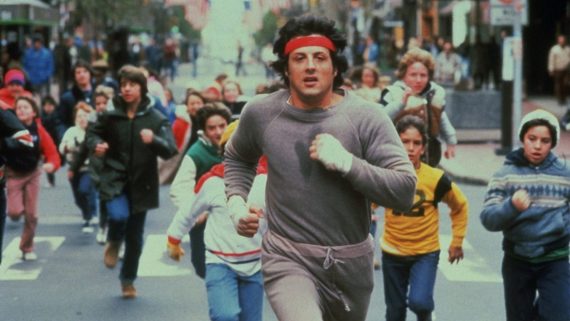
Rocky’s pretence of quality didn’t last long but Stallone still got a hell of a lot out of the subsequent franchise. Although it often used a sort of Greatest Hits approach, Rocky II was a solid sequel that even improved on some aspects of the original. From Rocky III onwards things got a bit ludicrous, with the little man theme falling by the wayside in favour of jingoistic determination to correct the world’s politics and a seeming determination to kill off every main character not played by Stallone. But the franchise remained entertaining even as it grew preposterous because Stallone had created a formula that worked and the thinness of those characters meant their malleability was considerable. But if it eventually became a film series to enjoy with a smirk, the first film sticks the landing magnificently, so that the audience leaves energised, uplifted and ready to forgive any shortcomings that came before it. The climactic fight itself was surpassed in later instalments but is still brilliantly brutal. You can feel the pummelling these two pugilists mete out to each other. As the fight approaches, the film soars. That famous training montage, set to the unavoidably rousing Gonna Fly Now, just works and works and works. Every variation of it in later films became a highlight but this first one has that special frisson of the originator. Rocky’s moment of self-doubt before the fight is perhaps Stallone’s best acting moment in the film and, although he essentially hands us the ending in his dialogue about just wanting to go the distance, it sets up the finale in a way that leaves no room for confusion in anyone who was expecting an uncomplicated victory. Stallone instead gives us an ode to resilience which contrasts with the win-obsessed endings of subsequent Rocky films. As the battered Rocky and the blossoming Adrian call to each other, completely disinterested in the imminent result of the fight, this terrific ending makes you realise just how much the film has managed to make you care about characters that at times barely seemed to be registering. I suppose there is something vaguely Capraesque in this erosion of cynicism but to say Rocky isn’t akin to Capra isn’t meant as an insult. It carves out its own imperfect, grubby poetry of the streets that proved irreplaceable in its sequels.
44. AROUND THE WORLD IN 80 DAYS
Watched 1 March 2023
Around the World in 80 Days has retrospectively become one of the most widely derided Best Picture winners and it’s easy to see why. A Best Picture Oscar win often brings in viewers who would otherwise not venture more than a decade South of their birth year in film choices and, to those who have neither experience of nor interest in classic Hollywood cinema, the pacing will probably seem slow, the characterisations thin, the runtime interminable, the cultural stereotypes insensitive and the celebrity cameos meaningless. But for those armed with a bit of context and the ability to place themselves in the shoes of excited 50s cinema-goers, there’s plenty of charm to unearth here.
I don’t want to start out this review sounding as snobbish as a member of the Pall Mall Reform Club so I should point out that it’s by no means a prerequisite to be unversed in classic cinema in order to dislike Around the World in 80 Days. Plenty of Hollywood aficionados hate it too, a feeling usually exacerbated by its Best Picture win and the more deserving films it beat. But there’s something to be said for the variety the victory of such a light Adventure film brings to the history of the award. If this is certainly a case when the word ‘Best’ could be replaced with ‘Biggest’ or ‘Most Expensive’, this shouldn’t necessarily exclude the film in question from competition. Given its size, the amount of extras, cameoing stars, locations and different types of action there are to be handled, getting a thing like Around the World in 80 Days from screenplay to celluloid is an achievement worthy of recognition. I’ve started out by defending Around the World in 80 Days because, above anything else, I enjoyed it immensely. But ultimately the problems with the film cannot be overlooked, whether they’re impacting on enjoyment or not. Perhaps we should start with the cultural insensitivity, since that’s something that can retrospectively sink a film even when taking its era into account. I’d suggest that that’s not the case here, since Around the World in 80 Days is quite deliberately working in broad strokes. With fleeting stopovers in so many countries, falling back on stereotypical depictions is almost inevitable for a movie from this era, but for the most part there’s a good natured balance which urges us to focus on the beauty of our diverse world first and foremost, before serving up the cultural clichés as an afterthought. It’s fair to say that everyone is lampooned to some extent, with the stuffiness of British attitudes and the pomposity of Empire caught in the screenplay’s sights too, but it’s probably far harder to laugh off being depicted as savage Native American attackers-of-trains than it is to enjoy a self-deprecating view of an exaggerated reverence for tea. The film has a bash at delineating a more progressive approach by introducing a counterpoint: apparently you can tell good Native Americans from bad ones by whether they smoke peace pipes or impale Buster Keaton with arrows. But it’s also all too easy to tell apart Shirley MacLaine and an Indian princess or Peter Lorre and a Japanese steward, no matter how hard Around the World in 80 Days hopes we can’t.
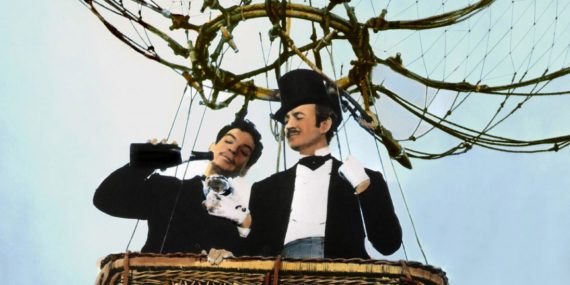
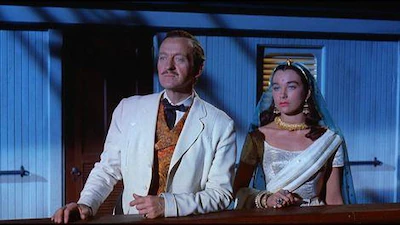
Not everyone is inappropriately cast. David Niven feels perfect for Phileas Fogg and he delivers pithy putdowns hilariously. The character is very thinly drawn, with his clipped eccentricities scarcely enough to make us root for him any more than we do for the other members of the Reform Club who have wagered against him. His enormous wealth allows him to buy his way out of practically any situation, which moves the plot along but is hardly an endearing quality, while the fact that his main defining characteristic is a whist obsession requires the audience to infer a moustache-fetish in Shirley MacLaine’s princess if they are to believe their subsequent romance. But Around the World in 80 Days is a film that encourages the act of looking above all else and, with his immaculate outfits and practiced poise, Niven certainly looks the part even if MacLaine doesn’t. The emphasis on visuals is also highlighted by the casting of Mexican comedian Cantinflas as Fogg’s valet Passepartout. Cantinflas’s trademark comedic style involved intricate Mexican-Spanish wordplay that didn’t always translate well into other languages but his deft physicality certainly works wonders here and gives his woman-chasing ways a non-threatening charm when such characteristics were usually played with a sinister lascivious edge in contemporary films of the day. His arrival by penny farthing at the beginning of the film establishes a charming whimsicality on which Around the World in 80 Days frequently and successfully falls back. Although it improbably won the Best Adapted Screenplay Oscar, for the most part Around the World in 80 Days doesn’t so much want you to listen to what its cast is saying or even look at what they’re doing. The priority is placed upon looking at who they are. If you have any familiarity with Golden Age Hollywood, go and look at this film’s incredible cast list. Or better still, don’t. Part of the fun is spotting all those A-listers in roles that last minutes or less. None of them are giving career-defining performances or anything, but they do appear to be having fun and the film plays fast and loose with the fourth wall in the way the camera excitedly gives them build-ups that go “LOOK, LOOK WHO IT IS!”
The adventures Fogg and Passepartout experience at each of their stops vary in quality. Their visit to Spain regrettably involves a bullfighting sequence which, while bloodless, is still complicit in promoting this despicable act (note I didn’t say “sport”). Quite apart from that, it is completely tedious, as Passepartout essentially teases the animal with a bit of cloth as a result of the flimsiest narrative pretext. I like Passepartout and I like Cantinflas in the role, so I don’t particularly enjoy spending six minutes hoping he’ll be gored, which is my kneejerk reaction when I see bullfighters. By contrast, the rescue of the princess in India and a fantastic Wild West sequence in America are both very entertaining if you can get past the problematic elements. But Around the World in 80 Days is at its best in moments of inaction. For many, its travelogue sequences are the most tedious part but I’ve always found them enchanting. The generous runtime allows the film to really stretch out in this respect, spending lengthy passages taking in the sights from train windows or watching Fogg’s hot air balloon drift past famous landmarks. Big budget films so rarely take the time to slow down and let the audience drink in the surroundings anymore but in Around the World in 80 Days you can practically bathe in them. An extra frisson is added by imagining the awestruck reaction of 50s audiences who were not yet able to see images of such exotic locales at the flick of a switch. But even as a modern day viewer, I relish Lionel Lindon’s glorious colour cinematography and the way it brings a vivid world into my living room. The film not only gazes longingly at the sights but also at Fogg and Passepartout’s means of conveyance: trains, boats, hot air balloons. Pick a method and go and see the world, the film implores us.
Before I wrap up this review, I should make special mention of the beginning and end of the film. Around the World in 80 Days begins with a prologue featuring broadcasting legend Edward R. Murrow talking us through information about author Jules Verne over the top of an edited version of George Méliès’ classic short A Trip to the Moon. The ending features a six minute animated credits sequence by the great Saul Bass, which lists that star cast in full, complete with themed caricatures to help identify them. The fact that it comes with its own built-in supporting shorts exemplifies how much effort has been put into packing Around the World in 80 Days full to bursting with ideas. Though it is deeply flawed in many unavoidable ways, this ambitious and affable film is also one of the most charming Best Picture winners.