


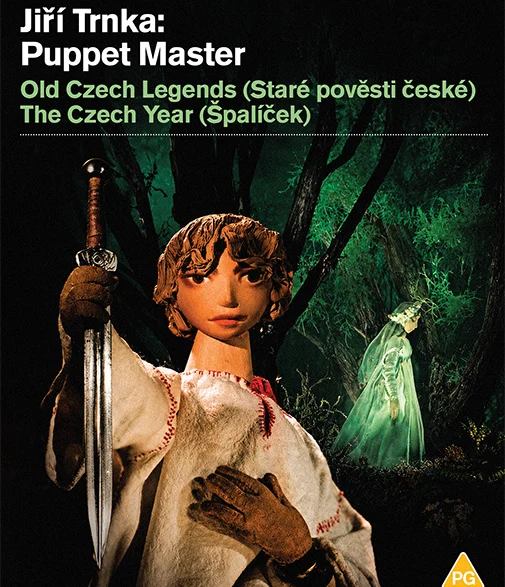
 Czechia and, previously, Czechoslovakia have been home to a number of remarkable and hugely influential animators over the years, but probably the earliest master of Czech animation was Jiří Trnka. He has been referred to as “the father of Czech animation” and also often as “the Walt Disney of Eastern Europe” (though more for his innovation and mastery of the form, rather than the commercialism the Disney brand would become known for in later years).
Whilst best known for his stop-motion films, Trnka was also a puppet-maker, puppeteer, painter, graphic artist, sculptor, and stage and costume designer. He was a student of the legendary Czech puppeteer, Joseph Skupa, before training at Prague’s Academy of Arts, Architecture and Design. He started working on newspaper cartoons and illustrations before making a name for himself with his book illustrations.
In 1936, he set up his own puppet theatre, the Wooden Theatre, before moving on to work as a stage and costume designer. Then, after honing his skills as a painter, he began working as an animator for The Trick Brothers film studio in 1945.
From then on, Trnka produced a number of films, working with different styles of animation. His work drew great acclaim overseas, in particular.
His modernist, experimental work often ruffled feathers with the Communist authorities after they took over in 1948. However, Trnka usually managed to skirt around censorship, due to working in the officially approved areas of folk and fairy tales.
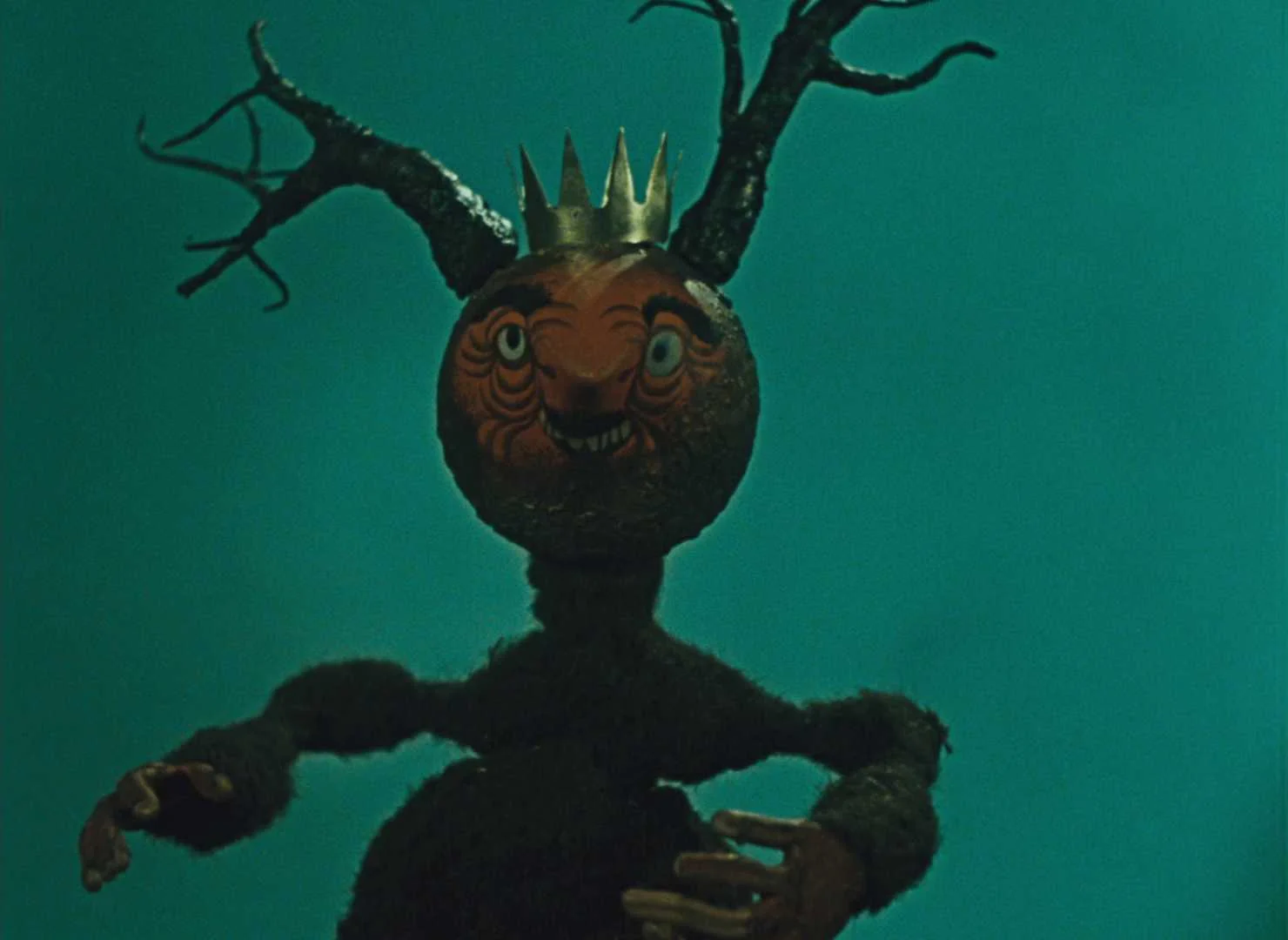
It was in these areas that some of his most famous work was born, including The Czech Year and Old Czech Legends, which are being presented in a new Blu-ray set by Second Run.
His final film, the acclaimed short The Hand (1965 – included in this set), did challenge the administration, though, with its clear anti-authoritarian message. It didn’t go down well, as you might imagine. That said, when Trnka died in 1969, he was awarded a state funeral, so his work was clearly valued. A retrospective of his work that came the following year at the Karlovy Vary Film Festival didn’t include The Hand, though.
Trnka’s films are now able to reach a new audience, thanks to Second Run’s new set. I got hold of a copy and my thoughts follow.
The Czech Year (Špalíček)
Director: Jiří Trnka
Screenplay: Jiří Trnka
Running Time: 80 min
Year: 1947
BBFC Certificate: PG
The Czech Year started out as a series of thematically connected short films. However, at the end of 1947, Trnka assembled them into a feature, making it the first animated feature film ever made in Czechoslovakia. It won the ‘International Prize for Animated Picture’ at Venice, among other awards, helping put Trnka’s name on the map.
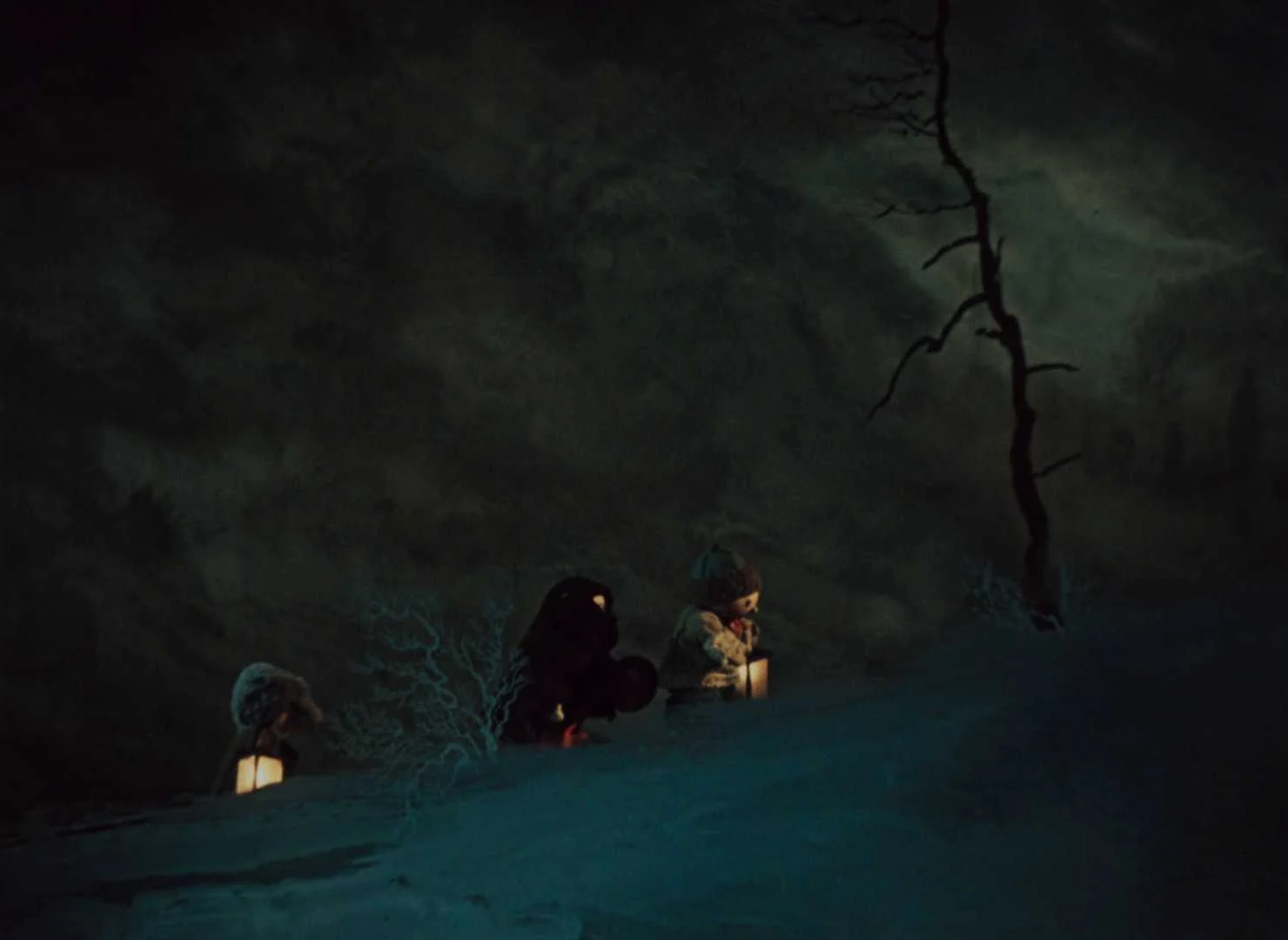
The film doesn’t have a narrative, as such. It’s a symphonic celebration of Czechoslovakia and the shifting seasons. It’s split into six sections – “Shrovetide”, “Spring”, “Legend About St. Prokop”, “The Fair”, “The Feast” and “Bethlehem”. These are all driven by a beautifully orchestrated, rich and vibrant score by Václav Trojan. His music was inspired by classic and modern folk songs and was performed by the Kühn children’s choir of Prague.
With its episodic structure and use of orchestral music over dialogue, A Czech Year reminded me a little of Fantasia, though it has a much more distinctively Eastern European style. It’s an often joyous film that celebrates life and music, though it has its dark and sombre moments.
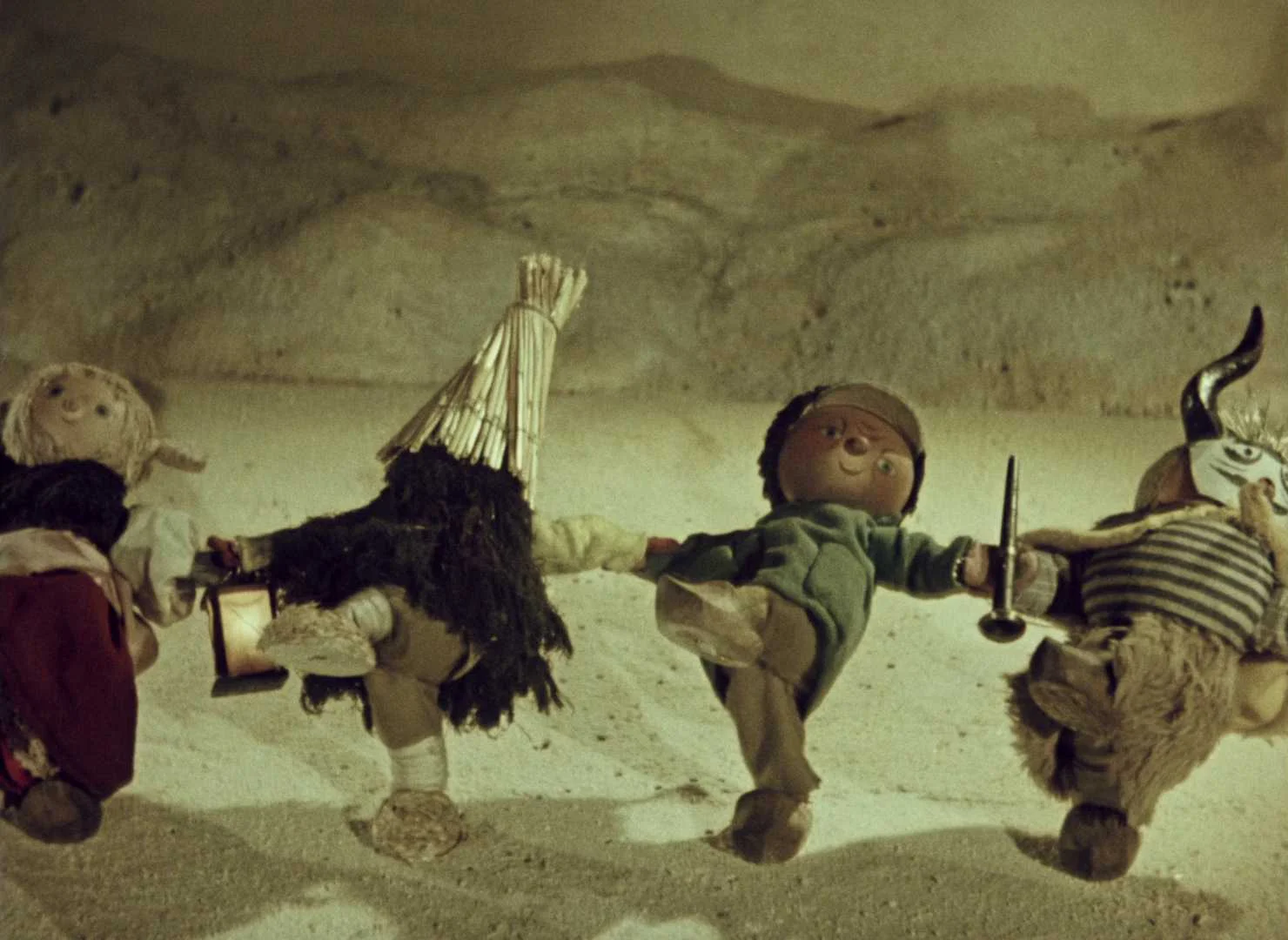
Trnka avoids any animated facial expressions on his puppets, but uses body movement and cinematic means such as lighting, editing and camera movement to express emotion in his characters. This is remarkably effective. Trnka is truly a master of the medium.
Some of his techniques are incredibly impressive, particularly considering the age of the film. The camera is often moving, which is quite a challenge for stop motion animation. There are some wonderfully playful moments, too, such as when a snowball is thrown at the camera, causing a wet smear over the lens.
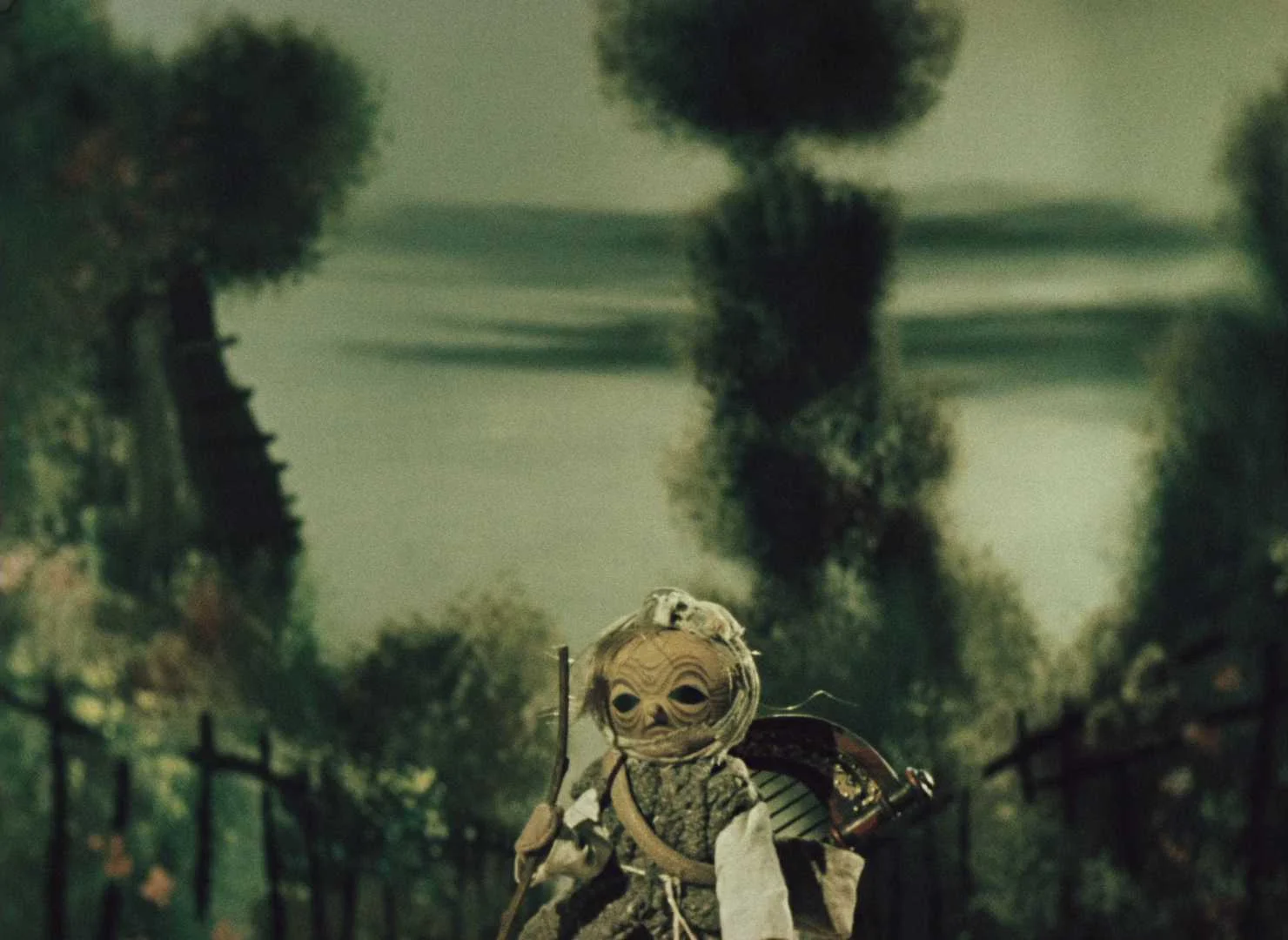
The film is also exceptionally well edited. It has a remarkable sense of rhythm and energy, thanks to the work of editor Helena Lebdušková and Trnka himself.
Overall, The Czech Year is a technical marvel but also a vibrant musical, brimming with life.


Old Czech Legends (Staré pověsti české)
Director: Jiří Trnka
Screenplay: Jiří Trnka, Jiří Brdečka
Based on Stories by: Alois Jirásek, Cosmas of Prague
Featuring the Voices of: Zdeněk Štěpánek, Eduard Kohout, Karel Höger, Růžena Nasková, Václav Vydra
Running Time: 84 min
Year: 1953
BBFC Certificate: PG
Old Czech Legends is based on the book of the same name by Alois Jirásek, which was published in 1894. Whilst it seems like a perfect fit for Trnka, it was actually thrust upon him by the Communist authorities, who were in the midst of ‘Jirásek action’ – a campaign to promote the author’s work and cast the nation’s history in a socialist light. Trnka, however, made the project his own and produced another masterpiece. He saw it as a chance to use puppetry to create something truly epic.
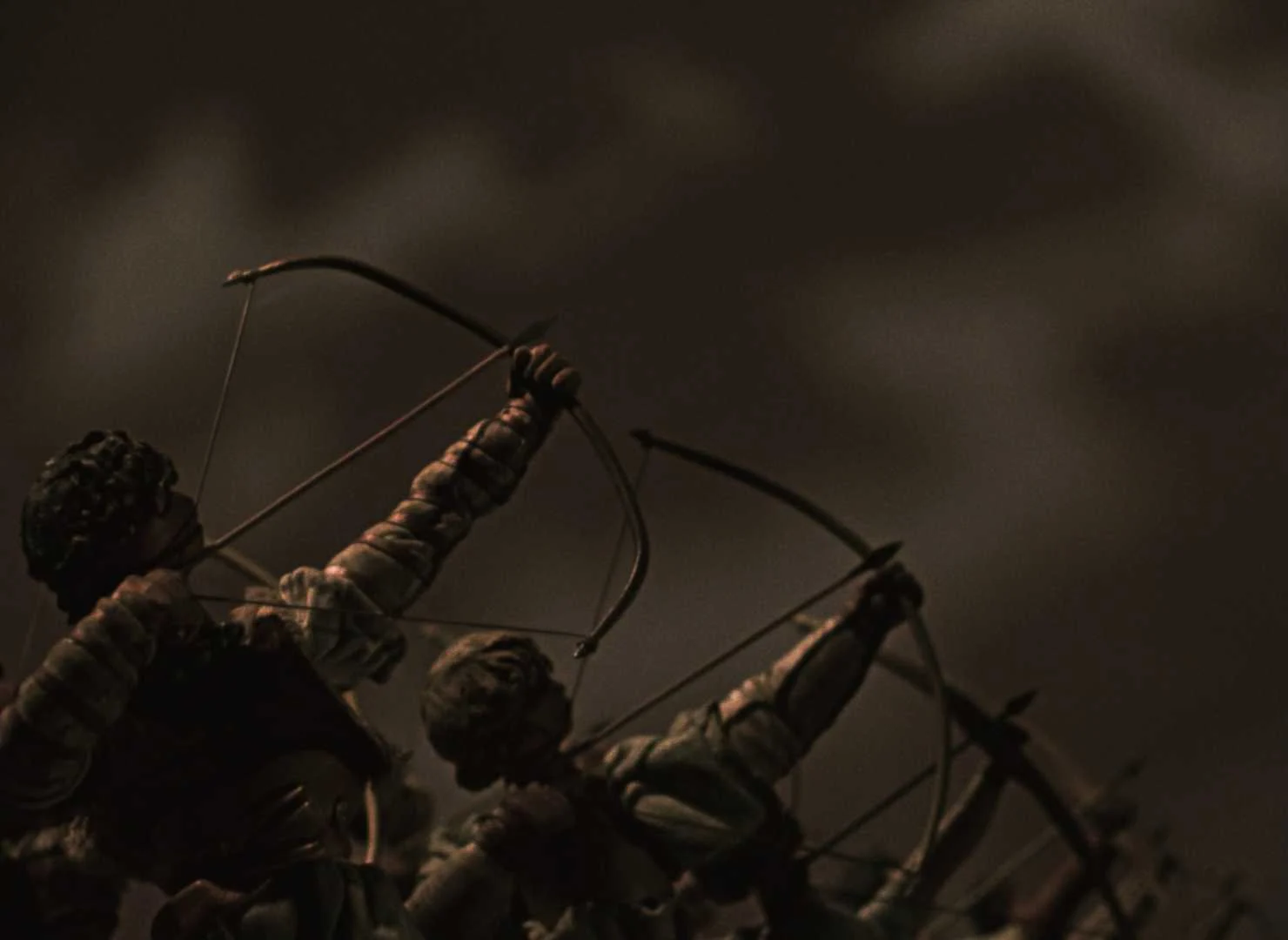
The film won a number of prizes at international festivals. After failing to win anything at Venice, a group of viewers actually protested and gave it their own ‘people’s’ award’ which, in turn, convinced the Venice jury to present Trnka with a ‘silver medal and honorary diploma’.
Old Czech Legends also takes somewhat of an episodic approach, though there is a clearer narrative here. It follows the founding of Bohemia and Czechia, from Forefather Czech and the subsequent leaders that followed.
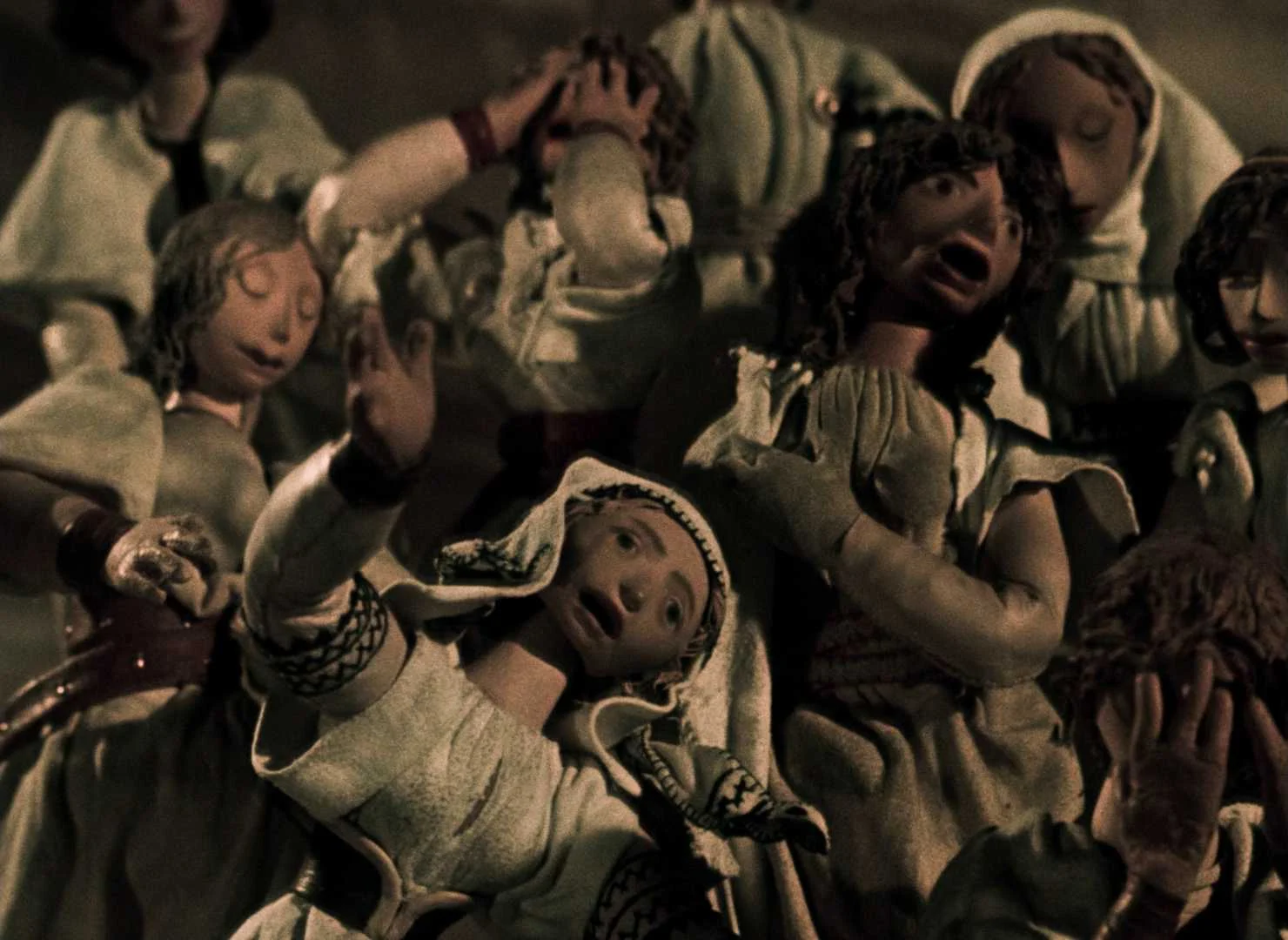
It’s not what you’d call an engrossing story, unless you have a real taste for Czech history and the aggrandising of national heroes. However, Trnka works his magic to create another stunningly well-crafted animated film, on an epic scale.
Once again, it’s dynamically presented, with some inventive camera moves and great use of a shallow depth of field. There’s even a fun drunken POV shot.
The animation is wonderful, with great attention paid to the flowing of material in the wind and the natural world around the characters. There’s an eerie slow-motion sequence, too, when a sacrifice is taking place to abate a storm.
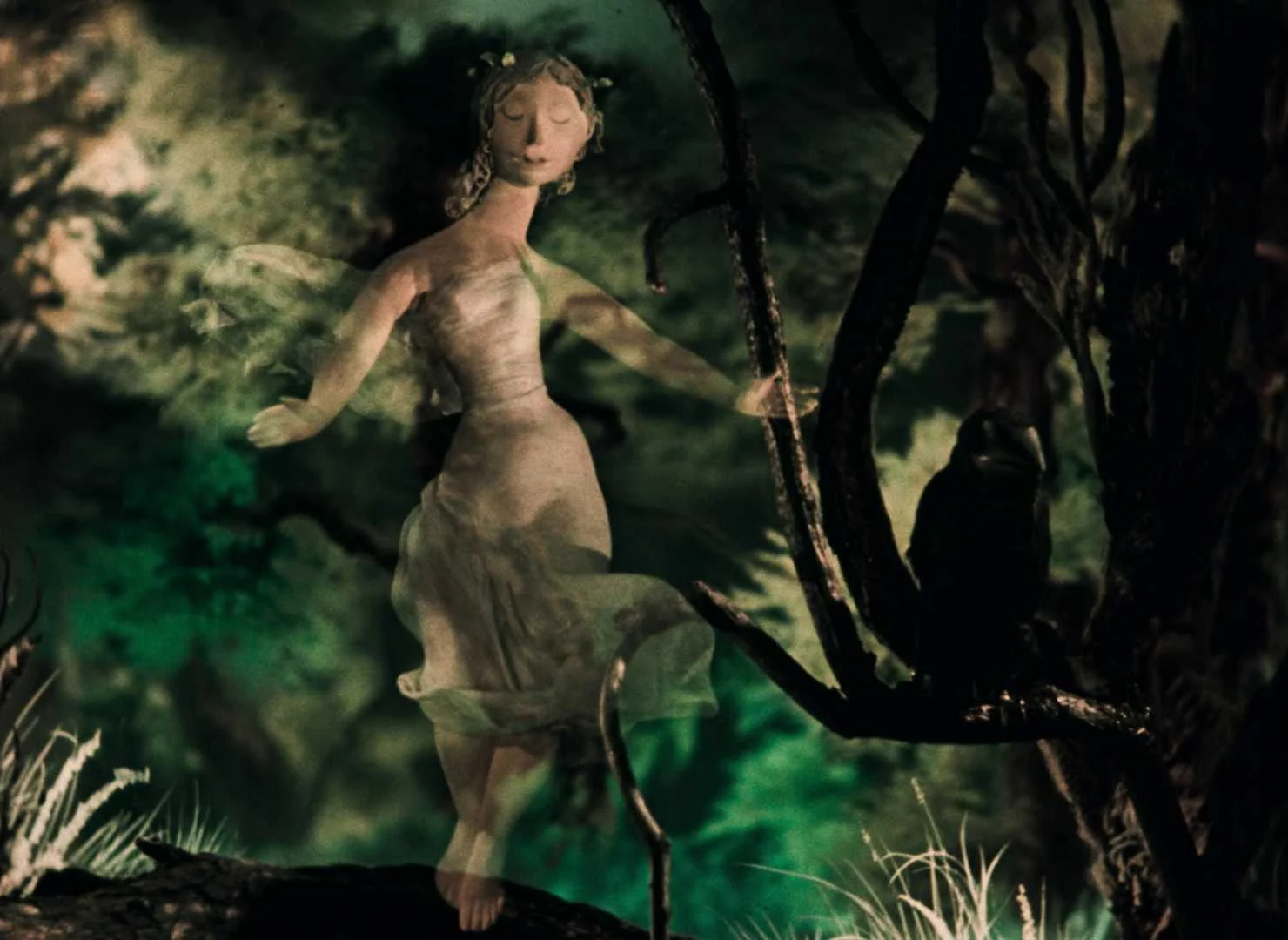
Again, Trojan’s score is a vital element, though there’s a little narration and dialogue here. Trojan’s music is often rousing and gives an operatic quality to the film. In the grand battle that provides the climax, the score takes an unusual, abstract approach, reflecting the horrors of war, rather than celebrating it.
So, Old Czech Legends is another masterpiece from Jiří Trnka. The story might not have done much for me but, cinematically speaking, it’s an astonishing piece of work.
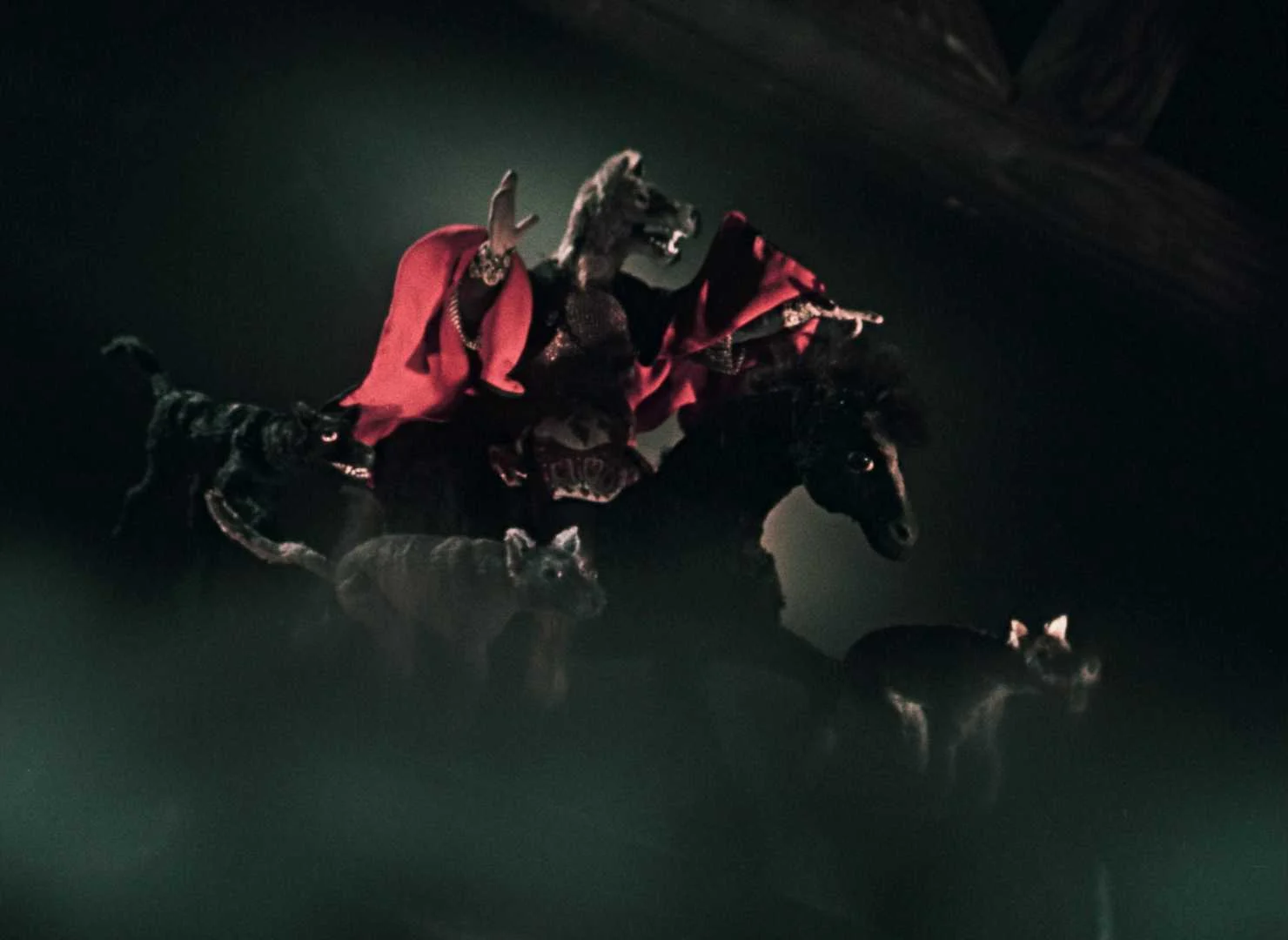
Jiří Trnka: Puppet Master is out on 10th August as a region-free Limited Edition 2-Disc Blu-ray Set, released by Second Run. There are statements that precede both films saying that the restorations retained any issues from shooting and the original lab processes to present the film as it would have originally been seen. That means there are a few issues here and there, generally with instability, but, generally, the films look great, with detailed, natural textures and wonderfully earthy colours. I’ve used screengrabs throughout this review to give you an idea of how the films look. Audio is impressive, with Trojan’s scores coming through beautifully.
The Limited Edition Blu-ray Set features:
• FIRST PRESSING LIMITED EDITION SLIPCASE
– strictly limited to 2000 copies only.
• Old Czech Legends (Staré pověsti české, 1953) and The Czech Year (Špalíček, 1947) presented from 4K restorations by the Czech National Film Archive.
• The Puppets of Jiri Trnka: A rare, award-winning 1955 Czech documentary on Trnka by Bruno Šefranka.
• Film historian Evan Chester’s video documentaries:
– A Beginner’s Guide to Jiří Trnka
– A Beginner’s Guide to Czechoslovak Animation
• The Hand (Ruka, 1965): Trnka’s renowned, politically defiant animated short film.
• Badly Painted Hen (Špatně namalovaná slepice, 1963): the acclaimed animated short film by co-screenwriter of Old Czech Legends and regular Trnka collaborator, Jiří Brdečka.
• Trailer for The Czech Year.
• 32-page Booklet with writing by experts on Czechoslovak cinema Peter Hames and Jonathan Owen.
• New and improved English subtitle translations.
• Region-free Blu-rays (A/B/C).
• World Premieres on Blu-ray.
‘The Puppets of Jiri Trnka’ is a wonderful addition to the set. This documentary on the filmmaker allows us to see Trnka and his team of animators at work. It’s a beautifully shot film, too, with a gorgeous score and a camera that glides through the studios.
Evan Chester’s documentaries are also valuable. His piece on Czechoslovak animation takes a look at a number of important filmmakers working in the field and their key works. It made me keen to see more of their films on Blu-ray. Fingers crossed!
Chester also takes a look at Trkna’s work more specifically, in another piece. He runs through (presumably) all of the director’s films, looking at their approaches.
You also get a pair of short animated films, Trkna’s own ‘The Hand’ and Jiří Brdečka’s ‘Badly Painted Hen’. These wonderful shorts have cropped up on previous Second Run Blu-ray releases, but they’re more than welcome here too.
The booklet contains a pair of essays by Peter Hames and Jonathan Owen. The former looks more generally at Trnka’s career as a whole, and the influence he had on other filmmakers and animators, whilst Owen looks more specifically at the two films in this set. Both essays proved valuable for my review, and I’ve ‘borrowed’ liberally from them.
Overall then, it’s an absolute must-buy for fans of animation or Czech cinema.
Disc/Package: