



In Part 4 of my journey through the Best Picture winners, I’m looking at the first batch of films I rated 3.5 stars. This is the rating I usually give to films that I consider good but which fall short of being great. All entries contain spoilers.
You can find the earlier parts of the list here:
63. THE ENGLISH PATIENT
Watched 7 July 2022
The 90s was a time when the Academy were in love with Epics, with the key words for many of the Best Picture winners being “expansive” and“expensive”. The English Patient was a big deal in 1996 when it won nine Oscars, including that top honour. But it very quickly became a divisive film and eventually something of a forgotten one. Sure, mention its name and most people will have heard of it but far fewer will have actually seen it, unlike Titanic or Braveheart. And there’s a sense that even that recognition may be dimming with elapsing years. So is The English Patient worth remembering? Is it due a reappraisal or can we safely just let it fade into obscurity?
I’d only ever seen The English Patient once over a decade ago and I was not impressed. My half-remembered impression was of a stiff, emotionally-dead romance that left me feeling completely alienated for over two and a half hours. This time round I enjoyed the film quite a bit more but I can still see how I drew my original conclusions. There is something about the central romance between Ralph Fiennes’ cartographer and his married lover Kristen Scott Thomas that never fully ignites as it should. There are moments when the sense of irrepressible passion is tangible but I never bought their growing love for each other, nor rooted for them to be together. The English Patient is reaching for more than just vicarious romantic fulfilment though, and the fact that I felt more empathy for Colin Firth’s betrayed husband was less a problem than an endorsement of the wide ranging experience that is present if you engage in the right way.

My initial mistake was putting too much importance on that central romance when in fact The English Patient is a story focused on many different characters. The scenes of a slowly growing group of disparate people seeing out the final days of World War II in a deserted Italian monastery seem, at first, like they will become no more than a framing device for the tale being told by Fiennes’ badly burned, dying protagonist. But the stories Fiennes character tells are only part of the narrative and equal weight is ultimately given to the occurrences at the monastery and the stories of what brought the other inhabitants there. The diverse characters include Juliette Binoche’s kindly, apparently cursed nurse, Naveen Andrews’ Sikh military engineer and his British sergeant Kevin Whatley, and Willem Dafoe’s mutilated Canadian thief, a man with a mission of his own. Their interactions are just as compelling as the flashbacks that form the bulk of the narrative, although they also slightly lack the emotional punch needed to make them believable.
Although the screenplay by Anthony Minghella, who also directs, was nominated for an Oscar, it is here from whence the main shortcomings stem. The characters are drawn with broad strokes, which makes them initially vivid and easily differentiated, but ultimately shallow and unrelatable. The dialogue often seems to be reaching for a poetic resonance but trips over its own ambition, letting go of the crucial sense of how people actually communicate. Some of the romantic dialogues between Fiennes and Scott Thomas are positively nauseating, in particular one in which Fiennes repeatedly tells her he can’t concentrate on his work because he can still taste her. A secondary romance between Binoche and Andrews is even more lacking and I never quite put my finger on what this narrative was trying to show me. It felt like an afterthought to fill out the excessive runtime. In both cases, the performances of the male actors were also a problem for me. Though Oscar-nominated, this isn’t one of Fiennes’ better performances. His strange coldness is sometimes appropriate but he struggles to shake it off in scenes when he’s supposed to be showing a little more emotion, resulting in a stiff and alienating protagonist. Andrews, meanwhile, struggles to bring anything to a very underwritten role. I’m not even sure what the point of this character is. I’m pretty sure he’s meant to be at least partially enigmatic but this is lost in how completely unknowable he is and there seems to be a missed opportunity in creating an interesting counterpoint to Fiennes. Instead we get another boringly stoic cipher.

It is left to the female actors to carry most of the emotional weight and fortunately they are more than up to the challenge. Binoche, who won the Oscar she should have got for Three Colours: Blue, is The English Patient’s one real source of warmth and human emotion. Though her character is still somewhat wishy-washy in the writing department, Binoche’s innate lovability not only cuts through this but seems to enliven the performances of her co-stars in their shared scenes (Andrews, unfortunately, is the exception and the potential for a warm, if complex, romantic subplot is one of The English Patient’s biggest missed opportunities). But it is Scott Thomas who is the standout for me. As the cool, confident Katherine, she is appealing and entertaining but, most importantly, real, an oasis of believability amongst so many characters whose interactions and delivery appear written.
It probably sounds like I enjoyed The English Patient a lot less than I actually did. It largely fails on the character front, which is often inescapably detrimental for me, but in its aspirations to grandiosity, The English Patient emerges as a film of great scope and novelistic realisation. It is hard not to get swept up in those vast desert-scapes, which Minghella shoots with the epic verve of David Lean, or feel inspired by Gabriel Yared’s Oscar-winning score which frequently provides the romance that is lacking elsewhere. These rousing elements of the film aren’t enough to make it a classic but you can see how Academy voters in the Epic-hungry 90s allowed themselves to be so easily manipulated into thinking otherwise. There’s an alluring classicism to this approach that helped me settle into the film to the extent that even the lengthy runtime didn’t bother me because it was nice company to be in.
The English Patient hasn’t aged brilliantly but sometimes there is an upside to that. When people bang on about things being timeless, I often wonder why a disconnection from a time period is something people crave in their films. I like to be transported back to a film’s respective era and The English Patient made me feel its 90s origin as much as its 40s setting. For anyone who fancies an evening with a typical example of 90s epic filmmaking, The English Patient should be an easy go-to. And while I don’t expect it to ultimately end up very high on my list, it was a pleasant surprise to discover this wasn’t the stuff of the very bottom end either, as I had suspected it might be.
62. THE LIFE OF EMILE ZOLA
Watched 14 October 2022
I first watched The Life of Emile Zola many years ago and I remembered enjoying it, but at the start of this rewatch alarm bells sounded immediately. Though it was highly regarded on its release in 1937, the film now feels instantly dated, with its cast stuck in a stagey acting style characteristic of early sound cinema, which seems to be trailing far behind many of its contemporaries from the same year. Paul Muni’s make-up, aiming to transform him into Emile Zola at various stages of his life, looks thoroughly unconvincing and his decent, if showy, lead performance gets a little lost amidst the obvious artifice of his fancy-dress-like appearance. Fortunately, though it initially looks like it will be an uphill struggle, The Life of Emile Zola quickly gets better as it begins to chart Zola’s numerous clashes with authority. Once we reach the plot point of the Dreyfuss Affair, which the film makes its central concern, The Life of Emile Zola becomes quite gripping, with its portrayal of corruption and prejudice guaranteed to provoke the requisite levels of anger to heighten the viewer’s interest.

But wait, let’s check that last sentence: “its portrayal of corruption and prejudice” is perhaps not the right phrase to use since, while it definitely depicts the former, the latter is erased from the story to a distressing level, given that anti-semitism was absolutely central to the erroneous conviction of Jewish army Captain Alfred Dreyfus on charges of treason and the military’s refusal to rescind those charges in the face of damning evidence to the contrary. For whatever reason, The Life of Emile Zola completely erases any mention of the word “Jewish” and racism isn’t hinted at as the underlying reason for the abominable treatment of Dreyfuss. This makes The Life of Emile Zola a difficult film to rate. It’s far from the first or last film on the list of Best Picture winners in which considerations beyond what appears onscreen have a bearing on critical assessment. Historical inaccuracies are sometimes more forgivable in one case than another but The Life of Emile Zola’s particular choices seem not only to diminish real life atrocities but also to shrink from the kind of positive activism the film purports to celebrate. While its numerous big speeches and tense stand-offs succeed on a purely dramatic level, the knowledge of these fudged details make it feel like an inappropriately cowardly work.
Despite its shortcomings regarding the disservice it does to history, The Life of Emile Zola has good intentions and the best one can hope for is that it encourages viewers to read up on the real Dreyfuss Affair. In the meantime, the film’s broadly anti-authoritarian attitudes make it an often riveting and heartening watch, even if the applause it received from the Academy feels a little self-satisfied given the influence of Hollywood’s early policy of appeasement of the Nazis and the effect it had on dulling the film’s impact.

I’ve placed The Life of Emile Zola a couple of places below Gentleman’s Agreement, an interesting double bill given that that film was an indictment of anti-semitism that suffered from several ideological issues. The fact that it openly acknowledged prejudice and didn’t shy away from specifics makes Gentleman’s Agreement the better film but I still enjoyed The Life of Emile Zola to a similar extent. Imperfect examinations of prejudice can sometimes do more harm than good but in the case of these two compromised examples, they feel like steps in the right direction in an era when subversion was an even more tricky and dangerous game to play, and ultimately their complex histories add a certain frisson of their own to the viewing experience.
61. THE DEER HUNTER
Watched 22 June 2023
Although it received overwhelming acclaim upon release, Michael Cimono’s The Deer Hunter is a film that has struggled to maintain its classic status in the face of changing opinions. To be fair, there were several high profile critics who called The Deer Hunter out on charges of racism, historical inaccuracy, melodramatic simplicity, vagueness and overlength from day one, while even those who loved the film usually included caveats in their reviews that acknowledged at least one of these criticisms. Over the years, I’ve been quite dismissive of The Deer Hunter, remembering it as a relentlessly bleak slog with few rewards to justify putting yourself through the viewing experience, so I was pleasantly surprised to discover on this rewatch that it is a better film than I thought. I wouldn’t go as far as to call it a masterpiece but it is a film with elements of greatness that help balance its many downsides.
In order to get some level of enjoyment from The Deer Hunter, one of the most important things for me was getting a handle on exactly what the film was. For decades, fans have been portraying it as this deep, poetic, realist classic but, at its heart, The Deer Hunter is a pretty straightforward Melodrama. Those who cling to the film’s fractured machismo may be loathe to admit such a close association with a genre that was once patronisingly referred to as “Women’s Pictures”, but amidst the blunt symbolism, moody love triangle, overwrought action sequences, unlikely narrative coincidences and suppressed, aching passion between the male characters, the impression emerges that the deer Cimono was really hunting for was that one that turns up in the infamously sentimental final shot of Douglas Sirk’s All That Heaven Allows. I adore a good Melodrama and think All That Heaven Allows is a significantly superior film to The Deer Hunter, but once I made that connection it made the latter film much easier to enjoy, without having to account for all the stony-faced chins so often stroked in the direction of Cimino’s frankly quite lousy screenplay.

The biggest hurdle to leap when it comes to The Deer Hunter is its overt racism. The portrayal of the Vietnamese as inhuman, remorseless torturers is in keeping with the vivid simplicity of Melodrama but when that is applied to an entire country’s people, especially in relation to the backdrop of a real life war, suddenly the broad strokes aren’t so easy to enjoy anymore. In particular, critics of The Deer Hunter have cited the suggestion that the Viet Cong forced prisoners into games of Russian Roulette as a brutal lie with zero corroborating evidence. For me, the scene in which this first occurs could just about get a pass, given that it features fictional characters who’s actions could be attributed to their individual sadism. For this excuse to hold water however, the instances of Russian Roulette would have to have ended there, preferably to be followed by some examples of less remorseless Vietnamese characters or some level of balance in the depiction of America’s own atrocities. Instead, we are shown that Russian Roulette has practically become a Vietnamese epidemic, sweeping the back streets of Saigon where it is supported by the locals who drink in the carnage with crazed enthusiasm. The film’s peculiarly unchecked time frame seems to suggest that this trend continues for about five years at least. While the way Russian Roulette becomes a chilling motif could have been effective, the fact that it has no historical basis renders it a mere flourish, and a deeply problematic one at that. Cimino responded to these criticisms by claiming he had newspaper evidence that Russian Roulette had been used by the Viet Cong, although his refusal to produce this evidence suggests it was about as real as the military history he fabricated in order to claim The Deer Hunter was autobiographical.
The reasons behind The Deer Hunter’s racism have been debated furiously, with some accusing Cimino of having a right-wing agenda comparable with that of Nazi propagandists. To me, the reasons seem slightly less sinister. The Deer Hunter was developed from a spec script by Louis A. Garfinkle and Quinn K. Redeker, called The Man Who Came to Play. This script was about people going to Las Vegas to play Russian Roulette. So rather than Cimino coming up with a terrible lie designed to smear a whole race of people, I suspect he simply mapped portions of that original concept onto a film that had now become about Vietnam. Though his own prejudices may have informed the way this process took place, it seems more likely to me that the same sloppy thoughtlessness that hampers other parts of The Deer Hunter’s story was at play here too. Cimino just took the shortest route and ignored the obvious warning signs.

While there are major problems with story and screenplay, there are areas in which The Deer Hunter makes up for these shortcomings. Make no mistake, the film is beautiful, with Vilmos Zsigmond’s ravishing cinematography making it a pleasure to look at, even when the images are less than agreeable. Cimino’s direction is extremely strong in places too, whenever he gets out of his own way. When he’s focusing closely on an idea he thinks is profound, the film falls down, never more so than in a pivotal scene in which a deer is supposedly shot dead but is very obviously just collapsing from the effects of a tranquilliser. But elsewhere, Cimino delivers a very strong action sequence involving a helicopter and some of the Russian Roulette scenes are as tense as they are ideologically uneasy. His direction is at its best though when he is focusing on the smaller interactions of the central group of friends. Critics often complain of the hour long first act, most of which takes place at a large wedding, and how it could easily have been cut down, but this is my favourite part of the film. Cimino staged an exhausting five day dance party with real booze, and then found many of the moments that make up this sequence by just shooting the results. This creates a fantastic air of neorealism and allows the film to break free from its constrictive melodrama for glimpses of real camaraderie. Though it seems while you are watching it that the characters are not being that forcefully established, by the time the Vietnam sequences begin you could cite several traits relating to each character and by hanging out with them in such an informal, narratively unstructured way, you’ve been implicated in the camaraderie to the extent where you start to care. Reportedly, Cimino promised to get through the setup in twenty minutes but never intended to do anything of the sort. This typically arrogant deception paid off, creating the strongest portion of the film and enhancing the subsequent ones by virtue of its greater humanism.
Although I was expecting the three hours of The Deer Hunter to be gruelling, I found that they actually went by quite quickly and that the length of the film suited its three-act structure, one of the screenplay’s few smart choices. Although the focus eventually shifts strongly towards Robert De Niro’s stoic Mike, the large ensemble allows for a rotation of characters that provide an appealing sense of variety. Crucial in this respect are the terrific cast, which includes De Niro, Meryl Streep, Christopher Walken and, in his final film, John Cazale, providing a vivid characterisation that caps his incredible five movie filmography (two Godfather films, The Conversation and Dog Day Afternoon are Cazale’s other films, 5 star classics all). De Niro, Streep and Walken are also great, often finding believable characteristics in underwritten characters (Streep, in particular, is ill-served by a male-centric screenplay). Special mention should be made of John Savage, who’s role as the third friend who goes to Vietnam alongside De Niro and Walken is frequently overlooked in favour of Cazale’s supporting role, but is movingly played nonetheless. Also memorable are George Dzundza as the affable bar owner John and Chuck Aspegren as the burly Axel. Aspegren was actually the foreman at a steelworks that Cimino and De Niro visited early in pre-production and they were so impressed with him that he became the second person cast in the film. He adds to that neorealist vibe that so impresses in the early portion of the film.
If The Deer Hunter is at its best when it isn’t leaning into its heavy-handed script, it also ultimately comes a cropper by either a refusal or a failure to define its own purpose. It is so wishy-washy in this respect that its final scene, in which the surviving characters sing a chorus of God Bless America in memory of their fallen friend, can and has been interpreted as both angry satire and sincere patriotism. Despite efforts to paint this ambiguity in a positive light, it actually feels frustrating and cowardly. It’s also a problem that the scene is dreadful. Whether you interpret it as heavy-handed satire or maudlin flag-waving, it lands with a horrible thud. As someone who has always prized strong writing, The Deer Hunter ought to fall flat for me but the filmmaking in other areas is so strong as to make it an article of immense fascination. While I think it falls short of the masterpiece status bestowed upon it, I had a better time revisiting it than expected.
60. EVERYTHING EVERYWHERE ALL AT ONCE
Watched 7 June 2023
I’ve now seen Daniel Kwan and Daniel Scheinert’s Everything Everywhere All at Once three times but I think I’ve changed my rating of it about five times. Given the enormous amount of ideas crammed into its 140 minutes, I’d say it probably takes at least three viewings to fathom sufficiently to accurately rate it. After my first watch, impressed by its ambition and, if I’m honest, intimidated a little by the initial wave of adoration it received, I think I overrated it slightly for my level of enjoyment. Returning to it a second time with this in mind, and probably no less intimidated by the inevitable backlash, I then underrated it a bit. In the interim between that second watch and this one, I’ve been back to my Letterboxd page to manipulate my star rating up and down so often that the gesture almost became masturbatory. Having finally returned for that much needed third viewing, I’m satisfied with the 3.5 star rating on which I settled.

In the midst of that second wave of hyperbole (the negative one), I almost convinced myself that I didn’t like Everything Everywhere All at Once but it’s clear to me now that I do. There’s no way I’d return to a nearly two-and-a-half-hour film three times within one year of first seeing it if there wasn’t some level of appeal. Everything Everywhere All at Once is a very likeable film. Even when it isn’t quite working, I’m pulling for it to succeed in its admirable attempt to tackle so many big subjects simultaneously. Even when it won three acting Oscars for performances about which I couldn’t understand the big fuss, I was delighted to see these particular actors finally gaining Oscar recognition. There was a relentless positivity surrounding the film’s success that was infectious. Films released as early in the year as this one rarely sustain their momentum until Oscar season but Everything Everywhere All at Once managed it. The fact that I’m just now settling on a rating with which I’m happy is testament to the fascinating power of its big themes and bold choices. But the fact that that final rating is only 3.5 stars is testament to the fact that, for me at least, its ambition is greater than its execution.
Like many others, the moment Marvel started delving into multiverses was the moment I decided I’d had enough and finally broke free from the Stockholm Syndrome that had been keeping me in the MCU for far too long. Seeing the proliferation of multiverse-based narratives that were starting to strangle any sense of dramatic finality out of mainstream cinema, I publicly stated my intention to move to one of the universes where that wasn’t the case. But perhaps I was a little hasty. While the concept of multiverses makes me back away from a film quicker than that of time loops, I’ve enjoyed variations on both of those themes (Into the Spider-Verse and Edge of Tomorrow being examples) and Everything Everywhere All at Once offered something more than just the chance to milk some cheap tears from long term fans at the death of a character before bringing them back for their own full-length series. The multiverse plot here is used to explore a plethora of interesting themes including depression, generational divides, racial identity, nihilism and existentialism. One of the key metaphors of the film is the Everything bagel, a type of bagel with an excessive amount of toppings which the film takes to an absurdist extreme. Unfortunately, it also becomes an apt metaphor for the film itself: something with a solid base and lots of appealing layers that is ultimately too overloaded to comfortably get your mouth round.

Although they are tonally very different pieces, Everything Everywhere All at Once put me in mind of Spike Jonze and Charlie Kaufman’s Being John Malkovich, in that its unique style resulted in initially ecstatic reactions, followed by it falling apart a little for me under further scrutiny. I still quite like Being John Malkovich too but I never bought the whole Captain Mertin plot and, having read the wildly different original version of the screenplay it became clear that this was just one of several possible outcomes that Kaufman nailed onto the premise when his initial intentions weren’t quite coming together. There’s nothing wrong with finding your story as you go along but Everything Everywhere All at Once shares that sense of sometimes detrimental spontaneity, with the bloated creation it becomes suggesting a “Yes, and…” approach, when every so often a “No, because…” one might’ve helped.
I’ve always found films in which characters spend time running around explaining the plot to be taxingly ludicrous (which is why Inception almost caused me to put my foot through the TV screen). Everything Everywhere All at Once has this to an extent but its arch absurdism means it just about gets away with it. One of the film’s strengths is how clearly it explains its increasingly complex plot, sometimes through chunks of exposition but often through clever visuals or gags that serve a greater purpose that just getting laughs but manage to do that too. But the film’s dedication to its absurdist conceits is often its undoing as well. Sometimes it pays dividends, such as the first scene featuring Jobu Tupaki, which has the infectious energy of an old Warner Bros. cartoon, but the longer the film goes on, the more it has to pursue outlandish premises like the Racacoonie gag, which loses its audacious appeal long before its screentime ends. There are also some pretty crass moments mixed in, such as the usually wonderful Jenny Slate using her dog as a weapon, which lean heavily into frat boy humour. They do so with a knowing wink but it’s another unnecessary topping on that already overloaded bagel and I can hear my jaw emitting a despairing crack at the very thought of it.
While I don’t think the performances of Michelle Yeoh, Ke Huy Quan or Jamie Lee Curtis were Oscar-worthy, they are very much a part of what makes me feel warmly towards Everything Everywhere All at Once. It is good to see such fun turns recognised for their comedic impact, although I think they were elevated in prestige simply by being in such an acclaimed film. I love it when a comedy performance gets an Oscar nomination but I’ve always thought Jamie Lee Curtis should’ve been nominated for her hooker-with-a-heart-of-gold in Trading Places, a terrific performance that is too often overshadowed by one famous scene in particular, beloved of the sort of mentality that laughs at Jenny Slate’s canine projectiles. The one performance in Everything Everywhere All at Once that I do think Oscar-worthy is Stephanie Hsu’s remarkable turn as Joy Wang/Jobu Tupaki, which is one of the most unusual combinations of cartoonish comedy and haunting melancholia I’ve ever seen. Granted, she is gifted the plum role by the Daniels but I feel she brings so much of her own interpretation to the part and, were it not for Kerry Condon’s luminous performance in The Banshees of Inisherin having also been nominated, I’d have given the Oscar to Hsu just for the way she bends herself under that police tape. She is the major reason I’ve come back to the film so many times and probably will again in future.

While I was happy enough to see Everything Everywhere All at Once win a few of its Oscars, the strangest decision was to award it the Best Original Screenplay Oscar, especially over The Banshees of Inisherin, which seemed like a shoo-in for that particular category. For me, Everything Everywhere All at Once impresses most in technical capacities like its hugely impressive editing and lively fight choreography. But the screenplay fails to cohere, with its positive message eventually being spelt out with all the subtlety of a #BeKind post. Certainly it’s a laudable moral but it seemed lost on a portion of the fanbase, who’s love of the film manifested itself in an obsessive desire to hunt out every negative review of the film and obnoxiously accuse its writer of having missed the point. Meanwhile, those who disliked the film often responded to its immense popularity with overcritical 1 star reviews that frequently attacked the fans as much as the film. It is curious that such a well-meaning movie could inspire such reductive bile across the board, but then it is these human tendencies that inspired a good chunk of its themes and it’s baffling to see so many people defending the film while obliviously embodying the very behaviour it decries. Fortunately, as the initial wave of a phenomenon dies down, these keyboard warriors fall away and we’re left with just the film itself to assess. While it doesn’t entirely work for me, I think Everything Everywhere All at Once will endure as a memorable, bold creation, not to mention the first Sci-Fi film to win Best Picture.
59. GENTLEMAN’S AGREEMENT
Watched 11 August 2022
“… solves racism” is one of my least favourite phrases to read in a review these days. People use it to criticise films that they deem to have fallen short in their lofty attempts to address a serious ongoing problem, but most reviews that feature that phrase include little else. No list of errors the film made, evaluations of its potential negative impact or discussion of how it could’ve done better. These reviewers prefer to use an over-simplified, borrowed phrase to assert just how much better they are than this particular film and its fans. If you don’t get why, that’s your problem. The irony of the “… solves racism” phenomenon is that its use generally indicates a narrow-mind. It implicitly discourages the discussion of prejudice in film with a self-satisfied demand for the impossible. Racists probably love the work the “…solves racism” crowd are doing to obliterate critical deconstructions of prejudice from our cinema screens because, though they generally age quite badly and often fumble the message to some extent, these films that attempt to understand and criticise bigotry are crucial in moving us forward. At the very least, they show a united front in our entertainers to try and address the worst of humanity. That has value even when the message ultimately amounts to little more than, to use another reductive phrase spouted by inadvertent reactionaries, “racism bad.”
Initially I was supposed to be watching Paul Haggis’s Crash for this review but, unable to find a cheap enough copy, I ran the random generator again and it came up with Gentleman’s Agreement. As a replacement for Crash this could scarcely have been a better choice, since I could’ve written the same introductory paragraph for both films. It’s been too long since I saw Crash to comment on its quality (although the fact I deemed a £3.49 rental too expensive probably gives some clue as to how I felt about the film the first time round) but there’s certainly plenty in Gentleman’s Agreement to stimulate a discussion of the narrow line between important social commentary and self righteous finger-wagging. I should be clear at this point that my distaste for the simplistic wielding of fashionable phrases in lieu of a review does not preclude considered, well-argued takedowns of the same films. Though I feel that it’s important for films like Crash and Gentleman’s Agreement to keep being made, their good intentions do not put them beyond the reach of criticism and to do so in a considered manner helps us get better in future, as opposed to the gleeful mockery that discourages any such attempt.

Gentleman’s Agreement’s approach to the theme of anti-Semitism may seem a bit tame by today’s standards. It’s easy to make the mistake of thinking it was a safe, liberal picture guaranteed to be awards garlanded. But, in fact, Gentleman’s Agreement was very controversial in its time, with several Jewish film executives imploring producer Darryl F. Zanuck to not make the film lest it stir up trouble. Concerns were raised that it would fall foul of noted anti-semitic Hays Code enforcer Joseph Breen and that the National League of Decency would object to a prominent role for a divorced character. Gregory Peck’s agent advised the actor against taking the lead role, concerned it would end his career, and of course the reliably pro-prejudice House Un-American Activities Committee took exception to the film’s progressive themes, leading to several cast and crew members being called to testify. Director Elia Kazan’s testimony would tarnish his name in the annals of history and it retrospectively hangs over Gentleman’s Agreement in a similar way that sexual misconduct allegations against Paul Haggis have cast large portions of Crash in an uncomfortable new light. Gentleman’s Agreement, then, is not quite the straightforward, safe, moralistic afternoon matinee as which it is has since been recast.
Another phrase I’ve grown to dislike, though have undoubtedly used in the past, is “This film hasn’t aged well.” The problem I have with it is that I think it lets us off the hook too easily. After all, degradation of film stock aside, films don’t age. They are trapped in amber, forever a representation of their time and place. It’s truer to say, rather than a film having aged badly, that it reflects how we used to be horribly complicit regarding the perpetuation of certain prejudices. If you want to put it in a more positive light, you could say that these films are a reminder of how we’ve progressed but, either way, the film itself hasn’t aged and it’s crucial that we accept our former complacency when we critique how old films play in our current climate. When you make the appropriate mental adjustments, Gentleman’s Agreement comes off looking pretty good in many respects. By modern standards, it drops the ball on several counts but it was assuredly one of the films that helped pave the way for those same heightened expectations by which it falls. Gentleman’s Agreement tells the story of Philip Schuyler Green, a journalist who is working on an article about anti-Semitism but can’t seem to find a satisfactory angle. While thrashing out the problem with his mother and his editor’s niece Kathy, Phil comes up with a notion that excites him. He will spend several months pretending that he is Jewish, and report back on anti-Semitism from the point of view of someone who has experienced it first hand. Though the extent of the prejudice he encounters surprises Phil, nothing is quite so shocking to him as the reaction of Kathy, and his growing love for her is challenged by the emergence of her own prejudicial complacency. Though there are immediately visible problems with Gentleman’s Agreement’s premise, I was quite impressed with how it unfolded. Based on Laura Z. Hobson’s novel of the same name, Moss Hart’s screenplay does a great job of examining the different forms prejudice takes, through a series of scenes displaying Phil’s numerous run-ins with various offenders. If the neatness of these examples are a tad too convenient, the essay-like form Gentleman’s Agreement begins to take has a pleasing resonance with the theme of Phil’s work-in-progress article and the different reactions people have to being challenged on their prejudices builds up into an effective, demonstrative picture of how complex something as idiotic as racism can be. Characters who consider themselves allies of the oppressed, or even some who are members of the oppressed group themselves, are shown to play a part in sustaining and perpetuating the bigotry through their failure to challenge others, the preparations they make to accommodate bigots in order to avoid a scene, and the belief that to confront prejudice will only make it worse.
Sometimes Gentleman’s Agreement can be the most interesting when it is also at its most problematic. Take, for instance, the moment Phil chastises his Jewish secretary for her own self-targeted anti-Semitism. The mindset of the secretary, who has seemingly divided the world into good and bad Jews and who defends her position by citing examples of when she playfully uses racial slurs against herself, is one of the film’s most fascinating explorations and, in its attempt to cover as many angles as possible, Gentleman’s Agreement would be remiss in overlooking this ideological friendly fire. But the way in which it positions Phil as the voice of reason, lecturing the foolish Jewish woman on the error of her ways, feels uncomfortably superior in a film about anti-Semitism. Later, when Kathy has validated the racism of one of her friends, Phil tells her “You’ve only assured him he’s the most wonderful of all creatures: a white Christian American.” There are moments when Gentleman’s Agreement inadvertently seems to be doing the same for the white Christian Americans in its audience.

There is, of course, an inescapable problem with the central premise of Gentleman’s Agreement and the fact that it is never addressed hurts the film greatly. Phil’s assumption that he can “become” Jewish just by pretending is akin to the naive rich student in Pulp’s song Common People assuming she can accurately experience poverty despite being able to end the charade at any time. There’s a hopeful moment when Phil’s Jewish buddy Dave Goldman, played by John Garfield, shows up in the film’s latter half. This is the ideal opportunity to address the major flaw in Phil’s plan but Dave instead suggests that the hurt Phil feels when he encounters anti-Semitism is due to his attempts to condense a lifetime into six months, giving him no chance to build up insulation against the hate. If anything, this suggests that Phil’s experiences with racism are somehow more intense, despite them being aimed at something he’s pretending to be rather than something he is. Earlier in the film, there are moments when Phil’s own sexist leanings are called into question so there is a precedent for challenging the naïvety of his approach, but from the moment he first tries on his Jewish persona, Phil is suddenly portrayed as impossibly pure and wise. Dave, meanwhile, is reduced to being a pawn in the central romance, as Kathy finally doing right by him is what triggers her reconciliation with Phil. Dave should’ve been the film’s saviour but instead he becomes a prop in ensuring the union of the two main white Christian Americans. Y’know, the most wonderful of all creatures!
But it’s easy to be snarky about Gentleman’s Agreement from a modern perspective. In critiquing its positive achievements, it’s important to remember just how dangerous this film was perceived to be. The fact that so many people opposed its creation and release illustrates the level of prejudice it was up against and, that being the case, intricacies of character start to seem not only less important but inadvisable if they risk compromising the message for those who would be won over by a simpler approach. Gentleman’s Agreement feels like a doorway to open-mindedness, a foundation on which to build rather than a film concerned with bogging down in the grey areas with which true progressives will eventually have to grapple. It’s no insult to say that Gentleman’s Agreement might be a good film to show to children, since its broad strokes depiction of prejudice is easily followed and works on the emotions without coming across as overly manipulative. But to suggest that Gentleman’s Agreement is entirely without nuance is unfair. In its depiction of Kathy, the female romantic lead no less, it gives us a woman who is riddled with prejudice without even realising it. She has all the right surface inclinations but dig a little deeper and disturbing truths are unearthed. Her pattern of mistakes and repentances show just how deeply rooted dormant objectionable isms can be and how difficult it is to break free of them. Only the constraints of a two hour runtime necessitate an oversimplified wrap up of her story but within the confines of a 40s Hollywood issues picture, her story is dealt with impeccably. Some critics object to the fact that Phil ends up with Kathy and not the more progressive, charismatic Anne (an Oscar-winning Celeste Holm) but it’s absolutely crucial that this be the case. Gentleman’s Agreement is not a film made for those without prejudice but those with similarly deep-rooted ones who, like Kathy, are not beyond saving. Giving this audience a relatable surrogate onscreen helps with this self-realisation and giving her the happy ending is an affirmation that change is possible.
Gentleman’s Agreement features a perfectly adequate cast, four of whom were nominated for their performances, but it really feels like a film that lives and dies by how convincing you find its rhetoric. The dialogue-heavy screenplay would be a challenge for any actor to make 100% convincing but Gregory Peck’s earnest, likeable persona carries it off well and Holm is excellent in her smaller supporting turn. I’m not going to pretend that Gentleman’s Agreement plays particularly well these days but for those who are able to place themselves in the headspace of the era from which it came, it still feels vital and important even at its stiffest and most blatantly didactic.
58. GREEN BOOK
Watched 26 March 2023
Settling down to watch Green Book, I did a strange and ridiculous thing. I hoped I wouldn’t like it. I have a three year old son and me-time is precious so I’m not in the habit of willing the next two hours of my life to be disappointing but knowing I was going to have to review Green Book after watching it, I also knew I’d have to address the huge backlash against it and the general feeling among many that it is counterproductive and dunderheaded when it comes to addressing racism. There’s also the fact that the white writers of Green Book completely neglected to consult the family members of the real Don Shirley, the inspiration for Mahershala Ali’s character, when putting the film together, resulting in what Shirley’s brother called “a symphony of lies.” This was countered by claims that the screenplay was based on input from Don Shirley himself who allegedly asked that no-one else be consulted but by the time Green Book received the Best Picture award, the bad feeling towards it had grown so strong that in certain quarters declaring that you liked it was seen as tantamount to being on the wrong side of history. All of which made me nervous because I quite liked Green Book the first time I saw it. And, despite my peculiar hopes for an evening of dissatisfaction, I still quite like it.
Fortunately for my liberal conscience and fear of online confrontation, I only quite like Green Book. I don’t love it and I don’t hate it. I’m not going to smugly explain that its critics were wrong but neither am I going to join the legions of equally smug reviewers wielding that ubiquitous but terribly sophomoric phrase “solves racism.” Perhaps I’m going to be one of those spineless fence-sitters who compromises their own views in an effort not to offend anyone. We’ll have to wait and see on that point. I’m not going to hide behind the phrase “well made”, because what does that even mean? But I am going to admit (and, as Green Book’s reputation as an emblematic punchline grows, “admit” does feel like the right word here) that I had a good time watching this and, though I cringed or rolled my eyes at times, I was moved and amused at others. I guess the major problem with Green Book for me is also one of the things that makes it so watchable: it’s old-fashioned. It taps into the same notes of hope in an unlikely relationship that characterised classic films such as The Defiant Ones and In the Heat of the Night, but the fact that it is nowhere near as successful as those films illustrates how films can’t be appreciated in a vacuum. Political and social context is vital for films like this and given that Green Book came out in what I am loath to refer to as the Trump era, its simple humanism felt immediately inadequate. The Best Picture win undoubtedly exacerbated this, as Green Book found itself becoming the poster child for the infamously whitewashed Academy’s preferred take on race relations, elbowing out more visceral and effective films by Black directors, like BlackKKlansman, If Beale Street Could Talk and even Black Panther which, for all its corporate ties (in many ways even because of them) felt vastly more important than Green Book.

Perhaps Green Book’s major failing then is in becoming as popular as it did. There is certainly still value in these tales of personal bridge-building which examine racism on a smaller scale without acknowledging the greater systemic issues. While it does have aspirations of inspiring increased harmony between races, I don’t think Green Book purports to be an insight into the complexity of the mechanisms that still allow racism to thrive. It aims instead to be a small, personal period piece, the likes of which casual racists can watch and easily recognise that the assholes are the characters they might have more in common with. Viggo Mortensen’s Tony Lip, meanwhile, is the racist jerk who’s mildly redemptive arc provides the hope, so that the racists can see a way out of that mindset rather than just see themselves depicted as beyond hope and leave the cinema angry and determined to take that out on their voting ballots. This sort of narrative works so long as its small significance isn’t elevated by… oh, I don’t know… a big awards win and acceptance speeches in which white men plead “can’t we all just get along?” This inadequate condensing of Green Book’s themes haunted awards season as its creators made a rod for their own backs and it exacerbated one of the film’s most troubling issues: in depicting Tony and Don as two flawed people who could learn a lot from each other, it came perilously close to the “there’s bad people on both sides” rhetoric that has become so recently and terribly topical. This mindset had been overtly addressed in the Spike Lee film that Green Book had just been officially declared better than, and its creators standing on platforms talking about how we all just need to listen to each other felt ironically tone deaf.
So what does Green Book get right? Even its harshest critics tended to recognise that Green Book is well cast and, in a film with such an intimate focus on two characters who spend a lot of time alone together, that goes a very long way. Viggo Mortensen makes the slightly underwritten Tony Lip into a believable character, the intuitive physicality of his performance filling in several steps in his journey from racist to tentatively less racist that feel conspicuously absent on the page. Mahershala Ali is even better as Don Shirley, bringing a poise, dignity and vulnerability to the role that never slips into the caricatured snobbery that the script occasionally feels like it’s pushing for. But the depth of this character feels like it comes entirely from Ali, since the moments when his underlying issues are made overt suggest that the writers had a far less nuanced vision in mind than the actor. The worst offender is a moment when Don admits that he feels like he doesn’t fit in with either white or black culture, leaving him a man cut adrift from identity. The implication seems to be that Don’s cultured side is somehow a betrayal of his race, and that he should sacrifice his love of classical music for a down to earth boogie with Little Richard and Sam Cooke. It’s a problematic mish-mash of race and class issues that seems to detrimentally equate one with the other in a sweeping and inextricable manner. Tony’s instigating comment that he is blacker than Don, while shown to be audacious, is not adequately challenged to convince me that the writers of the line disagree.

Many accused Green Book of being a white saviour narrative but this seems a total misnomer to me. While Tony gets Don out of a few scrapes, it’s usually through means of which Don vocally disapproves, like payoffs or violence, that are hardly depicted as heroic. If anything, it is Tony who Green Book depicts as being saved by Don. It might be oversimplified to suggest that racists could have their minds changed if they just spent some time with people of other races, but in Tony’s case it seems plausible. Certainly, in the film’s strangely cursory examination of Don’s sexuality, Tony’s surprisingly progressive attitude to this is attributed to his experiences working New York clubs, so there is a precedent for his turnaround on race too. It was Peter Farrelly’s subsequent speeches when Green Book started winning awards that attempted to apply this reductive notion across the board, and that ideological misstep became hard to retrospectively separate from the film itself. But the way Don’s gay encounter is instantly shrugged off does feel like testament to the film’s target audience being white. There’s surely a lot of interesting material to be mined from a gay black character in the early 60s but since Tony is already cool with homosexuality, that part is immediately swept aside and never mentioned again. That very much suggests that the focus is on Tony’s story over Don’s, as does the decision to put Ali forward for the Best Supporting Actor Oscar (which he won) when he is clearly a co-lead.
While Green Book is often clumsy and underthought in its approach, it also knows how to hit its emotional beats effectively. An infamously terrible and racially loaded scene in which Tony practically force-feeds Don fried chicken notwithstanding, most of the two men’s scenes together are involving and amusing. There’s an inescapable predictability to how every encounter plays out but, given the amount of problematic subtext there is to juggle, an otherwise uncomplicated experience can sometimes feel like a relief. The closing scene is just about as thoroughly mawkish as you could imagine (it’s even set at Christmas) but it is also undeniably uplifting in a manner that is easy to go along with for anyone craving the emotional boost. I’d also like to flag up the wonderful Linda Cardellini, who’s performance as Tony’s wife is rarely acknowledged but manages to have an emotional impact across a short amount of screentime.
So is Green Book a good film. I’d say yes, to a certain extent. Perhaps it could be more accurately categorised as a good failure: a film that entertains effectively without managing to pull together its admirable intentions into anything ideologically coherent. While this can result in something potentially dangerous, especially when it is given the false vindication of major awards wins, Green Book also has the potential to change the minds of bigots on a smaller scale, which can then open doors for a greater understanding of the larger systemic problem. The important thing is to ensure the point is emphatically made that there is more to conquering prejudice than these initial baby steps, an angle which the subsequent promotion of Green Book, and the subsequent reception of its most vocal fans, detrimentally failed to incorporate.
57. ARGO
Watched 24 August 2022
Ben Affleck’s Argo is a film I loved the first time I saw it, a reaction which has slightly diminished over subsequent viewings. As is often the case with films based on amazing real life events, the first watch is the best because you’re not aware of the story at all. But then you go and read into the real story, which is usually more interesting that the modified Hollywood take on it, and this affects your view of the adaptation. In the case of Argo, the real events have been manipulated in various ways to fit recognisable thriller tropes, turning an astonishing true life story into something more akin to the average American suspense movie. Fortunately, what has not been lost is the unique thrust of the tale, which involves the creation of a fake Sci-fi movie production as a cover for the rescue of six U.S. diplomats from Tehran during the 1979-1981 Iran hostage crisis. The sci-fi angle allows for the introduction of much humour to what could’ve otherwise been a pretty straightforward political thriller. It is the unusual nature of the cover story that makes Argo stand out.

If we put aside historical accuracy for a moment and just focus on the film we have, Argo hits most of the right buttons to entertain a wide-ranging audience. The film’s two hours are fairly neatly split into the conception and development of the rescue mission and the execution of the mission. The first hour leans more heavily on the laughs, with John Goodman and Alan Arkin’s Hollywood insiders proving an effective source of light relief, and it sufficiently establishes what a huge and unusual undertaking it was, while the second hour plunges us into the thick of the mission with a level of suspense that is fairly relentless. On first viewing, both halves of the film easily satisfy the requirements of a great evening’s entertainment. But on subsequent viewings it becomes apparent that this is partially because so much of Chris Terrio’s Oscar-winning screenplay relies on hackneyed cliches which, like the diplomats, are smuggled past right under our noses. There’s the sentimental fractured family dynamic of exfiltration specialist Tony Mendez, something which we’ve seen given this lightly melancholic treatment time and time again. When Mendez discusses his separation with composite Hollywood director Lester Siegel, Siegel reacts with the retrograde wisdom “Kids need the mother”, to which Mendez, and by extension Affleck, nods in quiet agreement. A lot of the humour also has the ring of the overfamiliar. A line like “So you want to come to Hollywood, act like a big shot without actually doing anything? You’ll fit right in!” is the sort of empty satirical swipe we’ve heard many times before, and it only works by virtue of John Goodman’s comic timing. Other painfully played-out gags include lines to the effect of “Know her? I was married to her!” and “Who said that?” “I think it was Marx.” “Groucho said that?” Argo just about gets away with this because it is not primarily a comedy and its flashes of humour provide a welcome balance. But in all honesty, this time round I did roll my eyes a couple of times. Even the initially funny “Argo fuck yourself” line is absolutely run into the ground. The last time it shows up is designed as a big climactic flourish to the running gag but it falls absolutely flat.
If Argo’s shortcomings would undoubtedly have become obvious across several viewings anyway, they are probably unfairly magnified by its Best Picture win. Even after my first viewing when my praise was much less tempered by nitpicking, Argo still struck me as an odd choice for Best Picture winner, perhaps even nominee. Though it is still a film that many people, myself included, enjoy, it has never really threatened to become a classic and when asked to name Best Picture winners is likely to be one of those most people forget. Like any film based on real life events, it quickly fell victim to scrutiny for historical inaccuracies and was criticised for minimising Canada’s part in the story in favour of America and the CIA. Certain characters were perceived as whitewashed, chiefly Tony Mendez himself, who’s Mexican ancestry made Affleck a questionable choice to play him, particularly given that he brings nothing special to the role. And while it acknowledges wrongdoing by America here and there, this is mainly swept under the rug in the form of introductory captions, while the unsubtle portrayal of Iranians sometimes cuts a little too close to a blanket Hollywood othering that makes them easily categorisable alongside the frenzied, hollering Libyans of Back to the Future.

If historical accuracy and racial sensitivity aren’t necessarily Argo’s strong suit, fortunately the storytelling and direction are. Though Terrio’s script largely plays it quite safe, this does make for a thrillingly uncomplicated ride and the nature of the story itself means it is unpredictable and tense. There’s no getting around the loss of suspense that comes with repeat viewings of Argo, although Affleck’s solid direction ensures it remains entertaining. There’s nothing that notable about his technique but there are enough reliable montages, quick cutaways from gags and punctuating needle drops to keep viewers happy. Still, Affleck became one of only six directors not to receive a nomination for their Best Picture winning film. Opinion on whether Argo was a deserving Best Picture winner probably depends on how much importance you place on historical accuracy in adaptations of real life events. I’m generally fine with some artistic license being taken provided the truth isn’t offensively fudged beyond recognition, and this is a line Argo just about walks, provided the viewer understands that “Based on a true story” means just that.
56. THE KING’S SPEECH
Watched 25 August 2022
The King’s Speech was a phenomenon when it first came out, spending weeks in the upper reaches of the Box Office Top Ten and receiving glowing reviews from critics and audiences alike. It seems strange to think about that now, given what a comparatively modest film it is, but sometimes a film catches the collective imagination in a way that increases its impact because we thrive on the impression that we’re all enjoying something together. Even when that initial buzz wore off, The King’s Speech still carried with it that nostalgic enhancement; “hey, remember when we were all watching The King’s Speech?” But does an initial outpouring of love inevitably lead to heightened scrutiny that leaves a film picked to death of its nits? In some cases, yes, and there were certainly plenty of people spouting that “It’s just two people talking in a room” bullshit that serves as an immediate warning that you’re not going to gain anything from this interaction. But as the years have passed there are plenty of legitimate reasons to doubt whether The King’s Speech deserved its big Oscar win.
Every so often, the Academy has an attack of Anglophilia and enjoys revelling in a certain image of Britain that invariably involves the more privileged inhabitants of this sceptered (septic) isle. As a staunch anti-monarchist, I’ve had a belly full of this nonsense in a year that’s included both a Jubilee celebration and an impossibly opulent royal funeral that has brought everyone together in a disgusting show of fetishised privilege in the face of a cost of living crisis. But it’s important to note that a film’s political leanings need not preclude those with different inclinations from enjoying it and there’s plenty of worth underneath the stuffy veneer of reverence that superficially coats The King’s Speech. At heart, it is not far removed from an underdog Sports movie. We have the unlikely competitor, in this case a monarch who struggles with a stammer, undergoing a rigorous training ritual (speech therapy) in order to meet an upcoming challenge head-on. In this case, instead of a big fight or a high-stakes race, the finale is a lengthy and historically important speech, but the structure of the film treats it no differently from Rocky’s climatic bouts or Daniel LaRusso’s high-kicking showdowns. Heck, there’s even a training montage in there.

The King’s Speech stakes its claim to prestige through a script that explores the historical drama of the abdication of Edward VIII and the political and personal fallout for the future King George VI. As usual, there are historical inaccuracies of varying degrees of forgivability (the descendants of former PM Stanley Baldwin were particularly unhappy with his vaguely buffoonish portrayal), a gallery of stalwart British actors in supporting roles, and, seemingly a must in Academy-approved British films, a sentimentalised Churchill caricature. While I was no fan of Gary Oldman’s Oscar-winning George-from-Rainbow rendition of the strangely-beloved white supremacist, Timothy Spall’s Churchill is perhaps the worst I’ve seen and his bare-bones impression of the upcoming Prime Minister is an unwanted distraction every time he pops up. I’m a big fan of Spall’s but this role fails to do justice to his considerable talents. Only the excruciatingly cloying depiction of the royal children trumps this faux-Churchill for cringe-inducing moments.
But The King’s Speech is able to sweep aside these problems when it stops indulging in upper class fetishism in favour of examining the people underneath the hard-to-stomach whipped cream swirls of its surface. As someone who opposes systemic elitism, it’s also important to remember not to oversimplify the experience of those caught up in it on the other side of the class divide. As the dramatic exit from public life of Prince Harry recently attested, the demands of royal life can be a tremendous burden on the individuals who don’t necessarily revel in them, even if they never quite reach the point of denouncing them. The King’s Speech does an excellent job of depicting this quandary, with Colin Firth’s reluctant incoming King trapped by a system in which he still believes. At his worst moments, his class prejudice and inherent nationalism comes out in the form of outbursts against his speech therapist, Lionel Logue. Logue is portrayed as a man who demands total equality in the sanctity of his office, which creates an interesting dynamic between him and his royal patient. There are little digs at the class system here and there, with Logue’s irreverent attitude providing some nice moments of dissent and, while these ultimately collapse into some predictable and fairly nauseating climactic supplications, their presence is welcome nonetheless. If David Seidler’s Oscar-winning screenplay struggles a little to overcome its reverent tone, it is also frequently excellent in individual scenes, a fact enhanced by the performances of the well-cast leads. Helena Bonham Carter is fun in a lighthearted turn as the young Queen Elizabeth, but it is Colin Firth and Geoffrey Rush as the King and his therapist who most impress. Rush is wonderfully impish but humane as Lionel, while Firth is quite exceptional as the man Lionel (improbably but, in terms of this narrative, effectively) calls Bertie. Firth is able to portray a contradictory mixture of entitled conservatism and trauma-induced self-doubt, astutely tapping into the pressures of upholding such a fundamentally prejudicial system which tradition forbids be openly criticised. He does all this while maintaining a completely believable stammer, which he is able to authentically vary depending on his current situation or state of mind. Siedler writes his central duo some powerful, funny and intelligently constructed scenes, from their tense first session through to a climactic confrontation in Westminster Abbey, and The King’s Speech comes fully to life when it is pared down to just these two men. The standout moment comes as a vulnerable Bertie pays a nighttime visit to Logue and, to the tune of Swanee River, opens up about the abuse he suffered at the hands of a former nanny. Whatever the film’s or the viewer’s attitudes to the monarchy, it all comes crashing down as Firth falters in his story and then sings the words “… and then she wouldn’t feed me.” It’s a moment that never fails to reduce me to tears and highlights the essential humanism that unites us all and the absurdism of the divisive class structures we impose upon it.
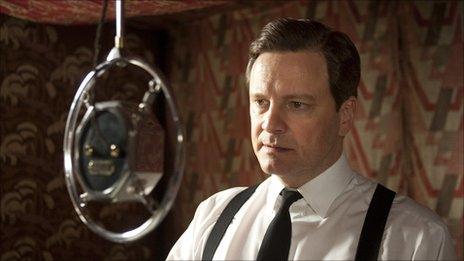
It’s easy to see why The King’s Speech briefly captured the imagination of such a wide audience and why the Academy deemed it worthy of the top honour, although in my book it doesn’t do quite enough to earn it. It may basically be an elitist, verbose retread of Rocky in which it is ultimately the working class who once again end up on the mat, but at its heart it’s a touching story of friendship across class barriers that would be so much easier to enjoy if those barriers were a historical memory rather than a continued contemporary atrocity.
55. THE SILENCE OF THE LAMBS
Watched 7 January 2023
As not only one of just three films to win all “the big five” Oscars (Picture, Actor, Actress, Screenplay, Director) but also the only Horror film (out of a staggeringly paltry six nominated) to win Best Picture, The Silence of the Lambs has an important place in Oscar history. But nerdy stats aside (I’ll play with them again later when you’ve all gone home), The Silence of the Lambs is also a film people just love. A good many people consider it a masterpiece and, at the time of writing, it is number 22 in IMDB’s top 250 (sorry, I kept one last nerdy stat in my back pocket). So clearly The Silence of the Lambs’ popularity goes beyond the awards-endorsed prestige that makes it acceptable to the sort of terrible person who uses phrases like “Elevated Horror.” This is a film that plays well with a wide-ranging audience, without ever pulling its punches when it comes to nasty and disturbing content. But is it all it’s cracked up to be? My inclination before this rewatch was to say no, as the one time I’d seen it previously I didn’t really enjoy it. This time round, however, I enjoyed it much more and can see what all the fuss is about to an extent. But as an all-time classic it still falls short for me. I see it more as an efficient Horror Thriller with moments of greatness.
The Silence of the Lambs gets off to a strong start with perhaps its most famous scene, in which FBI agent-in-training Clarice Starling first meets with imprisoned serial-killer cannibal and ex-psychiatrist Hannibal Lecter, in the hope he can offer insight into the case of killer-at-large “Buffalo Bill.” The set up is a strong one, with the difficulty of negotiating with one psychopath in order to catch another proving a strong basis for a thrilling story. The narrative cleverly hands all the power to Hannibal, who’s incarceration seems like a mere inconvenience to his powers of far-reaching psychological manipulation. Even trapped in an impenetrable glass case, the tension Lecter generates in his interactions with Clarice could scarcely be more intense if they were in the same room. His eventual escape feels like an inevitability. Though the writing of the scene is pretty good, most of its considerable effect is derived from the performances of its leads, Jodie Foster and Anthony Hopkins. Foster combines a suppressed vulnerability with a surface professionalism and an awkward sincerity that gives her away each time it slips even slightly. Hopkins, meanwhile, gives us one of the iconic performances of the 90s. If there are flashes of overacting here and there, they are in the service of creating a performance well-pitched between chilling and amusing. His every appearance in the film lifts it from being a grimy, downbeat Thriller towards something more enchantingly baroque. Much has been made of how Hopkins won Best Actor on the basis of 16 minutes of screen time but it would seem inappropriate to consider the performance that clearly drives the film as a supporting role. Though many cry “category fraud”, sometimes leading roles are based on more than how long an actor spends on screen, and Hopkins certainly feels like he’s in the film more than he is.

While the performances are great, there are problems with The Silence of the Lambs that prevent me from loving it. Though Ted Tally’s Oscar-winning screenplay does give us some relishable interactions, the psychological underpinnings are a bit flimsy and problematic. Though the controversial issues of Buffalo Bill’s persona have more recently been recast as transphobic, in 1991 they were seen by many as more broadly homophobic, leading to some high profile protests including at that year’s Oscars. As director Jonathan Demme would point out, the character of Buffalo Bill isn’t actually gay and the dialogue explicitly differentiates his behaviour from that of trans people. Rather, he has selected the most outré identity of which he can conceive to escape his own self-disgust. But the problem here is that when we see Ted Levine applying makeup, dancing to synthpop, displaying his nipple ring and talking about how he’d fuck himself, it’s clearly meant to trigger a feeling in audiences which exacerbates the othering of the LGBTQ+ community by prodding us not only to find the whole thing weird through aggressive use of stereotypes but dangerous through association with violence. Point to pieces of dialogue that say the reverse all you like, but they don’t change what’s being said more forcefully by the images that follow them. I’m willing to contextualise films according to their era and, the further we get from 1991, The Silence of the Lambs inevitably feels more outdated in this respect. But some elements must surely have seemed too ludicrous even then. The “I’d fuck me” monologue, the adventures of Precious the poodle? It’s perhaps surprising that these moments are less parodied than other scenes in a film that has been persistently parodied since its release. But that’s likely because they are so on-the-nose that they serve as their own parody, at the very least preserving The Silence of the Lambs as a camp classic for some LGBTQ+ audiences.

The problematic elements of The Silence of the Lambs have been thoroughly picked over elsewhere but they are not the only things that bring the film down a few notches in my book. Though there are plenty of exciting, well-realised moments throughout, Demme’s direction ultimately feels uneven. The film can feel a little flat in places and the early scenes involving Miggs, a feral prisoner who ejaculates in Clarice’s face, are some of the most sloppily directed I’ve seen in a supposed classic. As is often the case with films that attempt to explore the truly horrific, there are moments that teeter on the edge of, or plummet into the precipice of, ridiculousness. Can you really fool someone by literally wearing someone else’s face that you’ve just torn off minutes before? And that final line that’s supposedly brilliant: “I’m having an old friend for dinner.” Did Tim Vine do a polish on this screenplay?! There’s enough in The Silence of the Lambs to make it a solidly enjoyable film and the cultural impact it had only makes it a more fascinating piece to examine in retrospect. But I don’t love it or think it’s anything even close to a masterpiece.
54. HOW GREEN WAS MY VALLEY
Watched 25 March 2023
When asked about his taste in film, Orson Welles once said “I prefer the old masters, by which I mean John Ford, John Ford and John Ford.” So it’s somewhat ironic that How Green Was My Valley, John Ford’s Best Picture winning 1941 film, is now most regularly spoken about in the context of it having beaten Welles’ Citizen Kane to the award. Although it is still regularly cited as the greatest film ever made, Citizen Kane was also audacious, unusual and controversial, and such qualities often characterise Oscar nominees rather than Oscar winners. It was hardly unprecedented, neither would it be the last time, that a safer sentimental choice triumphed over the trailblazer on Oscar night. Still, How Green Was My Valley has at least retained a reputation as also being a classic, even if we must almost always pass through the Kane conversation to reach that acknowledgment. Unlike, say, Ordinary People, which seems to only be mentioned in relation to its perceived inferiority to Raging Bull, most reviewers do eventually get to How Green Was My Valley’s actual content and not always in the context of constant comparison to Kane. So in the interest of following that preferable path, allow me to now set aside Welles and his masterpiece and focus on the work of the man who was so clearly a huge influence on it.
Though How Green Was My Valley has never been a big favourite of mine, it is undoubtedly a masterpiece on a purely visual level. The studio’s original intention was to shoot the film in full Technicolor on location in Wales but, when this was scuppered by World War II, Ford had an 80 acre replica of a real Welsh mining town built in the Santa Monica Mountains. If anything, this breathtaking achievement makes for an even more ravishing experience. Shot in crisp, Oscar-winning black and white by cinematographer Arthur Miller, Ford’s Welsh valley is like a cross between an authentic location and a fairground, with the cogs of modern industry looming like a monochrome big wheel, before they dissolve into an equally unreal, clear-skied idyll of childhood. The opening sequences are all wistful remembrances of sweetshops and family gatherings, related in voiceover by the now adult Huw, who’s younger self is played with wide-eyed enthusiasm by a pre-pubescent Roddy McDowall. Ford’s compositions in these passages are exquisite. He arranges his actors and settings evocatively, creating seas of cloth-capped heads and placing the viewer right in the midst of revelries and tragedies alike, which increases the emotional impact considerably. For a while, even with its overwrought conservative nostalgia, How Green Was My Valley works beautifully, with Ford’s images proving the perfect complement for Philip Dunne’s adaptation of Richard Llewellyn’s longing prose.

The major problem with How Green Was My Valley is its inability to convincingly sustain the rousing atmosphere it so effectively establishes in its opening half hour. The narrative is necessarily episodic, focusing on the whole community as it endures a bitter miner’s strike and the negative influences of local gossips, sadistic schoolmasters and hypocritical church leaders, but the characters aren’t strong enough to support this structure. Huw is often marginalised, making his supposed recollections highly suspect, and the film feels like it lacks a centre that’s defined enough to latch onto. The authenticity is further damaged by an almost entirely non-Welsh cast, some of whom attempt Welsh accents and others who don’t bother. Romantic lead Walter Pigeon seems especially out of place as the most American man you’ve ever seen by the name of Mr. Gruffydd. Gruffydd is the new preacher, a representation of good religion who calls out the more puritanical leaders. Though there is a nice balance in showing these two sides of the religious community, How Green Was My Valley is Old Hollywood pious in a way that feels stifling even with the contrast. Its old-fashioned morality can be a little cockeyed too, such as in a scene that Ford plays for laughs in which two of Huw’s adult friends avenge his caning by a vicious teacher by beating the man senseless in front of his class. It’s the sort of eye-for-an-eye comeuppance that we easily allow ourselves to indulge in when watching Action films but as a comedic aside in a sentimental Drama it feels thoroughly disturbing.
While Donald Crisp and Sara Allgood stand out amongst the cast as the mother and father of Huw’s large family, generally the performances are subservient to the ensemble. While this does unfortunately mean that none of the characters get fully fleshed out, it does increase the sense of realism in many of the smaller moments. The budding but doomed romance between Walter Pigeon and Maureen O’Hara is often moving and the film’s refusal to foreground it is refreshing. The scenes of large gatherings, particularly joyous ones, have a terrific sense of realistic energy between the attendees. If these fleeting moments aren’t quite enough to make up for a gradually sagging narrative which starts to pile on tragic events too insistently in the closing passages, they do at least make How Green Was My Valley moving in its minutiae even when its heavier beats aren’t landing. Some of the more obviously manipulative bits still work if you’re willing to give yourself up emotionally and I did perform the near-tears-warm-smile a couple of times but by the final half hour it gets a bit much and the ending somehow feels both overdone and abrupt.

It’s understandable that How Green Was My Valley is so beloved by so many but for me it only sporadically threatens classic status, even as Ford’s exceptional direction begs for more consistent material. It boasts the sort of warm glow that often makes Oscar winners out of films that burn out quicker than expected but for many that flame has remained vibrant for decades. It just flickers a little too often and a little too awkwardly for my liking.