


 Director: Tomu Uchida
Screenplay: Naoyuki Suzuki
Based on a Novel by: Tsutomu Minakami
Starring: Rentarô Mikuni, Sachiko Hidari, Junzaburō Ban, Ken Takakura, Kôji Mitsui, Yoshi Katô, Tadashi Suganuma, Susumu Fujita
Country: Japan
Running Time: 183 min
Year: 1965
BBFC Certificate: 15
Based on the novel Kiga Kaikyo (1962) by Tsutomu Minakami, A Fugitive From the Past is considered the masterpiece of the prolific director Tomu Uchida, who worked from the silent era all the way up to until his death in 1970. Uchida is greatly respected in his home country of Japan and A Fugitive From the Past was voted 3rd best Japanese film of all time in a prestigious 1999 poll by Kinema Junpo, beating classics such as Tokyo Story and Rashomon. Strangely though, like most of Uchida’s films, it’s never seen a proper release in the West, other than a smattering of festival screenings.
At the end of my review of Uchida’s Bloody Spear at Mount Fujji, I commented “Here’s hoping Arrow delve deeper into Uchida’s filmography, particularly the acclaimed A Fugitive From the Past (hint, hint Arrow staff, if you’re reading this).”
Obviously, they were reading (er… maybe) as my call has now been answered, with Uchida’s supposed masterpiece now being given the Arrow Video treatment (after releasing The Mad Fox a couple of years ago). Of course, I couldn’t resist reviewing it.
A Fugitive From the Past opens in the midst of a typhoon in the Tsugaru Strait in 1947. With a passenger ferry caught up in the disaster and havoc reigning around the area, a trio of criminals, including the big, seemingly simple Takichi Inukai (Rentarô Mikuni), use the chaos as a smoke screen whilst they murder members of a wealthy family and steal a large sum of cash.
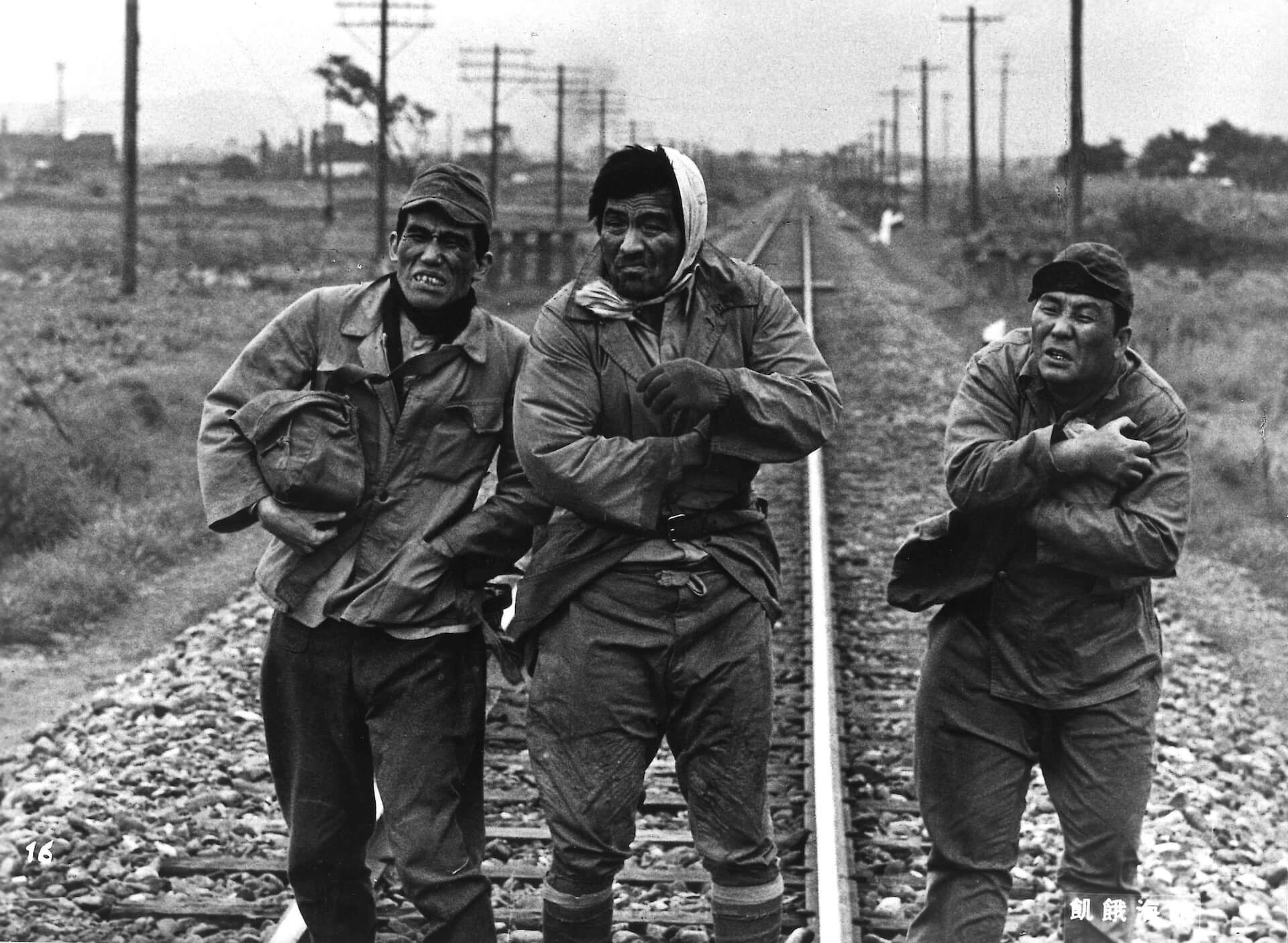
The three criminals foolishly take to the water to get out of town as quickly as possible and only Inukai survives. Whilst Detective Yumisaka (Junzaburō Ban), who catches onto their scheme, tries to track down the criminal, Inukai takes shelter with a friendly prostitute, Chizuro (later known as Yae and played by Sachiko Hidari). The two make love and Inukai leaves the woman a large sum of money.
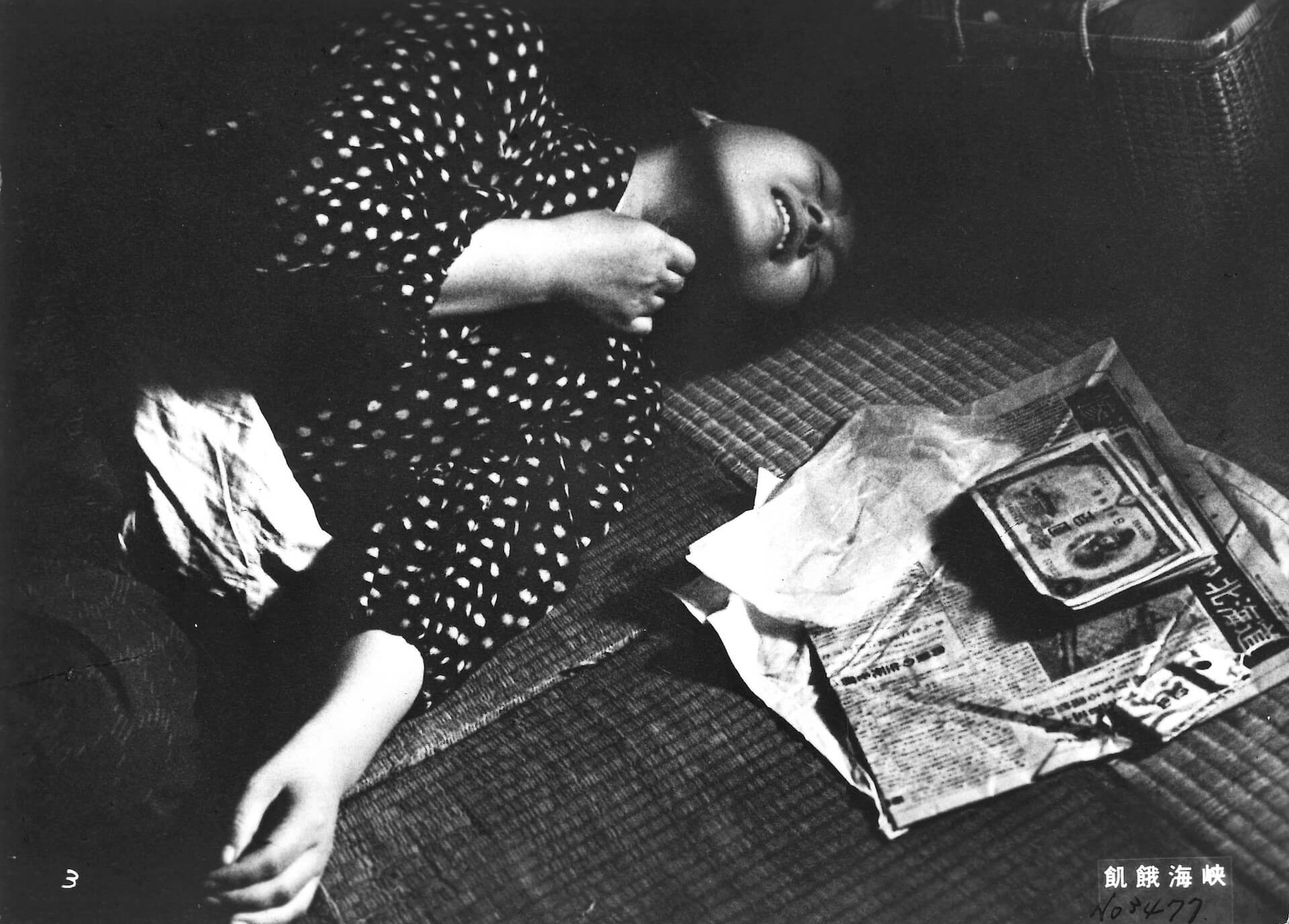
The generous pay-off allows Yae to start a new life in Tokyo and, on top of being eternally grateful for what Inukai did for her, she develops a deep love for his memory, gaining sexual gratification from the only other token he left behind, a toenail clipping.
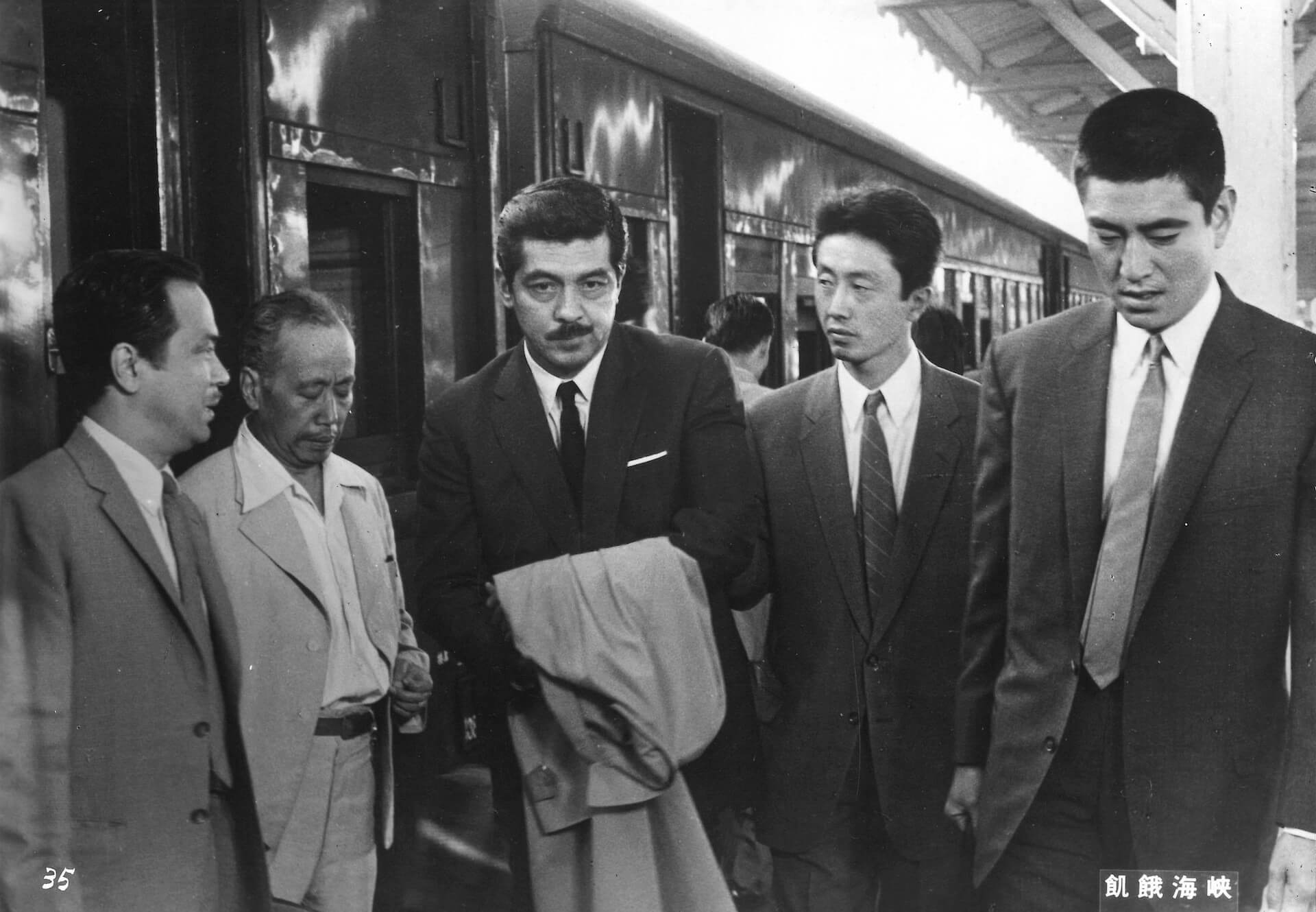
A decade later, Yae comes across a picture of a more respectable-looking Inukai in the newspaper and heads off to offer thanks and possibly rekindle their brief flame. However, the reunion doesn’t go as planned.
Reminding me a little of Kurosawa’s High and Low, A Fugitive From the Past is a lengthy drama with crime movie elements that is split into distinct sections. The first concerns the incidents surrounding the typhoon and the initial meeting of Inukai and Chizuro/Yae. The mid-section focuses solely on Yae as she moves to Tokyo. The final portion of the film contains the reunion of its central characters and the aftermath of this.
Despite running at over 3 hours, A Fugitive From the Past is a gripping watch. I must admit, I saw it in two chunks but only because my free time was limited. I could have easily sat through the film in one sitting, if I was able. Having the three distinct sections of the story helps and the pacing of these is expertly controlled, with the initial portion moving along swiftly, drawing you into the story. The second portion slows things down once you’re in and then the final act gradually builds to a powerful finale.
Despite its length, A Fugitive From the Past has a fairly intimate focus, with a minimal number of key players. However, it doesn’t only examine the stories of its small collection of characters but looks at the struggles Japan faced after WWII. Big political statements are thankfully avoided, but the poverty most inhabitants of the country faced is made clear and the black market and sex trade are brought up quite often, particularly the latter, due to Yae’s character.
Guilt and karma are the film’s key themes, reflecting the post-war guilt felt by many in Japan. The story here suggests past sins will not be forgotten and will come back to punish you at some point. Inukai tries to run away from his criminal past and do good through a new identity, but his crimes come back to haunt him. This Buddhist approach adds an intriguing spiritual slant too.

The characters are wonderfully flawed and their morals murky, making their stories transfixing. It’s never quite clear just how guilty Inukai is (in his earlier actions at least). The original crime isn’t shown and the death of his companions is shown in three different flashbacks, all of which are slightly different, with none clearly marked as a ‘true’ account. He seems like a good, decent man in much of the first half of the film too, so it’s a shock when he seems to sharply turn in the second half, though the audience is made to understand the reasons behind his later actions.
The film seems much more modern in approach than what you’d expect from a director working since the silent days of cinema. There are hints of the new wave here, with cynical social and political statements being made, on top of some interesting stylistic touches.
There is a great deal of camera movement employed, which can be quite graceful, though there’s a slightly rough, documentary-like handheld quality to it too, giving a subtle sense of gritty realism without delivering an ugly, difficult-to-follow style. An unusual solarisation effect is used too, usually in flashbacks, or often conjectured flashbacks when the detectives are trying to figure out what happened.
Music is used sparingly but makes an impact when it appears, often employing quite abstract techniques to add to the atmosphere and impact of key scenes. Several passages also reference the Buddhist themes of the film, particularly the final cue, which is incredibly haunting.
Overall, A Fugitive From the Past is a subtly rich and masterfully crafted film that takes well-worn crime/mystery-thriller plot points and weaves them into a deep, emotionally and morally complex tale. Telling much of the state of post-WWII Japan as well as Buddhist concepts of karma, it has much to unravel, despite a seemingly simple premise. It’s a long haul, due to its length, but Uchida never allows you to lose interest. The director and film both deserve to be better known in the West. Kudos to Arrow for releasing it and a couple of his other gems. More please!


A Fugitive From the Past is out on 26th September on Blu-Ray, released by Arrow Video. Blown-up 16mm footage was used in portions of the film, as part of Uchida and DOP Hanjirô Nakazawa’s stylistic approach. As such, some of the scenes can look quite soft and, generally, it’s not the sharpest or most detailed picture I’ve seen of a film from the era. However, there’s next to no damage and this is a film that has never before been released in the West, so we’re privileged to be seeing it in any state.
Special Edition Contents
– High Definition Blu-ray (1080p) presentation of the restored 183 minute-long cut of the film
– Original uncompressed mono audio
– Optional English subtitles
– Introduction by writer and curator Jasper Sharp
– Scene-specific commentaries from leading Japanese film scholars Aaron Gerow, Irene González-López, Erik Homenick, Earl Jackson, Daisuke Miyao and Alexander Zahlten
– Original theatrical trailer
– Image gallery
– Tomu Uchida filmography
– Reversible sleeve featuring original and newly commissioned artwork by Tony Stella
– FIRST PRESSING ONLY: Fully illustrated collector’s booklet featuring writing on the film by David Baldwin and Inuhiko Yomota

Most of the commentary tracks, which cover a little over 100 minutes of the film, are deeply analytical with a little added history and background, so will appeal to more scholarly listeners but might seem dry to others. There are some fascinating insights though and, if you’ve got the patience for it all, you will be able to better appreciate the film. Aaron Gerow takes a particularly interesting angle, suggesting that Uchida put a lot of his own life and beliefs into the film, making it a more personal project than it seems on the surface. Erik Homenick takes a notably different path too, specifically discussing the film’s musical score.
I found Jasper Sharp’s piece most useful in gathering background information for my review though. His knowledge of Uchida’s work and Japanese cinema knows no bounds and he presents his information in a fashion that’s clear to follow. It’s a good companion piece to his two exceptional commentaries on Bloody Spear and The Mad Fox.
I didn’t get a copy of the booklet to comment on that, unfortunately.
Overall, Arrow’s disc is a thoughtfully compiled release of an important piece of Japanese cinema history that’s unforgivably been kept from Western viewers for too long. Highly recommended. Keep ‘em coming Arrow Video!
Disc/Package: 