


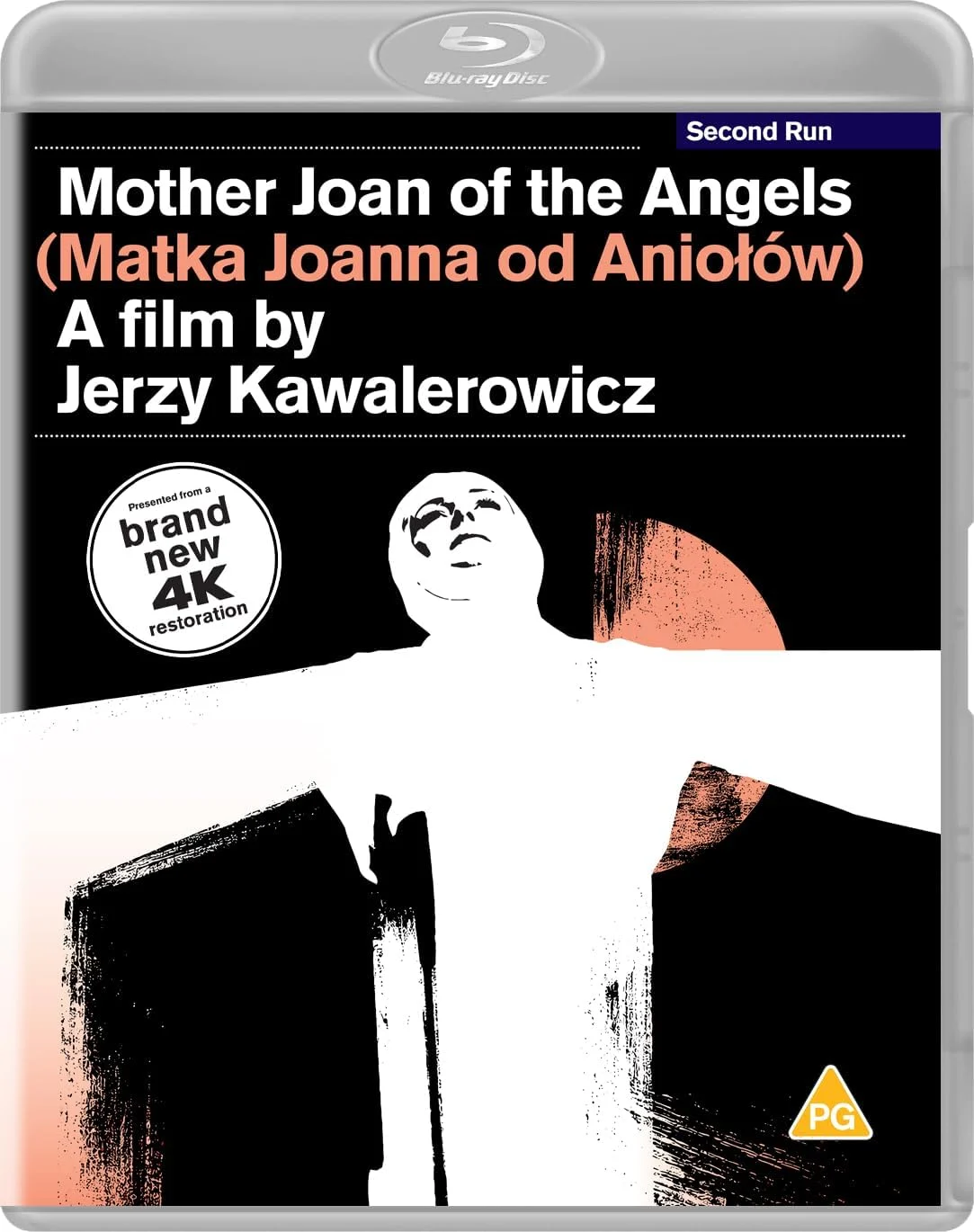
 Director: Jerzy Kawalerowicz
Screenplay: Tadeusz Konwicki, Jerzy Kawalerowicz
Based on a Novella by: Jarosław Iwaszkiewicz
Starring: Lucyna Winnicka, Mieczysław Voit, Anna Ciepielewska, Maria Chwalibóg, Kazimierz Fabisiak, Stanisław Jasiukiewicz, Zygmunt Zintel
Country: Poland
Running Time: 110 min
Year: 1960
BBFC Certificate: PG
Ken Russell’s The Devils is getting a lot of press at the moment, due to its original director’s cut finally being released in cinemas and soon on UHD. However, the infamous Loudun possessions that inspired that film had previously inspired a number of novels and plays, and also another film, Jerzy Kawalerowicz’s Mother Joan of the Angels (a.k.a. Matka Joanna od Aniolów).
This 1960 film was based on a novella by Jarosław Iwaszkiewicz, which was written in 1943 in Nazi-occupied Poland, so it was largely read as an anti-fascist allegory. Kawalerowicz’s film, however, got in trouble with the Polish Catholic Church rather than the communist state.
The film was officially condemned by the church, who even went as far as proclaiming that anyone who watched it would be committing a mortal sin. Mother Joan of the Angels, nevertheless (or due to this), was quite successful in Poland and also won the special jury prize at the 1961 Cannes Film Festival.
Whilst the film doesn’t have the cult-classic status of The Devils, it’s still highly regarded, and Second Run are now releasing it on Blu-ray from a gorgeous new 4K restoration. I got hold of a copy and my thoughts follow.
As mentioned, Mother Joan of the Angels is based on the recorded case from 1634 of a group of nuns believed to have been possessed by demons in Loudun, France.
The film relocates the story to Smolensk and sees Father Józef Suryn (Mieczysław Voit) arrive at the convent to investigate the situation after the area’s previous priest, Father Garniec, was burnt at the stake for sexually tempting the nuns.
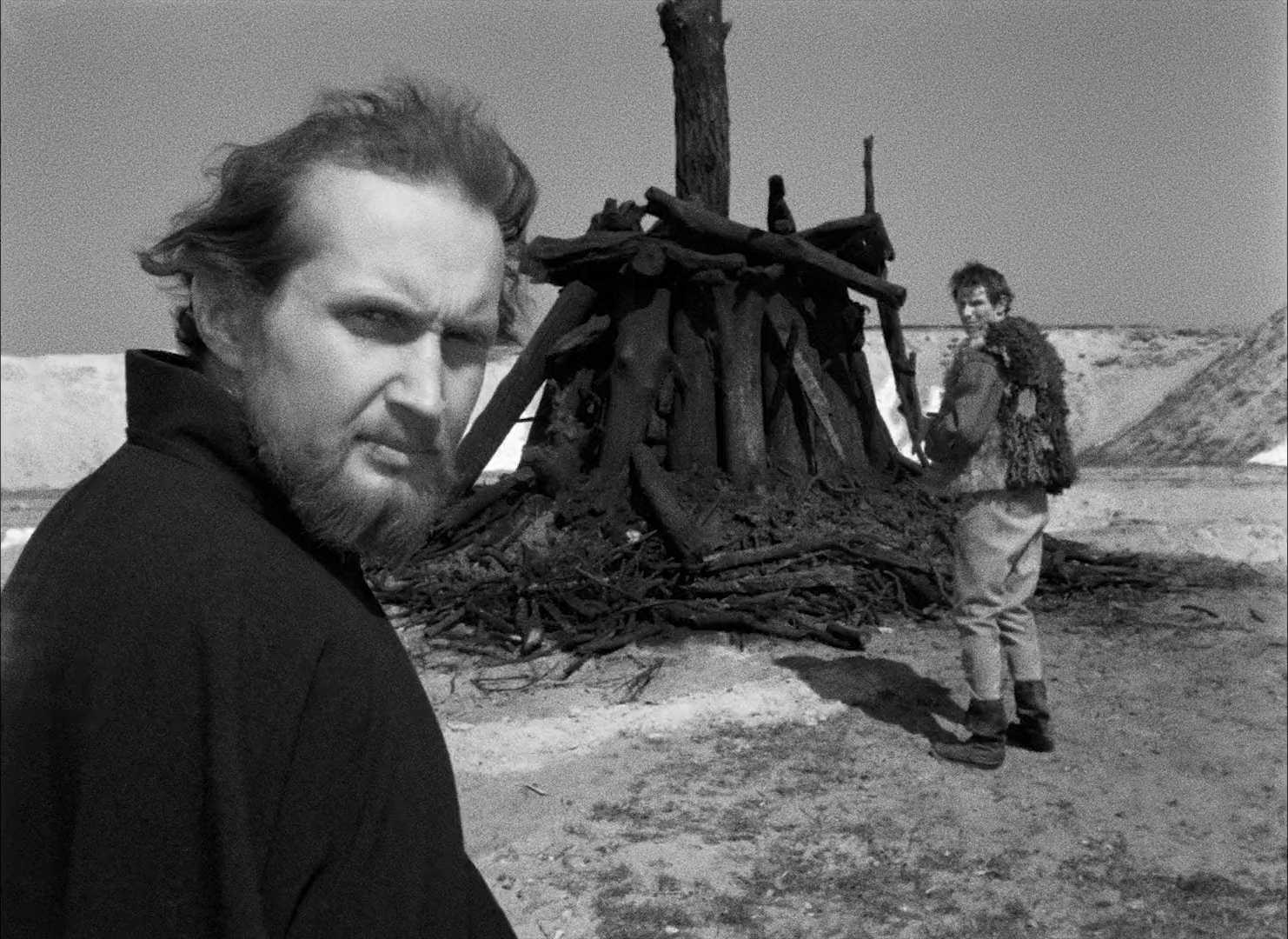
Suryn is told that the nuns are being led by Mother Joan (Lucyna Winnicka), who seems to be the most possessed of the group. He attempts to exorcise her demons but becomes infatuated with her.
Whilst Mother Joan focuses on the Loudun case as The Devils does, Kawalerowicz’s film begins where its 1971 counterpart ends. So you could call The Devils a prequel of sorts to Mother Joan. Russell is known to have seen the film before making his, so it may well have been an influence, though the two films take pointedly different approaches to the subject matter.
Whereas The Devils thrives on violence, depravity and hysterics, with a distinctly Grand Guignol approach, Mother Joan is much more subtly unsettling and only suggestively sexualised. However, it’s no less powerful.
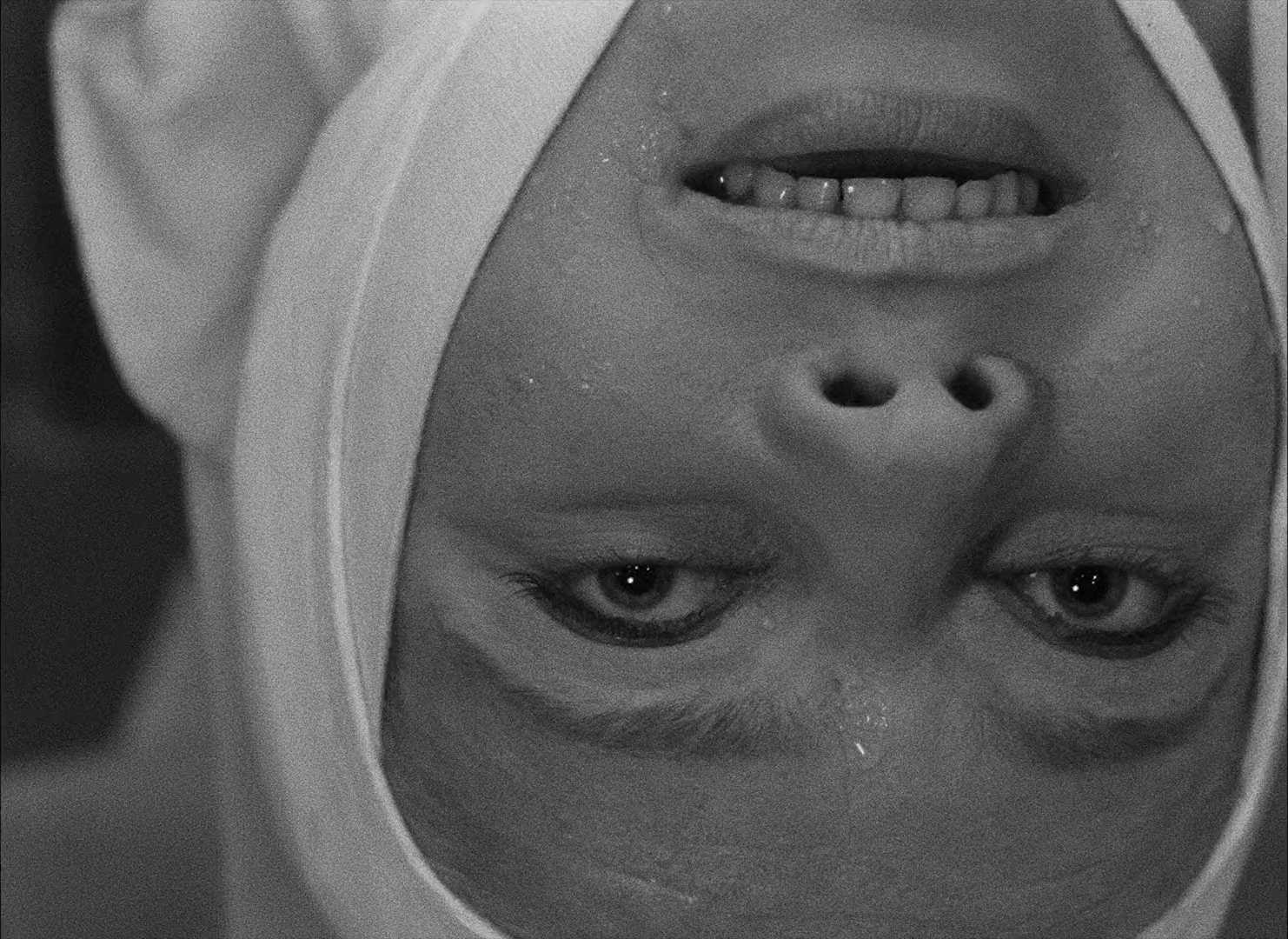
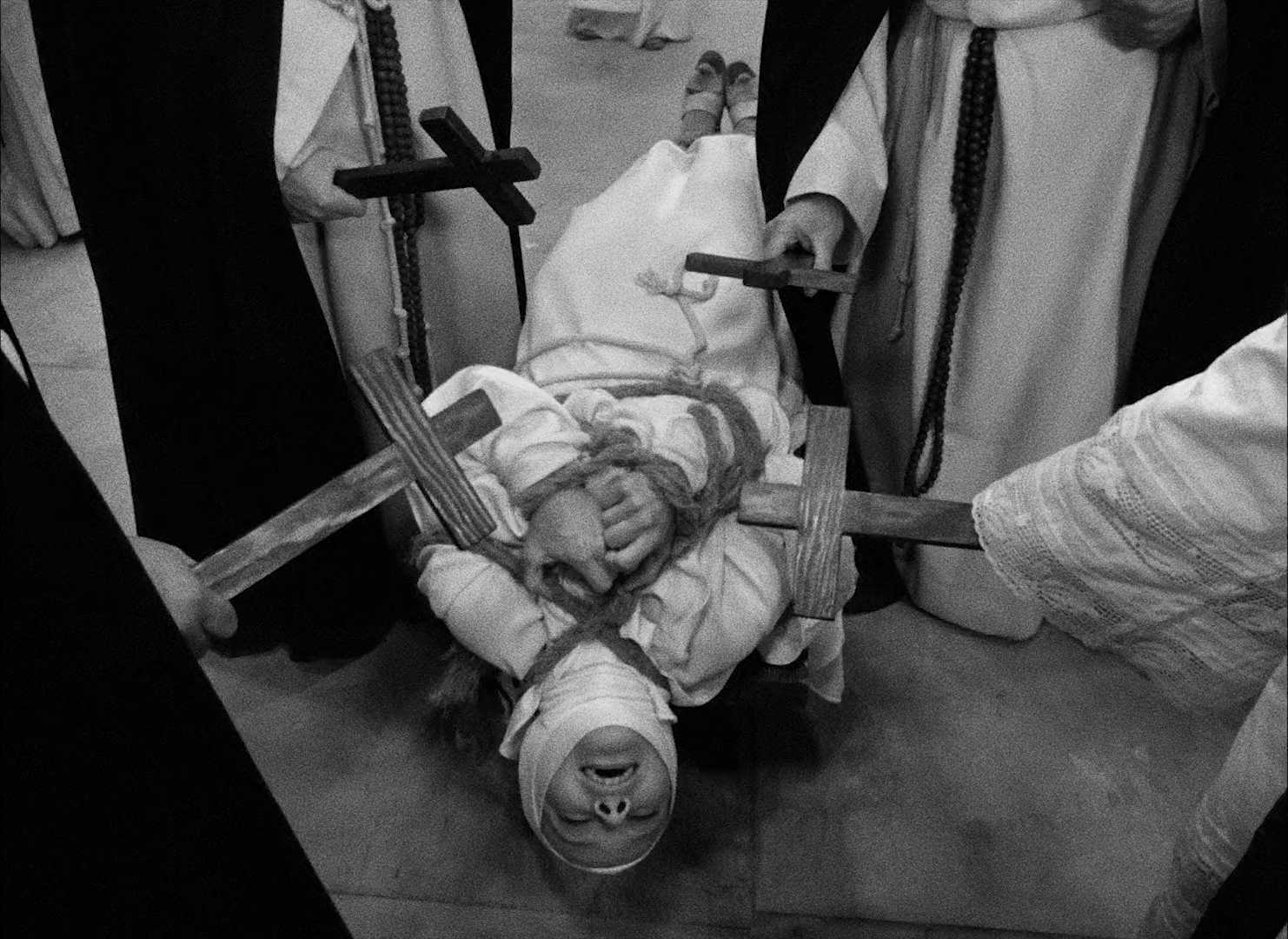
Most striking is its stark imagery. It looks incredible, despite its stripped-back design. Kawalerowicz and his cinematographer Jerzy Wójcik use contrast and composition to comment on characters and their place in this world. There’s an interesting use of movement and perspective, too, with a number of shots that initially look like they’re coming from a character’s point of view or occasionally with actors looking directly at the camera.
These unusual choices add to the uncomfortable nature of the film, as well as its ambiguous approach. The audience must make up their own minds whether or not there’s any actual ‘possession’ going on, or if Joan is simply rebelling against the patriarchy.
Kawalerowicz has stated that, “I wanted to make a film about human nature and its innate reaction against repression and laws which are imposed on it”. Indeed, Mother Joan works in this fashion, but it could be read in a number of ways, which makes it all the richer.
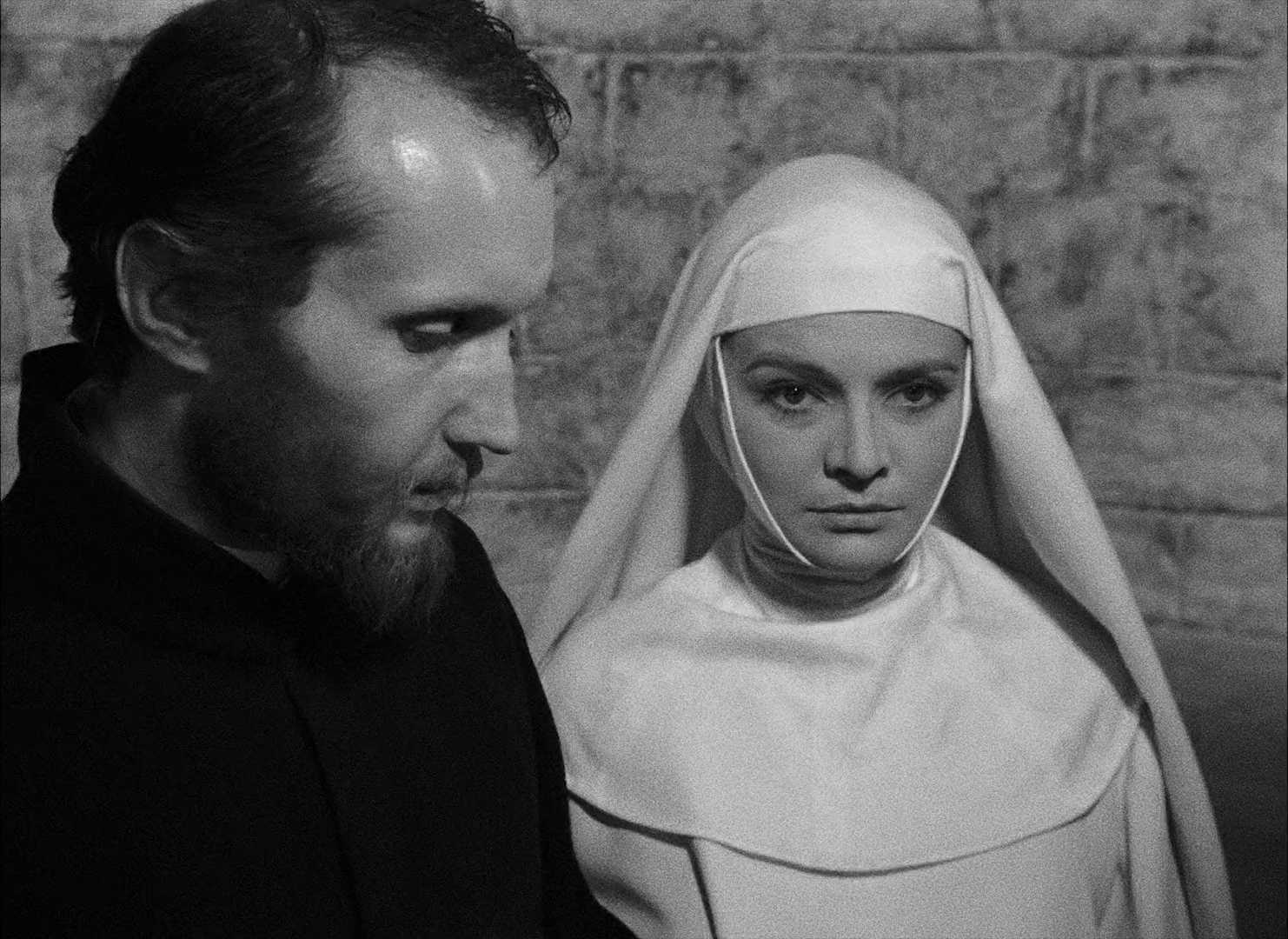
Also impressive are the performances. Winnicka was Kawalerowicz’s wife at the time. She still insisted on a formal screen test, though, as other actresses were being considered. She was pregnant during the shoot, but this didn’t prevent her from delivering an intensely physical performance. It’s impossible to tear your eyes off her, as she toys with the men who are desperate to tame this ‘beast’.
I also enjoyed the scenes in and around the inn, where the locals live for gossip about the nuns. They love to watch the ‘carnival’ happening on their doorstep, attending one of the exorcisms and befriending Sister Malgorzata (Anna Ciepielewska). She seems to be the only nun who hasn’t been possessed, though she indulges in acts she probably shouldn’t and falls in love with a travelling squire. These scenes help show how out of touch the church seems to be with reality and genuine humanity.
Overall, Mother Joan of the Angels is a masterfully directed, potent and intoxicating study of faith, desire and human nature, or whatever else you might make of it. The Devils may be getting all the attention at the moment, but I’d argue this is the better film.
Film: 
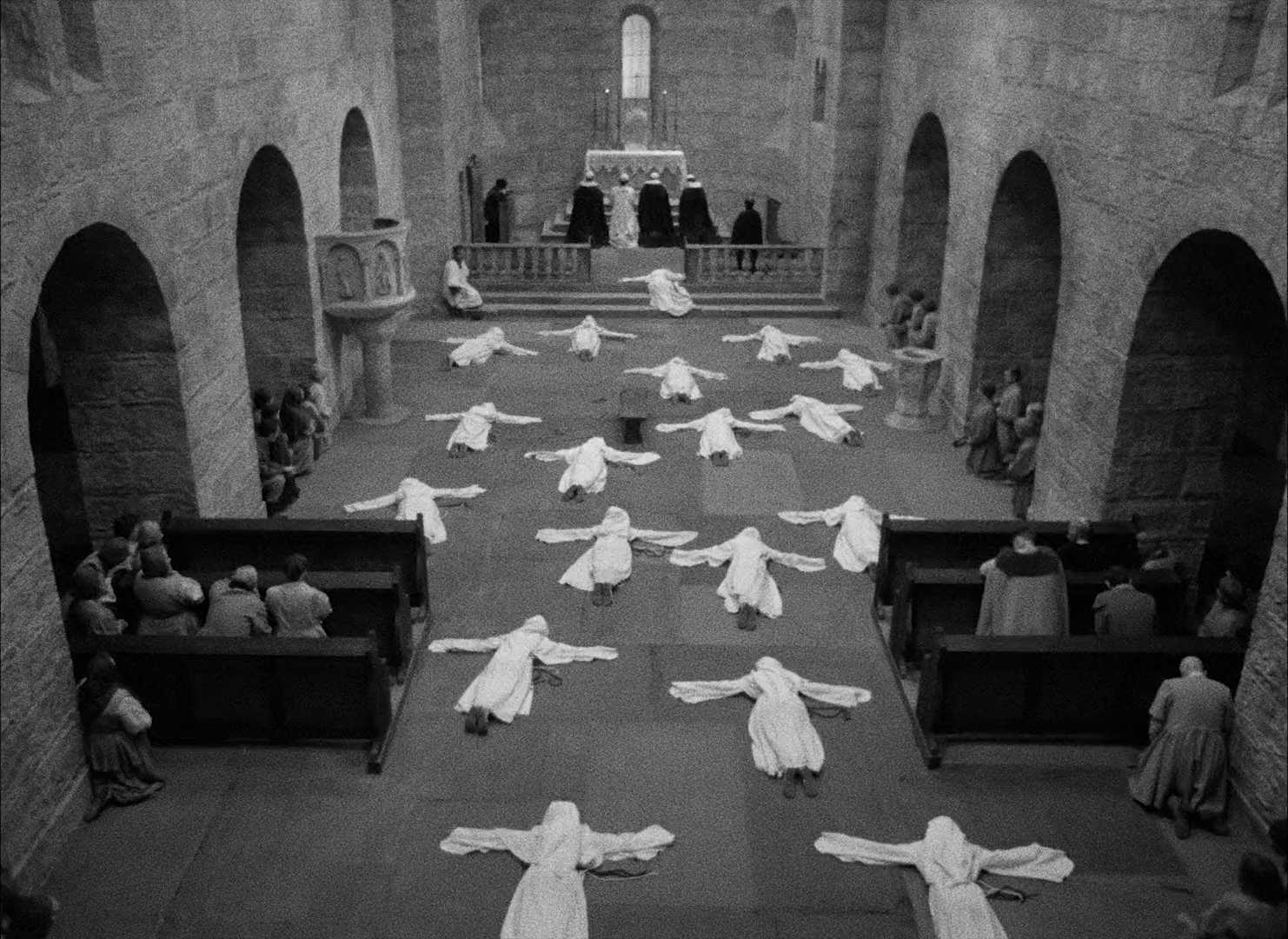
Mother Joan of the Angels is out on 23rd November on region-free Blu-ray, released by Second Run. The new restoration is very impressive, resulting in a clean, detailed image, with natural textures and grain structure. I’ve used screengrabs throughout this review to give you an idea of how it looks, though these have been compressed. Audio is similarly strong.
BLU-RAY SPECIAL FEATURES:
• Mother Joan of the Angels (Matka Joanna od Aniołów, 1960) presented from a brand new 4K restoration by WFDiF and Fixafilm, Poland.
• A newly filmed in-depth introduction to the film by the critic, curator and scholar Michał Oleszczyk.
• An expansive filmed appreciation by producer and film historian Michael Brooke.
• All-new Projection Booth audio commentary by Mike White.
• 32-page booklet featuring essays by author and film lecturer Dr David Sorfa, and Michael Brooke.
• New and improved English subtitle translation.
• World premiere of the new 4K restoration on Blu-ray.
In his commentary, Mike White analyses Mother Joan of the Angels in detail, as well as offering some background on the film and its makers. It’s a valuable addition to the release.
There’s a new interview with Michał Oleszczyk, who also delves into the background of the film. Thankfully, he discusses some aspects not present elsewhere, for instance, looking at the lives of the director and lead actress, and how that might have influenced the film. It’s an excellent piece.
Also included is an interview with Michael Brooke, which appeared on the old DVD release of the film. Like the other extras, this provides background to the production as well as analysing the end result. It’s a typically illuminating and engaging piece.
Brooke also provides an essay in the booklet. This focuses on the career of director Jerzy Kawalerowicz as a whole, whilst Dr David Sorfa writes more specifically about Mother Joan and other adaptations of the Loudun story.
All in all, it’s a stunningly good film, supplemented by a handful of excellent extras, making Second Run’s release of Mother Joan of the Angels a must-buy.
Disc/Package: 