


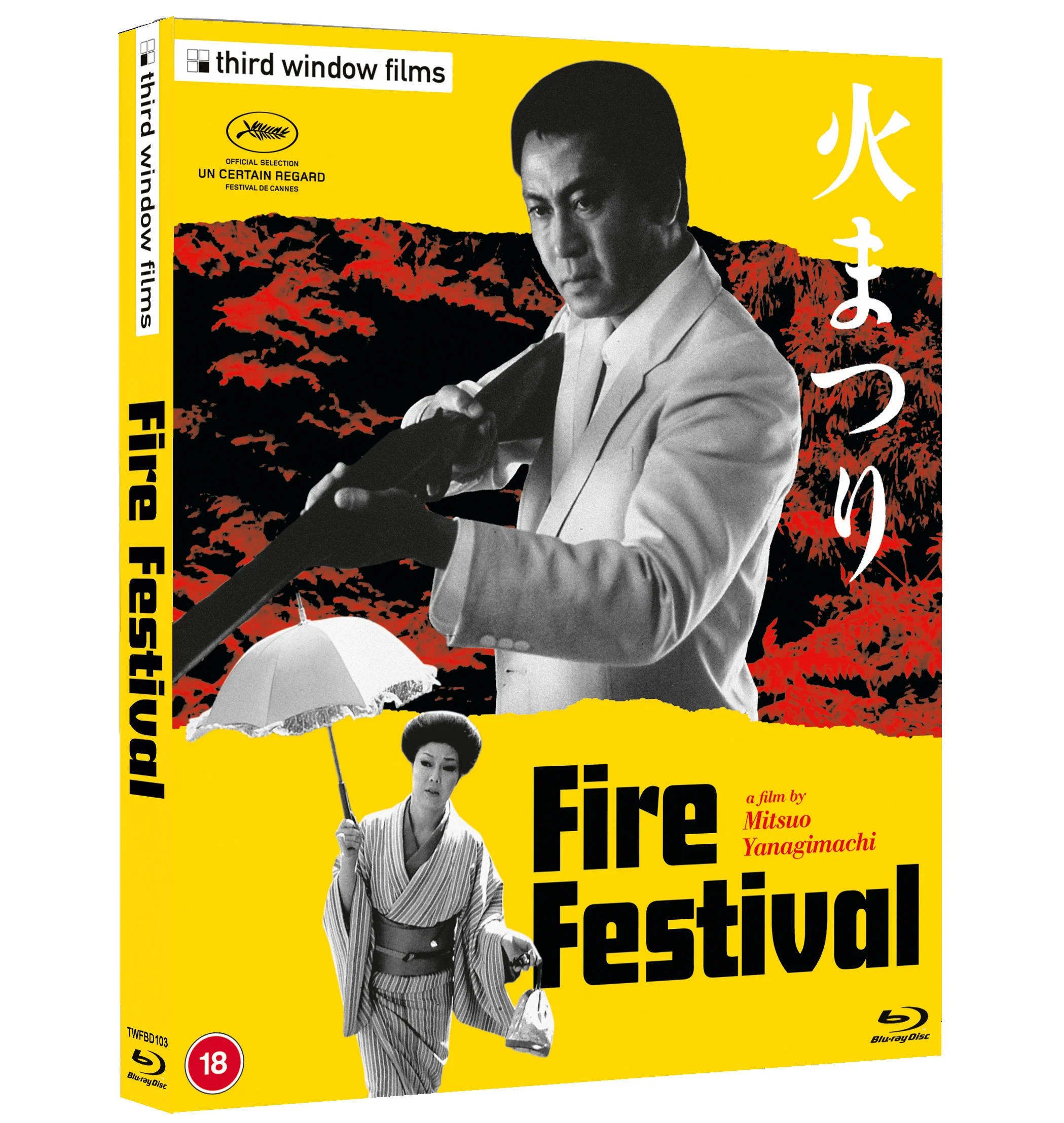
 Director: Mitsuo Yanagimachi
Screenplay: Kenji Nakagami
Starring: Kin’ya Kitaôji, Kiwako Taichi, Norihei Miki, Junko Miyashita, Ryota Nakamoto, Rikiya Yasuoka
Country: Japan
Running Time: 126 min
Year: 1985
BBFC: 18
Mitsuo Yanagimachi’s critically acclaimed 1985 film, Fire Festival (a.k.a. Himatsuri), which is being released on Blu-ray by Third Window Films, is based on a script by Kenji Nakagami.
The film is set in Nigishima, in the Kumano region of Japan. This region is seen as the spiritual heartland of Japan’s indigenous Shinto religion. They believe there are gods and spirits known as Kami throughout nature, and that the balance and cycles of the natural world must be maintained. Kumano has since become a site of pilgrimage.
Fire Festival centres around a lumberjack named Tatsuo (Kin’ya Kitaôji), who lives in Nigishima and seems to follow Shinto, but pays little respect to the natural world around him.
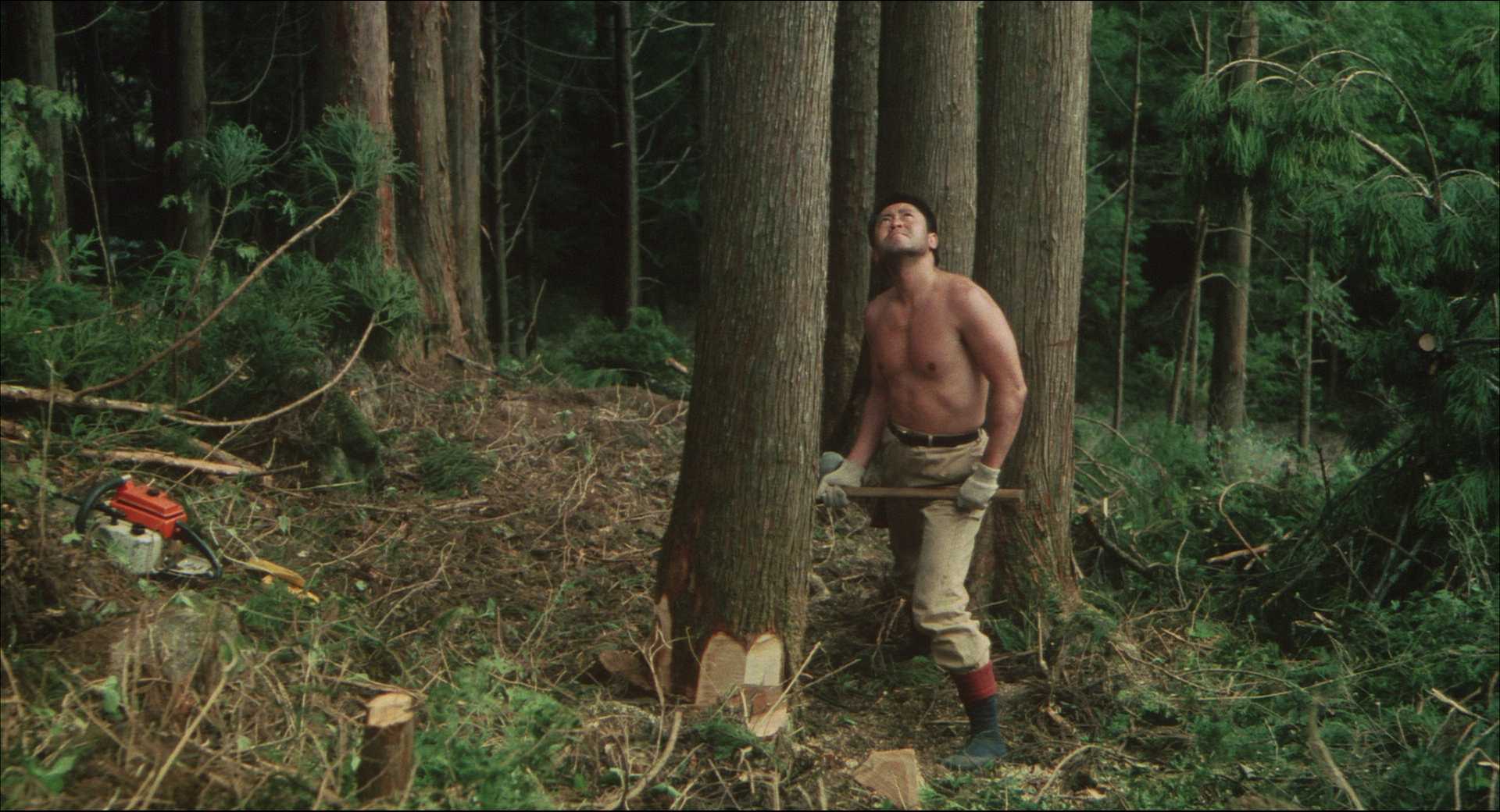
Threatening the area perhaps more than Tatsuo, though, is the planned development of a marine park. The oafish lumberjack stubbornly holds his ground against the developers, refusing to sell his family’s land.
He also clashes with the local fishermen, who believe he’s been dumping oil into the waters to kill their fish.
The film is based on a real-life criminal case from 1980 in Nigishima, which I won’t explain, as it would give away the end. Writer Nakagami was born in nearby Shingu, so he must have had a passion for the region and its problems.
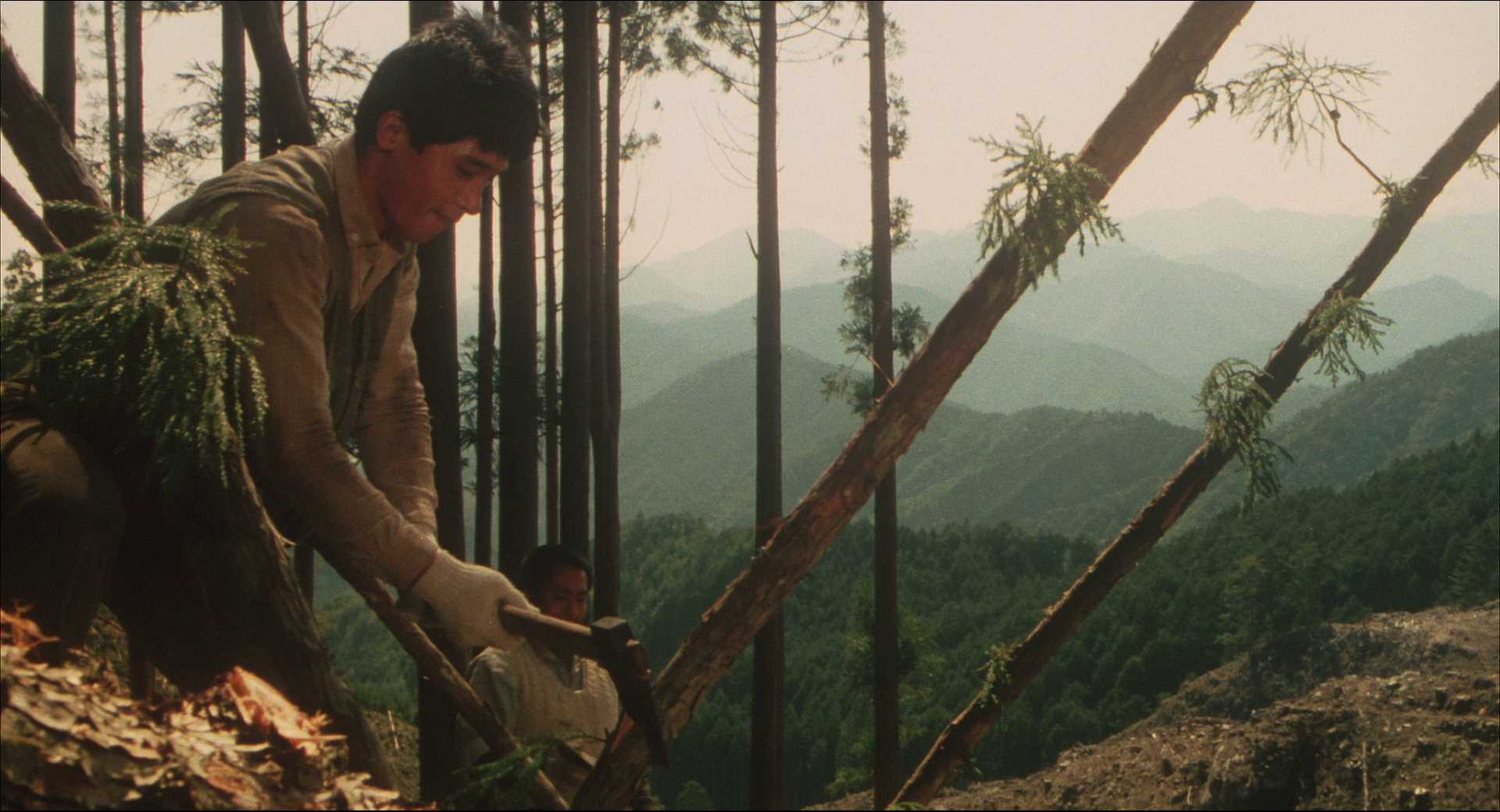
In Fire Festival, this supposed paradise is threatened by humanity and modernity. They have shattered the balance of nature through the divisions between locals, the thoughtless actions of selfish men and the commercial development of this once quiet spiritual haven.
Director Mitsuo Yanagimachi gets this across through some beautiful filmmaking, rather than using laboured dialogue as a soapbox.
It’s an often very quiet film, with its unusual score used only sporadically, and Tatsuo and his friend Toshio’s (Rikiya Yasuoka) lewd banter cutting through the calm. Also occasionally sounding out of place on the soundtrack is a little advertising jingle played on a loudspeaker by a van that manoeuvres itself through the town.
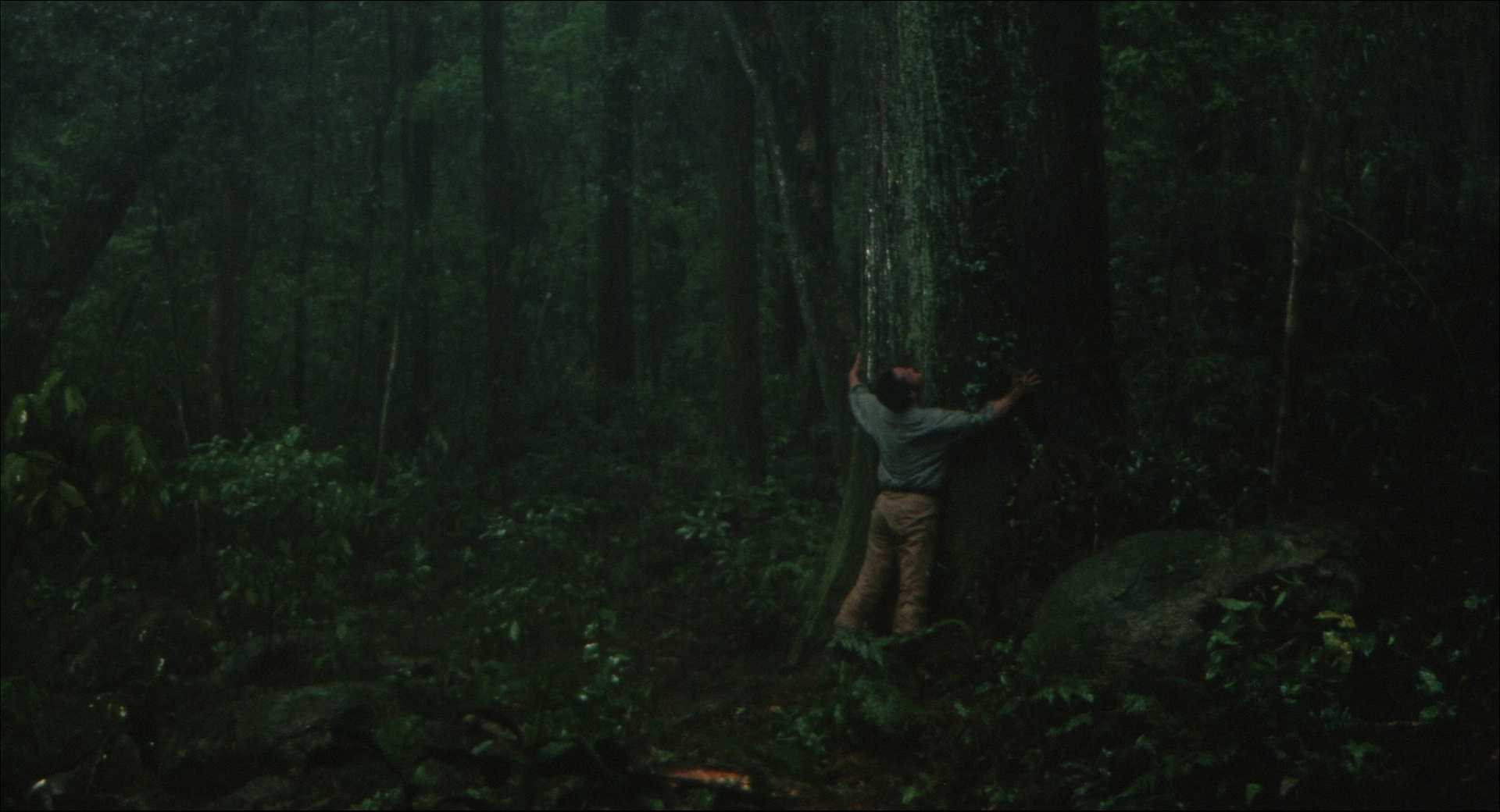
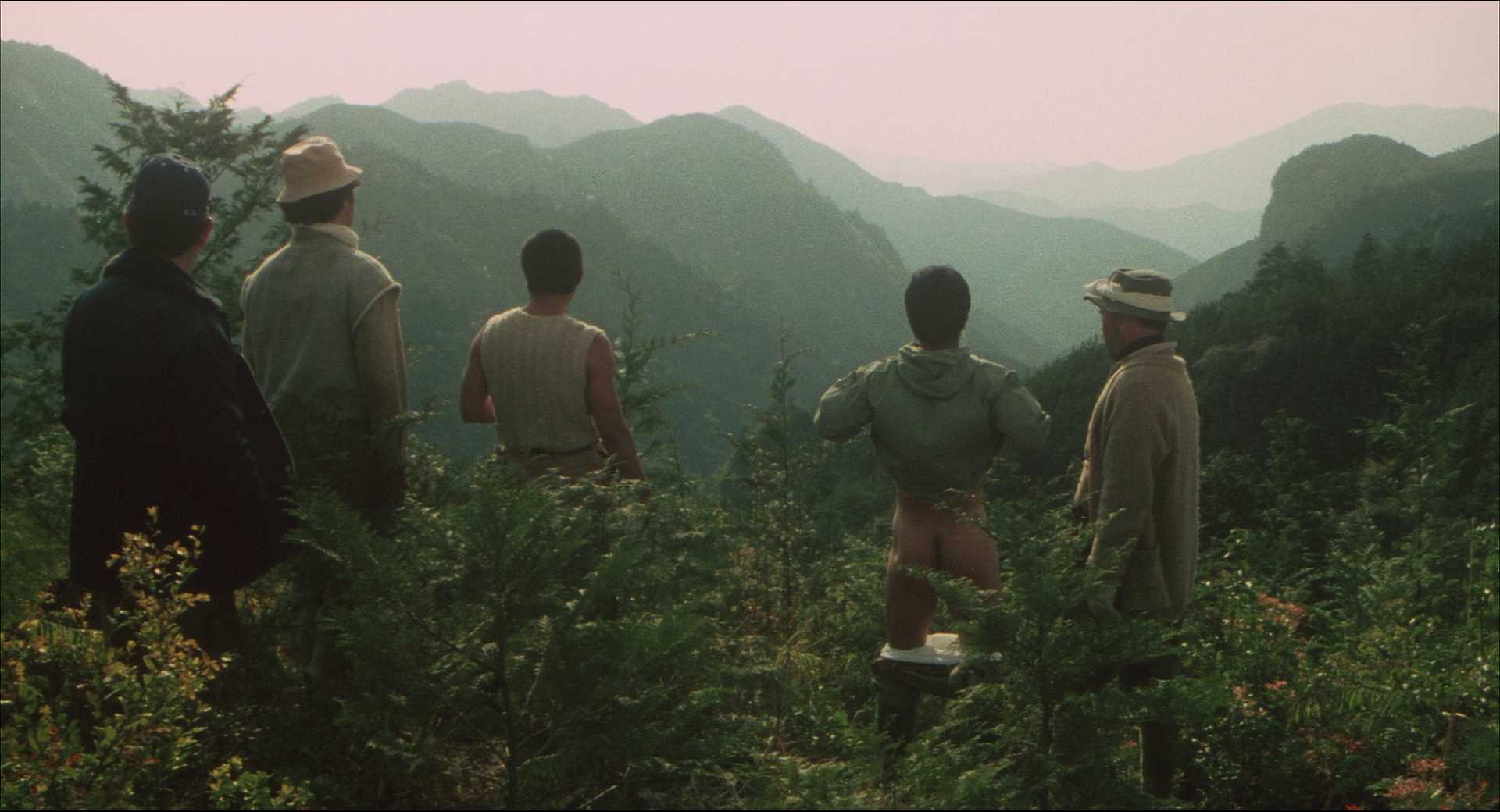
There’s a lot of visual symbolism like this in the film, too. Sex plays a big part, with a lot of phallic symbolism on display. Tatsuo and his buddies flaunt their masculinity wherever they go, and he regularly sleeps with his old flame, Kimiko (Kiwako Taichi), despite having a wife at home.
Indeed, Tatsuo is a deeply flawed lead character. He’s constantly breaking both social etiquette and Shinto rules. Like a car crash, though, it’s hard to look away. Plus, a lot of time is spent with several other residents of the town, including young Ryota (Ryota Nakamoto), who idolises Tatsuo, and a broker who tries to capitalise on the planned marine park by getting residents to either sell or buy up land.
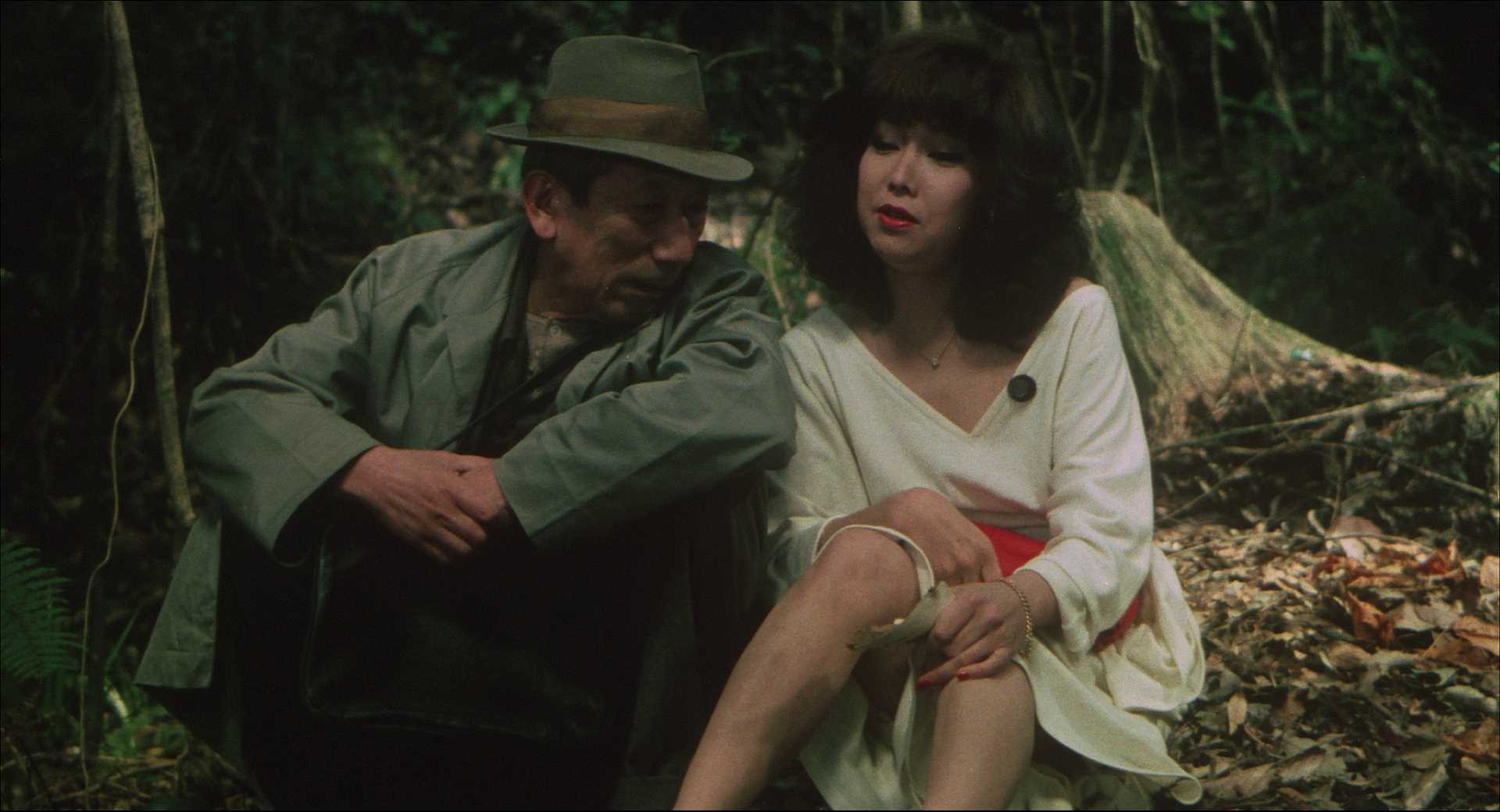
The film is deliberately paced, matching the sleepy town being depicted, but it’s always utterly compelling.
I wasn’t quite sure what to make of the ending, though. It came a little out of nowhere for me, and I’m not sure what Nakagami and Yanagimachi were trying to say here, though I appreciate it’s depicting real-life events at this point.
Regardless of me not finding the end very satisfying, Fire Festival is nevertheless a strangely intoxicating and stunningly well-directed film.
Film: 

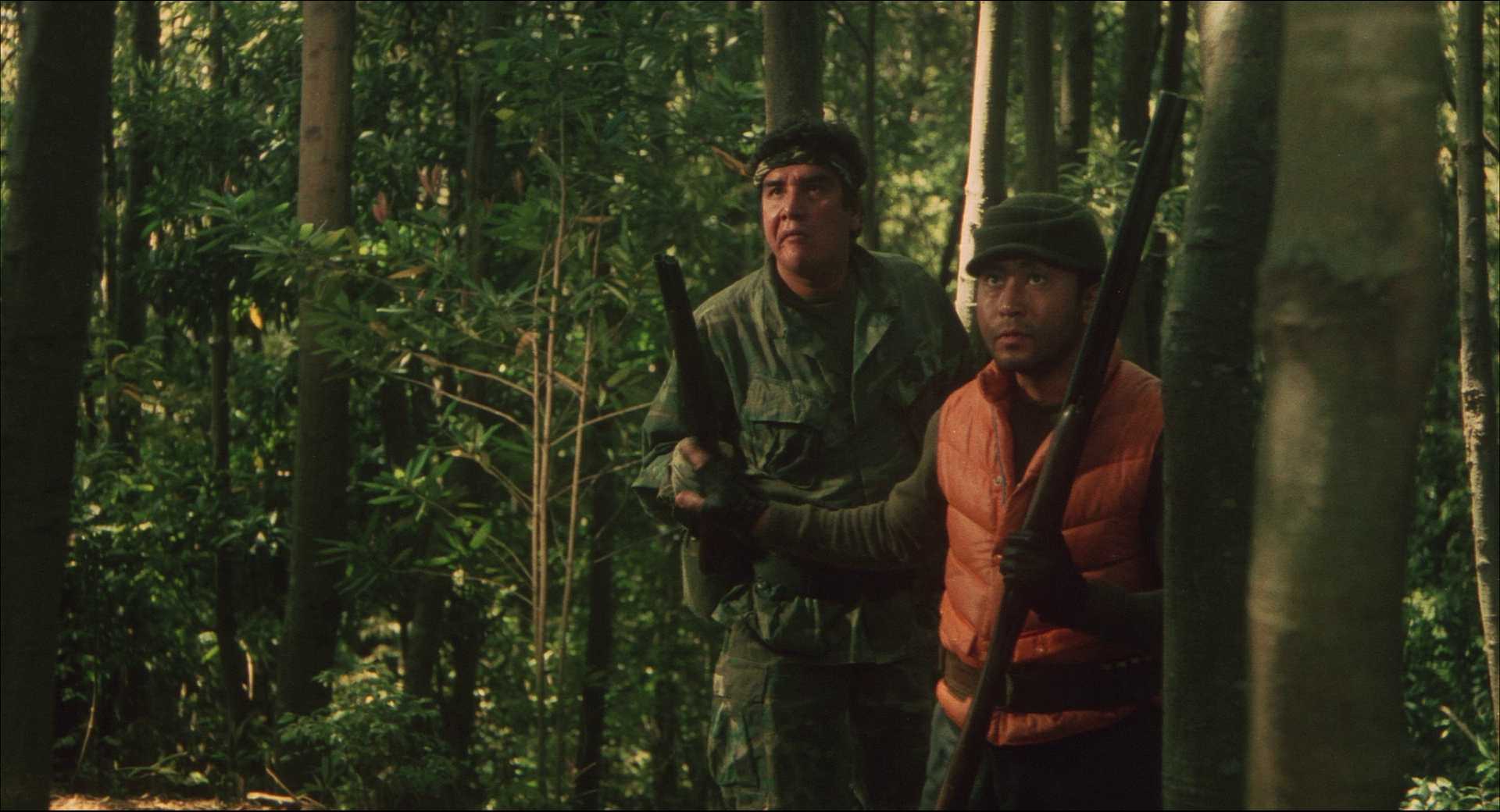
Fire Festival is out on 7th December on region B Blu-ray, released by Third Window Films. The transfer is a touch on the soft side and has a slightly murky look overall. This may be as originally intended, but it’s certainly not demo material. The print is free of damage, though, and has a natural feel to it. I’ve used screengrabs throughout this review to give you an idea of how it looks, though these have been compressed. I had no issues with the audio, which handled the often quite minimal sound design very effectively.
Special Features
・Selected audio commentary from historian Alexander Jacoby
・Video Essay by Jasper Sharp
・Original Teaser and Trailer
Jasper Sharp provides a 16-minute visual essay on the film. This offers some valuable contextual analysis. It’s highly recommended viewing to help better understand where the film is coming from. You should watch it after the film, though, as it could be seen to spoil the ending.
There’s also a selected scene commentary with Alexander Jacoby. This offers further, detailed analysis of the film. It’s another valuable addition to the set.
It’s only a modest collection of special features, but they’re both of a high standard, and the film is so good that the release is easy to recommend.
Disc/Package: 