


 Director: Peter Yates
Screenplay: Alan R. Trustman and Harry Kleiner
Based on the 1963 novel: Mute Witness by Robert L. Fish
Starring: Steve McQueen, Robert Vaughan, Jacqueline Bisset, Don Gordon, Robert Duvall, Simon Oakland, Norman Fell, Georg Stanford Brown, Justin Tarr, Carl Reindel, Felice Orlandi, Pat Renella, Vic Tayback, Robert Lipton, Ed Peck
Country: United States
Running Time: 113 Min
Year: 1968
BBFC Certificate: 15
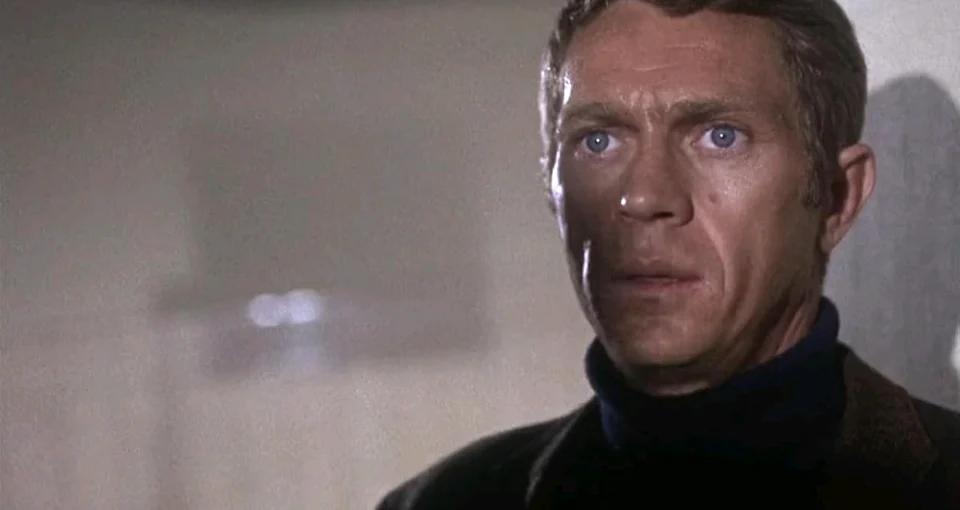
Actor Steve McQueen is in the history books as an icon. A cool, charismatic star exuding confidence and charisma, he was a huge box office draw in the 1960s, nicknamed the ‘King of Cool’.
A huge fan of car racing, he began studying acting in the early 1950s, became a household name thanks to TV shows like Wanted Dead or Alive and would move into feature films in the 1960s, starring in the likes of The Magnificent Seven (1960) and The Great Escape (1963). Both of these films were huge, but it would be 1968’s Bullitt that would see McQueen’s stock sore, turning him into the icon of cool that we know today.
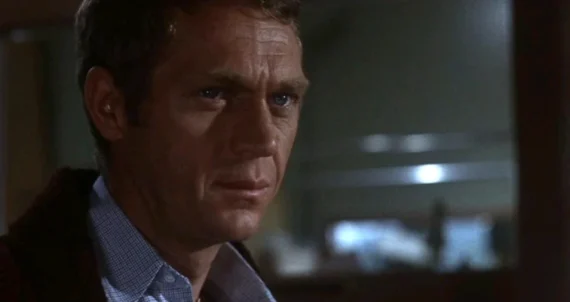
Directed by Peter Yates, Bullitt is an adaptation of the 1963 novel Mute Witness by Robert L. Fish. It sees several attempts on the life of Chicago mobster Johnny Ross (Pat Renella), after he flees the mob and is set to be a star witness for a Senate hearing on organised crime.
San Francisco Police Department Detective Lieutenant Frank Bullitt (Steve McQueen) is one of those tasked with protecting the witness, but is blamed when Ross is killed before taking to the stand. Bullitt investigates the circumstances and comes under threat himself the more he digs deeper into what’s unfolding.
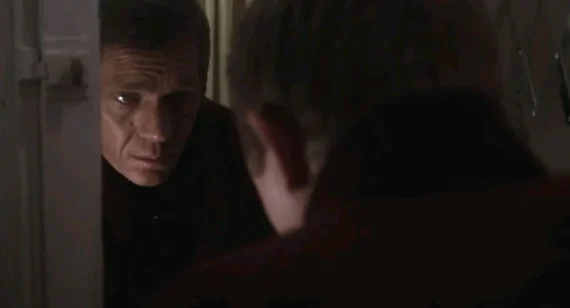
Firstly, the film oozes coolness – from the super cool opening titles which playout against the jazzy Lalo Schiffrin score, to Steve McQueen’s ice cool, often wordless performance as Lieutenant Bullitt, there s an effortless style that plays out throughout.
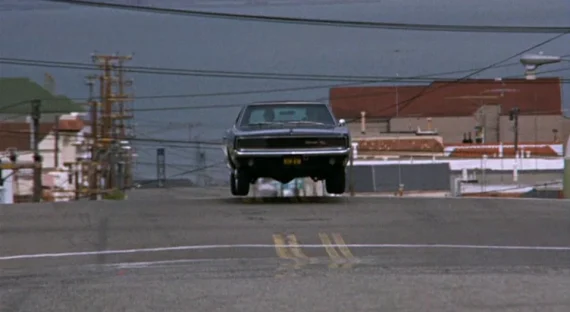
And then the is ‘that’ car chase. Even if you have yet to see Bullitt, you will likely have seen clips of the car chase through the streets of San Francisco. Lasting around 10 minutes and scored by the roar of the cars, including Bullitt’s iconic Ford Mustang, it features shots from the point of view of the drivers, crashes, near misses, and some impeccable editing by Frank P. Keller, it is a monumental effort.
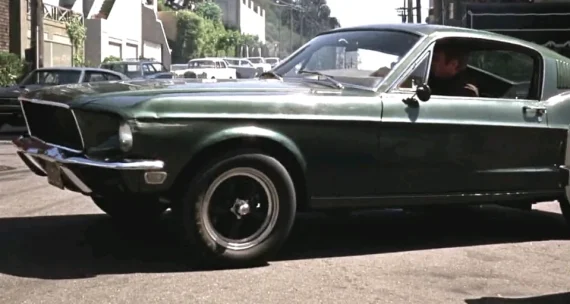
San Francisco itself is a great ‘character’ in the film, used to wonderful effect as one of the first films to be shot almost entirely on location in the city, which gives it a sense of time and place. The cityscape, and some of its biggest known locations, are used brilliantly in key sequences, not least the car chase, and lensed marvellously by William A. Fraker, whose camera set-ups are also well worth studying throughout, particularly when two characters speak, and in the different shots used in the chase, which comes just after the one hour mark.
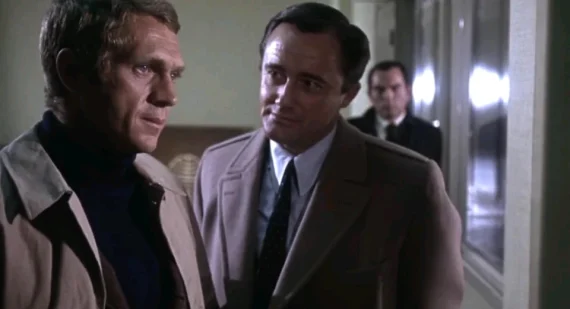
McQueen gives a great performance, inspired by real-life San Francisco Inspector Dave Toschi, who was the inspector on the Zodiac killer case. It is a physical performance by McQueen. A lot of the time we are following his looks and mannerisms to tell us what he is thinking, rather than dialogue, particularly in the early sequences, though later the score also helps underscore his emotions and motivations.
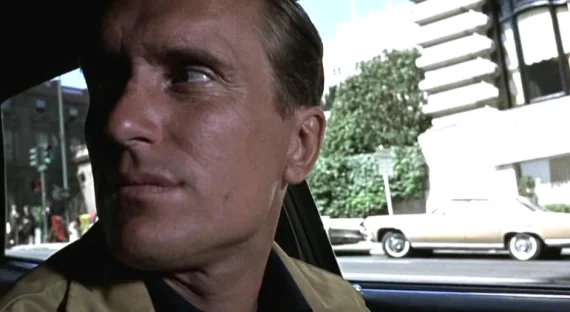
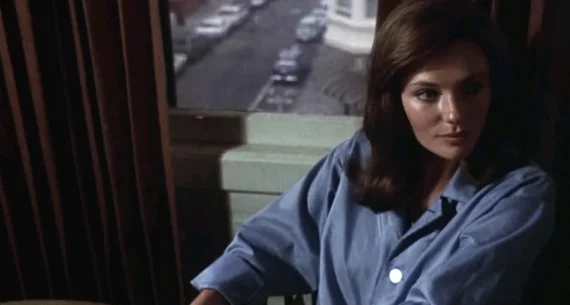
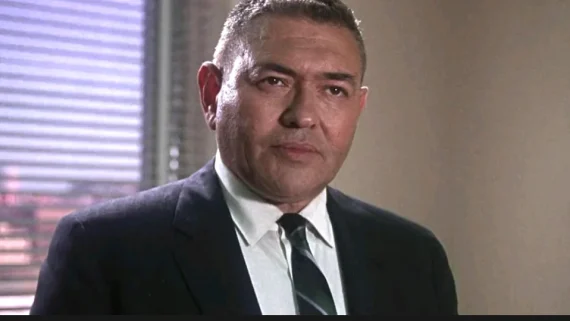
The actor would become a huge star mostly on the basis of this film and he would be ably supported by a cracking cast, including an incredibly memorable performance from Robert Vaughan, an early role for Robert Duvall, the familiar face of Simon Oakland and, in the almost sole female part in the film, an enigmatic Jacqueline Bisset.
Schifrin’s score is used sparingly, with a huge gap in music use after the opening titles until Bullitt tails criminals ahead of the car chase, but when it does play it is cool, hummable and iconic, a word that could be used to also refer to star, location, car chase and, ultimately, film.
Bullitt is a tough, gritty and fun ride, showcasing the streets of San Francisco well, featuring an iconic, effortlessly cool performance by Steve McQueen, and still one of the best car chases ever committed to celluloid. It is beautifully shot, entertaining from start to finish and features a cracking score by Lalo Schifrin.
Film: 

Bullitt is released on separate limited edition 4K UHD and Blu-ray by Arrow Video on 7 December 2026. I reviewed the 4K edition, content being mirrored across both except for one being on a 4K disc and the other on Blu-ray. The brand new 4K restoration from the original 35mm camera negative by Arrow Films is really strong, with a good amount of grain, rich detail – check out the fibres in McQueen’s clothes, for example, no blemishes and a natural colour scheme. I was very pleased with the way the film looks, and it also sounds fantastic – the roars of the engine, the crispness of the jazz score, and dialogue at the forefront of the mix.
The audio
4K Ultra HD limited edition contents:
Brand new 4K restoration from the original 35mm camera negative by Arrow Films
4K (2160p) Ultra HD Blu-ray presentation with Dolby Vision (HDR10 compatible)
Original restored lossless mono audio, plus lossless stereo surround audio
Optional English subtitles for the deaf and hard of hearing
Archive audio commentary by director Peter Yates
Brand new audio commentary by film critics Jason Bailey & Matt Zoller Seitz
The Sound of Cool, a brand new appreciation of Lalo Schifrin’s score by composer and historian Neil Brand
Bullitt: Steve McQueen’s Commitment to Reality, a vintage behind the scenes featurette
Peter Yates at the BFI, an on-stage interview with the director from 1996
The Cutting Edge: The Magic of Movie Editing, an archive feature-length documentary
Theatrical trailer
Image galleries
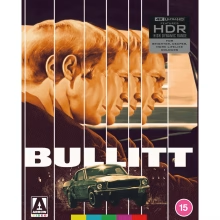
Reversible sleeve featuring original and newly commissioned artwork by Ben Turner
Collectors’ booklet containing new writing by film critics Alexandra Heller-Nicholas and Priscilla Page
The archive audio commentary by director Peter Yates is terrific, with Yates providing a film school in a box for the movie, from the reasons for the on location filming, to why he and those involved wanted to make something different to the other cop films that had been released by that point. Yates is on fine form throughout and easy to listen to and he provides a real sense of his filmmaking style and intentions with Bullitt.
Equally strong is a new audio commentary by film critics Jason Bailey and Matt Zoller Seitz who affectionately appraise the film in an entertaining style, whilst also providing plenty of details about the background to the making of the film, and how big McQueen was in the 1960s. There is a lot to take from this piece, which is full of facts and trivia, including the pair pointing our extras in certain scenes. Even long-time fans of the film are likely to find something new in the movie from this one.
Neil Brand provides a fascinating, informative and eloquently delivered appreciation of the late Lalo Shifrin’s phenomenal score for the film. Brand looks at how McQueen’s character doesn’t say too much but a mix of the score and the charisma of the actor paint a portrait of his character. Brand highlights how this approach goes back to the Man With No Name trilogy of films directed by Sergio Leone and where the score, beautifully composed by Ennio Morricone, does a lot of the character work. He also highlights, in the 18-minute piece, how the score is sparse for much of the opening half of the film and then how it is used in different scenes to help us understand what Bullitt is thinking in the second half of the film including, of course, the build up to the car chase. It is a first-class piece.
Bullitt: Steve McQueen’s Commitment to Reality, is a 10-minute behind the scenes featurette from the time the film was made which features some behind the scenes footage of McQueen and some of the driving scenes. There is little substance to the piece, which features mostly clips of the car chase, but the behind the scenes footage is incredibly valuable.
The BFI interview with Peter Yates from 1996 runs for 78 minutes and sees the director on great form running through career, providing a wealth of detail and background and covering a number of his films. It is a valuable piece that gives a wonderful insight into the director.
The Cutting Edge: The Magic of Movie Editing, is a 2004 feature-length documentary that runs for 100 minutes and was directed by Wendy Apple, and focuses on the importance of editing to any film. The documentary, narrated by Kathy Bates, looks at the history of film editing and examines loads of films from early silents like Battleship Potemkin (1925) and Man With a Movie Camera (1929) through the likes of Vertigo (1958) and Psycho (1960) right up to movies like The Matrix (1999), Gladiator (2000) and Cold Mountain (2003). There are loads of classics featured, including Bullitt, and plenty of great talking heads including Steven Spielberg, James Cameron, Quentin Tarantino, Walter Murch, Martin Scorsese and Jodie Foster. Lots of editors are praised, and scenes explored. It is a brilliant documentary.
The three-minute theatrical trailer understandably opens with the car chase before selling the coolness of the film, whilst giving some idea of the plot.
Three image galleries are included. The first features around 20 classy posters from the film, the second over 110 colour stills and promo shots and the third, almost 400 black and white promo stills.
I was not provided with the booklet, so am unable to comment on it.
In closing, Arrow have provided a stacked package of new and archival pieces for the Steve McQueen star vehicle Bullitt. Most importantly, the new restoration by Arrow is first class, as is to be expected from the label’s restorations, breathing new life into the film, whilst it also sounds brilliant. A terrific new appreciation of Lalo Schifrin’s score by Neil Brand and trivia packed new commentary by Jason Bailey and Matt Zoller Seitz are the new extras, but Arrow also provide excellent archival pieces, including a wonderful audio commentary and 1990s interview with director Peter Yates and the outstanding feature-length documentary The Cutting Edge: The Magic of Movie Editing. Quite simply, it is a phenomenal release of an influential classic.
Disc/Package: