


 Director: Victor Fleming
Screenplay: Sidney Howard
Based on the novel by: Margaret Mitchell
Starring: Clark Gable, Vivien Leigh, Leslie Howard, Olivia de Havilland, Hattie McDaniel, Thomas Mitchell, Barbara O’Neil, Evelyn Keyes, Ann Rutherford, George Reeves, Fred Crane, Oscar Polk, Butterfly McQueen, Victor Jory, Everett Brown, Howard Hickman
Country: United States
Running Time: 233 Min
Year: 1939
BBFC Certificate: PG (disc rated 12 due to extras)
The phrase ‘they don’t make them like this anymore’, couldn’t be truer than when referring to the 1939 epic Gone with the Wind. A near four-hour film, filled with stars and more than 2,000 extras (a large number of whom are showcased by a camera pan back over a battlefield full of injured and dead soldiers in one scene), and brought to the screen with supreme skill from cinematography to music, production design to costumes.
Adapted from Margaret Mitchell’s novel of the same name, it was a huge success on release, receiving critical acclaim and set records for the greatest number of Academy Award nominations and wins at the time, scooping 10 including Best Picture and Best Director. It was a true event movie.
It was also a troubled production. Director Victor Fleming would have his name on the credits and took home that Best Director Oscar, but he was one of three directors on the film. Fleming replaced original director George Cukor and would himself be briefly replaced by Sam Wood as he took some time off for exhaustion.
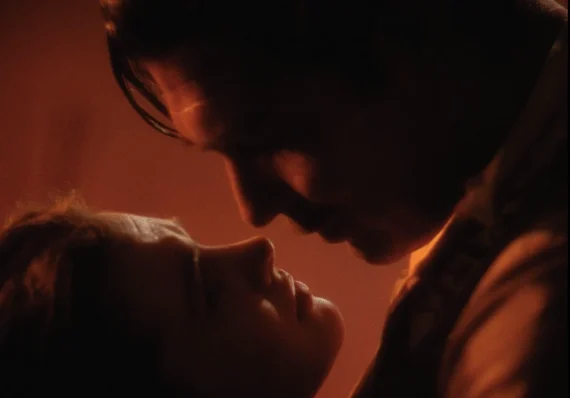
It is also controversial due to racist stereotypes, its romanticised depiction of slavery and an infamous sequence in which Rhett Butler carries Scarlett O’Hara to the marital bed against her will, the inference of what will happen clear to all.
These controversies do make elements of the film hard to swallow and difficult to watch. When viewing the film, it is important to think about the time period and context in which it was made 87 years ago and to pause and reflect on these elements.
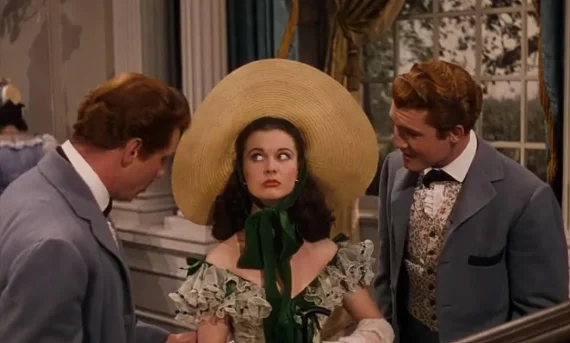
Gone with the Wind follows the life of Scarlett O’Hara (Vivien Leigh) over 12 years. Opening in 1861, on the eve of the American Civil War, at Tara, Scarlett’s family home, we are introduced to a number of key players including her parents Gerald (Thomas Mitchell) and Ellen (Barbara O’Neil), her sisters Suellen (Evelyn Keyes) and Carreen (Ann Rutherford), and her initial beaus Stuart and Brent (George Reeves and Fred Crane).
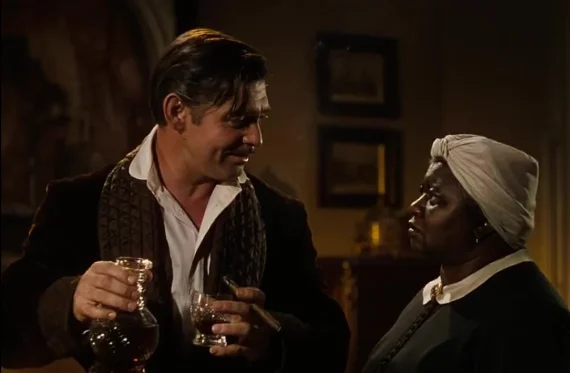
We are also introduced to the house servants Mammy (Hattie McDaniel), Pork (Oscar Polk) and Prissy (Butterfly McQueen) as well as those who work in the fields at Tara, Jonas (Victor Jory) and Big Sam (Everett Brown).
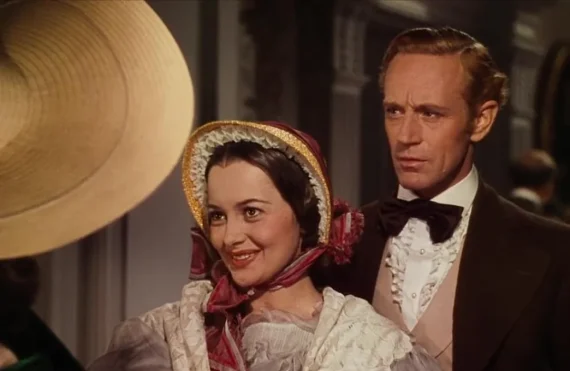
We learn that Scarlett is not short of male attention but the only man she wants is Ashley Wilkes (Leslie Howard) who is engaged to be married to his cousin Melanie (Olivia de Havilland). At Ashley and Melanie’s engagement party, Scarlett makes a failed advance on the husband-to-be and catches the eye of one of the other guests, Rhett Butler (Clark Gable).
We follow the life of Scarlett and those around her as they are caught up in the American Civil War. We see the huge devastation and impact this causes. At the core of the film is Rhett’s love for Scarlett and a will-they-won’t-they get together as she continuously rebuffs his advances, still holding hope that she will persuade the loyal Ashley to make a life with her instead of the wife he loves.
I shall say little more about the plot, as to not spoil it too much, but over its almost four-hour running time, including the musical overtures and intermission, it goes to some very dark places and is brave enough, small spoiler, to not give us a happy ending.
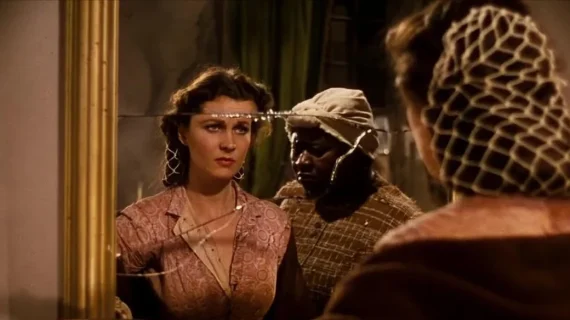
It feels as though Vivien Leigh was destined to play Scarlett and Clark Gable meant to play Rhett. I cannot imagine anyone else in either role. Each embody their characters perfectly. Both are wonderfully introduced, Scarlett in the opening moments alongside two suitors, and Rhett, with a camera swooping down a staircase as he looks up at Scarlett, smitten and immediately falling in love.
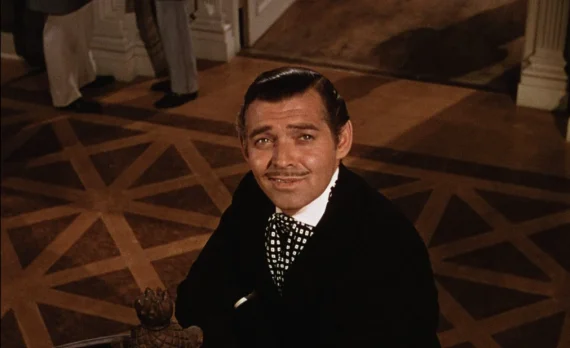
Leigh won the part of Scarlett after auditions which interviewed over 1,400 unknowns, and would win the Best Actress award at the Oscars, catapulting her to stardom. Scarlett is a fascinating character, strong-willed, headstrong and shows development throughout the runtime. The start of filming was delayed for two years to allow producer David Selznick to secure his Rhett Butler, in Clark Gable. Butler is equally fascinating, full of playful jokes but also showing a tough and at times problematic side.
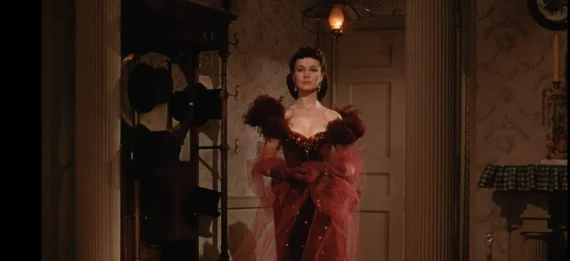
The pair are incredibly well supported by a phenomenal cast, who each play their part well. My favourite of the supporting cast is Hattie McDaniel, who is a force to be reckoned with as Mammy in a performance that won her Best Supporting Actress at the Academy Awards. Every scene she is in is a joy.
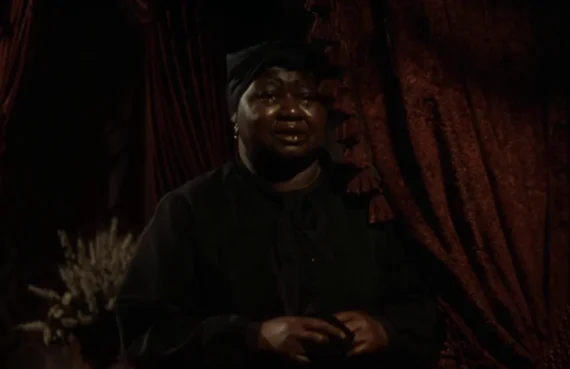
It is a long film yet not a minute is wasted, and it rattles along at such a pace that the runtime never feels an endurance test. Melodramatic moments are broken up by set pieces from the war that form the backdrop for the trials and tribulations, loves and quarrels our principal cast are involved in. This is film making on a huge scale at times and the Civil War scenes stand up to anything that modern CGI can deliver.
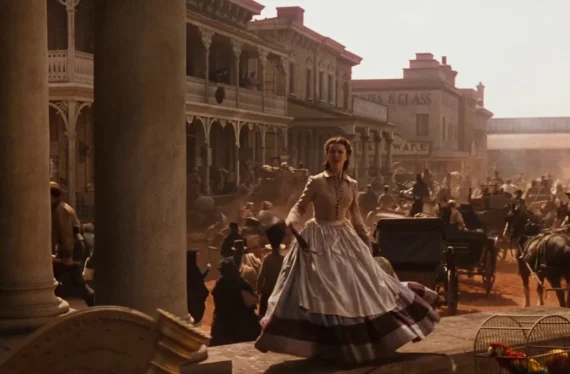
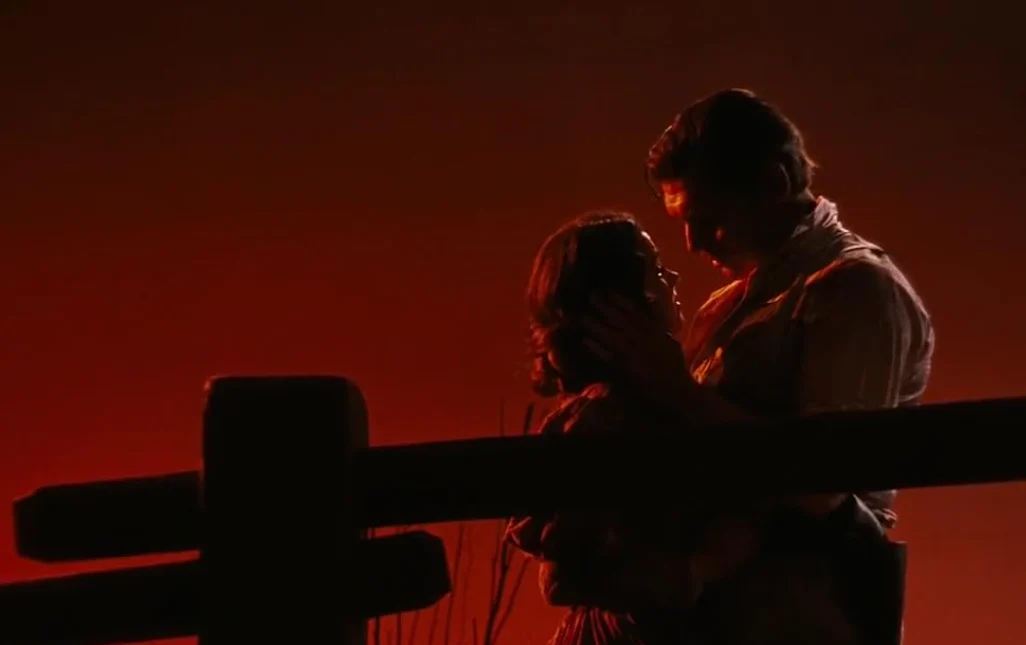
The cinematography by Ernest Haller is sublime and the sets, production design and costume design opulent. Some of Scarlett’s dresses, in particular, are breathtaking. The lighting is gorgeous against the painted backdrops, including a perfect moment where the moon is revealed from under clouds and lights Scarlett’s face, as are some beautiful images of characters in silhouette. The camera is also frequently moving and swooping, adding a sense of movement and urgency to proceedings. Some of the framed shots are works of art. It is a stunning looking film.
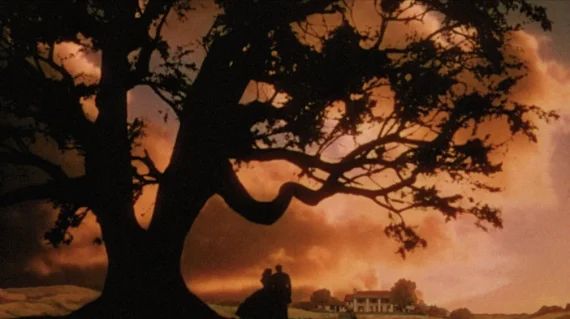
The film also sounds brilliant thanks to the music by the great Max Steiner, with some excellent recurring motifs and a central theme that is among the best in film history.
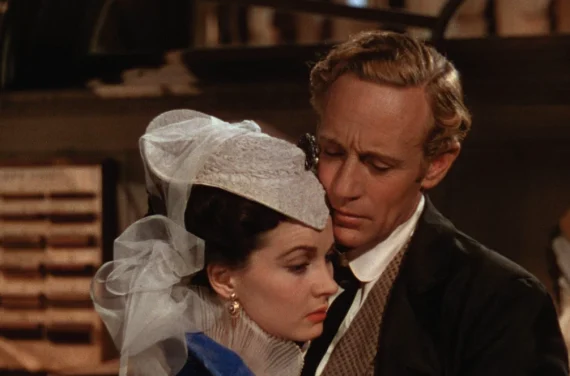
So, from a troubled production was born a masterpiece. It is one which provokes rightful debate about some of the controversial elements – which the new Warner Bros 4K disc does not shy away from thanks to a cracking panel in the extras – and is uncomfortable to watch at times, but it is also one where the outstanding craft of all involved can be seen on the screen. Cast and crew are at the top of their game and deliver a legendary film, rightly hailed as one of the greatest of all time, and one which won plenty of plaudits and accolades when it was released and was a blockbuster of its time. Frankly, my dear, I do give a damn…. about Gone with the Wind.
Film: [Rating: 5/5]
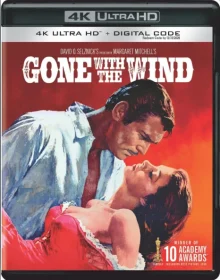
Gone with the Wind is available now on 4K UHD from Warner Bros. The transfer is generally exceptional, looking much better than prior home video releases thanks to a beautiful clean print, rich and fine detail, a natural colour scheme and well-balanced contrast. The detail can be seen in the costumes, individual holes in lace, the texture of Rhett’s suits and strands of his hair.
Some of the early sequences are soft, so do not look as strong as other parts of the film, and there is a similar shot early in the second half too. But the number of shots that are not as good looking are but a small fraction of the entire film and, overall, it is a triumph. The strong transfer is accompanied by great audio that is clean and crisp.
Special features:
Audio commentary by historian Rudy Behlmer.
Turner Classic Movies introduction
Gone with the Wind: The Influence That Endures
Scarlett O’Hara: A Woman Ahead of Her Time
Gone with the Wind: Restoring and Preserving an Epic
The Making of a Legend: Gone with the Wind
Gone with the Wind: The Legend Lives On
Melanie Remembers: Reflections by Olivia de Havilland
The Supporting Players
Dixie Hails Gone with the Wind
Atlanta Civil War Centennial
International prologue
Foreign language versions
Gone with the Wind: Hollywood Comes to Atlanta
The Complicated Legacy of Gone with the Wind
A Conversation about Slavery in Film
The film is split in two halves playing over two 4K discs and accompanied by the audio commentary. The rest of the extras are on a third disc, which is a Blu-ray.
Rudy Belhmer’s archival commentary is full of detail, and provides a wealth of insightful information, trivia and anecdotes not just about the film but about those involved and other projects they worked on. The bios of those involved are a particular highlight. There’s plenty to glean and it is an easy listen.
The Turner Classic Movies intro with Jacqueline Stewart gives a decent but brief five-minute overview about the film, its making of, the casting process, problematic elements and more, at a very high level, given the runtime.
The first of the new pieces is Gone with the Wind: The Influence That Endures, a nine-minute piece that looks at the film as a landmark, how successful it was and how influential it has been. There is a lot packed in but considering there is a two-hour piece on the making of the film, not to mention other extras, it adds little new.
Another new eight-minute piece is Scarlett O’Hara: A Woman Ahead of Her Time with the same talking heads as the previous piece. This is a decent little overview of Scarlett and why her character is so enduring. I got more from this than the previous piece and enjoyed it, particularly a section on costumes.
Gone with the Wind: Restoring and Preserving an Epic champions film preservation over seven minutes and explains a bit of the process of restoration with the same interviewees as the previous two extras. The look at the restoration process itself is fascinating.
The Making of a Legend: Gone with the Wind is an outstanding 123-minute making of from 1988, narrated by Christopher Plummer, which is full of praise for the legendary film, but which does not shy away from the challenges of making it. It features archival footage, valuable photographs and covers everything from the author who wrote the novel to release. There is plenty packed into this fantastic archival documentary. Best of all is the chance to see some of the many screen tests for the role of Scarlett.
Melanie Remembers: Reflections by Olivia de Havilland is a 39-minute archival interview from 2004 which is one of my favourite extras. The great actress was on fine form for the interview, revealing her memories of making the film, from reading the book, to being chosen for the role, through the making of and release. It is a warm and affectionate piece.
The Supporting Players archival pieces runs for 29 minutes and gives mini bios of actors Eddie Anderson who played Uncle Peter, Rand Brooks who played Charles Hamilton, Laura Hope Crews who played Aunt Pittypat, Jane Darwell who played Dolly Merriwether, Harry Davenport who played Dr. Meade, Leslie Howard, who played Ashley Wilkes, Evelyn Keyes who played Suellen, Cammie King who played Bonnie Blue Butler, Hattie McDaniel who played Mammy, Butterfly McQueen who played Prissy, Thomas Mitchell who played Gerald O’Hara, Ona Munson who played Belle Watling, Carroll Nye who played Frank Kennedy, Barbara O’Neill who played Ellen O’Hara, Oscar Polk who played Pork, and Ann Rutherford who played Carreen O’Hara. The pieces are brief but give some good highlights and overview of those featured.
Dixie Hails Gone with the Wind is a four-minute News of the Day piece about the premiere of the film with some fantastic footage of a historic moment.
The Atlanta Civil War Centennial features footage of the 1961 theatrical re-release of the film in Atlanta, which is again some wonderful footage to see. The footage is silent.
The International Prologue, which explains the Civil War for non-American audiences, runs for one minute and is a neat inclusion.
A three-minute foreign language versions section sees three scenes dubbed in different languages.
Gone with the Wind: Hollywood Comes to Atlanta is a 12-minute piece which again looks at the world premiere of the film, featuring archival footage, without the newsreel narration this time. It is marvellous to see all of the archival footage from the two-hour documentary and newsreel footage captured and preserved for current and future generations.
TCM Presents: The Complicated Legacy of Gone with the Wind is a 56-minute panel from 2019 which looks at some of the challenging elements, performances and analyses some of the scenes. It is a really, really good piece and given it looks at some of the less positive elements of the film; a really welcome, balanced inclusion to the praise.
TCM Presents: A Conversation about Slavery in Film is a seven-minute piece examining slavery on the screen. Given its runtime it does not have too much time to get going, but looks at Gone with the Wind and highlights how the film is being looked at in a different light and context, still admired, but not shying away from the troubling depiction of slavery.
Warner Bros have delivered a tremendous release for the all-time Oscar winning classic, Gone with the Wind. The epic film is as great as ever and looks as good as it ever has thanks to a generally excellent transfer. Warner have provided an excellent archival commentary and over five hours of video extras, half an hour of which are new, and an hour of which are new to disc covering pretty much everything you could ever want to know about the film and those who brought it to the screen. Definitive.
Disc/Package: 