


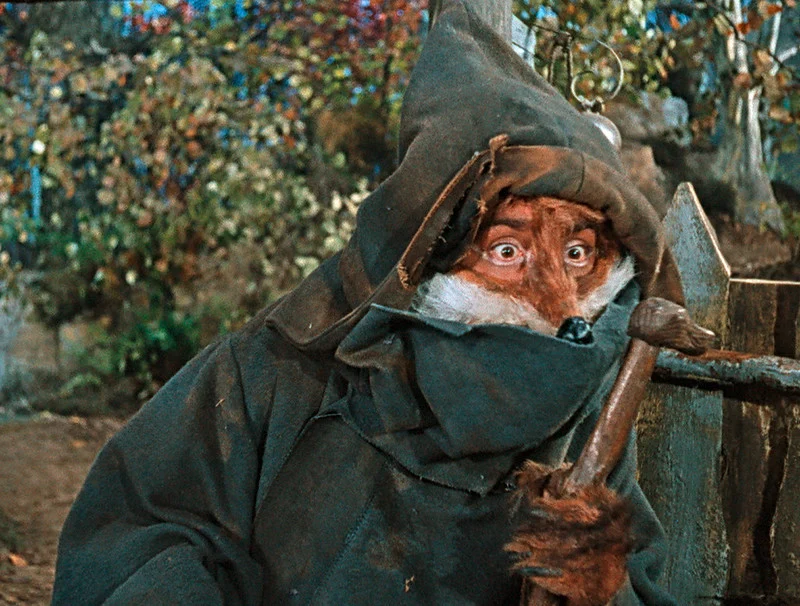
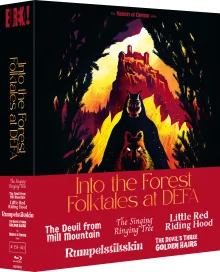
 Films: The Devil from Mill Mountain, The Singing Ringing Tree, Rumpelstiltskin, Little Red Riding Hood, and The Devil’s Three Golden Hairs
Directors: Herbert Ballmann, Francesco Stefani, Christoph Engel, Götz Friedrich, Egon Schlegel
Years: 1955–1977
Country: East Germany
East-German film studio DEFA released a series of children’s films inspired by German folklore that included Soviet-messaging. These were released from the 1950s until the late 80s. UK Bluray label Eureka has packaged five of these films, all in colour, as part of their Masters of Cinema series.
While most of the stories in this package are inspired by the notoriously dark Brothers Grimm fairytales, the tone is closer to children’s sketch show Horrible Histories. They’re inventive off-beat stories but they’ve been adapted with a Soviet-bent.
So, they have a light family friendly tone. There’s clear goodies and baddies. The simplistic moral lesson tends to focus on helping others and not capitalising on your own wealth, which may not come as a surprise. The kings tend to be portrayed as greedy, or young and impressionable to evil forces around them.
Most of these films are less than 90 minutes so they are quick and economical with their storytelling. It must be said, these films disprove the false stereotype that Germans don’t have a sense of humour as these fantasy films are all very funny, especially when taking aim at greedy nobles.
Picture and Sound
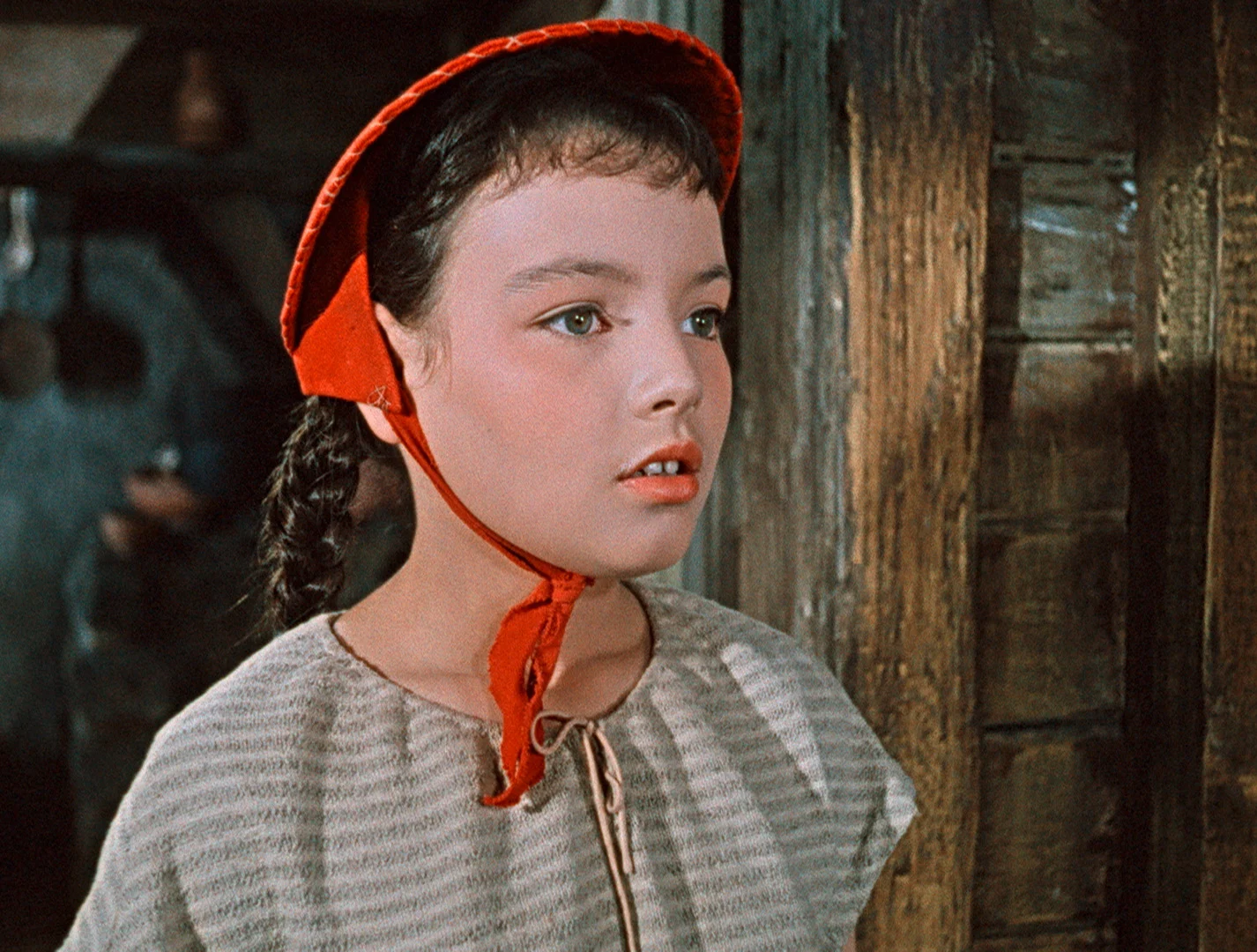
It’s a shame these were all shot in movie studios rather than on location, despite apparently having high budgets for the time. While the studio sets give the films the benefit of having somewhat of a picture-book effect, I can’t help feeling these would have been stunning works of art if they had been filmed in real life forests, rolling valleys and amid the Alpine peaks of Germany. At times, the sets do make it feel like watching a stageplay or a studio sitcom. Fortunately, the charm of the stories and the acting generally overcomes this.
All the films are presented in 1080p HD with a 1.37:1 wide-screen picture. The visuals and sound are at a high standard. The German version of Technicolor, Agfacolor, exposes the period stories in bright and vibrant lighting, enhancing the magic of these mythical stories. There’s a mix of earthy tones for the peasants and village life, dark greens of the forest, and muted grimy tones for the more sinister players. The costuming and make-up are phenomenal and you can see all the finer details in the textures and fabric.
There’s rich level of atmospheric sounds of the period with the clopping of horse hooves, chirping of birds and the roaring crackle of fire coming clearly through the speakers.
Below, I’ve jotted my thoughts on each film and the associated special features:
The Devil from Mill Mountain (1955)
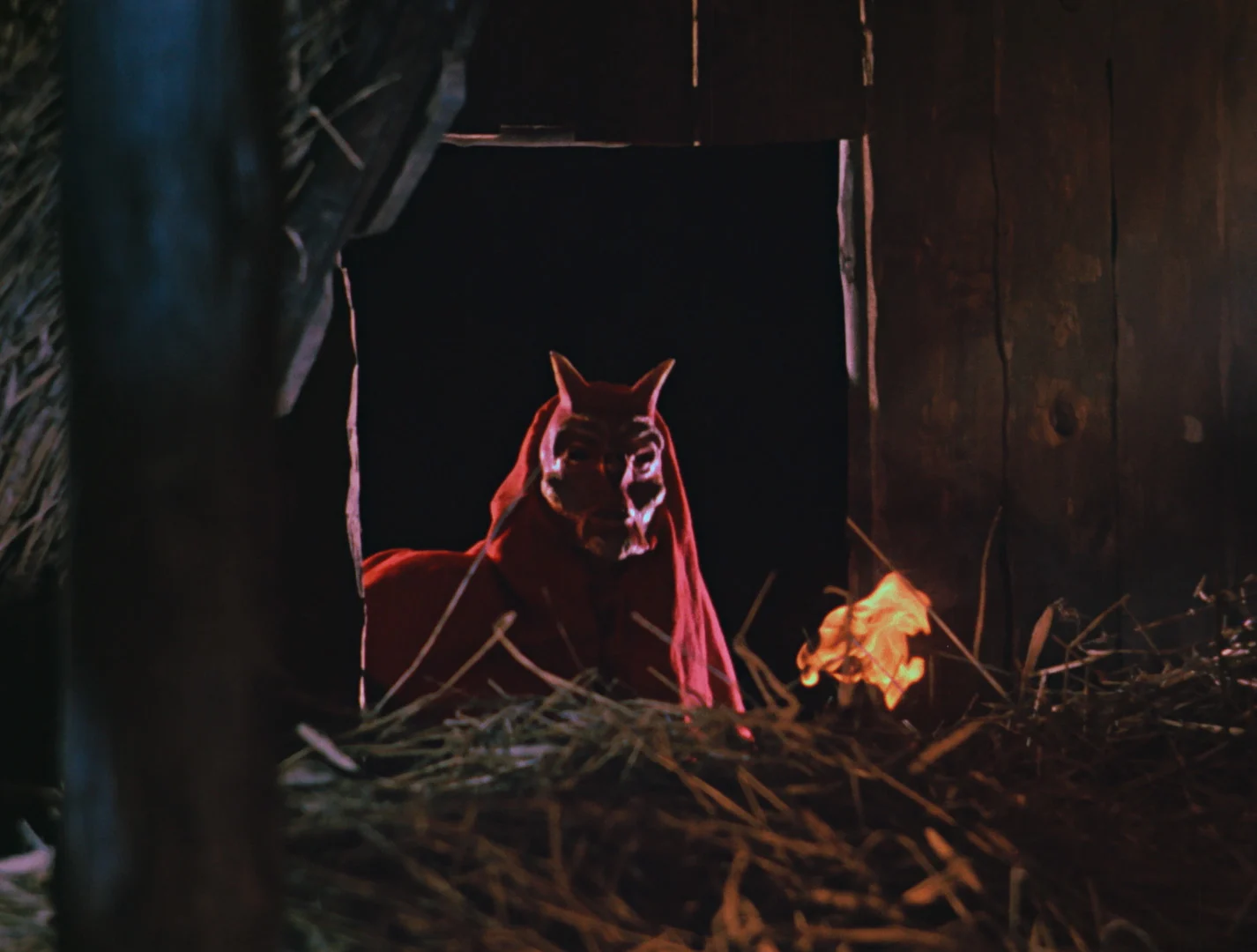
Light-hearted fairy tale with in-your-face soviet messaging, involving an evil mill owner scheming to exploit the local villagers. It features an excellent trio of bad guys with one of my favourite character actors, Werner Peters, known for the Dr Mabuse CCC sequels. They portray gluttony, stupidity and cruelty in equal measure. The mill owner, rather ironically, seems quite Stalin-esque in his appearance and the way he controls those around him. It was thoroughly entertaining – a great start to the boxset.
Special Features:
- New audio commentary on The Devil from Mill Mountain by film historian Michael Brooke
The commentary was very detailed, explaining the strategy behind DEFA’s productions, unpacking the socialist propaganda messaging (with there even being symbolism in the costuming) and giving background on the crew and performers.
The Singing Ringing Tree (1957)
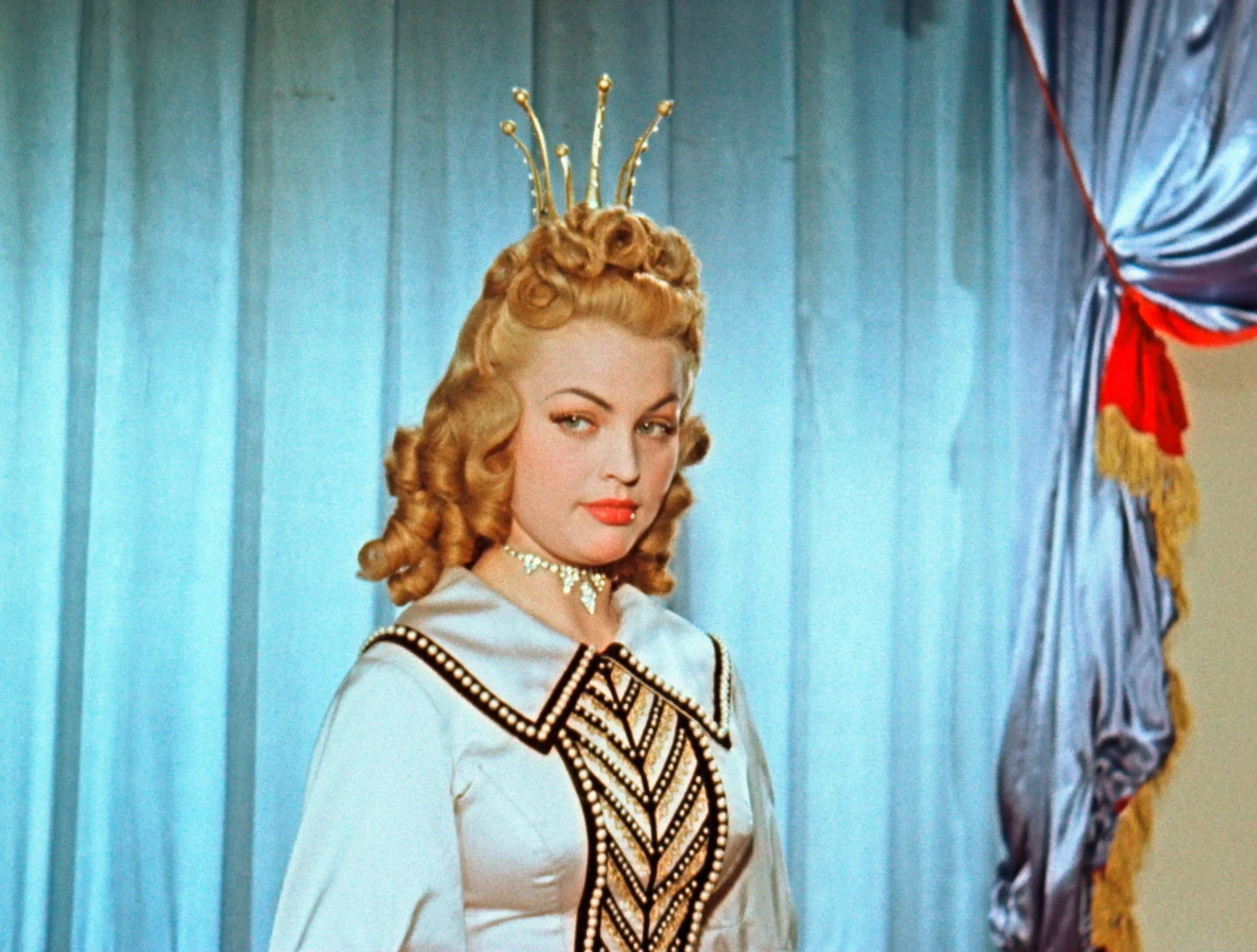
A delightful dreamlike tale that starts out very strong but sagged as the story developed. It’s a story about a prince trying to woo a spoilt princess. She sends him off on a seemingly impossible quest to find a magic tree.
Christel Bodenstein is utterly fantastic as “the haughty princess” in the first half of the story when she’s ill-tempered and demanding. There’s lots of funny moments, fantastic set design and the editing is very fluid, enhancing the storybook style of storytelling. There’s a great sequence where the prince rides his horse across various changing backdrops. It’s just a shame the plot necessitates its most entertaining character, the princess, must become less entertaining as the story unfolds.
It feels like a seminal work as the art design is eerily similar to Disney’s Sleeping Beauty which was released two years later in 1959 – especially the thorny bushes conjured up as a dark magical barricade by the creepy imp.
Special Features:
- Fairytales and Nightmares – new interview with writer, broadcaster and Fortean Times columnist Bob Fischer on the history of The Singing Ringing Tree
- Interview with princess actress Christel Bodenstein
Bob Fischer’s video essay (21.24mins) is illuminating. He speaks about the plot’s Brothers Grimm roots, the film’s legacy in Britain, as it was shown on British telly, and influences on shows like The Mighty Boosh.
Christel Bodenstein’s interview (16.33mins) is fantastic. Bodenstein argues the story is purely a morality tale with no soviet politics involved. She tells some very funny behind the scenes stories and reveals how some of the practical effects were achieved. Hearing these stories heightened the magic of the production.
Rumpelstiltskin (1960)
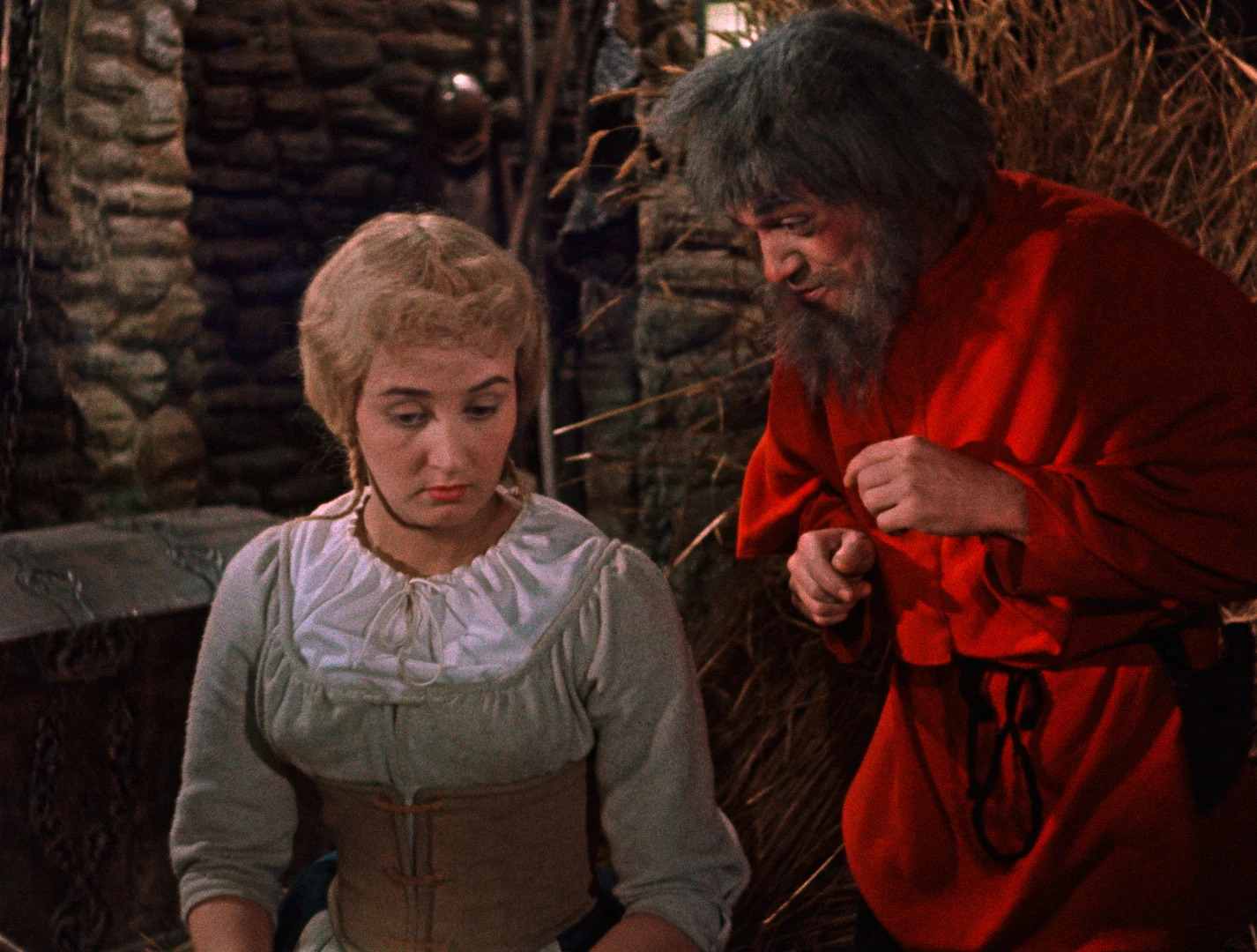
The storytelling here was a little more straightforward than the others so far. It’s the classic Brothers Grimm tale of Rumpelstiltskin. Disappointingly, he is reimagined as a kindly imp who imparts Soviet-slanted wisdom, rather than the wicked monstrous character from the original stories. The moral from this tale seems to be to never lie for gold or money. The standout performance comes from Müller Kunz as the Miller, a compulsive liar, who revels in getting more “fat, lazy and aristocratic” as the story progresses. It also features a hero with a rather dodgy wig who has an Alfie style fourth wall breaking monologue at the start of the film which is never revisited.
Special Features:
- New audio commentary on Rumpelstiltskin by Sam Goff, editorial director for Klassiki and host of The Klassiki Kino Club podcast
Really interesting approach to the commentary. Goff tackles how the Grimms’ fairytales were reworked to match the times.
Little Red Riding Hood (1962)
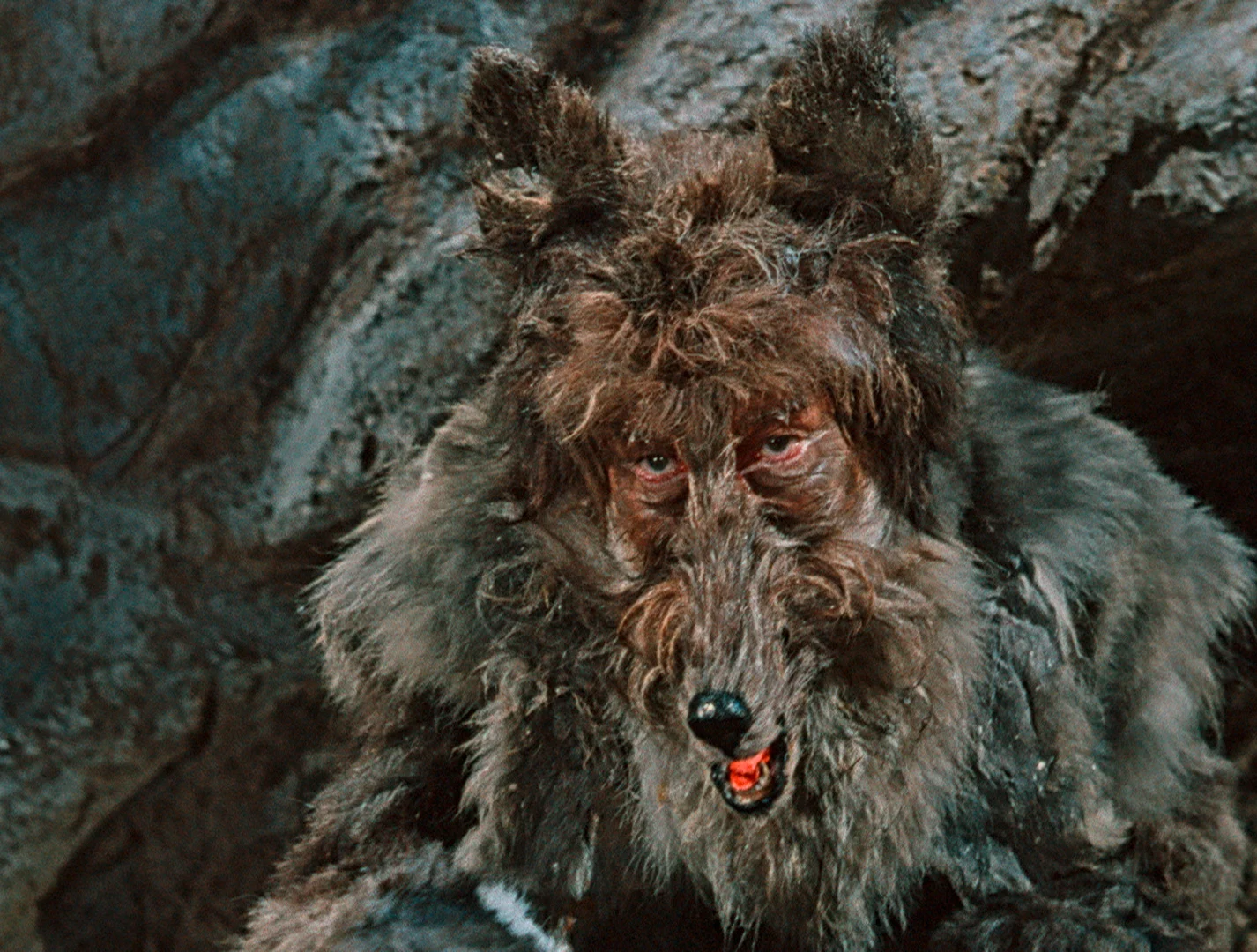
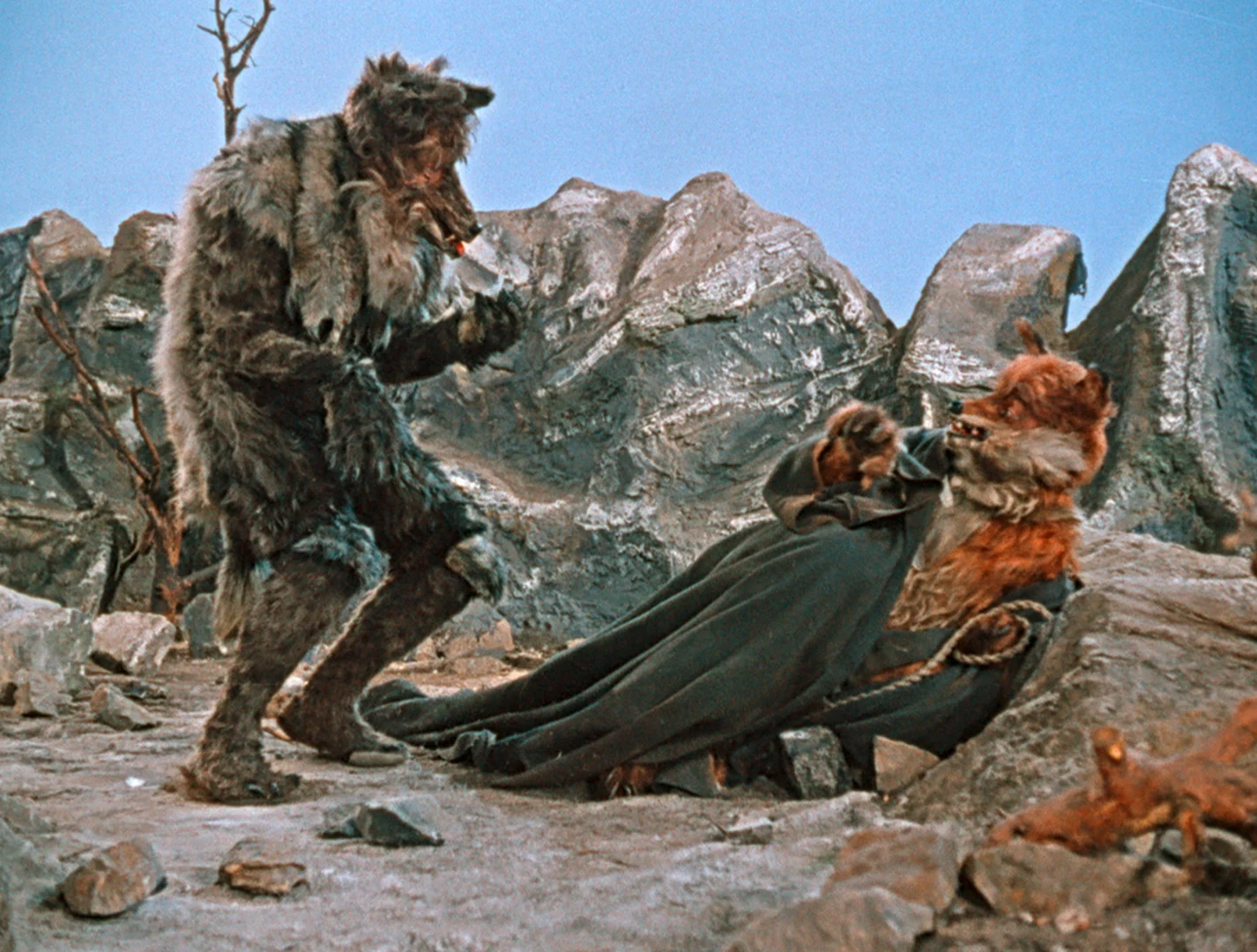
Certainly, the most Germanic of the films. A fantastic take on the Little Red Riding Hood (LRRH) tale. They’ve added in a series of animals to add more plot to the story. These include a devious fox who conspires with the Big Bad Wolf, a rabbit who acts as companion to LRRH and a dopey bear obsessed with honey. The costumes are fantastic with the wolf looking particularly terrifying. It reminded me of a stage play I saw of Fantastic Mr Fox many years ago.
Child actress Blanche Kommerell holds her own as a determined headstrong version of LRRH. All the actors playing the animals, including the young boy as the rabbit, seem to take their roles quite seriously, moving their bodies in the style of the animal even when inert.
The Devil’s Three Golden Hairs (1977)
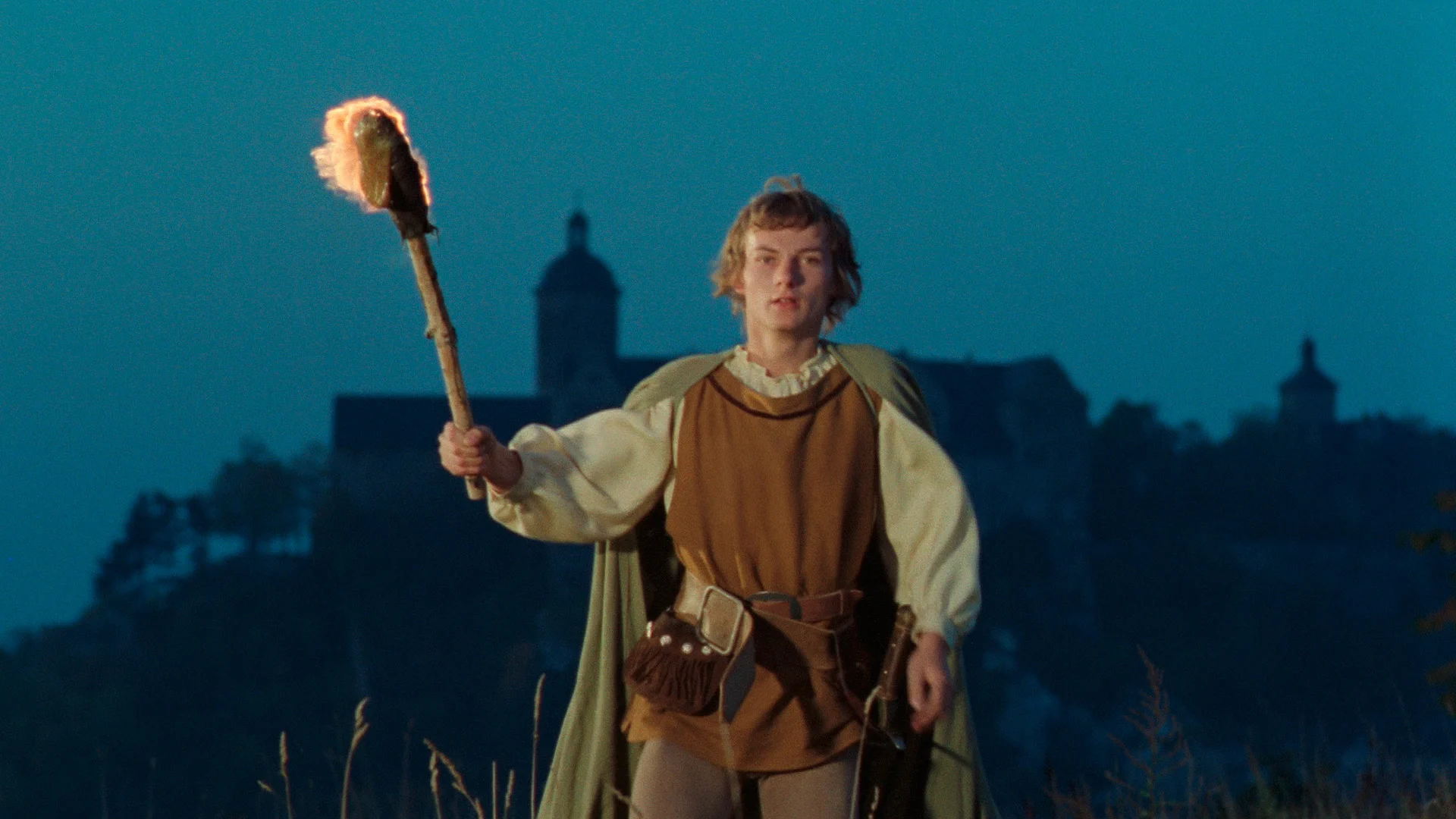
This film was delightful and had the most epic feel as some of it seems to have been shot on location. It was like a bizarre fever dream with so many strange occurences. It’s a hero’s tale where a greedy king sends a foolish peasant on a seemingly impossible quest to fetch the three golden hairs from the devil’s head.
Hans-Joachim Frank is endearing as our hero, Jakob, but the most memorable aspects have to be the performances from cruel king and the devil actors. This was the only film which had an English dub track included and it worked really well with some great dual performances.
Special Features:
- DEFA and the Devil – new video essay on the depiction of the Devil in folktales from the Brothers Grimm to DEFA by film and literature scholar Mary Going
Going provides a decent overview of the topic of the Devil in German folklore and film (25 minutes), with focus on the Brothers Grimm, the legend of Faust and conflicting depictions in German cinema. There’s a great real life story about how the printing press was seen as so miraculous, the man printing the bible was accused of working for the devil.
Films:


The package also contains three animations:
- The Wolf and the Seven Little Goats (Otto Sacher, 1990) – short cut-out animation adapted from the Brothers Grimm story by the DEFA Studio for Animation Film (10 mins)
- The Magic Scissors (Bruno J. Böttge, 1956) – short silhouette animation inspired by traditional folktales and produced by the DEFA Studio for Animation Film (19 mins)
- Sleeping Beauty Was a Beautiful Child (Katja Georgi, 1987) – short puppet animation adapted from Sleeping Beauty by the DEFA Studio for Animation Film (5 mins)
Like the rest of the works on here, these short animations were gloriously inventive and above-all, weird. The Wolf and the Seven Little was the highlight of the three – it was particularly dark. I was also delighted the 1990 animation seemed to have surround sound.
Booklet with three essays:
- ‘Work, Wealth and Ordinary Women’ An Introduction to DEFA’s Folktales by Sebastian Heiduschke
Heiduschke discusses the cultural significance of the folktale films, examining their high production values, global popularity and ideological modifications.
- Forest Trails Notes on Folktales at DEFA by Sonja Fritzsche, Qinna Shen and Elizabeth Ward
Ward provides expansive notes on each film, looking at how the films reinterpreted traditional motifs of the tales.
- Brothers Grim Folktales translated by Margaret Hunt
Hunt has translated three Brothers Grimm tales, including The Singing, Springing Lark, Rumpelstiltskin and Little Red-Cap. An excellent addition.
Extras:
Eureka releases Folktales at DEFA (Limited Edition Box Set) on 27 July, 2026.