


 Director: Basil Dearden
Screenplay: Basil Dearden and Michael Relph
Starring: Roger Moore, Hildegard Neil, Alastair MacKenzie, Hugh MacKenzie, Kevork Malikyan, Thorley Walters, Anton Rodgers, Olga Georges-Picot, Freddie Jones, John Welsh, Edward Chapman, Laurence Hardy, Charles Lloyd Pack, Gerald Sim, Ruth Trouncer
Country: United Kingdom
Running Time: 94 min
Year: 1970
BBFC Certificate: PG
I’ve long been a fan of Roger Moore’s as James Bond but also as an underappreciated actor who, given the right material, could deliver a cracking performance. For me, his best role is in Basil Dearden’s The Man Who Haunted Himself.
I reviewed the Australian Imprint release of the film in 2024, and my review of that release can be found here: https://blueprintreview.co.uk/2024/06/the-man-who-haunted-himself-viavision/
What follows is my thoughts on the film from that review, as my feelings on this viewing are unchanged – I only reviewed it around two years ago after all. The new material for this review is focused on the transfer and extra features on the new 2026 UK 4K UHD release by StudioCanal, whilst carrying over thoughts on some of the extras that featured on the Imprint edition.
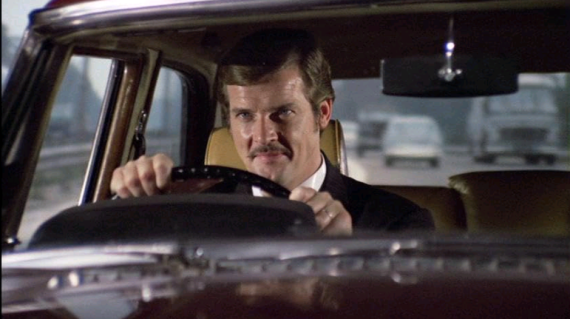
Roger Moore once remarked that The Man Who Haunted Himself was one of the few times he was allowed to actually act. Throughout his career he played heroes who were all, in his words, more straight-forward roles: Simon Templar in The Saint, Lord Brett Sinclair in The Persuaders and, of course, a seven-film run as 007, James Bond, from 1973’s Live and Let Die to 1985’s A View to a Kill. It’s true that The Man Who Haunted Himself really does give Moore a chance to showcase his acting ability in a dual role as part of a truly remarkable film, and one of my personal favourites starring the actor.
The Man Who Haunted Himself is based on a 1940 short story by Anthony Armstrong, called The Strange Case of Mr. Pelham, which became a novel in 1957. The film follows Harold Pelham (Moore) who is one of three directors of a marine technology company. Pelham drives home, in a sequence which features some great footage of London landmarks playing over the opening credits, only to lose control of the vehicle on the M4 motorway, which was yet to be completed.
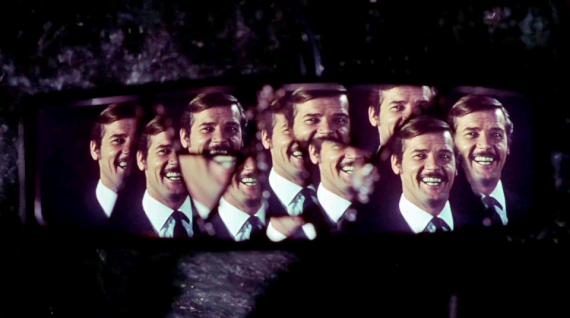
Pelham seems to have a strange turn, his face turning sinister, taking off his seatbelt and speeding and imagining he’s driving a sports car. He then crashes into the barricade for the section of motorway which was unfinished and comes to a halt after losing control and going into a spin. It’s a striking, audience-grabbing way to open the film.
Pelham is then taken into an operating theatre for emergency surgery, where two heartbeats are discovered. If that isn’t enough, after awakening Pelham discovers a load of odd occurrences and people acting strangely towards him, thinking he’s been to places he can’t recall. Pelham eventually suspects a double may be masquerading as him. That’s the basic premise and the groundwork for a terrific psychological thriller that plays like an extended episode of The Twilight Zone; mysterious, at times creepy and building to a cracking finale.
The supporting cast are on fine form, particularly Hildegarde Neil as Pelham’s wife, Eve. Freddie Jones gives an over the top performance as a psychiatrist who appears in several startling sequences featuring a spinning camera and lots of paranoia.
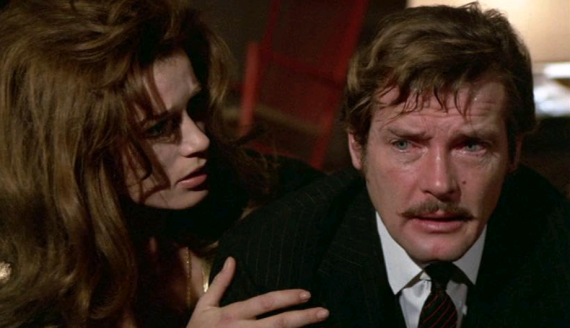
But this is Moore’s film and he’s fantastic from start to finish, playing two sides of the same character well in a Jekyll and Hyde style story. He proves his dramatic acting chops and range in a role that’s a wide departure from some of the heroic characters he’s best known for, showing a real sinister side and vulnerability, at times during the same scene.
There’s some marvellous on-location footage showcasing various parts of London, not least that opening sequence on the unfinished M4. Michael J. Lewis’s score is also great, with a hummable theme, a terrific piece for the end sequence and at times quite poignant, sad and melancholy.
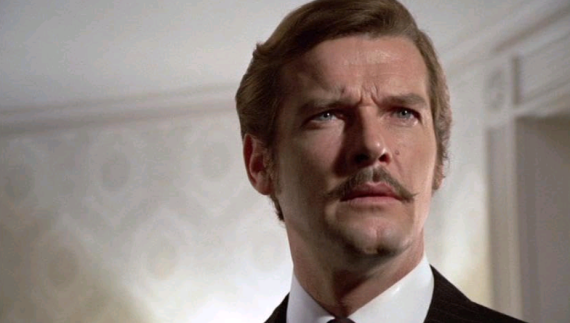
There’s also a nice, unexpected foreshadowing as a discussion takes place about someone leaking information from the marine technology firm where Moore’s Pelham is director. Pelham says that “espionage isn’t all James Bond and Her Majesty’s Secret Service”. Moore would star as 007 just three years later in Live and Let Die, and the rest, as they say, is history.
The Man Who Haunted Himself is a corking Twilight Zone-esque psychological thriller which showcases a different side of Roger Moore, who is given a chance to show his acting ability. It has a brilliant opening, is full of mystery and suspense and builds to a memorable, psychedelic and technically brilliant climax.
Film 
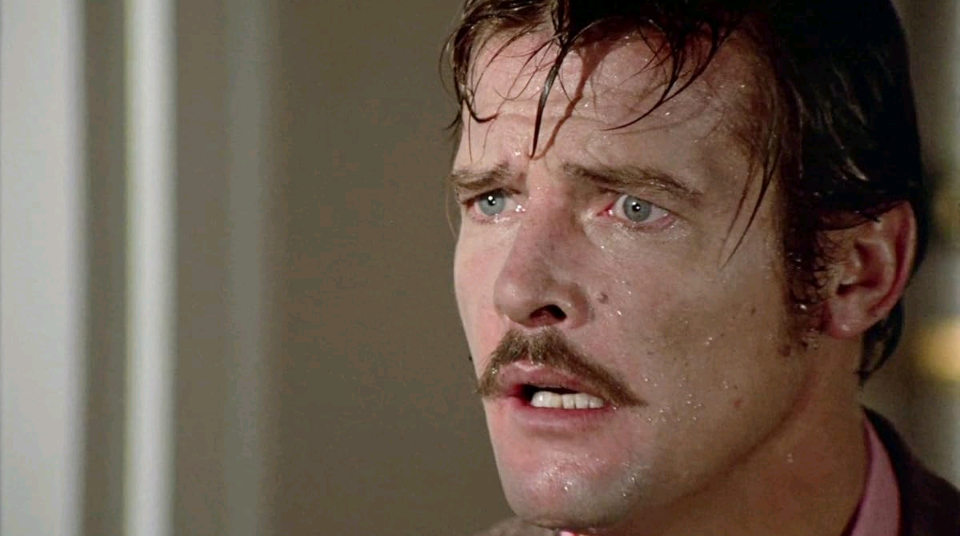
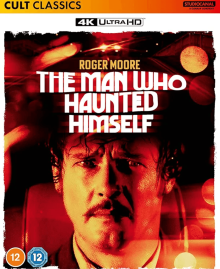
The Man Who Haunted Himself is released on 4K UHD by StudioCanal on 27th April 2026. I was provided with a check disc for the review so can’t comment on the packaging or art cards. The transfer is generally fantastic with no blemishes, a natural yet rich colour scheme, and plenty of really fine detail. You can see the pores on the skin, the sweat dripping, the detail in wood. There are the occasional softer shots that don’t fare as well but, overall, the transfer is a genuine revelation. The audio also sounds great, with dialogue, effects and score all very clear.
Extras
New Reflections on a Cult Classic: An interview with Kevork Malikyan
Masters of Horror: Joe Dante and Stuart Gordon on “The Man Who Haunted Himself“
Audio commentary by authors Jonathan Rigby and Kevin Lyons
The Man Who Became A Friend: Gareth Owen on Sir Roger Moore
The Men Who Were Haunted featurette
Four image galleries including Storyboards (opening titles and car chase)
Music suite of Michael J. Lewis’s original score
Theatrical trailer
Includes 4 art cards
The Imprint release contains a number of other wonderful extras that haven’t been ported over for this StudioCanal release, including an outstanding audio commentary by Moore and credited writer/producer Bryan Forbes, the great documentary Roger Moore, A Matter of Class, and an episode of Alfred Hitchcock Presents: The Case of Mr. Pelham, based on the original novel.
That being said, there are two extras on the StudioCanal release that weren’t on the earlier Imprint edition, as well as the addition of a selection of storyboards, and the opportunity to have the film on a 4K UHD disc looking and sounding as excellent as it does here is brilliant.
The new Reflections on a Cult Classic: An interview with Kevork Malikyan runs for 12 minutes. Malikyan played Luigi in The Man Who Haunted Himself and talks about meeting Roger Moore for the first time and working with him twice, the other being a 1968 episode of The Saint, called The People Importers. He has a lot of positive comments to say about Moore. He talks about the film in question, which was his first film role, and discusses Moore’s performance, working for director Basil Dearden. It’s a brief but warm interview.
Masters of Horror: Joe Dante and Stuart Gordon on “The Man Who Haunted Himself” runs for 18 minutes and see the two horror directors share their love of the Roger Moore film, in an archival piece. Their interviews are very positive, discussing some of the highlights of the film, its direction, Moore’s performance and plenty more. They also discuss Invasion of the Body Snatchers and the themes it shares with The Man Who Haunted Himself and also highlight some of the sequences, as well as the effects and how the film gets, in Gordon’s words “stranger and stranger” as it goes on. It’s a really good piece overall that paints an affectionate portrait of a film I adore.
The standout extra is the archival commentary with authors and film historians Jonathan Rigby and Kevin Lyons. Rigby and Lyons have appeared together on a number of commentaries, which are always well worth a listen and packed with information. They talk about some of the symbolism in the movie (that opening shot of Moore’s Pelham exiting onto a city street through a lift, which feels like a cage that is trapping him), point out the locations featured in the opening sequence and the sense of nostalgia that seeing these provides, as well as pointing out that the swimming pool featured early on was also in Michael Reeves’s The Sorcerers. Rigby and Lyons brilliantly compare the original source material story to the film – it’s 15 minutes before anything from the story appears. There’s plenty to take away about the plot, the actors, the crew, other films released at the time and plenty more, including their favourite lines in the film and the beautiful score and the composer behind it.
The Man Who Became a Friend is a brilliant 16-minute interview with Moore’s biographer and talent agent Gareth Owen. He shares what led to Moore taking on the role, and how the M4 was not finished when that sequence was filmed. Owen also shares tragic anecdotes about the film’s director Basil Dearden. Dearden worked with Moore again on The Persuaders, and, during shooting for that show, he died in a crash on the now opened M4 in 1971, not far from where the opening sequence of The Man Who Haunted Himself was filmed. Owen talks about how proud Moore was of the film and shares many more reflections on the movie.
The Men Who Were Haunted is a 32-minute featurette of interviews with actor Freddie Jones, who played the psychiatrist, and production crew members: camera operator James Devis, first assistant editor Roger Guertin, second assistant director Dickie Bamber, assistant art director Michael Pickwoad and John Comfort. The warm feeling they all have for the late great Moore shines through and there are some nice recollections of London at the time, the shooting locations and filming some of the sequences. There are also some poignant memories about the death of Basil Dearden.
The three-minute trailer focuses on Roger Moore, referring to him rather than the character in the text on the screen but gives a decent flavour of the film.
The isolated score is brilliant – it’s a fantastic suite of music by Michael J. Lewis and to have it as an isolated track is a welcome bonus.
The image galleries contain a wealth of images. The storyboards gallery auto-plays for about seven minutes. A second image gallery of stills and behind the scenes plays for nine minutes, a marketing materials gallery for just over a minute, and a portrait and promotional gallery for eight minutes.
In closing, StudioCanal have provided a first-class audio-visual presentation for the masterpiece The Man Who Haunted Himself, with some good new and archival extras, though losing some wonderful features that appeared on the 2024 Australian Imprint release. It’s a fantastic UK release, though, of one of my favourite movies, and looks simply astonishing in 4K.
Disc/Package: 