


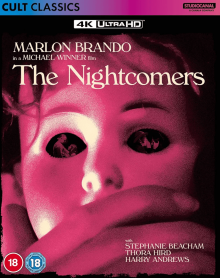
 Director: Michael Winner
Screenplay: Michael Hastings
Starring: Marlon Brando, Stephanie Beacham, Thora Hird, Harry Andrews, Verna Harvey, Christopher Ellis, Anna Palk
Based on: Characters from The Turn of the Screw by Henry James
Country: UK and US
Running Time: 96 min
Year: 1972
BBFC Certificate: 18
The Turn of the Screw is a masterpiece of horror literature. Written by Henry James, the gothic horror novella was serialised in Collier’s Weekly in 1898 before later being published as a standalone. The novella provided an inspiration for creative minds and was adapted as a Broadway play and chamber opera in the 1950s and a Netflix miniseries by Mike Flanagan in 2020, under the title of The Haunting of Bly Manor.
It’s also been adapted for the big screen, most notably by director Jack Clayton as The Innocents, a 1961 masterclass in mood, atmosphere and scares, which is among the best psychological horrors and ghost stories of all time and stars Deborah Kerr and Michael Redgrave. That version sees Peter Wyngarde play the role of Peter Quint, Clytie Jessop portraying Miss Mary Jessel, Megs Jenkins as Mrs Grose, Martin Stephens as Miles and Pamela Franklin as Flora.
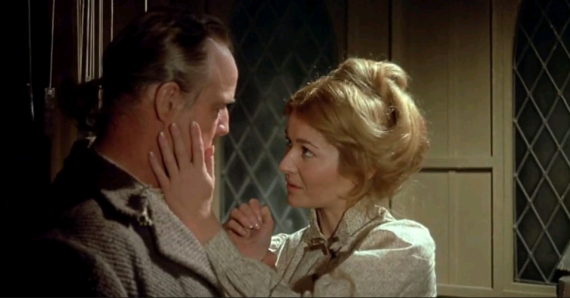
These characters are mentioned to give some context and comparison to the film which is the focus of this review, Michael Winner’s The Nightcomers, a 1972 film which was made as a prequel to James’ story, and ultimately The Innocents. Written by Michael Hastings, the prequel casts Marlon Brando as Quint, Stephanie Beacham as Miss Jessel, Thora Hird as Mrs Grose, Verna Harvey as Flora and Christopher Ellis as Miles.
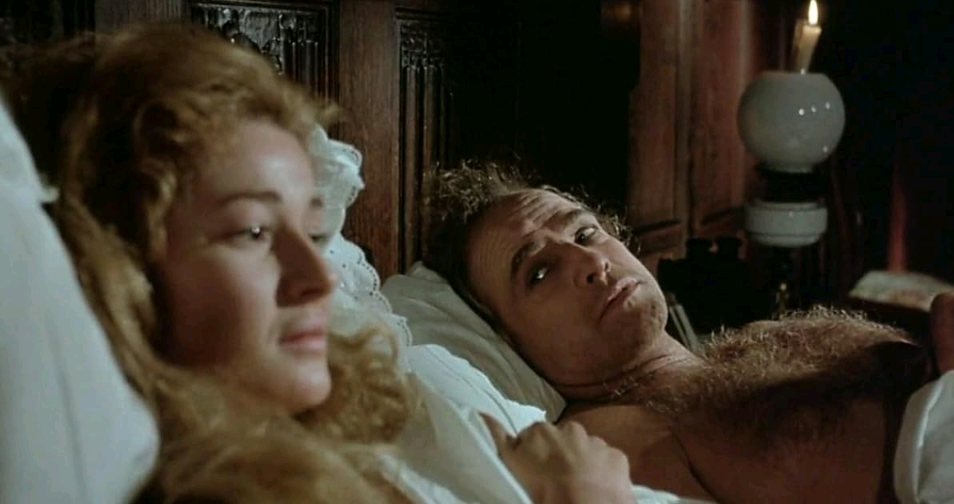
The Nightcomers focuses on groundskeeper Quint’s corruption of governess Miss Jessel and of the entire English manor household where he serves, which paves the way for the events in The Turn of the Screw. The plot sees Flora and Miles left in the care of repressed governess Miss Jessel and housekeeper Mrs Grose following the death of their parents. Hear they bear witness to Brando’s Quint, a malevolent servant who is the true rule of the household.
Miss Jessel is conflicted, as she can’t stand Quint on one hand but on the other is fascinated by him and drawn into a secret sado-masochistic affair, while his influence over Flora and Miles grows as the psychological horror film unfolds, seemingly light and friendly at the start but darker as the story progresses and the children see the darkly sexual games Quint and Miss Jessel embark in.
Presented by Joseph Levine, the film was a co-production between Winner’s Scimitar Productions and American film producers and was distributed by Avco Embassy Pictures. It’s an interesting take on the characters, but is ultimately flawed. It would have been much better if the production had not been based on the characters from The Turn of the Screw and its first screen adaptation The Innocents.
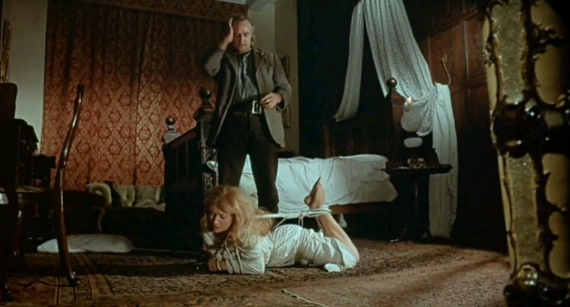
Expectations are not met when comparing to those two masterful works of art – and with the psycho-sexual elements, the characters feel like they’re not the same any way. Yes, in the original source material Miss Jessel was seduced by Quint, but in The Nightcomers this is reimagined as a toxic sadomasochistic sexual relationship that didn’t chime for me with the characters of the original source material, though it does humanise them somewhat. Had the film been made as a standalone not in James’ universe it may have been more warmly received.
The Innocents is a masterpiece in building tension and crafting scares. It also had a lot of mysteries and backstory which as left unexplained, and for good reason. The Nightcomers isn’t that. Its horrors are very different, focused on the overbearing presence of Quint and his corruption of Miss Jessel and household that sets the scene for The Innocents and unnecessarily imagines a backstory for the characters that is flawed.
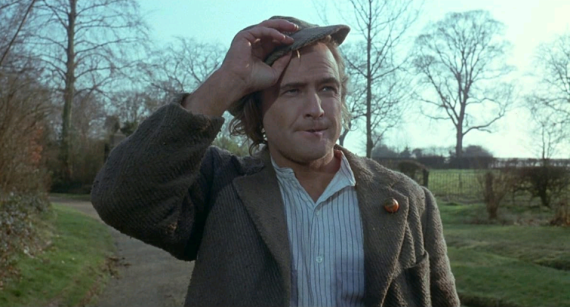
That being said, I enjoyed The Nightcomers much more than I did on first viewing and found plenty to admire, though also still found it a deeply flawed movie that can’t hold a candle to The Innocents. Firstly, the performances. Brando dominates proceedings whenever he’s on the screen – and, even when he isn’t, his grip over the household is still there in a foreboding kind of way. It’s far, far from his best performance but I found him utterly terrifying and repulsive at times, for the right reasons, but also very human and warm character in some of his early interactions with the children.
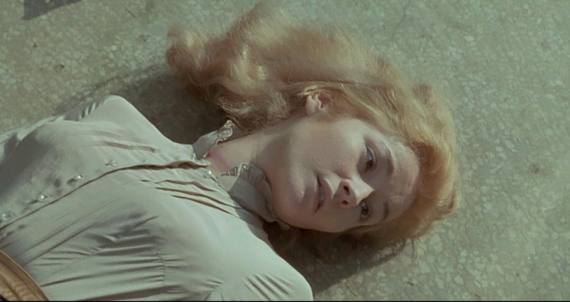
Beacham gives a good, committed performance as Miss Jessel, playing each facet of her character well and giving her all for the sexual encounters she has with Quint. This, and the previous year’s Tam-Lin (AKA The Ballad of Tam-Lin and The Devil’s Widow) would pave the way for a decent 1970s in horror for Beacham with roles in Hammer’s Dracula A.D. 1972 (1972), the Amicus production And Now the Screaming Starts! (1973), the Pete Walker duo House of Mortal Sin (1975) and Schizo (1976) and Norman J. Warren’s Inseminoid (1981), coming just after the 1970s. I also have fond memories of her scaring me as a child with her performance in the big screen adaptation of Joan Aiken’s The Wolves of Willoughby Chase (1989).
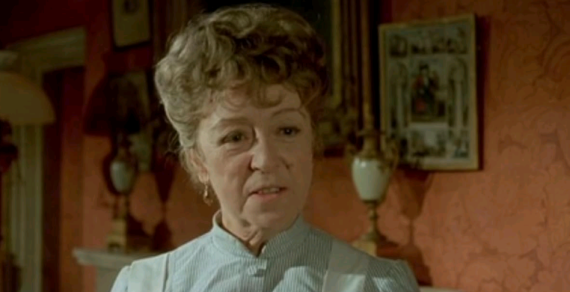
It’s always a pleasure to see Thora Hird and she gives a pretty dark performance herself in her interactions with Quint as Mrs Grose, whilst also being warm around the children and formidable in her interactions with Miss Jessel. Verna Harvey as Flora and Christopher Ellis as Miles are decent as the children, whose innocence is corrupted through what they witness at the house, and they go into some very un-PC territory as they start to recreate what they’ve witnessed Quint and Miss Jessel doing.
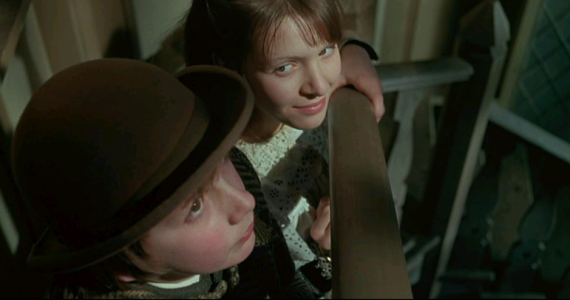
Filmed on location in Cambridgeshire, The Nightcomers was lensed by Robert Paynter, who collaborated with Winner on 10 films and would also work with John Landis on five films including An American Werewolf in London (1981), as well as the director’s classic Michael Jackson music video for Thriller (1983).
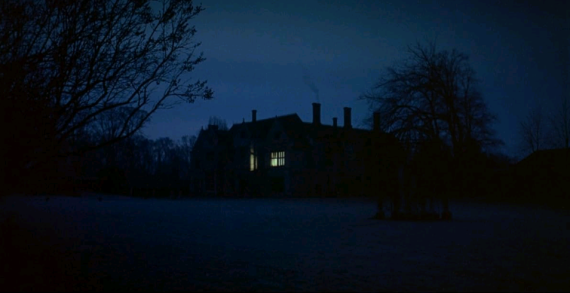
The cinematography features some interesting pans and zooms and frequent movement, with some beautiful framing which showcases the countryside and the manor house, which is brought to life through wonderful production design and costumes and the use of the real Sawston Hall in Cambridgeshire. There are also some nods to shots in The Innocents. Jerry Fielding’s score is quite classic, playful at the start, but building to a more ominous tone to underscore the very dark territory that the film slowly builds into.
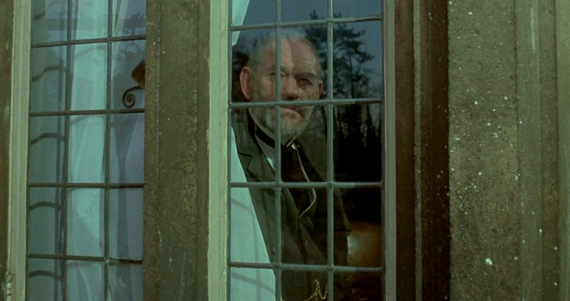
Michael Winner’s The Nightcomers is often derided, and I can see why, but it also has its champions. I fall somewhere in the middle. I didn’t find it as bad as some have said, on my second viewing, finding plenty to enjoy, not least Brando, Beacham and Hird’s captivating performances and the rich atmosphere that permeates throughout, thanks to the location filming, production and costume design, score and other performances.
Yet, on the other hand, it’s difficult to escape the fact that it was made as a prequel to the classic and masterful film The Innocents and an equally scary source material by Henry James, the novella The Turn of the Screw. It’s not scary, the character backstory didn’t entirely chime with me and, as such, my expectations were not met, as The Nightcomers just isn’t anywhere near the quality of The Innocents. It is an interesting watch throughout though but best to temper expectations before going in.
Film: 

The Nightcomers is released on 4K UHD by StudioCanal as part of their Cult Classics range on 30th April 2026. I was provided with a check disc for the review so can’t comment on the packaging or art cards. The image is good, with no print damage. The film is quite soft, visually, so it doesn’t have the same level of clarity or detail as some transfers and is far from the strongest 4K presentation I’ve seen, but it’s fine. The colour scheme is natural, though muted at times, and there are levels of detail, just not as much as the best presentations around. The audio is good with dialogue, sound effects and music all sounding clear.
Extras:
New – Kim Newman on The Nightcomers
Audio commentary by film historian Kat Ellinger
Audio commentary by film historians Alain Silver and Jim Ursini
Turn of the Camera – interviews with the production crew
Delicately Feminine: The Film Adaptations of Henry James’ ‘The Turn of The Screw’ – video essay by film historian Kat Ellinger
Theatrical Trailer
Teaser Trailer
Includes 4 art cards
The previous UK Blu-ray edition of the film from Network just had trailers, a stills gallery and a promotional material PDF. The StudioCanal release not only provides an upgrade on the audio-visual front with a decent presentation but includes a number of extras, one new and some of those found on the US Kino Lorber and Australian Imprint releases.
Firstly, the extra that is new for this release is from Kim Newman, who provides an excellent overview, which covers the background to the film, the novella The Turn of the Screw, that book’s original publication and plenty more over a very entertaining 19 minutes. He covers director Michael Winner and the place this came in his career, and gives a brief look at some of the cast. I particularly liked Newman’s analysis of Brando’s performance, debunking theories that he phoned in his performance. Great, as is to be expected from Newman.
Kat Ellinger’s commentary is authoritative, providing an analysis of the film and looking at it in the context of gothic horror. Ellinger is a fan of the movie and provides a strong case for the film, highlighting the elements she feels work well and covering the actors, themes and other elements. Supporters of the film will find plenty to enjoy and Ellinger’s case for it may give an interesting insight for detractors too. Fantastic stuff.
Film historians Alain Silver and Jim Ursini provide a different perspective on the film, covering the background to the production, the filming, looking at the cast and crew, and giving some analysis about the movie. It’s another good track. I preferred Ellinger’s overall, but both commentaries are entertaining and insightful and complement each other very well, so are well worth listening to.
Kat Ellinger appears again to provide a 19-minute video essay, which is equally fabulous, covering James’ The Turn of the Screw and what makes it a masterpiece before turning to gothic cinema and adaptations of the book, like the outstanding The Innocents. Ellinger eloquently explains why Jack Clayton’s film works before moving through other adaptations and then spending some time on The Nightcomers. It’s a fantastic watch that made me want to seek out the other films I hadn’t seen whilst rewatching others I have.
Turn of the Camera runs for 29 minutes and features interviews with a number of the production crew including Clapper Loader Peter Carmody, Property Master Barry Wilkinson, 1st Assistant Director Micharl Dryhurst, and Hairdresser Stephanie Kaye. They all talk generally warmly about director Winner and their memories of the production. There are some illuminating insights into the filming, and a few fun anecdotes. It’s always a pleasure to watch such interviews with crew members, particularly those who worked more behind the scenes who don’t always feature in documentaries and interviews.
Closing out the on-disc package are a trailer and teaser trailer, which play up Brando as “brutal and beautiful”.
In closing, StudioCanal have provided a decent, though not stellar, audio/ visual presentation for Michael Winner’s The Nightcomers, and have supplemented it with a fantastic new interview with Kim Newman and a number of archival extras, including a wonderful commentary by Kat Ellinger, who also provides an excellent video essay.
Disc/Package: