


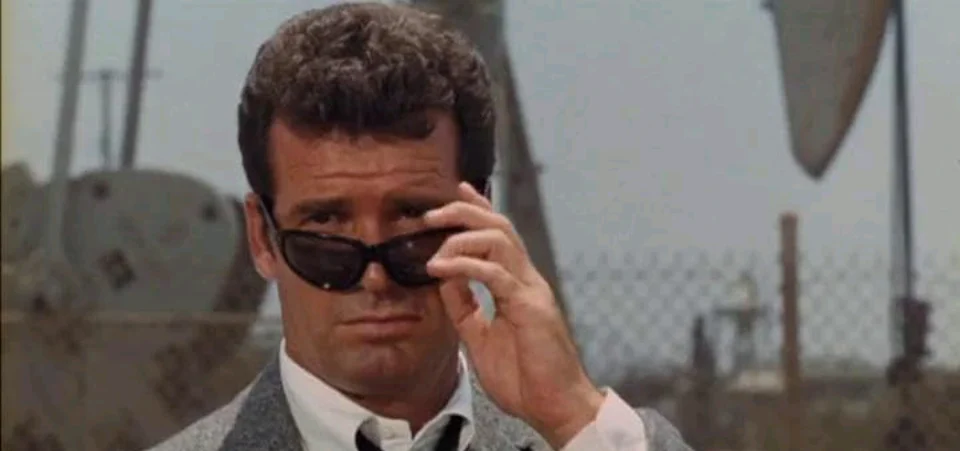
 Director: Paul Bogart
Screenplay: Stirling Silliphant
Based on the novel: The Little Sister by Raymond Chandler
Starring: James Garner, Gayle Hunnicutt, Carroll O’Connor, Rita Moreno, Sharon Farrell, William Daniels, H. M. Wynant, Jackie Coogan, Kenneth Tobey, Jason Wingreen, Bruce Lee
Country: United States
Running Time: 96 min
Year: 1969
BBFC Certificate: 15
The fictional hardboiled detective Philip Marlowe may have only appeared in seven novels written by its creator, but he has endured for almost a century thanks to those books and some memorable screen adaptations. The creation of Raymond Chandler, Marlowe debuted in the 1939 novel The Big Sleep, before appearing in six more novels over a 19-year period including Farewell, My Lovely in 1940 and 1943’s The Lady in the Lake. Chandler had only completed the first four chapters of The Poodle Springs Story at the time of his death in 1959, but Robert B. Parker turned the unfinished material into an eighth novel, which was published in 1989.
Fans of Marlowe and Chandler’s novels would not have to wait too long after the publication of the first stories to see an adaptation on the big screen. Three years after the debut of the character, The Falcon Takes Over (1942) was released as an adaptation of Farewell, My Lovely, although Marlowe was replaced by detective ‘The Falcon’, played by George Sanders.
The character would also be replaced in Time to Kill (1942), an adaptation of The High Window, in which detective Michael Shayne would replace Marlowe. However, two years later, the character would finally arrive fully formed on the big screen in Murder, My Sweet (1944), with the detective played by Dick Powell.
The film is a classic noir directed by Edward Dmytryk and would be memorably followed by The Big Sleep (1946), an unmitigated classic in which the great Humphrey Bogart plays the role of Marlowe alongside Lauren Bacall, and The Long Goodbye (1973), a Robert Altman-directed satirical neo-noir starring Elliott Gould as the character.
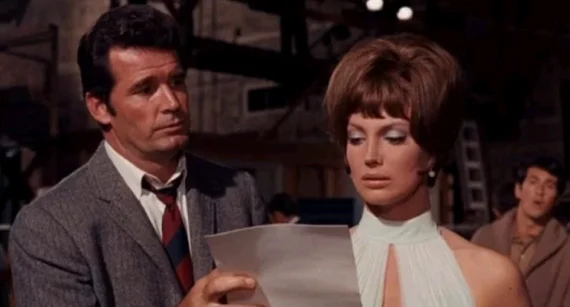
In between these two – and before several other adaptations starring the likes of Robert Mitchum and Liam Neeson as the character – came The Brasher Doubloon (1947), with George Montgomery playing the detective and, the subject of this review, neo-noir Marlowe (1969) in which James Garner would play the private detective in a film directed by Paul Bogart.
Written by Stirling Silliphant and based on Chandler’s 1949 novel The Little Sister, Marlowe sees our titular LA private detective Marlowe (James Garner) hired by Orfamay Quest (Sharon Farrell) to find her brother, Orrin (Roger Newman). However, a seemingly straight-forward missing person’s case soon develops into something much more, with two of Marlowe’s leads found murdered with ice picks and a blackmail plot involving compromising photos of television star Mavis Wald (Gayle Hunnicutt) and mob boss Steelgrave (H. M. Wynant)
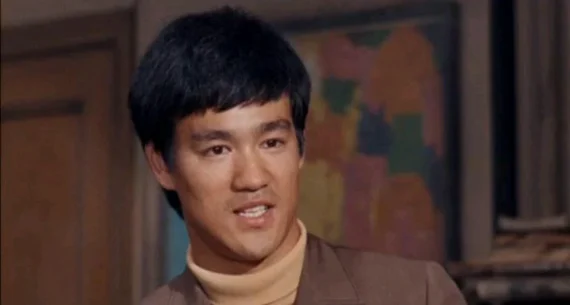
Along the way Marlowe will also encounter exotic danger Dolores Gonzáles (Rita Moreno) and other characters played by the likes of Carroll O’Connor, Jackie Coogan, and future icon Bruce Lee, here making his American feature debut and involved in a memorable scene in which he destroys Marlowe’s office with martial arts.
Firstly, there are plenty of elements to enjoy in the film. It opens with some stylish opening titles, scored to David Shire’s Farewell, My Lovely AKA Marlowe’s Theme. The sense of mystery is maintained throughout, as the bodies pile up and the blackmail plot comes to the fore, and there’s a quite inspired finale which sees Marlowe, off stage, interrogating striptease performer Dolores as she performs in front of an audience. It’s a very memorable scene.
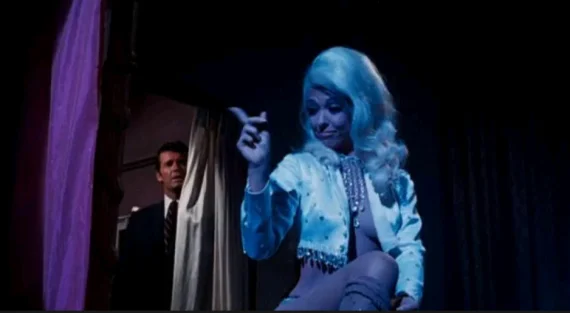
Garner is fantastic as Marlowe and there’s a quite marvellous supporting cast, particularly Moreno and Gayle Hunnicutt, although all of the cast play their roles well. The cinematography by William H Daniels is also good, and it’s supported by some infrequent style, like the opening titles and a telephone sequence that uses split-screen so we can see at one point all three of those on the call. Peter Matz provides a breezy score.
When pitted against Murder, My Sweet and the 1940s Humphrey Bogart-starring The Big Sleep, as well as the very different take on the works of Chandler that Robert Altman brought us with The Long Goodbye, though, Marlowe can’t compete. The elements that make those so memorable aren’t here, not least the atmosphere and more hard-boiled approach. Although Marlowe tiptoes around some dark territory it’s a more fun and frothier affair which doesn’t capture the harder edges of the character or Chandler’s version of Los Angeles.
Yet, for the elements referenced earlier, it is an entertaining and easy watch. Garner is great as the title character and I really enjoyed some of the sequences, particularly those involving Lee and Moreno.
Garner’s portrayal of Marlowe paved the way for his performance in classic TV show The Rockford Files, which was inspired by this role and was also an effort by creator Roy Huggins to recreate the type of character he enjoyed bringing to the small screen in another classic television series, Maverick, but this time in a modern setting.
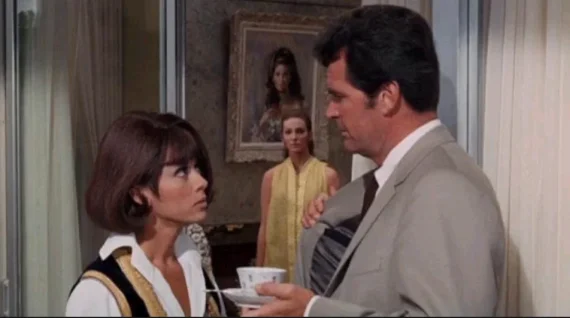
In closing, 1969’s Marlowe is a flawed adaptation of a Chandler novel, that doesn’t quite evoke the same atmosphere and hardboiled nature of the books. Yet, it is an entertaining ride, with a twisting plot, some fantastic performances, not least Garner as the title character and the chance to witness the American feature film debut of Bruce Lee in a film which builds to a very memorable finale.
Film: 

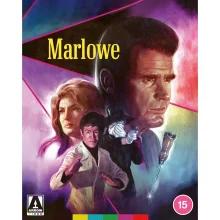
Marlowe is released by Arrow Video on a limited edition Blu-ray on 8 June 2026. For this release Arrow have carried out one of their excellent restorations, this time from the original 35mm camera negative. It’s another brilliant one, with a natural human look and colour scheme, plenty of fine detail and is a high quality restoration throughout. The audio is also great, and clear.
Limited edition contents:
Brand new restoration from the original 35mm camera negative by Arrow Films
High Definition (1080p) Blu-ray presentation
Original lossless mono audio
$100 A Day (Plus Expenses), a brand new appreciation by film historian Howard S. Berger
Theatrical trailer
Image galleries
Reversible sleeve featuring original and newly commissioned artwork by John Pearson
Collectors’ booklet containing new writing by critics Jeff Chang and Priscilla Page
In his video essay, Howard S. Berger provides an excellent overview of the character Philip Marlowe on page and screen, and particularly how this has been portrayed in different eras. Running for 52 minutes it’s a fabulous introduction to the character, covering what makes him so special and why he’s endured for almost a century. Berger also provides a personal touch sharing how he was first introduced to the character after his introduction to film noir, seeing Humphrey Bogart as Sam Spade in the classic The Maltese Falcon (1941). It’s adorned with images of book covers and clips from films, and is a fantastic piece.
The theatrical trailer runs for two minutes and opens with that memorable scene involving Bruce Lee before giving us a run through a few other sequences and closing with Rita Moreno’s striptease.
Two image galleries close out the disc. Firstly, around 15 posters and secondly around 90 promotional stills, mostly black and white.
I was not provided with the booklet so am unable to comment on it.
In conclusion, Arrow Video have provided a fabulous audio-visual presentation of the 1969 neo-noir Marlowe. The film is flawed but entertaining and well-acted and Arrow have provided one of their typically outstanding restorations from the original 35mm camera negative. Extras are slight, with only one on disc outside of a trailer and image gallery, yet it is a cracking one – a 52-minute-deep dive into the Philip Marlowe character by the always wonderful historian Howard S. Berger.
Disc/Package: 