


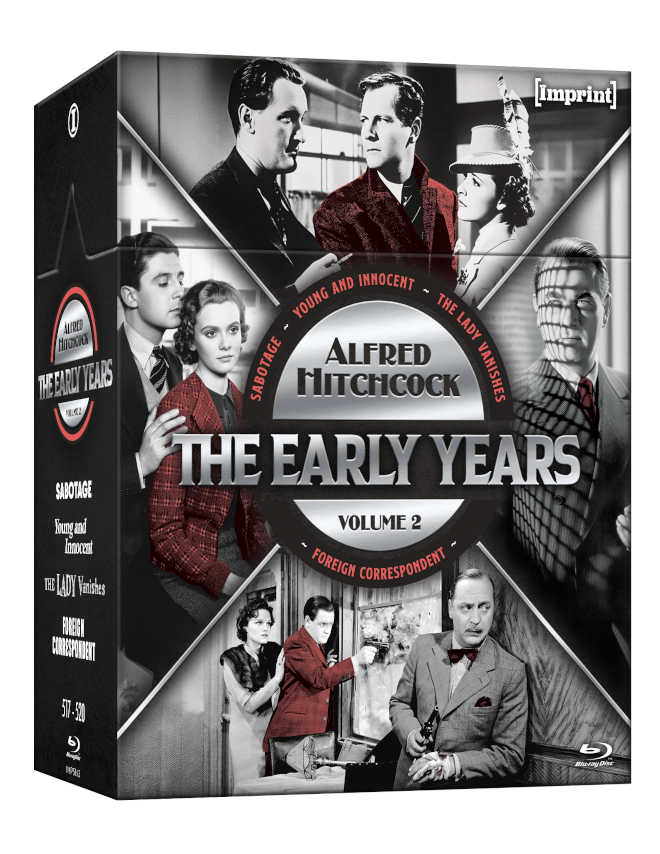
 Much has been said about the American films of Alfred Hitchcock, but when he moved to the United States to make Rebecca in 1940, he’d already made 24 feature films and a few shorts. A few of these are highly regarded and still discussed alongside his heavy hitters like Psycho and Vertigo, but a good number of them tend to get passed over when discussing the director. This is unfair, as a good deal of his British and early American titles are just as brilliant as his later work.
Here to celebrate the latter end of Hitchcock’s British period (and the start of his American one) is Imprint. They’ve collected together four of his films on Blu-ray (and a bonus title in SD) in a set entitled Alfred Hitchcock: The Early Years Volume 2, following their Volume One set, which is now out of print in its limited edition.
The films included in the latest box set are:
Sabotage (1936)
Young and Innocent (1937)
The Lady Vanishes (1938)
Foreign Correspondent (1940)
Bonus film: Waltzes From Vienna (1934) (standard-definition)
Now, you’ll have to forgive me, as I’m going to be a little lazy in covering the collection. Andy Goulding has already reviewed every available feature film Alfred Hitchcock ever made (click here to view the epic ranking), and he did a damned good job of it. So, I’m going to repurpose his reviews of each of the films in the set, occasionally adding my own personal thoughts at the end, along with my given star ratings. I’m going to be tackling the wealth of special features at the end of the page, though.
I also discussed most of the films in the set on an episode of the Lambcast. Take a look or listen here.
Sabotage
Director: Alfred Hitchcock
Screenplay: Charles Bennett, Ian Hay, Helen Simpson, E.V.H. Emmett
Based on a Book by: Joseph Conrad
Starring: Sylvia Sidney, Oscar Homolka, John Loder, Desmond Tester
Country: UK
Running Time: 76 min
Year: 1936
Like Secret Agent, Sabotage was a film I had seen once many years ago and largely forgotten. I had the vague sense that it was one of Hitchcock’s darker films and also that I didn’t really like it that much. Fortunately, only one of those things proved to be true. The impression of Sabotage I had carried around for years was that it was a dour, humourless effort amidst a run of zippy, fun British thrillers. In fact, there is plenty of humour throughout Sabotage, from Hitchcock’s trademark quirky supporting characters to a final moment that toys with the audience’s emotions with an almost throwaway glee. There’s even a very fleeting cameo by an instantly recognisable Charles Hawtrey, decades before he became a Carry On legend. Hitchcock stirs this humour seamlessly into a very bleak story of a wife in a convenient but passionless marriage to a cinema owner, Mr. Verloc, who is also a secret saboteur, working for a gang of European terrorists. The key to the marriage is Verloc’s supportive behaviour towards his wife’s little brother but when the boy unwittingly becomes a pawn in the sabotage, things take a turn for the worse.
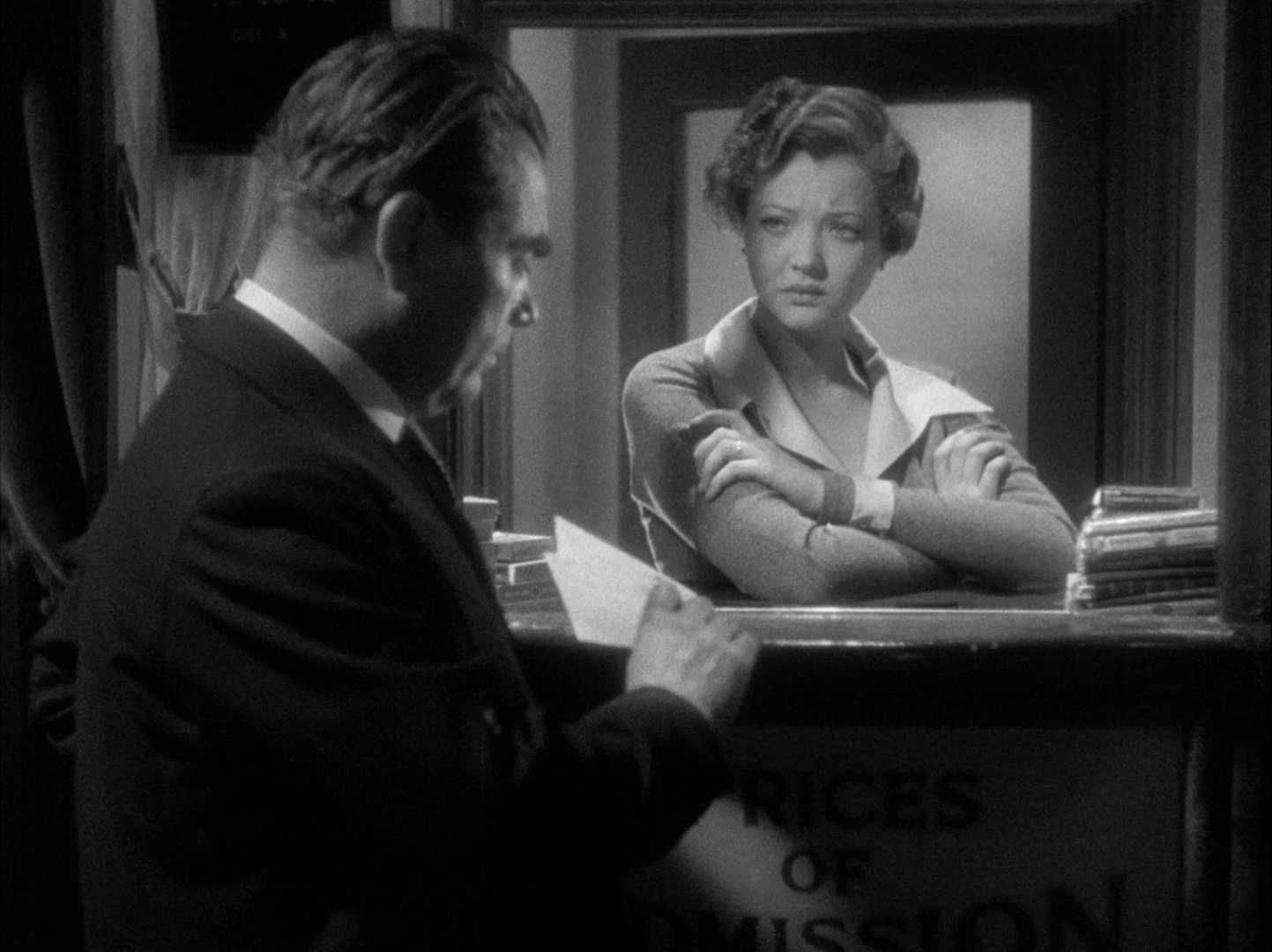
Sabotage is the fourth collaboration between Hitchcock and screenwriter Charles Bennett, but this one takes a slightly different approach, making its main villain one of the protagonists, often putting the audience in his shoes as much as in those of the more sympathetic characters. Oska Homolka is effectively sinister as Verloc, but his character is depicted as more desperate than inherently evil, craving the love of a wife who has no passion for him and even using a tragic event as an excuse to make an attempt to advance the relationship sexually. Verloc is a layered villain, ruthless but pathetic, and never fully in control of his situation. Hitchcock and Bennett allow us to understand him better by making him so prominent rather than hiding his identity, though they wisely never try and get us to sympathise with him. The underrated Sylvia Sidney instead garners all the sympathy as the wife whose need for security for herself and her brother has condemned her to a staid, loveless marriage.
Sabotage is one of those films in which the setting is as important as the characters. Although it mostly takes place in and around one small cinema, Hitchcock manages to give us a real sense of 30s London, which is crucial in making us feel a sense of the threat hanging over the whole community. The film’s major set piece, involving the delivery of an explosive package, particularly gives us a nice trip round the city. It’s a famous sequence filled with tension, but one that Hitchcock himself came to regret, feeling he broke an unspoken contract with the audience with its payoff. That payoff though is crucial to the plot, and I’ve always felt it’s a strong scene with a refreshingly different take on the suspense we associate with this director.
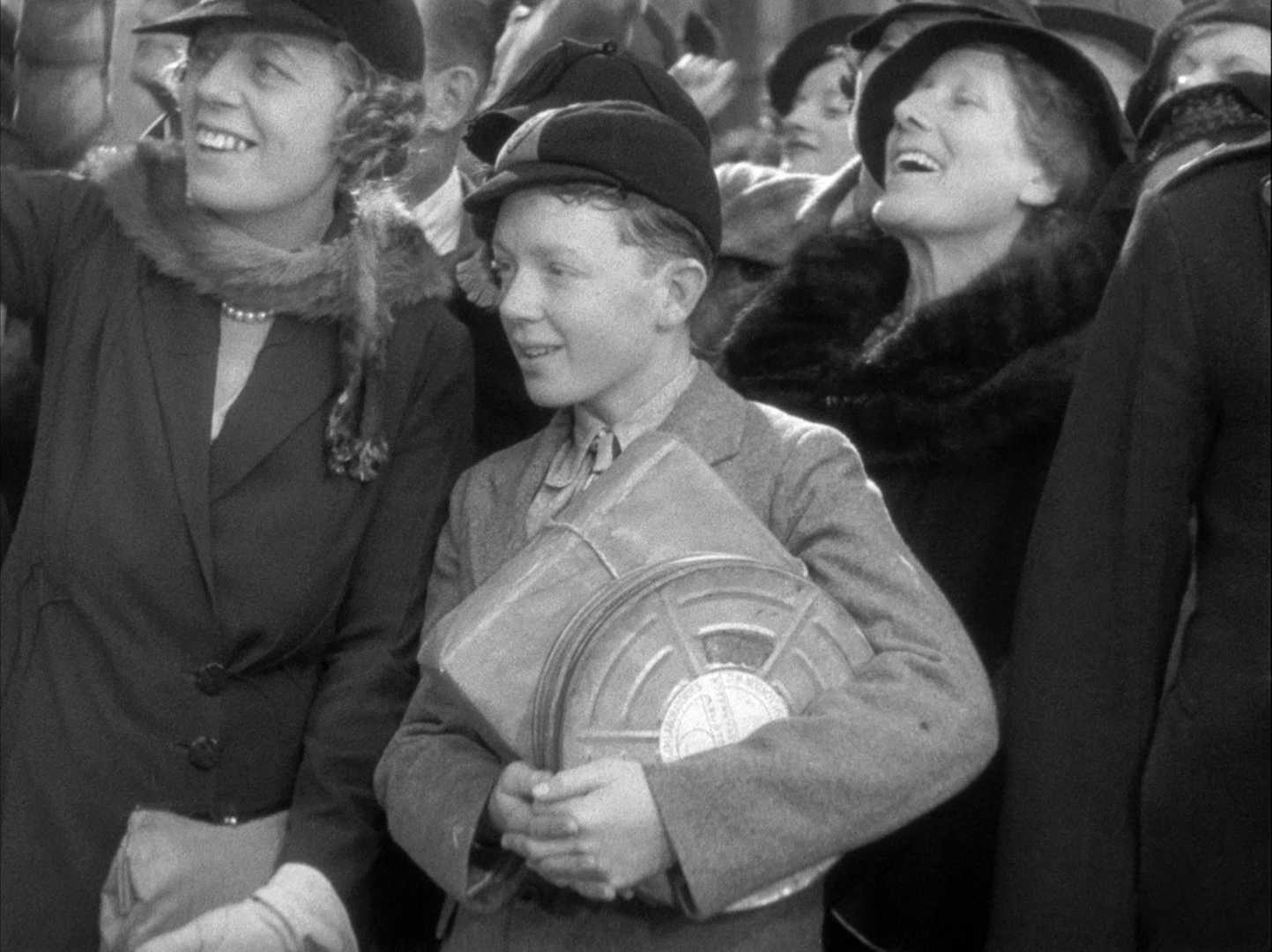
Sabotage fits into Hitchcock’s run of classic British thrillers nicely, while also standing out as quite different from them. There’s fun to be had, but the film has a really dark heart that makes it all the more memorable. It’s an oft-overlooked work in the Hitchcock canon, usually flagged up only by aficionados of British cinema, but it’s a clear demonstration of the director’s continued growth after the stumble of Secret Agent.
Film: 

Young and Innocent
Director: Alfred Hitchcock
Screenplay: Charles Bennett, Edwin Greenwood, Anthony Armstrong, Gerald Savory
Based on a Book by: Josephine Tey
Starring: Nova Pilbeam, Derrick De Marney, Percy Marmont, Edward Rigby, Mary Clare
Country: UK
Running Time: 83 min
Year: 1937
I’ve been looking forward to Young and Innocent coming up ever since I started this Hitchcock adventure. It’s a film that tends to be looked on as minor Hitchcock, and its ultra-light tone and fairly thin plot have seen it consigned to semi-obscurity, save for one key moment that tends to be the only context in which Young and Innocent gets discussed. But I’ve always had a massive soft spot for this film, and rewatching it last night just confirmed its place as a personal favourite. Young and Innocent was the last of the British collaborations with screenwriter Charles Bennett and, following the strange Secret Agent and the darker Sabotage, Young and Innocent is a breath of fresh country air, with its light, whimsical tone and quaint parochial settings. All of the Bennett collaborations feature some level of humour, but Young and Innocent comes closest to being an outright comedy, with its wrongly accused man on the run encountering a quirky collection of characters and some absurd situations. Chief among these is a hilarious scene at a children’s party, in which he is forced to adopt a ridiculous pseudonym.
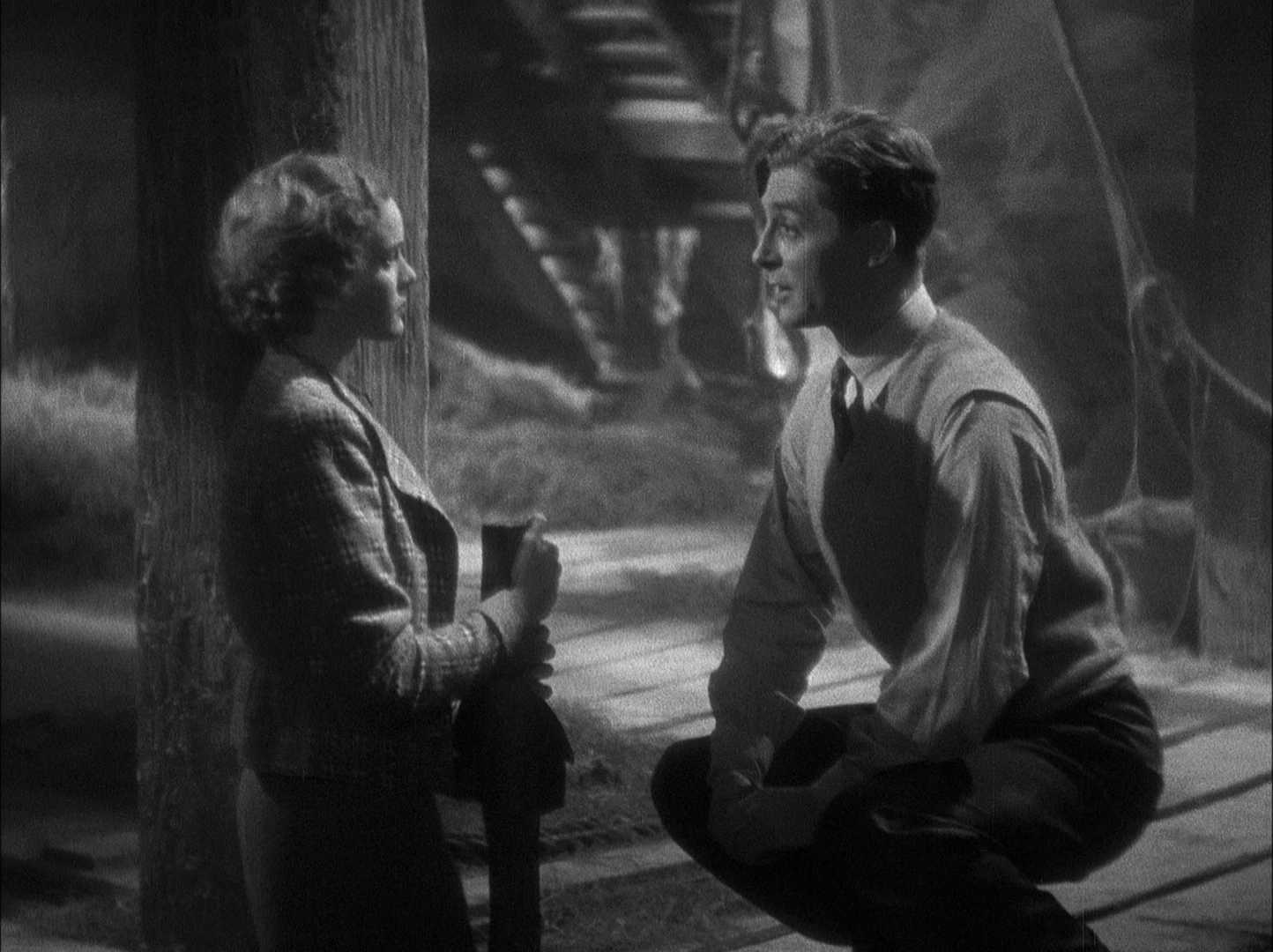
Derrick De Marney is great fun as the man on the run, but it is his reluctant accomplice, police chief’s daughter Nova Pilbeam, who stands out. In fact, Young and Innocent slowly positions her as the main protagonist above De Marney, and it is a wise move. Having appeared as the kidnapped daughter in The Man Who Knew Too Much, Pilbeam had since grown into a strong leading lady, and here she is magnetically charismatic and convincingly layered as a conflicted woman drawn into a caper against her will. De Marney and Pilbeam pretty much carry the film between them, although Edward Rigby is also great in a late-arriving but pivotal role.
Young and Innocent is far from a perfect film. There are a few too many dodgy model shots standing in for a railway location, including one that makes the baffling choice to try and include the lead characters by utilising dolls. The film feels like it was shot on a shoestring budget, so there’s quite a bit of artifice elsewhere, from back projection to obvious studio sets. The plot itself suffers from its central quest to uncover a lost raincoat seeming like nowhere near enough evidence to exonerate the accused, as he seems sure it will. And there is a moment involving blackface which is inextricably linked with crucial scenes. It’s not nearly as offensive as many of its contemporary examples of blackface but, in the end, it’s still blackface and still hard to watch in a modern mindset.
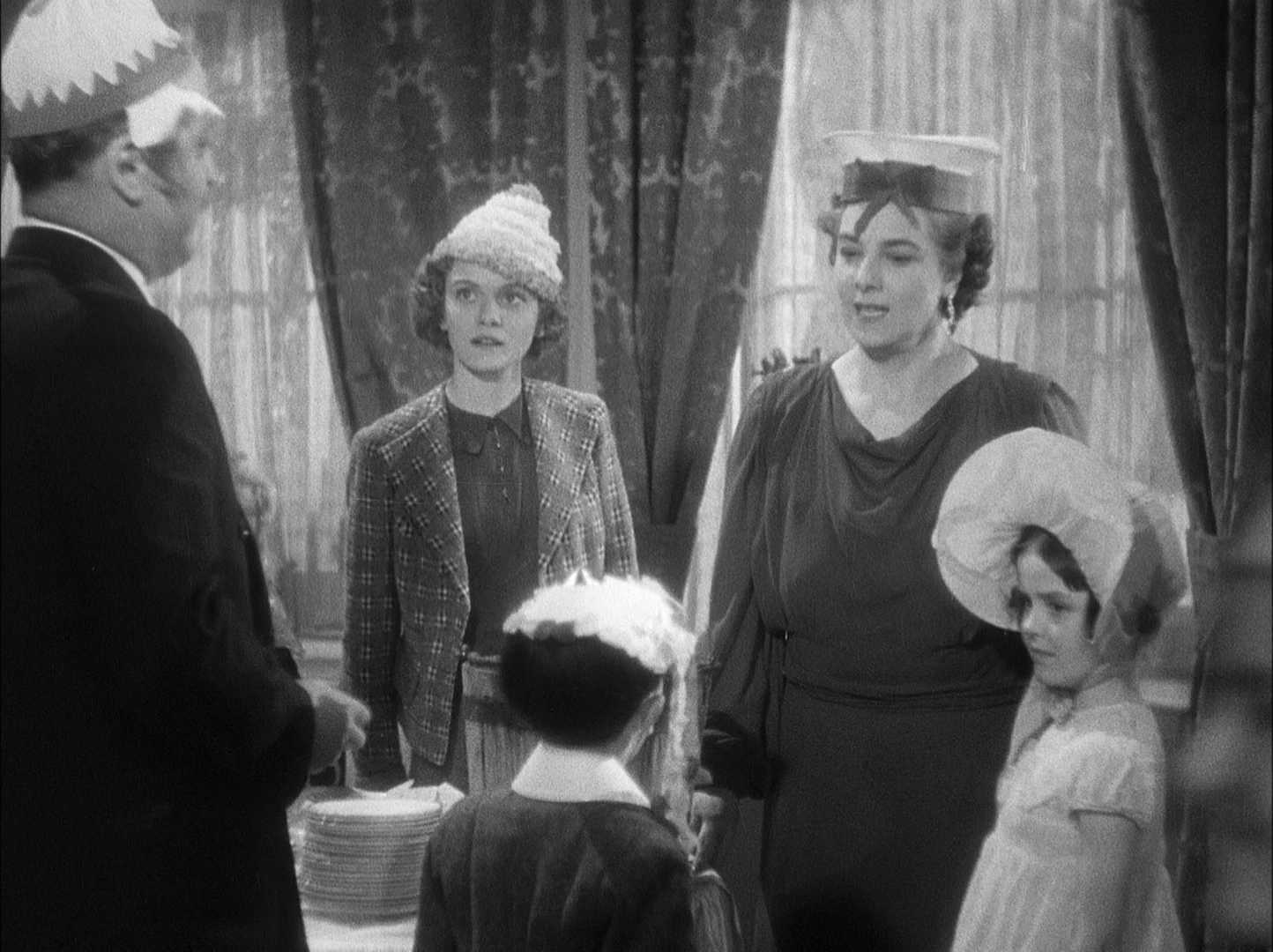
The blackface aside however, all of these flaws only serve to make Young and Innocent more endearing to me. It’s a thoroughly good time throughout and Hitchcock seems to be enjoying himself as much as his game cast. And there is, of course, that one famous shot in which the camera pans for a long time through a large room full of people to finally hone in tight on one very small detail which reveals the identity of the murderer. It’s a virtuoso moment in a modest production.
Young and Innocent isn’t as groundbreaking as Blackmail, as weighty as Sabotage, as crucial to Hitchcock’s development as The Lodger, but I’ve placed it above all of them in my ranking because Young and Innocent means a lot to me and I enjoy it enormously. It feels like MY Hitchcock film, the neglected puppy in the litter that I’ve chosen to adopt.
* David’s take: I wholeheartedly agree. I’d seen this before and actually reviewed it myself a while back, but it gets better the more you watch it.
Film: 
The Lady Vanishes
Director: Alfred Hitchcock
Screenplay: Sidney Gilliat, Frank Launder
Based on a Story by: Ethel Lina White
Starring: Margaret Lockwood, Michael Redgrave, Paul Lukas, May Whitty, Cecil Parker, Linden Travers, Naunton Wayne, Basil Radford
Country: UK
Running Time: 95 min
Year: 1938
For the final film in his famous run of six British thrillers, Hitchcock switched from working with screenwriter Charles Bennett to instead collaborate with British cinema legends Sidney Gilliat and Frank Launder. Gilliat and Launder would go on to write, produce and/or direct some of the great underrated British films of the next three decades, including the likes of Green for Danger, London Belongs to Me, Only Two Can Play and the popular St. Trinians films. Their extraordinary script for The Lady Vanishes established Gilliat and Launder as forces to be reckoned with from an early stage. Its fiendishly clever construction is bolstered by a pervading wit that characterises The Lady Vanishes as the most consistently comedic of the British films. While the likes of The 39 Steps and Young and Innocent made plenty of room for humour, The Lady Vanishes blends comedy, mystery and adventure more successfully, thanks to a diverse set of vivid characters, cracking dialogue and a plot with the propulsive forward motion of the train on which it is set.
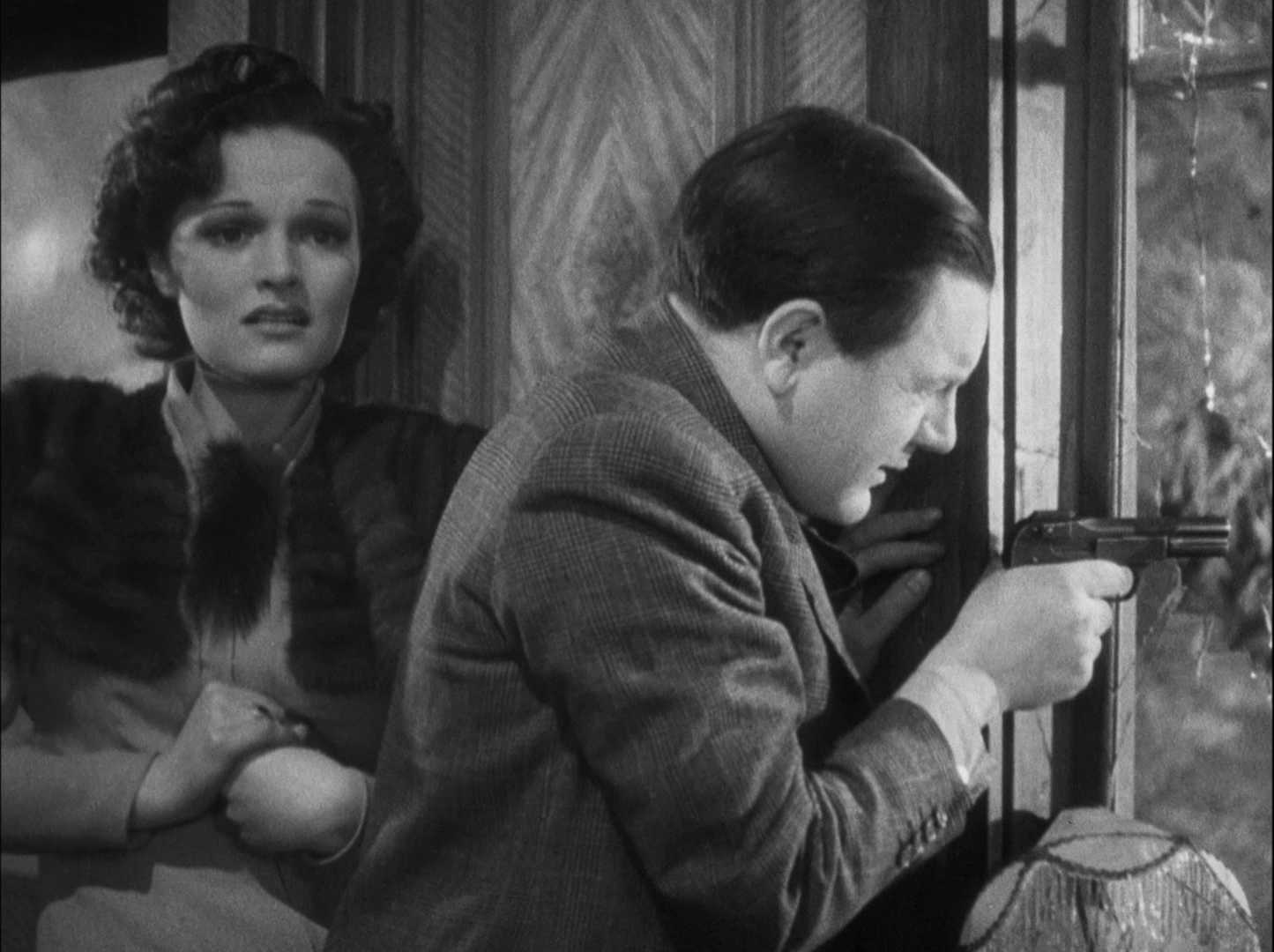
Such strong material could easily be scuppered by the wrong cast or bad direction but fortunately The Lady Vanishes is equally excellent on these fronts. The cast includes Hitchcock’s best leads yet in Margaret Lockwood and Michael Redgrave, both charmingly droll in their many dialogue scenes and physically adept on the occasions when they need to clonk someone over the head with a blunt instrument or tumble into a magician’s magic box. The rest of the cast is peppered with famous British faces, including a small role for Googie Withers, a nicely oily turn as an adulterous lawyer by Cecil Parker and a fabulously engaging performance by May Whitty as the titular disappearing woman. But the film is emphatically stolen by Basil Radford and Naunton Wayne as Charters and Caldicott, a pair of cricket-obsessed Brits desperate to make it home for the test match at any cost. No such characters appear in Ethel Lina White’s source novel ‘The Wheel Spins’ but these two original creations were so popular with audiences that they went on to appear in several other film and radio productions, both as Charters and Caldicott and, after contractual issues emerged, as very similar characters. The pair came very close to being featured in Carol Reed’s The Third Man, before their characters were instead amalgamated into the character played by Wilfred Hyde White.
Hitchcock’s direction of his superlative cast is equally excellent. The film begins with a lengthy prologue in a crowded hotel filled with last-minute guests trapped by an avalanche. Hitchcock introduces his characters through a delightful collection of comic vignettes, ensuring that we know all the key players before they board the train where the main action takes place. Once we’re aboard, the film immediately becomes as intriguing as it is amusing, its mystery laced with ambiguity and a sinister streak that blends beautifully with the comedy. The different motivations of each character help their individual stories naturally coalesce into a satisfying whole, building to a climax that throws all the key players together for an action-packed finale.
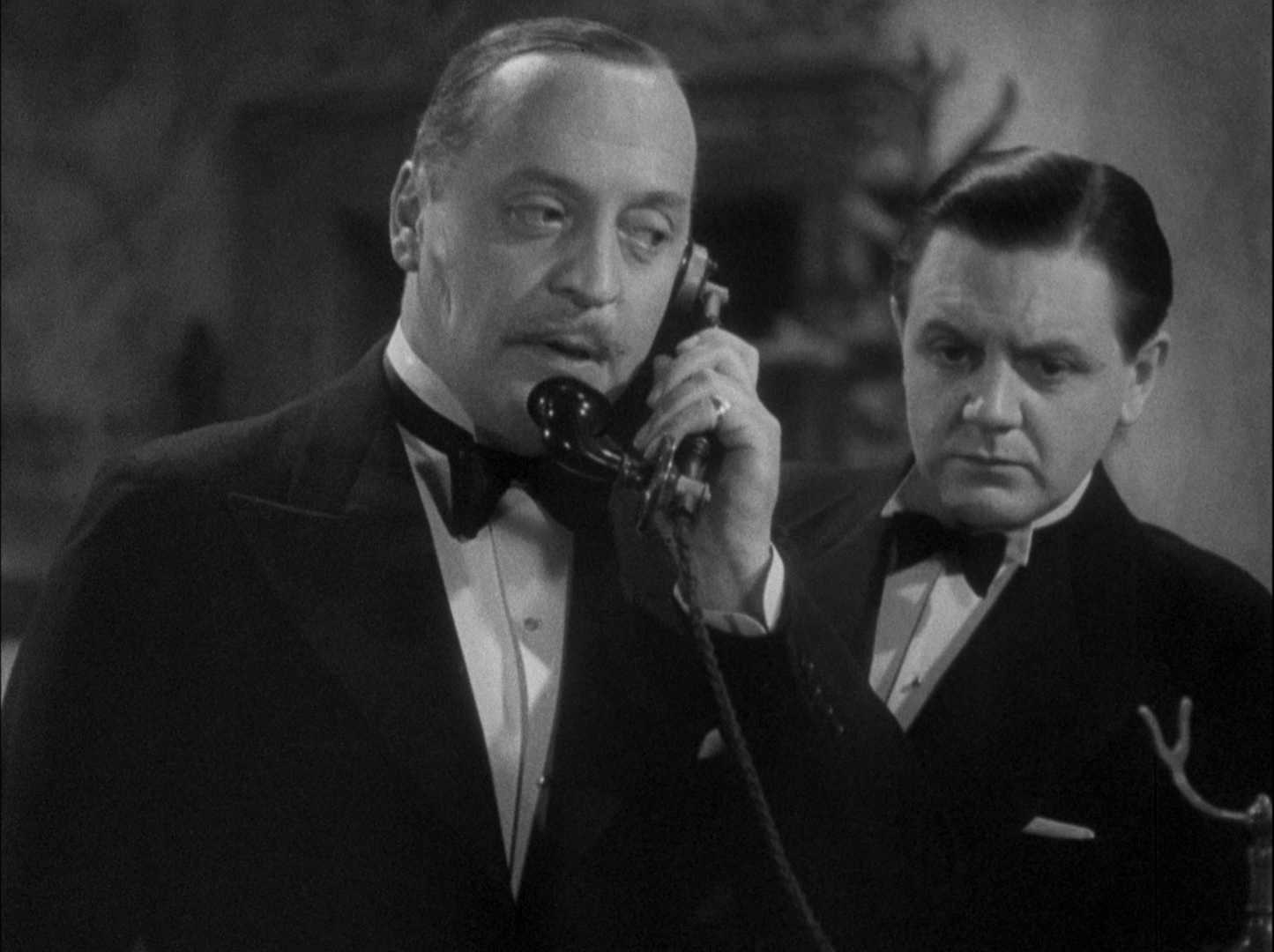
The Lady Vanishes was an immediate hit with audiences and critics, confirming David O. Selznick’s conviction that Hitchcock had what it took to make it in Hollywood. Soon he would be working with bigger budgets and bigger stars but The Lady Vanishes remains up there with his finest works. There are still endearing idiosyncrasies of the British era, such as obvious model shots here and there, but ultimately The Lady Vanishes is as smooth, thrilling and thoroughly classic as anything to come. Hitchcock had grown exponentially in just over a decade as director and it would be this film, rather than the divisive one that immediately followed, that would go down as the culmination of this particular era.
Film:
Foreign Correspondent
Director: Alfred Hitchcock
Screenplay: Charles Bennett, Joan Harrison, James Hilton, Robert Benchley
Starring: Joel McCrea, Laraine Day, Herbert Marshall, George Sanders, Albert Bassermann, Robert Benchley
Country: USA
Running Time: 120 min
Year: 1940
Alfred Hitchcock had a good 1940, with both his films from that year proving popular with audiences and critics alike. Hitchcock was new in Hollywood but this didn’t stop the first two films he made there from both scoring a clutch of Oscar nominations. Rebecca and Foreign Correspondent even ended up competing against each other in several categories, including Best Picture, which Rebecca ultimately won. Everyone remembers Rebecca and it is still held up as a classic of cinema. Foreign Correspondent, however, is rarely seen or spoken of these days. There are reasons for that.
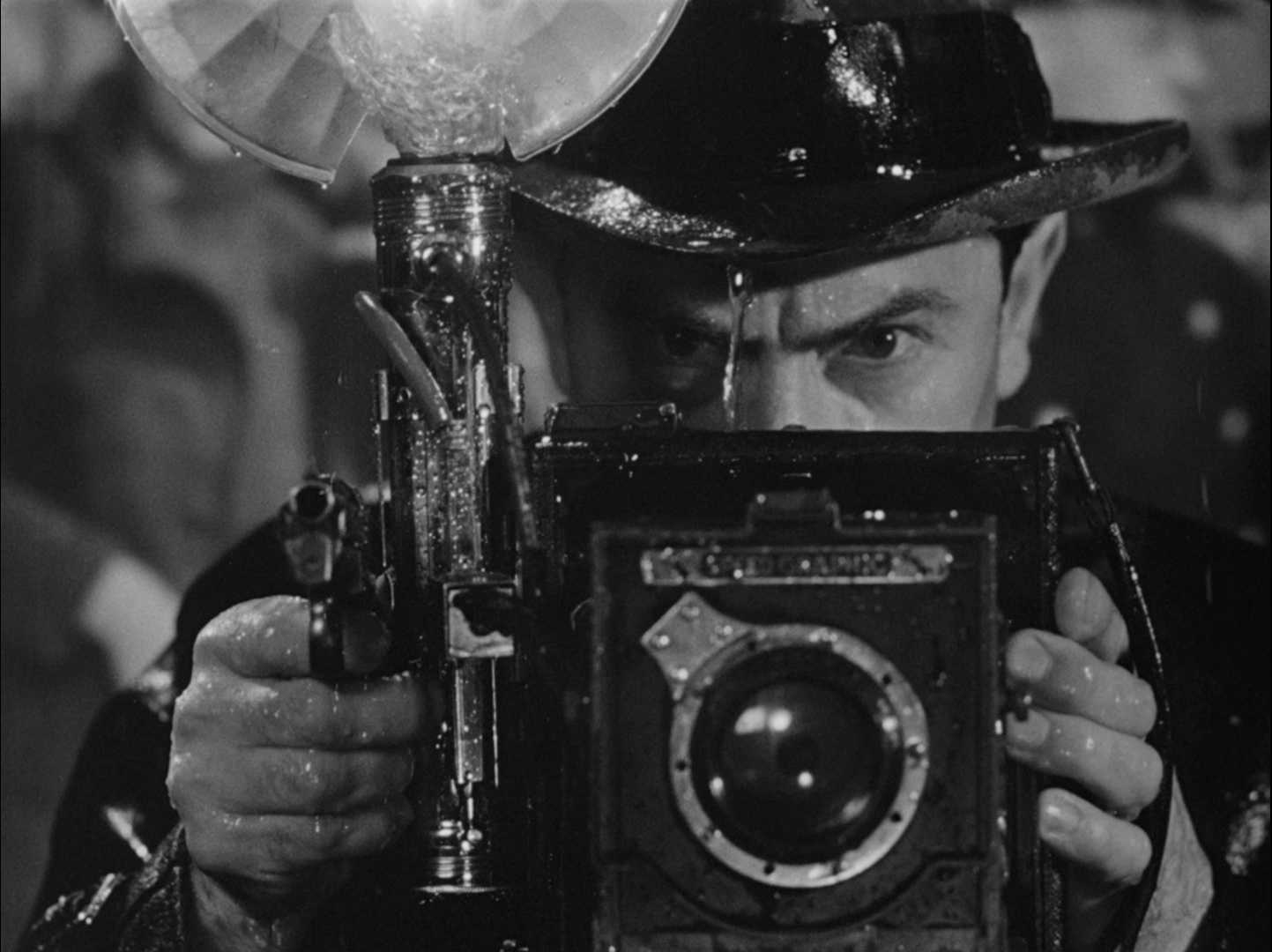
Foreign Correspondent is one of Hitchcock’s stranger films; a globetrotting spy adventure with prominent elements of comedy and romance and a propagandist bent. If that sounds like a lot to cram into two hours, it is. It’s not that such a film couldn’t work (North by Northwest would have most of these ingredients), it’s that Foreign Correspondent doesn’t blend them comfortably enough. It’s no surprise to hear that the film’s screenplay passed through the hands of ten different writers across five years. That’s just enough writers and just enough time to overthink yourself into a mess. In fact, it’s a wonder Foreign Correspondent works as well as it does. While still a failure in my book, it is fun in places even as it feels ungainly.
What sinks Foreign Correspondent is its inability to commit to a tone. It could’ve been a magnificent drama with elements of comedy, but these styles keep bleeding into each other at inappropriate times. After the film’s most famous set piece, an assassination in the rain, a high-speed chase occurs. During this chase, Joel McCrea’s reporter is introduced to another reporter played by George Sanders. Sanders’ character has a comically eccentric surname and the pair discuss this in a dryly witty exchange. The dialogue is fine, but the fact that it takes place while they are driving at high speed and being shot at feels ridiculous, to mention nothing of their comparative flippancy having just witnessed a bloody public murder. It would’ve been easy to have the characters meet before the chase, when their exchange would’ve been amusing, allowing Hitchcock to then focus on the action sequence as just that. But dividing up the comedy and drama doesn’t always prove successful either. Later in the film, following some important revelatory scenes, we get an extended sequence in which Edmund Gwenn plays a cockney assassin trying in vain to dispose of an oblivious McCrea. The scenes border on slapstick and, while a drastic change from deeply dramatic to broadly comic can work, here it just feels like an error in judgment that slows the film’s pace when it should be picking up a head of steam.
There’s also a romance at the centre of Foreign Correspondent which may stand as one of the most perfunctory in cinema history. Whirlwind romances are not uncommon in classic Hollywood cinema but the mid-film marriage proposal here comes out of nowhere, and the acceptance of said proposal beggars belief. It’s a poorly written relationship and, more than that, it’s just not needed or indeed helpful to have it there in an already clearly overstuffed film. Romance was pretty much de rigueur in 40s Hollywood films, so it’s hard to hold this against Foreign Correspondent too much, but it’s clear that even the writers saw this strand as a distraction.
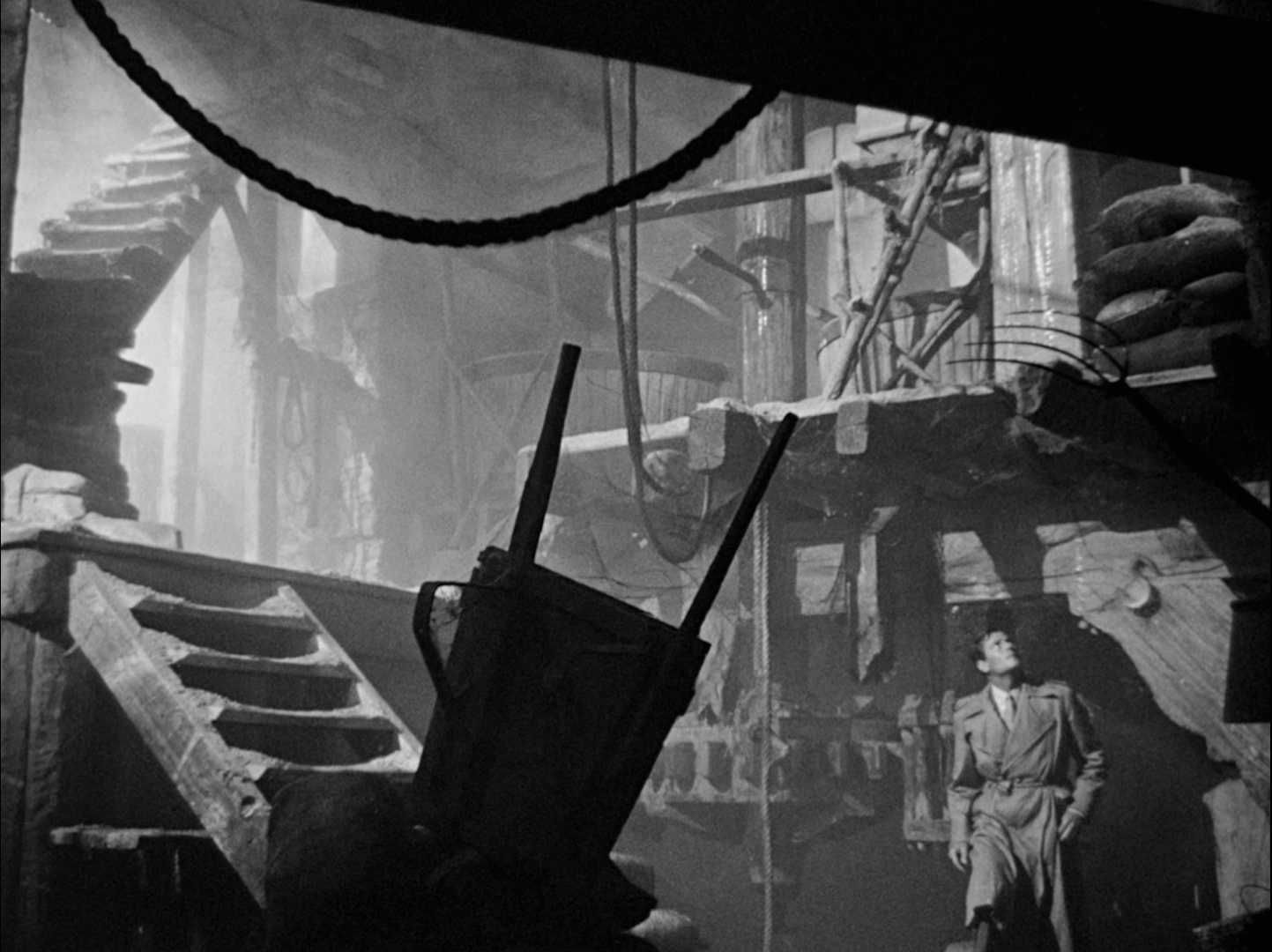
Fans of Foreign Correspondent often point out that it features some of Hitchcock’s best set pieces. There are certainly high points, like that aforementioned assassination and a famous plane crash scene towards the end, but other than those, I often felt that Hitchcock didn’t quite reach the level of tension for which he would quickly become famous. The celebrated sequence in the windmill, for instance, felt clunky and devoid of the suspense for which it was aiming. Perhaps its effectiveness was dulled by the precedent set by the awkward mixing of tones earlier in the film. As Joel McCrea struggled to avoid detection by the villains onto whom he’d stumbled, I kept expecting him to break off for a second to crack a joke or fall in love.
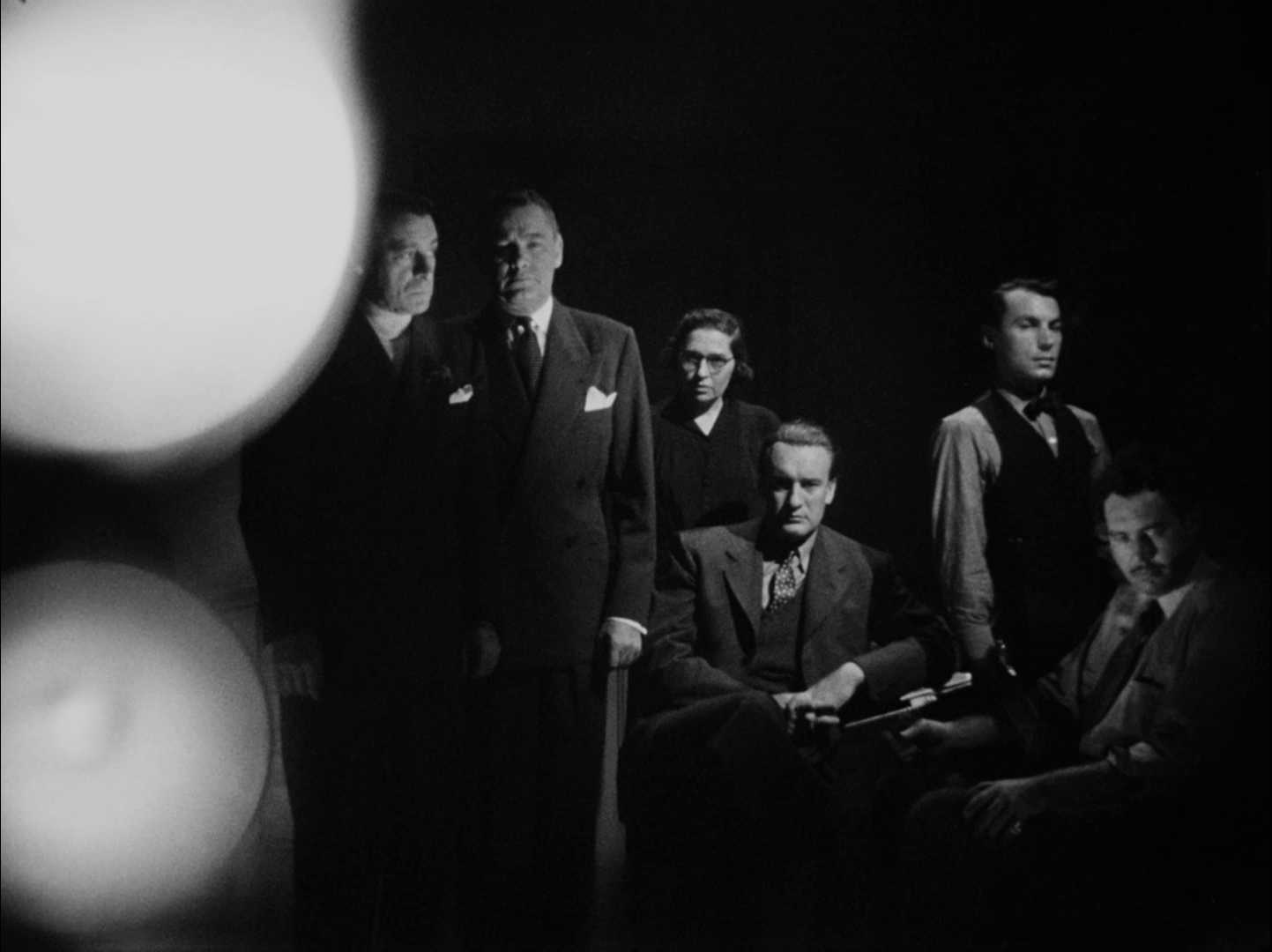
Much is made of the film’s final scene, for which legendary screenwriter Ben Hecht was asked to write a rousing speech encouraging American involvement in WWII. While some complain of it as a sentimental, jarring presence, I’ve never begrudged it its place in the film. It dates it in a good way, firmly situating the film in its historical context and giving us a glimpse of what wartime audiences experienced. There is a small sense of the film having been hijacked at the last minute to serve a greater political purpose, but in a film that is so all-over-the-place anyway, why not go for it?
Foreign Correspondent is quite fascinating in many ways, but when you’re actually watching it, it’s more frustrating. Its inability to settle into an identity prevented this viewer from settling into the experience, making the two-hour runtime drag.
* David’s take: I enjoyed Foreign Correspondent a lot more than Andy. The tone worked for me, and I found it hugely entertaining. I do agree that the romance was pretty ridiculous, though. I laughed out loud in disbelief at the proposal scene. I also found the film a little overlong, running out of steam towards the end, but I loved it overall.
Film:
Waltzes From Vienna (a.k.a. Strauss’ Great Waltz)
Director: Alfred Hitchcock
Screenplay: Guy Bolton, Alma Reville
Based on a Play by: Heinz Reichert, A.M. Willner, Ernst Marischka
Starring: Edmund Gwenn, Esmond Knight, Jessie Matthews, Fay Compton, Frank Vosper
Country: UK
Running Time: 80 min
Year: 1934
It’s really annoying when people reduce a director to their most well-known works, to the extent that they act confused if a film deviates from that pattern. When people bemoan the absence of gangsters in a Scorsese film or sneer at comedy in a Bergman film, the irritation comes not so much from them obviously not knowing much about the varied output of those directors, but rather from the fact that they would rather boil their canons down to something repetitive. They don’t just think these great artists’ filmographies are one-note, they actually want that to be the case, and complain when it’s not. If they had their way, we wouldn’t have Smiles of a Summer Night or Alice Doesn’t Live Here Anymore, we’d lose The Last Temptation of Christ and A Lesson in Love. And we certainly wouldn’t have Waltzes from Vienna.
The number of reviews of Waltzes from Vienna that begin with “This is a Hitchcock film?!” or “A Hitchcock movie without a murder?” is dispiriting and I tend to get no further in reading them. That’s not to say I don’t read and enjoy reviews that I disagree with. There are plenty of legitimate reasons you could cite for disliking Waltzes from Vienna, and plenty have done so eloquently and convincingly. But if you kick off your review with “Where’s the MacGuffin?” you’re immediately demonstrating that your criticisms are founded on a reductive basis and your argument crumbles before it’s even begun. There was never meant to be espionage or suspense in Waltzes from Vienna, so stop trying to hold its director hostage, especially over work from an era before he became primarily famous for that kind of film.
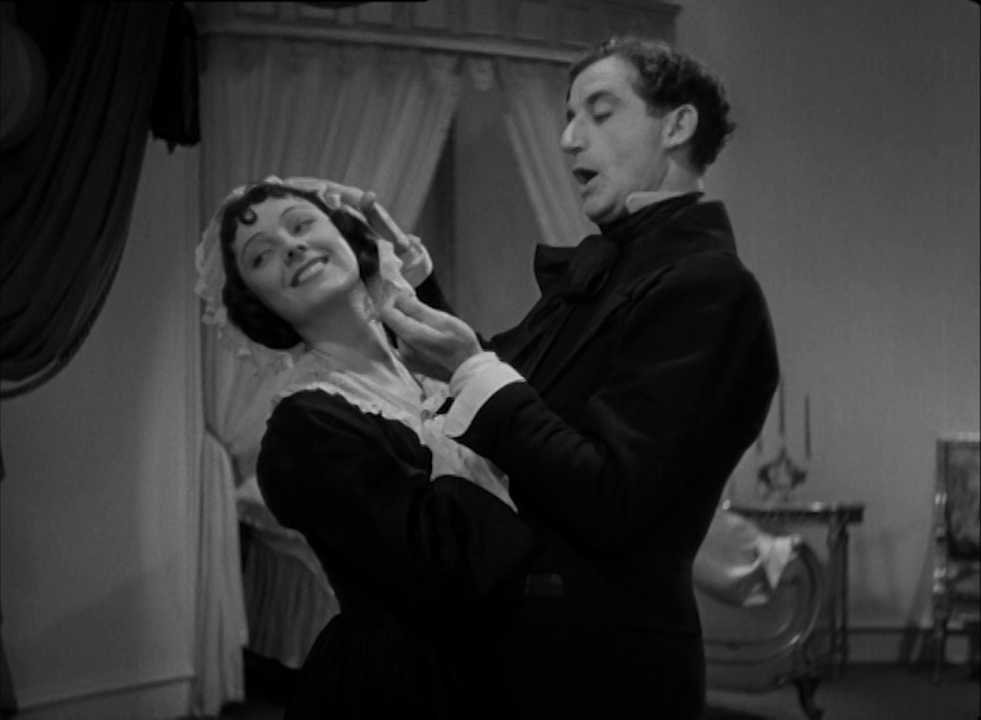
For the record, Hitchcock hated Waltzes from Vienna and chose it as one of his worst films, a film he only agreed to make so he could keep working after numerous box office disappointments. Also for the record, I didn’t hate Waltzes from Vienna. I didn’t even dislike Waltzes from Vienna. In fact, I think I sort of loved Waltzes from Vienna. The fascinating thing about working chronologically through these early Hitchcock films is you never know when a hidden gem is going to pop up. It happened several times during the silent era Hitchcocks but, after an amazing start to the sound era with Blackmail, I began rather losing hope for another little-known treasure among a series of clunky early sound films. Waltzes from Vienna was the last chance for such a thing before the more famous Hitchcock films began. And to my surprise, it delivered a final early jewel.
Waltzes from Vienna comes from a time when films based around operettas were very popular. This era and most of those films are now comparatively forgotten but Waltzes from Vienna is a superlative example. In keeping with the style, it is light as a feather, upbeat, good-humoured, melodramatically romantic and driven by music. A loose telling of Johann Strauss II’s composition of The Blue Danube, the film wraps the musical tale in a love triangle and a conflict between a father and son, with a movingly edgy Edmund Gwenn standing out as Johann Strauss the Elder, jealously bullying his son to quell his aspirations of greatness. The rest of the cast is good too, a refreshing change from some of the stiff performances in the Hitchcock films that immediately preceded Waltzes from Vienna. Jessie Matthews was a regular fixture in the operetta genre and makes for a winningly conflicted leading lady, while Fay Compton’s Countess is an alluringly flirtatious rival for her and Frank Vosper enjoys devouring the scenery as the Countess’s bumbling, pompous husband.
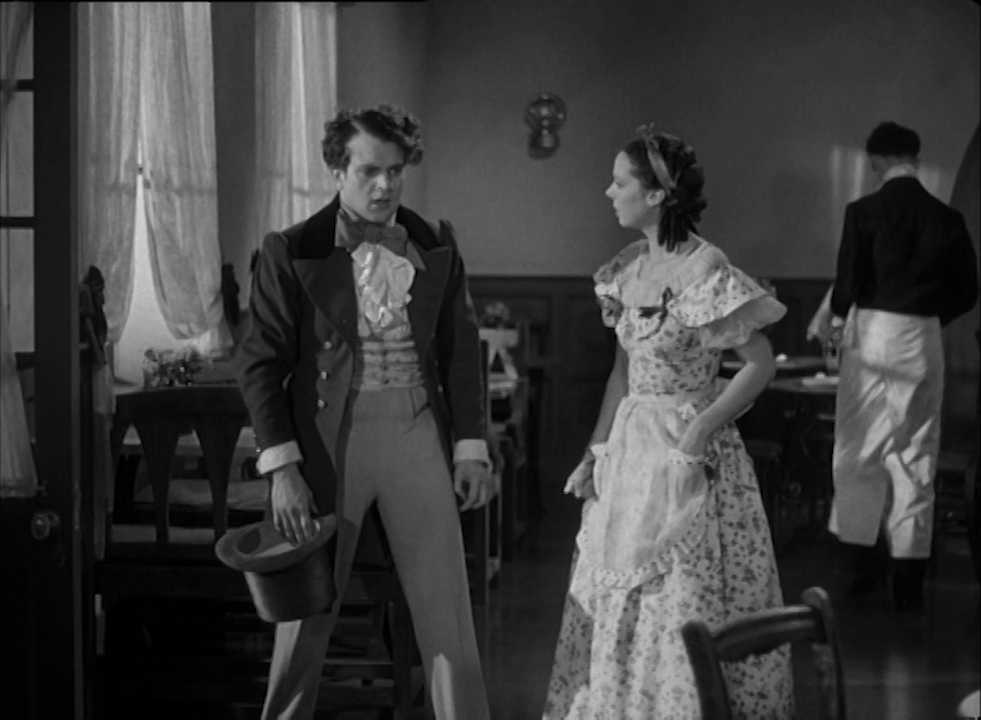
Crucially, Hitchcock seems to have received a bigger budget for this film and he puts it to good use. While some of his then-recent films had felt stagebound, Waltzes from Vienna is handsomely cinematic, lovingly evoking its period detail in a modest but effective way that could almost claim to be lavish if you’re willing to give yourself over to it to that extent. And the film builds to a rousing finale in which The Blue Danube receives its rapturous public debut. It’s a winning structure and the story is peppered with moments of farcical comedy which are always charming and sometimes genuinely funny.
Although it’s usually written off as an anomaly in the Hitchcock canon, many critics have noticed how Waltzes from Vienna kicks off Hitchcock’s preoccupation with waltzes, which would return in later films such as Shadow of a Doubt, Strangers on a Train and Torn Curtain. Waltzes from Vienna also, for me, shows Hitchcock’s directing getting tighter and more interesting again after several uneven efforts. Apparently, this was an unpleasant experience for Hitch, but that doesn’t show through on screen. I’m so glad I took the time to finally watch this least-seen of Hitchcock’s films. It’s an underappreciated gem.
* David’s take: I agree that this is highly underrated, though it took me about half an hour to get into it and I wouldn’t rank it higher than titles like The Lodger or Foreign Correspondent.
Film:
As a reminder, the above film reviews were all written by Andy Goulding, but the below write-up of the boxset and its special features is by David Brook.
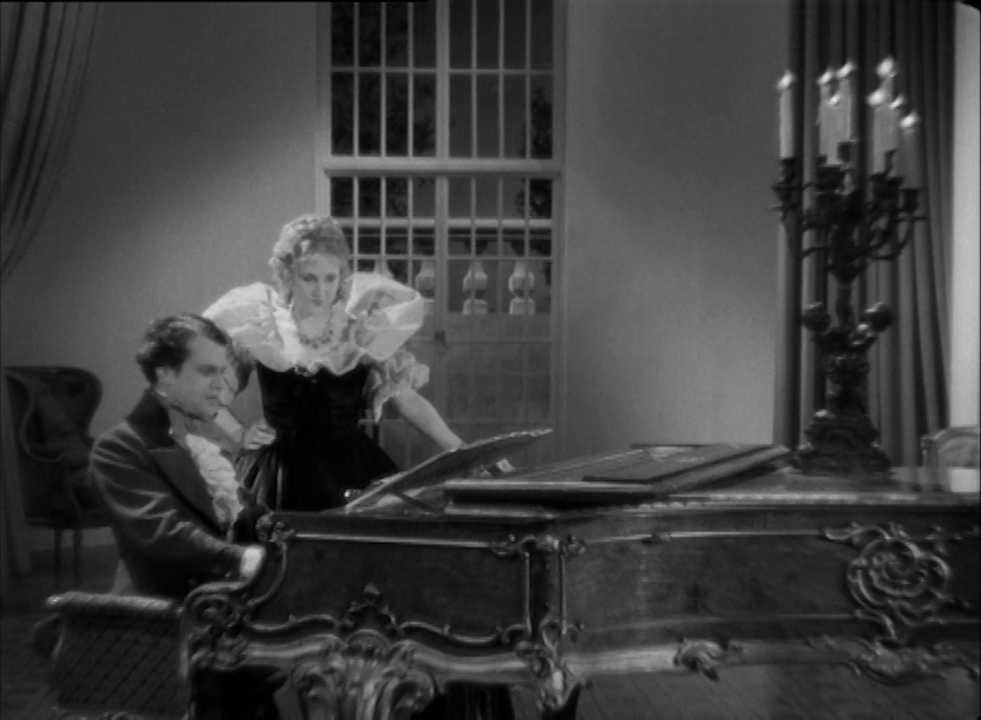
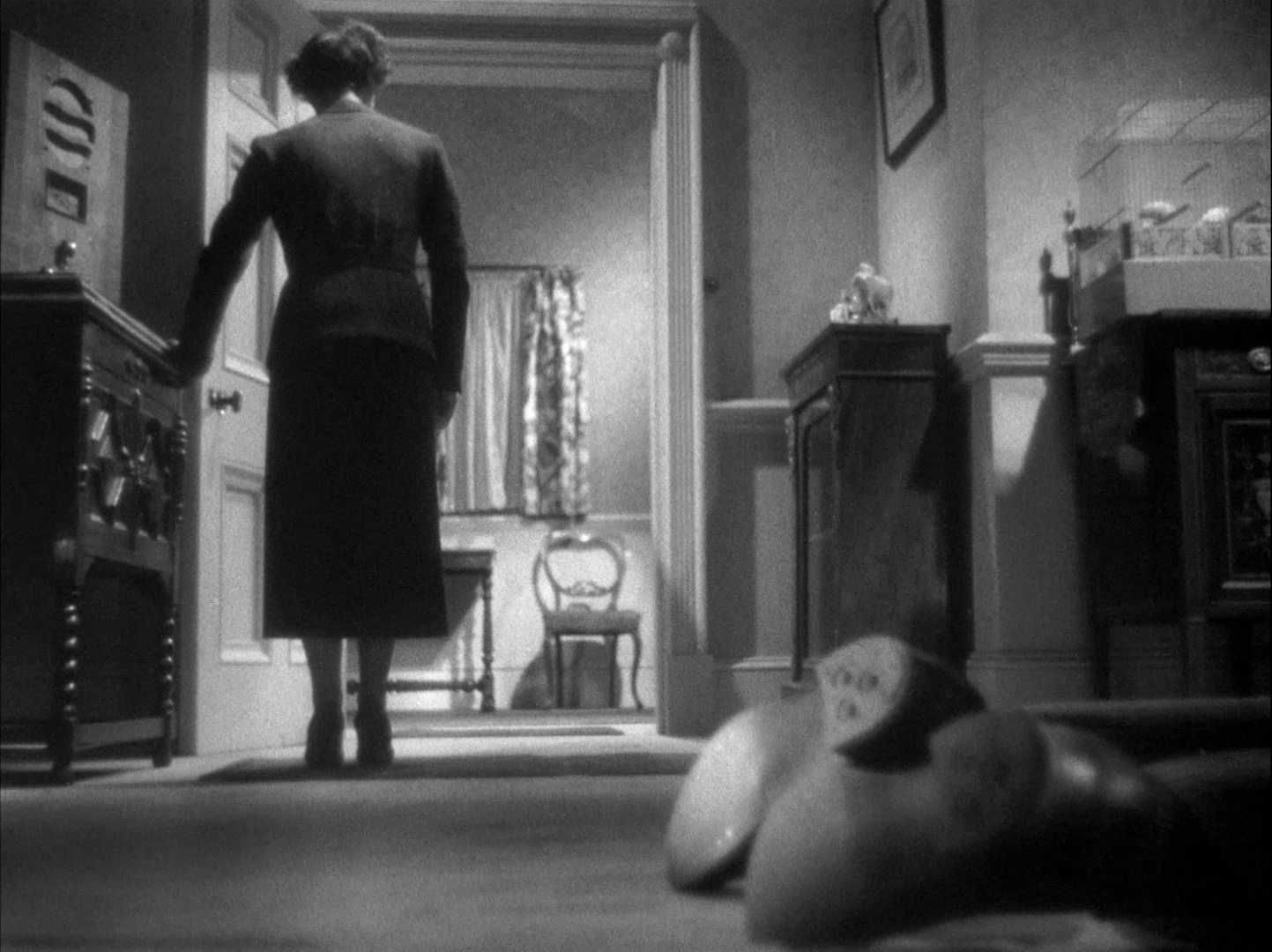
Alfred Hitchcock: The Early Years Volume 2 is out now on Blu-Ray, released by Imprint Films. The transfers are strong, considering the age of the films. Most show a little wear and some slight instability, but the level of detail is impressive and the tonal balance is pleasing. Whilst only included as a ‘bonus film’ in SD, Waltzes From Vienna doesn’t actually look bad. It’s relatively detailed and stable. I’ve used screengrabs throughout this review to give you an idea of how they look, though these images have been compressed. Audio is as good as possible for films of this age, though Waltzes From Vienna sounds rather muffled. This might be the main reason it’s not included as a main film in the set.
Special Features & Technical Specs:
Sabotage:
– 1080p High-definition presentation on Blu-ray
– NEW Audio commentary by writers and film experts Kim Newman and Barry Forshaw
– Audio commentary by author/film scholar Leonard Leff
– NEW Film Critic Tim Robey on Sabotage
– Introduction by film critic Charles Barr
– On Location – featurette, introduced by Robert Powell
– Archival episode of Cinema Then, Cinema Now featuring Professor Jerry Carlson, Professor George Custen, and Professor Ilan Stavans
– Peter Bogdanovich Interviews Hitchcock – audio interview
– Archival introduction by actor Tony Curtis
– Image Gallery
– Audio: English LPCM 2.0 Mono
– Aspect Ratio 1.33:1
– Optional English HOH Subtitles
Young and Innocent:
– 1080p High-definition presentation on Blu-ray
– NEW Audio commentary by writers and film experts Kim Newman and Jo Botting
– Audio commentary by authors Stephen Rebello and Bill Krohn
– NEW Film Critic Tim Robey on Young and Innocent
– Introduction by film critic Charles Barr
– A Profile of Alfred Hitchcock: The Early Years
– Peter Bogdanovich Interviews Hitchcock – audio interview
– Hitchcock / Truffaut – audio interview segment
– Archival introduction by actor Tony Curtis
– Image Gallery
– Audio: English LPCM 2.0 Mono
– Aspect Ratio 1.33:1
– Optional English HOH Subtitles
The Lady Vanishes:
– 1080p High-definition presentation on Blu-ray
– NEW Audio commentary by professor and film scholar Jason Ney
– NEW Film historian Matthew Sweet on The Lady Vanishes
– Introduction by film critic Charles Barr
– Archival episode of City Cinematheque featuring Professor Jerry Carlson and Professor Royal Brown
– Image Gallery
– Theatrical Trailer
– Bonus film: Waltzes From Vienna (1934) (standard-definition)
– Audio: English LPCM 2.0 Mono
– Aspect Ratio 1.37:1
– Optional English HOH Subtitles
Foreign Correspondent:
– 1080p High-definition presentation on Blu-ray
– The Art of Film: Vintage Hitchcock
– Trailers from Hell: Foreign Correspondent – featuring filmmaker Larry Cohen
– Academy Award Theatre: Foreign Correspondent – 1946 radio adaptation starring Joseph Cotton
– Theatrical Trailer
– Audio: English LPCM 2.0 Mono
– Aspect Ratio 1.33:1
– Optional English HOH Subtitles
There are an awful lot of special features in this set. I’ll do my best to go through them.
Barry Forshaw and Kim Newman provide a commentary over Sabotage. They compare the book to the film and look at criticisms aimed at the film on its original release, among other topics. It’s a strong track.
Leonard Leff provides a second commentary on Sabotage. This is perhaps even better. Leff analyses the film as well as discussing its background.
There’s also an essay by Tim Robey. This looks at the qualities of the film, acting like a condensed version of the commentaries.
The Sabotage and Young and Innocent discs both have excerpts from an interview with Hitchcock by Peter Bogdanovich. These are particularly good, with the director explaining his thoughts on and intentions behind the films.
Included in the set is an episode of ‘Cinema Then Cinema Now’, featuring a discussion of Sabotage. The group analyse the film in great detail, picking out its flaws and qualities.
Robert Powell presents a TV piece about the locations of Sabotage. It’s a little cheesy and not my kind of thing, but others might like to see what the locations looked like in the 90s.
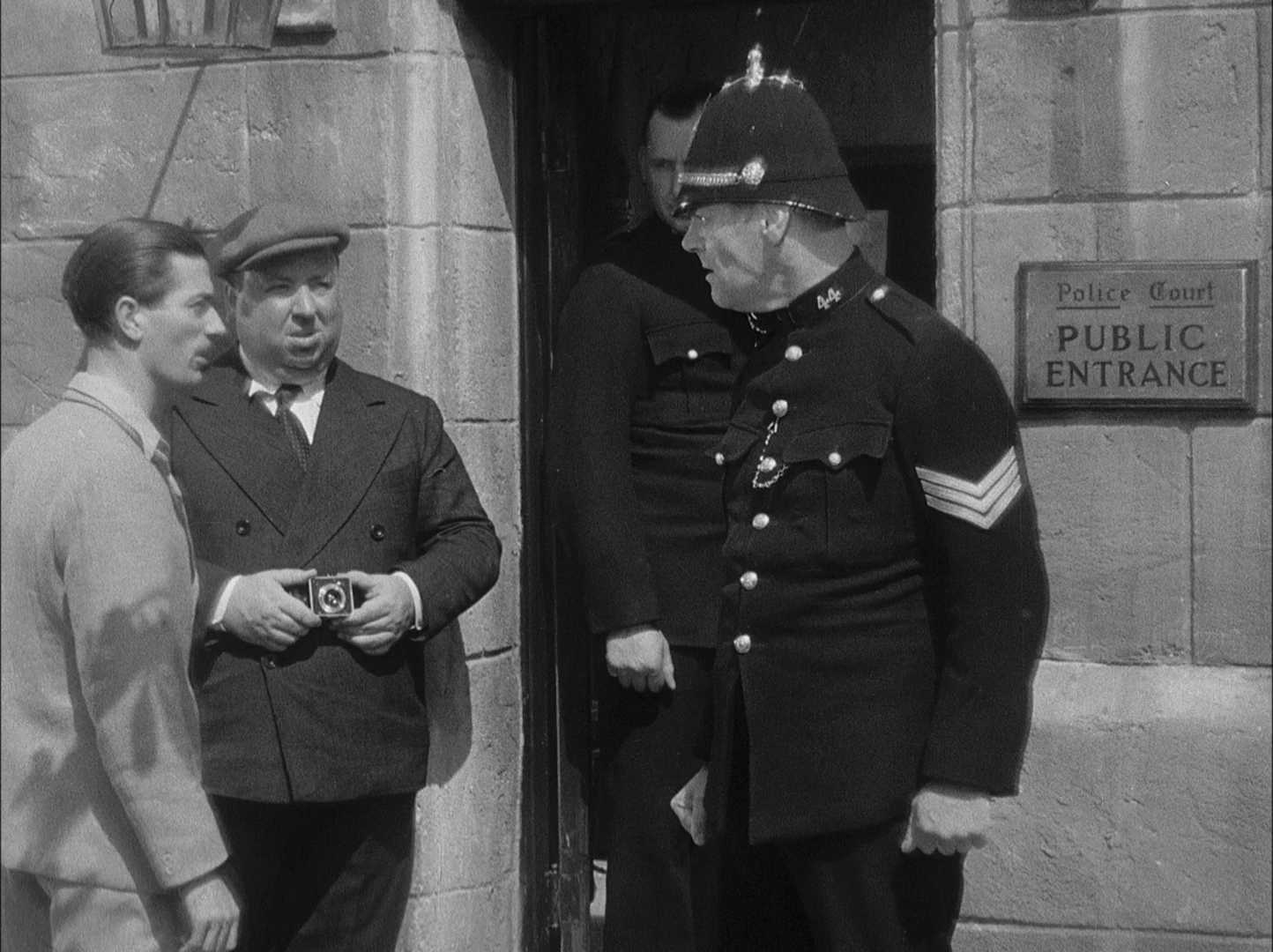
Tony Curtis provides introductions to a number of the films. These are very short but provide handy backgrounds to the films before you watch them.
Similarly, there are a number of introductions by Charles Barr. These are a little more studious than the Curtis ones, but complement them nicely.
Kim Newman and Jo Botting provide a commentary on Young and Innocent. This is great. They bounce off each other nicely and dig into the film and the backgrounds of its makers.
The other commentary on that film, with Stephen Rebello and Bill Krohn, is just as good. Again, they make a decent pair and provide valuable insight.
Tim Robey provides an interview about Young and Innocent. Running just under 15 minutes, it offers a concise but thoughtful analysis of the film.
Also on the Young and Innocent disc is a 25-minute documentary about Hitchcock’s British films. This races through those early days, providing a handy overview.
There’s also a sample from the famous interview between Hitchcock and François Truffaut on the Young and Innocent disc. This is excellent, as you’re probably already aware.
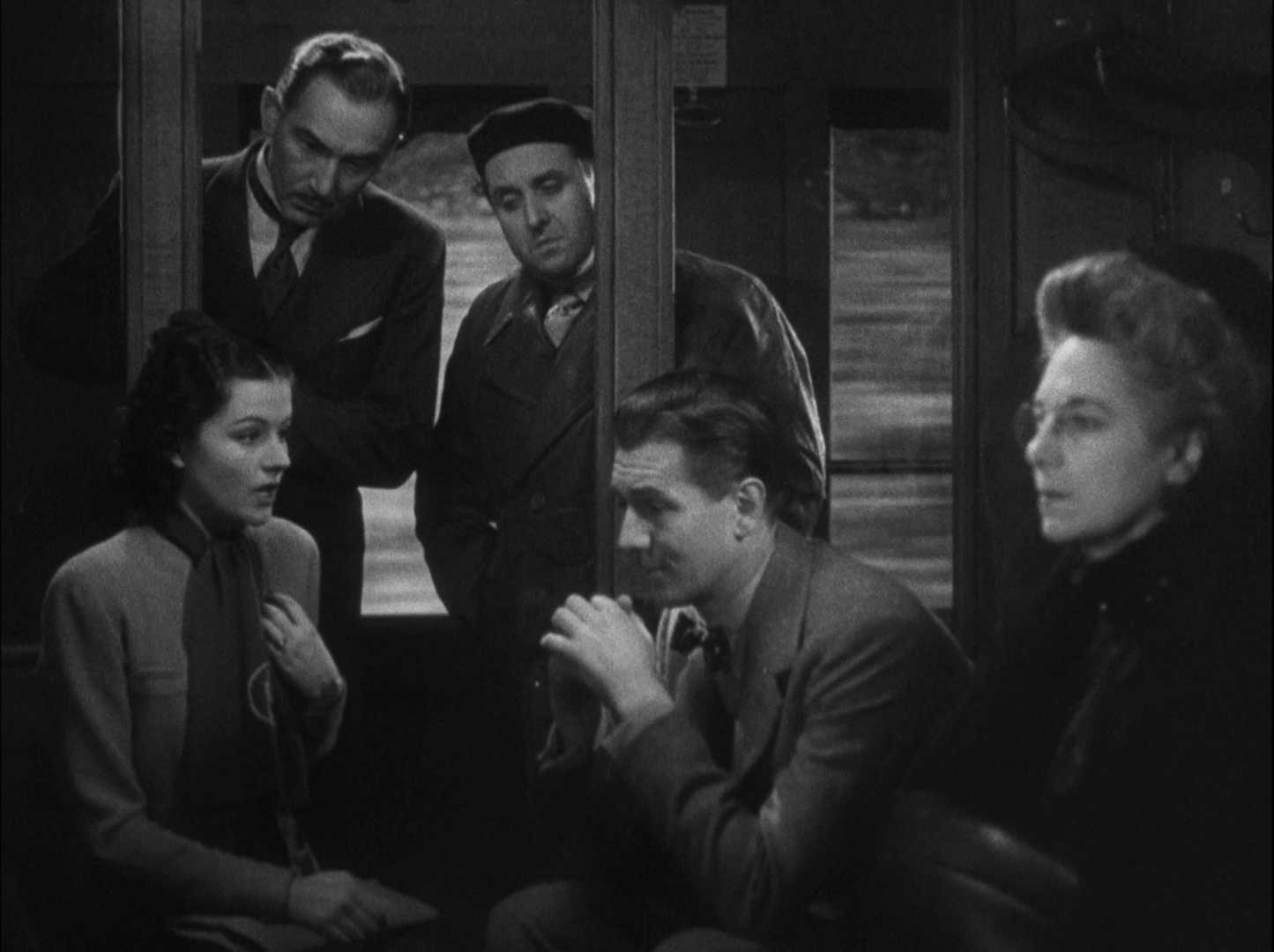
Jason Ney provides a commentary over The Lady Vanishes. This is excellent. He analyses the film in depth in a captivating track.
Matthew Sweet talks about The Lady Vanishes in a near-half-hour interview, focusing on the wonderful characters of Caldicott and Charters. The roles turned the actors Naunton Wayne and Basil Radford into stars.
There’s an episode of the TV programme ‘City Cinematheque’ included in the set. The presenter and guest discuss the music and sound design of Hitchcock’s films, particularly The Lady Vanishes. It’s a fairly academic but nevertheless interesting piece.
On the Foreign Correspondent disc, there’s a half-hour documentary about the famous interviews between Hitchcock and François Truffaut, and the resulting book. This includes interviews with the daughters of both directors, as well as some other colleagues of Truffaut’s. It’s a wonderful piece.
Larry Cohen provides a ‘Trailers From Hell’ commentary. It’s worth watching for his Hitchcock impression alone!
There’s also an ‘Art of Film’ episode on ‘Vintage Hitchcock’. This is a sort of clip show, with a narrator cueing up each clip. It offers a nice little sample of Hitchcock’s early years ‘greatest hits’, though it shows the finales of a couple of titles, so don’t watch it if you’re worried about ‘spoilers’.
There’s also a radio play adaptation of Foreign Correspondent. These are always fun to listen to, offering a slightly different take on the material.
So, Imprint have done a wonderful job, bringing together a wealth of material to supplement a quintet of wonderful and often under-appreciated films from one of cinema’s greatest directors. Very highly recommended.
Disc/package: