


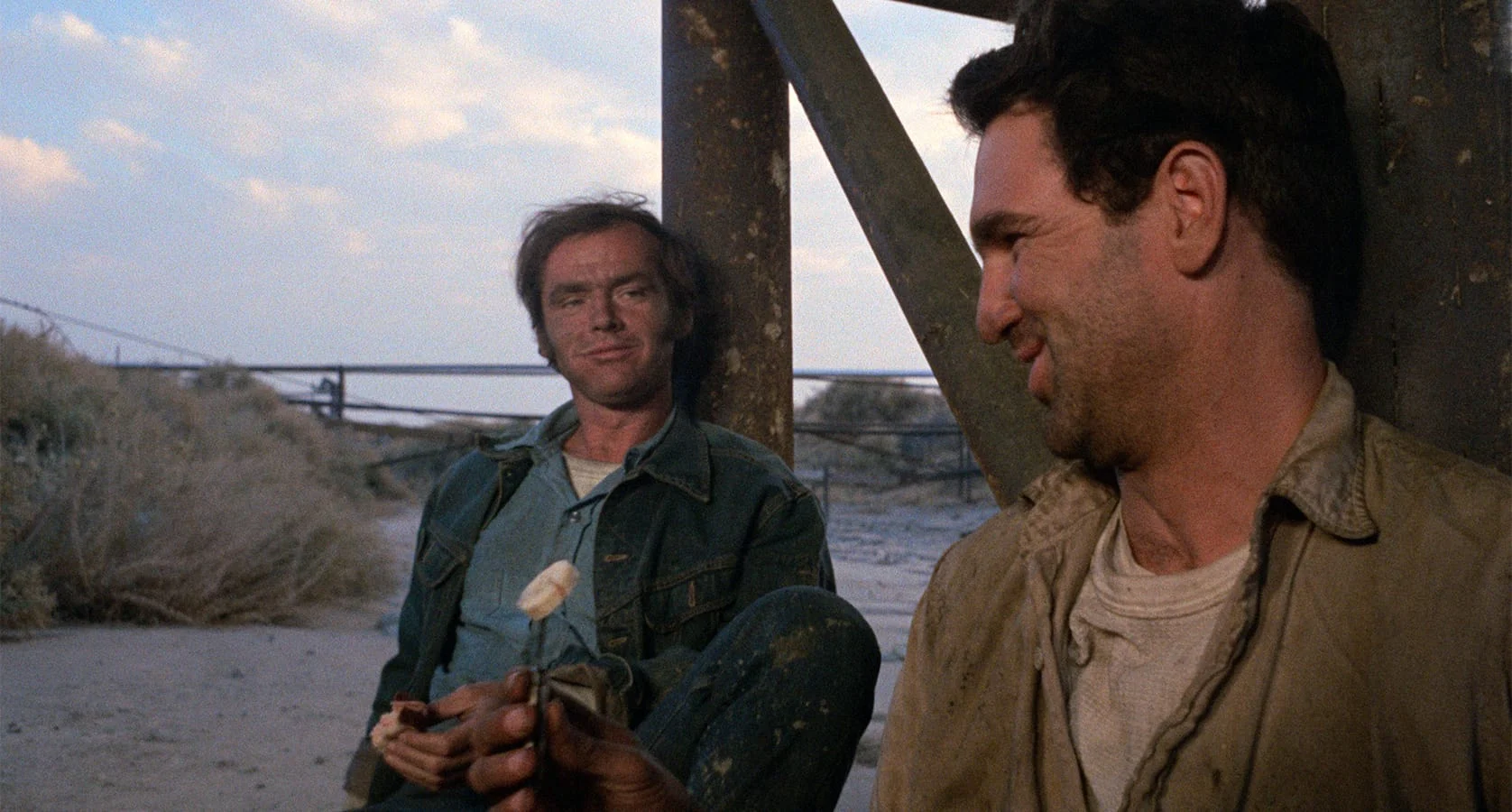
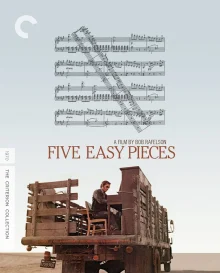
 Director: Bob Rafelson
Screenplay: Carole Eastman (as Adrien Joyce)
Starring: Jack Nicholson, Karen Black, Billy “Green” Bush, Fannie Flagg, Sally Ann Struthers, Marlena MacGuire, Richard Stahl, Lois Smith, Helena Kallianiotes, Toni Basil, Lorna Thayer, Susan Anspach, Ralph Waite, William Challee, John Ryan, Irene Dailey
Country: United States
Running Time: 98 min
Year: 1970
BBFC Certificate: 15
BBS Productions is a legendary North American film production company that crafted some wonderful independent movies in the 1960s and 1970s. It was preceded by Raybert Productions, founded by Bob Rafelson and Bert Schneider, which produced musical sitcom The Monkees – which made stars of the band – and co-produced, with Peter Fonda’s Pando Company, director and star Dennis Hopper’s road movie classic Easy Rider (1969).
Following the success of Easy Rider, Rafelson and Schneider enlisted a third partner, Stephen Blauner, and renamed their company BBS Productions, with the BBS standing for Bert, Bob and Steve, the three partners behind the production firm.
The company brought some of the most iconic independent film productions of the 1970s including Peter Bogdanovich’s The Last Picture Show (1971), anti-war documentary Hearts and Minds (1974) and actor Jack Nicholson’s directorial debut Drive, He Said (1971).
In total BBS Productions released seven films, plus Easy Rider in their earlier Raybert Productions incarnation, including the subject of this review Five Easy Pieces (1970). Directed by Rafelson, who also co-wrote the film alongside Carole Eastman (credited in the film as Adrien Joyce), the film was devised as a powerful leading role for Nicholson, following his breakout supporting turn in Easy Rider.
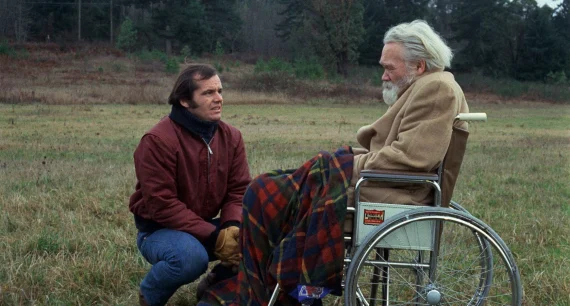
The film follows oil rig worker Bobby Dupea (Jack Nicholson), a former piano prodigy who doesn’t take any responsibility and is directionless. Bobby wastes away his days getting drunk, bowling and philandering with fellow oil worker Elton (Billy “Green” Bush). Bobby’s girlfriend Rayette (Karen Black) is a waitress who does have direction – she dreams of being a country music singer.
Bobby gets Rayette pregnant and decides to quit his job and head to LA with his girlfriend to see his sister Partita (Lois Smith), who is making a classical piano recording in the city. She tells her brother that their father (William Challee), from whom Bobby is estranged, is dying. Bobby sets off, reluctantly taking Rayette along, to see his father and reconcile, meeting some interesting characters along the way in a film that’s both road trip and character study.
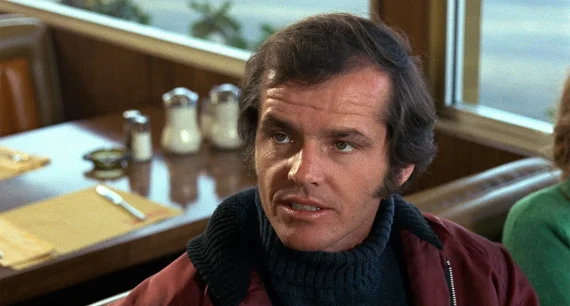
First and foremost this is an acting masterclass. It’s an actor’s films where everyone is given their chance to shine. I enthused about Nicholson in my review of the Warner Bros 4K edition of One Flew Over The Cuckoo’s Nest (1975) and could do the same here. He’s magnetic whenever he’s on the screen and shows as much emotion in the times he’s saying nothing as the times when he has plenty to say. He’s simply excellent throughout and a joy to watch. His scene in a diner, where he has a running battle with a waitress is a masterclass. He also gets a chance to play the piano, having undertaken lessons from Polish concert pianist Josef Pacholczyk to prepare for the role.
Equally brilliant is Karen Black, who won a Golden Globe for best supporting actress for her role as Rayette. She’s the emotional heart of a lot of the film, mistreated by her boyfriend, yet not wanting to be left alone by him. She displays plenty of range throughout from loved up to despondent.
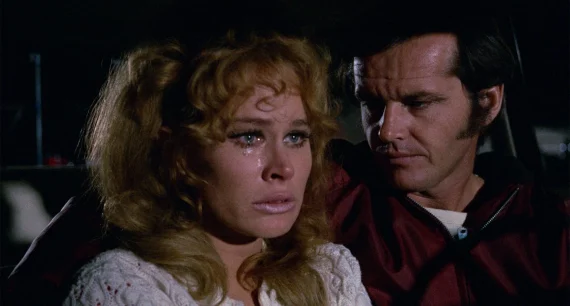
Supporting players also have memorable moments, but it’s a film owned by those Nicholson and Black performances, who deliver an array of little character touches that bring us closer to them both and to understanding their motivations, or lack of, in life.
The script is wonderful, painting a portrait of alienation, delivering unforgettable characters in Bobby and Rayette and outlining a journey that takes us on a road trip from a Californian oil field to LA and ultimately to Washington, showing blue collar America alongside the more privileged side of the world.
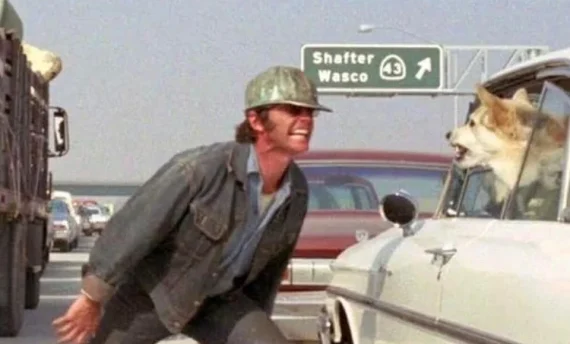
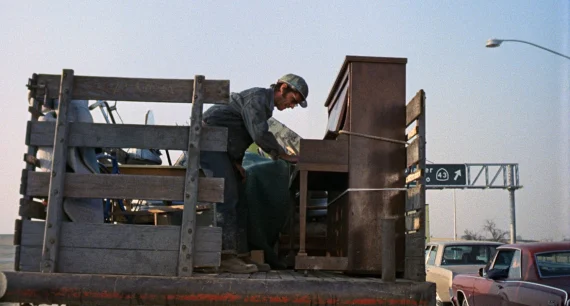
The film is full of great scenes, from Bobby snarling at a dog and playing a piano on the back of a truck, in an iconic image, when he and co-worker Elton are stuck in traffic, to a memorable dialogue sequence in a diner that turns into a more physical scene. The diner is a stickler for rules and annoys Bobby to the point that he keeps provoking her and then pushes plates off a table. These are just two of the many brilliant scenes in a film that’s full of them. I particularly enjoyed some of the silent sequences of Bobby just wandering the streets alone.
It’s also an excellent film of place, from the opening location filming in a Californian oil rig, to the locations the characters drift through on their journey. Location is very much a character here and it is all beautifully lensed by the outstanding director of photography László Kovács.
The score is sensitive with classical music playing its part, linked to Bobby’s piano prodigy past, and there are some great songs by Tammy Wynette, including Stand By Your Man, D-I-V-O-R-C-E, Don’t Touch Me, and When There’s Fire in Your Heart that underscore some of the scenes, giving us a little insight into the characters through their lyrics.
The film garnered plenty of accolades and nominations, particularly for Black’s performance, and is rightly considered an American independent classic, but lost out on the Best Picture Academy Award to Patton (1970). I like the film Patton but personally prefer Five Easy Pieces and have revisited it much more than the Oscar winner.
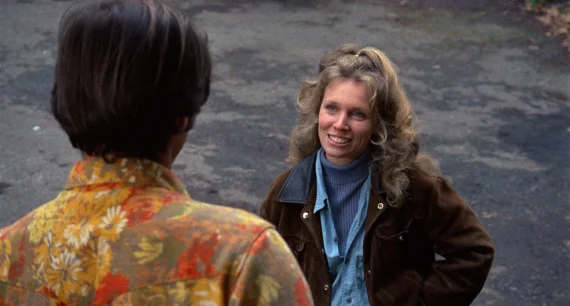
In closing, Five Easy Pieces is a phenomenal piece of cinema, a true masterpiece of New Hollywood which, for me, should have won Best Picture at the Oscars and features among the best performances in the careers of both Jack Nicholson and Karen Black. It’s a searing character study of alienation and blue collar America, a heart-wrenching drama, and a road-trip all in one that is a joy to spend time with and, for me, simply gets better with each and every viewing.
Film: 
Five Easy Pieces is released on dual-format 4K UHD and Blu-ray by the Criterion Collection on 8th June 2026. The new 4K digital restoration is outstanding, and the film looking as good as I’ve ever seen it. There’s a wealth of rich and fine detail throughout, a natural amount of grain and no blemishes. The audio is also great with the dialogue coming through clear, and sound effects and music also sounding good.
4K UHD and Blu-ray special edition features:
New 4K digital restoration, with uncompressed monaural soundtrack
One 4K UHD disc of the film presented in Dolby Vision HDR and one Blu-ray with the film and special features
Audio commentary by director Bob Rafelson and interior designer Toby Rafelson
Soul Searching in “Five Easy Pieces” – a 2009 program featuring Bob Rafelson
BBStory, a documentary about the legendary film company BBS Productions, with Rafelson; actors Jack Nicholson, Karen Black, and Ellen Burstyn; filmmakers Peter Bogdanovich and Henry Jaglom; and others
Documentary featuring critic David Thomson and historian Douglas Brinkley
Audio excerpts from a 1976 AFI interview with Rafelson
Trailer and teasers
English subtitles for the deaf and hard of hearing
Plus: An essay by critic Kent Jones
The 4K UHD check disc I was provided with only contains the film and the audio commentary. Luckily, I have the previous Criterion Collection Blu-ray edition so was able to review the remaining extra features.
The archival commentary by director Bob Rafelson, who passed away in 2022, and his wife, interior designer Toby Rafelson, is very informative. You get a real sense of both Rafelsons as people and some good background to the making of the film and its themes. The pair complement each other well and focus more on giving some great insights rather than being focused on scene-specific comments.
Soul Searching in Five Easy Pieces is a 2009 interview with director Rafelson and actor Jack Nicholson which sees the pair discussing the writing and development of the film. The nine-minute piece is entertaining and gives some background on the conception of the film, the diner sequence and the ending. The first five minutes feature Rafelson, who is the main focus of the interview, with Nicholson popping up for a couple of comments and further insight as it goes on.
BBS: A Time for Change is a brilliant 30-minute piece from 2010 which features critic David Thomson and historian Douglas Brinkley looking at Rafelson, executive producer Bert Schneider and the legendary movie company BBS Productions. It’s a really strong piece that provides plenty of context to the time in which the company was founded and what was happening in the United States at the time. There’s a real sense of time and place and it’s a good overview of the conception of the company and why it’s so important as well as highlighting the film censorship relaxation at the time that paved the way for independent cinema and also providing a good social history.
BBStory is a quite fabulous 2009 documentary featuring director Rafelson along with directors Peter Bogdanovich and Henry Jaglom, actor-director Jack Nichlson, actresses Karen Black and Ellen Burstyn and others who reminisce about the production company and the great films it made. Running for 47-minutes it’s the standout extra of the disc. There are some marvellous stories dotted throughout the documentary, which is a really great overview of BBS Films and a good introduction to the company and its films. The interviews with Rafelson and Nicholson from Soul Searching, the previously mentioned extra, are seemingly excerpts from this fantastic documentary.
Audio excerpts from a 1976 interview that Rafelson undertook as part of the Harlod Lloyd Master Seminar Series at the American Film Institute, sees the director talking about his career, his creative process and the films he directed for BBS. Running for 50 minutes, Rafelson is on great form, though the sound is quite low, so I had to turn the volume up quite a bit on this one, which is understandable given the archival nature of the piece.
Rounding out the on-disc extras are two teaser trailers, one running for two-and-a-half minutes and the other for 80 seconds and a three-minute theatrical trailer.
I wasn’t provided with the essay, but assume it’s the same as the one in the previous Blu-ray edition. It’s a good essay that gives a good overview of the film and its performances.
Criterion have provided a marvellous package for the modern American masterpiece, Five Easy Pieces. The film is anchored by phenomenal performances by Jack Nicholson and Karen Black and is an excellent independent film. The disc includes a fabulous 4K digital restoration with the movie never looking better, and all of the extra features from their previous Blu-ray edition are included. This means we get some quite wonderful documentaries and interviews providing a wealth of background about the film, BBS Productions and the independent cinema scene of the late 1960s to early 1970s. Essential viewing.
Disc/Package: