


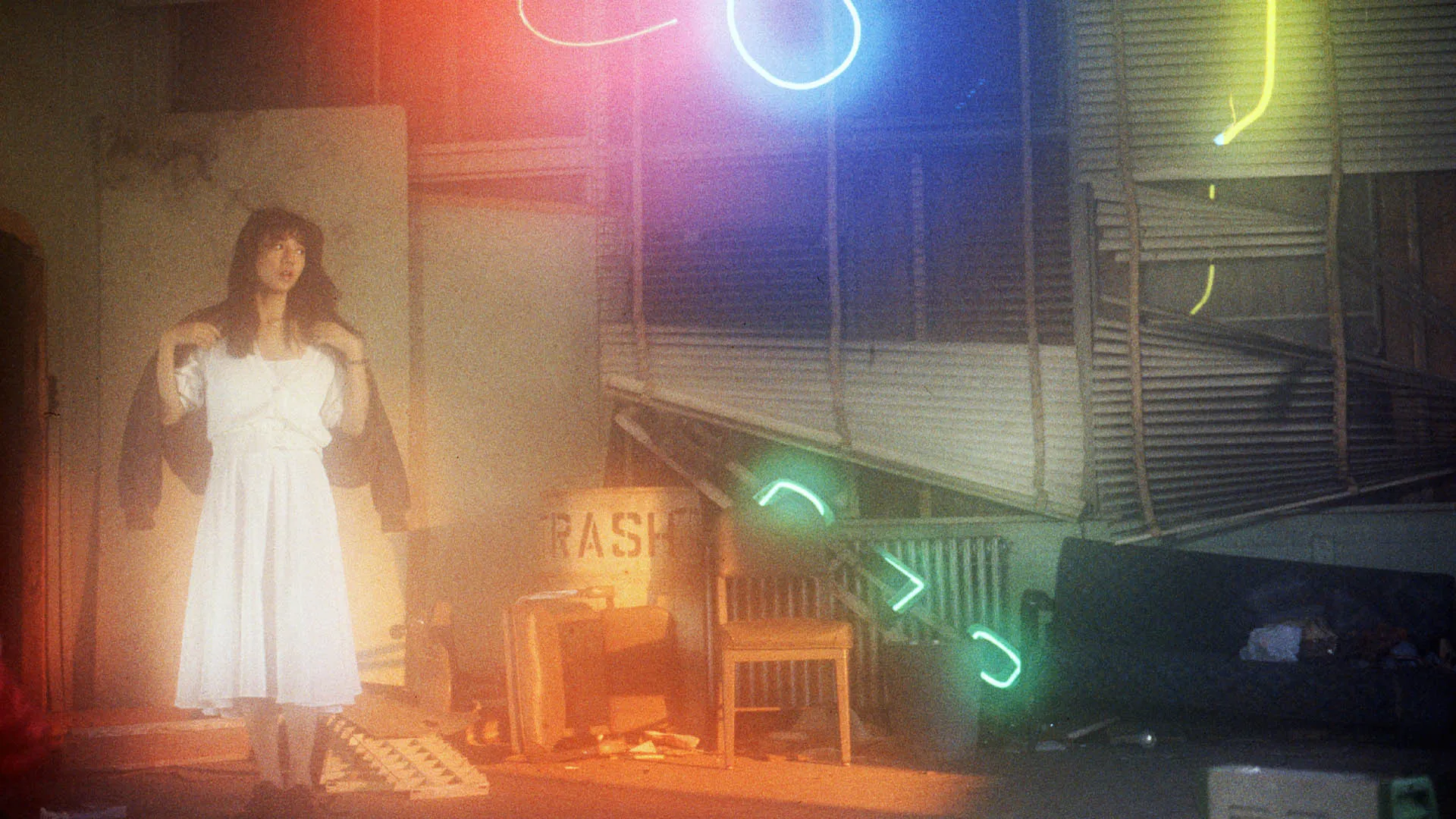
 To me, part of engaging in the hobby of watching films is to be challenged by new things. Maybe that means tackling some material by a director you’ve never seen or maybe it means dipping your toes into a genre you’re unfamiliar with, but stepping outside of your comfort zone can be exciting, intimidating and often rewarding. Having recently watched 1988’s superb horror film Evil Dead Trap, I started diving into researching the other films by its writer, Takashi Ishii, and discovered his manga series Angel Guts.
An anthology series with narratives focussed on exploring dark and seedy subject matter, often around sexual assault and its physical and psychological effects, each story revolves around a woman called Nami and a man called Muraki who’s lives collide in often tragic ways. David has previously reviewed Third Window’s box set of Ishii directed Nami films here and when it was announced that they were producing a set focussed purely on the Angel Guts films, I was intrigued and decided to take on the task of reviewing them…
Red Classroom
Director: Chusei Sone
Screenplay: Takashi Ishii, Chusei Sone
Starring: Yûki Mizuhara, Keizô Kanie, Jun Aki, Ken Mizoguchi
Country: Japan
Running Time: 89min
Year: 1979
BBFC Rating: 18
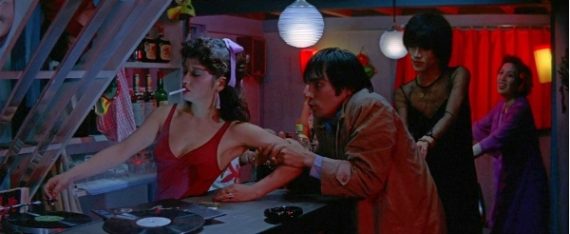
Muraki is an editor of an independent pornographic magazine and is a man who seems deeply unhappy with his life. When he views a school set porn film showing the rape of the lead actress, he becomes obsessed with finding this Nami. When he does, he descends into a world darker than he could have imagined…
Going into Red Classroom, and this box set as a whole, I was aware that these films were put out as part of production company Nikkatsu’s “Roman Porno” series of pink films; adult films with dark subject matter and a heavy focus on eroticism. That does set a very specific expectation of what the viewer might find but, as an introduction, Red Classroom came as a huge surprise.
This is a film which is most certainly adult but never feels smutty, graphic but not explicit with an incredibly unsettling darkness running through it. Muraki, played here with a brooding intensity by Keizo Kanie, constantly feels like a man on the edge, in a career that he’s never happy with, with a partner he maybe doesn’t love. Nami (a superb Yuki Mizuhara), is even more broken. Muraki finds her as the receptionist at a love hotel he’s planning on using for a photoshoot and the more he gets to know her, the more we, the viewer, find a woman eternally scarred from the experience of shooting the porno film that starts us down this path.
Red Classroom has a big focus on character drama exploring the psychological effects of sexual abuse with Nami being somewhat split between protagonist and antagonist, running the lives of everyone she comes into contact with just as her life was ruined and gradually exposing characters far seedier than anything Muraki is putting into his magazine. It’s also remarkably matter of fact about its portrayal of the pornography industry with discussions of art vs pornography for pure titillation, as well as the blurred line between reality and film and how it’s easy to dissociate when viewing adult material without fully engaging with the experiences of those involved.
Director Chusei Sone shoots all of this with a stunningly vibrant colour palette and a fantastic eye for filling the 2.35:1 frame in just the right way; Red Classroom feels like a film rather than an adult movie, a noirish nightmare which becomes surprisingly violent towards the end, eschewing any fantasy a film like this could have and covering it with a thick layer of unpleasant grime. The ending itself is remarkably cruel and will easily get under your skin, creating a film that’s not easy to recommend but will easily surprise anyone who feels that they’re up to the task.


Nami
Director: Noboru Tanaka
Screenplay: Takashi Ishii
Starring: Eri Kanuma, Takeo Chii, Mimi Sawaki, Miyako Yamaguchi
Country: Japan
Running Time: 98min
Year: 1979
BBFC Rating: 18
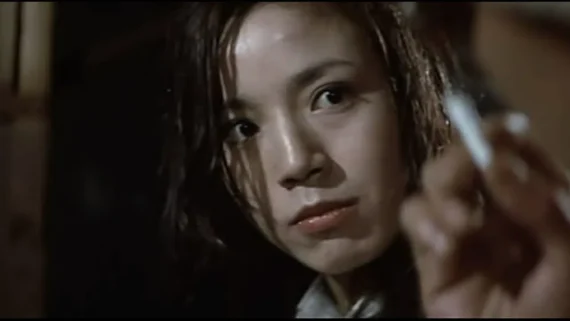
Nami is a journalist working for a woman’s magazine, writing a series of stories about rape victims. When her investigations lead her into contact with Muraki, a reporter working for a men’s pornographic magazine, she starts to realise that their goals and methods are not dissimilar and that she is perhaps preying on the victims as much as those who perpetrated the crimes.
Released in the same year as Red Classroom, Nami is a very different affair and absolutely the best film in this set. Out of the gate Nami is far more aggressive with it’s depiction of sexual assault but feels almost more like a psychological thriller instead of the drama of the first film. We get scenes of stalking, almost like we were watching the killer in a giallo pursue their victims, however the crime here is not murder.
Nami as a character is also very different than in Red Classroom. Portrayed by Eri Kanuma she is here more of a driven workaholic desperately pursuing her victims with the goal of, she believes, exposing the truth about the suffering that rape causes these women. In actuality her actions and indeed those of her rival, Muraki, are just as predatory; this is summarised in one particular scene in which Nami aggressively interviews a woman, finally getting her story out of her which results in possibly one of the most harrowing assaults in the film.
The story does genuinely lean more into being a thriller over a film purely about sex, with a narrative that ramps up into a sequence in the third act which dips fully into horror territory with some incredibly intense gore and a scene involving a formaldehyde bath full of corpses which is going to be hard to forget. Underneath it all we’re asked to question Nami’s role as a protagonist. The narrative is complex and the film doesn’t land on a resolution, leaving things open ended for the viewer to interpret.
Once again excellently shot with a stunning sense of surrealism and is the longest film in the set at over an hour and a half. It’s definitely the most fully formed of all the productions here and a film that would be easy to recommend to anyone with an interest in extreme cinema and thrillers. Ultimately this is a superb story about broken people and the things that break them.
Red Porno
Director: Toshiharu Ikeda
Screenplay: Takashi Ishii
Starring: Jun Izumi, Masahiko Abe, Kyoko Ito, Michiko Asô
Country: Japan
Running Time: 67min
Year: 1981
BBFC Rating: 18
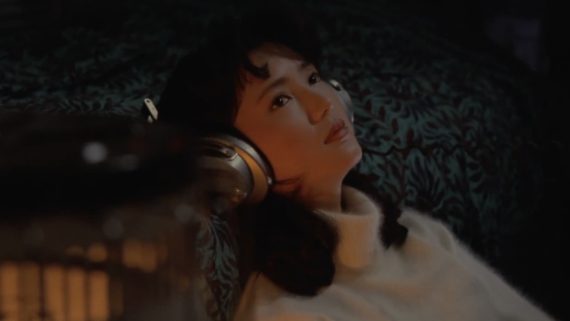
Nami is a shop assistant working at a department store. When her friend tricks her into attending a photoshoot which turns out to be a modelling session for a bondage magazine, Nami’s life is turned upside down when the photos are published, threatening to expose the affair she is having with her boss and bringing her under the gaze of local recluse Muraki who begins to obsess over her…
We move from the strongest film in the set to the weakest. Despite maintaining an incredibly noirish presentation, Red Porno is, as the title suggests, easily the most smutty film in the set, focussing almost all of its slight run time on the sexual content rather than the character drama. There’s a very voyeuristic feel here with a stream of softcore scenes which almost undermine some of the more surrealistic imagery at play and the darker themes which are brought into the film in the final act.
It feels like Ishii and Evil Dead Trap director Toshiharu Ikeda are exploring concepts of entitlement and the male gaze, but with the story being given very little room to breathe and grow it’s hard to exactly pin that down. There is a cautionary tale at play here, however, with Nami’s naive trust of everyone around her leaving her open to abuse and the obsessions of Muraki, a man who is shown multiple times to be unstable with disturbing fantasies and kinks. The film also does successfully juxtapose both Nami and Muraki’s loneliness and the clashing of their different lifestyles, however again, none of this is really given any time to develop into a full and proper narrative before we’re subjected to another raunchy scene.
Despite its shorter run time and lesser focus, Ikeda manages to give the film a striking visual style, even if it’s not as elegant as its two predecessors. This feels like a more outwardly grimy film with a similar grindhouse exploitation style that he later gave to the fabulous Evil Dead Trap. There’s an unsettling feeling with Muraki’s obsessive pursuit (both figurative and literal) of Nami, as well as a sub-plot about a mysterious man assaulting women in his neighborhood which inevitably turns the attentions of the residents of his tower block to casting their eyes towards Muraki.
The gut wrenching twist at the finale is a genuinely shocking descent into horrific depravity but also largely feels unearned due to the rather slight nature or the story which relies far too much on the graphic nature of its sex to shock rather than engaging it as a narrative tool as in the previous two films.
Red Vertigo
Written and directed by: Takashi Ishii
Starring: Mayako Katsuragi, Naoto Takenaka, Hirofumi Kobayashi, Jun Izumi
Country: Japan
Running Time: 74min
Year: 1988
BBFC Rating: 18
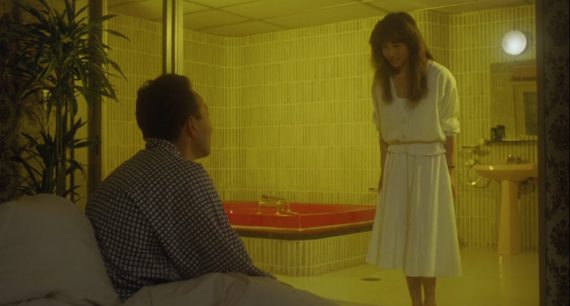
Nami is a hard working nurse who’s life is turned upside down in the space of a day when she’s assaulted by two of her patients and returns home to find her partner having an affair with one of the models he photographs. Running from her home she is hit by a car being driven by disgraced insurance broker Muraki who, in a fit of panic, kidnaps her and takes her to an abandoned warehouse to decide his next move.
Takashi Ishii always wanted to be filmmaker, a career that always eluded him but one which was finally offered when he became the director of his own writing with this part of the Angel Guts series. In many ways playing out as more of a romantic crime thriller, Red Vertigo is a smaller, more intimate affair than its predecessors with a strong focus on establishing the characters of this narrative over anything else; this is probably the most time we get to spend with our Nami and Muraki, exploring their motives and stories.
Nami here is probably her most innocent and naive, and it’s heartbreaking to watch her life fall apart in the films opening scenes. The initial rape by her patients while on her shift is probably one of the most aggressive and unsettling in this set of films, shot by Ishii in a single take and presenting a disturbing scenario that awful things can happen in the most familiar places, in this case a place of work. Her being subsequently betrayed by her boyfriend and then being hit by Muraki and kidnapped is just a bleak 1-2-3 combo.
Muraki by contrast is portrayed from the outset as a full on scumbag, a man in a position of power who has already abused that by stealing a sizeable amount of money from his clients (strongly suggested to have Yakuza ties) but his panic on initially thinking he’s killed Nami sends him spiralling further. His subsequent attempts to assault her before finally forming a strangely symbiotic bond with her leads the narrative into the realms of an unlikely love story which may not entirely sit well with many viewers.
Muraki clearly holds a lot of power over Nami here and it’s never certain whether she’s finding companionship with Muraki as an attempt to lure him into a false sense of security or if her sense of Stockholm Syndrome is brought on by the extreme trauma she’s been through, but their emerging romance fills the last half of the film and forms a tale of two broken souls eventually finding solace in one another.
As with all of the films in this set this leads into a finale which presents a typically bleak ending before finally managing to find a tiny ray of hope for an optimistic Nami as the credits roll, leaving the audience ambiguously wondering what comes next. Red Vertigo is probably the most narratively straightforward film in this set and is a much more satisfying story than its predecessor, but does perhaps lack the more noirish appeal of the first two films.
Ishii meanwhile shows a great eye as a filmmaker, using colour and movement wonderfully with shots that are full of expressionist imagery. There’s less overt horror on display here but Ishii films a number of scenes in an almost dreamlike way, leading to a heightened sense of reality that plays well into the themes of the film.
Bonus Features
Disc 1:
Red Classroom
- New Audio Commentary by Jasper Sharp
- Frankie Balboa Video Essay
- Two Archival Interviews with Takashi Ishii
- Original Trailer
Disc 2:
Nami
- New Audio commentary by Jasper Sharp
- James Balmont Video Essay
- Archival Interview with Noboru Tanaka
- Original Trailer
Disc 3:
Red Porno
Red Vertigo
- Red Vertigo Audio Commentary by Tom Mes
- Red Porno Audio Commentary by Samm Deighan
- Archival Interview with Toshiharu Ikeda
- Archival Interview with Takashi Ishii
- Original Trailers
Bonus Disc:
Red Flash
- Audio commentary by Jasper Sharp
- Matthew Carter Video Essay
- Archival Interview with Takashi Ishii
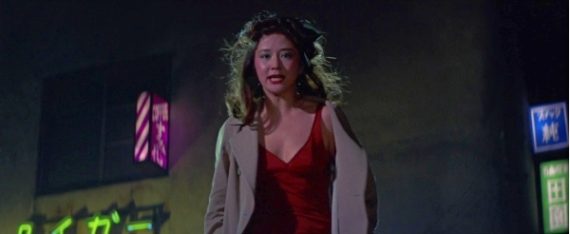
Watching the films in this set was quite an experience. In many ways this series holds some similarities with Lars Von Trier’s Nymphomaniac or Steve McQueen’s Shame with their frank portrayal of sex, often turning it from being less erotic and more horrific, while mixing the narratives with elements of crime and explorations of society and class as well as presenting a warts and all representation of the pornography industry.
The films all look superb in their new HD masters with Red Classroom and Nami particularly standing out, while the bonus features do a great job of diving into additional details behind the films and their production. The archival interviews with Ishii are particularly fascinating viewing providing context to the films and manga as well as the writer’s personal pursual of a career in filmmaking that he was finally able to realise through his own writings.
Perhaps disappointingly, however, is the choice to include a fifth film here of Red Flash, an Angel Guts film that Third Window have previously included in their Nami box set which I linked to our review of at the start of this article. I didn’t receive a review disc for this, so do go and read David’s words there, but putting it in here does provide some cross over for collectors, particularly as there is another alternative film that could have been included, 1978’s High School Co-Ed, the film which kicked off the Angel Guts series at Nikkatsu.
Overall though, this is a good set which is hard to recommend to all viewers given the sometimes extremely graphic and difficult content of the films contained. You’ll know if this is something you want to watch, however, and there is some rewarding viewing to be had for those who are willing to go all in. Often bleak and soul destroying but with the occasional glimpses of humanity, the Angel Guts films will probably be unlike anything you’ve experienced before.