


 Takashi Ishii was always interested in getting into the film industry but, after failing to get a job at Nikkatsu, he instead moved on to writing manga. He soon found fame with his gekiga (manga aimed at adults), most notably the ‘Angel Guts’ series. This led Ishii to get his first break into the film industry, writing a screen adaptation of one of his manga that would become Angel Guts: Red Classroom, released in 1979.
He continued to write screenplays throughout the 80s, including a few more Angel Guts adaptations, as well as scripting notable titles such as Love Hotel and Evil Dead Trap. In 1988, however, the same year the latter film was released, Ishii got the chance to direct. Unsurprisingly, his debut was another entry in the Angel Guts series, Red Vertigo. This led to a career behind the camera, making films largely in the erotic thriller, neo-noir and crime genres (sometimes all at once). He’s probably best known for the Gonin series but has several well-regarded films to his name, often featuring repeated traits, both stylistic and in terms of themes and content. Among these is his commitment to centring his stories around a female character called Nami. There are a few films where he doesn’t adhere to this formula, but for the most part, Ishii sticks to it.
Third Window Films are releasing a quartet of Ishii’s films on Blu-ray in the UK, in a set entitled Takashi Ishii: 4 Tales of Nami. This includes Original Sin, A Night in Nude, Angel Guts: Red Flash and Alone in the Night. I got hold of a copy, and my thoughts follow.
Original Sin
Director: Takashi Ishii
Screenplay: Takashi Ishii
Based on a Novel by: Bo Nishimura
Starring: Shinobu Otake, Masatoshi Nagase, Hideo Murota
Country: Japan
Running Time: 117 min
Year: 1992
Based on a novel by Bo Nishimura (which, in turn, was based on a real account of murder), Original Sin (a.k.a. Shinde mo ii) is a stripped-back, pitch-black drama that plays like a Japanese take on The Postman Always Rings Twice. The story follows Makoto (Masatoshi Nagase), a drifter who joins a real estate firm after falling for the owner’s wife, Nami (Shinobu Otake), who also works for the company. Makoto seduces Nami, leading to an intense extramarital affair. As passion escalates and jealousy builds, Makoto plots to murder the husband (Hideo Murota).
When Ishii was approached to make Original Sin, it was originally going to be a Roman Porno, made for Nikkatsu through The Directors Company. However, the latter company (which I’ve discussed in several other Third Window releases) went bust just as the project was moving into production. Co-financiers, Argo Pictures, jumped in to pick up the slack, but it meant the schedule and budget were greatly restricted.

Ishii and his crew persevered though, and the resulting film went on to win several awards and helped legitimise his work as a director.
It’s easy to see why the heads of festival juries were turned, as Original Sin is an impressive piece of work. It’s deliberately paced, but this aids the melancholic tone. There’s a wonderful quote from Shinobu Otake on the disc, that explains Ishii’s unusual style – “He delicately handles something that is not delicate.”
Because it was based on a true story, Ishii did his best to keep things believable on screen. As such, there’s a rawness to the film that is absent from most Hollywood erotic thrillers. The drama isn’t overladen with forced dialogue, and the bursts of violence that crop up are messy and chaotic, rather than choreographed and artificial.

There are a lot of long takes used too. In an interview on the disc, Ishii describes how he likes to shoot like this so as not to interrupt the flow of the performances. It works a treat, as the core trio of Shinobu Otake, Masatoshi Nagase and Hideo Murota are superb. The subject matter is tough, with a deeply problematic relationship at its core (Nami and Makoto’s ‘romance’ is instigated by rape), but the performances help make this work, somehow.
However, there’s a tragic beauty to it all. Ishii makes effective use of movement, camera tricks and match-cuts. He tells his story with all the cinematic means at his disposal.
Overall, it’s a troubling, slow-moving but masterfully directed drama that serves as an excellent introduction to Ishii’s talents.


A Night in Nude
Director: Takashi Ishii
Screenplay: Takashi Ishii
Starring: Naoto Takenaka, Kimiko Yo, Jinpachi Nezu, Kippei Shîna, Noriko Hayami
Country: Japan
Running Time: 110 min
Year: 1993
A Night in Nude (a.k.a. Nûdo no yoru) is a crime drama that follows Jiro (Naoto Takenaka), a fixer-for-hire in Tokyo. He’s hired by a mysterious woman named Nami (Kimiko Yo) to show her around the city. There seem to be some sparks between the pair in this refreshing excursion.
However, shortly afterwards, Nami murders her abusive boyfriend. She leaves a message for Jiro to come and pick up something she left in her hotel room, and he arrives to find the ‘something’ is her boyfriend’s body.
Believing that their seemingly pleasant time together was nothing but a ruse to get him to tidy up after her mess and take the blame, Jiro seeks out Nami to confront her.

He finds her but only gets further embroiled in her dangerous games.
I loved the neo-noir vibe to A Night in Nude. It oozes atmosphere, aided by a minimalist, jazz-inflected, moody score by Gorô Yasukawa. He worked regularly with Ishii, providing fantastic music for all of the films in this set.
Cinematographer Yasushi Sasakibara was another Ishii regular (he shot everything in this set, except Angel Guts: Red Flash), and he does great work here. There are more long takes and striking use is made of colour, light and composition.
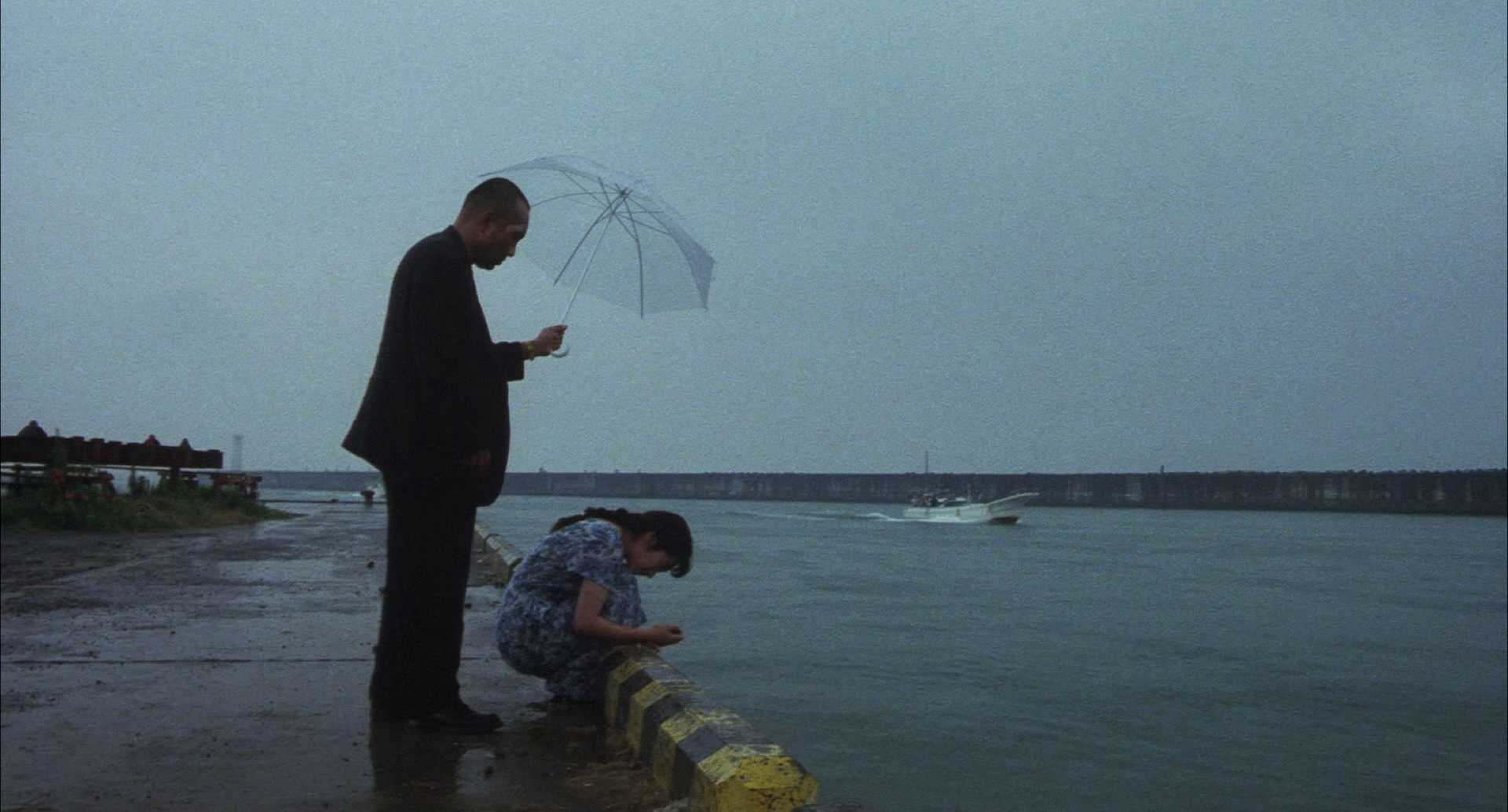
Like most of the films in the set, A Night in Nude is about loneliness and toxic relationships. The latter is usually a turn-off for me, but Ishii’s films are unique, intriguing and stylish enough to win me over, even if I don’t particularly enjoy watching them.
The stories are also well-told. A lot of details here are kept just out of arm’s reach, keeping the audience at a slight distance, maintaining intrigue and mystery.
The performances are excellent, once again. Our two leads are understated and quietly brooding, whilst the ‘villains’ play things much larger but not enough to derail the film.

Once again, the pace is slow, and it’s bleak as hell, but A Night in Nude remains a heartbreaking look at loneliness and abuse through a neo-noir lens.
Oh, and make sure you sit through the whole credits because the final shot playing behind them flips the film on its head.
Angel Guts: Red Flash
Director: Takashi Ishii
Screenplay: Takashi Ishii
Based on a Manga by: Takashi Ishii
Starring: Maiko Kawakami, Jinpachi Nezu, Noriko Hayami
Country: Japan
Running Time: 88 min
Year: 1994
Angel Guts: Red Flash (a.k.a. Tenshi no harawata: Akai senkô or Angel Guts: Red Lightning) focuses on Nami (Maiko Kawakami), a photographer who is disturbed after being hired to take production stills on a rape-heavy adult video.
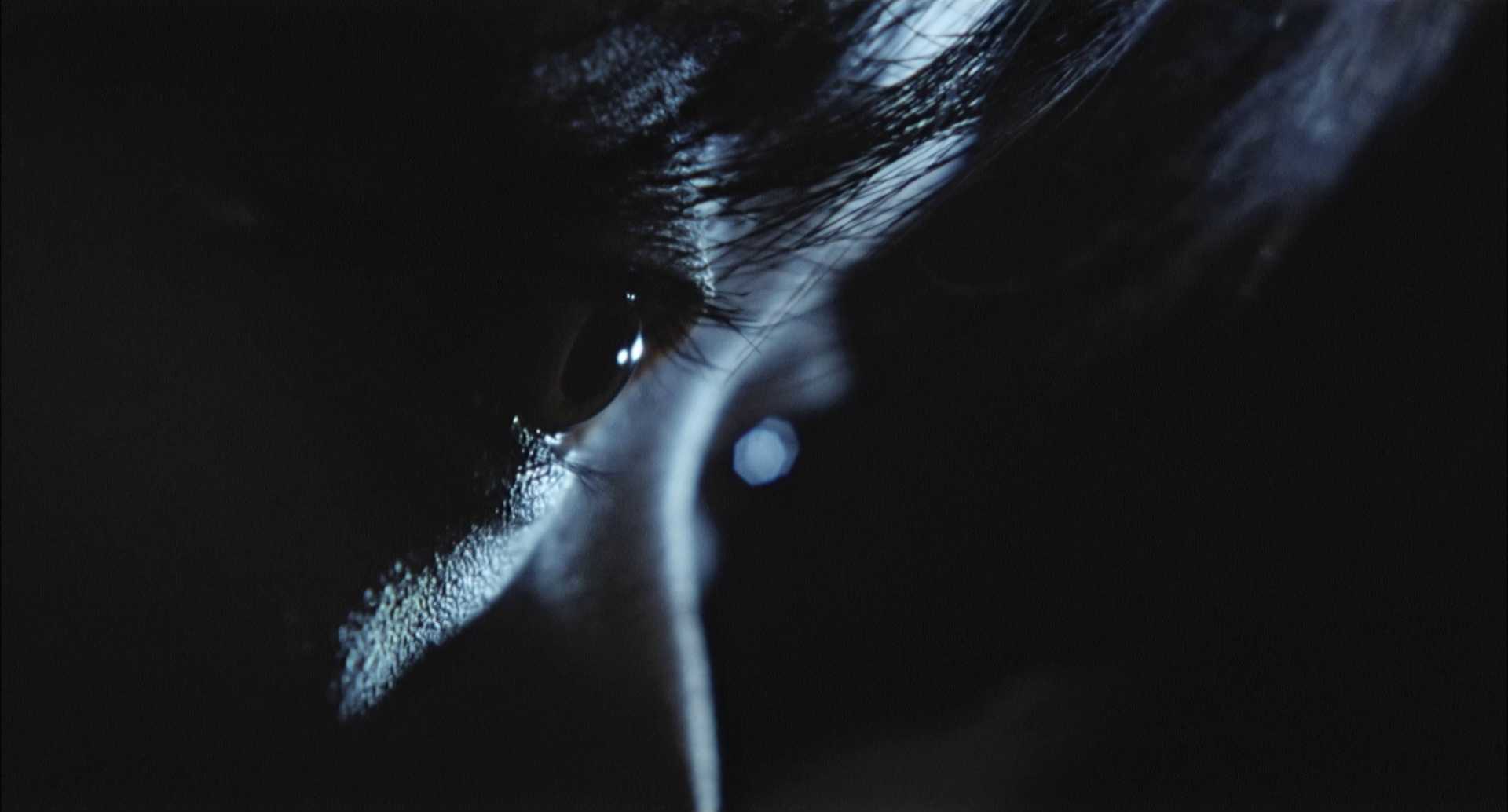
Not long after the shoot, following a drunken night out, Nami wakes up in a ‘love hotel’ beside a dead man. With no memory of the night and a videotape as her only clue, she teams up with her colleague Muraki (Jinpachi Nezu) to unravel the mystery.
The Angel Guts films are a series of unconnected, standalone films, based on the manga series by Ishii. As such, you don’t need to watch them in any order. They all, however, centre around a young professional character called Nami who gets caught up in a world of sexual violence. Nami is usually played by a different actress each time, and they are never supposed to be the same character. There’s also always a counter male character called Muraki.
Perhaps it’s because the film is part of a series, but I found Angel Guts: Red Flash to be the most generic film in the set. Only by a touch though. It still has Ishii’s fingerprints all over it and his usual stamp of quality. It just didn’t feel as unique and artful.

The exploitative elements, which aren’t absent from the other films, felt more in-your-face here too. I have a strong dislike for rape scenes in films, and this has quite a few. Thankfully, these are never made to seem ‘sexy’, as they can be portrayed in some films. Ishii doesn’t try to trivialise them. Rape is shown to severely affect a couple of characters, psychologically.
This doesn’t make the film any easier to watch, however, meaning Angel Guts: Red Flash is another heavy-going addition to the set. It’s slickly put together though, and often quite powerful.


Alone in the Night
Director: Takashi Ishii
Screenplay: Takashi Ishii
Starring: Yui Natsukawa, Jinpachi Nezu, Toshiyuki Nagashima, Kippei Shîna
Country: Japan
Running Time: 108 min
Year: 1994
The Nami in Alone in the Night (played by Yui Natsukawa) starts the film as the loving wife of an undercover police officer. He’s swiftly killed off though, and the yakuza gang he had infiltrated pay Nami a visit, trashing her house in search of some missing drugs and raping her before leaving.
After a failed suicide attempt, Nami instead decides to take revenge by trying to kill the gang’s boss, Ikejima (Minori Terada). Muraki (Jinpachi Nezu) stops her though, initially, catching her just before she tries. He later saves Nami’s life when she tries to kill herself once again, and he asks her to quit trying to kill Ikejima, as she likely won’t succeed.
Undeterred, Nami poses as a hostess to get close to Ikejima. This doesn’t go to plan though, and her life continues to spiral out of control. Thankfully, Muraki has her back at every step.

Ishii was asked to take a break from working on Gonin to make this and another film, originally intending these ‘quickies’ to be made back-to-back for the V-cinema market. However, Yui Natsukawa, the actress Ishii wanted for the lead, would only take the role if the film was released in theatres. So Ishii had to dip into some of his own festival prize money to pay to ‘upgrade’ the film to be suitable for cinemas.
This sacrifice paid off, as the resulting film is another masterfully directed tale of isolation and grief.
On the surface, Alone in the Night seems quite generic, but it blends elements of the rape-revenge and yakuza films together and subverts them enough to create something fresh.

For one, the film seems to be more brutally realistic than most revenge movies. Nami doesn’t become a bad-ass vengeful heroine. Her attempts to get revenge continue to fail and only serve to make her life more miserable each time.
Again, there’s a lot of rape in the film but, thankfully, Ishii tends to cut away before or shortly into each act. This keeps the scenes from seeming exploitative. It doesn’t make the film any less grim though. Nami really goes through the wringer in this.
There are some subtly touching moments though, between Nami and Muraki, to keep the bleak tale from getting to be too much. Their relationship helps give great impact to the film’s finale.

There are plenty of Ishii’s signature touches here, such as the long takes mentioned before, and also his use of water to heighten the more emotionally powerful scenes, be it through rain, the sea or shallow pools.
So, Alone in the Night is another harrowing crime drama shot with great confidence and artistry.
Takashi Ishii: 4 Tales of Nami is out on 25th August on region B Blu-ray, released by Third Window Films. The transfers are all decent. The films largely take place at night or in darkened rooms, and these dark scenes can look a bit murky on disc. However, this might be intentional, and it fits the mood. The images look a little soft too, but this is likely down to the source material. It all looks wonderfully natural though, and colours are pleasing. I’ve used screengrabs throughout this review to give you an idea of how the films look. Audio is solid across the board.
Limited edition set (2000 copies)
Includes a booklet by Jasper Sharp
Disc 1: Alone in the Night 夜がまた来る (1994)
・Audio commentary by Samm Deighan
・Archival Interview with Takashi Ishii
・Archival Interview with Jinpachi Nezu
・Archival Interview with producer Yu Okada
・New Interview with cinematographer Yasushi Sasakibara
Disc 2: Angel Guts: Red Flash 天使のはらわた 赤い閃光 (1994)
・Audio commentary by Jasper Sharp
・Archival Takashi Ishii interview
・Matthew Carter Video Essay
Disc 3: A Night in Nude ヌードの夜 (1993)
・Audio Commentary by Frankie Balboa
・Archival Interview with Takashi Ishii
・Archival Interview with Kippei Shiina
・Archival Interview with Naoto Takenaka
・Archival Interview with producer Yu Okada
・Theatrical Trailer
Disc 4: Original Sin 死んでもいい (1992)
・Archival Interview with Takashi Ishii
・Archival Interview with Shinobu Otake
・Archival Interview with producer Yu Okada
・Theatrical Trailer
・Teaser

There are archival interviews with Ishii on all the discs. These allow the director to explain his approach to the films as well as how he got involved. I particularly enjoyed hearing him describe some of the clever little details I missed in a couple of the films, as well as some happy accidents that occurred during production.
Frankie Balboa provides a commentary over A Night in Nude. This is decent. He breaks down what’s happening on screen, offering his thoughts on the film’s qualities.
Jasper Sharp provides a commentary over Angel Guts: Red Flash. He opens by telling us how his first-ever commentary was for a DVD release of the first four films in the series, so it has a special place in his heart. It’s a typically well-researched and engrossing track.
Samm Deighan provides a commentary on Alone in the Night. Whilst there’s a little crossover between this and Jasper Sharp’s track (which I listened to prior to this one), Deighan still has a lot of interesting things to say about Ishii and his work, as well as about Alone in the Night in particular.
Kippei Shiina is interviewed on the A Night in Nude disc. The actor begins by talking about the importance of the role in his career. The first half of his interview is a little too gushing for my liking, but the second half is more interesting, when he talks about being on set and his approach to the role.
Naoto Takenaka is also interviewed on the same disc. He begins by explaining how he first came across Ishii and A Night in Nude after coming across an early copy of the script in his agent’s bin! He has some eye-opening stories to tell about all the films he’s made with the director. It’s a wonderful interview.

Shinobu Otake is interviewed on the Original Sin disc. This archival piece is a little backslap-heavy, but she has some thoughtful things to say and I believed most of her praise.
There are also interviews with producer Yu Okada on Original Sin, A Night in Nude and Alone in the Night. He talks about his history with Ishii and his involvement in the films. He tells of the turbulent production history of Original Sin and discusses Ishii’s approach to filmmaking.
There’s also an essay by Matthew Carter about the depictions of the Nami character throughout Ishii’s work, particularly in the Angel Guts series. He looks at how these films balance a mature and complex look at sexuality alongside exploitative elements.
Jinpachi Nezu is also interviewed on the Alone in the Night disc. He talks of his experiences working with Ishii, particularly on that film.
There’s also a new interview with Ishii’s regular cinematographer Yasushi Sasakibara on the Alone in the Night disc. He’s enjoyably frank, talking about how they would fight, due to Sasakibara being a more traditional filmmaker than Ishii.
I didn’t receive a copy of the booklet to comment on that.
So, if you’ve got the mettle for this challenging set of films, you’ll find much to admire. You just might need a shower and a hug afterwards. Third Window have certainly done the films justice, with an array of first-rate special features. Fans of extreme Japanese cinema should pick this up soon, before it goes out of print.
Disc/Package: