


 Director: Miloš Forman
Screenplay: Laurence Hauben and Bo Goldman
Based on: the novel by Ken Kesey and play by Dale Wasserman
Starring: Jack Nicholson, Louise Fletcher, Will Sampson, William Redfield, Brad Dourif, Sydney Lassick, Christopher Lloyd, Danny DeVito, Dean Brooks, William Duell, Vincent Schiavelli, Michael Berryman
Country: United States
Running Time: 134 mins
Year: 1975
BBFC Certificate: 18
Czech filmmaker Miloš Forman rose to fame in his home country as a leading light in the Czechoslovak New Wave, breaking out with the likes of Black Peter in 1964, which won the Golden Leopard award at the Locarno International Film Festival, and The Fireman’s Ball in 1967, a satire of Eastern European Communism.
Forman was forced to emigrate to New York after the Czech studio he was working for claimed he was out of the country illegally when he made his first US movie Taking Off, which shared the Grand Prix at the Cannes Film Festival with Johnny Got His Gun in 1971.
The film was far from a critical or commercial success but he followed it up with the subject of this review, One Flew Over the Cuckoo’s Nest, which was based on Ken Kesey’s cult novel of the same name which was published in 1962 and a play adaptation of the novel by Dale Wasserman, which debuted on Broadway a year after the release of the novel.
Forman would experience the polar opposite to that which he experienced for Taking Off, with One Flew Over the Cuckoo’s Nest receiving critical and commercial acclaim, winning the five big Oscars – best director, best actor, best actress, best picture and best screenplay. Only two other films have so far also received those five Oscars, It Happened One Night and The Silence of the Lambs.
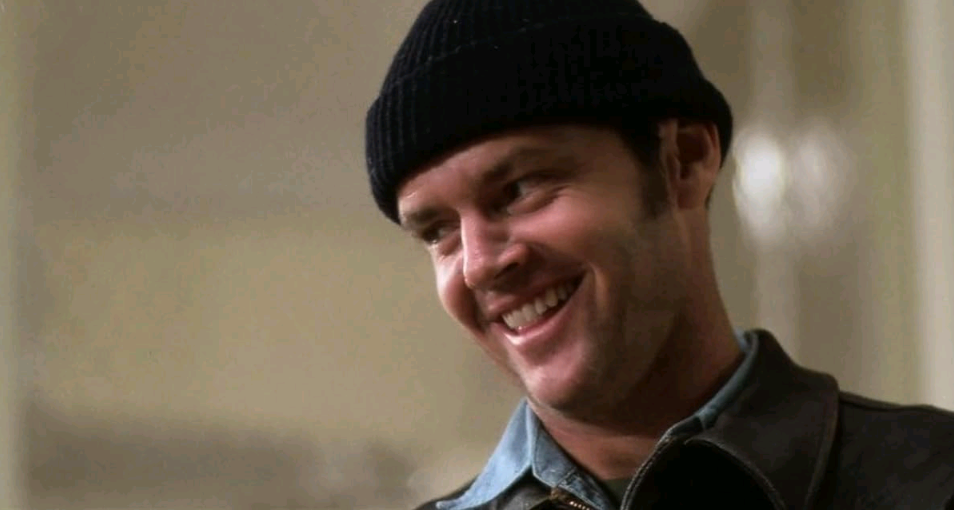
The film follows Randle McMurphy (Jack Nicholson) who feigns mental illness so that he can be moved to a mental health hospital to avoid the hard labour he’d experience in prison, after he is jailed for the statutory rape of a 15-year-old girl, though he claims he assumed she was 18.
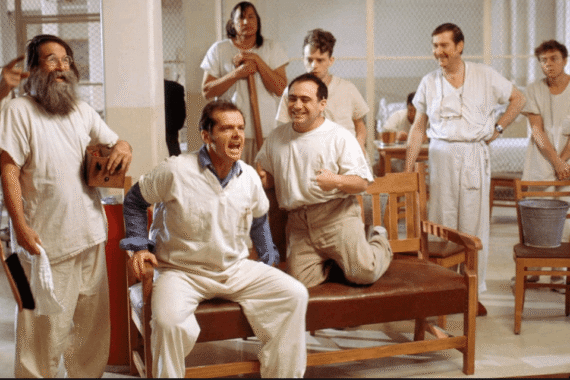
On the ward at the hospital he encounters a memorable mix of other patients including Billy (Brad Dourif), who stutters, angry Charlie (Sydney Lassick), child-like Martini (Danny DeVito), repressed Dale (William Redfield), challenging Max (Christopher Lloyd), epileptics Jim (William Duell) and Bruce (Vincent Schiavelli), and tall, deaf-mute Native American Chief Bromden (Will Sampson).
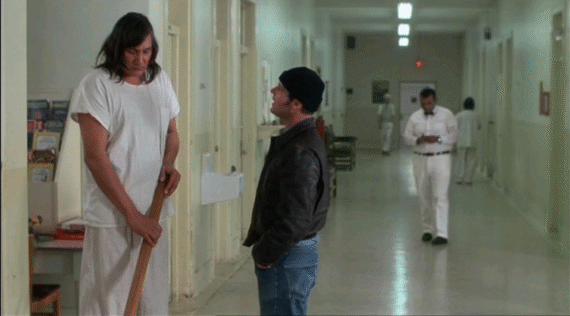
The ward is overseen by the intimidating Nurse Ratched (Louise Fletcher), surely one of the great antagonistic characters committed to film. Ratched sees McMurphy as a threat to her domineering, military style rule and what plays out is a game of wits as they try to outdo each other.
Jack Nicholson is my personal favourite actor; I’ll always seek out films he’s in and some of my favourite performances involve him, from Chinatown and Stanley Kubrick’s The Shining to his portrayal of The Joker in Tim Burton’s Batman. For me, Nicholson rightly won the best actor for his performance in One Flew Over the Cuckoo’s Nest.
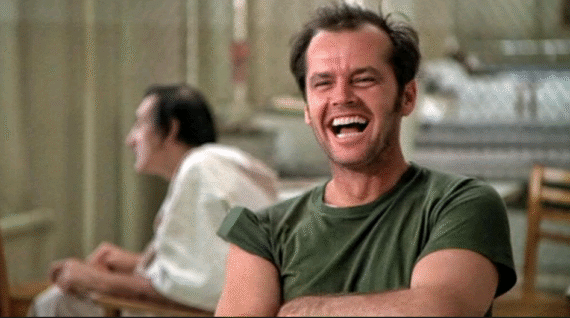
The beauty of Nicholson’s performance, and the writing of the character, is that we initially are led to believe that he is suffering mental health problems. But as the story plays out the reality of the situation becomes clearer, that he’s playing the system. It’s among my favourite performances by Nicholson. He’s incredibly charismatic, orchestrating the actions of other characters and quickly joined by his fellow inpatients in rebelling and trying to live their lives their way despite being institutionalised.
Kirk Douglas was originally set to play the role of McMurphy after performing it in a theatre production. However, this wasn’t to be and it took more than a decade to come to the screen with his son and fellow actor Michael Douglas producing.
Some of the other potential casting choices are discussed in the supplementary features, giving a tantalising tease of another version of the film but, for me, the cast we got is perfect and I couldn’t imagine anyone else playing any of the parts better.
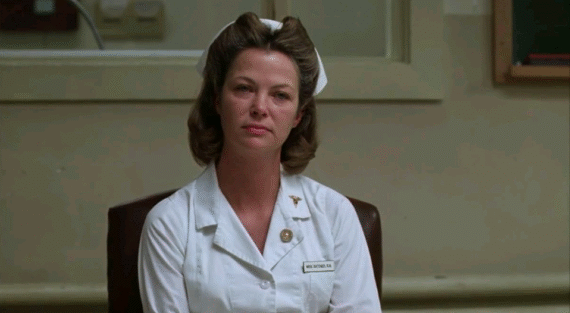
Louise Fletcher is also outstanding, and probably the highlight of the film for me despite the presence of Nicholson. Her Nurse Ratched is cold, calculated and devoid of any positive emotions, chillingly pushing one of the patients to commit suicide in a harrowing scene. She dominates every scene she’s in, more than gives her own against Nicholson and rightly won an Oscar in her own right.
It’s a joy to watch the game of chess that plays out between McMurphy and Nurse Ratched. Other characters grow to challenge Ratched as they spend more time with McMurphy leading to some phenomenal and dramatic moments.
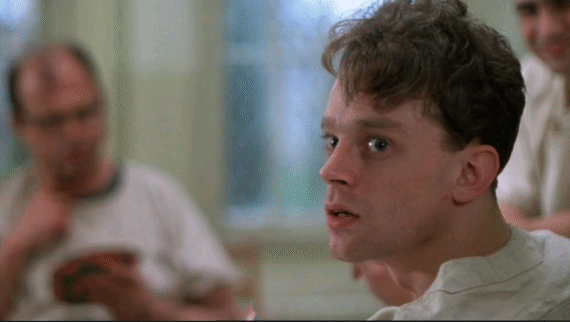
Christopher Lloyd and Brad Dourif, making their feature film debuts, give two further fantastic performances, indeed the film is packed with familiar faces bringing their characters to life in a wonderful way, with others including Danny DeVito and Vincent Schiavelli.
There are some wonderful and touching character moments with each of the cast given their moments to shine and embodying their characters incredibly well. It’s impeccably acted throughout. Special mention to DeVito, reprising his role as Martini from the 1972 off-broadway version of the play. He throws his heart and soul into the performance. I also enjoyed seeing Scatman Crothers as a night guard, a few years before he would share the screen with Nicholson once more in Stanley Kubrick’s adaptation for Stephen King’s The Shining.
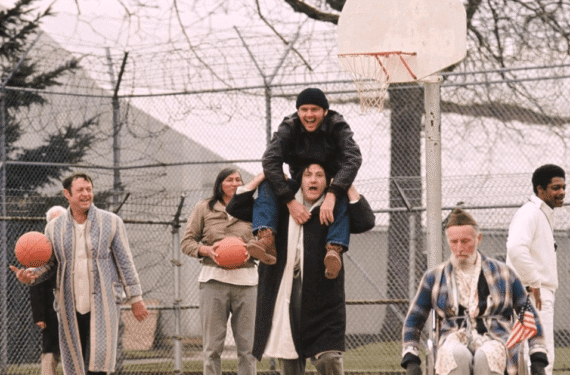
As well as the moments involving McMurphy and Nurse Ratched, other standout scenes includes McMurphy and some of his fellow patients commandeering a boat which is great fun, as is a basketball game that follows. Both are really entertaining sequences. And then there’s the finale where Chief comes into his own in a truly memorable scene, once seen never forgotten, that’s both incredibly sad and poignant yet also filled with hope.
The location, a real hospital in Salem, Oregon, helps no end with the sense of place and atmosphere. No set could come close, and it gives the film a sense of reality.
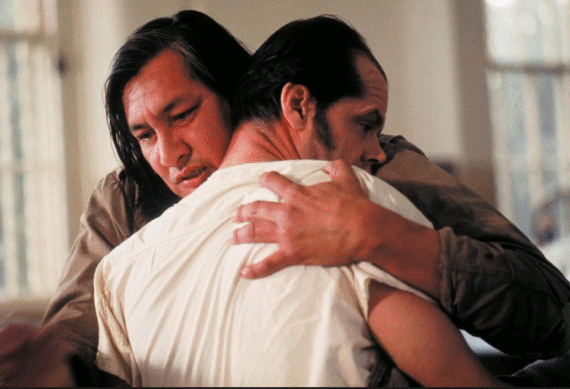
The cinematography by Haskell Wexler is beautiful, observing without ever judging and using minimal, but well chosen, flourishes, often slow zooms. The opening shots of the Oregon landscape at sunrise and the boat trip are also particularly gorgeous.
In closing, I loved rewatching One Flew Over the Cuckoo’s Nest. It’s a powerful, fun, dramatic and entertaining classic of the 1970s that rightly won big at the Academy Awards. It features a glittering cast on top form, and some outstanding sequences.
Film: 
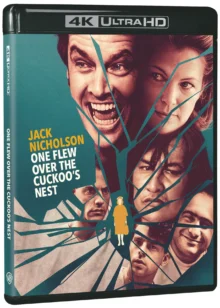
One Flew Over the Cuckoo’s Nest is available now on 4K UHD by Warner Bros. The picture quality is incredible and likely the best the film has ever looked. It’s certainly the best I’ve ever seen it look. Grain is very natural, as are the colours, culminating in a very filmic feel to the look of the movie and there’s a great depth of clarity. The audio is also great.
Special features:
Conversations on Cuckoo: Group Therapy and Moviemaking Memories
Completely Cuckoo featurette
Deleted scenes
Group Therapy runs for 13 minutes and features actors Danny DeVito, Christopher Lloyd, Brad Dourif and producer Michael Sheen having a Zoom conversation. They all speak warmly and there’s some interesting anecdotes about the casting process. I particularly enjoyed the comments about the casting of Louise Fletcher as Nurse Ratched. It’s a warm and lovely little interview.
Moviemaking Memories runs for 11 minutes and is a continuation of the Group Therapy Zoom interview. Douglas gives some near insight into how he came across the play and novel and the inception of the film version. He also shares how Forman came to direct the film, and there’s a funny anecdote about a member of the art department. All four contributors seemed to love working on the film, with Lloyd and DeVito particularly proud. There’s plenty to glean despite the brief runtime.
Completely Cuckoo is an archival 86-minute documentary, which is around twice as long as the version of it that appeared on some earlier releases, though not the first time its complete form has been released. It’s absolutely brilliant, giving plenty of background about the making of the film and those involved in front of and behind the camera. There’s lots of talking heads, including staff from the mental health hospital where it was filmed, director Forman and members of the cast and crew, though no Nicholson. Among the highlights are the casting of the McMurphy character he played, including alternative options. It’s a gem of a documentary.
The deleted scenes section contains five scenes over nine minutes. The quality isn’t great but there are some treasures, including a well scripted sequence with McMurphy talking to fellow patients which foreshadows the finale.
So, it’s a good selection of extras but sadly it’s not definitive, losing a commentary track with Forman, Douglas and fellow producer Saul Zaentz and some of the deleted scenes, amongst other extras, from earlier releases.
In conclusion, Warner Bros have provided a first-class audio-visual presentation of One Flew Over the Cuckoo’s Nest on 4K. The film is supplemented by around two hours of extras, including two lovely new Zoom interviews with actors Danny DeVito, Christopher Lloyd and Brad Dourif and producer Michael Douglas and the full version of an excellent 86-minute documentary on the making of the film. It does lose some extras from previous releases though, including some of the deleted scenes. The release is easy to recommend for fans of the film, director Miloš Forman and its glittering cast, headlined by Jack Nicholson.
Disc/ Package: 