



 Director: Kaizô Hayashi
Screenplay: Kaizô Hayashi, Daisuke Tengan
Starring: Masatoshi Nagase, Shirô Sano, Kiyotaka Nanbara, Akaji Maro, Shin’ya Tsukamoto, Jô Shishido, Mika Ohmine, Masako Miyaji, Kenji Anan, Hai-Ping Yang, Te-Chien Hou, Haruko Wanibuchi, Eiji Okada, Yui Natsukawa, Tomoko Yamaguchi, Kiyotaka Nanbara
Country: Japan, Taiwan
Running Time: 92 min, 102 min, 107 min
Year: 1993-6
Kaizô Hayashi seemingly came out of nowhere when he released To Sleep so as to Dream to great acclaim in 1986. This wasn’t just a flash in the pan though. He followed the film up with titles that ranged from further arthouse fare like Circus Boys to more mainstream studio films, like Zipang. It was his Maiku Hama trilogy, made between 1993 and 1996, that proved to be his biggest success though, at least in Japan. It even spawned a TV series, The Private Detective Mike, which was made up of different stories involving the title character. Each of these were written and directed by different filmmakers, including Isao Yukisada, Gakuryū Ishii, and Alex Cox.
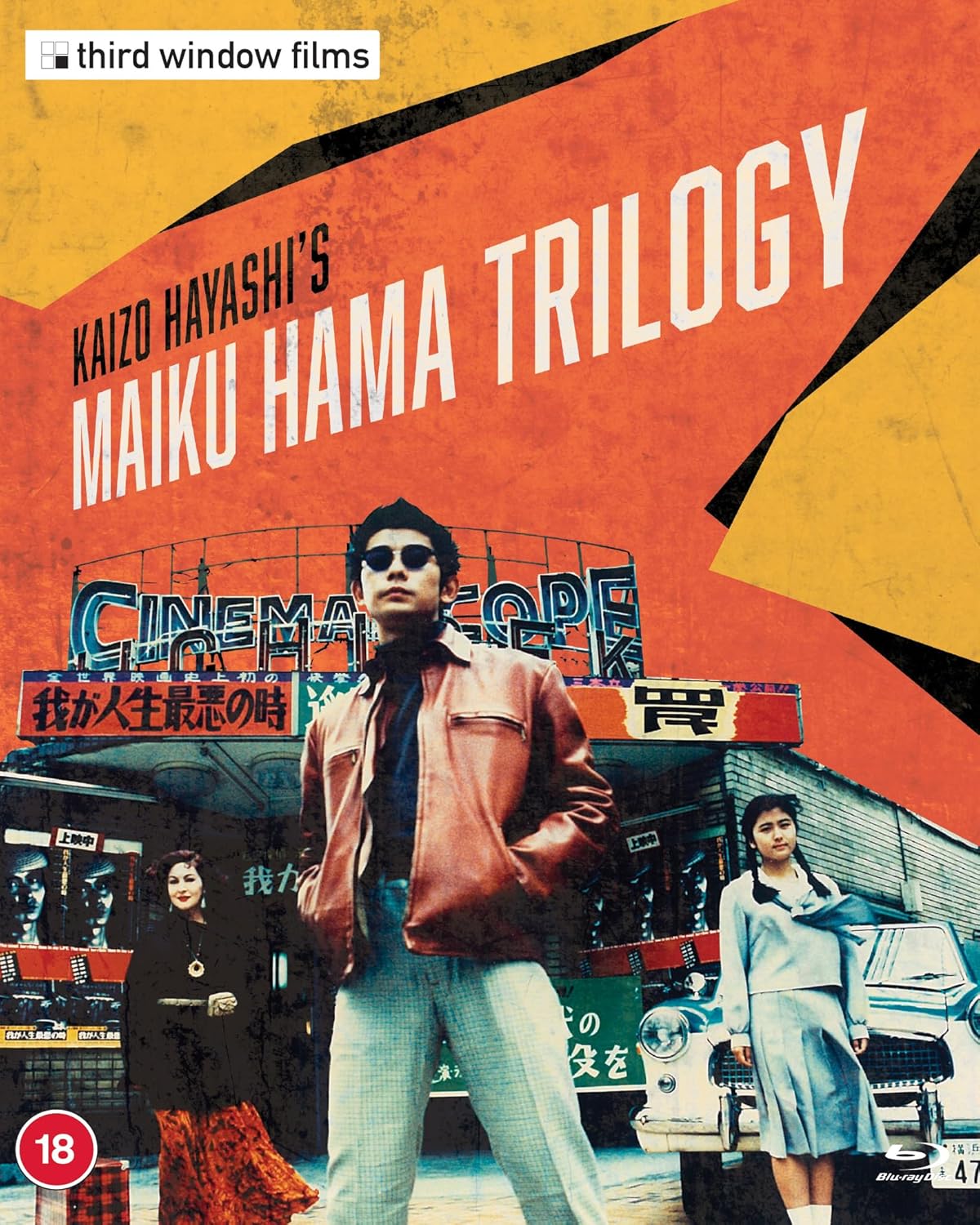
Third Window Films, who have long been dedicated to releasing interesting and often hard-to-find Japanese films in the UK, are turning their attention to the films in the Maiku Hama trilogy. These include The Most Terrible Time in My Life (a.k.a. Waga jinsei saiaku no toki, 1993), The Stairway to the Distant Past (a.k.a. Harukana jidai no kaidan o, 1995) and The Trap (a.k.a. Wana, 1996). Third Window are collecting the films together in a handsome limited edition box set, and I eagerly got my hands on a set of screeners.
Whilst each has its own distinctive story and tone, I’m going to review the set together as one, as the films still all come from the same writers and director, on top of sharing much of the same cast.
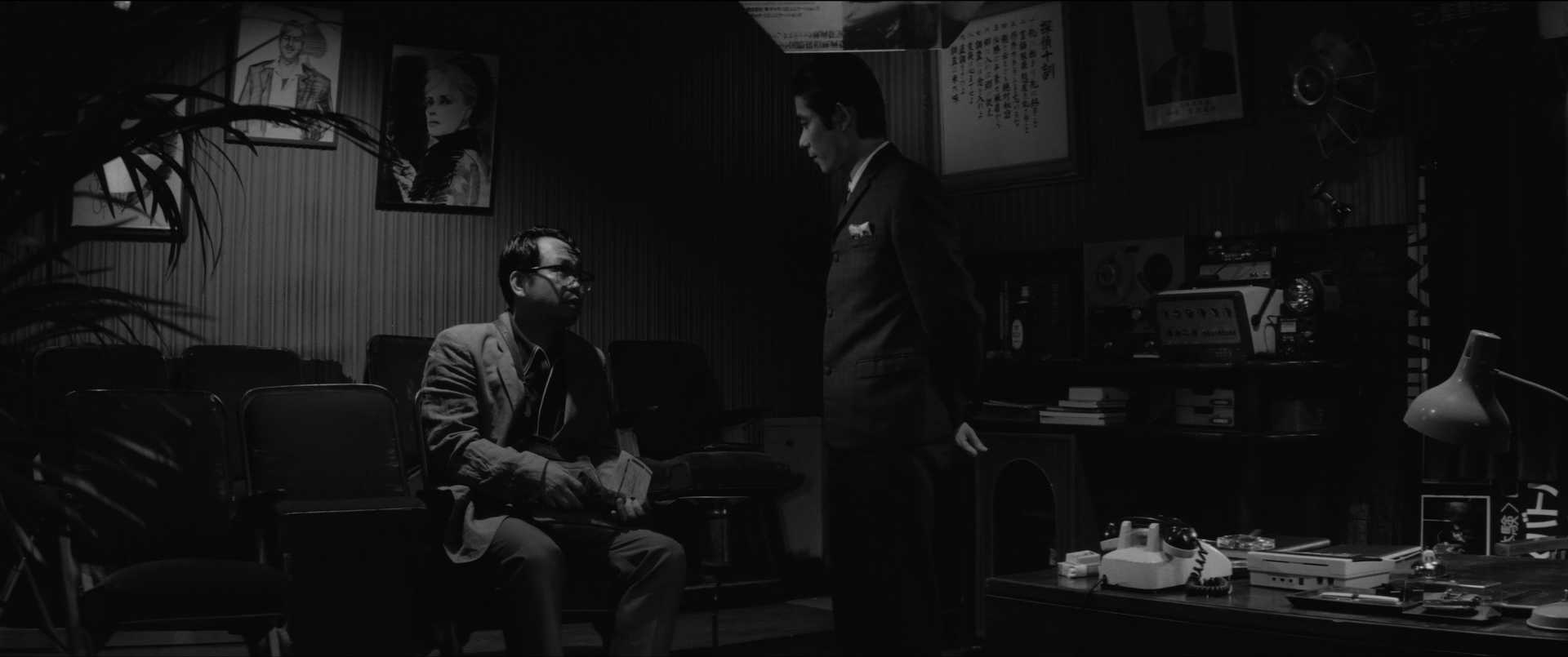
The Most Terrible Time in My Life introduces us to Maiku Hama (Masatoshi Nagase), a private detective based in Yokohama whose office is above a cinema. His primary goal is to earn enough money to send his younger sister, Akane (Mika Ohmine), to college, as their parents are not around.
When a Taiwanese waiter named Yang (Hai-Ping Yang) hires Maiku to look into the disappearance of his brother, Hama becomes entrenched in underworld politics between Taiwanese criminals and the Japanese yakuza. Therefore, what begins as a missing‐person assignment turns into betrayal, shifting loyalties, and violence.
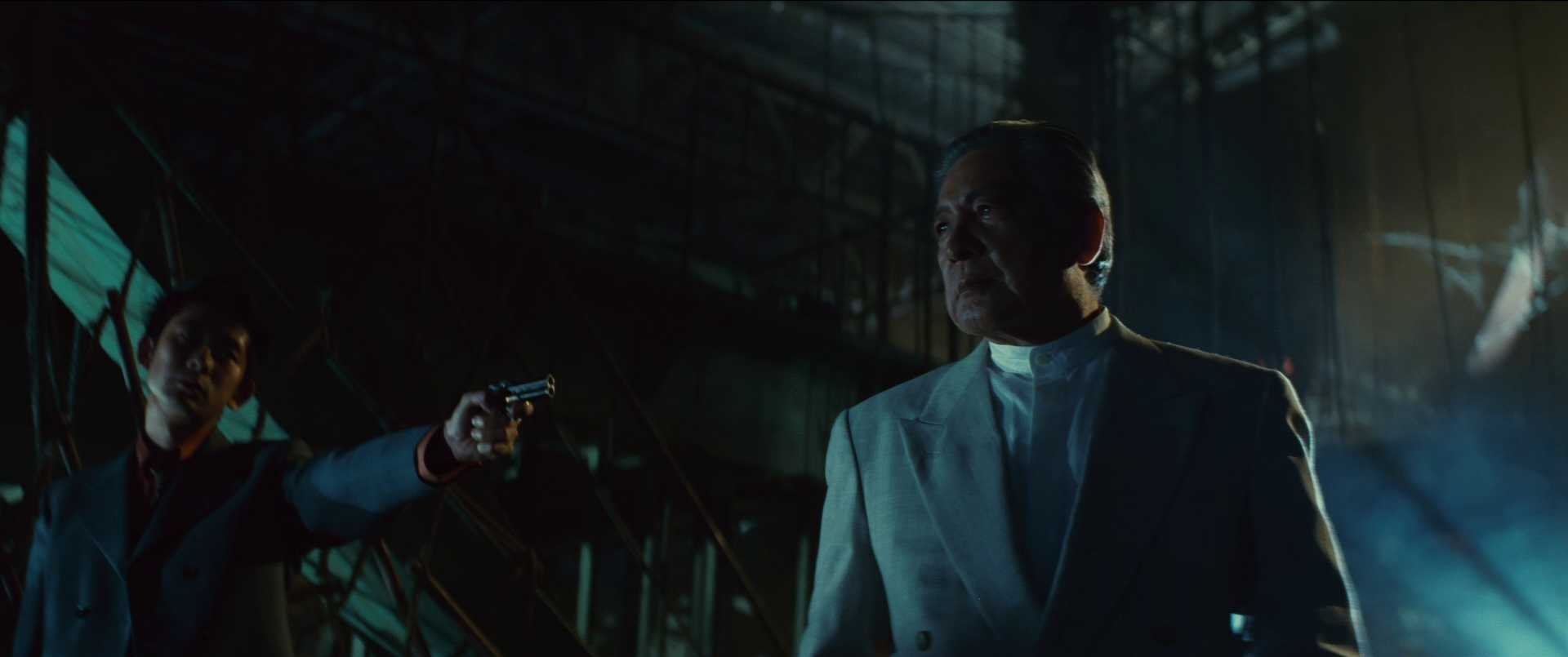
In The Stairway to the Distant Past, Maiku is again drawn into murky conflicts in Yokohama. He starts out in bad shape, financially speaking. His car is repossessed, forcing him to get around more humbly. Also, his mother, Lily (Haruko Wanibuchi), who had abandoned him and his younger sister Akane years earlier, returns to the city, and this rekindles both personal turmoil and mystery. Meanwhile, a powerful and enigmatic crime boss known only as “the White Man” is gaining influence along the riverfront, bringing tension between the police, yakuza factions, and the city’s criminal networks. As Maiku negotiates old wounds, family secrets, and the pull of his past, those conflicts lead to confrontations that are as much about identity as crime.
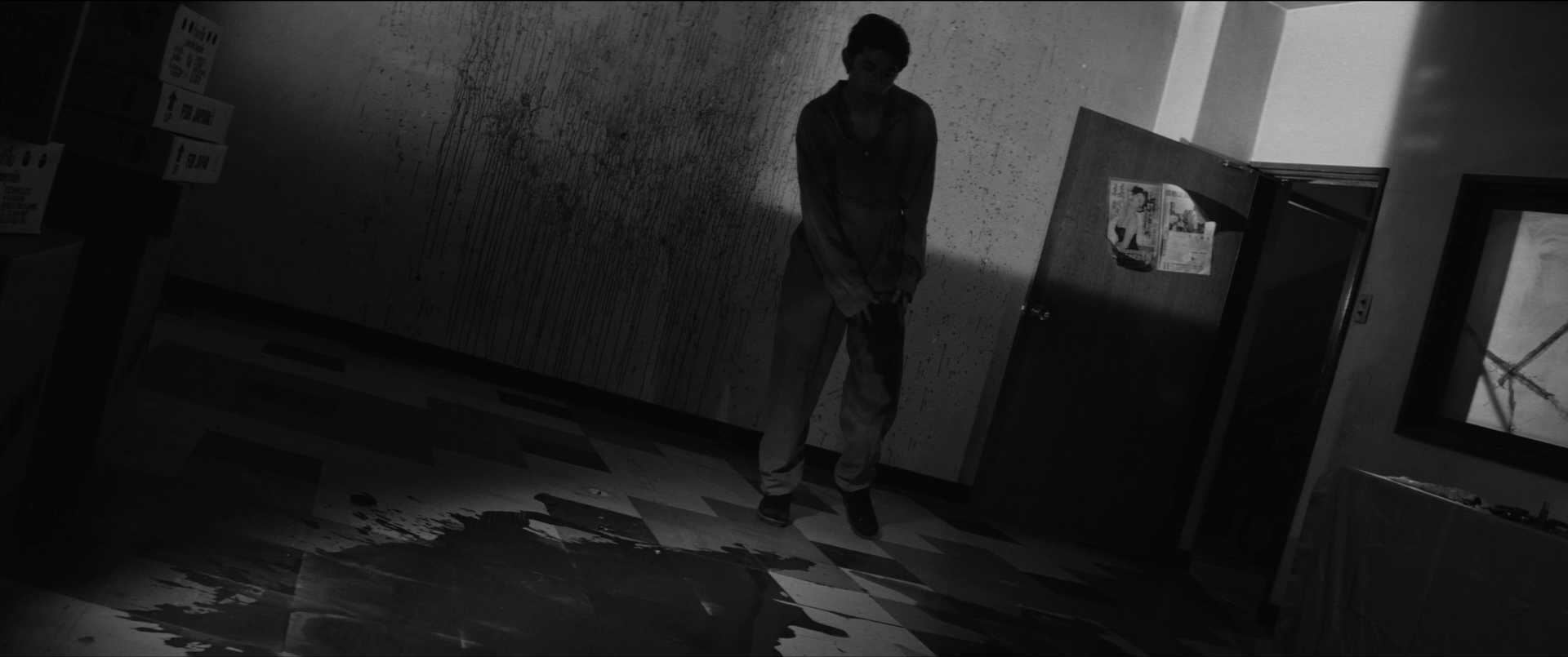
The Trap, the final chapter in the trilogy, drops Maiku into a horror/thriller plot. At the opening, things appear to be improving for him. His business is booming, his sister Akane is doing well at school, and for perhaps the first time, he seems close to love in his relationship with Yuriko (Yui Natsukawa), a mute churchgoer. But the calm doesn’t last. A masked serial killer begins targeting young women, poisoning them and staging their bodies in unsettling tableaux. Worse, evidence is planted to implicate Maiku in the murders, and police pressure escalates. As he seeks to clear his name, Maiku confronts both external threats and internal uncertainty.
Right off the bat, I’m going to say that I really enjoyed this set. Each film in the trilogy is of a similarly high standard, yet they’re markedly different enough to keep you interested, even if you binge-watch them over a few nights, like I did.
The Most Terrible Time in My Life is the more playful of the three, with a lot more humour and a few extra stylistic flourishes, amongst the crime drama at its core. The jokes might not be to everyone’s taste, getting a bit weird and wacky in places, for a film that gets much more serious as it goes on. I found it amusing though.
The first film is the only one shot in black and white. It’s wonderfully crisp, with gorgeous high-contrast lighting and striking mise-en-scène. The other films aren’t as immediately jaw-dropping but they’re still beautifully shot and make stunning use of colour.
Whilst the films, particularly the first, look and sound like they’re a riff on American noir and crime thrillers, aided by the obvious reference in Maiku Hama’s name, there are more than a few nods to a variety of Japanese genre movie tropes. Much like To Sleep so as to Dream, the trilogy feels like a love letter to cinema in general.
Whilst the first film had some effectively moving sequences, through the relationship between Yang and Maiku, as well as Yang and his brother, The Stairway to the Distant Past makes things even more personal, by focusing on Maiku’s family problems. This makes for quite a melancholic film that’s elegantly told, whilst still throwing in some grisly violence and frightening villains.
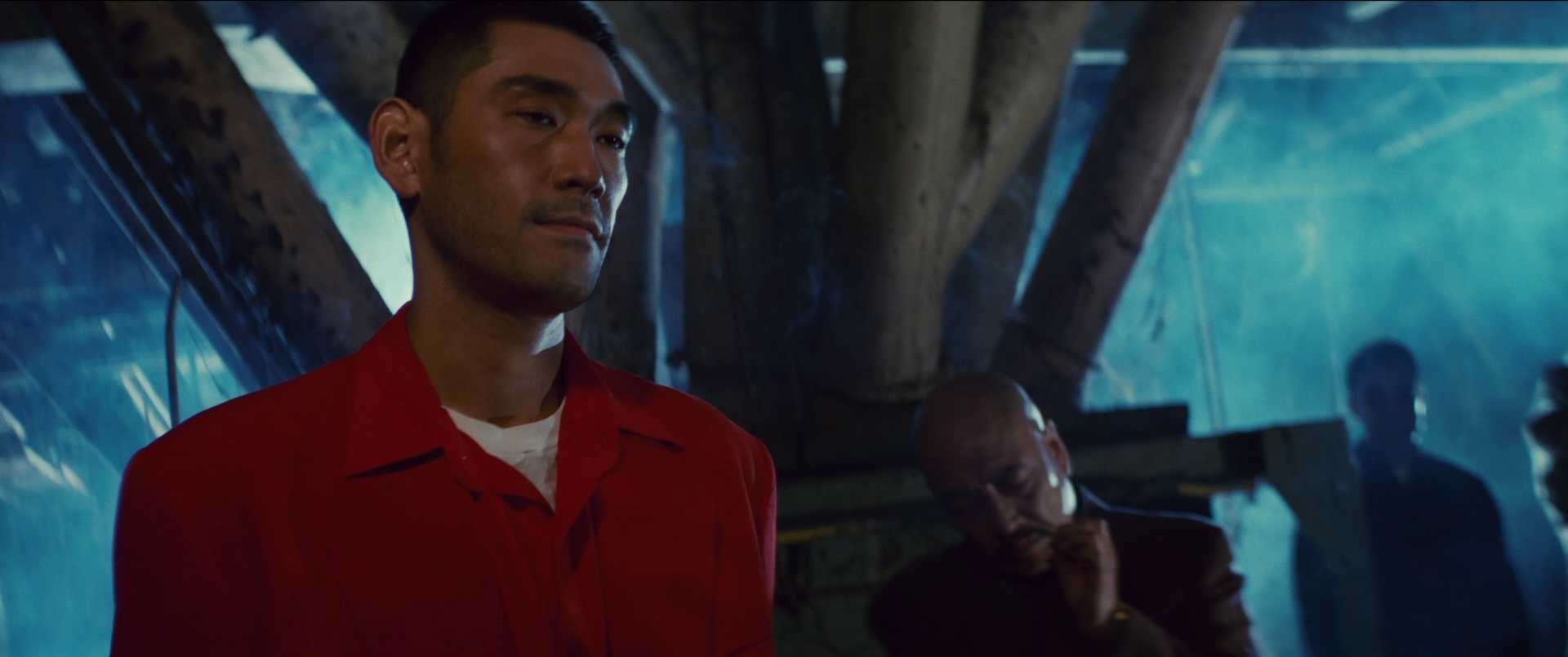
It’s perhaps less showy than its quirky predecessor, but it’s a beautifully made and engrossing film. There’s a bewitchingly surreal sequence later on too, when Maiku is taken through a sort of time warp to see Yokohama in the past.
Speaking of which, Yokohama is like a character in the films. It was one of the first ports open to trade outside of Japan in the 19th century. The films reflect that through the important part that cross-cultural divides play in all of them, particularly the first.
The Trap takes things down a much darker path, with its serial killer narrative. There’s much less comedy, though some of the side characters retain their cartoonish personalities. This doesn’t always settle with the rest of the film but helps keep it within the trilogy.
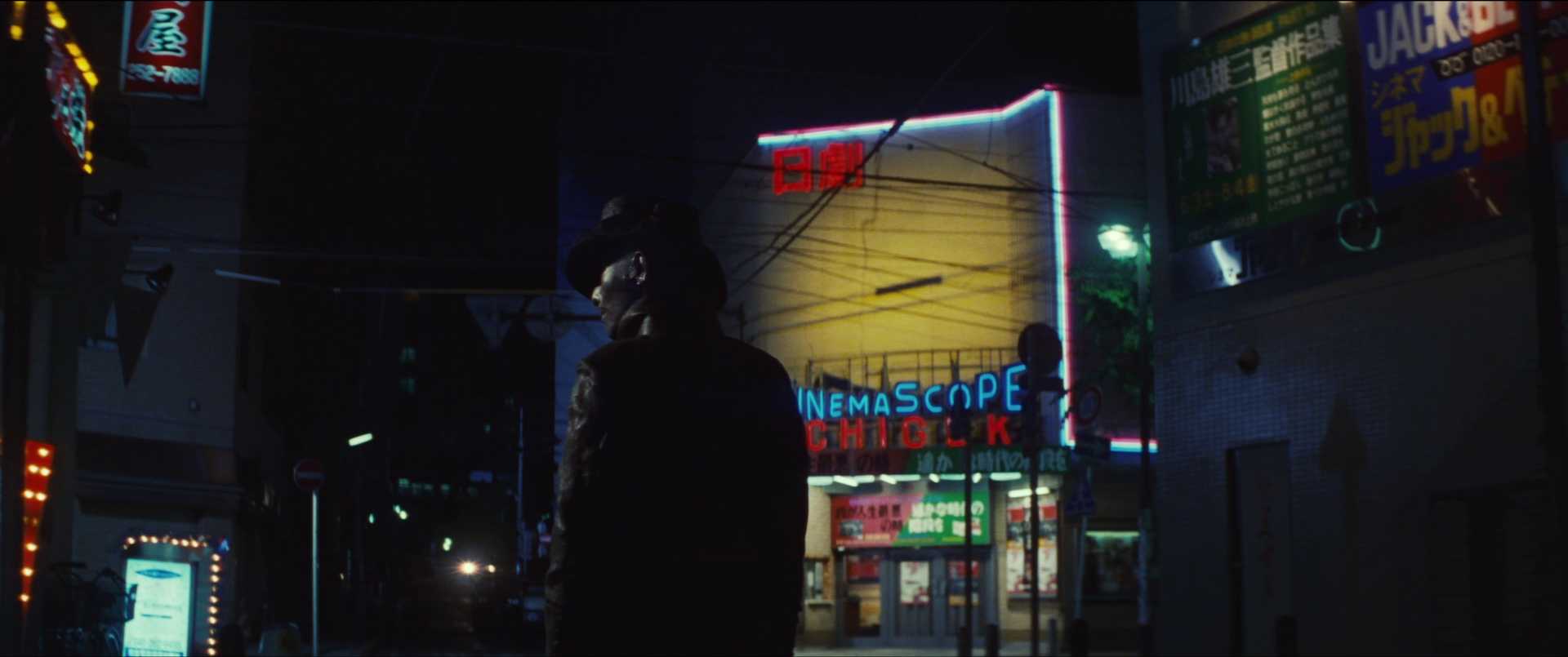
Largely due to touches like that, The Trap is perhaps not as consistently classy as some of the great Hollywood serial killer movies, like Seven or Silence of the Lambs, but it’s equally as gripping and disturbing, whilst taking some unusual twists and turns.
As much as Kaizô Hayashi’s direction is one of the biggest selling points in the trilogy, due to his effortless and intoxicating mishmash of genres and eye-popping visual style, some credit to the success of the Maiku Hama films has to also go to Masatoshi Nagase. He’s been in all sorts of great films (including his international breakthrough in Mystery Train), and was already a big name when he made these. It’s easy to see why he has been so popular for so long. He has so much energy and charisma here, oozing cool whilst retaining his humanity.
I must admit, I didn’t realise that the mysterious, seemingly brain-damaged Mikki in The Trap was also played by Masatoshi until I listened to the commentary. Hayashi sees the film as being about fighting inner demons, which goes some way towards explaining this quirk.
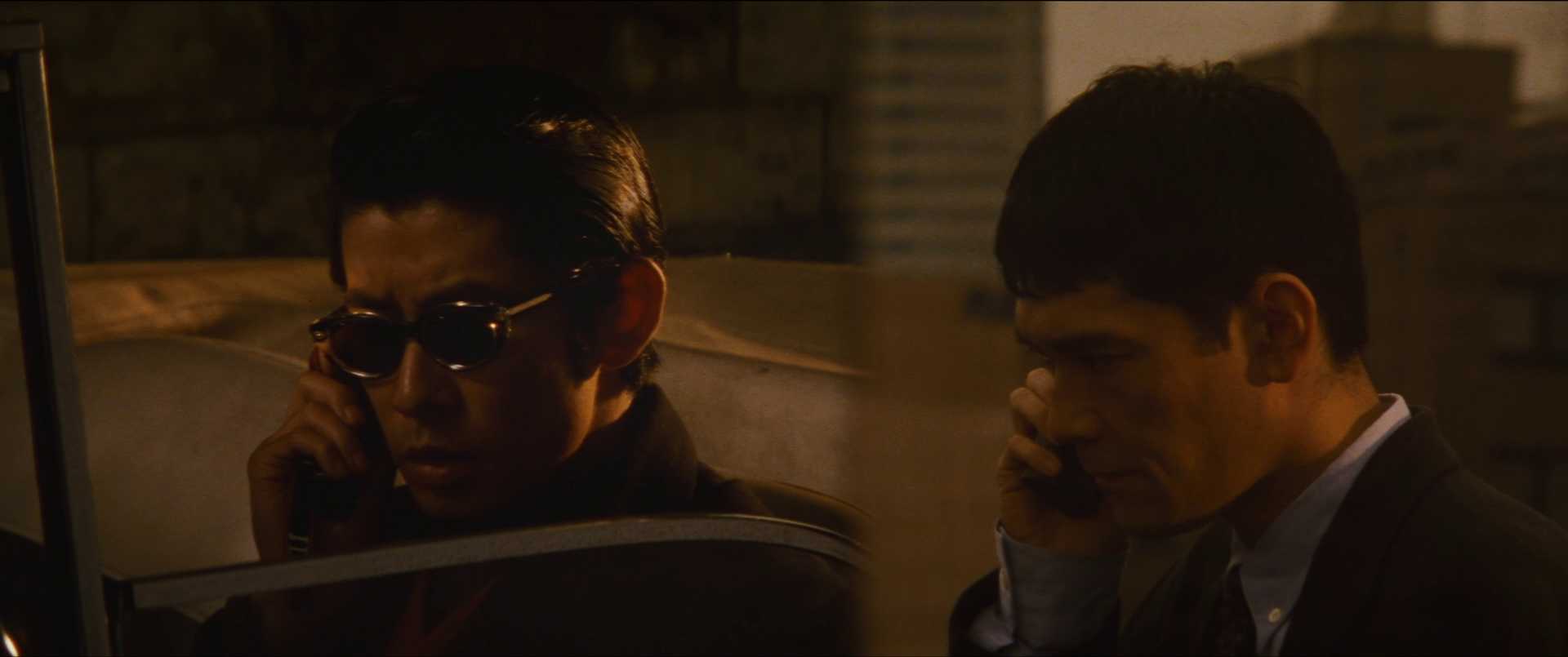
As mentioned, there are lots of recurring characters and most get their chance to shine. Some of the older cast members are former stars who are referencing or paying homage to their past. Most memorably, you have the legendary Jô Shishido playing, er, Jô Shishido – or his namesake, at least. The character is a retired private eye, not an actor, though he channels his usual star persona.
There’s also a nice recurring visual motif of seeing Maiku pulling out of his office, doing a 3-point turn (or something similar) and heading off to work in his car with the theme song playing in the background.
Speaking of which, the theme tune is incredibly catchy, so expect to be humming it for a while afterwards. The music is strong throughout, in fact. It probably helped that the production company behind the film, For Life Records, was originally just a record company – this was their first foray into making feature films.
So, overall, the Maiku Hama trilogy is a wonderful set of offbeat homages to crime and mystery films that reference the past without losing track of their own personalities and narratives. I’d recommend them to anyone with an interest in noir and/or Japanese cinema.
All films: 

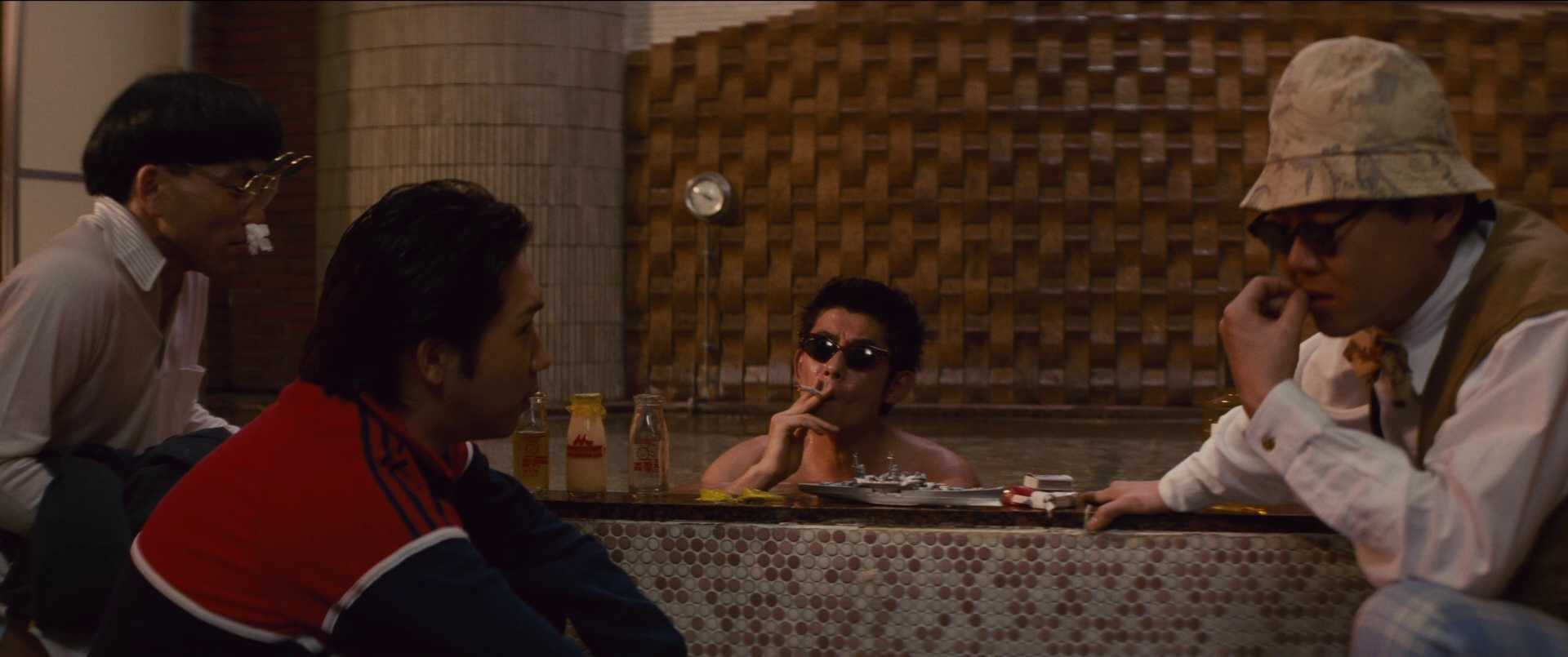
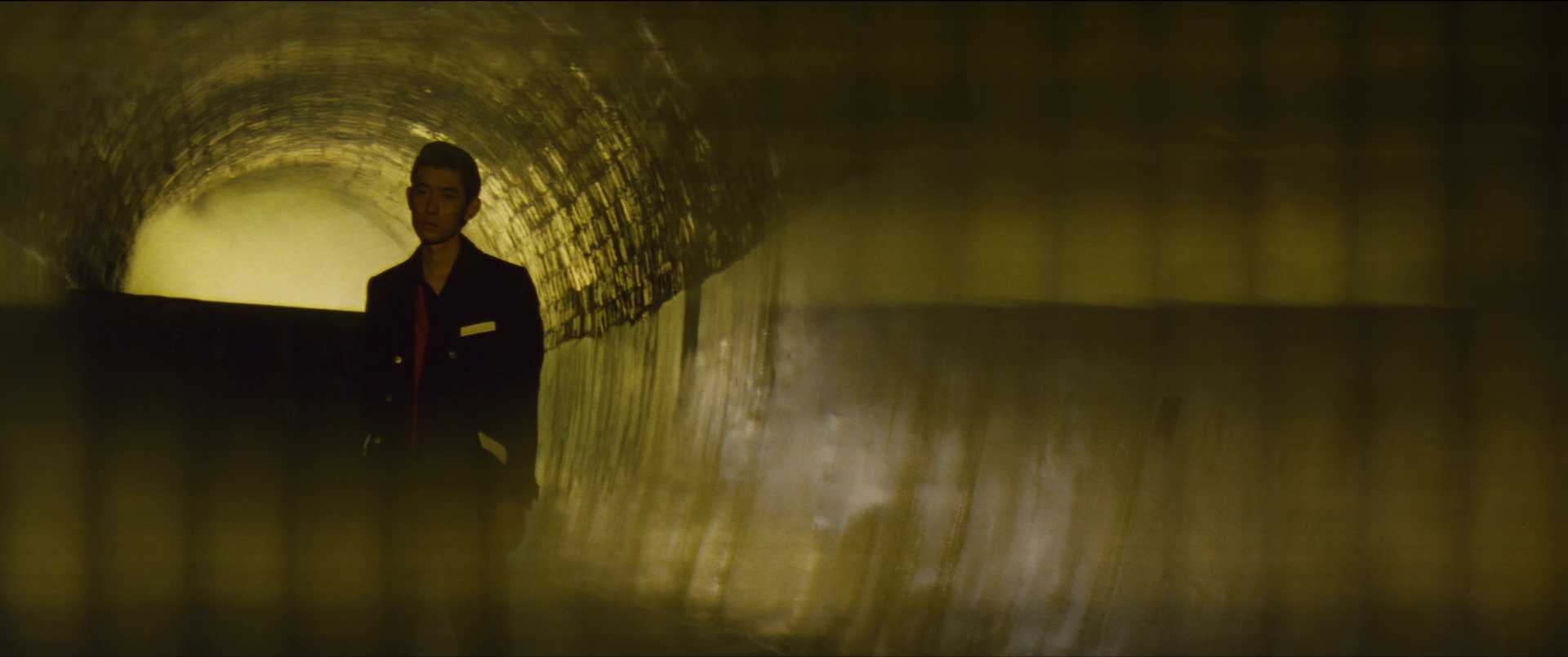
The Maiku Hama Trilogy is out on 27th October on region B Blu-ray, released by Third Window Films. The transfers are all fantastic. Colours are rich, and detail is impressive. The Most Terrible Time in My Life is beautifully crisp. All three films look gorgeous. I’ve used screengrabs throughout this review to give you an idea of how they look. I wasn’t quite as impressed by the audio, noting that the second two films sounded a little weak and slightly tinny in places, as though there’s been some overly heavy noise reduction put on them. My sound system isn’t the best though, so it may have been an issue at my end. I didn’t have the volume particularly high either, as I had my kids sleeping upstairs.
Limited edition digipack set (2000 copies) featuring a booklet by Josh Slater-Williams
30th Anniversary 4K Remasters
Disc 1: The Most Terrible Time in My Life 我が人生最悪の時 (1994)
Special Features
・Feature audio commentary by Jasper Sharp
・New Interview with director Kaizo Hayashi
・New Interview with producer Shunsuke Koga
・Trailer
Disc 2: The Stairway to the Distant Past 遙かな時代の階段を (1995)
Special Features
・Selected audio commentary by Edmund Yeo
・Matthew Carter Video Essay
・Trailer
Disc 3: The Trap 罠 THE TRAP (1996)
Special Features
・Feature audio Commentary by Samm Deighan
・James Balmont video essay
・Trailer
Jasper Sharp provides a commentary over The Most Terrible Time in My Life. It’s well-researched and insightful, as usual, coming from Sharp. He digs into the background of the film and those involved, as well as offering a little analysis.
There’s also a near-half-hour interview with Kaizo Hayashi himself included on the disc. He talks about his life and career before digging into the production of the Maiku Hama Trilogy.
Producer Shunsuke Koga is interviewed too. He talks about his career and how the trilogy got greenlit and produced. He’s cheerful and has some fun tales to tell, so it’s an enjoyable interview.
Edmund Yeo provides a selected scene commentary over The Stairway to the Distant Past. He explains the cultural context behind some elements of the film, as well as offering a little analysis. It’s a decent track, even if it’s not as rich and lengthy as the other commentaries in the set.
There’s also a piece by Matthew Carter covering the whole trilogy. He sees the films working as a deconstruction of the detective genre.
Samm Deighan provides a commentary over The Trap. It’s engrossing and fascinating as usual, coming from the film historian and author. I’m always happy to see her and Sharp’s names come up on lists of special features, as they both know their onions, so to speak, and open my eyes to aspects I might have missed and other cinematic gems to seek out.
James Balmont talks about Masatoshi Nagase in a 21-minute essay. This helps you appreciate the actor’s impressive and varied career.
I didn’t receive a copy of the booklet to comment on that.
So, it’s a fantastic set overall. Get it bought before the limited edition release goes out of print.
Disc/Package: 