



 Director: Jean-Jacques Beineix
Screenplay: Jean-Jacques Beineix, Jean Van Hamme
Based on a Novel by: Daniel Odier (as Delacorta)
Starring: Frédéric Andréi, Wilhelmenia Fernandez, Roland Bertin, Richard Bohringer, Gérard Darmon, Chantal Deruaz, Jacques Fabbri, An Luu, Dominique Pinon, Jean-Jacques Moreau
Country: France
Running Time: 118 min
Year: 1981
BBFC Certificate: 12
The initial release of Jean-Jacques Beineix’s Diva (1981) was a disaster. Its producers, Claudie Ossard and married couple Serge and Irène Silberman, the latter of whom had first brought the idea of adapting Daniel Odier’s novel to its director, weren’t happy with the end result and didn’t know how to market the film. So, Diva came and went with little fanfare, only screening in a few select cinemas. However, the film got into the hands of the head of the Toronto International Film Festival, and they talked the Silbermans into letting them screen it there.
Diva went down well at the festival, which led to it being re-released in a single French cinema, where it played to a full house most nights. Then, unexpectedly, Diva went on to win 4 awards at the 1982 Césars and was given a proper, full release in France, following this.
The film did very well this time around, despite not wowing all the critics. It was more than just a box office hit though. Diva’s slick, luxurious visual style helped usher in a new film movement in France, the ‘cinéma du look’. This saw filmmakers go hard on ‘style over substance’, so to speak, putting less emphasis on narrative and dialogue and more on visuals and atmosphere. It’s an approach Beineix would continue in his following films, such as his other big hit, Betty Blue, along with upcoming French directors like Luc Besson and Leos Carax.

Cinéma du look could be seen as being incredibly influential on film in general, with the modern era of world cinema that would follow often going down that heavily-stylised path, taking inspiration from music videos and advertisements, rather than classic movies. You could argue that filmmakers like Francis Ford Coppola and Rainer Werner Fassbinder were doing a similar kind of thing at the same time as Diva, but the French movement was certainly influential and Beineix’s film kicked it off.
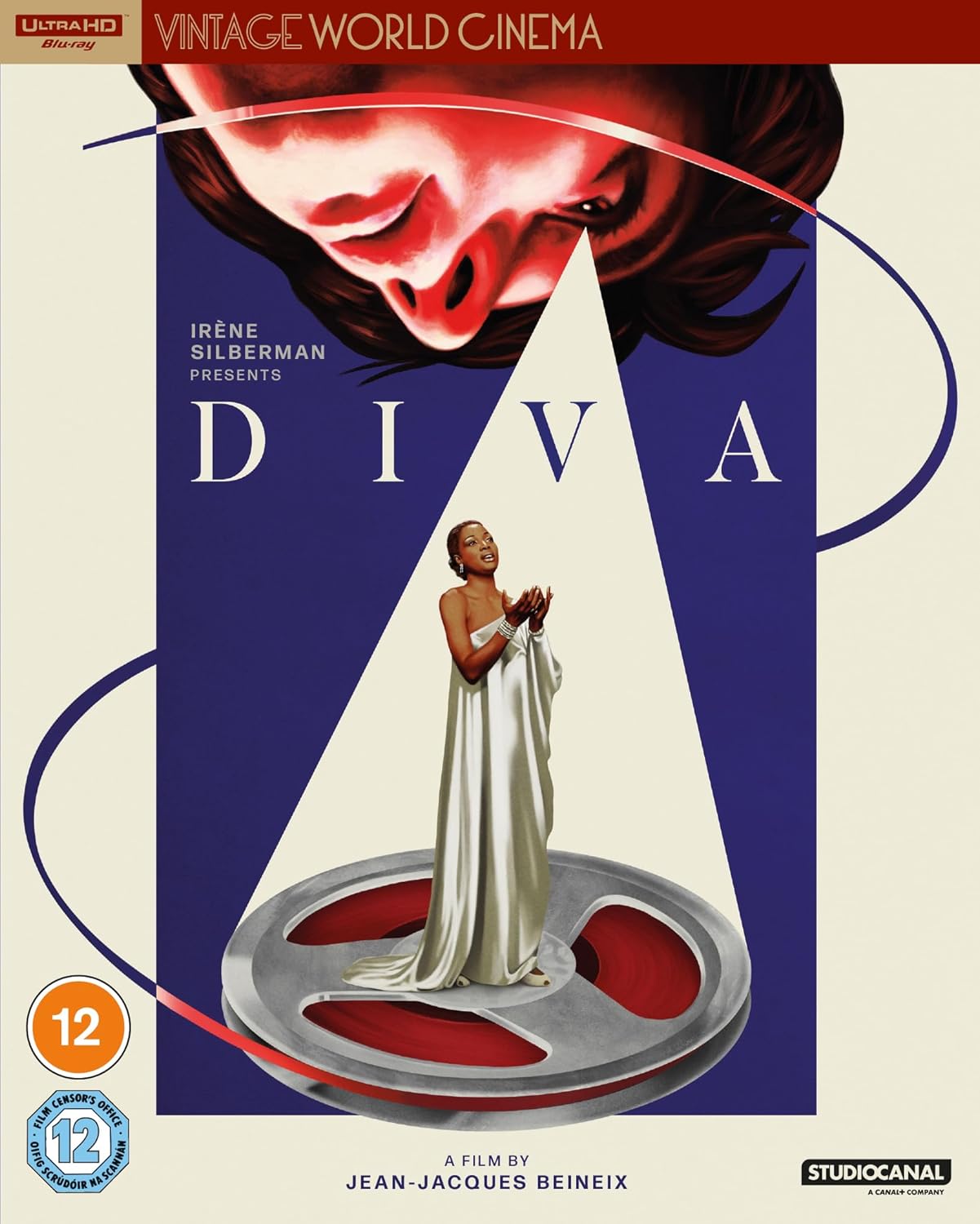
Well, Diva is being re-released once again, this time on 4K UHD and Blu-ray, courtesy of Studiocanal. It’s a film I’ve often heard about but never seen, so I requested a copy with the intention of sharing my thoughts here.
Diva tells the story of Jules (Frédéric Andréi), a young Parisian postman and devoted opera fan, who is infatuated with the American soprano Cynthia Hawkins (Wilhelmenia Fernandez). Known worldwide for her refusal to make any recordings, Hawkins fascinates Jules so much that he secretly tapes one of her performances. Soon after, he becomes entangled in two dangerous pursuits. One involves music pirates determined to get hold of his rare recording, the other arises when a woman fleeing a pair of mysterious killers slips a separate cassette into his mailbag, containing evidence that incriminates a powerful figure in the police force.
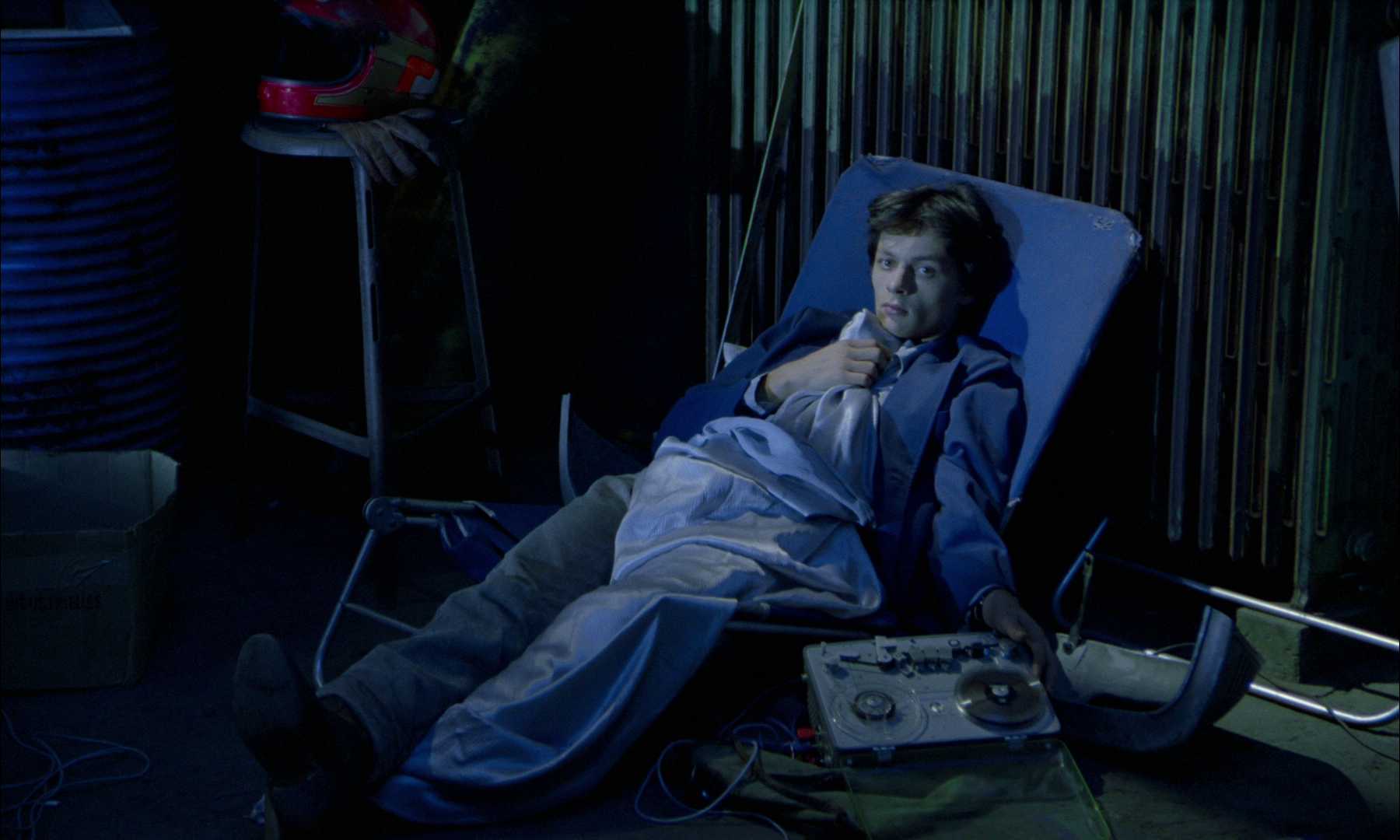
Unaware of the danger, Jules finds himself chased across Paris by corrupt officers, gangsters and criminals all seeking one tape or the other. With the help of Gorodish (Richard Bohringer), a quirky artist with a sharp mind, and Alba (An Luu), Gorodish’s young muse, Jules tries to stay alive while keeping both recordings out of the wrong hands.
On this, my initial viewing of Diva, I found it to be a film of two halves. The first hour is quite stately in pace but compelling, jumping between characters to hold your interest, whilst creating an intriguing sense of mystery and atmosphere. This is where the cinéma du look approach really sets sail. The exquisite cinematography and blend of opera, pop art and other influences are intoxicating.
However, I found my interest waned in the second half of the film. Strangely enough, this is when there are more of the genre beats you’d expect from a thriller, coming into play. Some of the action scenes, particularly the motorbike chase through the metro, are very well done, but I think the fact that this initially quite unusual film became rather generic in its second half made me lose interest. The two-hour running time didn’t help, and I found the way the narrative strands get tied up to be a little clumsy. The way Gorodish turns from a meditating enigma to a dashing hero didn’t sit well with me, in particular.
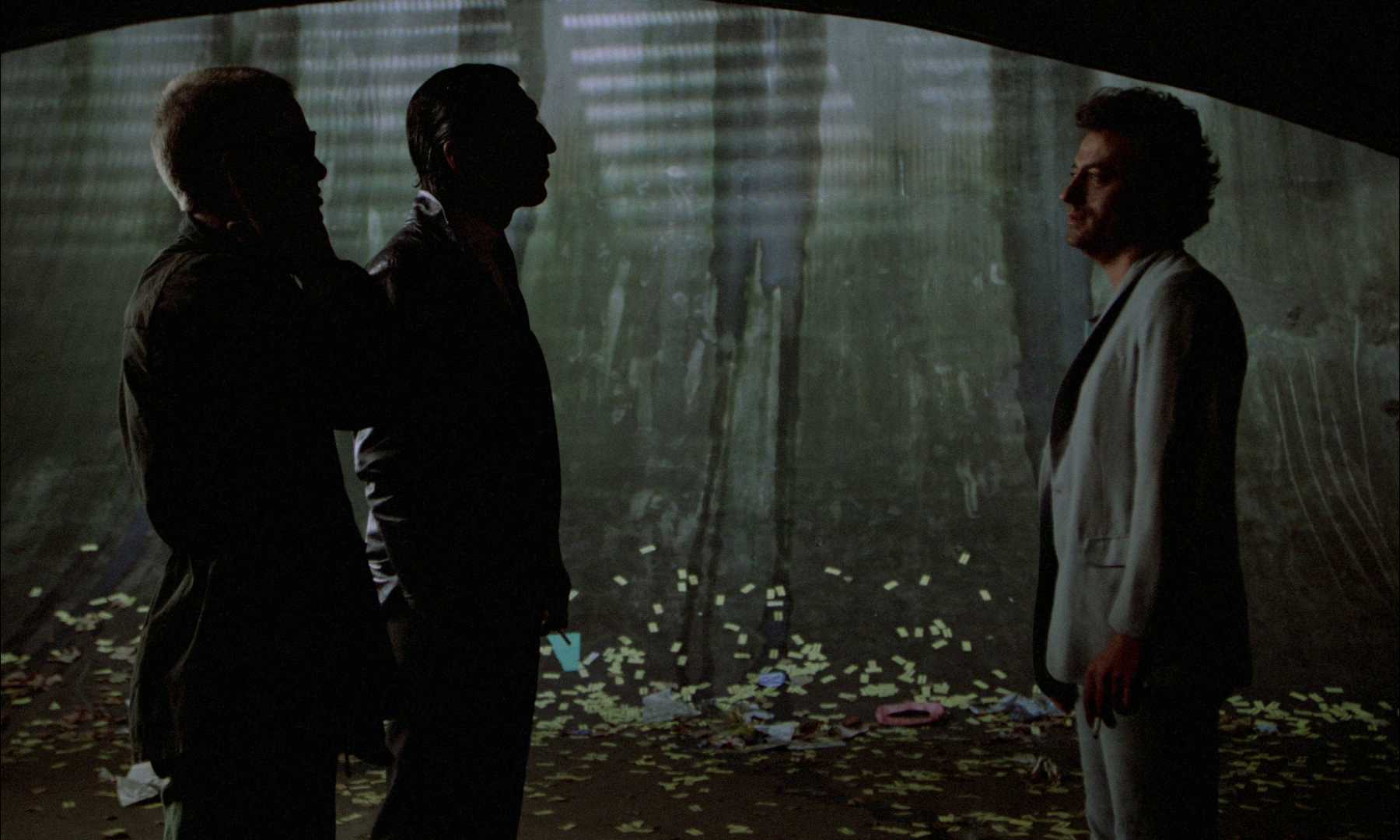
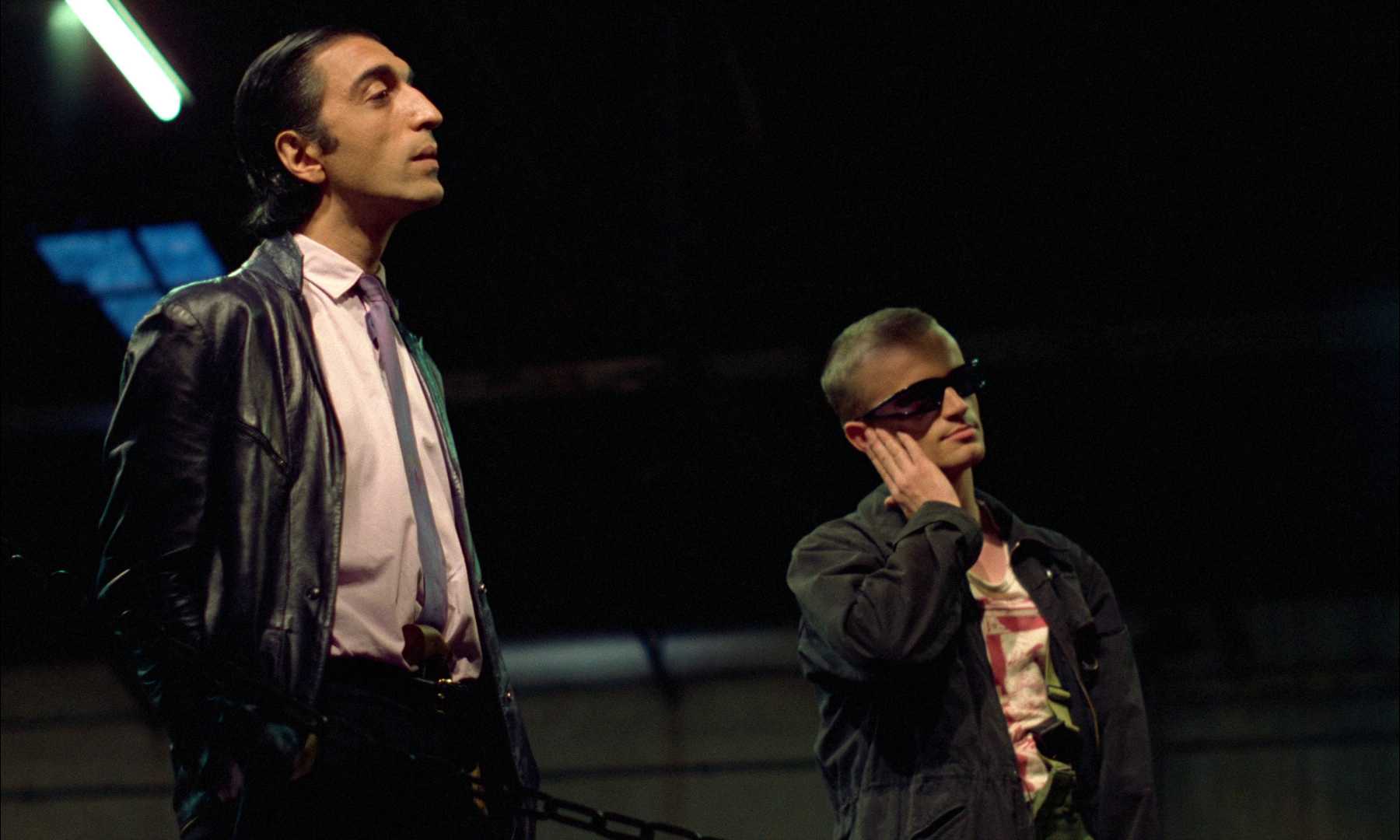
There’s still much to admire though, even if the film didn’t keep its hooks in me the whole way through. The cast, none of whom were big stars at the time, is strong. It was the feature debut of Marc Caro and Jean-Pierre Jeunet’s go-to actor, Dominique Pinon, and he is particularly memorable here. He plays a skinhead heavy who says little other than repeatedly stating he hates everything. He and several other characters add a little humour to the film, which works nicely.
Overall, Diva is stylish and enjoyably quirky but unfortunately unravels a little as it goes on. It’s well-crafted enough to admire though, and was incredibly influential, so it’s well worth your time.
Film: 


Diva is out on 6th October on 4K UHD and Blu-ray, released by Studiocanal. I watched the Blu-ray version, and I thought it looked fantastic. It has a clean, sharp image with rich colours and natural tones. I’ve used screengrabs throughout this review to give you an idea of how it looks, though these have been compressed. You get English and French language audio options. I opted for the latter and had no issues with the quality at all. The music comes through particularly well.
SPECIAL FEATURES
– NEW 4K RESTORATION OF THE FILM FROM THE ORIGINAL CAMERA NEGATIVE
– Blue as DIVA: Memories of a cult film DIVA
– About the film by Denis Parent
‘Blue as DIVA’ is a feature-length talking-heads making-of that looks at the full production of Diva from inception to reception. I found director Jean-Jacques Beineix, who features heavily, to be more than a little full of himself and quite waffly, so I didn’t find the documentary all that easy to watch, but it’s undeniably thorough, and there are a lot of eye-opening stories to be told.
Denis Parent also provides a lengthy (roughly 45 minutes) interview about Diva. This is excellent. He describes the production and release as well as discussing why he believes it’s such an important film and why its director is often unjustly criticised.
Overall, whilst I had some issues with the film, it’s still certainly worth watching, particularly in this gorgeous new restoration, and the extras are of value too. Recommended.
Disc/package: