


 Director: Stuart Rosenberg
Screenplay: Steve Shagan and David Butler
Based on the book by: Gordon Thomas and Max Morgan Witts
Starring: Faye Dunaway, Max von Sydow, Oskar Werner, Malcolm McDowell, Orson Welles, James Mason, Lee Grant, Katharine Ross, Luther Adler, Michael Constantine, Denholm Elliott, Jose Ferrer, Lynne Frederick, Helmut Griem, Julie Harris, Wendy Hiller, Paul Koslo, Nehemiah Persoff, Fernando Rey, Leonard Rossiter, Maria Schell, Victor Spinetti, Janet Suzman, Sam Wanamaker, Ben Gazzara
Country: United Kingdom and United States
Running Time: 158 min
Year: 1976
BBFC Certificate: PG
In the 1970s, all-star disaster films were a big deal at the box office. Whilst the genre had existed prior to the Seventies, it was the 1970 release of Airport that really kicked off a boom, with some of the best of the genre released in that decade. Some of the biggest and best known disaster flicks of that time include The Poseidon Adventure (1972), The Towering Inferno (1974), Earthquake (1974) and Airport 1975 (1974).
One of the most intriguing and very different takes on the genre is Voyage of the Damned, which features an all-star cast (check out the larger than usual cast list at the start of this review) and some of the tropes of the genre, whilst also being a historical drama about a real incident. In truth it’s more of a historical drama but contains so many elements that make up a disaster movie that it’s hard to get away from the feel of that style of film: all-star cast, peril on a ship, and several scenes that could end in danger.
The film is based on a non-fiction book, also called Voyage of the Damned, and inspired by the story of the ocean liner St. Louis which carried more than 900 Jewish refugees from Germany to Cuba in 1939. The refugees, including some whom had been released from concentration camps, thought they were escaping the anti-Semitism and horrific treatment they suffered at the hands of the Nazis in Germany in the run-up to the outbreak of the Second World War.
However, what the Nazis knew but the refugees didn’t, was that Cuba had recently changed its immigrations laws and wouldn’t accept them. The tension builds as we hope that the refugees will be accepted by one country – but, like Cuba before them, the United States and Canada also refuse them entry, and they’re left moored off the Florida coast. The reason for the Nazis shipping the refugees out of Germany is gradually revealed, and I won’t spoil this element, other than to say it’s one of the numerous examples of the notorious Nazi propaganda machine.
One of the best aspects of the film is trying to spot all of the actors – not just the headliners. There are some wonderful cameos, including a young Jonathan Pryce, Brian Hall (perhaps best known as chef Terry in Fawlty Towers), and Laura Gemser. But these are just three of the many, many familiar faces that pop up throughout the film, often in just one or two scenes.
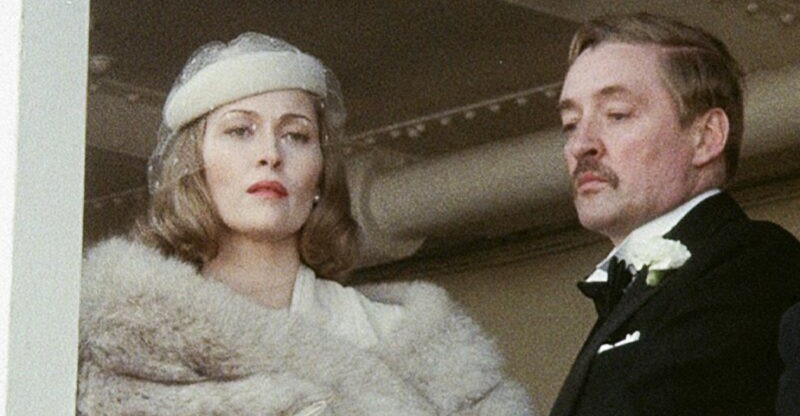
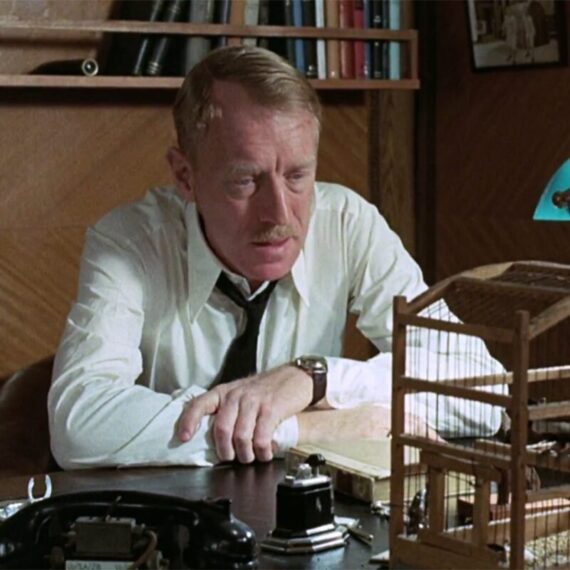
And then there’s the headline stars. They give it their all (though some are a bit over the top and hammy) but, aside from a few, they’re also glorified cameos. Dunaway is fabulous in what would be her second disaster movie in quick succession (she starred in The Towering Inferno, too), and Max von Sydow is first class as the captain of the ship, a German who wants to do right by the passengers, despite the intentions of the Nazis. Orson Welles also deserves a special mention. He only appears in a few brief scenes but they are corkers and pivotal to the plot.
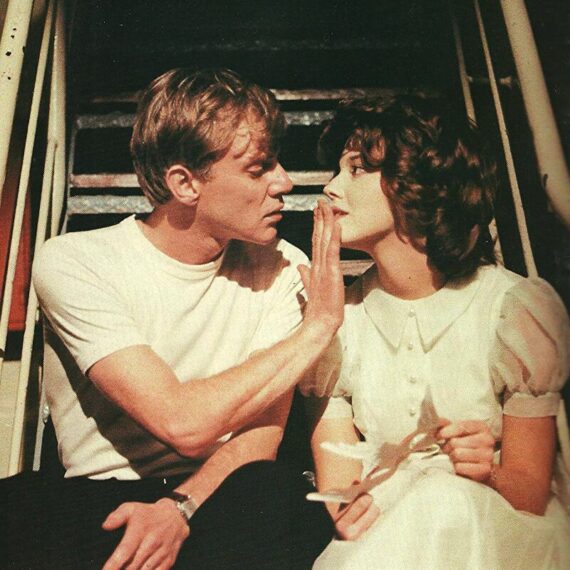
Much of the film sees us spending time with that wonderful cast, getting to know characters, their reasons and motivations for being on the voyage, and their hopes for the future. Interspersed with these scenes are others where we slowly learn the Nazi’s intentions for the ship, and see several countries refuse entry to the refugees, sparking the emotion of the reactions of the passengers and leaving us gripped as we wonder how they, and the ship’s captain, will respond.
The cinematography by future Academy-Award winner (for 1982’s Gandhi) Billy Williams is fantastic. Characters are often framed in close-up, whilst there are also sweeping shots of the ship at sea. There are some really beautiful images throughout the runtime. The score of Lalo Schifrin and the incidental music on the ship, as music plays at dinner and musical performances entertain the passengers, is also memorable, though it’s far from Schifrin’s best work.
The film treads a strange line, given the subject matter, between historical drama – where it’s at its best – and disaster movie, where it feels more overblown and cinematic than rooted in reality. The difficulty with all-star casts also plays out – many are cameos, meaning that a number aren’t given much to do; characters also come and go with long gaps between appearances. Whilst we get to know a number of the characters, there are many more that we only briefly meet or whom have weak plot threads that could have been lost to tighten up some of the plot. As mentioned earlier, most of the actors give it their all and there are some strong performances, but there are just too many characters, even with the more than two-and-a-half-hour runtime.
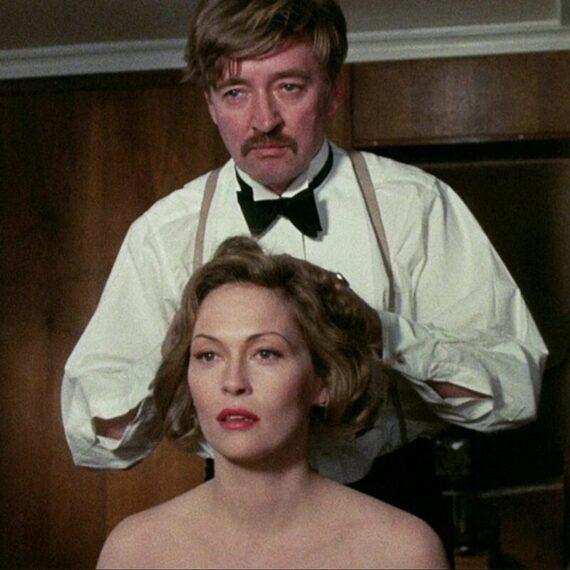
The ending also feels very rushed; indeed the final half an hour feels like there’s a film’s worth of plot that is constrained into a brief runtime. But the final scene, without spoiling it too much, is very poignant – a moment of jubilation gives way to incredible sadness as text plays out and reveals the fates both of some of the main characters but also of more than half of the 900 passengers.
In conclusion, there’s much to admire in Voyage of the Damned, from some of the wonderful cast performances (particularly von Sydow) to the cinematography and other elements I’ve not mentioned, like the fabulous production design. Yet, it’s hampered by not always knowing which way it wants to go – historical drama or disaster film – and for being bloated with too many characters, and, despite its lengthy runtime, feeling rushed towards the end.
Film: 

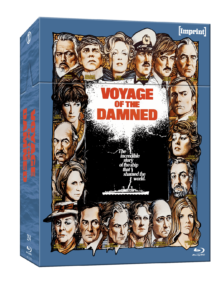
Voyage of the Damned was released in Australia by ViaVision as number 354 on its Imprint label. It’s a region free disc, limited to 1,500 copies, and can be ordered direct from the ViaVision website.
The transfer is decent but not first rate. It’s soft at times and there are frequent blemishes and damage to the print. It always looks more than passable but it’s not a clean print and could have looked fantastic if it had undergone a restoration. Sound is fine, though, and I had no issues with this.
Special Features and Technical Specs:
Disc One: Theatrical Cut
1080p high-definition presentation of the Theatrical Cut of the film on Blu-ray (158 minutes)
Audio Commentary by cinema author and critic Matthew Asprey Gear (2024)
Photo Gallery
Theatrical Trailer
Audio English LPCM 2.0 Mono
Aspect Ratio 1.78:1
Optional English HOH Subtitles (Theatrical Cut only)
Disc Two: Extended Cut
Standard-definition archival presentation of the Extended Cut (182 minutes)
Audio Commentary by film historian/filmmaker Daniel Kremer (2024)
Movie Memories – career interview with cinematographer Billy Williams
The Crowd Around The Concierge – Interview with actor Malcolm McDowell (2024)
The audio commentary on the theatrical cut is by cinema author and critic Matthew Asprey Gear. He provides plenty of contextual information about the film, actors, Lew Grade Productions, who produced the film, and plenty more. He doesn’t shy away from discussing the lesser elements of the film, but also highlights its many high quality elements. We also hears about the original real-life inspiration to the film, the book that was based on the reality and about the other adaptations of the works of the authors of the book. These are just some of the nuggets that Gear provides and there are plenty more in his rich and rewarding commentary.
The photo gallery auto plays and features 24 images, mostly stills, but also some portraits and a look at one of the posters.
Rounding out the first disc is the trailer, which runs for four minutes.
Disc two contains the bulk of the extras, starting with the 181 minute version of the film. It opens with text outlining that it was sourced from the only available material, a rare 1979 VHS tape transfer, so is presented in standard definition and in 4:3 ratio. This version features additional footage and scenes, as well as reordering some of the scenes and using different takes than those seen in the theatrical cut. It’s a fascinating addition. I preferred the theatrical cut but am very pleased that this cut was also included.
The extended edition also benefits from its own new commentary, this time by film historian and filmmaker Daniel Kremer, who provided the source material for this version. Kremer points out the differences and additions found in the longer version, as well as providing a wealth of other information about the making of the film, Magnetic Video (which was where the longer cut was sourced from) and much more. He touches on some of the other alternate versions (one was just over two hours, a good half an hour shorter than the theatrical cut). It’s a fantastic commentary that provides a lot of detail not included in the other extras and looks at the film from a different perspective, namely the intriguing history of the alternate versions.
The archival interview with cinematographer Billy Williams is from 2018, runs for just over an hour and is excellent. We hear how he got into cinematography, his early work, what drove his career and what he felt made a good film. Williams shares loving memories of some of the pictures he worked on including The Magus (1968), Ken Russell’s Women in Love (1969), and Richard Attenborough’s biopic Gandhi (1982). Williams is a wonderful interviewee and shares some great memories; I particularly enjoyed the sections on Women in Love, shooting the opening sequence of The Exorcist (1973), and working with Elizabeth Taylor. Narration introduces and provides context to each section of the interview, and trailers for the films discussed are also included. Fantastic stuff.
The new interview with Malcolm McDowell is brilliant with the actor on great form during the 17-minute piece. He shares how he got the part, his memories of the production, fond recollections of the director and some of the actors, and how General Francisco Franco died during the filming in Spain and the mood in Spain, where a large portion of the movie was filmed.
Voyage of the Damned is a flawed film which is full of some great elements, headlined by that stellar cast and wonderful production design and cinematography. The Imprint label release provides gorgeous packaging and some fabulous extras – the extended cut, two great commentaries, an hour-plus long career retrospective and a new interview – but the package is let down by the picture quality. It’s okay but full of print damage and blemishes and could have looked so much better with a new restoration.
Disc/Package: 