


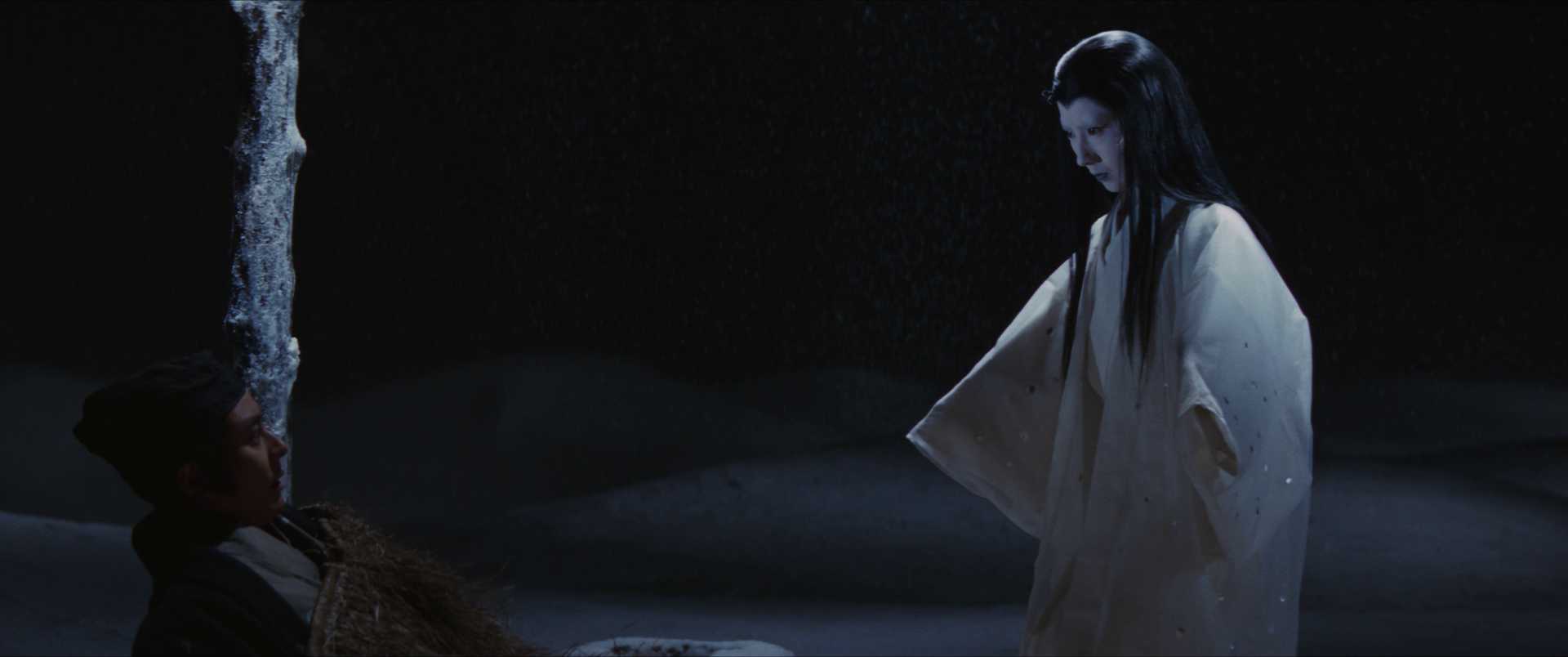
 I imagine when most Westerners think about Japanese horror films, they tend to jump to the ‘J-Horror’ boom that came in the late ‘90s and early ‘00s, following the international success of Ringu in 1998. However, like many cultures, the Japanese have a long history of supernatural folk tales to put a chill down the spine of anyone who hears them. These have been interpreted into numerous novels, plays and films over the years, as you might expect. The most famous of these adaptations, in terms of films, is probably Masaki Kobayashi’s Kwaidan (1964). This was an anthology of ghost stories based on the writing of Lafcadio Hearn, who himself drew inspiration from Japanese folk tales.
The Daiei Film studio, which was enjoying a golden era during the 50s and 60s, was not immune to producing ghost stories (a.k.a. kaidan) either. With gothic horror enjoying a renaissance around the world at the time, following the success of Hammer Films and the work of directors like Mario Bava and Roger Corman (in his Poe phase), it made sense for the internationally-inclined Daiei to get involved.
Just in time for Halloween, Radiance Films are releasing a trio of the studio’s forays into the genre in a handsome boxset entitled Daiei Gothic: Japanese Ghost Stories.
I got hold of a copy of the set and, peering out from behind my sofa, I dared to watch it. My thoughts follow.
The Ghost of Yotsuya (a.k.a. Yotsuya kaidan or Yotsuya Ghost Story)
Director: Kenji Misumi
Screenplay: Fuji Yahiro
Based on a Play by: Tsuruya Nanboku IV
Starring: Kazuo Hasegawa, Yasuko Nakada, Yôko Uraji, Mieko Kondô, Jôji Tsurumi, Narutoshi Hayashi
Country: Japan
Running Time: 84 min
Year: 1959
* Please note – it’s hard to discuss this particular film without giving away a major plot development that happens relatively late in the story. This is given away in the film’s description practically everywhere though, including on the box for this set, so I’m going to openly mention it. Those who are particularly troubled by the concept of ‘spoilers’ might want to skip over this review though.
The Ghost of Yotsuya is based on a classic kabuki play originally called ‘Tōkaidō Yotsuya Kaidan’, which was written by Kyoko Hirano and first performed in 1825. It’s been turned into over 30 films, so might easily be classed as the most popular Japanese ghost story of all time. In fact, in the same year Kenji Misumi’s version included here was released, Nobuo Nakagawa directed another adaptation of the tale. Nakagawa’s version is probably the more famous of the pair but Misumi’s is no less worth your while.
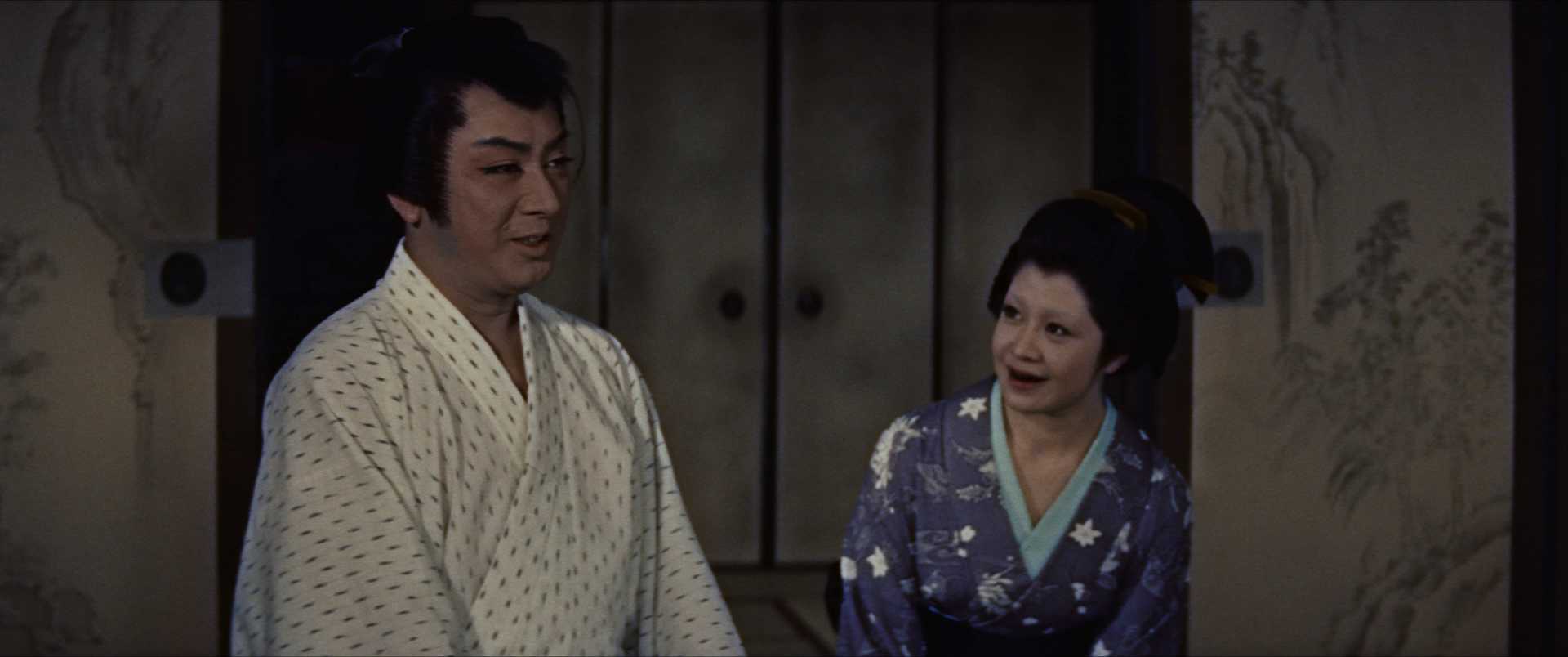
Misumi reportedly changed quite a few crucial details to make the story his own. Most notably, these changes helped make the main protagonist, Iemon (played by Kazuo Hasegawa), a more sympathetic character.
In the film, Iemon is a samurai for the Shogun who is currently living in relative poverty. After humiliating himself whilst trying to secure a new job, he helps save a pair of women from some attackers. One of these women is Oume (Yôko Uraji), the daughter of Lord Ito. She takes a shine to Iemon and uses her influence to get her father to give him a position and help make him her husband.
However, Iemon is married to Oiwa (Yasuko Nakada), who is currently in poor health following a miscarriage. To tackle this ‘problem’, the Ito’s and one of Iemon’s servants plot to discredit Oiwa by suggesting she’s having an affair and then later poisoning her.
Oiwa’s spirit, however, won’t let the villains get away with it and haunts them and her husband after her death.
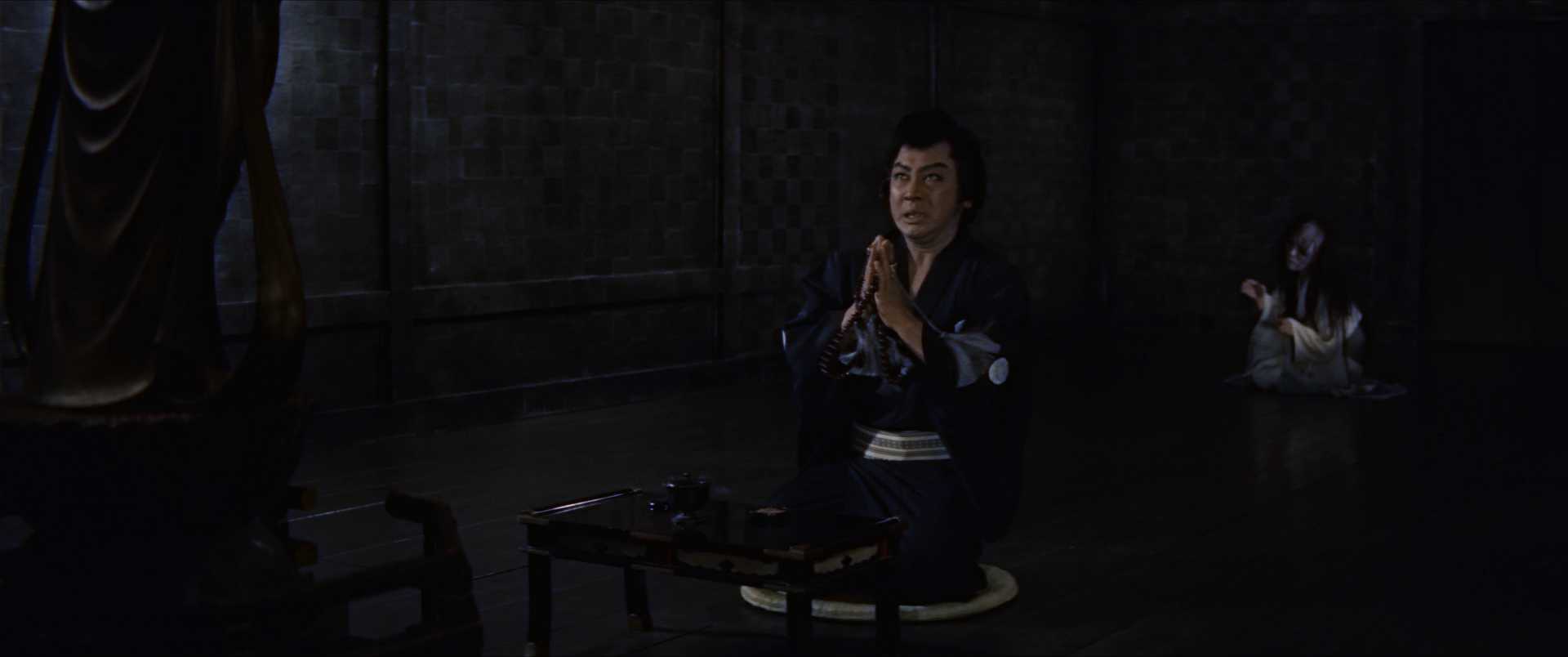
The supernatural horror elements of The Ghost of Yotsuya don’t appear until quite far into the film, after Oiwa is killed. As such, I was surprised to find this was more of a period melodrama than a horror film, for the most part. It’s a well-executed tale though, so that’s not necessarily a bad thing.
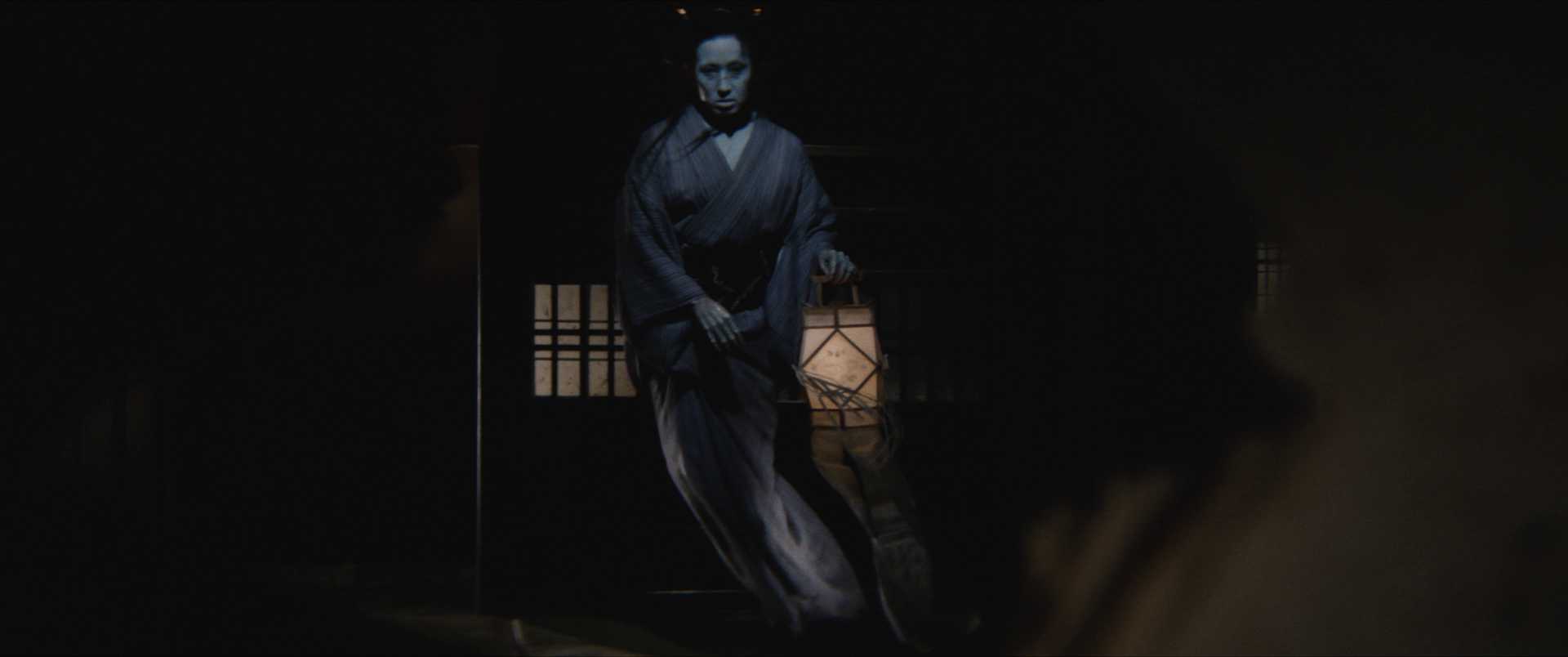
When the film does turn though, the scenes of horror are highly effective. It’s surprisingly graphic and violent for the era, with some unsettling yet hauntingly beautiful imagery in places. There are some well-devised special effects too, that hold up well considering the age of the film.
Overall then, The Ghost of Yotsuya is a strong start to the set. It’s a slow burner, so fright fans must have a little patience but, when the ghost story finally kicks in, it’s worth the wait.
Film: 


The Bride From Hades (a.k.a. Botan-dôrô or Peony Lantern)
Director: Satsuo Yamamoto
Screenplay: Yoshikata Yoda
Based on a Story by: Enchô San’yûtei
Starring: Kôjirô Hongô, Miyoko Akaza, Mayumi Ogawa, Kô Nishimura, Takashi Shimura, Michiko Ôtsuka
Country: Japan
Running Time: 88 min
Year: 1968
The Bride From Hades is based on a story by Enchô San’yûtei, which itself was based on a traditional Chinese folk tale. Like the previous film in this set, it had already been adapted to stage and screen several times by this point.
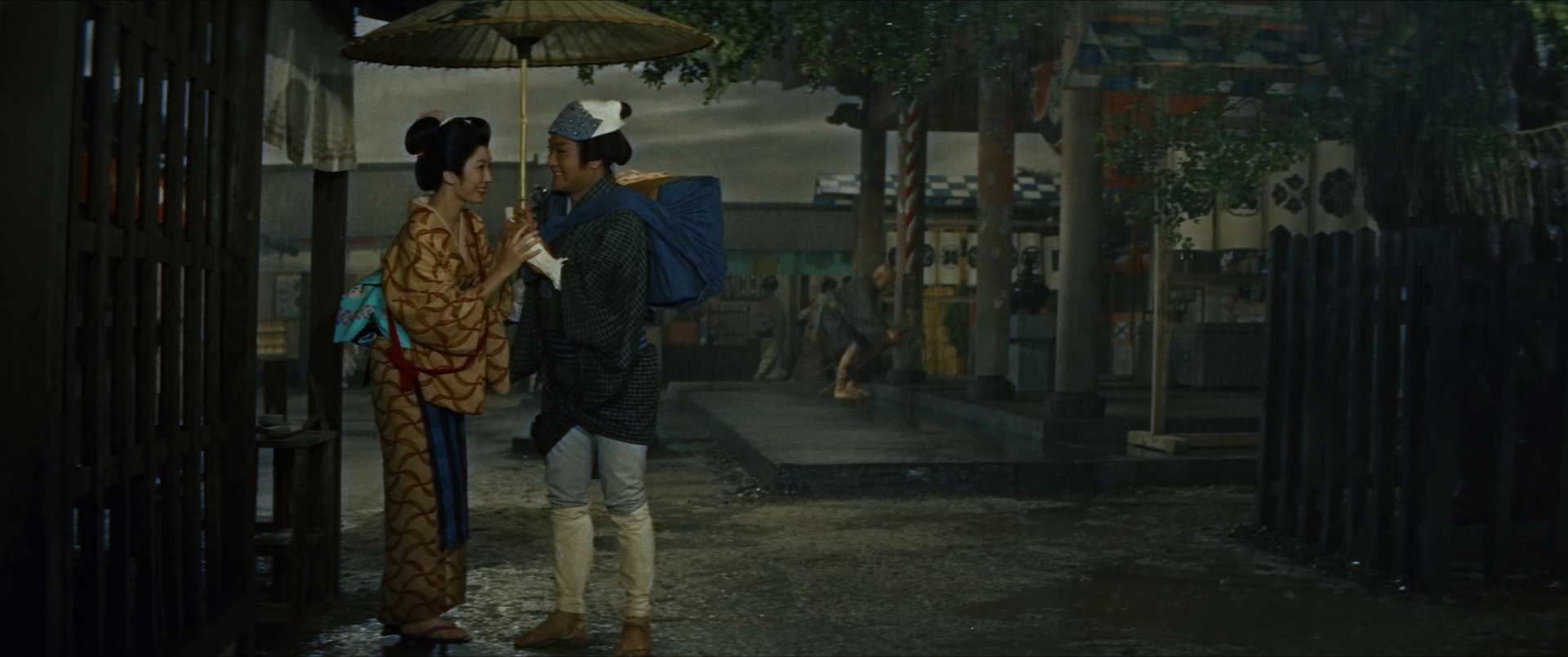
The film is set during the Obon Festival, a period when the spirits of the departed return to the world of the living. During this time, a young samurai-turned-teacher named Hagiwara Shinzaburô (Kôjirô Hongô) faces pressure from his domineering parents to enter an arranged marriage with Kiku (Atsumi Uda), which will make the family more prosperous. Fate intervenes, however, when Hagiwara encounters a stunning courtesan named Otsuyu (Miyoko Akaza) and her guardian, Oyone (Michiko Ôtsuka).
A mutual attraction sparks between the teacher and the courtesan but their budding romance is complicated by a chilling secret: the courtesan and her guardian are ghosts, drawn back from the afterlife during Obon to tempt another soul into the eternal realm with the allure of everlasting love.
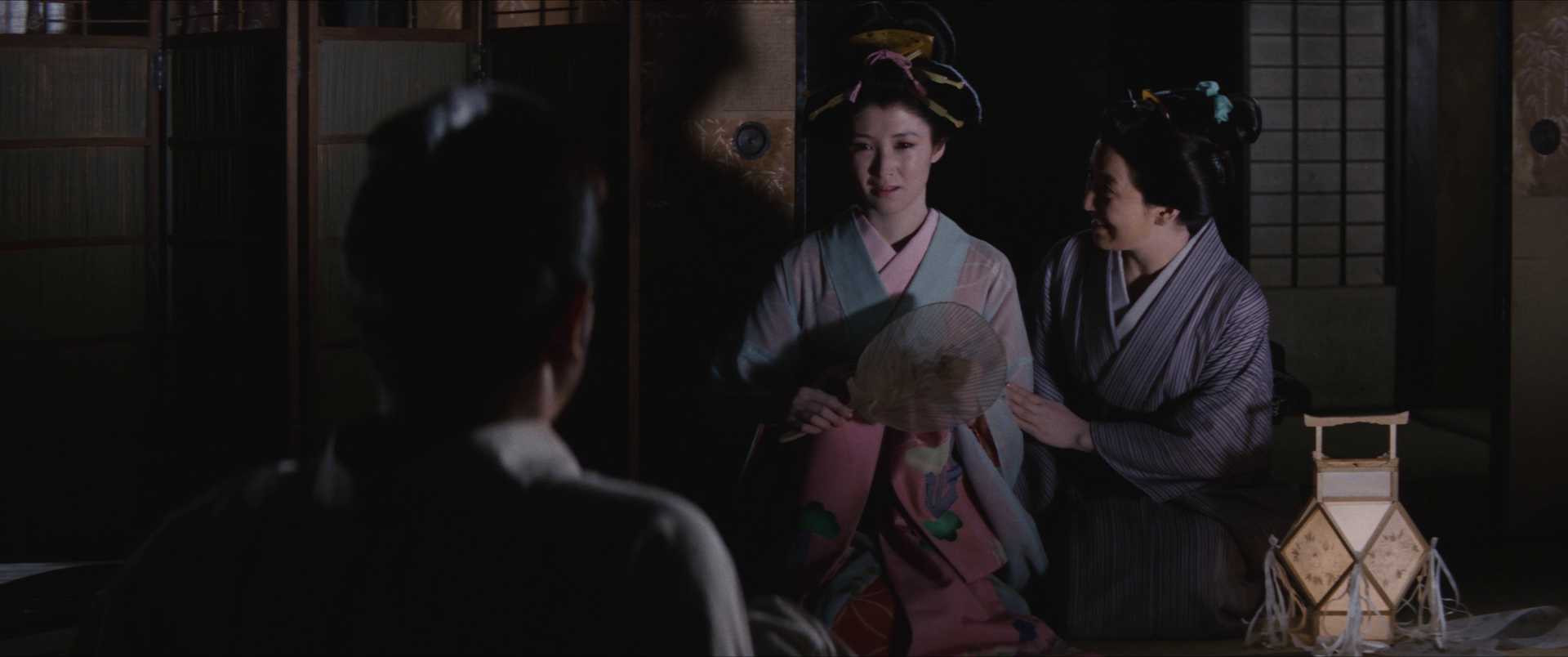
The Bride From Hades is an elegantly shot supernatural drama that effectively blends sweeping romance with atmospheric chills. Chishi Makiura’s cinematography is gorgeous, with careful framing and graceful movement utilised throughout. This mood is further enhanced by Shigeru Ikeno’s lush soundtrack.
There are a few very familiar faces in the cast too, the most notable being Takashi Shimura, who any fans of Japanese cinema will instantly recognise from his work with Akira Kurosawa and key role in the original Godzilla.
Another Kurosawa regular in The Bride From Hades is Kô Nishimura. He plays Hagiwara’s mischievous assistant Banzô. As great an actor as Nishimura normally is, I felt his character let the film down a little, unfortunately. Banzô and his wife, Omine (played by Mayumi Ogawa), are played largely for laughs, with broad performances that seem badly misplaced among the otherwise melancholic tale. This creates a stumbling block in the final act, where their characters become key figures. A shockingly violent finale attempts to give their threads more weight but, again, it feels too detached from the sensitive romance at the heart of the film.
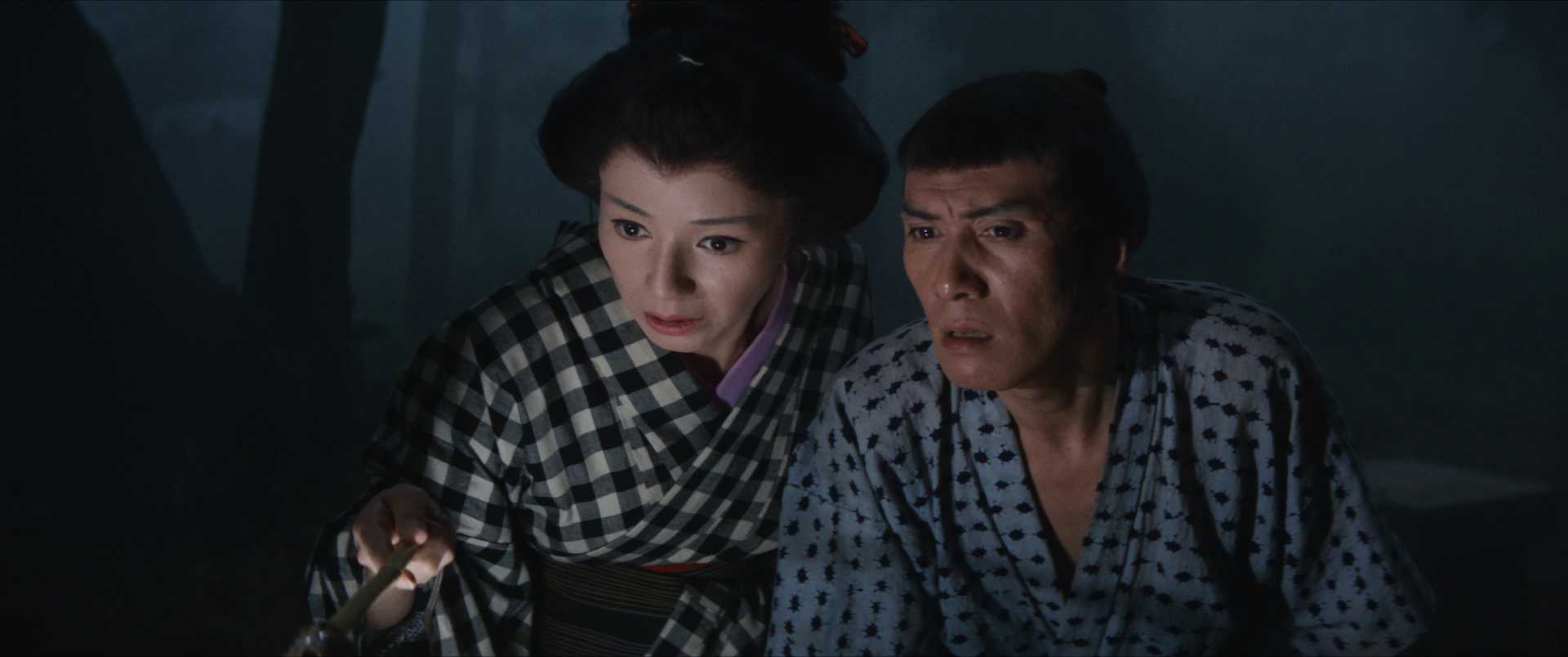
Nevertheless, The Bride From Hades remains another beautifully made tale of love and spirits. Some bits didn’t work for me but, for the most part, the film kept me under its spell.
Film:
The Snow Woman (a.k.a. Kaidan yukijorô)
Director: Tokuzô Tanaka
Screenplay: Fuji Yahiro
Based on a Short Story by: Lafcadio Hearn
Starring: Shiho Fujimura, Akira Ishihama, Machiko Hasegawa, Taketoshi Naitô, Mizuho Suzuki, Fujio Suga
Country: Japan
Running Time: 79 min
Year: 1968
The Snow Woman is once again based on a famous story. This time, it’s by Greek immigrant Lafcadio Hearn, some of whose stories based on Japanese folklore were used as the basis for the horror classic Kwaidan. In fact, the ‘Yuki-onna’ story included in Masaki Kobayashi’s anthology film is the same that was adapted to create The Snow Woman.
The film begins high in the Mino Mountains, where the renowned sculptor Shigetomo (Tatsuo Hananuno) and his apprentice Yosaku (Akira Ishihama) discover the perfect tree to craft a magnificent statue of the goddess Kannon for their village temple. A fierce snowstorm forces them to seek refuge in an abandoned cabin though, before they can head back home.

During the night, a mysterious ‘snow woman’ materialises and enters the cabin. She freezes Shigetomo to death and offers Yosaku his life on one condition: he must keep her existence a secret forever.
Due to being Shigetomo’s apprentice and having been raised by him and his wife Soyo (Sachiko Murase), Yosaku is tasked by the village leader with completing the Kannon sculpture in the master’s stead.
A year or two later, during a storm, Yosaku and Soyo encounter the beautiful Yuki (Shiho Fujimura), who they offer shelter from the rain. As you might have guessed, Yosaku and the young lady hit it off instantly, though we the audience can see that Yuki bears a striking resemblance to the snow woman.
However, tragedy strikes during this whirlwind romance. A cruel lord brutally assaults Soyo for protecting the local children. In her final moments, Soyo makes Yuki swear to marry Yosaku.
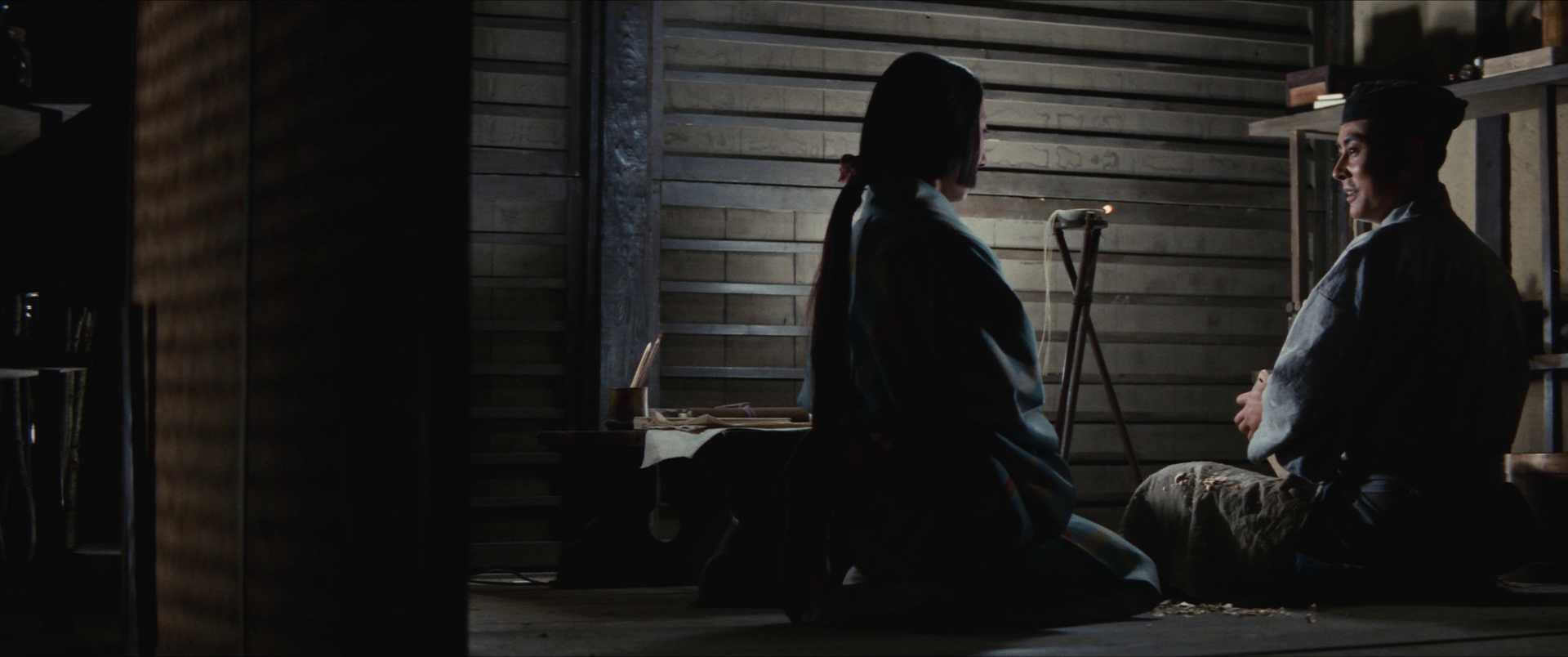
Five years later, Yosaku and Yuki have a happy marriage and a young son, Tarô. However, the Lord’s relentless harassment of the couple reaches a breaking point, forcing Yuki to make use of her hidden powers.
I found that The Snow Woman worked in the opposite way to The Ghost of Yotsuya, in that it opens with its most chilling supernatural sequence, then becomes more of a drama as it moves on (though not without a couple of creepy ghost scenes). Horror fans may baulk at this but I found the drama intensely moving in places.
For one, the central relationship is very well established, with the pair having strong chemistry. It also builds to a heartbreaking finale. Through this, I found the film to be the most successful and well-rounded of the titles in the set. I enjoyed all three but this stood out as the best, in my opinion.
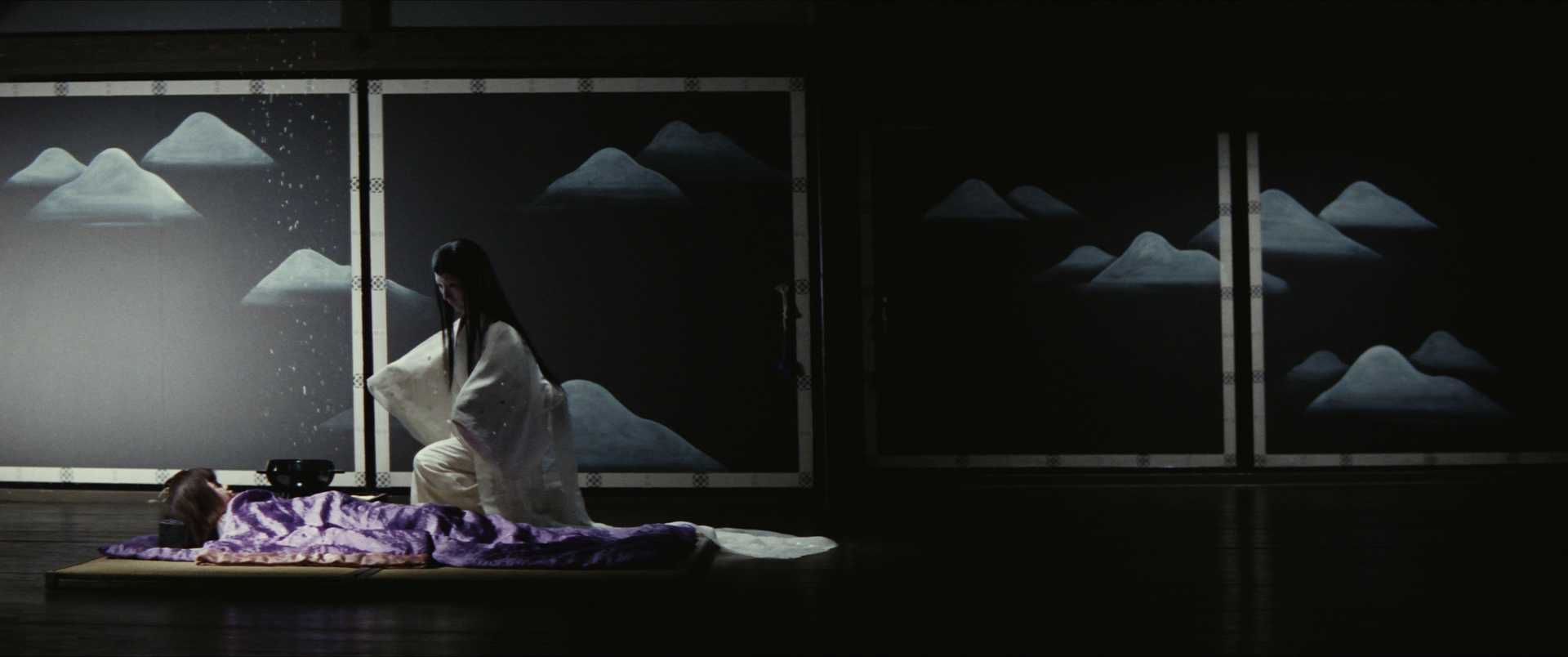
The film looks ravishing too, with stylish and atmospheric cinematography, once again by the great Chishi Makiura. This is backed up by emotive music composed by a Japanese legend, Akira Ifukube.
Once again, practical and in-camera effects are well utilised in the supernatural sequences. I liked the way Yuki could freeze people and rooms, and her shining yellow eyes when in ghost form are particularly striking.
So, The Snow Woman is a stunning gothic horror romance that’s beautifully presented and emotionally satisfying.
Film:
Daiei Gothic: Japanese Ghost Stories is out on 28th October on region A&B Blu-Ray, released by Radiance Films. The picture quality on The Bride From Hades and The Snow Woman is exceptional, with clean, detailed prints and lovely colours. The Ghost of Yotsuya isn’t quite as strong with some haloing in places, a little light damage and some slightly odd colours, but it’s an older film which likely used a more troublesome colour process. I’ve used screengrabs throughout this review, to give you an idea of how the films look, though these have been compressed. I had no problems with the audio across the discs.
BLU-RAY LIMITED EDITION BOX SET SPECIAL FEATURES:
– New 4K restorations of each film
– Uncompressed mono PCM audio for each film
– Optional English subtitles for all films
– Newly designed box and booklet artwork by Time Tomorrow
– Limited edition 80-page perfect bound book featuring new writing by authors Tom Mes, Zack Davisson and Paul Murray, newly translated archival reviews and ghost stories by Lafcadio Hearn
– Limited Edition of 4,000 copies presented in a rigid box with full-height Scanavo cases for each film and removable OBI strip leaving packaging free of certificates and markings
THE GHOST OF YOTSUYA
– New interview with filmmaker Kiyoshi Kurosawa
– A visual essay on the history and adaptations of the classic Ghost of Yotsuya story by author Kyoko Hirano
– Trailer
– Reversible sleeve featuring original and newly commissioned artwork by Filippo Di Battista
THE BRIDE FROM HADES
– Audio commentary by author Jasper Sharp
– New interview with filmmaker Hiroshi Takahashi
– Trailer
– Reversible sleeve featuring original and newly commissioned artwork by Filippo Di Battista
THE SNOW WOMAN
– New interview with filmmaker Masayuki Ochiai
– A visual essay on writer Lafcadio Hearn by Paul Murray
– Trailer
– Reversible sleeve featuring original and newly commissioned artwork by Filippo Di Battista
Kiyoshi Kurosawa is interviewed about The Ghost of Yotsuya. He calls Kenji Misumi’s version of the film the best of the many adaptations of the story and compares some of them, describing why he thinks this one stands out. He also discusses why the film doesn’t work in the same way as your classic, common-or-garden horror film.
Kyoko Hirano provides a visual essay on The Ghost of Yotsuya story by Tsuruya Nanboku IV, which inspired the first film in the set, as well as countless other adaptations. She talks about how Misumi alters numerous details from the original play for his version, as well as discusses how the source material has influenced Japanese horror cinema in general.
Jasper Sharp provides a commentary for The Bride From Hades. It’s typically very well-researched, covering the cultural, literary and production backgrounds of the film and its makers. He offers some recommended reading and watching along the way and the track is engaging and illuminating throughout.
Hiroshi Takahashi talks about the origins of The Bride From Hades story. I was glad to hear him mention Viy, as Satsuo Yamamoto’s film reminded me of that Russian horror movie, whilst I was watching it. He also describes his history and opinion of the version of The Bride From Hades included in this set and how it compares to films made later.
Masayuki Ochiai talks about The Snow Woman in an interview. He describes how he sees the Yuki character as a yokai (elemental creature) rather than a ghost. He also talks about why he thinks ghosts in Japanese stories are largely female.
Paul Murray (via narration by Tom Mes) talks about the life and work of Lafcadio Hearn, whose story inspired The Snow Woman. It’s a fascinating tale of an important literary figure.
The 80-page booklet is excellent. Tom Mes provides a valuable cover-all introductory essay. Zack Davisson writes about the fascinating history of kaidan, or Japanese ghost stories. This piece is followed by a series of archival reviews of the films and the final portion of the booklet is made up of a pair of stories by Lafcadio Hearn, which inspired a couple of the films in the set.
I must also add that I love the artwork on this set, from what I can see on the Radiance Films website.
So, Radiance have put together a fabulous release that I enjoyed working through a great deal.
Discs/Package: