


 Platform: PC (Steam or GOG)
Developer: SNEG & Wizards of the Coast, a subsidiary of Hasbro, Inc.
Players: 1
Back in 2001, an official Dungeons & Dragons turn-based RPG called Pool of Radiance: Ruins of Myth Drannor was developed by Stormfront Studios and released by Ubisoft. There was some weight of expectation behind it, being the fifth game in the Pool of Radiance series and having been adjusted to fit the then relatively new 3rd edition rules of D&D. However, the release was, by all accounts, a disaster.
After a strong first couple of weeks of sales, these took a tumble once word got around how littered with bugs the game was. One notorious example was a bug that would cause a player’s system files to uninstall when the game was removed. Critics weren’t kind to the game, in general, and it drifted away into obscurity, despite patches that fixed a lot of the original problems.
Over the years, it’s become somewhat of a footnote in D&D gaming, with the original release difficult to get running on modern systems.
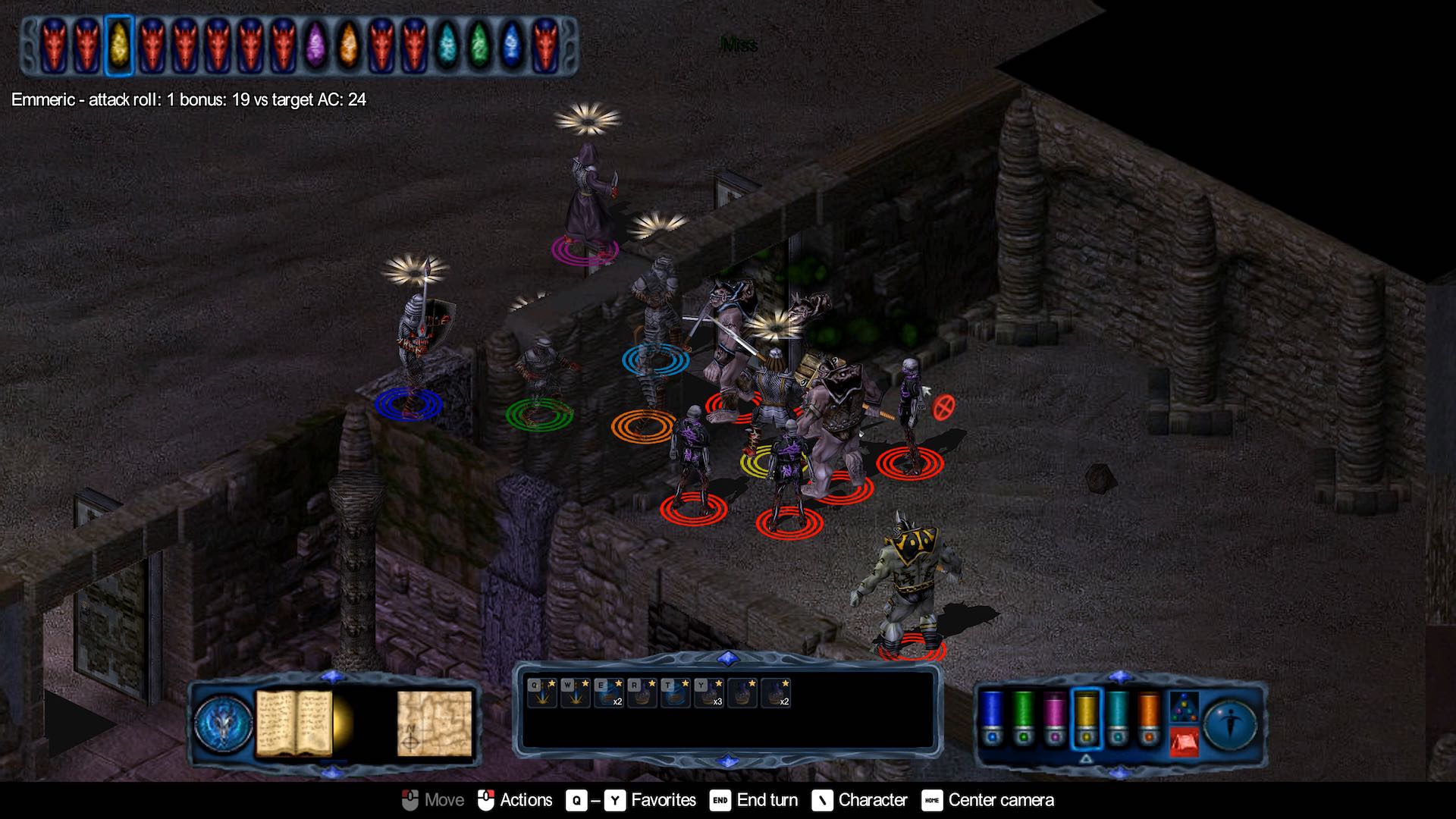
Publishers SNEG, however, believed that Pool of Radiance: Ruins of Myth Drannor was worth resurrecting. They set about remastering the game to wipe out all of the bugs and make some quality-of-life changes to let today’s gamers experience it in a much less painful fashion.
I’ve been on a bit of a turn-based RPG binge recently, so I got hold of a copy to see how it held up.
Please allow me to borrow the press blurb to provide a basic summary of the game:
“Featuring the Dungeons & Dragons game rules with different species, classes and spells, Pool of Radiance: Ruins of Myth Drannor offers over 100 hours of gameplay. After a Pool of Radiance has been discovered in the Forgotten Realms, emanating a wave of pure evil cursing all it touches, the legendary wizard Elminster sends your party on a quest to find out what is behind this vile resurgence – and put a stop to it.
Build a band of heroes, descend into the haunted elven ruins of Myth Drannor, and use tactical positioning, spellcraft and steel to stop an ancient evil from spreading across Faerûn. Players may choose between the genuine turn-based style of role-playing or focus on action with a timed-turn style of play.”
I must admit, I never played Pool of Radiance: Ruins of Myth Drannor on its original release, but from what I gather from reading online and trying out the ‘legacy’ setting on this new version, I can see that SNEG have done an excellent job in not only ironing out the bugs, but listening to the criticisms people had of the game.
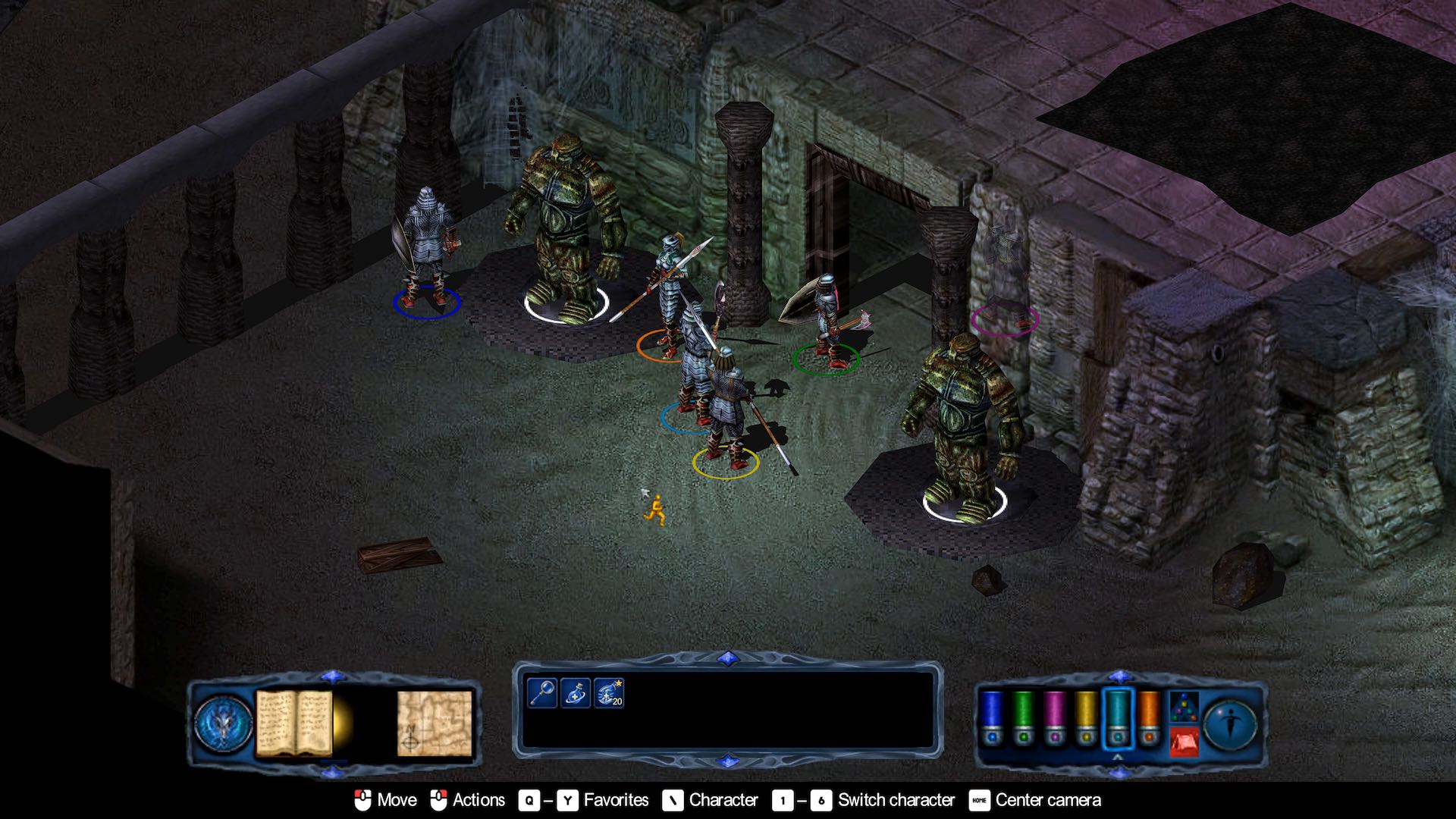
Not only has it been given a graphical overhaul, with widescreen support up to 4K and upscaled backgrounds, but they’ve addressed a common problem people had with how slow combat could be. You can now adjust the animation speed of enemies and your own party, which is a lifesaver for the multitude of lengthy skirmishes you’ll face.
Another gameplay mechanic that’s been looked at is the turn timer. Originally, though please correct me if I’m wrong, you were forced to have a turn timer during combat, meaning it was a kind of semi-turn-based experience that caused you to rush your choices. Now, you can play at your own pace, which I much prefer, though you can turn the timer on, should you wish.
I noticed a couple of little bugs when I first started playing the game, particularly with checking item stats. However, these seem to have been addressed with the patch that was released when the game was properly launched. Since that, I haven’t noticed any outright bugs.
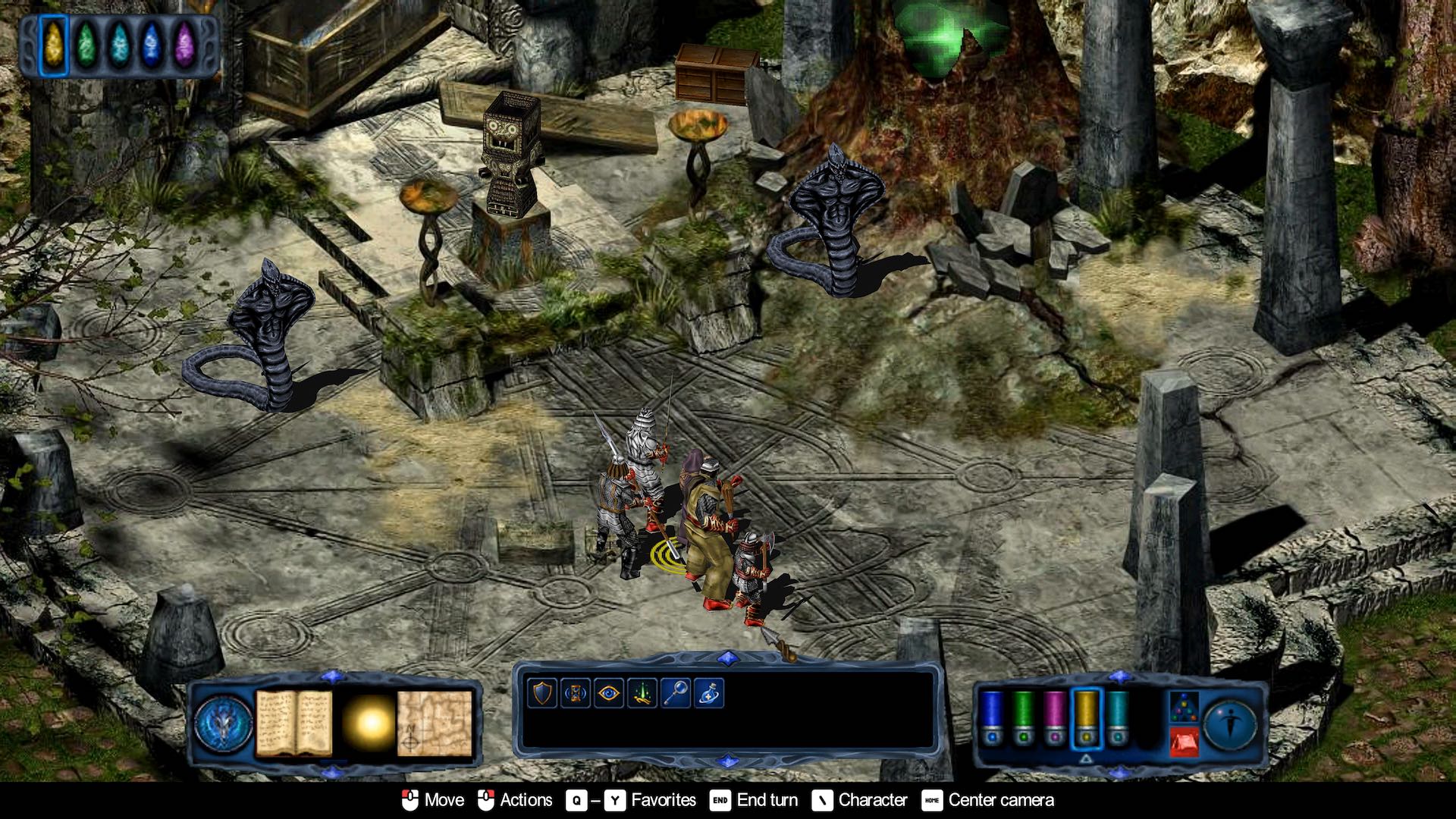
So, SNEG must be applauded for doing a first rate job with a game that was certainly not without its problems. However, whilst the game experience has certainly been improved, Pool of Radiance: Ruins of Myth Drannor is still far from a perfect game.
I have a sort of love-hate relationship with it, to be honest. There are many aspects of the game that I find frustrating, yet I find myself strangely addicted to it. I’m far from finishing the game (it’s got over 100 hours of content and I needed to write something – give me a break), but I’ve put over 30 hours into it and counting.
Something that annoys me but might be a selling point to others is that the game is punishingly difficult. Perhaps it’s my skill level that’s the problem (I’m a middle-aged man who hasn’t played a lot of turn-based RPGs), but I had to reload so many times after non-boss battles, that it became ridiculous.
There are no difficulty settings to adjust, either. I struggled for a good 10 hours before I slowly got enough gear and figured out the best tactics to use (I tend to naturally go gung ho in action games but that doesn’t work here). I still find I often lose battles, despite now knowing how better to use my spells and such. I have to rest and save after every one.
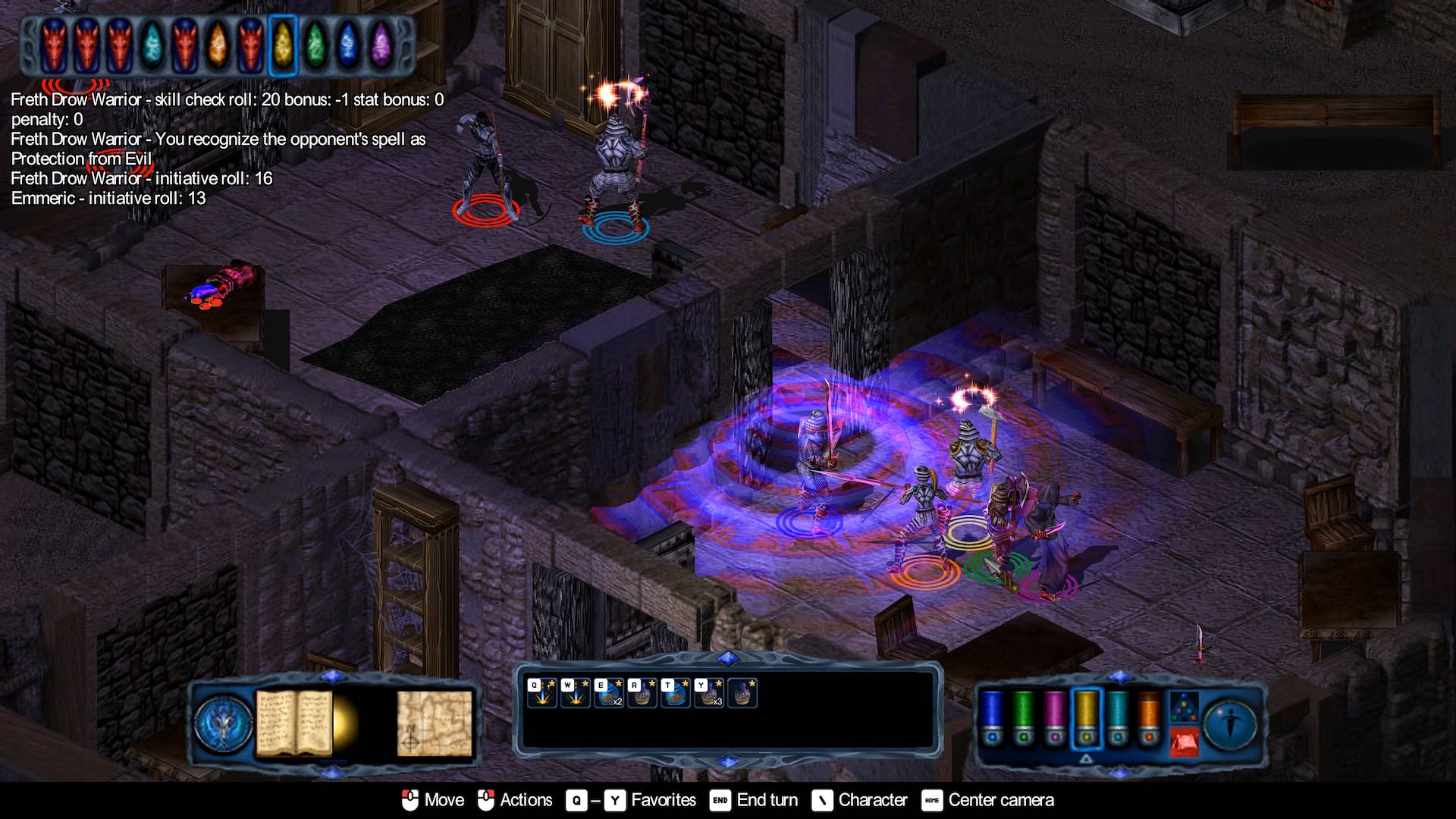
The fighting uses D&D 3rd edition rules, so your effectiveness in battle goes by the roll of the dice. This is part an parcel of a D&D game, but it can be annoying when you continuously miss your strikes due to bad rolls.
The difficulty was perhaps what was keeping me hooked, though. I don’t like giving up on anything, so I kept going back for more punishment.
However, another problem I have with the game is that it’s incredibly repetitive. As mentioned, I’ve been playing for over 30 hours and I’m still stuck in the vast dungeons. You start out in an attractive looking exterior location but soon get stuck in the dungeons and I can’t see a way to get past these any time soon (though you can go back to the start, if you like). The press images show a nice range of locations, but who knows when I’ll get to see them. My poor skills at the game might be to blame, but the maps are truly huge and there are hoards of enemies everywhere. This is definitely more of a hack-and-slash dungeon crawl than a narrative or character-focused adventure.
It all becomes a bit of a chore and my interest is starting to wane. I’m not sure I’ll carry on playing after writing my review. If the level design was a little more condensed or varied, I’d think differently, but it’s a bit of a slog, as it is.
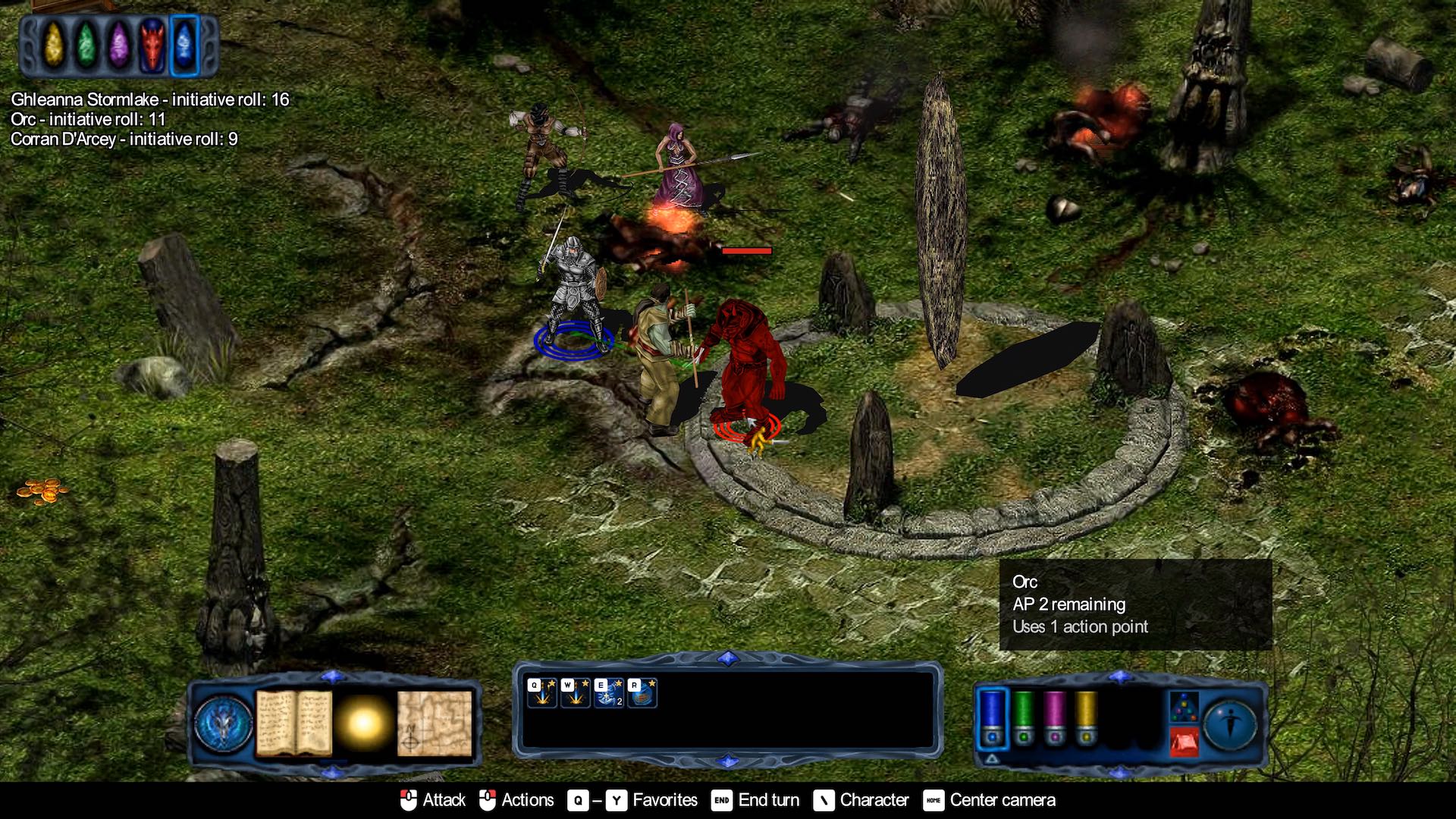
Another annoyance is that when an enemy has badly sapped an attribute such as strength (which happens quite a lot later in the game), you have to rest several times to get back to normal, as it only recovers one point each time. It doesn’t take a huge amount of time to rest but it’s still severely annoying, when you have to hit the button ten times and listen to that little tune again and again. Health goes straight back though, thankfully.
The character and skill development here is a little basic, compared to modern iterations. Initially, you can choose from 6 different characters to be in your party of 1-4. These have fixed races and stats but represent a range of classes. When levelling up a character, you choose what character type to advance in level, rather than simply build stats and feats within that one type. For instance, you could have a character that’s both level 1 rogue and level 2 sorcerer. You occasionally get to add one point of an attribute and choose a new spell, but most of it is done for you.
As you go through the game, you can add more people to your party. So far, I’ve just added one. You can proceed to level them up as you desire, just like the rest of the group.
It took me an hour or so to get used to the dated menu system. It’s not as slick and intuitive as in modern games, but it works. It can just be a little slow to do what you want. You’re best off learning the keyboard shortcuts, though the new action bar helps a little.
You get a map that reveals itself as you explore. It allows you to place markers you name yourself, which is very handy when the maps get so big.
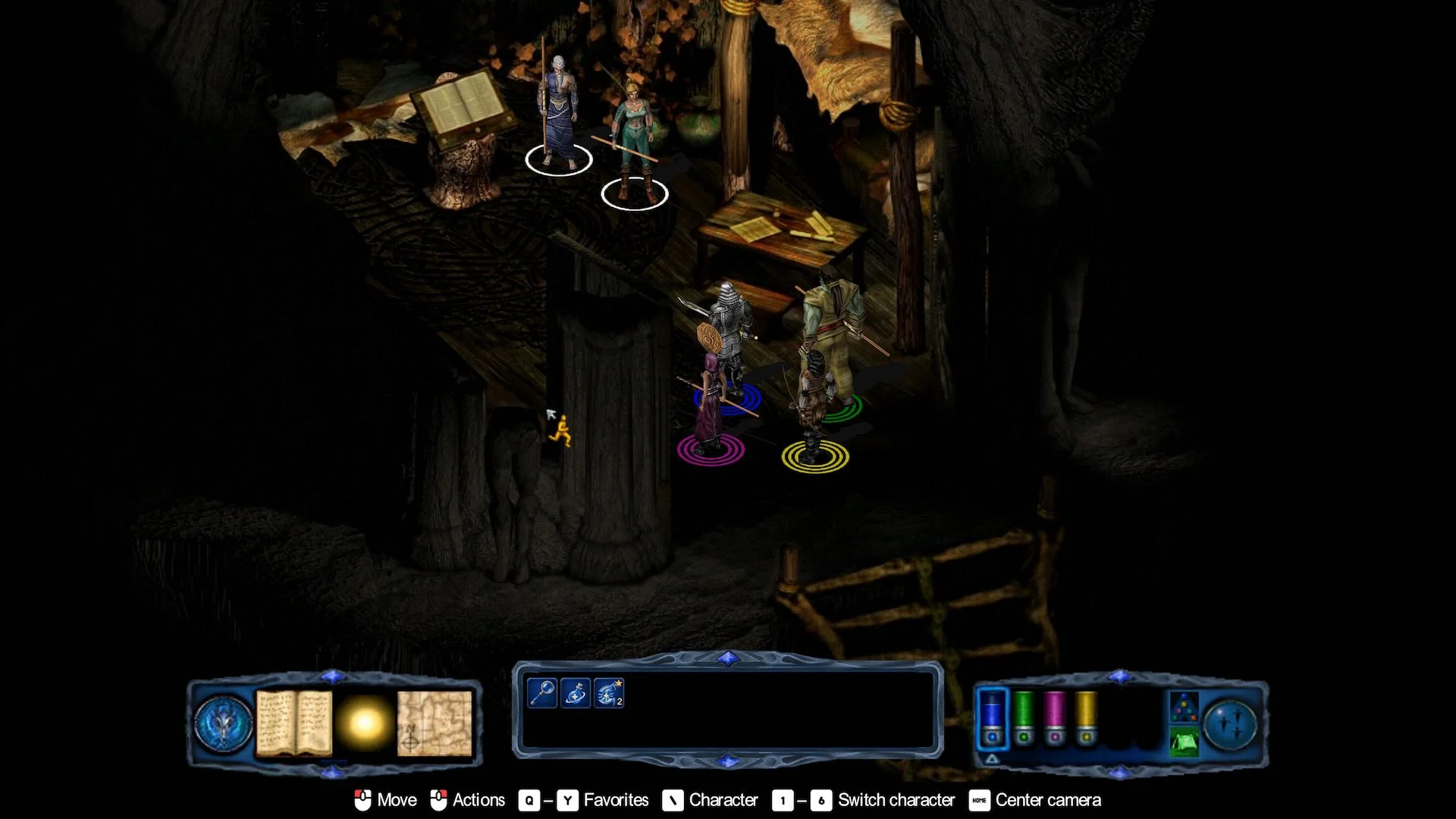
Graphics-wise, this hasn’t had an Ocarina of Time-level overhaul, but resolutions and textures have been tweaked. It’s not one of the more beautiful games I’ve played, but it looks OK, if a little repetitive in the dungeons. The cutscenes have been left in their retro state, which I liked.
The music is quite good, though with it being such a long game, you’ll hear the same cues again and again. I got a copy of the soundtrack with my Steam key. This might depend on what package you buy, though.
I may sound very negative in this review, and, indeed, I found much of the game frustrating. However, as mentioned, I did find myself coming back to the game time and again, staying up later than I should to beat some of the more difficult enemies. So, whilst I won’t claim Pool of Radiance: Ruins of Myth Drannor is a newly resurrected masterpiece, I’d say it’s worth giving a try. Just so long as you temper your expectations and are prepared for a potentially anger-inducing challenge.


Pool of Radiance: Ruins of Myth Drannor is out now on PC, available on Steam and GOG.
FEATURES
– Features official Dungeons & Dragons rules
– Return to the legendary Pool of Radiance – back to where the legacy began
– Answer Elminster’s call and face a new threat to Faerûn in the ruins of Myth Drannor
– Build a party of six: create up to four heroes and recruit two companions along the way
– Develop characters up to level 16, with powerful spells reaching 8th level
– Explore sprawling dungeons and battle through tactical turn-based encounters
– Use the optional turn timer to add extra pressure and a faster pace to combat
– Play comfortably on modern systems with widescreen support up to 4K, full controller support, and reworked camera controls
– Enjoy sharper visuals, an improved UI, adjustable combat animation speeds, and numerous bug fixes and quality-of-life improvements
– Choose how much you want to modernize the experience with granular settings and an optional “Legacy” mode that preserves the original gameplay and visuals