

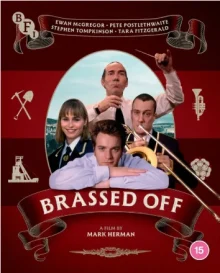
 Director: Mark Herman
Screenplay: Mark Herman
Cast: Pete Postlethwaite, Tara Fitzgerald, Ewan McGregor, Stephen Tompkinson, Jim Carter, Philip Jackson
Country: United Kingdom
Running Time: 107 mins
Year: 1996
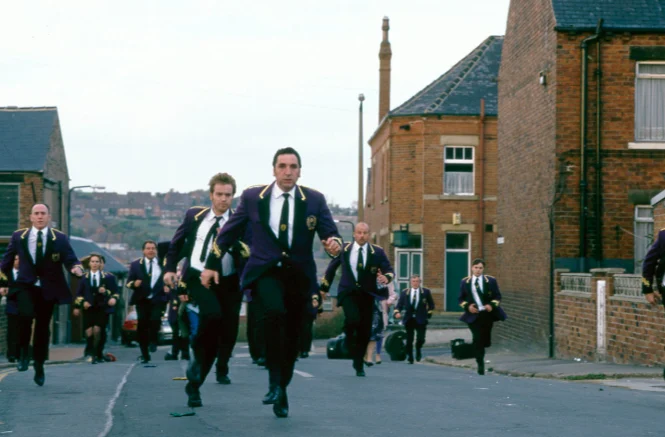
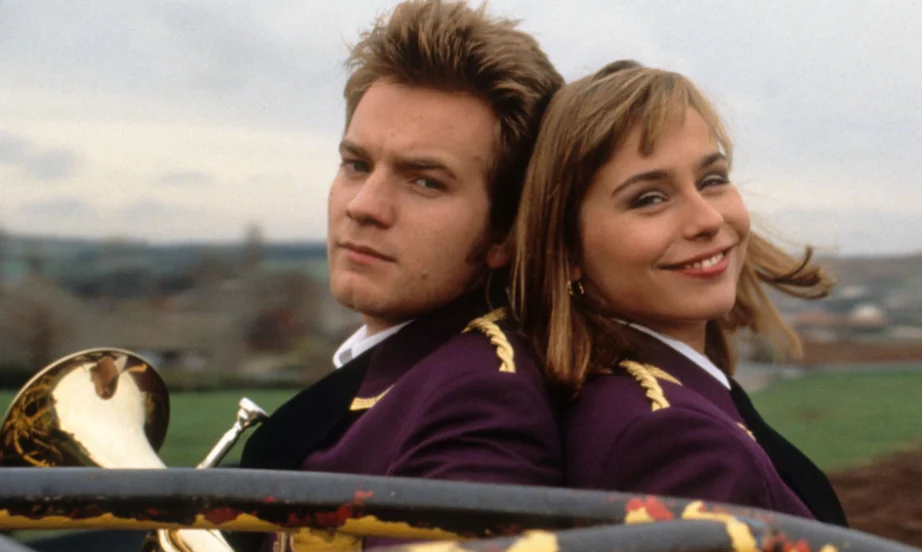
It’s 1992, and the miners of Grimley Colliery are facing uncertainty. Not only is their pit, and therefore their livelihoods, under threat but the Grimley Colliery Band is on the verge of breaking up – that is, until Gloria (Tara Fitzgerald) arrives. As the only female member of the band, she somehow manages to revive their enthusiasm for the forthcoming National Championships, as well as rekindling a childhood romance with Andy (Ewan McGregor).
Led by the passionate Danny (Pete Postlethwaite), the band plays on. Danny has his pride and his trombonist son, Phil (Stephen Tompkinson), has his problems. Problems which not even Mr Chuckles the clown can seem to help solve. With the National Finals at the Royal Albert Hall looming, can they hold it all together and secure a famous victory for Grimley?
Brassed Off is marvellous, and always has been, but has become almost reassuringly comfortable as we reach its 30th anniversary. As Mark Herman comments in the excellent interview included on the BFI’s new edition, it isn’t a Ken Loach film (though certainly the best of the albeit high-standard Cosy Social Despair sub-genre that includes The Full Monty and Pride). I’m not sure it would be as effective if it were grittier, quite honestly. Still, the scandals of the pit closures are old news. Vague history. Aren’t they?
I grew up with the headlines. I learned in college how the miners’ strikes in the 70s were backed by secondary picketing and transport unions refusing to move fuel, starving the power stations and causing the blackouts that brought down a Government. And in stark contrast, how the devastating strikes in the 80s were left isolated, leaving the mining communities to their fate. But we didn’t really need coal anymore. Did we?
Turns out we got played. The disc’s archival materials include the National Coal Board’s 1978 short documentary 40 Years On. The BFI are great at including often slightly eccentric archive pieces in their boutique editions, but placed alongside the main feature, this one gains a bitter irony: its optimistic coda envisions high-tech mining flourishing well into the twenty-first century.
Produced without prejudice and presented without comment, it left me reeling. I couldn’t understand how anyone was optimistic in 1978. But in actuality, the shutdown was a long-planned concerted effort by a Government declaring war on its own workers. They shipped in foreign coal and brutally broke the Unions; we would need coal for years, just not our coal. The communities be damned, and indeed they were. The economic effects can be seen to this day.
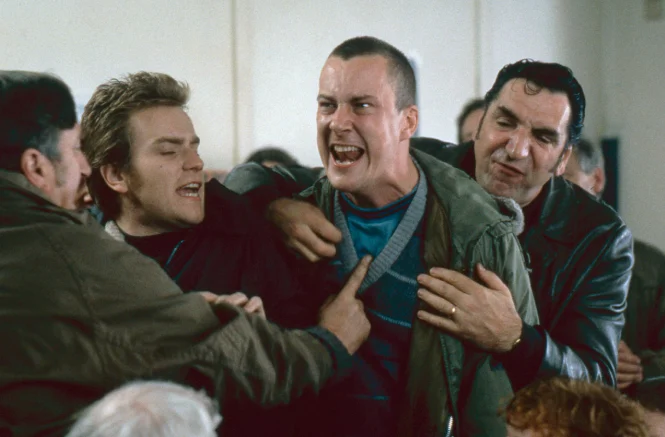
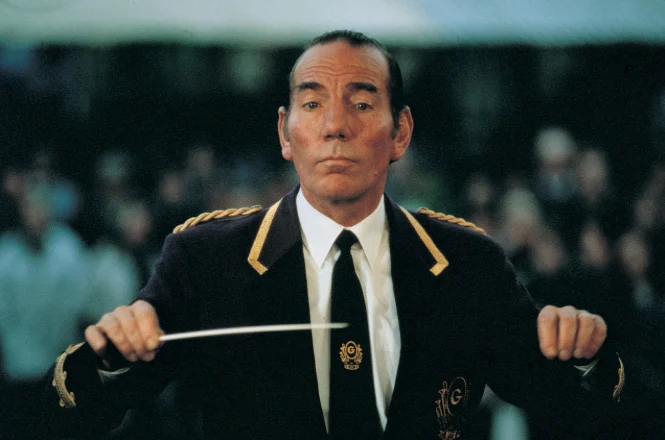
It’s a simmering, hard-earned anger that drives the seemingly cosy narrative engine of Brassed Off and we should continue to listen. Focused on the quiet, proud dignity of brass band leader Danny (Pete Postlethwaite), it crystalises the profound outrage into fabulous music. The balance of earthy humour and pathos is maintained perfectly throughout. The heart of the film remains the stark reality of sudden colliery closure with genuine musicianship providing texture. The actors learned precise musical posture to play alongside members of The Grimethorpe Colliery Band, who in reality were reeling from their own pit’s closure. The music is incredible and its presence in the film is emotional and empowering.
The screenplay works how a musical should, shortcutting exposition. When quietly intelligent Tara Fitzgerald walks into the all-male clique, the jokes could have written themselves, leaving her character drowning in dated misogynistic banter. Accurate but dated; however, in Brassed Off, within minutes of entering the band room she plays the solo on Rodrigo’s Concierto de Aranjuez (“Concerto d’Orange Juice” to the lads), silencing every gob in the place.
Miners will make mucky jokes and Gloria is a narrative problem any other film would have to skirt around until the last act, but here, one short piece of music, she’s in the band, and the film can power on.
The wonderful ensemble cast balances despair with warmth and comic timing. Postlethwaite anchors the film as Danny; Spielberg called him the greatest actor in the world and whenever I see him, I’m reminded that we lost his singular talent too soon. Stephen Tompkinson gives a heartbreaking turn as Danny’s son, with mounting debts reducing him to moonlighting as Mr. Chuckles the clown. His wife (Melanie Hill) embodies grounded, exhausted domestic resilience. Jim Carter (who was much looser in this and The Little Vampire before he buttoned up for Downton Abbey) and Philip Jackson form a brilliant double act. Sue Johnston, Lill Roughley, and Mary Healey capture the fierce communal solidarity of the women’s support groups on the picket lines, while Peter Martin’s smarmy colliery manager is pure corporate callousness.
The primary subject of Herman’s extraordinary script is dignity rather than unvarnished rage. White-hot political fury is there, diffused by dry northern wit. “Dirty money; Prefer brass” covers a musical pun, Yorkshire slang and defiance into a single quip. Herman would explore similar themes in Little Voice, but Brassed Off avoids pity by insisting that its working-class characters should be respected with basic human recognition rather than charity.
VIDEO
This feels like a modest release. Considering the Yorkshire connection, we might even be tempted to call it a bit “tight”. (We didn’t have none of that 4K nonsense in our day, etc). Actually, it’s perfectly formed and of excellent value. The BFI’s 1080p presentation of Brassed Off is struck from an older Film4 master rather than a new scan. It’s a solid image rather than an eye-popping one, and the 35mm source is respected, but the master clearly reflects the mid-tier lineage.
Fine detail shows a clear upgrade over DVD releases, as seen in actual brass and coal muck. However, it’s a bit soft in wide shots. Drab skies give a muted patina, but that just makes the colour pop in the striking band jackets. This is a presentation that prioritises honest, unpretentious filmic realism over modern gloss.
AUDIO
And we can do without that fancy 5.1 as well! In all seriousness, the sound presentation is wonderful in a fully uncompressed 2.0 stereo soundtrack. It preserves the film’s original theatrical sound without an artificial remix. I do think 5.1 would have been off-putting. For a drama built around the wallop of a world-championship brass band, the track does have exceptional range, heft and warmth. Just listen to the solo on ‘orange juice’.
EXTRA FEATURES
I already referenced 40 Years On, but it really does speak to the BFI’s unique ability to subtly support the main feature with something from their astonishing archive. Sometimes, the choice is a stretch, but this is powerful; a bit dull but emphatic, showing how betrayed the industry must have felt. It’s a stark contrast to what would happen.
Mark Herman’s retrospective interview is excellent, offering a frank look at the creative and political inspirations for Brassed Off. Herman reflects candidly on writing the script, the logistics of shooting in Yorkshire and the Grimethorpe Colliery Band’s real-world trauma adding some genuine emotion. Taken with the archive footage and a collector’s booklet featuring essays, the extras add some genuine value to an otherwise modest release.
- Newly recorded audio commentary by Scott Harrison
- Toilet Breaks and Brass Band Shame (2026, 16 mins): a newly recorded interview with writer and director Mark Herman
- Brassing Around (2026, 25 mins): a newly recorded interview with Tara Fitzgerald
- Unusual Ground Floor Conversion (1988, 11 mins): Mark Herman’s early short film starring Adrian Dunbar (My Left Foot, The Crying Game) as a writer who becomes increasingly frustrated by his upstairs neighbour
- Archive interviews (1996, 9 mins): a series of short interviews recorded on location
- Balletomines (Mining Review 7th Year No.12) (1954, 3 mins): a group of burly Yorkshire miners form a ballet-dancing troupe to raise money for charity
- The Big Meeting (1963, 28 mins): Sam Watson, former general secretary of the Durham Miners’ Association, explains the origin of the Durham Gala Day and its purpose
- 40 Years On (1978, 20 mins): the changes in coal mining that have taken place during one man’s working lifetime
- Stills gallery
- FIRST PRESSING ONLY Illustrated booklet featuring a new essay on the film by Johnny Mains, plus writing by the film’s producer Steve Abbott, Mark Herman on his short film Unusual Ground Floor Conversion and on the archive films by Ros Cranston, Patrick Russell and Katy McGahan