


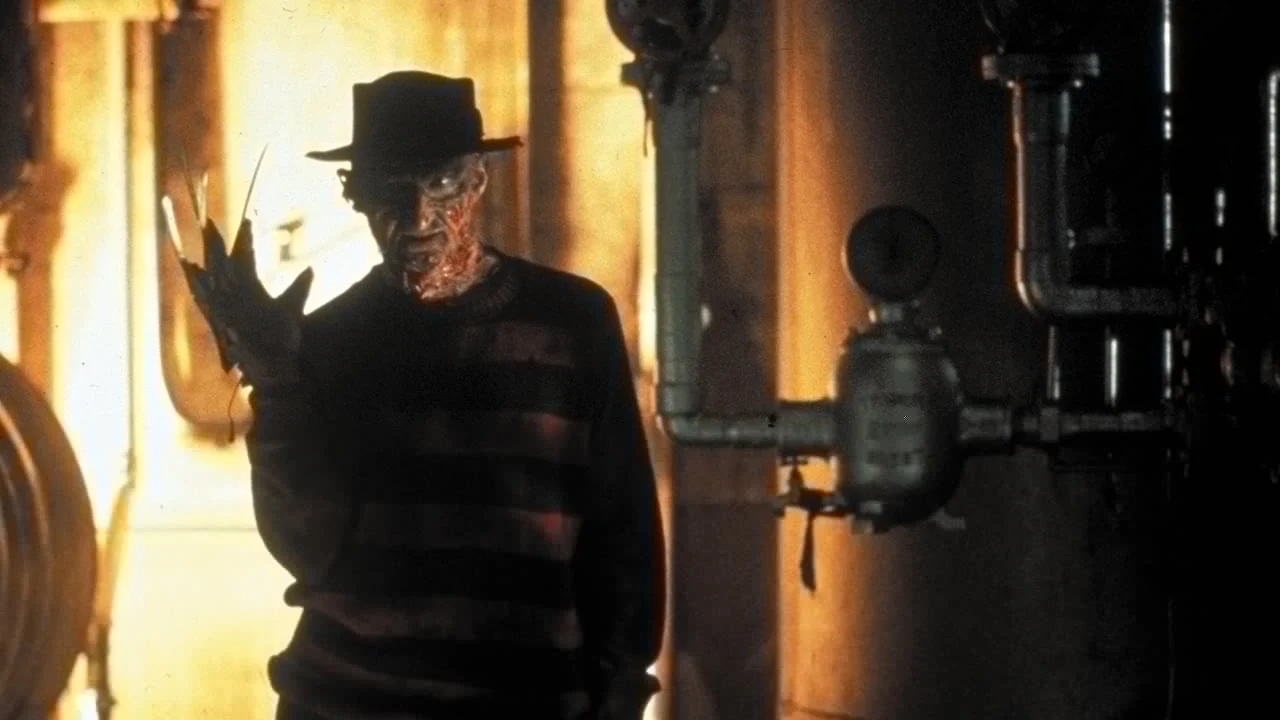
I thought I knew Freddy Krueger. After numerous sequels, television appearances, merchandise and decades of pop-culture references, it would be difficult not to. But returning to the original A Nightmare on Elm Street reveals something slightly weird: Freddy doesn’t feel quite like Freddy. Or, more accurately, he doesn’t feel like the Freddy we eventually came to know.
Freddy’s wisecracks and puns are kept largely to a minimum in the 1984 original. Lines such as “I’m your boyfriend now, Nancy” and “This is God” show the sadistically humorous side of the character that would become much more prominent later. But the tone of the movie remains consistently dark. Contrast that with the third entry onwards and there is a noticeable shift in how Freddy is presented. He gradually becomes less threatening and more entertaining, a transformation that continues right up to 1991’s Freddy’s Dead: The Final Nightmare.
It was not just what Krueger did or the number of puns he delivered. Even his voice sounds noticeably different in the later sequels. Freddy’s voice in the first movie is much more guttural and throaty: rougher, less polished and less performative. By Dream Warriors in 1987, changes were becoming apparent. His delivery gradually became more theatrical and conversational, while Freddy was also given considerably more dialogue. Rhythm and emphasis were increasingly used to land his lines. Overall, the man once described as a “filthy child murderer” became so charismatic that he barely resembled the character we experienced in the first movie.
The original Freddy did not need to keep talking. Later films increasingly allowed his personality and dialogue to dominate scenes. That naturally contributed to the Freddy we remember as a wisecracking character rather than the largely mysterious presence of the original.
Although Wes Craven did not completely conceal Freddy, he used plenty of shadow and low lighting to prevent us from seeing every detail of him. Englund has specifically talked about using the fedora’s shadow to hide his eyes and then revealing them by changing the position of his head. But as Freddy himself became the central attraction in the later sequels, we began to see much more of him. Shocks and scares increasingly took a back seat as the films moved towards a gorier and more comedic kind of thrill ride.
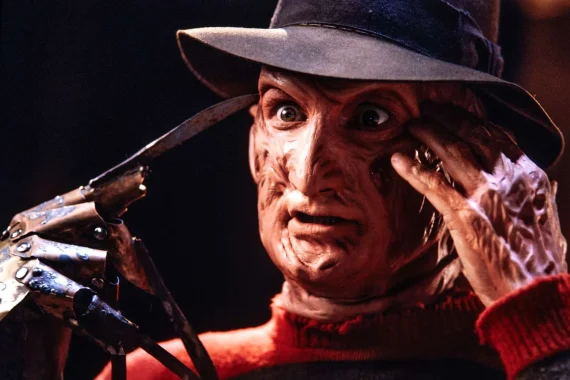
We began by relating to Nancy Thompson, and then to Jesse in Part 2. We were aligned with their worlds and experienced Freddy as the thing intruding into them. We wanted them to win. But as more films were made, the relationship changed. Audiences increasingly began showing up to see Freddy.
Early Freddy is strangely physical: hunched posture, one shoulder dropped by the weight of the glove, exaggerated arm movements, stalking and sudden bursts of movement. Later Freddy often stands more confidently and performs for both his victims and the audience. Another interesting change came through the makeup. Englund has said that the thicker makeup used in the original required him to exaggerate his facial performance. Later versions allowed much smaller movements to register, giving him considerably more freedom to make Freddy expressive.
The original gives us the essential backstory, but the franchise subsequently piles on mythology and explanations. Someone approaching Freddy through decades of sequels and pop culture therefore carries knowledge of the character that simply wasn’t part of the original 1984 experience. Even the television series Freddy’s Nightmares, which began in 1988, opened with a prequel showing how Freddy escaped conviction because of a legal technicality before the parents of Springwood tracked him down and burned him alive. Some of the details differ considerably from the version of events Marge Thompson describes when she finally reveals Freddy’s past to Nancy in the original film.
Freddy eventually existed independently of A Nightmare on Elm Street. Merchandise, Halloween costumes, television, music and countless pop-culture appearances all changed the audience’s perception of Freddy Krueger. Englund recalls Freddy posters becoming enormous sellers and has expressed discomfort that some of the merchandising was aimed at children who were too young.
The Freddy Krueger we remember was not created in one film. He was created across sequels, merchandise and decades of pop culture. Go back to 1984, and underneath all that familiarity is a rather different monster.