



There was something about watching horror on VHS that modern formats can’t quite reproduce. The picture was soft, dark scenes were genuinely dark, and sometimes you weren’t entirely sure what you were looking at. Technically, almost everything about it was worse. For horror, though, perhaps that wasn’t always a bad thing.
Why?
Because the technical limitations of VHS often amplified the terror, horror and what we did and did not see. When DVDs first launched in the US and the UK in 1997, many audiences agreed that they delivered a dramatic advancement in picture and sound quality. Then the Blu-ray format showed even more of an improvement. And, of course, we are now in the middle of the 4K era, where we have reached a level of clarity in movies that we once thought was unimaginable. And because of that, the horror films that we all grew up watching during the 1980s and 1990s do not evoke the same level of apprehension anymore.
1974’s The Texas Chain Saw Massacre has received numerous home video releases, with Second Sight’s 2023 UHD using a 4K scan of the original 16mm camera material. Today, how we watch the film is very different from how cinemagoers in 1974 saw it. The 35mm theatrical versions had much less detail, more grain and a different colour presentation. However, it isn’t all bad! The original 16mm grain remains, and the extra clarity actually makes the stifling Texas heat look more palpable.
The 2024 4K of A Nightmare on Elm Street has been criticised for looking far too clean due to heavy grain removal, which makes the movie lose some of its grit. The HD image of The Evil Dead exposes how cheap-looking the make-up and practical effects can look compared with what the VHS format managed to disguise. Its sequel suffers the same fate, as does a restoration of Poltergeist.
So, it raises a question. Can seeing more make horror less convincing?
I think the evidence shows that this can appear to be the case with certain examples. And that can somewhat interfere with the nostalgia that we all have for these films. They can go from looking campy and charming to looking downright ridiculous and hokey.
The restoration of 1973’s The Exorcist interestingly has a slightly different problem. The digital processing leaves certain textures looking overly clean and smooth, despite the original cinematography possessing deliberate picture softness.
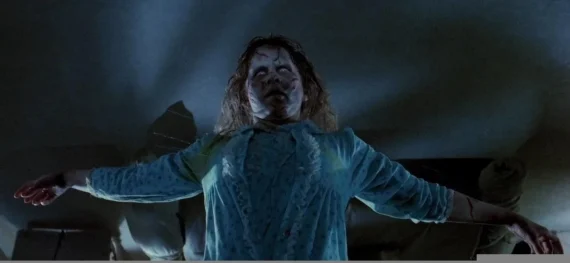
The current video formats that we have now are great for many films. But older horror movies can suffer in particular with those formats. VHS fed our imagination by obscuring details that we could not see, and it gave us a sense of uncertainty. Once a newer format shows what is there, that uncertainty disappears and you are left with a feeling of… “oh.” Conversely, a modern restoration has the ability to show what the director originally intended. So, it isn’t always fair to criticise Blu-ray or 4K simply because we are nostalgic for VHS.
VHS gave us ambiguity, while 4K and Blu-ray give us more detail, more accurate colours and superior sound quality. And perhaps the most ironic thing of all is that VHS probably made horror films scarier by accident.