


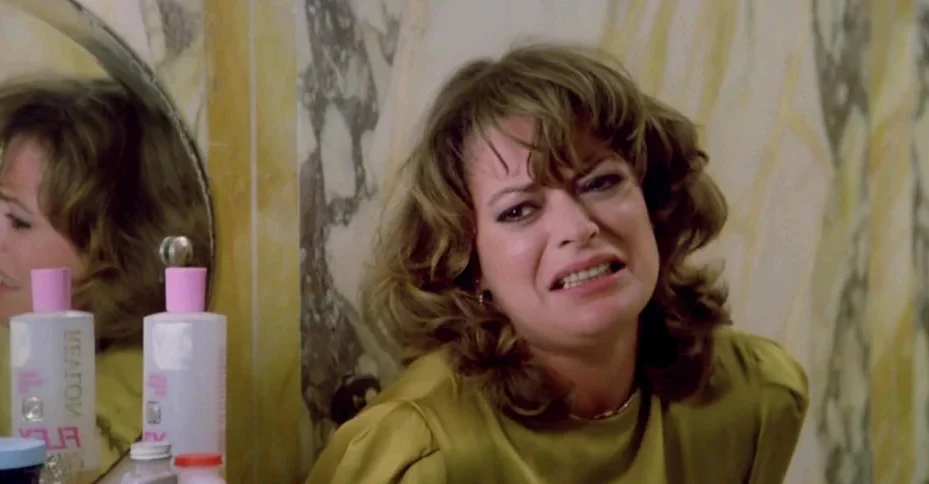

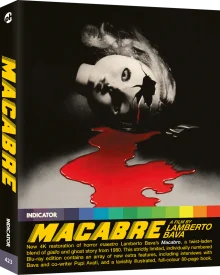
 Director: Lamberto Bava
Screenplay: Pupi Avati, Roberto Gandus, Lamberto Bava, Antonio Avati
Starring: Bernice Stegers, Stanko Molnar, Veronica Zinny, Roberto Posse, Ferdinando Orlandi, Fernando Pannullo, Elisa Kadigia Bove
Year: 1980
Country: Italy
Running Time: 91 min (Macabro), 90 minute (Macabre) and 90 min (Frozen Terror)
BBFC Certificate: 18
Filmmaker Lamberto Bava had been in the industry for around 15 years, working alongside some of the best Italian directors around, before he made his directorial debut. He had worked as an assistant director to his father, the great filmmaker Mario Bava, as well as others like Ruggero Deodato and Dario Argento, and co-directed with his father twice before making his directorial debut in 1980. That film was Macabro (AKA Macabre, AKA Frozen Terror).
Bava was called in to discuss the film, and thought he was going to be the assistant to director Pupi Avati. Yet he was offered the opportunity to direct the film himself, based on a story found in an American newspaper, which I won’t say more about, as it’ll give one of the surprise moments of the film away.
As Roberto Curti points out in his wonderful essay in the accompanying booklet, the story for the psychological thriller, which has minimal gore but is frequently unsettling, was created in a week, the script written in 20 days and the shoot lasted four weeks.
The plot follows Jane (Bernice Stegers), who is having an affair at a boarding house in New Orleans with a man called Fred (Roberto Posse). Her daughter, Lucy (Veronica Zinny), suspects the affair, and randomly kills her younger brother in the bathtub, staging it as an accident, whilst Jane is at the boarding house having sex with Fred.
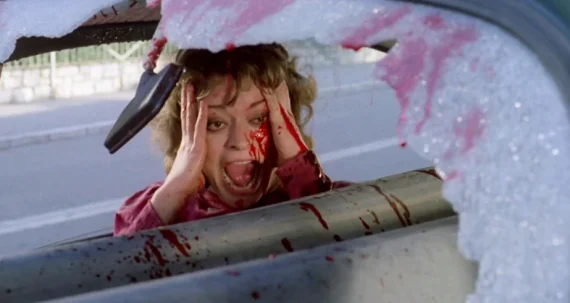
Jane hears the news of her son’s death and Fred drives her home. The couple are involved in a car accident, though, and Fred is impaled by a guardrail which smashes through the windscreen.
A year later, Jane is traumatised by the deaths of Fred and her son and retreats to live at the boarding house, run by the blind Robert (Stanko Molnar). Jane builds a shrine to Fred, passionately calling out his name whenever she is alone in her room. Robert and Lucy suspect something strange is unfolding and investigate Jane’s bizarre behaviour.
The film plays out like a strange, atmospheric and melancholic mystery, for the most part. Blood and gore is kept to a minimum, aside from the aforementioned impaling leaving blood on the windscreen, but then a large gap before the special effects are called on again.
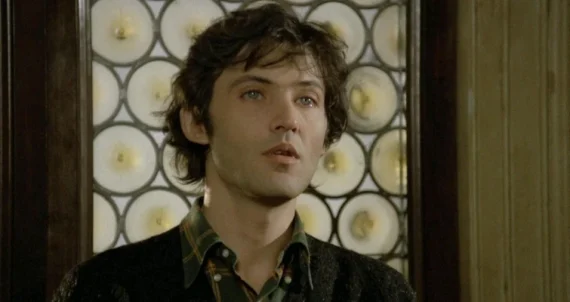
Robert hears noises coming from Jane’s room, like she’s having sex, despite there being no-one else in the boarding house. Robert investigates the room, and so does her killer child Lucy (though Jane is unaware that her son died at Lucy’s hand) who arrives at the boarding house too. But what do they find? And just what is in the fridge in Jane’s room?
Well, it all builds to a shock twist and twisted final moments that I shall not spoil, even though VHS and DVD covers have done so in the past. The movie is much better if you don’t know what the twists are. It’s a slow burn affair, perhaps a bit too slow and drawn out at times, but I enjoyed it overall and found it to be gripping throughout.
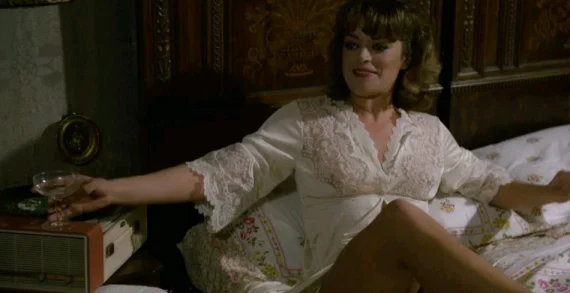
Much of the film plays out in the boarding house, which is an atmospheric set, adding a claustrophobic feel to proceedings, whilst the on-location footage filmed in New Orleans, as well as Gardone Riviera on the western shores of Lake Garda and the village of Crespi d’Adda, creates an evocative sense of place.
It’s all beautifully lensed by director photography Franco Delli Colli who gets the most out of two shots and close-ups, as well as framing scenes to provide maximum depth. It looks stunning throughout thanks to the skill of Delli Colli.
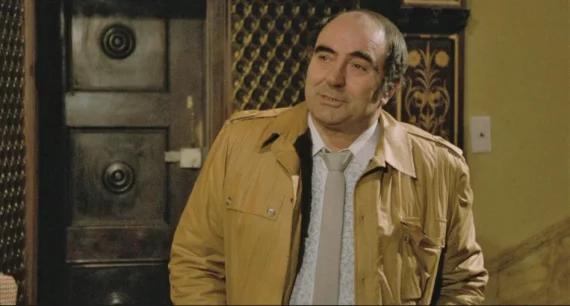
The gruesome moments may be few and far between, but when they come, they’re effective. The car crash is almost a jump scare in that it comes out off the blue, glass shattering when the car hits the barrier.
Other such moments relate to several twists, which I shall not mention. You’ll have to wait more than an hour for the first, and the final moments for the second. Suffice to say, the film earns that 18 certificate at the end. And there’s even a sequence involving soup that makes me wonder if Peter Jackson had been inspired by it for an eerily similar moment in his splatter classic Braindead (1992).
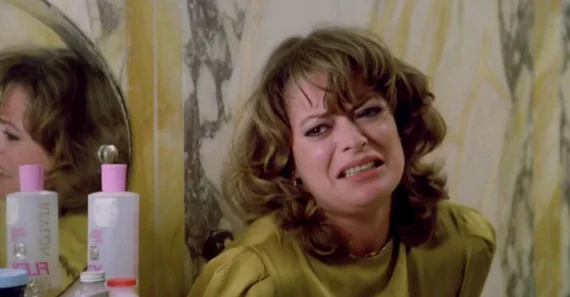
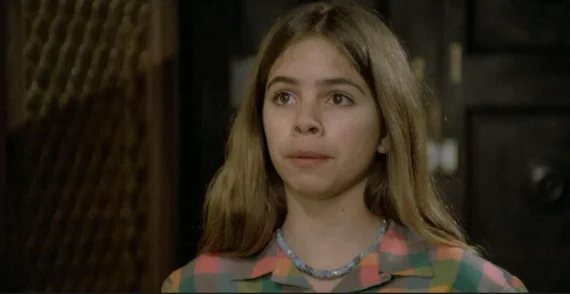
Liverpool-born Stegers gives a fabulous performance as Jane, though is dubbed in both the Italian and English language versions, who has lost her grip on reality following the death of her lover. Her performance swings from being deliriously over-the-top to understated. Posse is also strong as the blind Robert, and Zinny is unhinged as the evil child (aren’t there so many of these in Italian productions?) who kills her brother and then investigates the behaviour of her mother.
There’s a melancholic jazzy score throughout, including a harmonica, by Ubaldo Continiello, which is hummable and enhances the scenes throughout and it’s a pleasure to hear it when it comes to the fore. Yet, some of the most unsettling moments don’t involve music. These include some of the relatively early scenes of blind Robert feeling around Jane’s room – which she doesn’t want anyone to enter – trying to uncover a clue to what’s happening, sometimes only just evading the tenant’s return to the room. The lack of music serves these early scenes well.
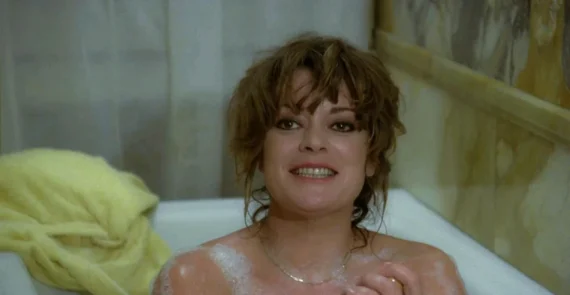
It’s hard to believe Macabre is a debut directorial effort, Bava’s direction is so assured throughout. But then, Bava had been in the film industry for over a decade prior learning from his father, the godfather of modern Italian cinema, as well as the likes of Argento and Deodato.
In closing, Macabre is a deeply atmospheric directorial debut for Lamberto Bava. It starts with a bang before settling into a slow rhythm that uses atmosphere to create tension. The central mystery plays out at a deliberate pace before Bava unleashes a strong finale and a killer last-minute twist.
Film: 


Macabre is released on separate limited edition 4K UHD and Blu-ray editions in the UK by Powerhouse Films on their Indicator label on 29 June 2026. I watched the 4K UHD version. The release was co-produced by Powerhouse Films and Vinegar Syndrome, who will be releasing their own version of the film in the United States with the same restoration and extra features.
The brand new 4K HDR restoration from the original negative by Powerhouse Films and Vinegar Syndrome is superlative, with a very natural filmic quality and colour scheme, and rich fine detail. It’s a great transfer that looks fantastic throughout and the also sounds brilliant.
The disc contains three versions of the film; the original 91-minute Italian version, Macabro, and the 1-minute shorter international version Macabre and US edition Frozen Terror. Each look great with subtle differences. For me, the original Italian version is the best.
Indicator limited edition 4K UHD special features:
Brand-new 4K HDR restoration from the original negative by Powerhouse Films and Vinegar Syndrome
4K (2160p) UHD presentation in Dolby Vision (HDR10 compatible)
Three presentations of the film: Macabro, the Italian theatrical version; Macabre, the international theatrical version; and Frozen Terror, the US theatrical version
Audio commentary with film historians Eugenio Ercolani, Troy Howarth, and Nathaniel Thompson (2026)
Interview with director Lamberto Bava (2026)
Interview with producer Antonio Avati (2026)
Interview with writer Pupi Avati (2026)
Critical appreciation by Italian genre film expert and Macabre aficionado Mark Thompson Ashworth (2026)
Pierpaolo De Sanctis, the founder of Italian soundtrack specialists Four Flies Records, explores the oeuvre of composer Ubaldo Continiello (2026)
On-stage interview with Bava, filmed after a Macabre screening at the 2025 World Wide Weird cult cinema event held in London
Original theatrical trailer
International theatrical trailer
New and improved English translation subtitles
New and improved English subtitles for the deaf and hard of hearing
Limited edition exclusive 80-page book with a new essay by Roberto Curti, archival interviews with director Lamberto Bava and writer-producer Pupi Avati, an overview of Italian critical responses, and full film credits
World premiere on 4K UHD
Limited edition of 5,000 individually numbered units (4,000 4K UHDs and 1,000 Blu-rays) for the UK
The film was previously released on Blu-ray in the UK by 88 Films. That edition featured different extras – a different interview with Bava and an audio commentary by Troy Howarth and Nathaniel Thompson, plus a booklet essay by Rachael Nisbet.
The new edition is definitive and contains a wealth of new material – all of which is produced by Eugenio Ercolani and all of which is excellent.
The new audio commentary with film historians Ercolani, Howarth and Nathaniel plays over the international cut Macabre. If you’ve listened to a commentary with the trio before, you’ll know that you’ll be in for a real treat. They complement each other really well, each bringing something different and delivering a wealth of information and detail in a very entertaining way. They touch on the setting, the promotion of the movie, key moments, the production, the twists and so much more. It’s absolutely brilliant. If you only have time for one extra, make it this one.
The new interview with director Lamberto Bava runs for 17 minutes and is fantastic. He opens by talking about his father and his transition from black and white films to colour, his father’s relationship with Dario Argento and, of course, his directorial debut Macabre. Like all the interviews on the disc, produced by the outstanding Ercolani, it is first class.
Next, we have a new interview with producer Antonio Avati, which runs for 18 minutes. He talks about his brother, his introduction to ‘scary’ films, producing Macabre, thoughts on Dario Argento and plenty more besides. It’s another very strong interview, which I enjoyed immensely.
Another new interview is with writer, and a director in his own right, Pupi Avati. This one runs for 10 minutes, and opens with Avati sharing how he wrote some scripts because of the travel perks, for example allowing him to travel to America. He talks about some of his writing gigs, such as Profondo Rosso (AKA Deep Red, 1975) for Dario Argento, his masterful The House with Laughing Windows (1976) and plenty more. It’s a dense, info-packed interview.
An archival interview from 2016 with co-writer Roberto Gandus is also good, with him sharing insights into his career, working on the script for the film and with his colleagues, and the key role of a child in the movie.
Up next is a 23-minute critical appreciation by Italian genre film expert and Macabre aficionado Mark Thompson Ashworth, again produced by Ercolani, which is really, really good. Thompson Ashworth opens with his recollections of seeing the film for the first time – via a VHS video release in the UK, considered controversial as its cover gives away one of the key twists in the film. He shares snippets from an interview he did with star Stegers and some wonderful thoughts on the film, as well as anecdotes from other chats he had with some of those involved in the Italian film industry. It’s a marvellous piece.
Also produced by Ercolani is a 22-minute interview with Pierpaolo De Sanctis, the founder of Italian soundtrack specialists Four Flies Records, who explores the oeuvre of composer Ubaldo Continiello. De Sanctis shares the conception of his record label and provides a warm and informative look at Continiello, who composed the score for Macabre. It’s another great new piece by Ercolani.
The main final on-disc extra runs for an hour and is a recording of an on-stage interview that Ercolani did with Bava, which was filmed after a Macabre screening at the 2025 World Wide Weird cult cinema event held in London. Ercolani is a considerate interviewer who has interviewed Bava multiple times, so has a strong connection with the director throughout, helping to bring us a really insightful interview that covers lots of ground. A fantastic inclusion.
The original two-minute Italian theatrical trailer includes some of Continiello’s score, shares some of the early moments of the film, as well as some of the final ones, though thankfully doesn’t give away the plot twists.
The image gallery contains almost 40 lobby cards, posters and video box covers.
The booklet is a typically beautifully appointed one by Indicator. It is lavishly illustrated with stills and posters from the film and other productions involving Lamberto Bava. It opens with a fantastic new piece by Italian critic and historian Roberto Curti who covers the conception and background to the film and looks at its themes and links to other films. It’s a great primer for the movie. A wide-ranging conversation with director Bava from 1988 follows, and it is a fascinating piece. It covers his father, Mario Bava’s influence on him, working on his dad’s films, memories of working with Pupi Avati, author Stephen King, nods to 1950s films in his works and much more. I particularly enjoyed his comments about several of his other films, Demons (1985) and Delirium (1987). Next, we have a 2007 interview with Pupi and Antonio Avati. It’s a good interview that covers the likes of The House with Laughing Windows, a film I adored. A few excerpts from reviews close out an outstanding booklet.
In closing, the new Indicator release of Lamberto Bava’s directorial debut Macabre is fabulous. The transfer and extras were co-produced with Vinegar Syndrome, who will be releasing their own version of the same disc in the US. The film looks and sounds wonderful throughout, three cuts are provided, and there are hours of brilliant new extras. All the new extras were produced by the great Eugenio Ercolani, whose name is a sign of high quality. He is one of a trio – with Troy Howarth and Nathaniel Thompson – who provide a fantastic new audio commentary, while Ercolani has produced a number of insightful new interviews with the likes of Bava, co-writer Pupi Avati and his producer brother Antonio Avati. Ercolani has also produced excellent appreciations of the film and composer, which are included on the disc, as is a marvellous hour-long interview that Ercolani moderated with Bava from a 2025 film festival in London. The accompanying 80-page booklet is also a first-class one. The film itself is a highly assured directorial debut with several shock moments that are preceded by a slow burn, atmospheric mystery. Highly recommend.
Disc/package: