


 Director: John Woo
Screenplay: Barry Wong Ping-Yiu, Gordon Chan, John Woo (uncredited), Chan Hing-Ka (uncredited)
Starring: Chow Yun-Fat, Tony Leung Chiu-wai, Anthony Wong Chau-Sang, Teresa Mo Shun-Kwan, Philip Chan Yan-Kin, Phillip Kwok Chui, Kwan Hoi-San, John Woo
Country: Hong Kong
Running Time: 128 min
Year: 1992
BBFC Certificate: 18
Arrow Video aren’t the only company licensing Golden Princess library titles from Shout! Studios. Australian label Viavision are also releasing these through their Imprint Asia range. One of these is John Woo’s classic Hard Boiled. I got my hands on a copy to see how it differed from the Arrow disc.
I’m going to reproduce my review of the film from my Arrow review, but will discuss the differences between the releases further down the page.
Going into the early 1990s, Woo was unhappy about continuing to glorify the Triads at a time when crime was a big problem in Hong Kong. So he decided to focus on a cop this time, influenced by American thrillers like Dirty Harry and Bullitt.
I’ll borrow Arrow’s press blurb to describe the story; “Iconic actor Chow Yun-Fat (City on Fire) stars as Tequila, a gung-ho cop working to bring down Johnny Wong (Anthony Wong, Infernal Affairs), the villainous triad boss who maintains a stranglehold on Hong Kong’s illegal gun trade. Johnny attempts to recruit Ah-Long (Tony Leung, Bullet in the Head), an assassin from a rival syndicate, just as the insubordinate Tequila gets taken off the case. Taking justice into his own hands, Tequila tracks Ah-Long down and uncovers an intricate web of deception that threatens to boil over into all-out war.”
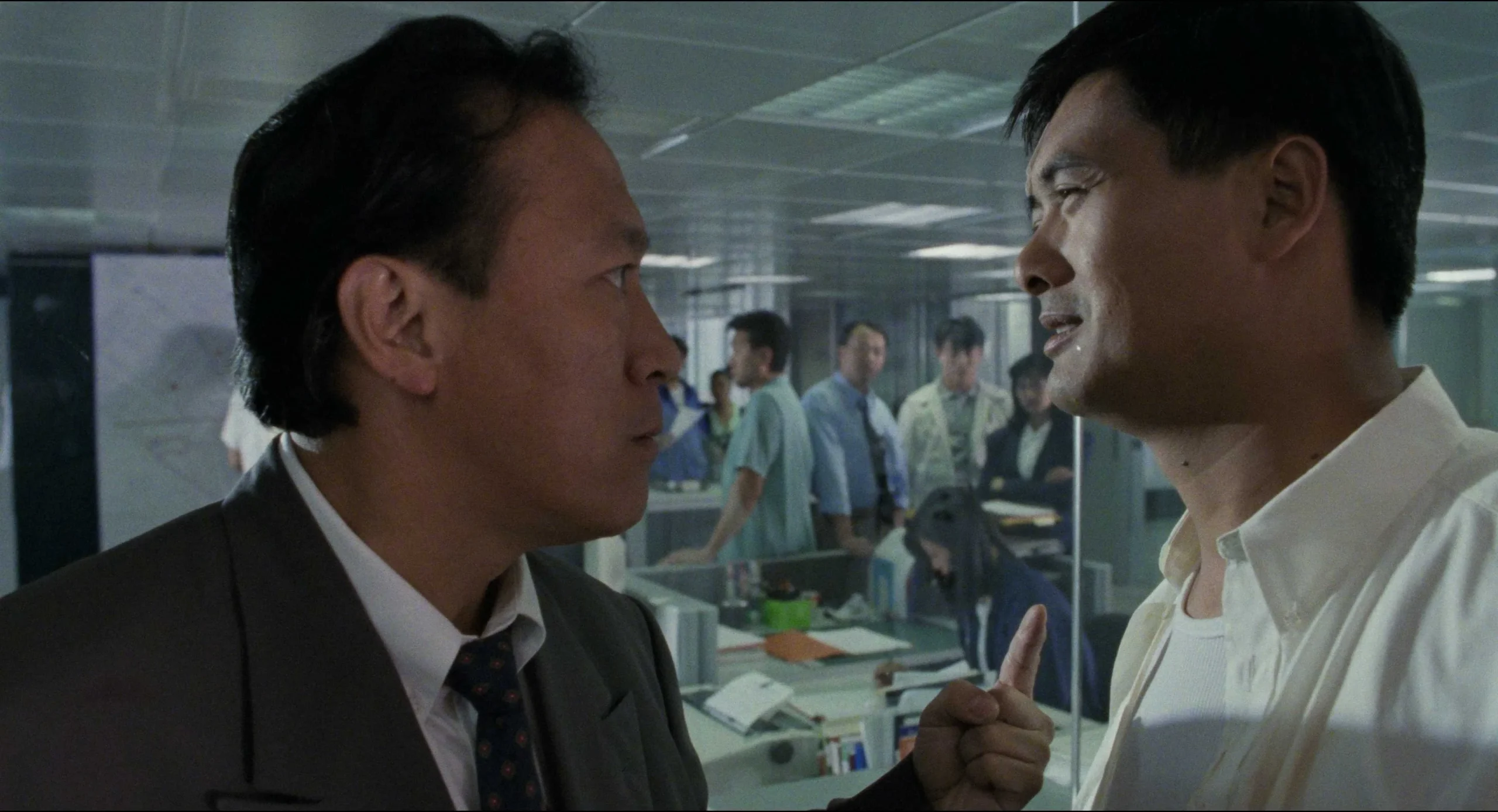
The original concept for Hard Boiled (a.k.a. Lat sau san taam – or ‘Spicy Hand Magic Cop’, literally translated into English), was based on the true account of a man (to be played by Tony Leung) who was poisoning babies through baby food. Chow Yun-Fat was going to be the Harry Callahan-like cop trying to take him down. This was felt to be too dark and unpalatable, though, particularly for its popular stars and its director, who was already set to be making his Hollywood debut following the production.
The film’s pre-production continued to face problems when writer Barry Wong tragically died of a heart attack, leaving the script unfinished. Gordon Chan was brought in to work on it, with uncredited support from John Woo and Chan Hing-Ka, but Woo decided to move into production before it was finished.
Even after the script concept changed, Woo still originally planned to do something more gritty and less stylised. However, once production started, Woo couldn’t help himself and reverted to his usual stylish, gleefully over-the-top approach.
And I’m glad he did, because it’s so damned good.
For such a visually stunning and expertly produced action film, loaded with stunts, it’s surprising to hear that much of it was done on the fly, so to speak. On top of starting shooting without a finished script, they came up with a lot of ideas on set. Woo says he never storyboarded anything when working in Hong Kong, either. It was all in his head.
They actually shot the opening teahouse scene before the scriptwriting had even started. The location was closing down, and they had the chance to use it, so just jumped on it, coming up with a generic situation they could slot into the story at a later date.
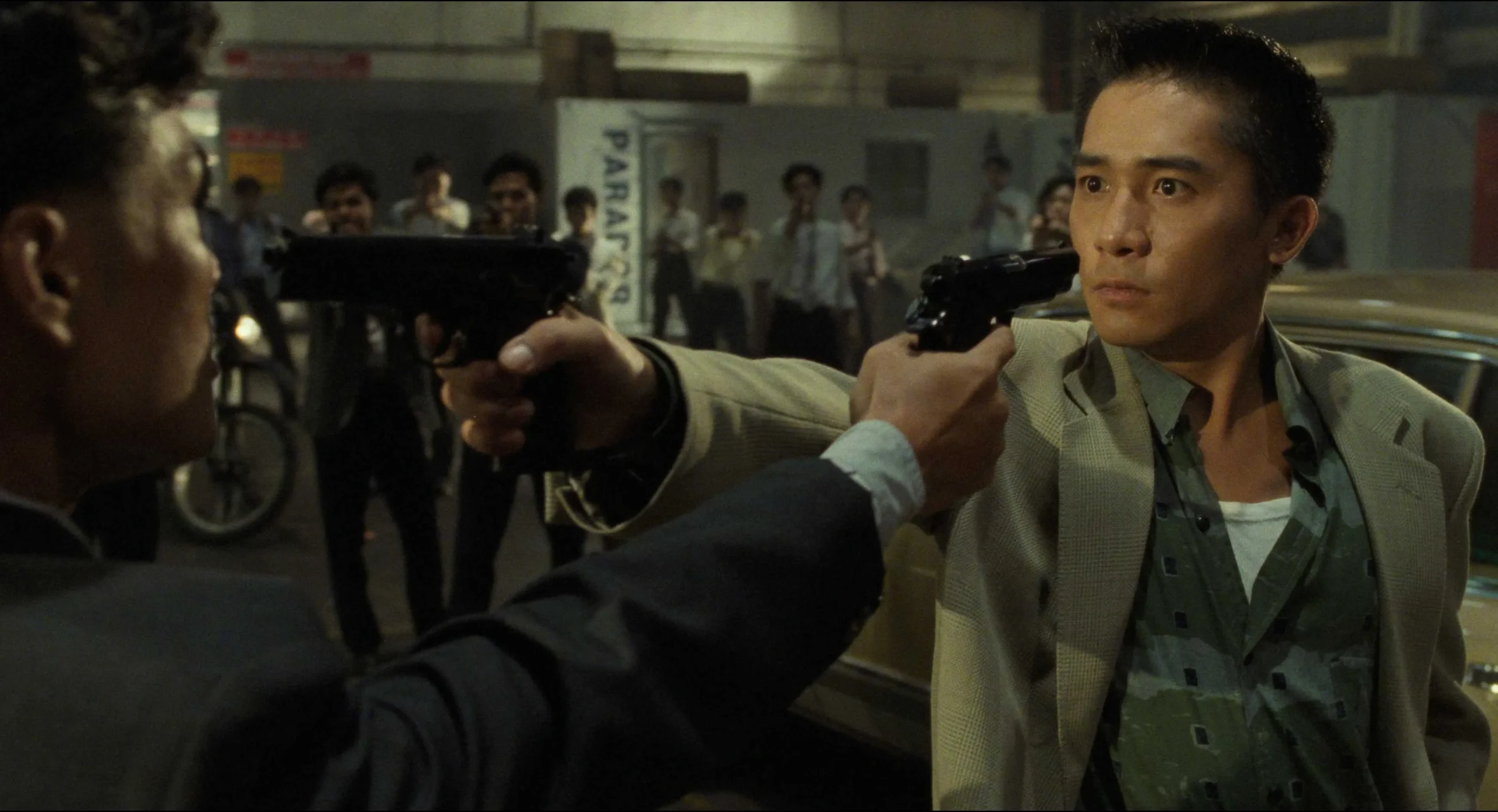
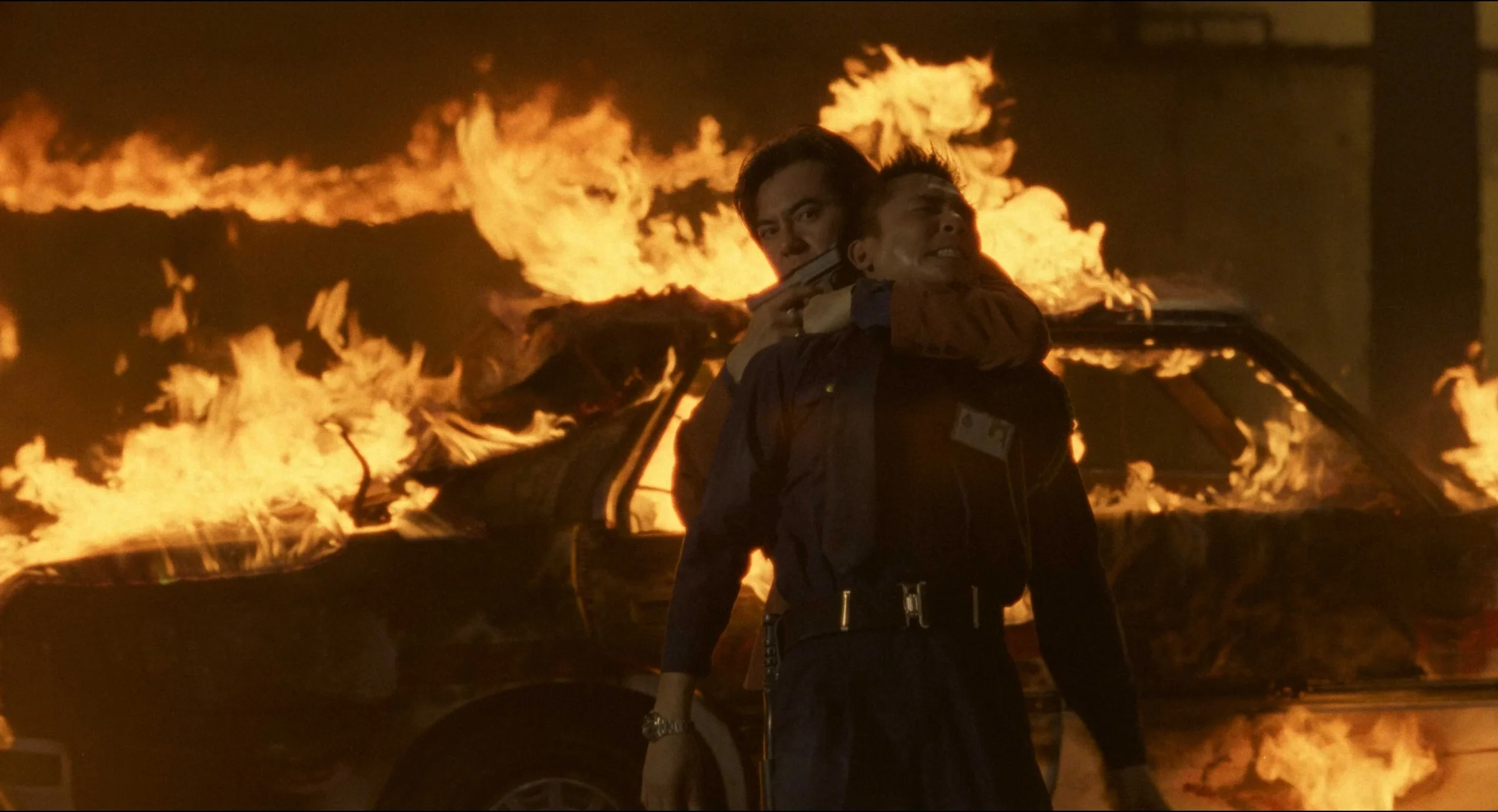
It just goes to show how much of a genius Woo is as a filmmaker. There’s a blend of kinetic energy and balletic grace that no one else has pulled off to the same degree. The camera moves so beautifully, the use of light and smoke is gorgeous, and the editing is masterful (done by Woo and a trio of Hong Kong post-production legends), blending slow-motion with fast-paced carnage and perfect pacing. Amidst all the chaos on screen, you can always keep a handle on what’s going on, too. There’s none of the rapid-fire shaky-cam nonsense that just gives you a headache.
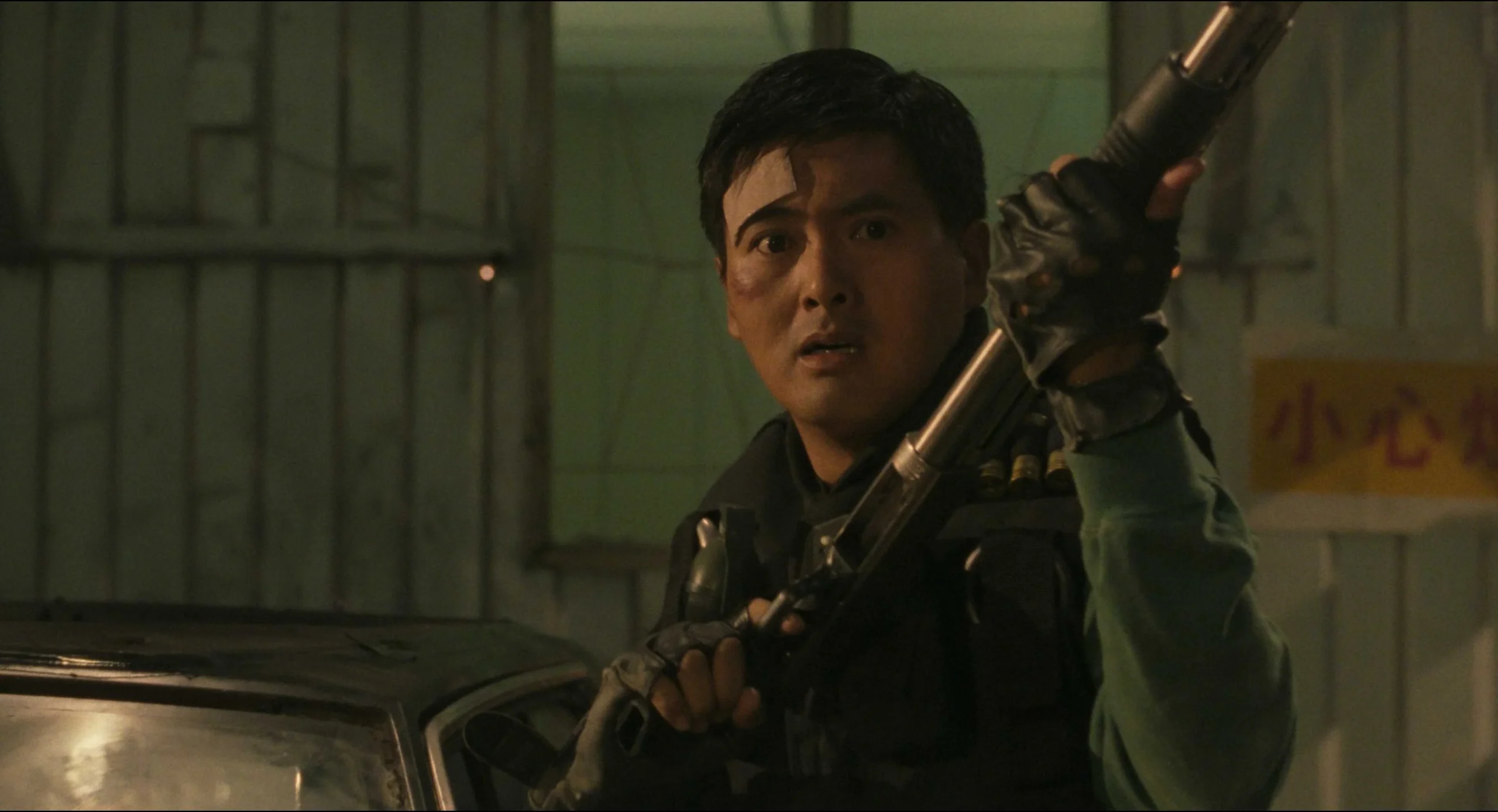
Woo also knows how to add texture to an action scene, to give it greater impact. Not only does he go heavy on the squibs, but he also ensures there are sparks and debris flying everywhere to add to the intensity of his action scenes.
You also get a stunning 5-minute long-take in the film. It doesn’t sound like a long time, but with all the violence on screen, it’s a remarkable achievement. Plus, I love the fact that the elevator we go into partway through the scene was a dummy, so the crew had to quickly reorganise the set whilst the doors were shut, so that it looked like a different level once the doors reopened, 20 seconds later.
The action is expertly choreographed by Phillip Kwok and Bruce Law. There are some incredible stunts, and the actors and stunt performers regularly throw themselves around the sets in dynamic, inventive ways.
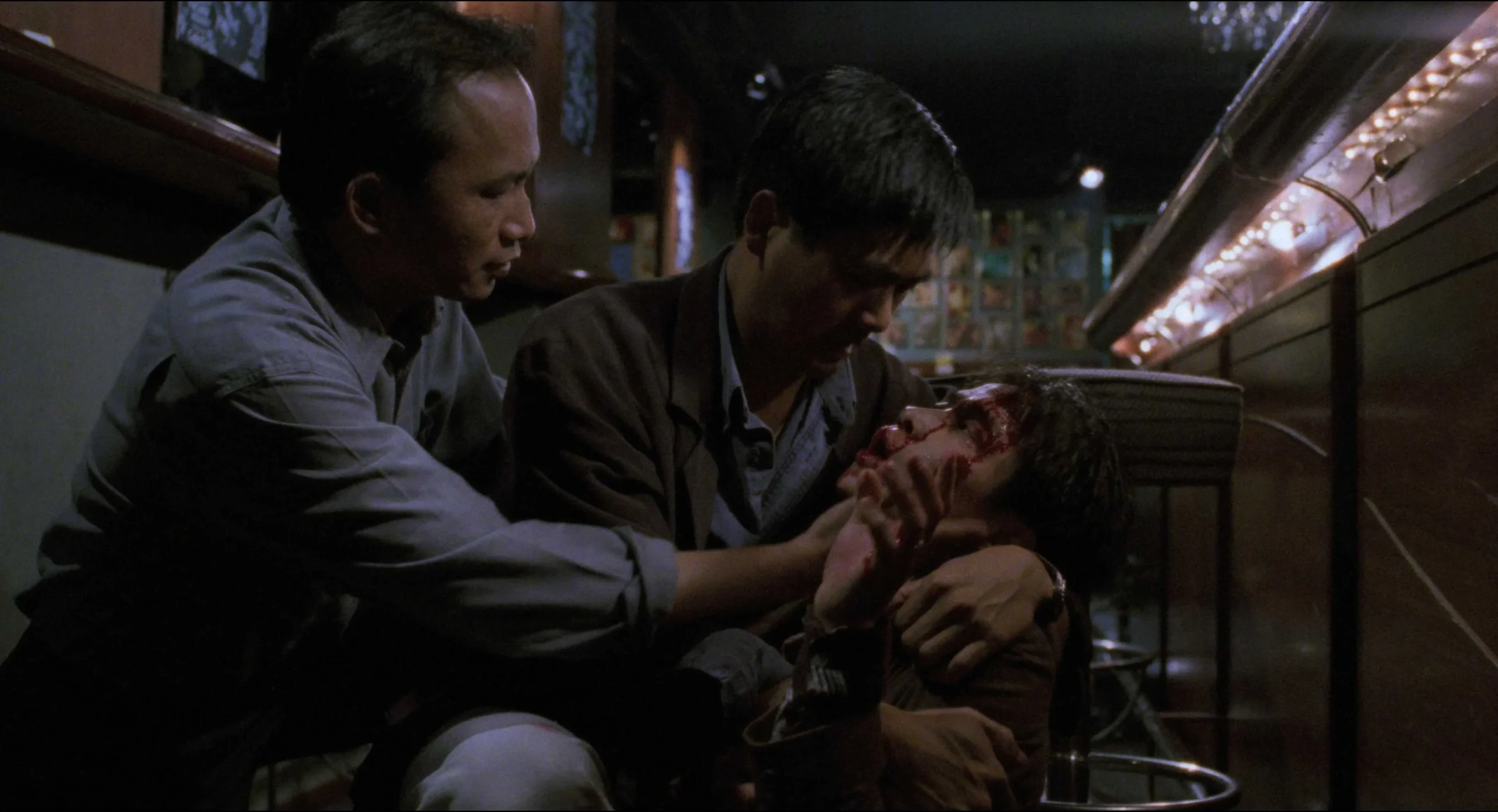
There’s more to Hard Boiled than just the violence, though. Whilst the undercover cop concept is not new to cinema, it makes for effective drama. Woo was mentored by Chang Cheh, and his cherished theme of brotherhood rubs off. Whilst Tequila and Ah-Long don’t get as close as some of Woo’s heroes, they still develop a friendship, and the bonds they share with other male characters are vital catalysts to their arcs.
This gives Leung, in particular, quite a meaty role to work with. His character gets close to the mob boss whose family he has infiltrated, and he is forced to kill him at the film’s turning point. Leung plays this with quiet intensity.
Chow is as charismatic as ever, too, and Phillip Kwok is great as ‘Mad Dog’, Johnny Wong’s brutal right-hand man, who, nevertheless, has morals of his own.
All-in-all, Hard Boiled is loaded with stunningly well shot, edited and choreographed action, and backed up by strong performances and character work. This all results in, quite possibly, the greatest action movie of all time – or at least top 10. No matter how often I watch it, I always find myself in awe of how incredible it is.
Film:
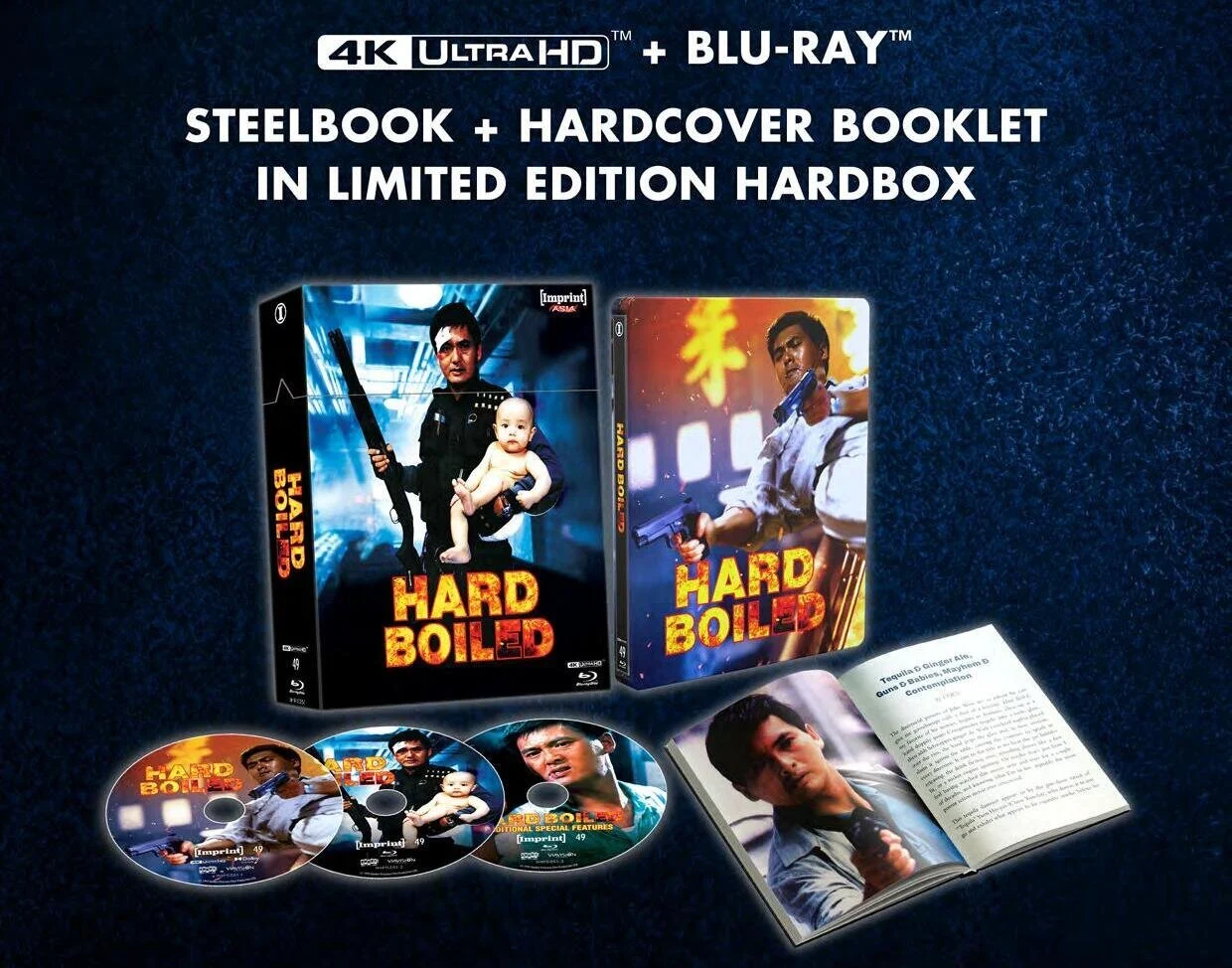
Hard Boiled is out now on 4K UHD + Blu-ray SteelBook with a Hardcover Booklet in a Limited Edition Hardbox, courtesy of Imprint Asia (a Viavision label). I might be wrong, but I suspect the Imprint transfer is the same as on the Shout disc. The Imprint UHD looks a touch brighter than Arrow’s and has a slightly yellowy-greenish tinge to it. What you prefer is down to personal preference, to be honest. I can’t say which is closest to Woo’s original vision. I think I prefer the brighter look of the Imprint disc, but the colour of Arrow’s. I’ve used screengrabs from the Imprint UHD throughout this review and below I have compared a couple of these screengrabs with the same frames on the Arrow disc.
Imprint UHD
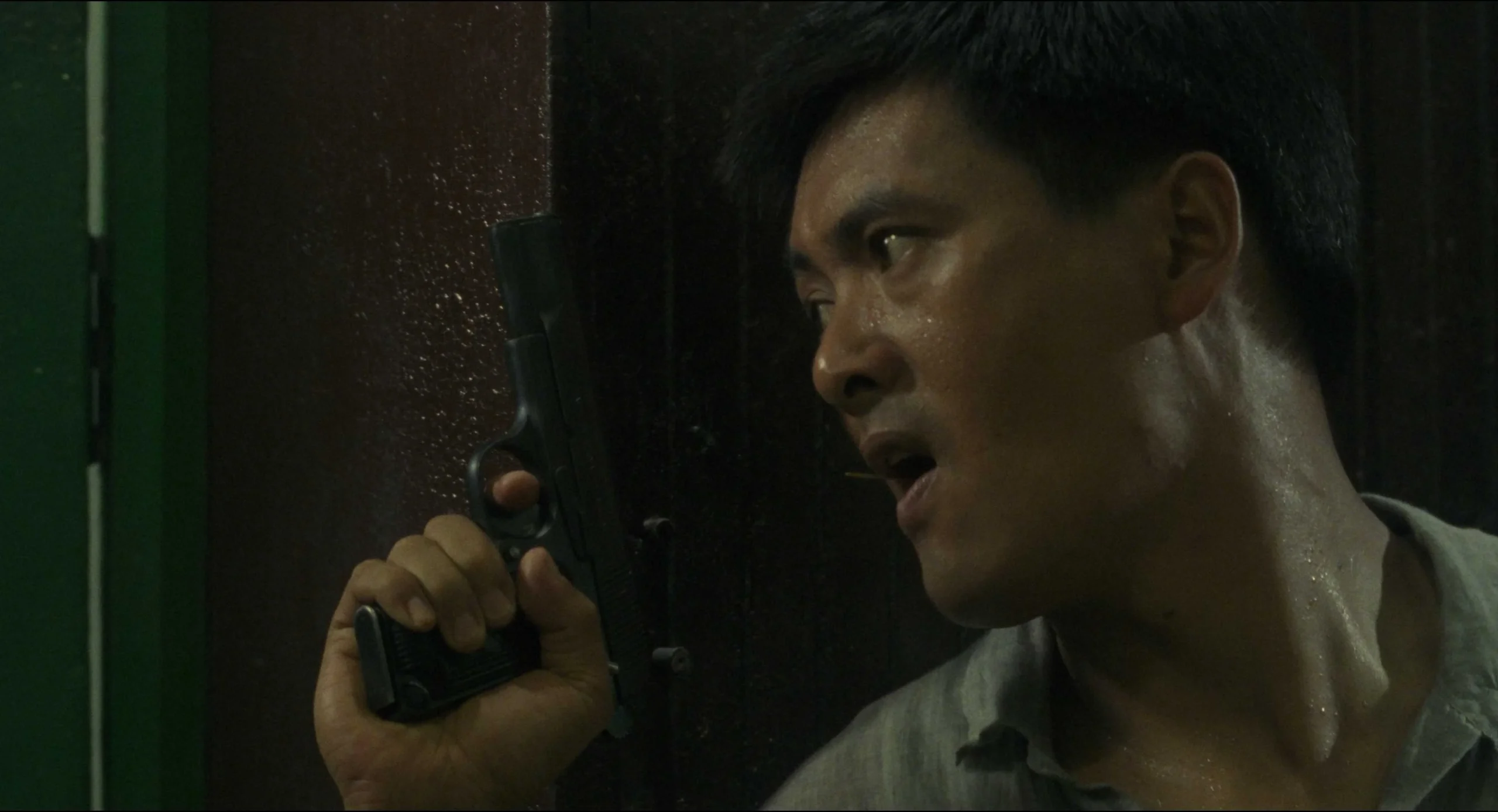
Arrow UHD
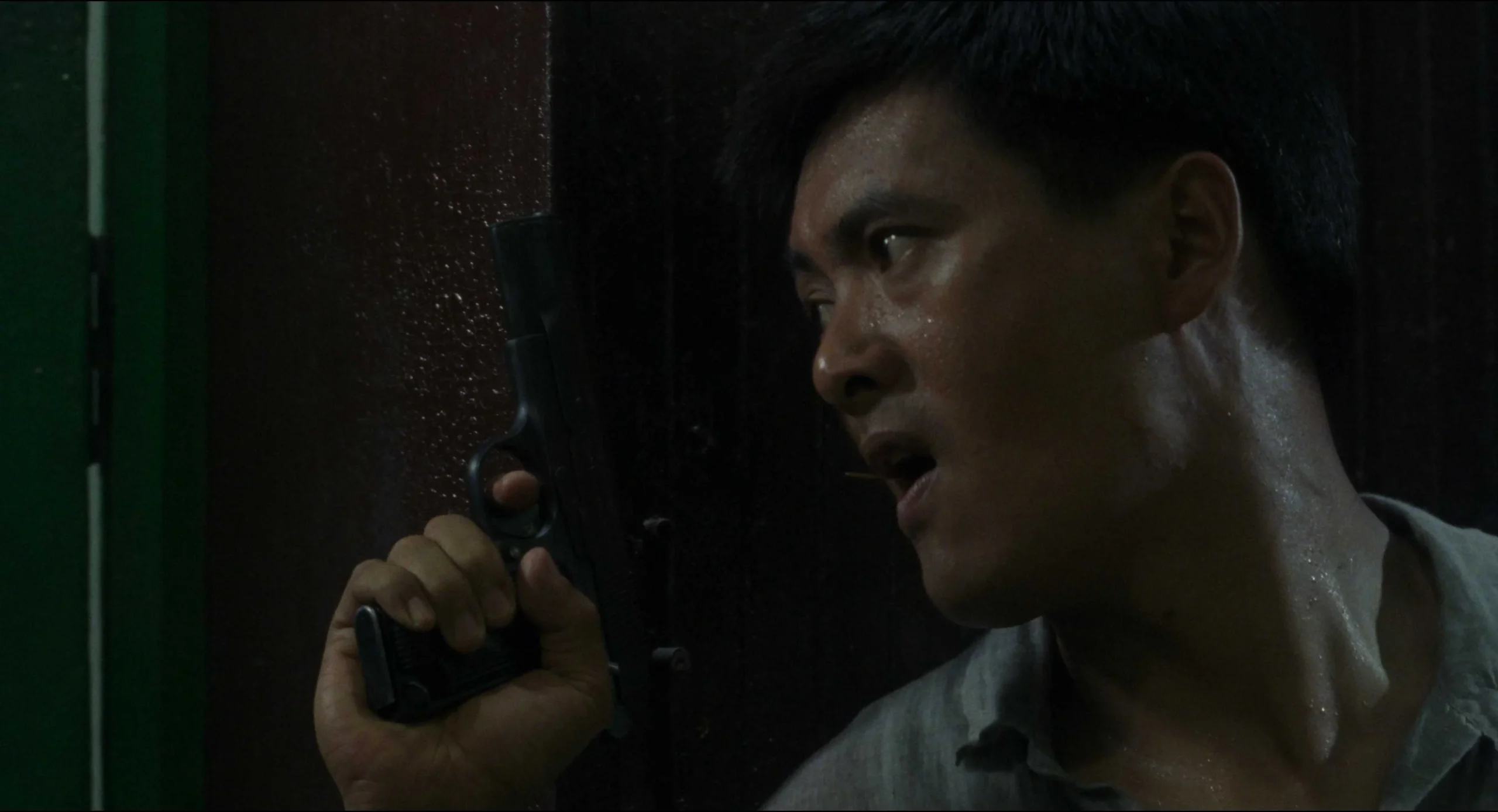
Imprint UHD
Arrow UHD
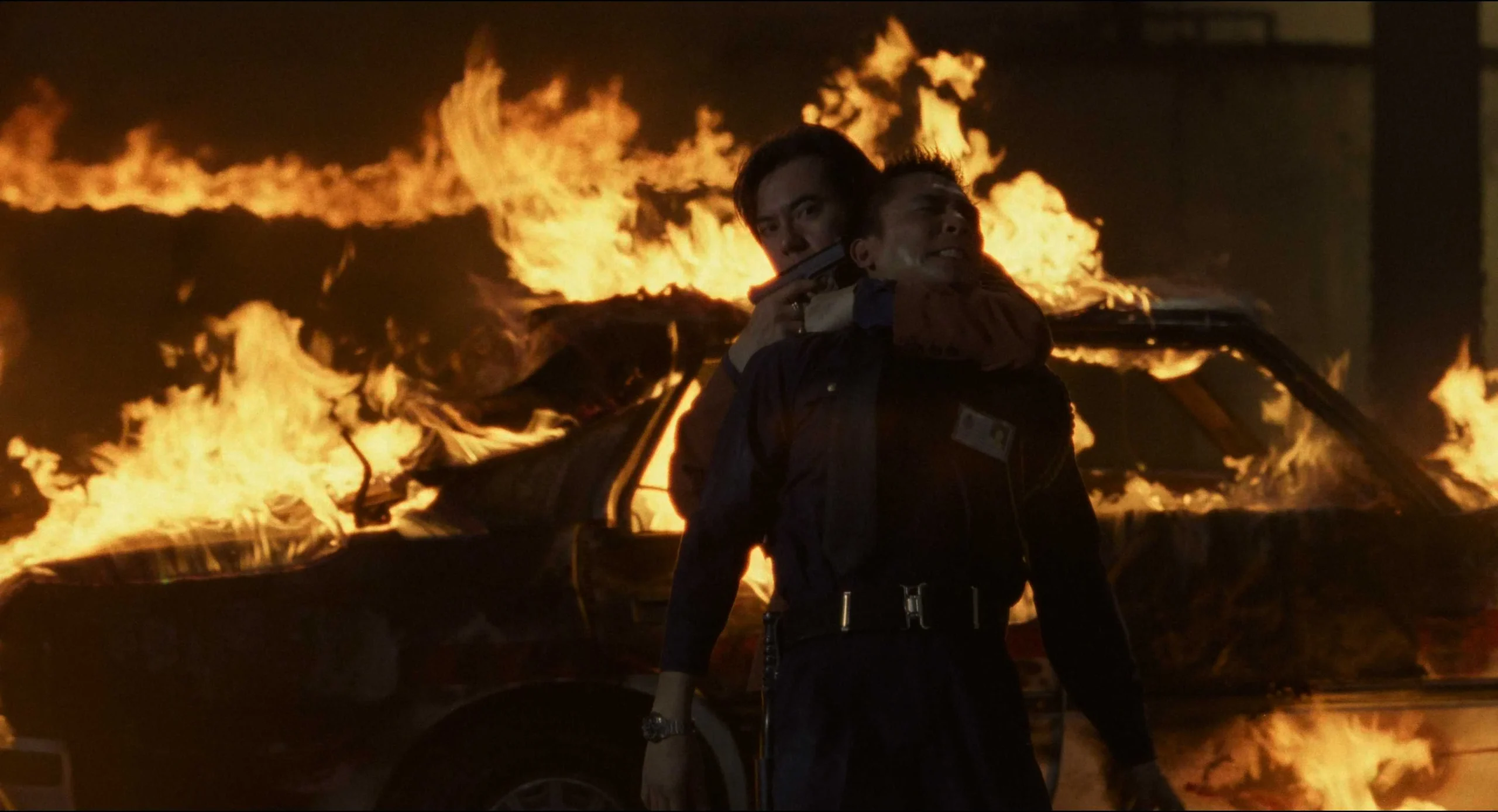
I believe the audio options are the same as on the Arrow disc. The Cantonese DTS-HD 5.1 Surround track sounded great to me.
Special Features & Technical Specs:
Disc One – 4K UHD
– 2160p Ultra high-definition NEW Dolby Vision / HDR10 presentation on 4K UHD, restored from the original camera negative
– NEW Audio commentary by director John Woo and film journalist Drew Taylor
– NEW Audio commentary by film historian Frank Djeng
– Audio commentary by director John Woo, producer Terence Chang, filmmaker Roger Avary, and critic Dave Kehr
– Audio commentary by director John Woo and producer Terence Chang
– Audio: Cantonese LPCM 2.0 Mono + Cantonese DTS-HD 5.1 Surround + Mandarin DTS-HD 5.1 Surround + English LPCM 2.0 Mono
– Aspect Ratio 1.85:1
– Optional English Subtitles from a NEW translation
Disc Two – Blu-ray
– 1080p High-definition presentation on Blu-ray of the 4K restoration
– NEW Audio commentary by director John Woo and film journalist Drew Taylor
– NEW Audio commentary by film historian Frank Djeng
– Audio commentary by director John Woo, producer Terence Chang, filmmaker Roger Avary, and critic Dave Kehr
– Audio commentary by director John Woo and producer Terence Chang
– Audio: Cantonese LPCM 2.0 Mono + Cantonese DTS-HD 5.1 Surround + Mandarin DTS-HD 5.1 Surround + English LPCM 2.0 Mono
– Aspect Ratio 1.85:1
– Optional English Subtitles from a NEW translation
Disc Three – Blu-ray Special Features
– 131-minute Extended Taiwanese Cut
– NEW Violent Night – interview with director John Woo
– NEW Boiling Over – interview with actor Anthony Wong
– NEW No Time for Failure – interview with producer Terence Chang
– NEW Hard to Resist – interview with screenwriter Gordon Chan
– NEW Boiled to Perfection – interview with screenwriter Chung Hang Ku
– NEW Body Count Blues – interview with composer Michael Gibbs
– NEW Hong Kong Confidential – interview with author Grady Hendrix
– NEW Gun-Fu Fever – Interview with author Leon Hunt
– NEW Chewing the Fat – Interview with film historian Lin Feng
– Two archival interviews with John Woo
– Archival Q&A with John Woo
– Archival interview with Philip Chan
– Archival interview with Terence Chang
– Archival interview with Philip Kwok
– Archival interview with actor Tony Leung
– Location featurette
– Deleted and Extended Scenes
– Trailers
– Image Gallery
Hardback Booklet
– An exclusive 60-page hardcover booklet featuring production stills and brand NEW essays by Panos Kotzathanasis and VERN.
Most of the Arrow on-disc extras also appear on the Imprint release, but there a few differences. Most notably, Imprint’s release includes the 131-minute Extended Taiwanese Cut of the film. This is not in a remastered, polished form, and is presented with old burnt-in dual English and presumably Taiwanese subtitles. However, it’s wonderful to have the cut included.
There are four commentaries on the disc. Woo appears in three of the tracks, recorded at different periods of time. Drew Taylor joins the director for the newly recorded commentary, which is the only Woo track that I listened to (I didn’t have time to listen to four commentaries). The filmmaker is advancing in years, so his voice is a little grizzled and hard to make out in places, but he still has plenty to say about his experiences making the film.
Frank Djeng goes solo for another one of the commentaries. He’s always a safe pair of hands, and this is possibly one of his strongest tracks. He discusses the background of the film and its cast and crew, as well as giving a lot of cultural context. This latter aspect is particularly useful to viewers like myself who have no East Asian heritage, helping us understand some of the wordplay and other references that would have otherwise passed us by.
There’s a recent interview with Woo which runs for 41 minutes. He talks about making Hard Boiled in great detail. A lot of what he says appears elsewhere, but it’s nice to have something more focused and polished than the commentaries, for those without the time or patience for all of them.
Dr. Lin Feng talks about Chow Yun Fat in an essay. She also talks about how she feels the emotional intensity and characters draw people to the film, beyond the action.
There’s also a new interview with composer Michael Gibbs. I enjoyed this. He talks about how different the process was from most of the scores he’s done. He also discusses his approach to the main themes of the film.
Another new interview is with producer Terence Chang. This is a good one, covering the genesis of the film as well as telling stories about the production.
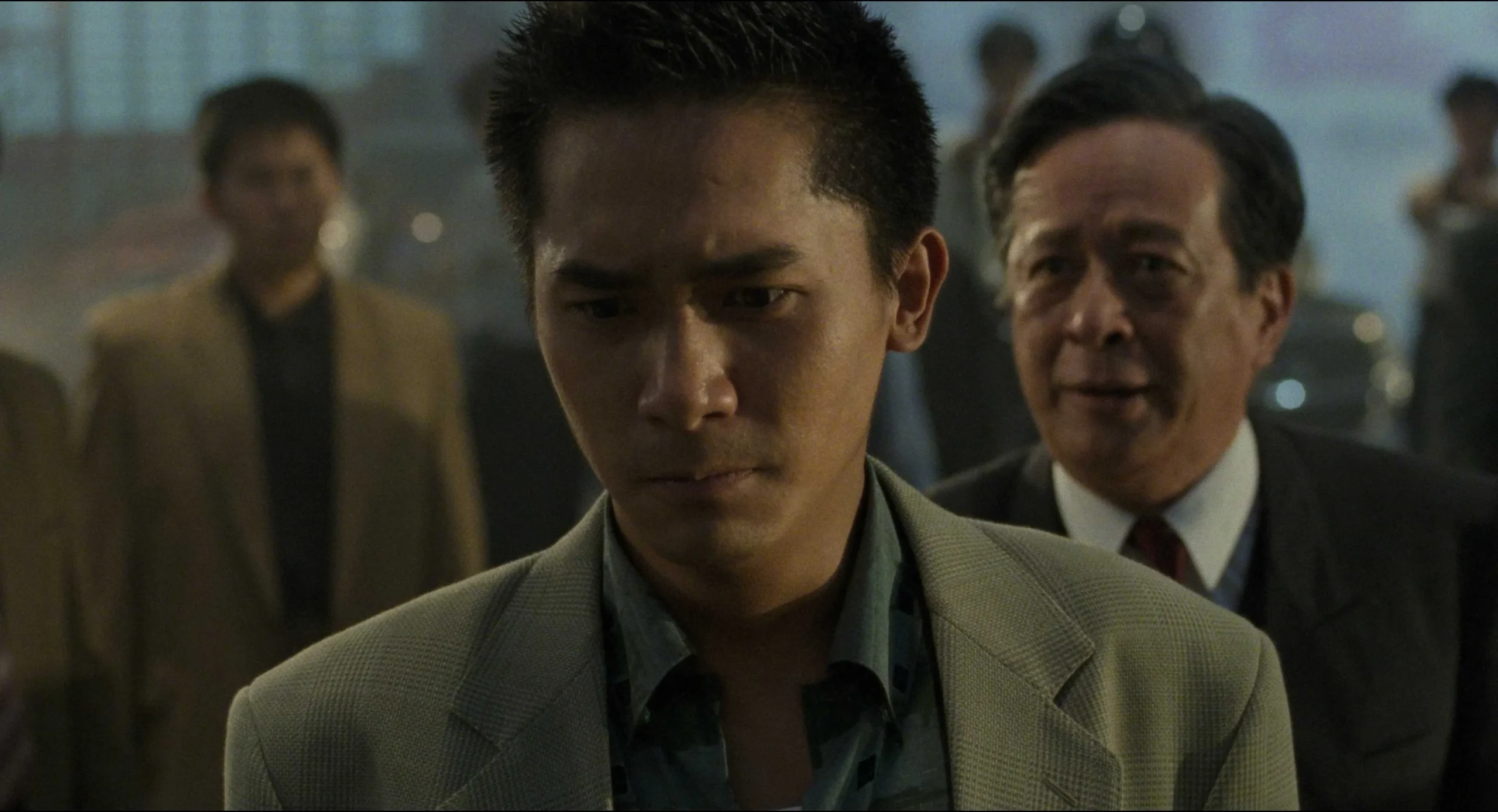
‘Gun Fu Fever’ sees Leon Hunt talk about the ‘heroic bloodshed’ boom and Hard Boiled‘s place within it. It’s a decent piece.
Grady Hendrix also discusses the film in an interview. This runs over some key facts surrounding the production, making for a clear overview of its history if you don’t have the time or patience to sit through the countless hours of extras on the disc.
There’s also a new interview with screenwriter Gordon Chan. He’s humble about his role, describing his part as simply polishing the script. He talks about working with Woo. It’s a nice piece.
The new interviews with Anthony Wong and uncredited screenwriter Chan Hing-Ka are also entertaining and valuable.
Also included is an archival 75-minute making-of documentary called ‘The Test of Time’. This is fantastic. Based around interviews with Woo, editor David Wu and stunt co-ordinator Phillip Kwok, it tells the full story of the production. Some of the stories have been told before, but, being recorded closer to the time, they feel fresher and more clearly told.
There is an archival interview with Tony Leung, too. This sees the actor talking about his work with Woo. It’s worth watching. The Chow Yun-Fat interview included on the Arrow disc isn’t included here, though it does show up on their The Killer release.
That’s the end of what is shared between both the Arrow and Imprint releases. Also unique to the Imprint disc, on top of the Taiwanese cut, are two archival interviews with Woo, one in Chinese and one in English. These are strong, with the director talking with enthusiasm about the shoot. The English one covers very similar ground to the other interviews and commentaries in the set, so it’s not adding a great deal extra. The Chinese one, however, covers the director’s career as a whole, so is more valuable, even if the burnt in subtitles aren’t the best. Funnily enough, though, Hard Boiled is probably the film brought up the least in the interview!
The Q&A on this release is an archival one, rather than the more recent one that appears on Arrow’s release (the only thing missing from that disc). It’s filled with the usual stories included elsewhere, however, so doesn’t really offer anything new.
There’s also an archival interview with Philip Chan. He actually used to be a policeman, so he has some interesting stories to tell. He goes on to talk about how it was to work with the cast and crew. Generic questions, perhaps, but he’s a charming guy.
Another extra archival interview features producer Terrence Chan. I enjoyed this, though there is a little crossover with the rest of the extras. He talks with humour about working with John Woo and the rest of the team.
Added to this is an archival interview with Philip Kwok that was missing from the Arrow disc. Running at 24 minutes, it covers a lot of ground.
Also new to the Imprint disc is a location piece. This is well presented and informative, providing some film facts alongside showing what the locations looked like at the time of recording the piece.
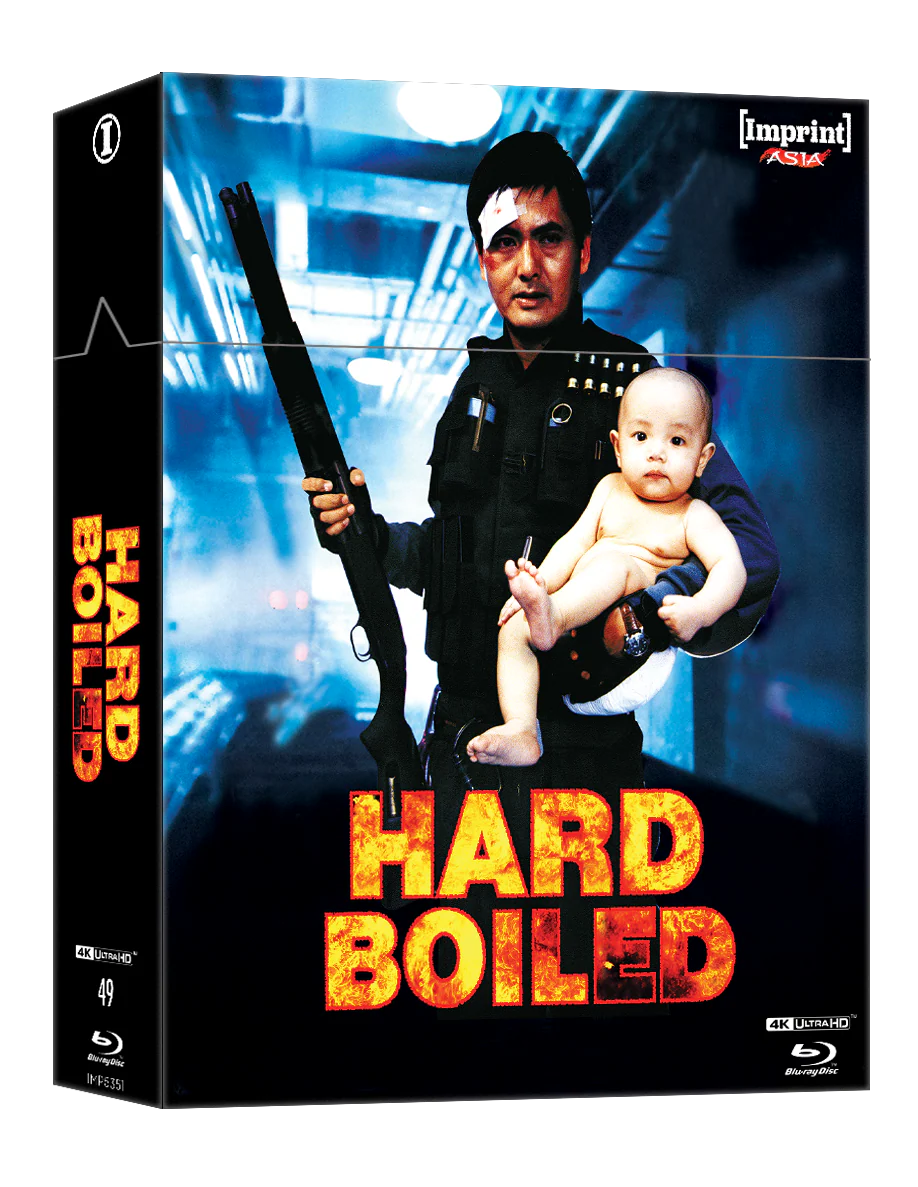
I didn’t get a copy of any of Arrow’s physical packaging or extras, but the Imprint release looks and feels gorgeous. As usual with their LE releases, it’s housed in a solid, hard case with handsome artwork, based on the original poster design. The discs are housed in a gorgeous embossed, glossy steelbook.
The booklet in Imprint’s release is beautifully presented in hardback form and includes a pair of insightful essays alongside a wealth of publicity stills.
So, Imprint have taken the already stacked Arrow release and expanded on it. Some of the extras cover similar ground to before but the Taiwanese cut will be a big bonus for many. As for which release has the best grade on the transfer is open to debate, but I’d be tempted to say that Imprint’s release is the best option, overall, due to it having a little more to offer.
Disc/Package: