

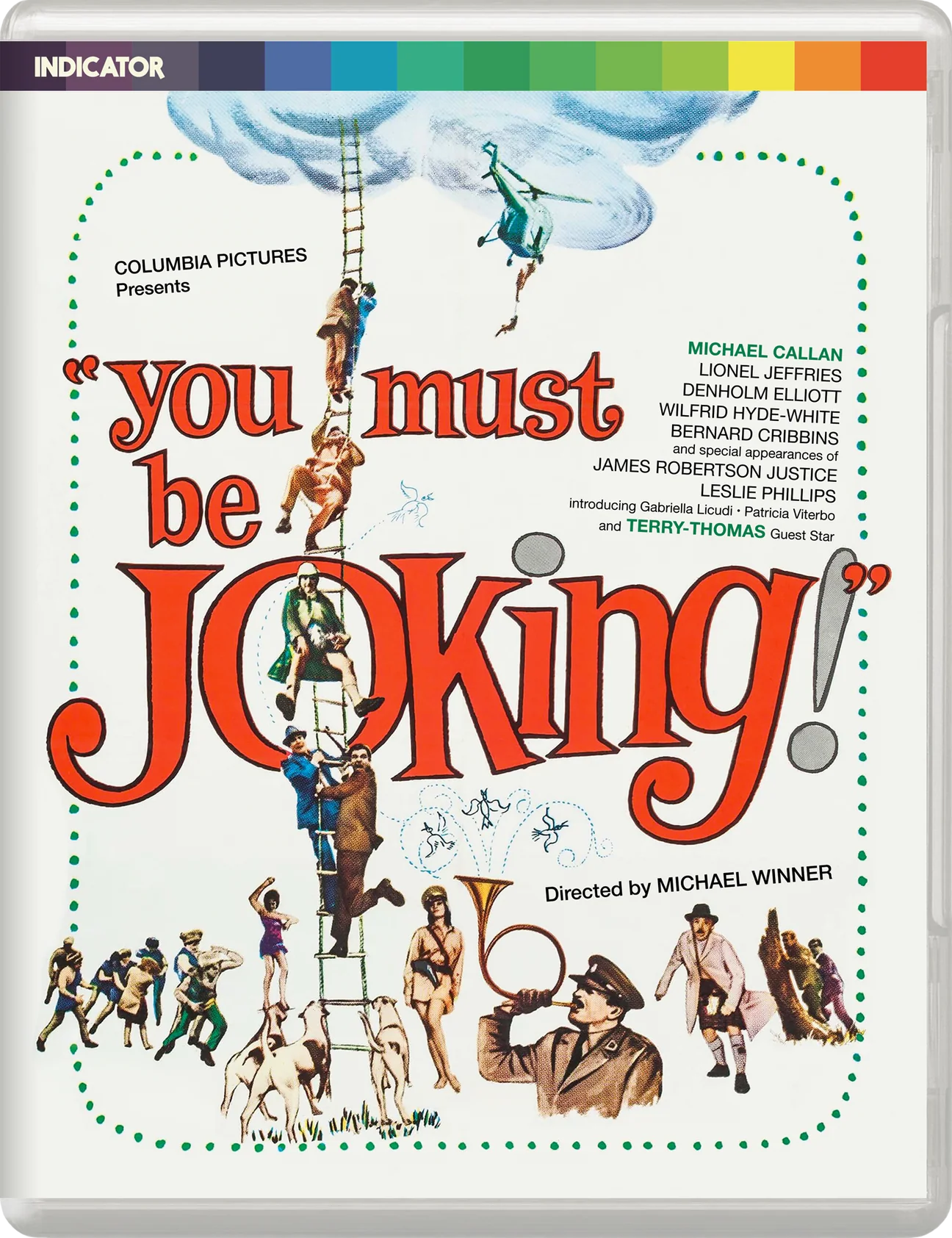
Director: Michael Winner
Screenplay: Alan Hackney
Story by: Michael Winner
Cinematography: Geoff Unsworth
Starring: Michael Callan, Lionel Jeffries, Denholm Elliott, Bernard Cribbins, Lee Montague, Terry-Thomas, Wilfrid Hyde-White
Year: 1965
Duration: 100 mins
Country: UK
BBFC Certification:U
You Must Be Joking? is a glorious romp of a film, and I’m delighted that Indicator has finally given it the love it deserves.
The film’s story is a series of loosely connected comic vignettes based on a real-life British Army initiative test at Catterick, where soldiers were instructed to travel as far from camp as possible within a set time limit. You Must Be Joking? merges this premise with the anarchic comic sensibility of It’s a Mad, Mad, Mad, Mad World (1963) and fills its frame with the finest comedy actors of the era.
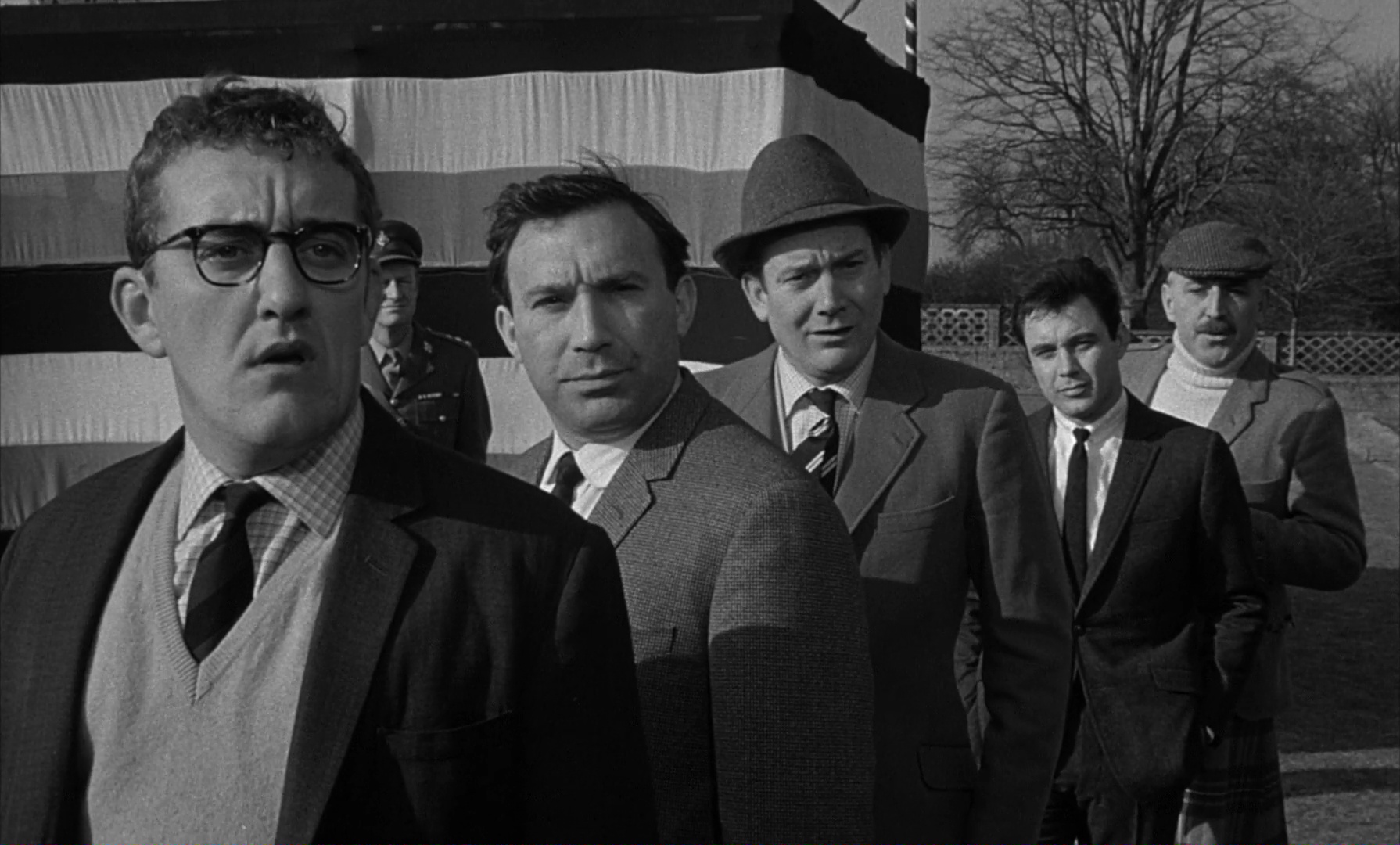
Major Foskett (Terry-Thomas), an eccentric army psychologist, recruits five soldiers for a scavenger-hunt-style initiative test designed to measure subordination and ingenuity under absurd pressure. The subjects are: the dashing American Lieutenant Tim Morton (Michael Callan); the hyperactive Scottish Sergeant-Major McGregor (Lionel Jeffries); the upper-crust Captain Tabasco (Denholm Elliott); the weary Sergeant Clegg (Bernard Cribbins); and Staff Sergeant Mansfield (Lee Montague).
If you haven’t seen this film before, that cast list alone should be sufficient incentive to pick up this disc, but when I add that Wilfrid Hyde-White, Leslie Phillips, Richard Wattis, Irene Handl, Clive Dunn, Arthur Lowe, and Jon Pertwee feature, I’m at a loss for what more could possibly entice you.
In the accompanying booklet, I discovered that Harry H. Corbett had originally signed onto the film, though his intended role isn’t specified. Corbett however I think could have tackled any of these parts with ease. He, along with Eric Sykes, Hattie Jacques, and perhaps a Goon or two, represent the only major comedy talents of the period absent from the cast.
Michael Winner, here directing his original story, delivers a film as energetic and youthful as its era. The opening credits, created by animator Bob Godfrey in a photomontage style, establish a visual language that carries through the film’s transitions beautifully.
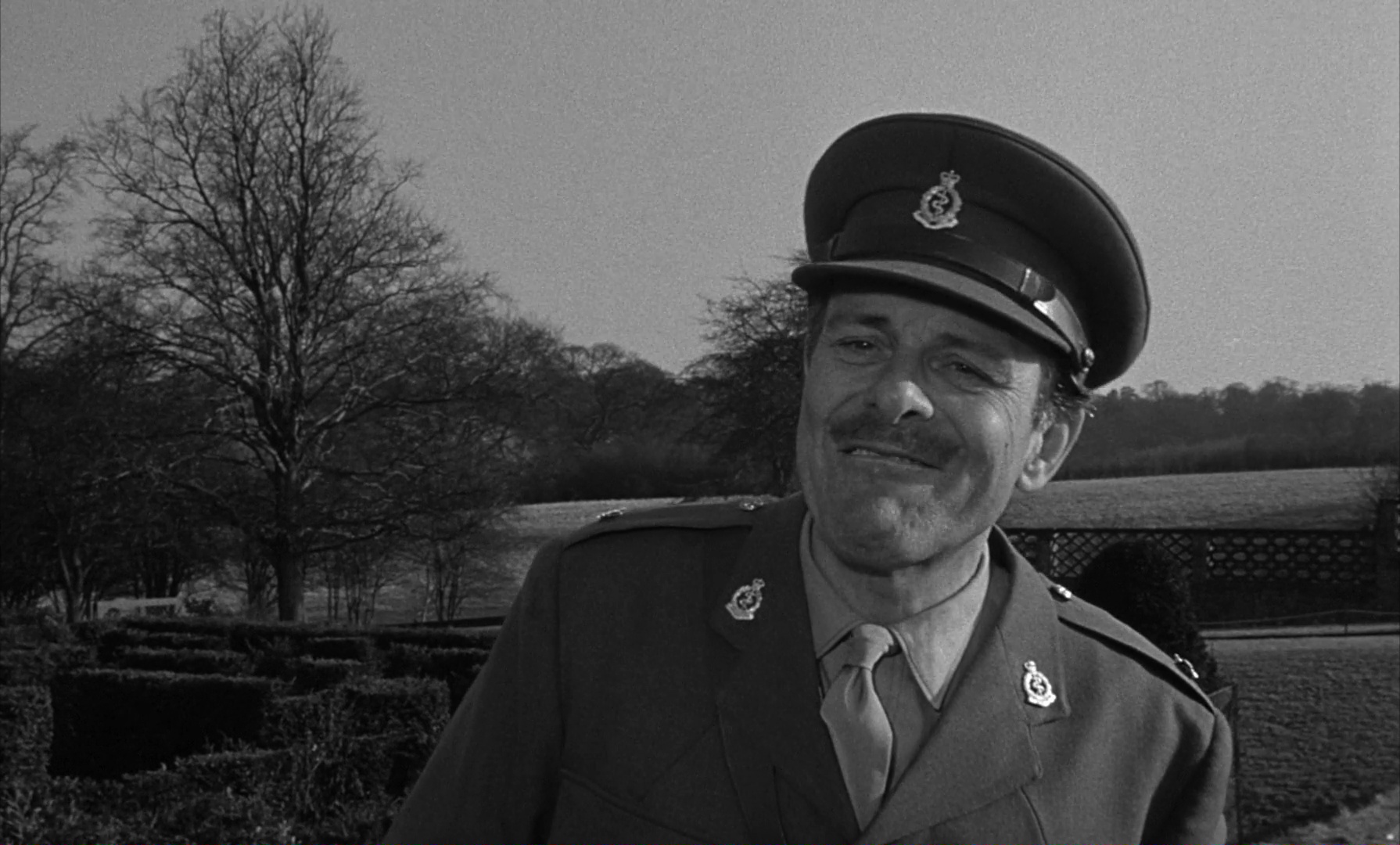
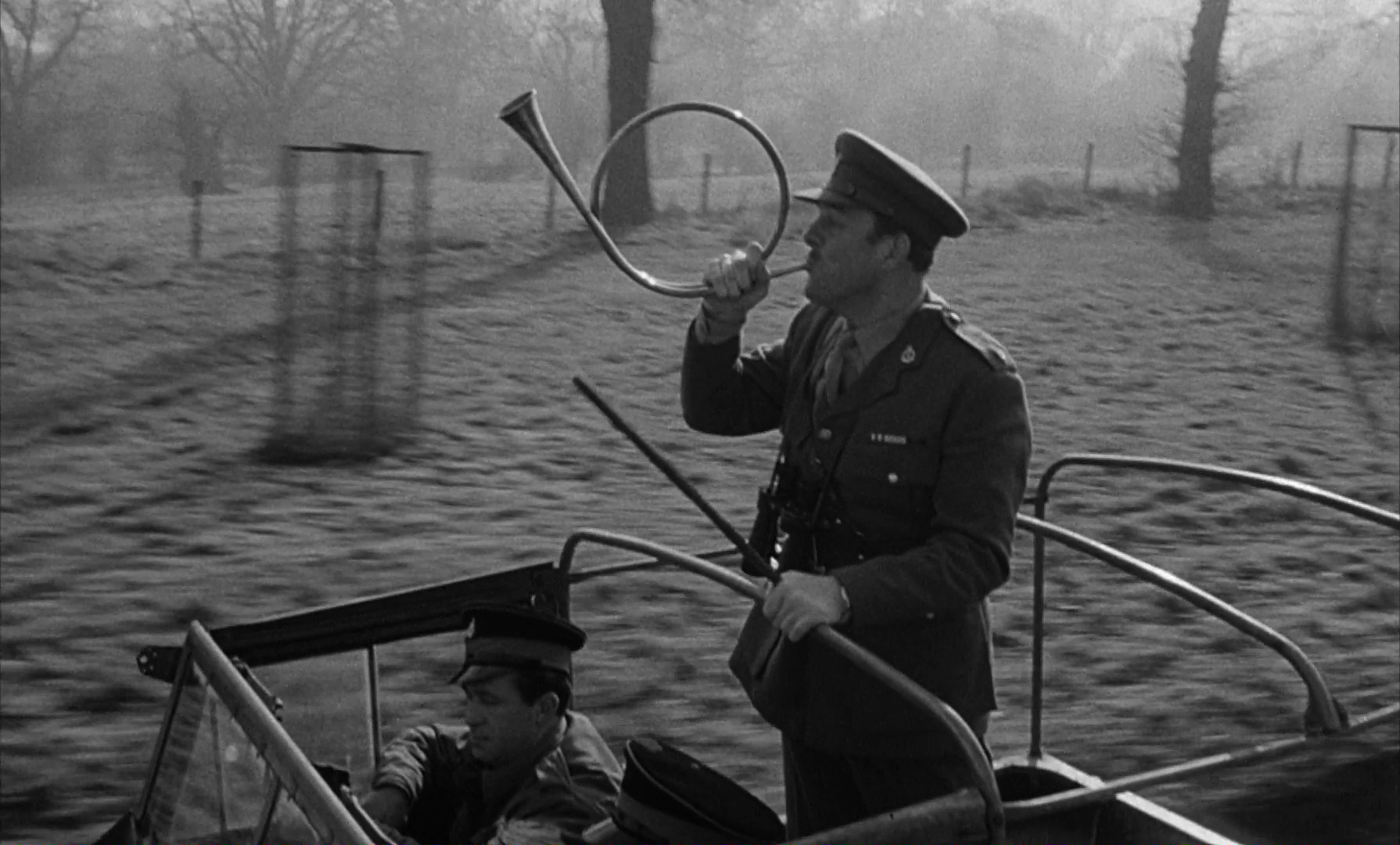
Cinematographer Geoff Unsworth brings fluid, crisp camerawork that allows for sustained long takes, which work brilliantly with the film’s brisk pacing. Unsworth would later shoot 2001: A Space Odyssey (1968) with Kubrick and Cabaret (1972) for Bob Fosse, winning an Academy Award for the latter.
The plot is expansive and the comedy broad, yet it never tips into the obtuse zaniness that would characterise comedy films by the decade’s end.
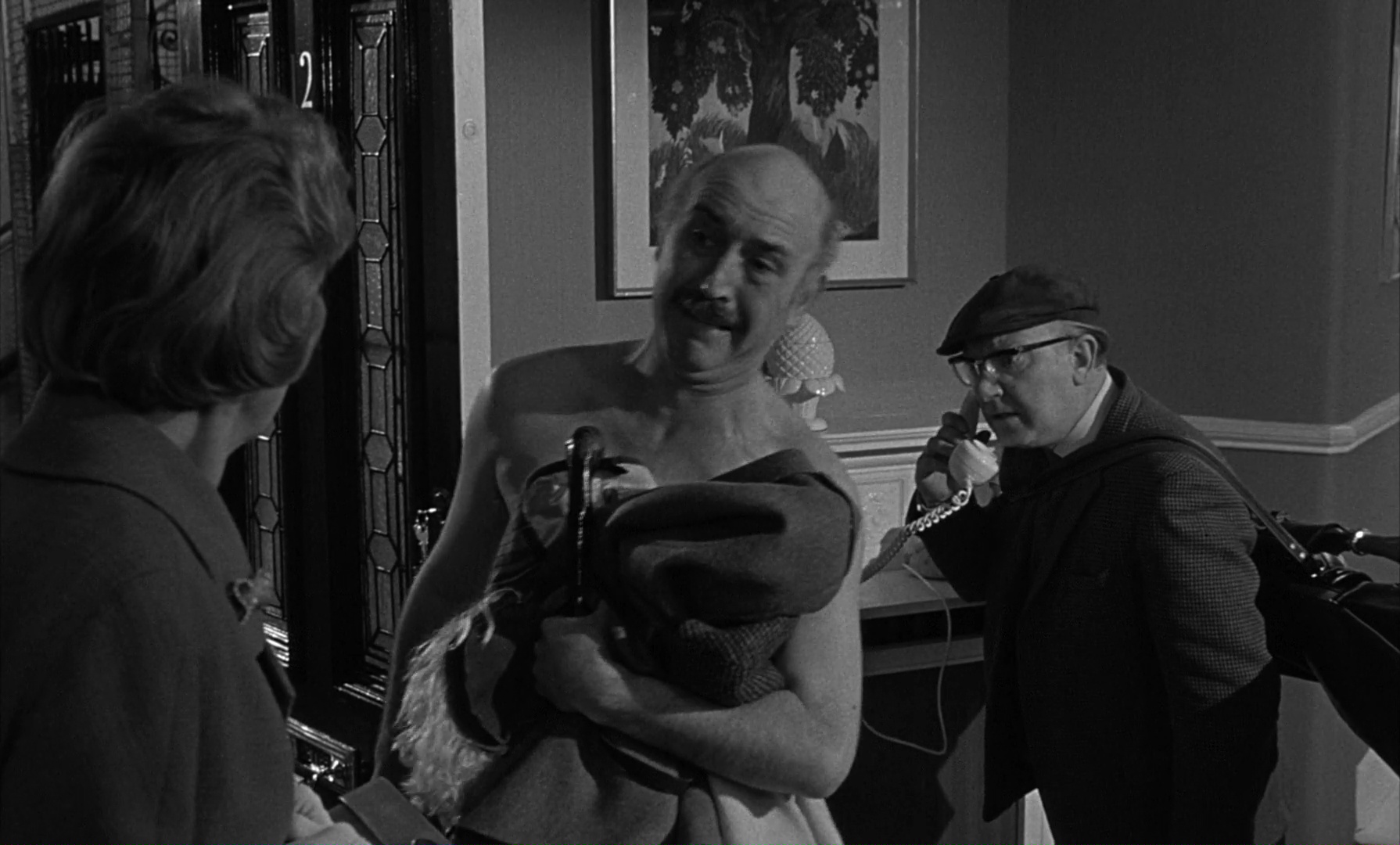
Standout moments include Bernard Cribbins’ recurring gag as Sergeant Clegg, who keeps tunnelling his way to wherever Terry-Thomas’s Major Foskett happens to be standing, only to be returned to the start, a bit that earns consistent laughs through pure repetition. I also treasure the blink-and-you-miss-it moment of Arthur Lowe phoning the police to report a semi-naked Lionel Jeffries prowling his house, delivering the line “he is wearing a moustache and a blue towel” with such perfect deadpan timing that I found myself genuinely laughing out loud.
The film does suffer from some minor pacing issues in its final act, a few sequences could be tightened, but it’s a small quibble given the sheer joy of inhabiting this world.
The film was well-received on its original release but underperformed commercially. With this new Indicator release, I genuinely hope it finds the wider audience it has always deserved.
Special Features
Audio Commentary by Kevin Lyons and Jonathan Rigby
This pair work excellently together, weaving personal reminiscences with the task of introducing the seemingly endless parade of familiar faces who pop up on screen. Highly recommended for a rewatch to catch everyone you might have missed.
From Stage to Screen: Interview with Lee Montague
An extensive 72-minute interview and a brilliant archival piece featuring an actor whose career was remarkably varied and fascinating.
The Guardian Event: Michael Winner on Censorship (1990, 83 mins)
Michael Winner discussing censorship at the National Film Theatre. Winner is in robust form throughout as he takes on the BBFC and in particular he takes aim, unsurprisingly, at James Ferman. Well worth a listen just to hear how he works a room.
The Guardian Lecture with Bob Godfrey (1985, 53 mins)
A Guardian Lecture by legendary animator Bob Godfrey, a brilliant addition given the title sequence’s influence on the film’s entire visual approach. The reason for the lecture is to coincide with the centenary of animation but the main focus is presenting the state of British animation at the time. A real wealth of information here by the animator of Roobarb and Henry the Cat.
The BEHP Interview with Bernard Gribble (1995, 100 mins)
This is another very interesting interview from the British Entertainment History Project with an editor who talks about his early life and his career highlights including working at Ealing Studios and his long working relationship with Michael Winner (who he can also do a killer impression of). He also talks at length about the rise of computer based editing or non-linear editing which I found very interesting and it’s a real peak behind the curtain into how an editor works.
Booklet
A new essay by Michael Pattison contextualises the film alongside Dr. Strangelove (1964) as Cold War-era comedies. It also includes contemporary critical reviews and recollections from cast and crew.
I thoroughly enjoyed myself watching You Must be Joking? And the extras are well worth exploring if you have any interest in British films from the period.