


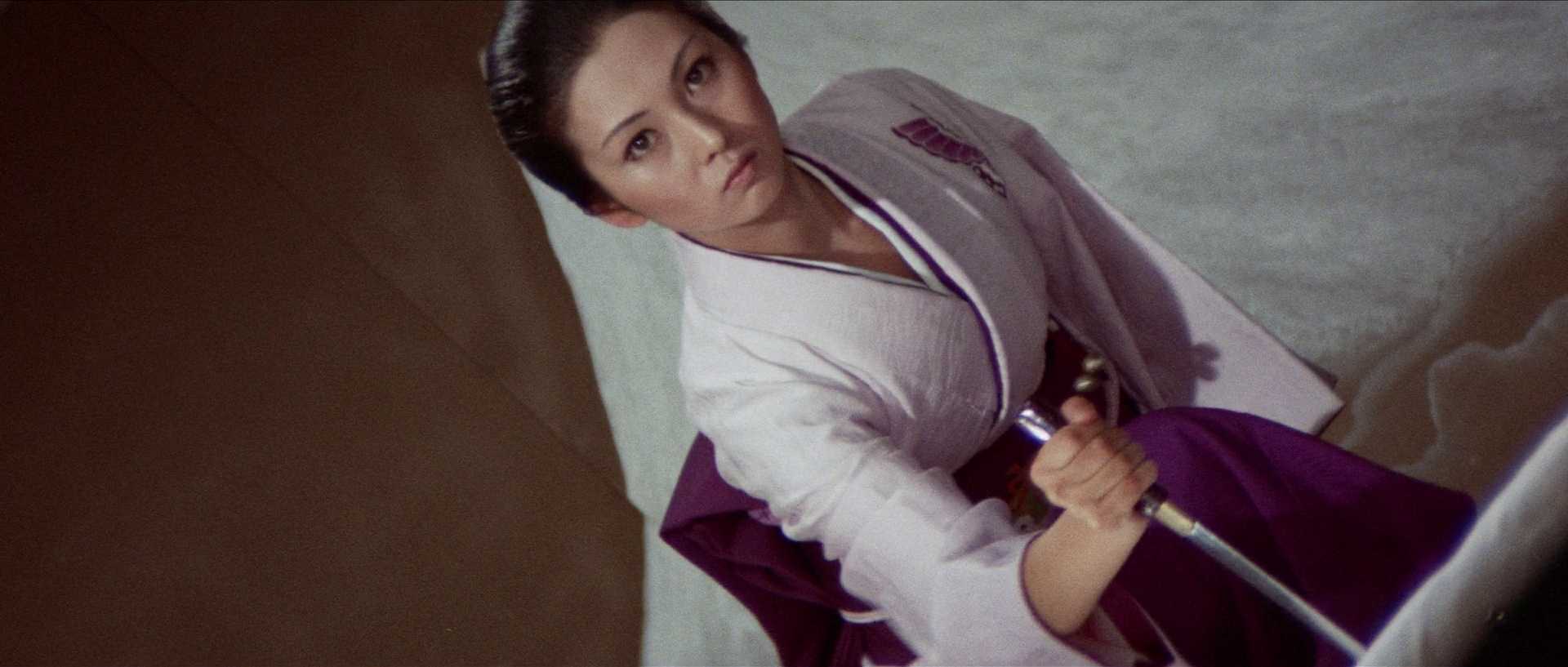
 Director: Kazuhiko Yamaguchi
Screenplay: Isao Matsumoto, Kazuhiko Yamaguchi
Starring: Meiko Kaji, Tatsuo Umemiya, Tsunehiko Watase, Akiko Koyama, Shin’ichi (Sonny) Chiba, Shingo Yamashiro, Fujio Suga
Country: Japan
Running Time: 86/86 min
Year: 1972
BBFC Certificate: 15
Meiko Kaji’s star was on the rise in the early 1970s. At the start of the decade, whilst working for Nikkatsu, she was given her first starring role under her new stage name, in Blind Woman’s Curse. Later that year and through to the following year, she was one of the leads in the five-film Stray Cat Rock series of juvenile delinquent biker movies.
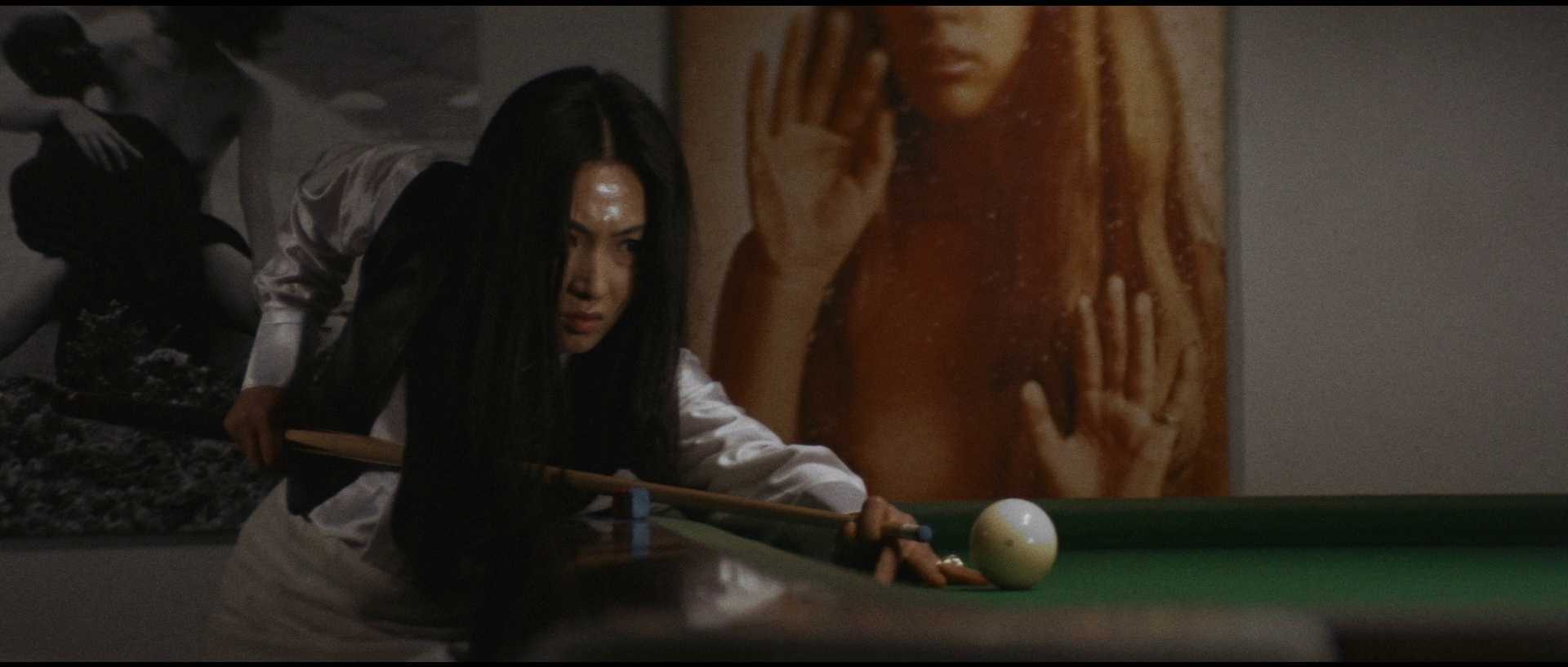
She moved to Toei, though, after Nikkatsu started changing their production model to Roman porno, and there she was offered the chance to star in a film about a female pool hustler. However, the nature of the project shifted after Junko Fuji (a.k.a. Sumiko Fuji) retired early to get married. She was the star of the hugely popular Red Peony Gambler series, and Toei made the decision to mould Kaji into a replacement for Fuji. As such, the pool hall drama Kaji was promised morphed into something with much more of a ninkyo eiga (chivalry film) flavour, akin to Red Peony Gambler. Kaji reportedly wasn’t too happy with the direction the film took, after being promised a Japanese spin on The Hustler, but she was under contract, so she reluctantly went ahead with it.
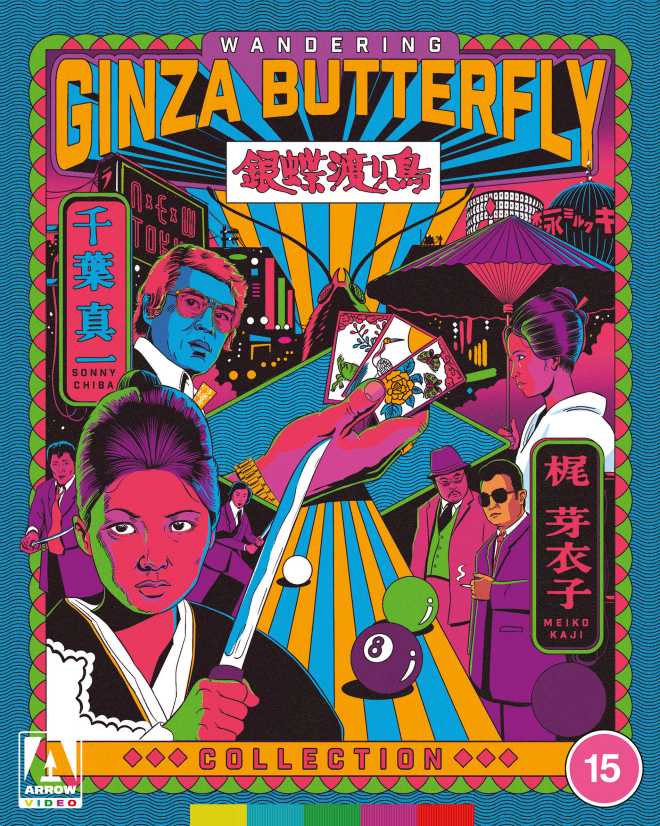
The resulting film was Wandering Ginza Butterfly, which was popular enough to spawn a sequel, Wandering Ginza Butterfly 2: She-Cat Gambler. Arrow Video are releasing the two films together in a set called the Wandering Ginza Butterfly Collection. I got hold of a copy, and my thoughts follow.
To quote from Arrow’s press blurb: “The first film sees Kaji’s character Nami “The Red Cherry Blossom” returning to her old stomping ground in the seedy Tokyo district of Ginza after a stint in prison for killing a yakuza boss. She soon settles in, living in her uncle’s pool hall and working at the local hostess club. But when ruthless yakuza Owada (Koji Nanbara, 11 Samurai) attempts to take control of the club, Nami and her uncle devise a plan to take him down. In the sequel, Kaji is paired up with the equally legendary Sonny Chiba at his most charismatic as the streetwise Ryuji, who takes a shine to Nami and decides to help her on her quest to avenge her father. Together they’ll comb through every seedy gambling den and lowlife ruffian of the Ginza underworld until Nami finally zeroes in on her prey.”
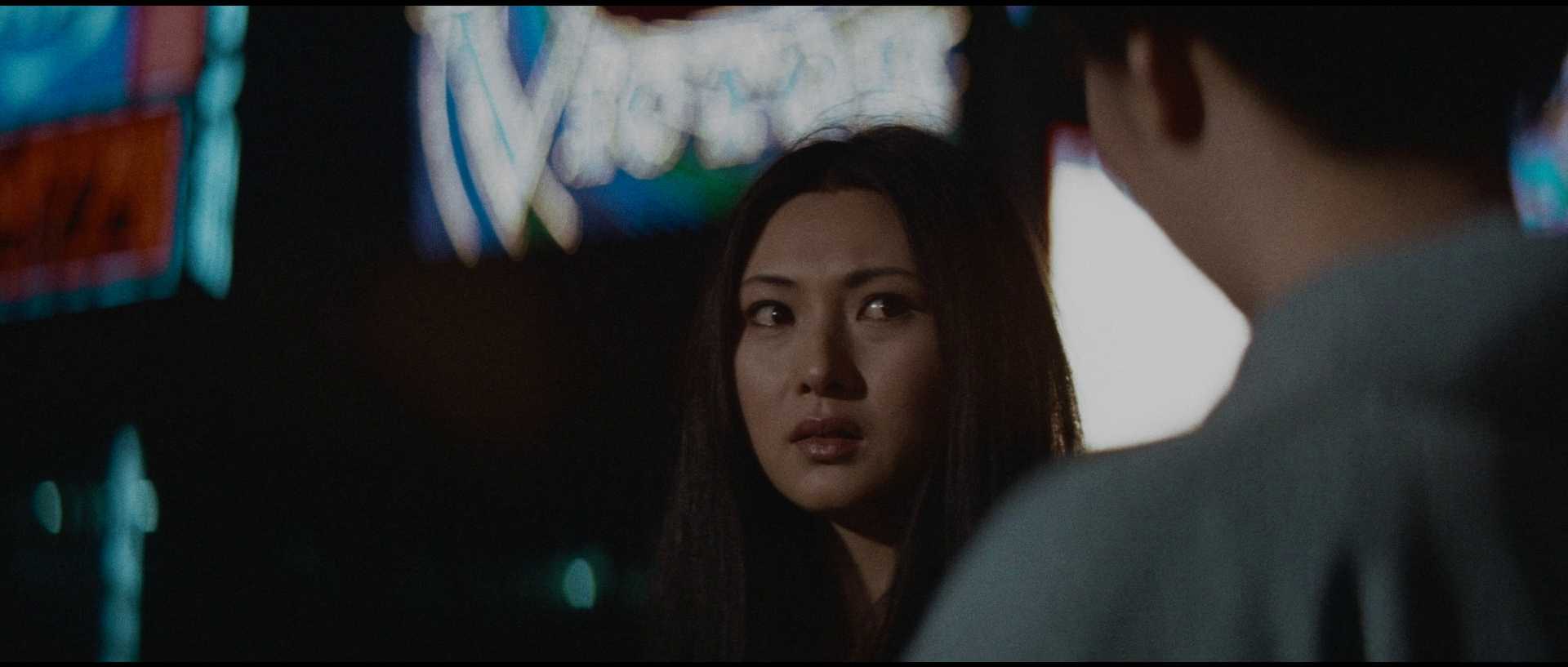
The films are more light-hearted and comic than I expected. Director Kazuhiko Yamaguchi said he wanted to show the flamboyant Ginza nightlife through the films, and this is reflected in the cast of colourful characters in the series as well as the setting.
There’s very little violence in the first film until the end, when it finally delivers the goods, with an explosion of bloody swordplay during the final few minutes. It’s an impressive sequence that seems a little at odds with what came before, but the drama that builds to it helps keep it from feeling unnecessary.
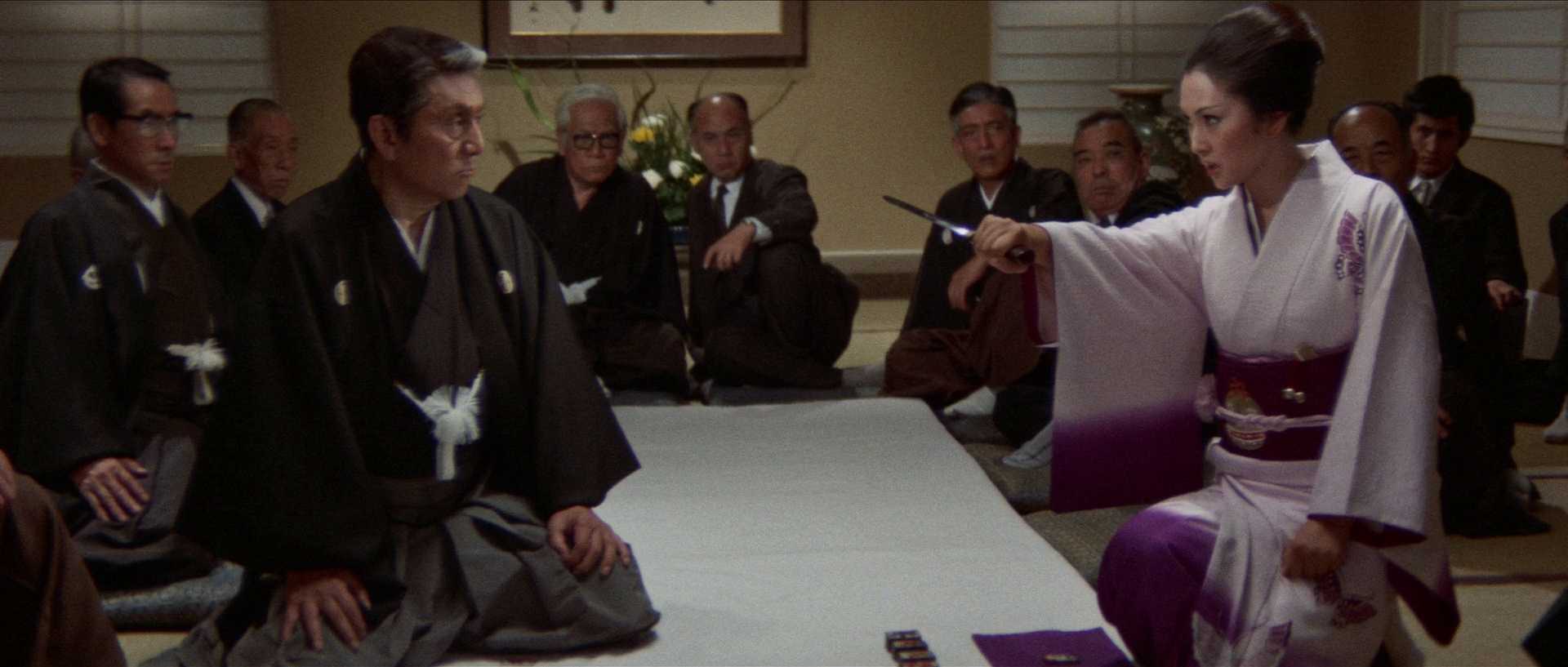
The second film has even more of a split personality, jumping between wacky comedy, serious drama and brutal violence. Strangely enough, the second film feels even more indebted to the Red Peony Gambler series. Kaiji wears a kimono much more often in it (she only puts one on at the end of the first film), just to emphasise the point. This is a little surprising, given that Female Prisoner 701: Scorpion came out in between the two films and made Kaji a huge star with her own distinctive style.
The second film in the Wandering Ginza Butterfly is sleazier, too, with added nudity and a bigger emphasis on the whoring and pimping side of Ginza.
Whilst a less cohesive film than its predecessor, I enjoyed Wandering Ginza Butterfly 2: She-Cat Gambler every bit as much as the first film, perhaps even a little more. This is aided by the inclusion of Sonny Chiba in the cast. He’d been in the film and TV industry for a while by this point, but hadn’t yet become a big star. He has a lot of fun in this film, playing a “clean, just and honest” pimp with a stutter. He adds extra charm to the uneven romp.
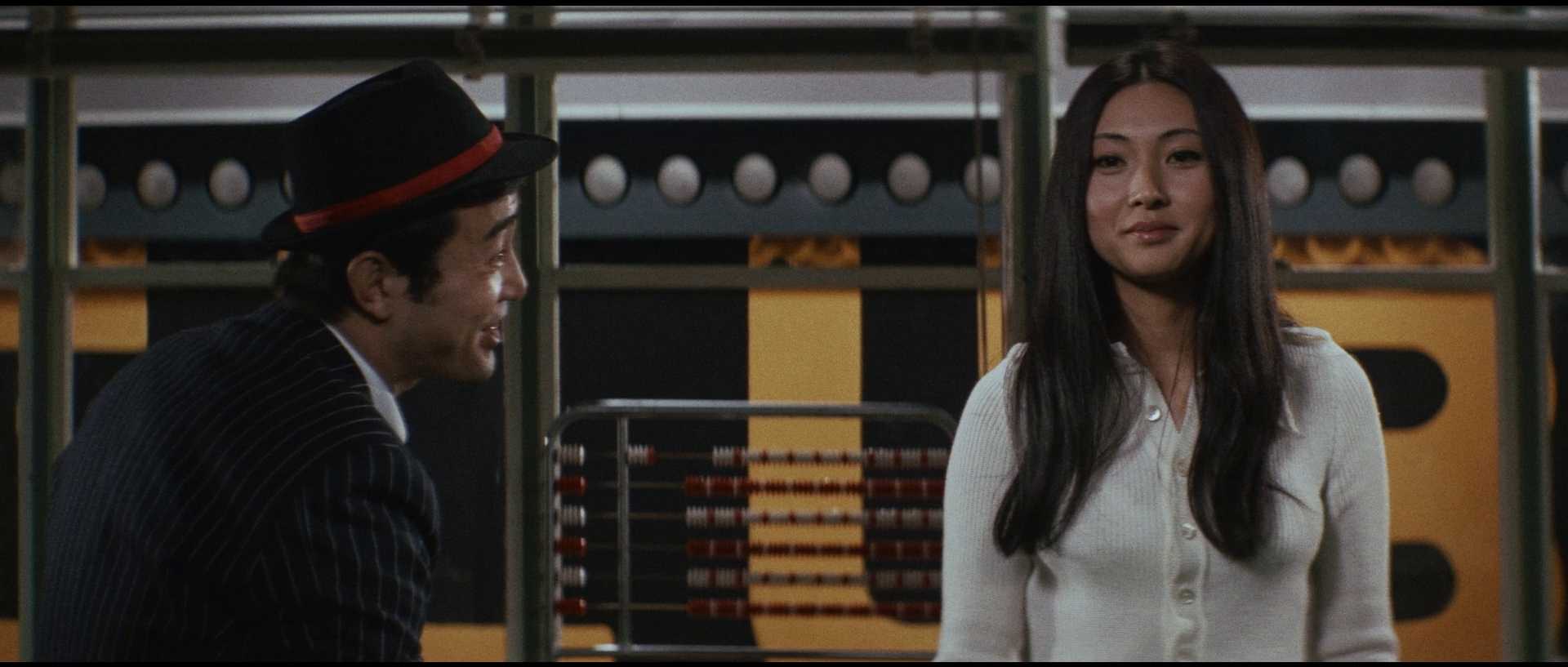
Kaji is friendlier than usual in the first film – she even smiles a few times – though her usual ice-cool personality comes through by the end. She maintains this through the second film.
Both films look good, with boldly colourful production design and stylish photography. They’re snappily paced too, both running under 90 minutes, so you’re never likely to get bored, even if the films can be a little ‘fluffy’ at times.
Overall, whilst the series was a lot lighter than I expected, it’s still a lot of fun and Kaji does deliver the arse-kicking goods in places. They’re not quite Lady Snowblood or Female Prisoner Scorpion then, but the Wandering Ginza Butterfly films are still well worth a look.
Film: 


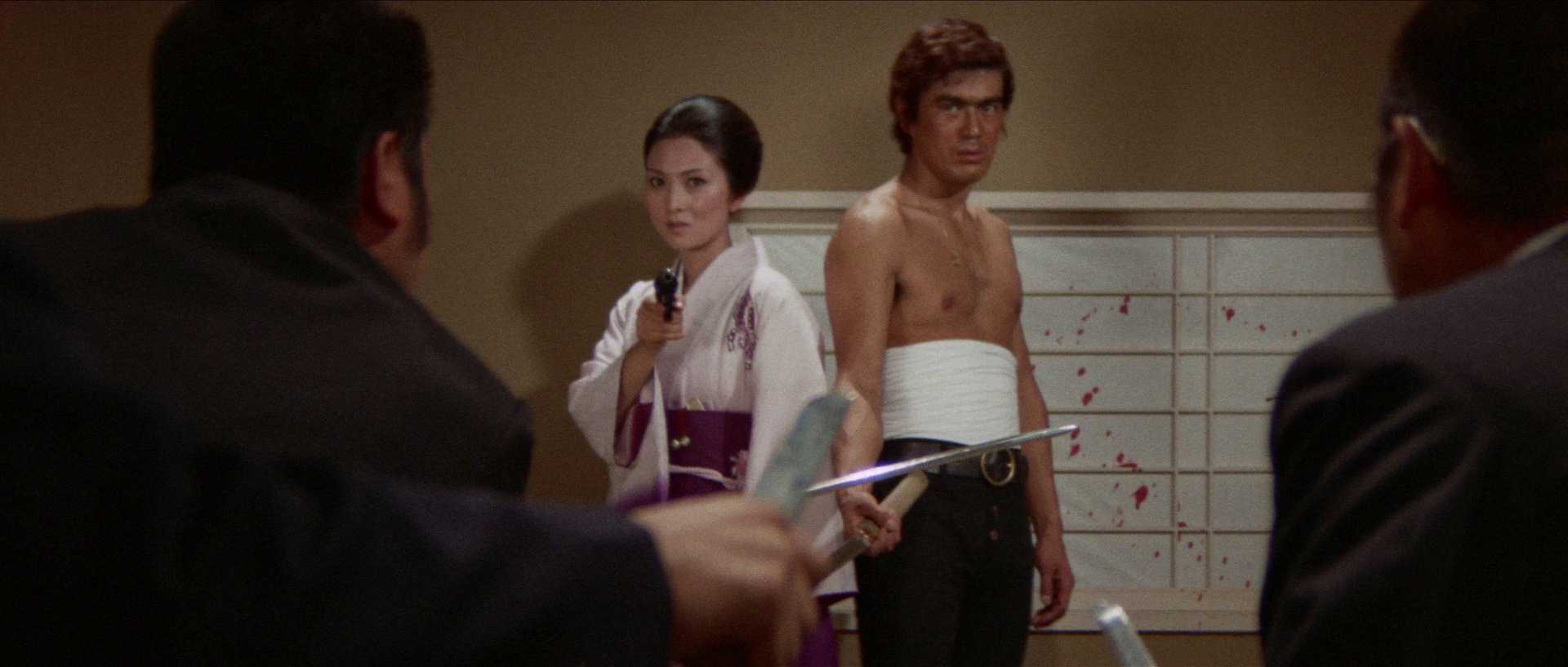
Wandering Ginza Butterfly Collection is out on 6th April on region B Blu-Ray, released by Arrow Video. The transfers on both films are fantastic, with crisp details and wonderfully rich colours. I’ve used screengrabs throughout this review to give you an idea of how the films look, though these have been compressed. Audio is solid, too.
LIMITED EDITION CONTENTS
– High Definition (1080p) Blu-ray presentation of both films
– Original lossless Japanese mono audio for both films
– Optional newly translated English subtitles for both films
– Brand new audio commentary for Wandering Ginza Butterfly by Japanese cinema experts Patrick Macias and Matt Alt, hosts of the Pure TokyoScope podcast
– Archival audio commentary for Wandering Ginza Butterfly by Japanese cinema expert Chris D.
– Back to Back in the Yakuza Multiverse, a brand new interview with Patrick Macias and Matt Alt on Wandering Ginza Butterfly 2: She-Cat Gambler
– Genre Mill Memories, an archival interview with director Kazuhiko Yamaguchi
– Butterfly and Scorpion, an archival appreciation of star Meiko Kaji by Japanese action and pink film expert J-Taro Sugisaku
– Original trailers for both films
– Reversible sleeve featuring new artwork for both films by Andy Bourne
– Collectors’ booklet featuring new writing on the films by Asian cinema expert Camille Zaurin
Patrick Macias and Matt Alt, from the Pure TokyoScope podcast, provide one of the two commentaries (both over the first film). It’s an enjoyably light-hearted track that gives a lot of cultural context, as well as background information about the filmmakers.
Chris D provides the other commentary on the film. His track is less irreverent than the other, but it’s still engaging and insightful. Among other things, he talks about how the film fits among various Japanese genres.
Patrick Macias and Matt Alt come back again to discuss the series in a 21-minute interview, focusing largely on the second film. It’s a fun but still illuminating piece.
There’s also an archival interview with Kazuhiko Yamaguchi. He runs through his career and talks honestly about his work and the nature of the way these studio genre movies were produced. At the end, he describes how he is prouder of his work on the Wandering Ginza Butterfly series than on his later karate movies.
Another archival piece sees J-Taro Sugisaku talk about Meiko Kaji and where the Wandering Ginza Butterfly films fit within her oeuvre. He explores the possible reasons why Kaji became so popular and continues to appeal.
So, Arrow have compiled a strong collection of extras to complement an enjoyable pair of films. Recommended to Japanese genre movie fans.
Disc/Package: