


 Director: Daniel Taradash
Screenplay: Daniel Taradash and Elick Moll
Starring: Bette Davis, Brian Keith, Kim Hunter, Paul Kelly, Joe Mantell, Kevin Coughlin, Sallie Brophy, Howard Wierum
Country: United States
Running Time: 86 min
Year: 1956
BBFC Certificate: PG
Pioneering film actor Mary Pickford was all set to make her first screen appearance after almost 20 years in Stanley Kramer’s production of Storm Center. The star had been one of the most popular actors of silent cinema and had last appeared on the screen in Frank Borzage’s Secrets in 1933. But her much fan-fared return was not to be – she wouldn’t star in a film again and was quoted as withdrawing from Storm Center because she felt her return should be in Technicolor, not black and white.
Pickford’s withdrawal from the film would be one of a number of setbacks that would befall the production, which would ultimately mean it would take five years to reach the screen. Barbara Stanwyck was next signed to as the lead, but her shooting schedule for Titanic (1953) delayed the production further, and original director Irving Reis then sadly passed away in 1953.
Co-writer Daniel Taradash saved the picture by coming forward to direct it, with legendary actor Bette Davis signed on to star, six years after one of her most memorable performances in Joseph L. Mankiewicz’s All About Eve. It would be the only film that Taradash, the Oscar-winning screenwriter of Fred Zinnemann’s 1953 feature From Here to Eternity, would direct.
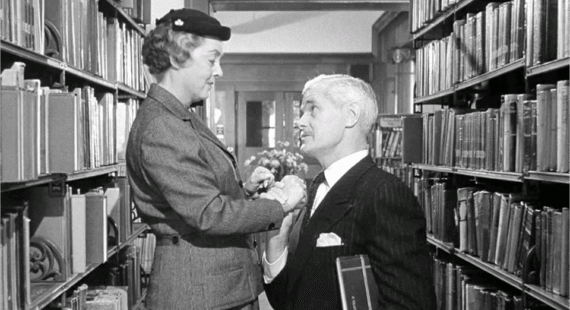
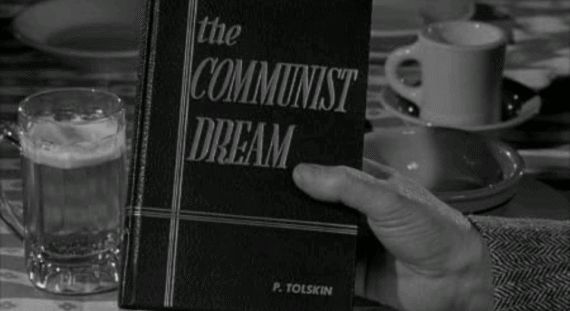
Storm Center follows Alicia (Bette Davis), an idealistic librarian who is promised a new children’s wing for her library if she removes a controversial book called The Communist Dream. She refuses to do so, the promise of the new wing is taken away and she’s fired and stigmatised by society for refusing to censor the book. Whilst Alicia is not a Communist sympathiser, her idealist views prevent her from removing any books from a library and she stands by her principles.
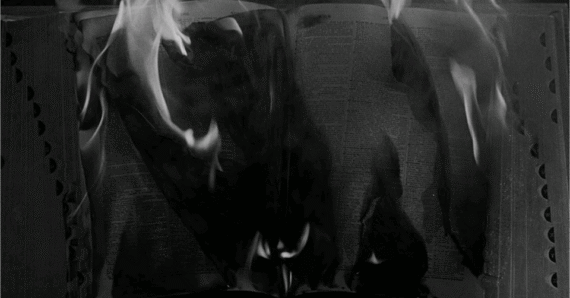
The opening title sequence designed by Saul Bass sets the tone incredibly well and is a feast for the eyes – a child’s eyes are seen reading the pages of a book which soon begin to burn, the pages disappearing as they’re engulfed in flames. It’s one of the designer’s great title sequences, not only looking good but telling its own story and laying out key themes for the film (Alicia inspires children to read, but controversial works are to be banned) and also a prelude to the film’s fiery climax, in just a few short minutes whilst the titles play.
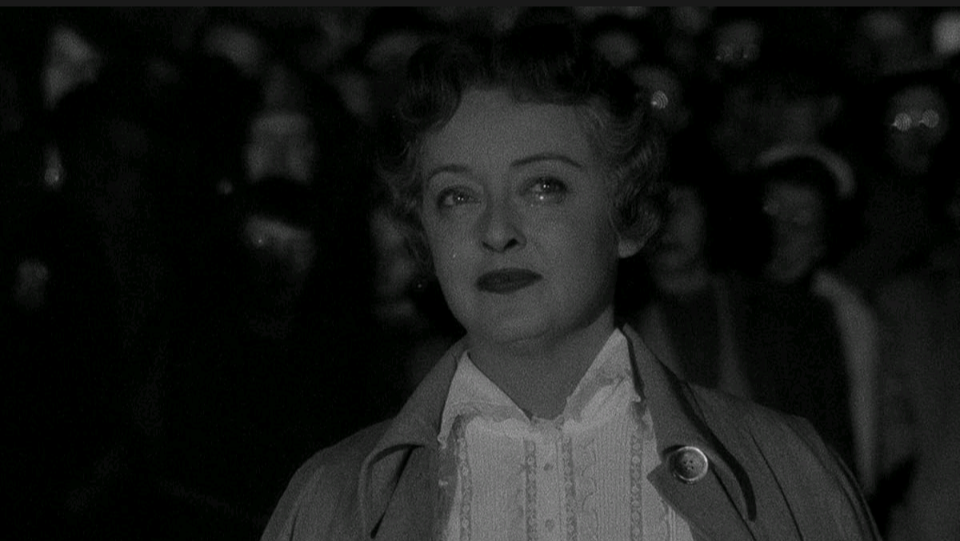
Davis is fantastic in the lead role of Alicia, playing very much against the type of characters she’d be most famous for before and after this film. Alicia is the morale compass of the picture and the film is all the better every time Davis on the screen, losing a sense of gravitas when she’s not.
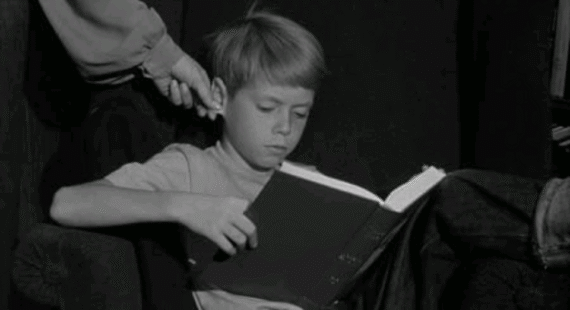
Other performances are not as strong and I could see the key character of Freddie (Kevin Coughlin), a young boy who adores reading thanks to Alicia, but who grows increasingly fearful and angry about books as the film and treatment of the librarian goes on, dividing audience. I found him quite endearing but I could also see other viewers finding him annoying. Whether you like him or not, he plays a pivotal role in the story, and instigates a flame-filled finale.
The visuals at times are interesting, with cinematographer Burnett Guffey, who won Academy Awards for From Here to Eternity and Bonnie and Clyde, mixing up standard shots with some interesting pans and framing, particularly when Davis is on screen. The aforementioned opening titles and the climax, with the library engulfed in flames, are certainly memorable.
Storm Center is quite melodramatic at times and a little preachy, and not all of the performances or elements worked for me. Yet whilst it occasionally feels like a product of its time, it also feels very relevant in 2025 thanks to its themes, and I found it easier to warm to the story and forgive its flaws because of that relevance.
The film was made in the wake of the 1954 Army-McCarthy hearings, set up to investigate conflicting accusations between the United States Army and US Senator Joseph McCarthy, who had led aggressive investigations into suspected communists and security risks in the Army. McCarthy became a well-known figure for spreading fear of communism, and Storm Center would be the first Hollywood movie to explicitly tackle McCarthyism on screen.
Alicia is forced out of her job because of a fear of communism and then she’s stigmatised by society for refusing to do so, her critics dredging up her past. We hear the fears and the doubts about her character as the story unfolds, and some of the scenes clearly play on the real-life accusations McCarthy levelled at high profile people as the wave of fear of communism grew.
This element and the censorship of books feel very relevant in 2025 and should bring the film a modern audience. In closing, despite its faults, I found Storm Center to be a well-made film with plenty of food for thought and a strong central performance by Davis that feels as important a work now, in the themes it contains, as it did when it was released almost 70 years ago.
Film: 


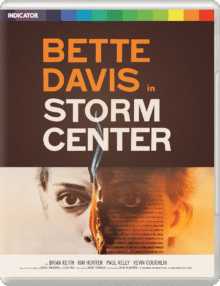
Storm Center is released on limited edition Blu-ray by Powerhouse Films on their Indicator label on 18 August 2025. The transfer is not one of the strongest Indicator have provided. There’s frequent print damage and blemishes and some of the scenes are a tad soft, but when it looks at its best, it looks pretty good with a lot of fine detail, and a natural filmic look. The audio is fine, and I had no issues with that.
Indicator limited edition Blu-ray special features:
High Definition remaster
Original mono audio
Audio commentary with professor and film scholar Jason A. Ney (2025)
Lies Lanckman on ‘Storm Center’ (2025): the academic and film historian examines the film’s themes and production
The Guardian Interview with Saul Bass (1986): archival audio recording of the revered designer in conversation at the National Film Theatre, London
Original theatrical trailer
Image gallery: promotional and publicity material
New English subtitles for the deaf and hard of hearing
Limited edition exclusive booklet with new essay by Maggie Hennefeld, ‘making of’ round-up of archival materials on the film’s production, an overview of contemporary critical responses, and film credits
UK premiere on Blu-ray
Limited edition of 3,000 copies for the UK
The new audio commentary by professor and film scholar Jason A. Ney is a strong one, providing plenty of scene specific analysis. Ney opens with background to graphic designer Saul Bass and his work in film as well as an analysis of his opening titles, before looking at other scenes in a similar way. As well as a look at some of the scenes and themes of the film, Ney also provides some context for the time in which the film was made, and adds some personal insight into why some of the elements resonate with him, as well as touching on some of the symbolism. He also provides an entertaining look at the film’s troubled production history. It’s an easy and rewarding listen.
Lies Lanckman’s piece, entitled Fiery Principles, runs for 15 minutes and sees the academic and film historian providing an overview of the film’s production, and some of its themes. Lanckman also looks at where the troubled production came in the career of Davis and analysis of what the actor brought to the role, despite playing against type. It’s a great piece.
The Guardian lecture with Saul Bass was recorded at the National Film Theatre in London in March 1986 and plays over the film like a commentary track. Bass provides a wealth of detail about his career during the near 90 minutes we spend with him, and if you’re a fan of his work or want to know about his life and background to the point of the interview, you’re likely to be pleased. It’s an exhaustive listen, and I mean that in a positive way; it’s excellent.
The three-minute trailer is an intriguing watch, mixing scenes from the film with a screening featuring Davis and a critic which features a small amount of analysis and a small interview with the actor.
The image gallery contains around 35 promotional and publicity images, including behind the scenes stills and posters.
The 40-page booklet is a typically rich one from Indicator, with some marvellous new and archival material. Professor and author Maggie Hennefeld provides a new essay looking at the themes of the film and how prescient they are today, including a quite startling statistic that over 10,000 books were banned from public schools in the United States in 2023-24. Hennefeld also looks at the critical reception the film received, and how the story of Alicia was inspired from a case that made national headlines. Next is a look at the making of the film taken from interviews with Taradash, covering the Hollywood Ten, who refused to cooperate with hearings to testify about their Communist affiliations, Pickford’s withdrawal from the film, and the influence of Hollywood gossip columnist Hedda Hopper. Also included are extracts from Louise S. Robbins’ 2000 book The Dismissal of Miss Ruth Brown: Civil Rights, Censorship, and the American Library, which dedicated a chapter to the film as looked at the picture’s origins in that aforementioned true-life dismissal of Bartlesville librarian Ruth Brown. The fantastic booklet concludes with an extended section looking at the critical reception the film received.
In closing, Indicator have provided a small but strong package for a flawed but interesting film. The transfer is at times full of depth, detail and clarity, but is frequently blighted by blemishes, whilst the new commentary, Lies Lanckman analysis and booklet are all fabulous. What’s included provides a wealth of background and context to a story drawn from the newspaper headlines, and a troubled production packed with themes that resonate strongly in 2025.
Disc/Package: