



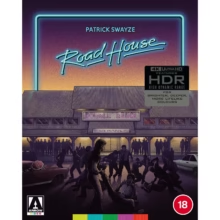
Director: Rowdy Herrington
Screenplay: David Lee Henry and Hilary Henkin
Starring: Patrick Swayze, Ben Gazzara, Kelly Lynch and Sam Elliott
Country: United States
Running Time: 114 min
Year: 1989
Ah, Road House. A staple of late 80s cinema in many ways. A film with notable fans, such as Clerks director Kevin Smith and the iconic father Peter Griffin. It’s a film in which Patrick Swayze proved to the world that he wasn’t just the man to call for romantic films like Dirty Dancing, but instead something cool, manly and badass that dads across the world would unanimously agree is one of the greatest films ever made.
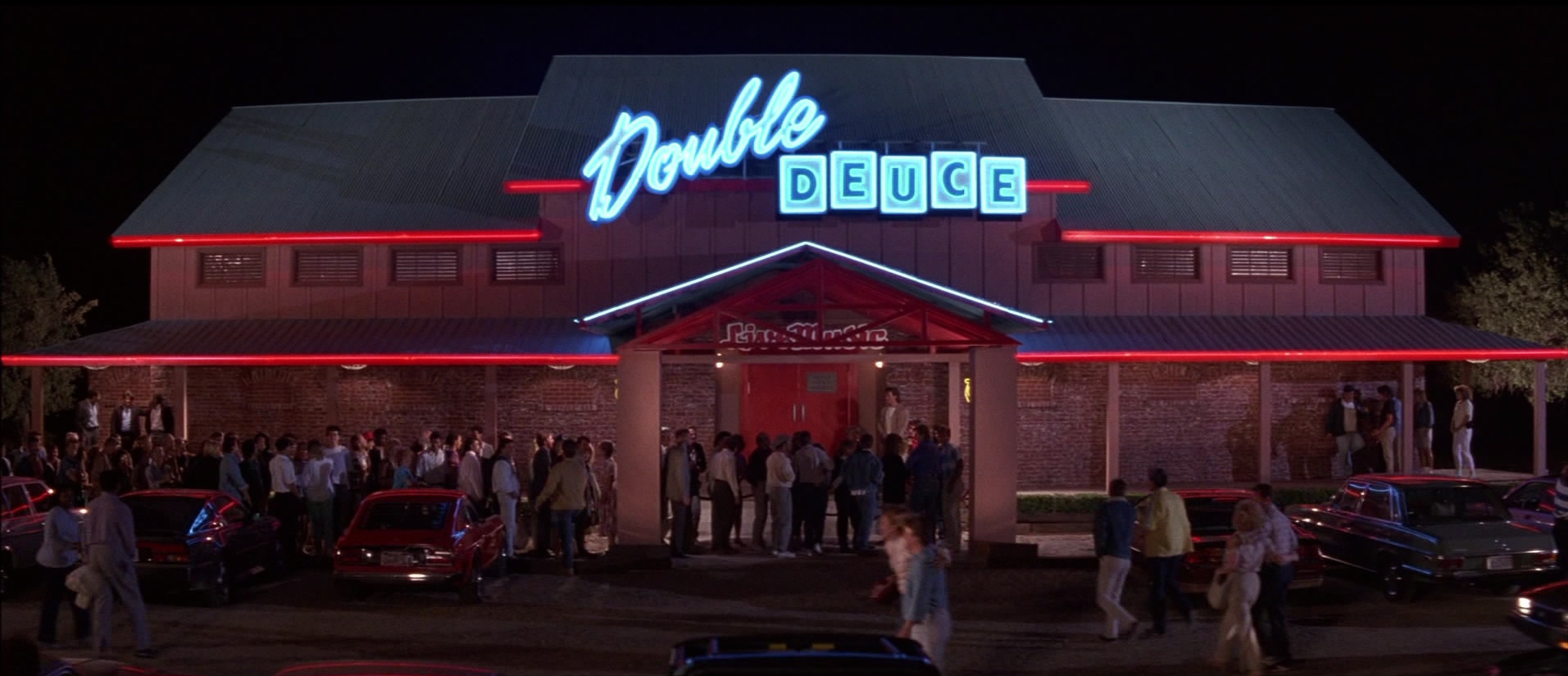
Road House has it all. Kicking? You’ve got it. Obscene one-liners? It’s here. A never-ending barrage of cover songs? That’s covered. Patrick Swayze plays Dalton, a bouncer who takes no names, keeps his cool and does his best to be nice, until the patrons of the Double Deuce take it too far. With his luscious hair, akin to the lion that graces the opening MGM logo, Dalton is a cool badass that doesn’t talk unless he has to. Women constantly come up to him, asking him if he’d like to take them home. Men aspire to be on his level, but know deep down that they could never compete with his incredible masculinity.
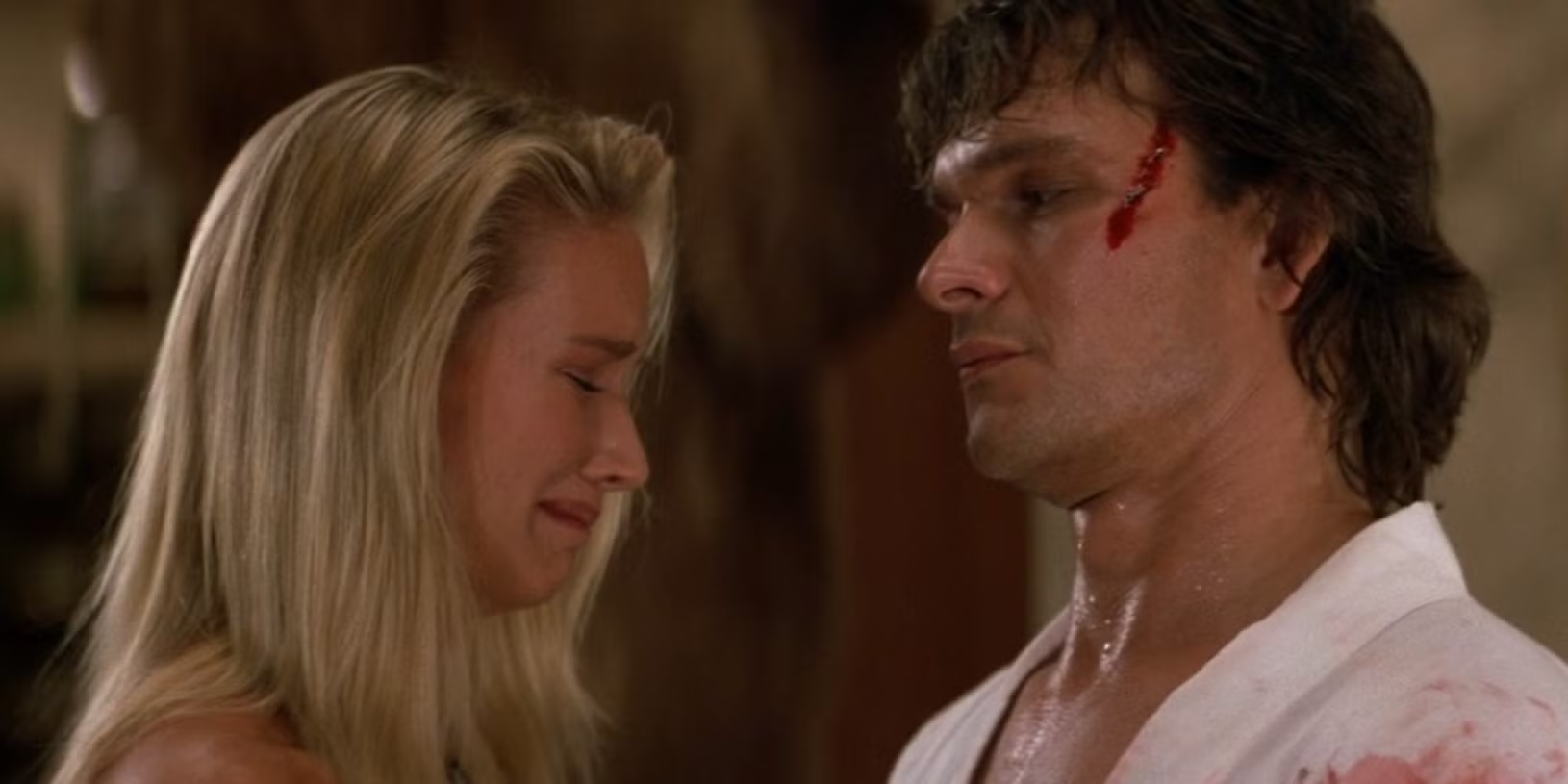
The only other person who can compete with the cool factor that Dalton possesses is Sam Elliott’s Wade Garrett, the man that Dalton looks up to. You could refer to him as a father figure in many ways, as he mentored Dalton to become the legendary bouncer that everybody knows about. Rumour has it that he even killed a man by ripping his throat out. You’d be silly to mess with a man like that, wouldn’t you?
During his time at the Double Deuce, Dalton teaches the bar staff, with his PHD in Philosophy (yes, this is real) how to maintain a club. Before long, Ben Gazzara’s Brad Wesley starts causing trouble around the town, worming his way into situations that place Dalton into some sticky situations. Before you know it, there’s no more time for Dalton to spend doing typical activities such as reading books in the nude, doing laundry and working out, to highlight how athletic and prepared he is for any situation thrown at him.
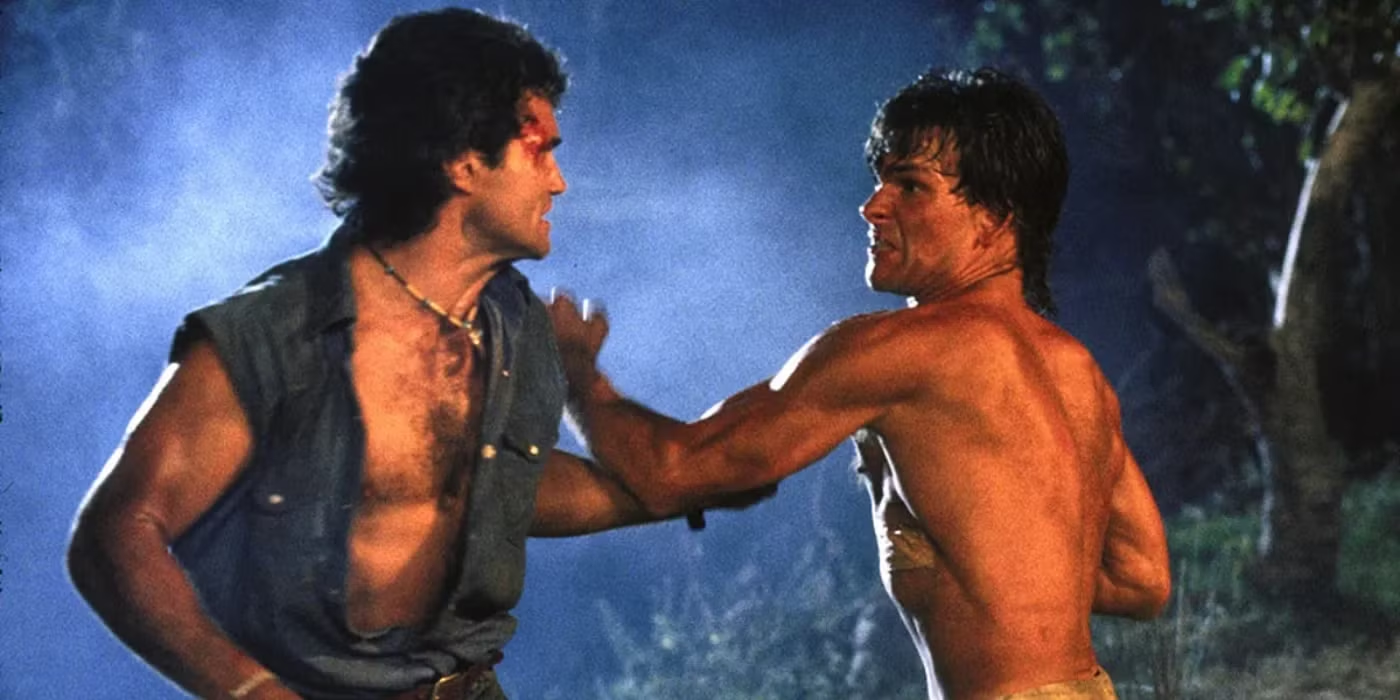
There’s few films that can compete with the excess that’s presented in Road House. Every single fight feels like it’s part of a Looney Tunes cartoon. Every stunt feels like you’re watching a crazy Hong Kong joint. Every performance feels like they’re completely unaware of the movie they’re in. Every minute of the film is either the coolest thing you’ve ever seen, or the most perplexing.
It’s a film that features Patrick Swayze sitting on the roof of a barn completely nude, gazing out at the night sky after sleeping with his love interest. There’s a man with a monster truck that runs over people’s cars. There’s countless explosions that feel like they belong in a Stallone or Schwarzenegger picture. There’s a ludicrous amount of broken glass in virtually every single scene. Did I mention how much kicking there is?
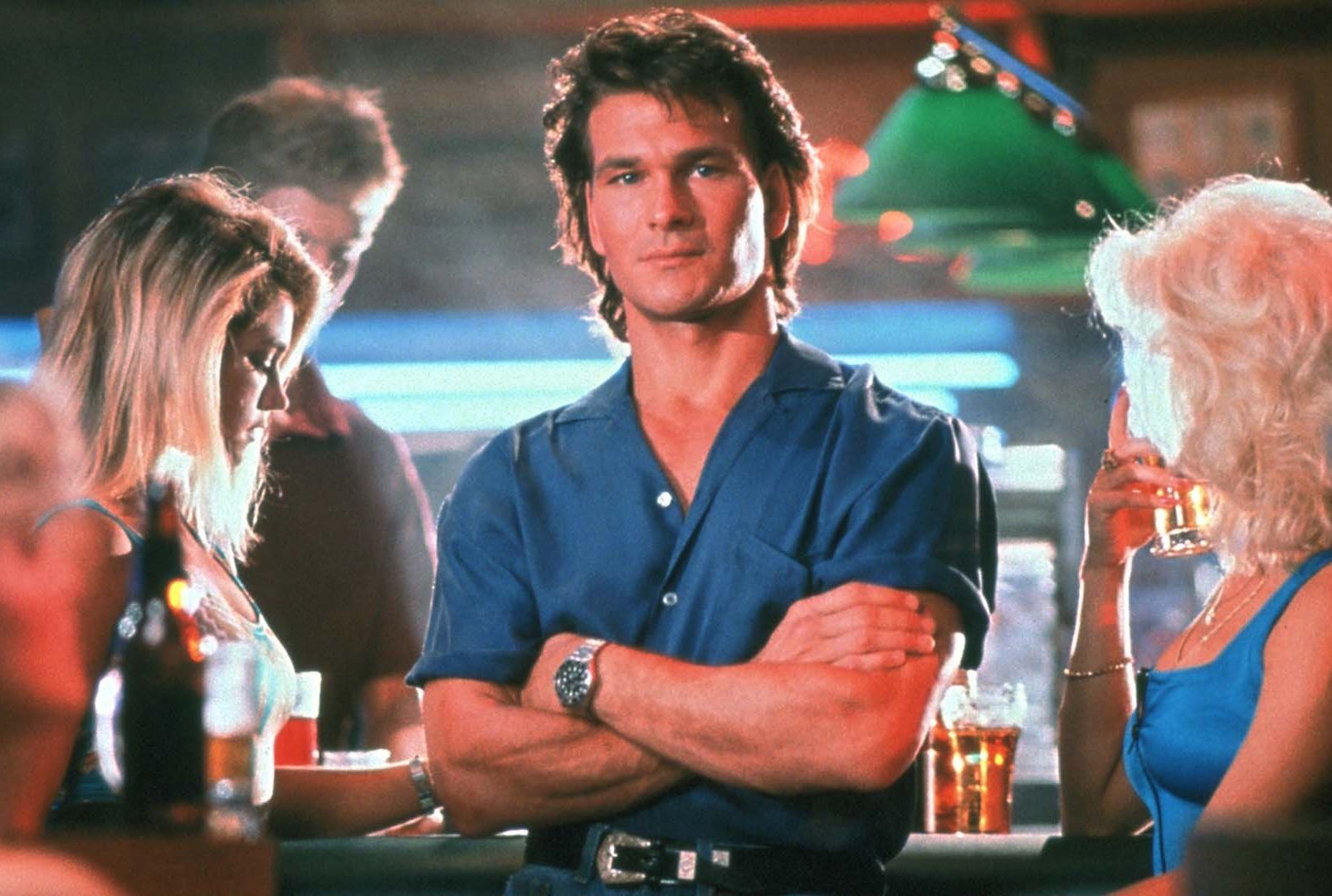
It’s hard to dissect and analyse a feature film such as Road House because in many ways, it’s the pinnacle of the filmmaking profession. Did director Rowdy Herrington know he was going to create the magnum opus of action films in 1989? Maybe he did. Did Patrick Swayze know that he’d star in a film that’d go on to spawn sequels, remakes and even a stage adaptation, highlighting the campy nature of the film to an entirely new audience? Perhaps. There’s an argument to be made that after 1989, future aspiring filmmakers were doomed. Even if they hadn’t seen it, even if they wanted to make something in a completely different genre, it was over. Road House was here. No matter how awesome they wanted to make their films, no matter how many kicks, how many shots of Patrick Swayze’s ass they wanted to include in a film, anything like that, it had already been perfected.
Citizen Kane. The Godfather. 2001: A Space Odyssey. Seven Samurai. Apocalypse Now. All of these have been referred to as some of the greatest motion pictures ever conceived. But tell me something. Do any of those movies contain a shot where Patrick Swayze rips a man’s throat out? I didn’t think so.
Film: 
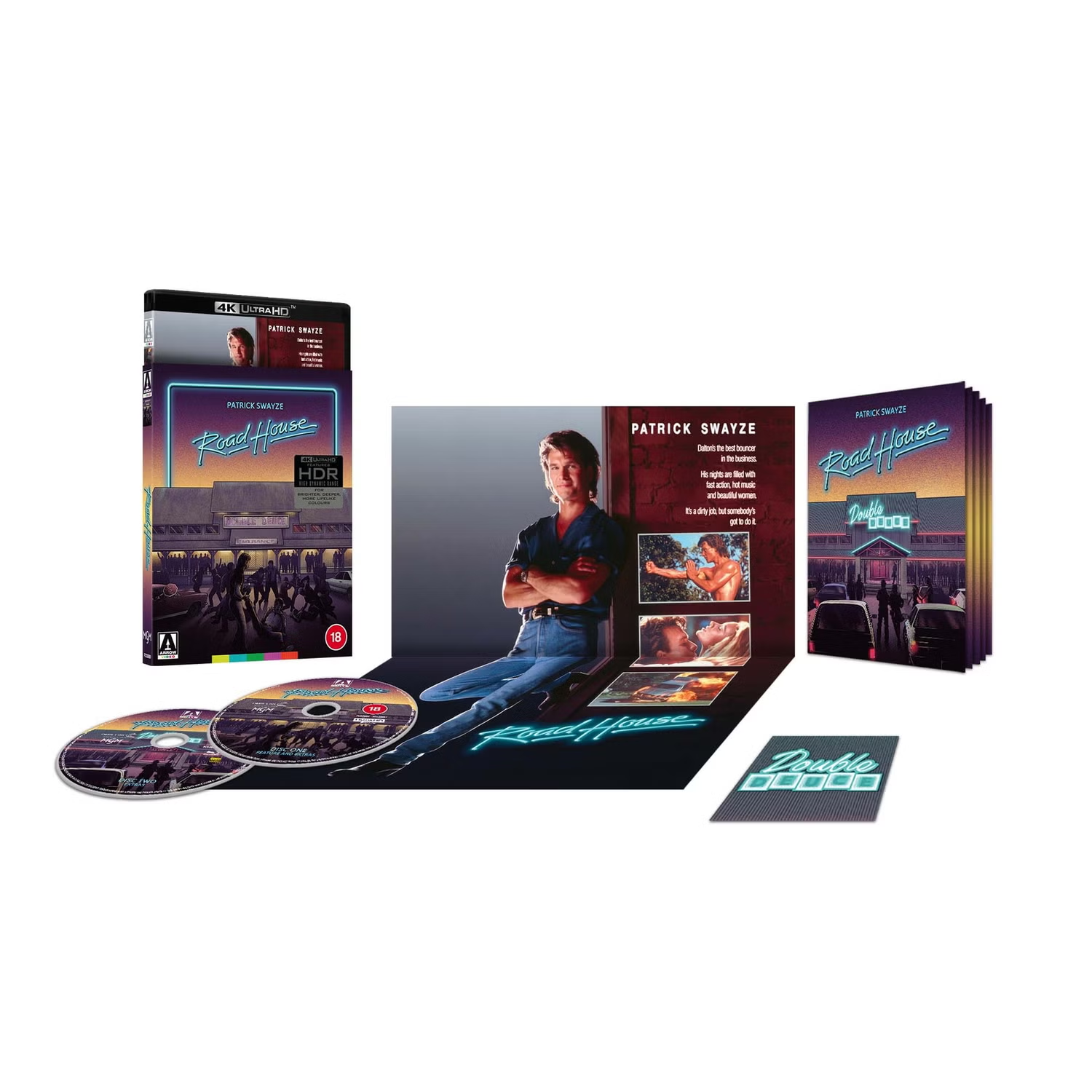
Road House released on Limited Edition 4K UHD and Blu-ray on June 2nd via Arrow Video. Surprisingly, this is both the UHD and Blu-ray debut for the film in the UK, although it’s not the first time the film’s had a UHD release. New to this release, compared to the likes of the Vinegar Syndrome UHD release, is the Dolby Vision grade. The film looks excellent on here, as to be expected from an Arrow disc. Comparing it to the Amazon Prime stream I viewed last year, it’s night and day in terms of image quality. Considering how much of the film is bathed in gorgeous lighting, the Dolby Vision HDR grade works wonders and it looks stunning. Audio wise, there’s a lossless stereo mix and a DTS-HD 5.1 MA to choose from. I viewed the film with the stereo mix but tested out the 5.1 track, and both sound great, although I preferred the stereo mix here. Optional English subtitles are included too. All in all, Arrow have knocked it out of the park, as they typically do. The following extras are included.
4K (2160p) Ultra HD Blu-ray presentation in Dolby Vision (HDR10 compatible)
Original lossless stereo and DTS-HD 5.1 surround audio options
Optional English subtitles for the deaf and hard of hearing
Reversible sleeve featuring original and newly commissioned artwork by Mark Bell
Double-sided foldout poster featuring original and newly commissioned artwork by Mark Bell
Double Deuce coaster
Collector’s booklet featuring original production notes
Audio commentary with director Rowdy Herrington
Audio commentary with Road House fans Kevin Smith and Scott Mosier
‘I Thought You’d Be Bigger’: The Making of Road House, a making-of documentary
A Conversation with Director Rowdy Herrington, an interview with the director about the genesis and making of the film
‘Pretty Good for a Blind White Boy’: The Music of Road House, a featurette on Michael Kamen’s score and blues musician Jeff Healey’s performance in the film
Remembering Patrick Swayze, a tribute to Road House’s iconic lead actor
On the Road House, a featurette where cast and crew members look back on the film’s success
Patrick Swayze Profile featurette
Original theatrical trailer
Image gallery
I Did It My Way, an interview with second unit director and stunt coordinator Charlie Picerni
Henchman #2, an interview with actor and stuntman Anthony De Longis
Blonde Ambitions, an interview with actor Laura Lee Kasten
Fightin’ Man, an interview with actor Roger Hewlett
Ain’t Nothing Gonna Kill Me but Me, an interview with actor Travis McKenna
Pain Don’t Hurt: The Stunts of Road House, a featurette on the stunts seen in the film
What Would Dalton Do?, a featurette where professional bouncers show their appreciation for the film
Selected interview soundbites
On the Set, archival behind-the-scenes footage
Two archival audio commentary tracks are included, both ported over from virtually every release since 2006. The first is with director Rowdy Herrington and it’s a pretty good listen. Rowdy’s a little dry, and there’s quite a lot of dead air throughout the track, with Rowdy popping up every so often to recount the shoot, anecdotes and what you’d typically expect from a director’s commentary. There’s a good amount of trivia about the film here, but I’d honestly suggest checking out the 30 minute interview with Herrington that’s included on the release as it’s a little more engaging. The second track is with filmmaker Kevin Smith and his longtime collaborator Scott Mosier, two fans of Road House. The entire track consists of the duo gushing about their love and admiration for the film in a lighthearted, fun and surprisingly informative commentary track. I had a fun time listening to this and found myself cracking up throughout. Definitely my favourite of the two tracks.
I Thought You’d Be Bigger: The Making of Road House is an archival making-of documentary from 2016, running for 63 minutes and is the most substantial extra on the release. There’s interviews from tons of cast and crew members, such as director Rowdy Herrington, director of photography Dean Cundey, actor Kevin Tighe and others as they dive into the entire process of bringing Road House to the big screen. It’s a solid documentary and touches on the campy, almost so-bad-its-good nature of the film, which was great to hear.
A Conversation with Director Rowdy Herrington is an archival interview from 2016 with director Rowdy Herrington, which runs for 29 minutes and features Herrington diving into the time he spent working on Road House, as well as the film’s legacy. Herrington’s open about his experiences, describing how he initially turned the film down due to the screenplay, how he wanted the film to visually look like a cartoon, the casting process, deciding on the crew and more. It’s an in-depth and wonderful interview.
Pretty Good for a Blind White Boy: The Music of Road House is an archival featurette from 2016 on the film’s score by Michael Kamen and Jeff Healey’s performances throughout the film, It runs for around 9 minutes and features Rowdy Herrington and other interviewees talking about how integral the music and score are to Road House. A solid piece.
Remembering Patrick Swayze is an archival tribute from 2016, running for 15 minutes and features a series of interviewees, such as Patrick’s wife and the cast and crew of Road House, as they recount their experiences with Swayze before his unfortunate passing. It’s a touching piece.
On the Road House is an archival featurette from 2006, running for 17 minutes and features the cast, crew and others as they touch on the legacy of Road House around the time of release. Swayze’s the most enthusiastic of the interviewees, touching on why he resonated with Dalton as much as he did. It’s a fun little piece.
The Patrick Swayze Profile featurette runs for around 3 minutes, and offers a comically dated EPK highlighting the ‘tough guy’ performance that Swayze gives in Road House. Brief, but fun.
I Did It My Way is an archival interview with second unit director and stunt coordinator Charlie Picerni, recorded via Zoom and it runs for 30 minutes. In the interview, Picerni talks about his career as a whole, talking about his time working on Road House and more. He’s a fascinating interviewee with stories that rival most people who typically get interviewed for home media releases like this. It’s a solid watch.
Henchman #2 is an archival interview with actor and stuntman Anthony De Longis, which runs for 25 minutes. This is ported over from the Vinegar Syndrome release and features De Longis touching on his time working as one of the henchmen in Road House, some of the issues he had with the production, although most of his comments are positive. It’s another solid interview.
Blonde Ambitions is an archival interview with special talent coordinator Laura Lee Kasten, ported over from the Vinegar Syndrome release. It’s 19 minutes long and features Kasten humorously recounting her time on set, the nudity that featured in the film and the time she spent with some of the actors like Sam Elliott. Worth checking out.
Fightin’ Man is an archival 14 minute interview with actor Roger Hewlett, who discusses his time on set and how most of his scenes in the film were left on the cutting room floor. It’s an interesting interview that’s ported over from the Vinegar Syndrome release, offering a different perspective to your usual interview subject. Hewlett is a fun guy to listen to and offers one of the more fascinating interviews on this release.
Ain’t Nothing Gonna Kill Me but Me is an archival interview with actor Travis McKenna, running for 21 minutes. Ported over from the Vinegar Syndrome release, this interview focuses on McKenna’s previous history as a bouncer before working on Road House, and how that helped him during his time working on Road House. He’s a charming person who recounts his time playing Jack the Bear and it’s a solid final interview for this release.
Pain Don’t Hurt: The Stunts of Road House is an archival featurette from 2016, diving into the stunts seen in the film and it’s a great piece. Running for 22 minutes, it highlights the tremendous effort put into each of the fight sequences in the film, the team who brought the sequences to life and more in this solid piece.
What Would Dalton Do? is an archival featurette from 2006, focusing on the profession of bouncers and how Road House portrays them. There’s interviews with a series of real bouncers and coolers in a fun piece running for 12 minutes.
On the Set is an archival featurette, highlighting the shoot of Road House. It runs for around 4 minutes and it’s a fun watch.
11 minutes of selected interview soundbites are included.
The original theatrical trailer and an image gallery are also included.
I wasn’t provided with any of the physical extras, unfortunately.
Arrow Video does what all boutique labels aspire to do, and preserve one of cinema’s greatest exports on a beautiful 100GB UHD disc for eternity, alongside a further 50GB disc packed with hours of supplemental features for a film worthy of every Academy Award it was eligible for back in 1990. A phenomenal transfer, excellent sound, fantastic bonus features and of course, the preservation of something that’s stood the test of time in every conceivable way. Stop reading this review. Go and buy Road House. Buy it twice. Buy a copy for your dad. Buy a copy for your son. Buy a copy for your grandmother. It’s Road House. Full marks.
Disc/Packaging: