



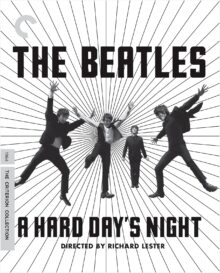
 Director: Richard Lester
Screenplay: Alun Owen
Starring: John Lennon, Paul McCartney, George Harrison, Ringo Starr, Wilfred Brambell, Norman Rossington, John Junkin, Victor Spinetti, Anna Quayle, Deryck Guyler, Richard Vernon
Country: United Kingdom and United States
Running Time: 87 min
Year: 1964
BBFC Certificate: PG
It’s hard to believe now, but back in the early 1960s when the film A Hard Day’s Night was made, the long-term success of Liverpool band The Beatles wasn’t confirmed. Filmmakers saw that they were super popular but thought they’d fade into obscurity, so a decision was made to capitalise on their popularity and rush a film out.
Of course, The Beatles wouldn’t fade into oblivion; they’d become the most iconic and influential band of all time. They’d also become the best-selling music act of all time, with the most number one hits on the US Billboard Hot 100, the most number one albums in the UK Albums Chart and the most singles sold in the UK, as well as receiving many accolades.
What’s as surprising as the thoughts that the band would be a flash in the pan, is just how good a film A Hard Day’s Night is; in its own right it is, like the band, iconic and influential.
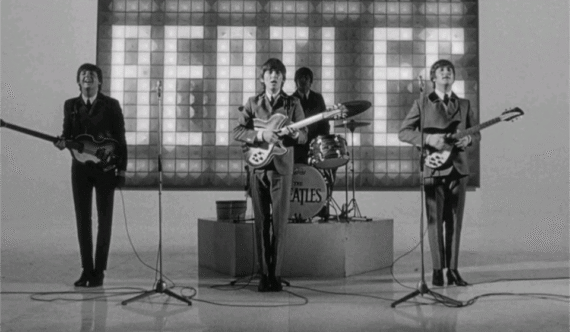
A Hard Day’s Night was made just a month after the band exploded onto the US music scene with an appearance on the Ed Sullivan Show. The film essentially follows slapstick versions of The Fab Four, John Lennon, Paul McCartney, George Harrison and Ringo Starr, at the height of Beatlemania; and follows them as they prepare for a television performance.
We’re immediately thrust into the exaggerated versions of the lives of John, Paul, George and Ringo in a blistering, high energy opening as the band are chased through the streets of London by dozens and dozens of screaming fans who want to meet their idols, before they manage to escape on a train. This is one of a number of outstanding sequences where everything comes together: the star power of the four, their music, the documentary-like style of moments captured, excellent cinematography with a diverse range of conventional and unconventional shots, and music-video-like editing. Everyone, cast and crew, is on the top of their game, and it shows.
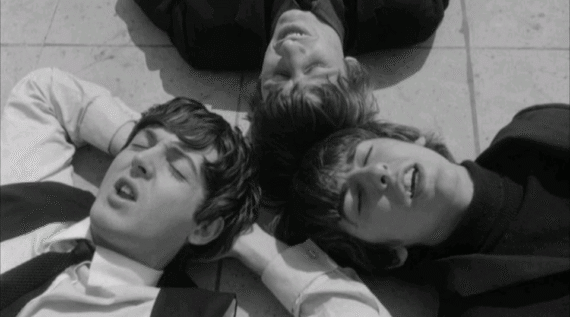
The Fab Four are naturals on the big screen, but then they are essentially playing exaggerations of themselves, and ooze star quality in every frame. It’s easy to see why the band become so popular and revered.
Steptoe and Son star Wilfred Brambell pops up as “grandpa to Paul” and is as fantastic as is to be expected and there are some wonderful small roles for other familiar British faces, as well as some cameos from the likes of Lionel Blair, actresses Margaret Nolan and Charlotte Rampling and a blink and you’ll miss it appearance by a very young future singer Phil Collins.
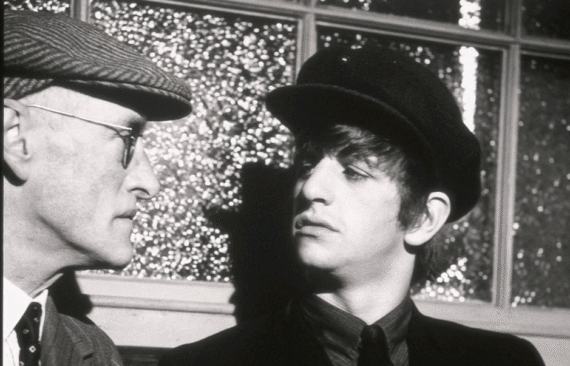
Director Lester had worked on the anarchic The Goon Show and Oscar-nominated short The Running Jumping and Standing Still Film with Peter Sellers and Spike Milligan, and his background in surreal, slapstick comedy shines in the film, which features some very funny moments and visual gaps throughout.
The music, as is to be expected, is a key component of the film, with some great pop anthems, including the title track, A Hard Day’s Night, as well as Can’t Buy Me Love, I Should Have Known Better, and If I Fell. The sequences when the songs play feel like music videos, with some containing performances by the band and others playing out over scenes.
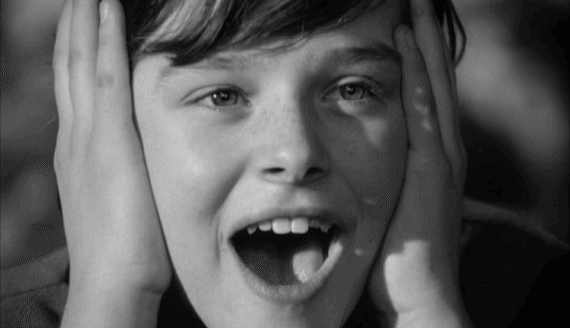
The film feels like a documentary at times, as mentioned earlier, and it also feels improvised on occasion, which helps no end with the high energy of it all. There are some excellent aerial shots, and a lot of fluid motion and movement involving the camera, bringing a real sense of energy, particularly in the inventive music sequences. There is also some wonderfully evocative location filming throughout London and a chase involving police which evokes memories of the silent Keystone Cops shorts.
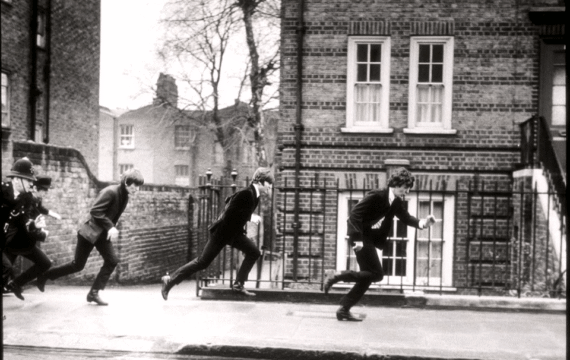
In closing, I adored A Hard Day’s Night on this, my third, viewing and it’s easily my favourite music film alongside In Flames starring Slade, which came out on BFI Blu-ray earlier this year. A Hard Day’s Night perfectly captures the popularity of The Beatles at the height of their fame in an almost documentary-like style at times. Everyone involved is on top form, headlined by John, Paul, George and Ringo, the music is toe-tappingly good, music sequences are inventive, and there’s so much energy throughout the runtime it’s infectious. For me, it’s a landmark and influential classic that is endlessly entertaining.
Film: 
A Hard Day’s Night is released by the Criterion Collection on dual format 4K UHD and Blu-ray and standalone Blu-Ray on 7th July 2025. The dual-format edition contains the film on both discs, with all extras, except for the audio commentary, being solely on the Blu-ray disc and the 4K disc containing the film and commentary. I reviewed the 4K disc version of the film and it looks absolutely phenomenal, with a gorgeous transfer that perfectly showcases the beautiful, inky black and white cinematography. It’s incredibly sharp, with plenty of detail standing out, and the film also sounds fantastic, which is obviously important for a music film. No complaints from me at all on the picture or sound quality.
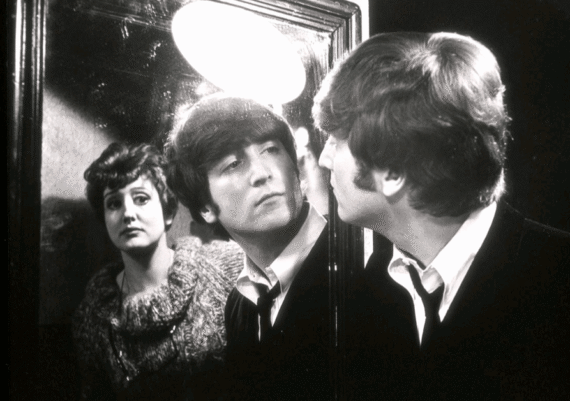
Director-approved 4K UHD and Blu-Ray special edition features:
New 4K digital restoration, approved by director Richard Lester, with three audio options—a monaural soundtrack as well as stereo and 5.1 surround mixes supervised by sound producer Giles Martin at Abbey Road Studios—presented in uncompressed monaural, uncompressed stereo, and DTS-HD Master Audio
One 4K UHD disc of the film presented in Dolby Vision HDR and one Blu-ray with the film and special features
Audio commentary featuring cast and crew
In Their Own Voices, a programme featuring 1964 interviews with the Beatles and behind-the-scenes footage and photos
You Can’t Do That: The Making of “A Hard Day’s Night, a 1994 documentary by producer Walter Shenson including an outtake performance by The Beatles
Things They Said Today, a 2002 documentary about the film featuring Lester, music producer George Martin, screenwriter Alun Owen and cinematographer Gilbert Taylor
Picturewise, a programme about Lester’s early work, featuring a 2014 audio interview with the director
The Running Jumping & Standing Still Film, Lester’s Oscar-nominated short
Anatomy of a Style, a 2014 programme on Lester’s methods
Interview from 2014 with The Beatles biographer Mark Lewisohn
English subtitles for the deaf and hard of hearing
Plus: An essay by critic Howard Hampton and excerpts from a 1970 interview with Lester
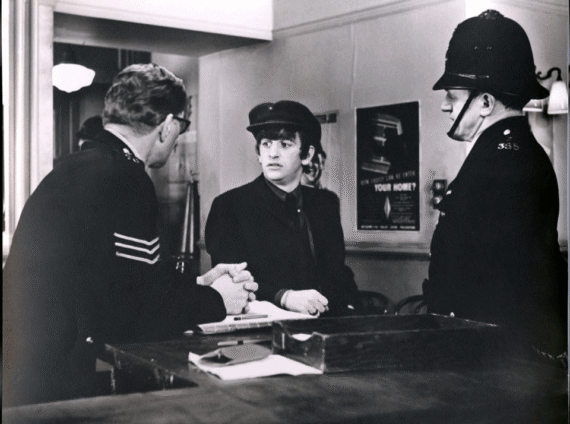
The extras are all archival but that’s no big deal when the quality is so high across the board and totalling over three hours, not including the audio commentary.
Extras kick-off with a 2002 audio commentary which features cast and crew members, including actors John Junkin, David Janson and Jeremy Lloyd; cinematographer Gilbert Taylor; associate producer Denis O’Dell; second assistant director Barrie Melrose; assistant editors Pamela Tomling and Roy Benson, and others. There’s a real mix of affection and information throughout the commentary which is an entertaining and informative listen.
The Beatles in Their Own Words is an 18-minute piece featuring an interview with The Beatles during their 1964 tour. The interview focuses on A Hard Day’s Night and the audio interview plays over behind-the-scenes stills and footage from the making of the film. It’s wonderful to hear the archival interviews from the Fab Four, with them sharing background to the making of the film, their hopes for it, details about the song-writing, including the title song, and more. The behind-the-scenes footage is a treasure trove of imagery.
Anatomy of a Style features story editor and screenwriter Bobbie O’Steen and music editor Suzana Peric as they explore five of the music sequences from the film, in a piece that intersperses their interviews with the scenes themselves. The piece runs for 17 minutes and provides some neat background, including why John Lennon is laughing in the opening (George trips and Ringo falls over him). This was an error that Lester decided to keep in. The pair capture what makes the film so special, not least its energy, some of the unconventional shot choices that add energy to the opening sequence and the groundbreaking nature of some of the other shots. It’s a fabulous piece.
You Can’t Do That: The Making of A Hard Day’s Night is a marvellous 60-minute documentary from 1994, hosted by musician Phil Collins, which was made to mark the 30th anniversary of the film. It features loads of great interviews as well as outtake performances. Interviewees include critics, other musicians, cast and crew members, and fans amongst others. Highlights include songs that were cut, including outtakes of these which are a gem, analysis of key elements, recollections of the making of the movie and more. Phil shares how he made his motion picture debut in the film as a blink and you’ll miss him background extra in the audience in the Scala theatre during a Beatles performance. Given who is involved, the documentary provides a mix of background to the making of the film as well as highlighting some Easter eggs, and analysis of why it’s so special. It’s a brilliant documentary.
Things They Said Today is a 36-minute documentary from 2002 which features interviews with cast and crew members, including director Lester and music producer George Martin. This is briefer than You Can’t Do That but more of a conventional making-of documentary providing more on the background to the making of the film and less of the analysis of its cultural impact and what makes it a landmark in music cinema. That being said, some of the sequences are highlighted for their inventiveness, and the documentary also provides a rich insight into the editing process and memories of the filming process. Another great supplement.
A section entitled Richard Lester contains two extras related to the director. First is The Running Jumping & Standing Still Film, Lester’s Oscar-nominated live-action short, starring Lester, Spike Milligan, Peter Sellers, Graham Stark and Bruce Lacey, and shot over two Sundays in 1959 for about £70. The film was a favourite of The Beatles and features a series of anarchic, surreal and at times hilarious vignettes. There’s plenty of slapstick here, a strong use of music and some wonderfully framed shots. It’s a delightful 11-minutes of cinema.
Second in the Richard Lester section is Picturewise, a 27-minute piece written and produced for the Criterion Collection in 2014 by critic and filmmaker David Cairns, and narrated by actor Rita Tushingham. It’s a typically entertaining piece from Cairns which looks at the influences on and impact of the early works of Lester. It highlights the television techniques Lester used in his early films, and nine of the reasons he was the right fit for a Beatles film. It covers how Lester met Milligan and Sellers, looks at The Running Jumping & Standing Still Film, some of the cameos in A Hard Day’s Night, Lester’s subsequent movies and much more – exceptional!
The Beatles: The Road To A Hard Day’s Night is a 28-minute interview with Mark Lewisohn, author of The Beatles: All These Years, Volume 1- Tune In which was produced for the Criterion Collection in 2014. He shares how the end of army conscription came just at the right time – if it hadn’t, The Beatles may never have existed, before looking at their early years and an earlier name for the band before they became the legendary Beatles we know today. Lewisohn covers the importance of key characters in the music industry, like Brian Epstein, in the band’s success and what drove their popularity. It’s an incredibly detailed, informative and fascinating interview and a highlight of the disc.
Rounding out the on-disc package are the 2000 and 2014 re-release trailers, both running for around two minutes.
I wasn’t provided with the physical essays, unfortunately, but assume the one by critic Howard Hampton is this one on the Criterion website, which is fantastic and gives a good range of background as well as highlighting a few of the smaller moments that make the film so memorable.
The Criterion Collection have provided a fabulous transfer and overall audio-visual presentation for A Hard Day’s Night. There’s over three hours of extras plus a commentary, all are archival but all are essential, providing a wealth of fascinating background and analysis about The Beatles and the film. It’s an excellent package for a hugely influential and entertaining movie.
Disc/Package: